RichardL
-
Posts
205 -
Joined
-
Last visited
-
Days Won
1
Everything posted by RichardL
-
Yes - this is a major consideration - the DHW one will be in the utility room with the tank, One already outside for the front room/office test Potentially I can obscure the one for the other end of the house in a roofless outhouse currently only used to store junk - or at least convert its roof to more a pergola effect for free airflow.
-
Currently I am trialing A2A heating making the most of the heat pump COP for the timber frame part of the house. Cooling in summer via solar PV, heating in winter mostly offset battery off-peak power. IF that works out - i.e. is useable in terms of comfort and fundable in terms of electric vs. oil, potentially extend to the rest of the house - bedrooms ducted version etc. Hot water is the challenge. I sort of like the idea of separating hot water generation from heating - I think they may only the same thing by tradition of having hot water in pipes - and if you got back to first principles of energy/electric they aren't necessarily the same system. So - sunamp/chemical heat battery looks like its on the decline as a concept - but perhaps a smaller air source for hot water directly - i.e. as its own unit and DHW as its only purpose is an option? I've seen these aroStor (and similar) setups for example - its one and only task to heat a tank of water daily for hot taps and bath etc. In the summer hot water is via resistive heat PV diversion - but the rest of the year and on cloudy days... Sanity check Am I barking up completely the wrong tree to think about hot water separately from heating? Even if the rest of the house ended up with A2W or A2A/Ducted - is having a separate hot water system a daft idea? Context I'm not particularly into 'pays for itself' .. more focused on investment in the property and getting off oil Capital investment is ok within reason provided running costs are equitable with the current electric/oil mix That doesn't mean waste money - just means capital vs. running costs sort of mindset. Stream of consciousness/thinking out loud rather than specific questions - I know.
-
Octopus Cosy - new tariff for ASHP owners
RichardL replied to George's topic in Air Source Heat Pumps (ASHP)
Gut feel, I didn't run precise numbers, It feels more like a winter battery tariff (or battery without solar) so you can charge up twice a day and time shift usage a little later without needing capacity for the whole day in the battery bank? -
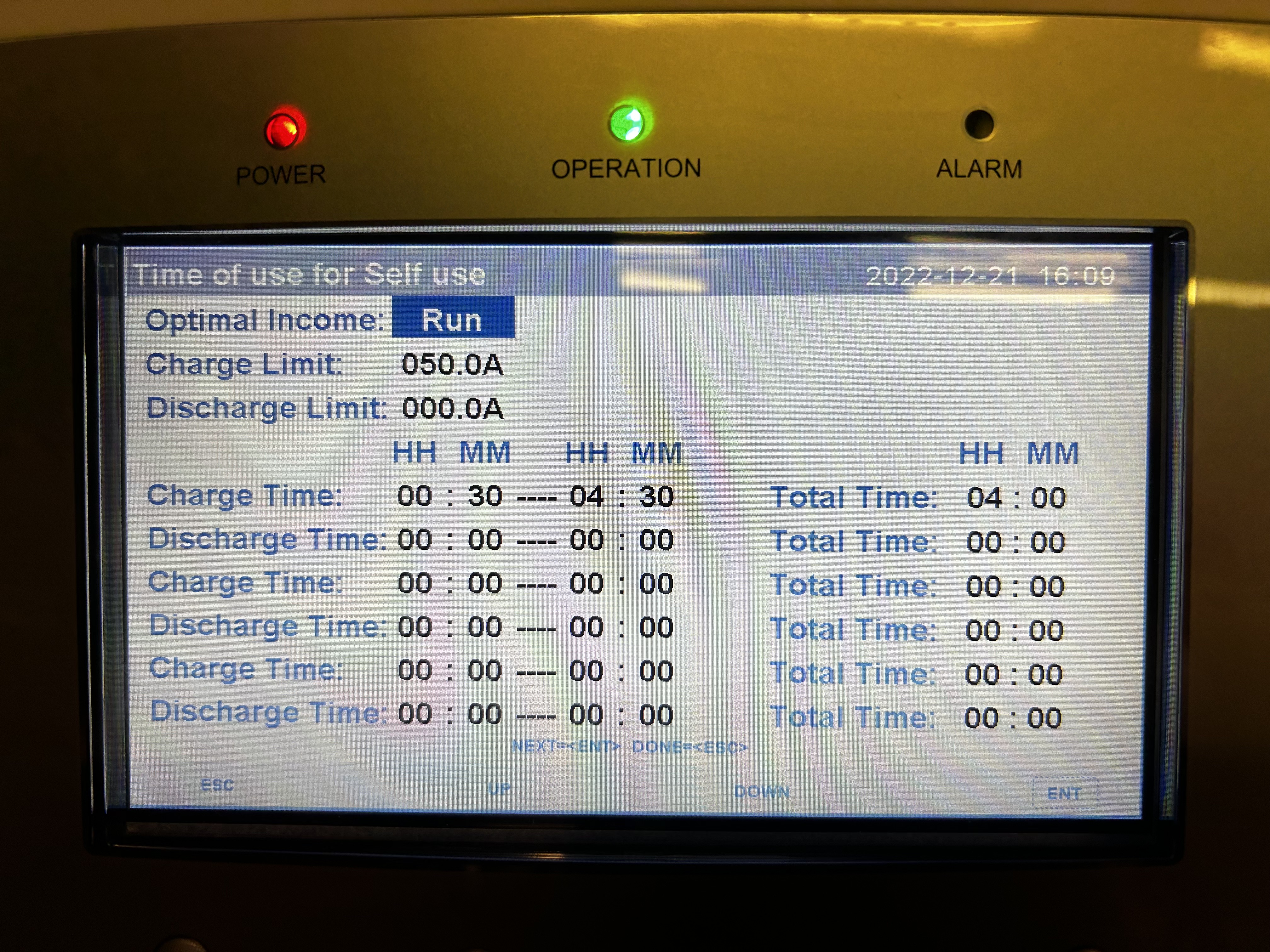
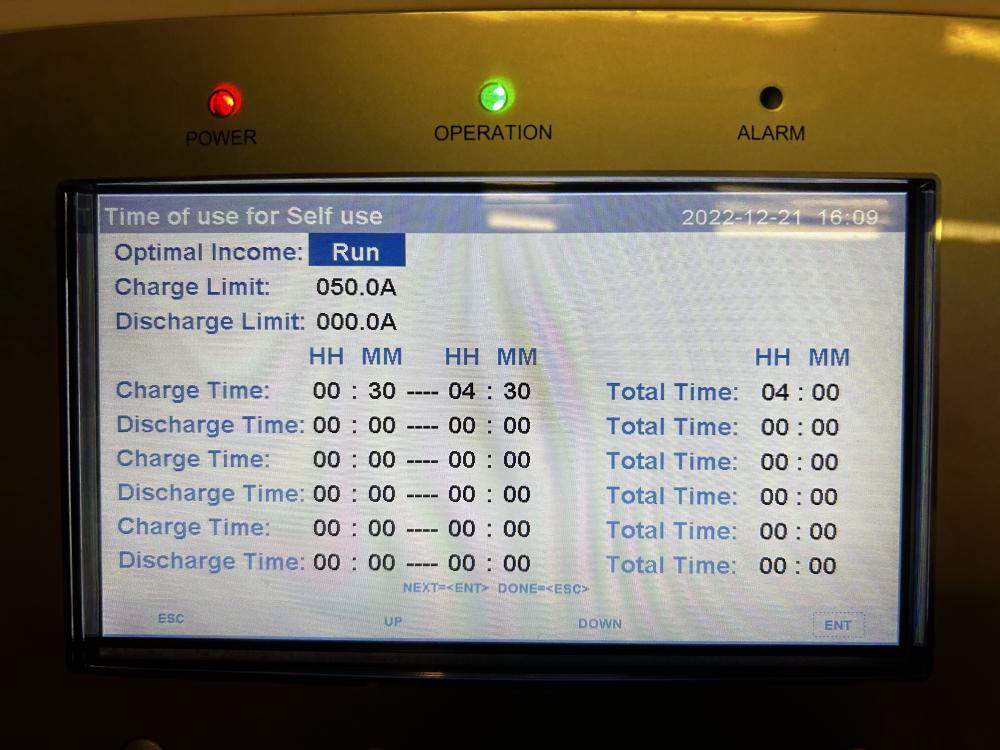
Yes - you can charge off peak - I'm doing exactly that since the solar only generates a couple of kW hours over the winter. Check out the timed charge functionality Advanced settings (default password is 00010) Storage energy set, Storage mode (is probably self use - just click through) Time of use... Mine looks like this (pictured) for Octopus go 00:30-04:30 off peak. The charging amps is only relevant IF a. your BMS does not control charge rate and b. your inverter is sized so it can't overload its grid cable. This is a solis hybrid 5k - might look slightly different, + if theres no batteries you might need to find its 'keep awake' option to stop it shutting off when there's no solar overnight. Does that answer the question?
-
Re 12º - The nature of that bit of the house & our location TBH - it has external wall insulation - but persistent cold inbound from the Brecon Beacons and the timber frame part of the house takes on a chill relatively quickly. I guess 'no heat' is different on A2A too - i.e. once its off its done and the rooms start to cool immediately whereas radiators/central heating going off at 22:30 there will be residual warmth in the pipes/water etc.
-
FWIW - I tried 16º setback overnight for a bit - but the AC units heat the rooms up so quickly I reverted to a nominal 18º during waking hours increasing for the evening then off overnight (similar to how I have central heating setup for the rest of the house). Normally rooms drop to 15º min overnight with no heat, but in the cold snap I had one morning where they went down to 12 inside! IMHO Just need enough heat to avoid condensation or cold soak in the building for long periods.
-
Update re the cold snap in Nov/Dec - Mitsubishi Electric units in two rooms/end of house with radiators off in those rooms. Normal consumption on my 2x rooms - living room 3.5kw unit, office 2.5kw unit is around 500w During the cold snap that rose to anywhere near double consumption - 1.2kw - with outdoor temps down to -3 to -5ºC The A2A still heated the rooms although the air seemed to stratify more easily when it was colder and I needed to manually turn up the fan to stop the top half of the room getting all the benefit. That was only really a problem in the front room which has a double height ceiling which also has the indoor unit mounted about 3m high. It does become a balance of moving the air vs creating a breeze + a little more fan noise inside. The outside unit - outside the front room double glazed window is silent - I don't think its ever really working that hard 5kW (I think) capacity. Changes I upgraded the front room to a wired remote - on the wall - so it feels more oldschool/expected themostat type control - i.e. to pass the wife (and me TBH) test on ease of use. That needed an interface box and PAR41A(or similar code) off ebay and a little work with some cat5 cable. Costs I don't have detailed stats, the water/radiators in the two rooms are still off so I can get a feel for oil use reduction vs the approx £10/month electric increase. I'm intending to make a pretty coarse assessment based on monthly bills in the spring. My crude overall OIL house + hot water bill is around £110 / month averaged out, so +£10 on the electric for the aircon for 2 rooms is promising - or at least order of magnitude workable. Next... Still planning out possibilities for the rest of the house - bedrooms I think - perhaps a single unit above the landing with ducting; I don't heat the bedrooms at night when sleeping - just warm them up in the evening and mornings - to turn in and get up & tick over during the day. -or- perhaps wall/floor mounted inside units (look like radiators) so heat rises rather than having to be forced down? That would mean another external unit at the other end of the house too. Jury is out on hot water in the winter when there's no solar for the immersion. Perhaps a small oil boiler in the medium long term just for that job?
-
batteries Most economical use of battery storage to heating a room.
RichardL replied to Alshamal's topic in Energy Storage
++ - Trying almost exactly this principle over the winter with part of the house to get a feel for real world increase in electric vs. decrease in oil in the remainder of the house. Until the cold snap electric was up approx +£10/month, vs. the usual oil nominal ~£100/month heating spend. (Different A2A hardware/similar ~500-600w A2A consumption - rising to double that as the temp drops below 0ºC + using Octopus go and the 00:30-04:30 to charge batteries in the winter) The challenge is extending to a. bathrooms and b. bedrooms The latter perahps on a separate ducted A2A TBC. -
batteries Most economical use of battery storage to heating a room.
RichardL replied to Alshamal's topic in Energy Storage
Mini split A2A conditioning/heat pump? Heat in the winter/cooling in the summer. The controls on them are pretty basic + needs a little more infrastructure work to install than plugging in a heater. -
Cold water might help change that into a more predictable routine?
-
I have my SOLIC setup to only try and turn on the immersion from midday until 6pm, to give the batteries a chance to get some solar. My boiler then runs on the hot water thermostat demand from 5pm-6pm Its more the oposite of your original request - i.e. if there is solar the solic will heat the water in the afternoon and the boiler makes sure there is always hot water in that last hour. If the solic already heated it then the boiler doesn't kick in. (HW thermostat is set a touch lower than the immersion thermostat) As soon as the solic sees power going to the grid it tries to divert to the immersion AND incrementally increase that diversion to test how much it can take. So interestingly, if a big appliance is turned off there will be some grid export (due to inverter timing) - and that can be enough for the solic to wake up and take its chance to drain the batteries. You need an electronic timer so it remembers the time and settings even when it gets no power - this is wired after the solic and before the immersion. Thus: Consumer unit immersion breaker->solic->timer->immersion heater This one works for me - 5 months so far - it will be interesting over the winter when the solic hardly ever kicks in so the timer hardly ever gets power either. https://www.screwfix.com/p/lap-digital-immersion-timer/1804r Apologies - I did not read the entire thread - if this is already covered above.
-
No substitute for a light on the front of things 'green' ok, ideally not routed through external/cloud layers of technology.
-
I'd insulate the door today - for winter, and not rip anything out until you're ready for the full refurb project. Unless theres some safety issue or direct damage to the roof itself.
-
Working appliances inside cupboard? Safe? Good?
RichardL replied to puntloos's topic in Kitchen & Household Appliances
Our microwave lives in a cupboard - but only runs with the doors open. Toasters give off a h*ll of a lot of heat, and any sort of slow cooker feels like its asking for trouble running inside a box? -
Power and network socket philosophy 101 please
RichardL replied to puntloos's topic in Power Circuits
Embrace the infrastructure - power is a useful thing - don't hide sockets they are what they are and really no different from a fireplace 'heat' or your telly/gamesystem 'entertainment' or light fittings etc. Houses are for humans - put the things in them, and proudly present those, that make human habitation enjoyable. -
It's not going to go uphill Sounds like discrete a plinth under the loo pan might fix it
-
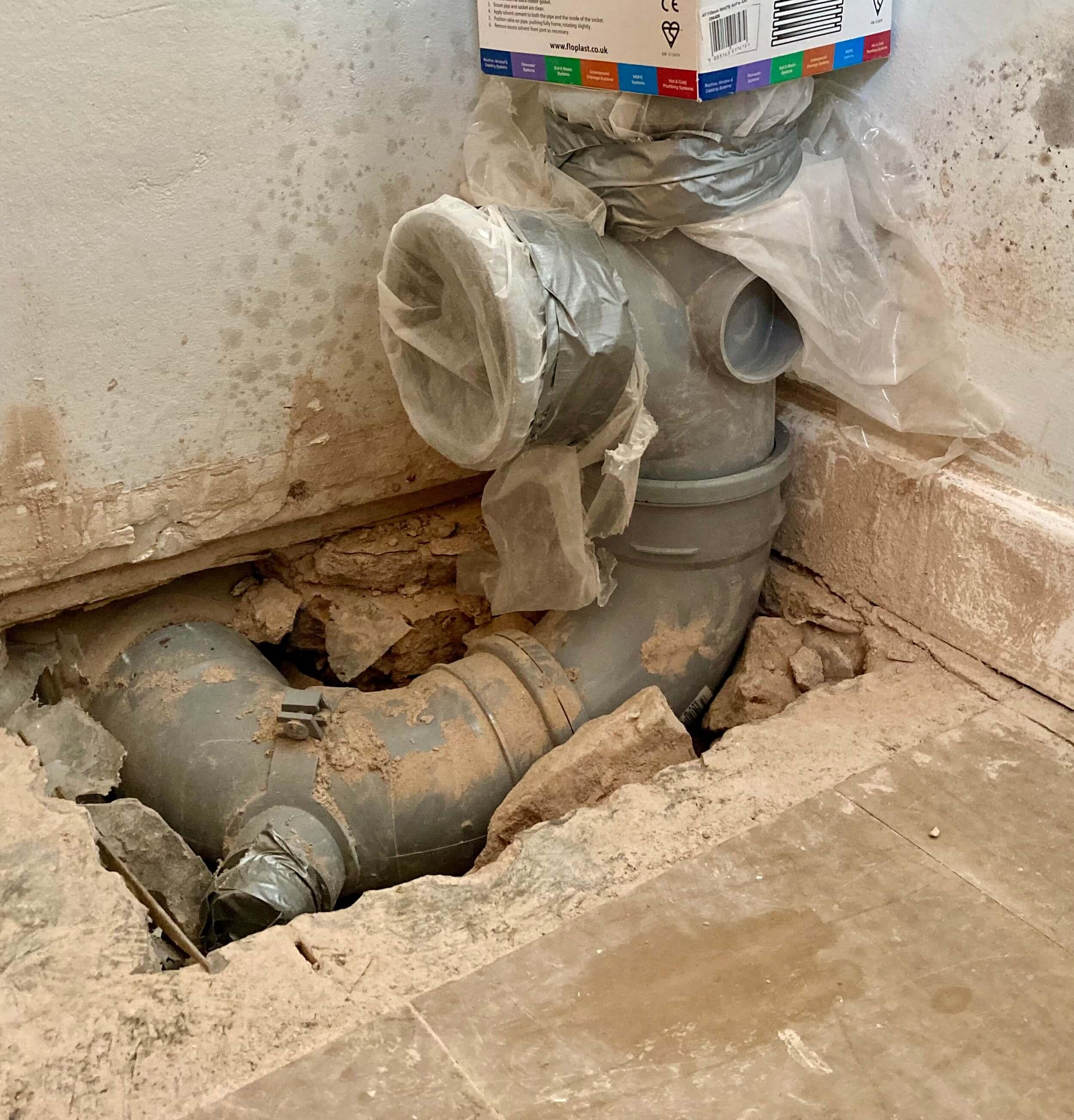
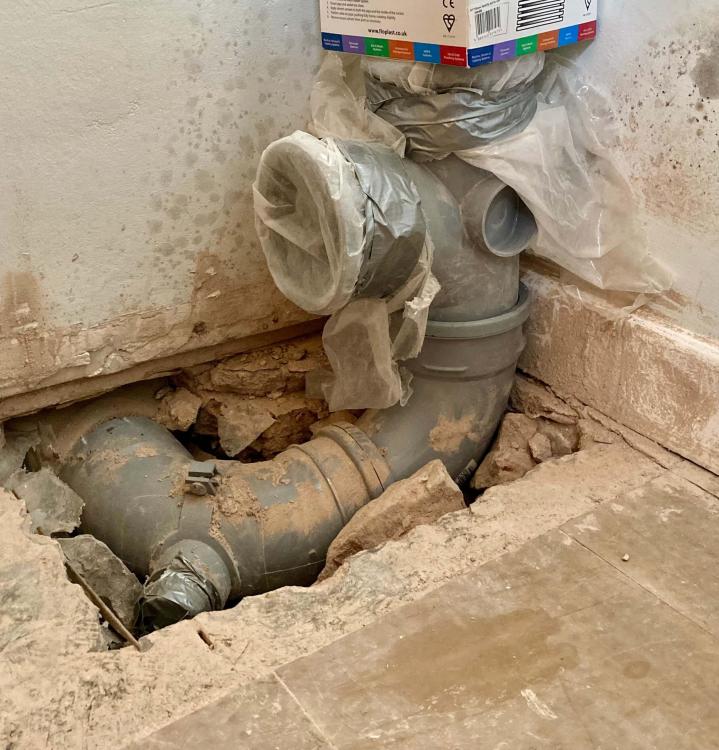
Previously to prep for a room conversion I had the toilet waste extended to allow another loo/bath/basin etc. At that point - the idea was to put a trench across the concrete foundation slab to connect into the bath/basin waste - hence the 45º blanked off below floor level. Soil pipe across is for a toilet, and vertical to allow appropriate high vent/one way air intake etc. This whole area gets boxed in to ceiling hight in due course. Changes I'm now thinking more to leave the slab alone and run the basin/bath waste around the room, to be boxed in, but arrive at this area at approx floor height. Question What options do I have for plumbing the bath/basin waste in? I'm thinking another strap boss on the upturned/curved soil joint? - to face along the wall to the right? ...am I missing an obvious option? Many thanks for any insight.
-
Control - multiple zones and heat/cool sources
RichardL replied to RichardL's topic in General Alternative Energy Issues
@dpmiller Thank you - that looks promising. -
Worth installing PV on entirely West facing roof
RichardL replied to Huckleberrys's topic in Photovoltaics (PV)
Go for it - I'm 4kW array on a WSW roof - it means we only generate decent amounts around lunchtime but right into the evening. In June-Aug when you get the long evenings to 8-9pm its generating and offsetting house load all the time. Peak I have seen is around 3.6kW from the 4kW array - usually its more like 2.5 with clean sun. That charged the battery to 90% yesterday and even now is offsetting the house daily base load of around 500W Not enough to divert to the immersion heater since last month though. Don't expect any miracles re getting the max theoretical output from the panels. Think of it more like an investment in the building - roof/windows etc - (My opinion only) All this 'pays for itself' stuff is a little odd - gas and oil boilers never pay for themselves - indeed they consume even more money after install to run! -
Slowly moving the house from a traditional single source oil-fired central heating to various: Heat/cool sources - Solar PV - does its own thing generates juice and indirectly hot water via immersion (no integrated control required) - Oil phasing out but initially topping up the hot water when solar isn't sunny - Bathrooms underfloor and electric towel rail x2 - Couple - perhaps 3-4 eventually - zones of Air to Air heating cooling: living area, bedrooms, office area, rest of house Zone control is the challenge. a. I don't need to control the heating when I'm not at home. b. I don't want integration with a remote server, or probably even my wifi router, to heat/cool the house (NO CLOUD). c. The timeclock/multiple thermostat combination seems to work well (i.e. timeclock to centrally shut things off (summer/ overnight) room/zone stats for local temp control through the day/week. There are a few timeclocks with more than 2 zones on the market - they tend to switch 240v rather than volt free though. Q Am I making this complex - are these requirements satisfied with some simple kit? Closest I'm getting is a 4 zone clock, and then use mains detection to revert to the volt free on/off the aircon needs. The ideal would be a 4-5 zone timeclock with exposed relays so I can make some volt free and some mains.
-
Installed this week Multisplit with 2x inside units for my living room and home office. I'm not minding the air flow so far - granted its not anywhere near extreme weather. Front room unit is a good 8' high, office one more like 7' Control - with the stock remotes will need some work - the concept right now is more like a plug in heater than the usual central heating single timeclock etc. one remote per unit (no supprise) but all timers are in the remotes - the inside air-con units have no 'brain' for timers. I'll live with it for a while then intend to hook into the house main heating timeclock - so theres a single winter/summer on/off switch & a daily on/off to heat during at-home/waking hours etc. (overridable in the summer for air-con cooling) - but obv. leave each inside unit's own thermostat for the local room, but perhaps a wired remote so it feels more like central heating control. Interesting experiment so far - inside units are quiet - not silent, but certainly not obtrusive. Outside unit completely silent (the other side of a double glazed window) Better than increasing rad sizes for a wet heat pump. Kit: Mitsubishi Zen (Zero VAT on air heat pumps too right now too)
-
FWIW Don't discount west facing - I've only 4kW on a west facing roof but its perfect, at least in the summer, to offset afternoon/evening use - when we start pulling significant juice. The batteries tide the system over until around mid-morning/lunchtime when theres more solar than the house draws. Short days in winter won't help - but right now I'd go west facing over south. Battery is full and I'm generating 3kW right now at 17:44.
-
How often do you look at your ceiling... i.e. is it a sort of effect where you are thinking about it now because of the change but a month down the line will not even notice? The picture you showed looks neat and tidy - if its in a hallspace. Granted if its in the middle of your front room ceiling or bedroom ceiling thats another thing.
-
Interesting topic! All things being equal - i.e. insulation state on the building etc. Currently I'm heating from Oil and Hot water from Solar/oil backup. Air to water brings with it the infrastructure changes with radiator increase in size + its an all or nothing jump onto a marginal untested/trust the installer (for my building) investment. Air to air - taking on the points previously in the thread about moving air feeling cold etc - seems like a way to install in stages & do away with the water approach entirely for some parts of the house. Experimenting with Air to Air in the main living space might provide a transition away from oil heating over time - i.e. install in one space , see how it goes cooling/heating but keep the oil boiler in place for the medium term as a backup and topup. Added to that my living space is double height so might be just right for an air-air/con heating to avoid those draughts? I have a house of two halves - 1800's 2' thick stone walls - kitchen/bedrooms, and 1960s timber+EWI - living spaces/bathroom etc. The timber end is ~15m from the boiler with the 2x 22mm central heating pipes to/from it down the middle of the house.
-
ASHP Unit distance from property?
RichardL replied to ashthekid's topic in Air Source Heat Pumps (ASHP)
Any milage in mounting the heat pump on a wall - you said potential space on the 'car side' - what if the pump were 5 or 6' up on that wall? I suspect you've thought through all possible locations - but perhaps another pair of eyes will find options/thoughts if you could share a siteplan?