hendriQ
-
Posts
137 -
Joined
-
Last visited
Everything posted by hendriQ
-
An issue came up today though is that not sure how to set up a circuit for the two towel rads we're having. Here are the different factors we're juggling: The UFH will need to be kept fairly low temp, because our engineered floor cannot be exposed to a subfloor that is hotter than 27 degrees. So I'm guessing we will run the UFH at 30C - though not sure how to calculate what temp to give 27? And presumably different rules apply for heating screed on a ground floor than for heating a non-screed system on the first and second floors. The hot water cylinder I understand needs to be at 60 degrees minimum to avoid legionella. Our plumber thinks this is a waste of energy, but I don't see a way around it, although I know some people just heat it once every so often to sterilse, but either way the temp of the UVC will be much higher than the temp sent to the manifolds won't it? Then what to do about the two towel rads. Presumably these are fine at 40 to 45 degrees, but that is higher than the UFH and lower than the UVC. Or can each UFH manifold lower the temperature of the water it is getting from the boiler? We are not having buffer tanks for the UFH because we've gone for a broad range modulating boiler and a low loss header instead.
-
That's very reassuring, thank you. It's amazing that you have a faster line of communication to CVC than I do, even though I'm a paying customer!
-
That would be great, thank you! I have checked and I have enough space to remove the 510mm filter, but i pretty much don't have a mm more than that. Given the unit is 560mm deep in total, I'm just concerned that if a large part inside the unit ever needs to be removed for a service or replacement, I won't be able to. Presumably eventually the motor or heat exchanger needs servicing/replacing.
-
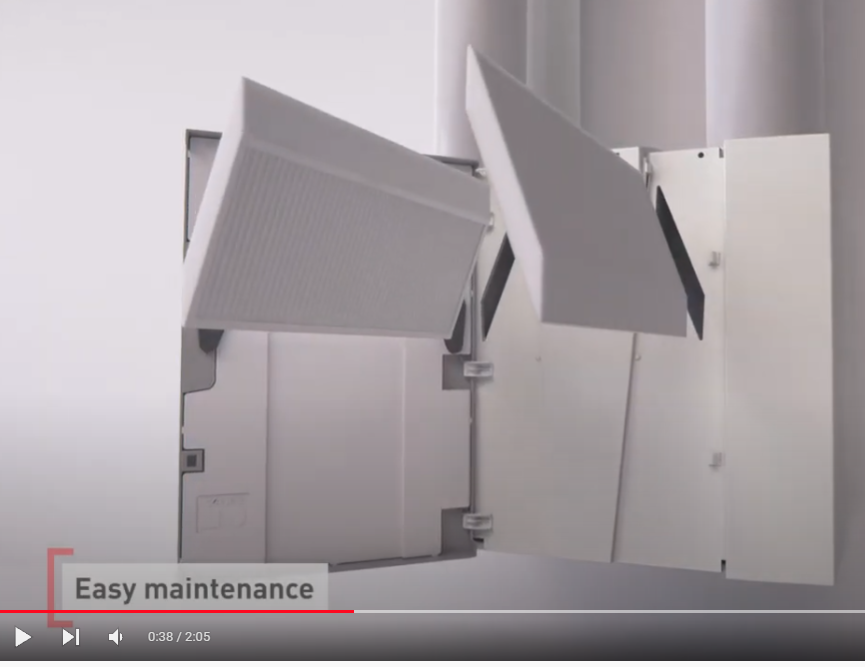
@Nickfromwales as you're familiar with these machines, I wonder if you would do me a MASSIVE favour and let me know what is the minimum space required in front of a flair brink 400 to change filters and service it? The filters sold on ventilation land are 510mm long so is it just that ones needs enough space to open the door and pull out the filter, as shown in the space image or are there other servicing that need to be done which would need more space than that 510mm depth in front of the machine?
-
Actually plumber recommended me to upgrade to the next size up softener because we were already on the limit for the size we had gone for and by upgrading the inlet and outlet on the softener would be 28mm instead of 22mm, so he thought this would eliminate any restriction to flow that the 22mm would have caused. We're paying a fortune to upgrade the TW connection so a bit more money for a larger capacity softener makes sense, although still shocked how much these things cost. I've been looking at Harveys and Kinetico. Any other brands worth considering? Interesting thread. I've contributed to it with my twopence - which is probably not worth very much. Not too worried about this as there are no bedrooms adjoining the pump room it is going in, as in the loft space it will just be the softener, the MVHR and the UVC. If it is noisy, I guess i can always box it in, but I doubt it will be.
-
Any advantage for toilet cisterns to be unbalanced/before PRV
hendriQ replied to Olf's topic in General Plumbing
Presumably this would depend on the differential between the pressure of your cold mains before the PRV and after the PRV. If there is a significant difference (and I have no idea what significant would be) then this could be quite an efficient way of diffusing some pressure that is going to get diffused by the PRV anyway and making use of it to send water to the toilets cisterns more quickly. If your PRV is high up in the property, e.g. loft, then the water will have lost quite a bit of head by the time it gets there, though of course it will gain almost all of that on its way back down after going through the PRV. What stage are you at? Can you take pressure readings before and after PRV so you can work out whether it's worthwhile? But could a possible downside be that if you have too much pressure taking water to the cisterns your cisterns will be louder? -
But if my plumber is going to balance the pressure of the hot and cold, any pressure lost in the cold going up to the softener on second floor won’t matter because the hot water has to do the same journey to get to the UVC which will be next to the softener. Or am I misunderstanding this?
-
My understanding is that most people put their water softener on the ground floor under the kitchen sink. I'm not sure why that is, but my plumber has suggested that as the unit is quite big and as the kitchen sink cold feed won't be softened water so that we can drink it, we might as well put it where there is more space, which is by the UVC on the second floor. This is also very close to all three bathrooms, though further away from the guest WC which will be the only cold outlet on ground floor to have softened water. Can anyone see any downside of siting the water softener on the second floor? The only possible negatives I can see are: Cold water pipe length to the two bathrooms on first floor will be a bit longer as cold water would have to go up from the stop cock on ground floor to second floor and then back down to first, instead of straight up to first; cold water feed to guest WC on ground floor will also be longer for the same reason, but presumably this isn't really an issue because the pipe run would be no longer than the hot water as that needs to go up to the cylinder first anyway, and as hot and cold will be balanced I shouldn't lose any additional pressure. Have I got that right? Or will there be some pressure loss? Our pressure is about 3 bar (sometimes falls slightly below this) but flow rate should make up for that as Thames Water is currently digging up our road to do our upgrade to a wider pipe that should give us plenty of flow. The only upside is that we gain quite a bit of space under the kitchen sink and make it easier for the plumber to install, so if there is a loss of pressure, perhaps it's better not to do this.
-
Paranoid about spontaneous failure of large skylight
hendriQ replied to hendriQ's topic in Skylights & Roof Windows
Update: builder already had some patination oil on site and has been meaning to do the flashings (which I hadn't realised had already been installed a couple of weeks ago). So we agreed he is going to clean them up with wire wool to remove the little carbonate that has probably formed in the last couple of weeks and then once it's dry apply the patination oil on both sides; After the rooflight goes in we are laying seedum trays on the roof, so now need to consider how to access the lead flashings to service them in future years. How often does one tend to need to reapply patination oil? If it is only every 24 months, do people think it's okay to walk across the seedum trays? Alternatively, I could leave a small gap along the roof just under an openable window on the first floor and fill that with gravel instead of seedum trays. This would then allow me to walk up to the ~1.6m strip of flashing that is angled towards the glass (the rest of the flashing is angled away from it) and apply patination oil. -
Paranoid about spontaneous failure of large skylight
hendriQ replied to hendriQ's topic in Skylights & Roof Windows
Yes, you’re right. Not sure how to solve that. Is it too late to solve it by applying insulated plasterboard to the inside? It’s not a passive house, but agree that thermal bridging is not ideal. At least it’s a breeze block construction, si not the best conductor of heat. -
Paranoid about spontaneous failure of large skylight
hendriQ replied to hendriQ's topic in Skylights & Roof Windows
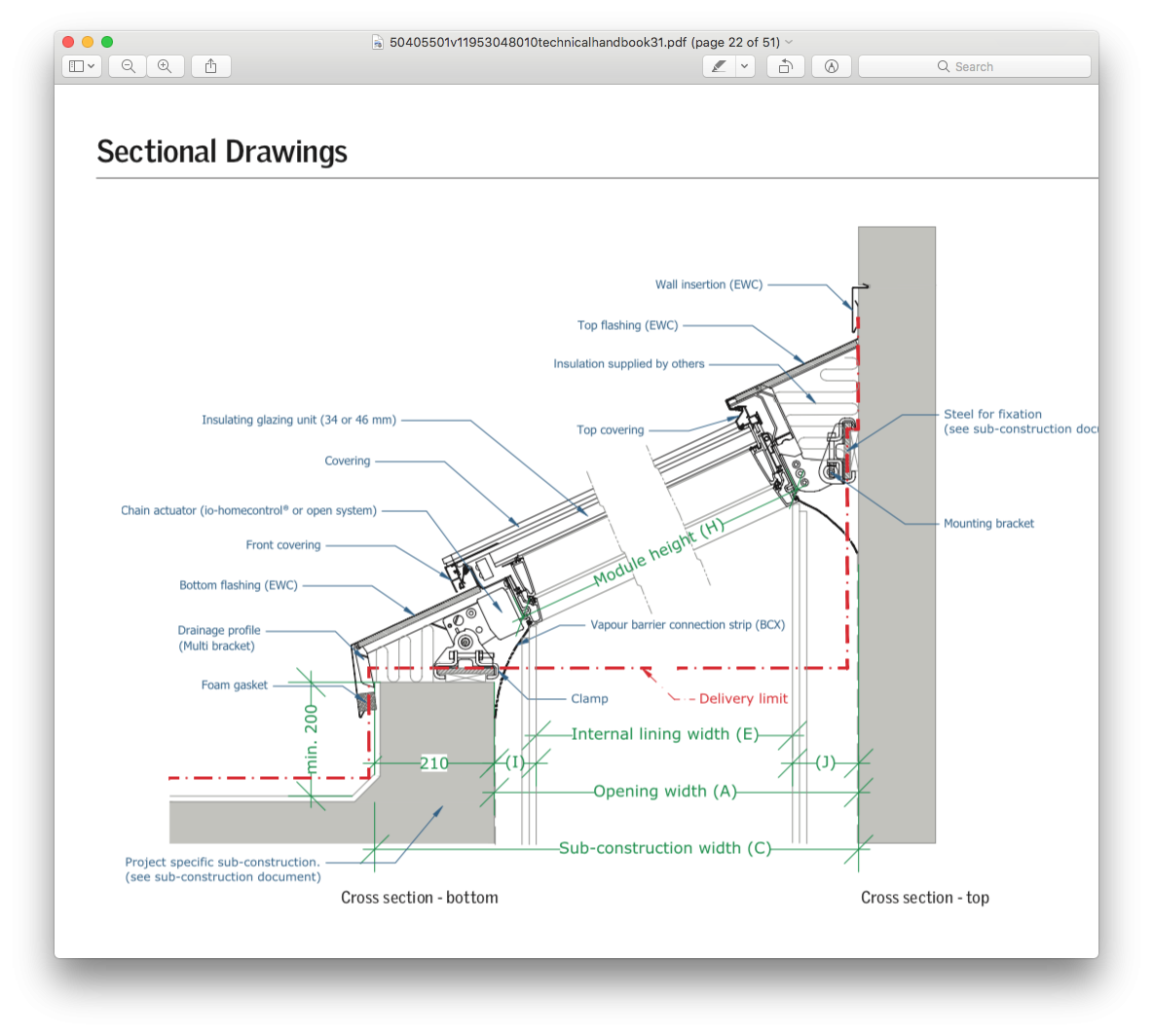
Yes, there are two sections to the design drawings. I have only shown one, which is where the wall is. The other one also has a flashing, but it will take water away from the glass down a fall in the opposite direction, so there shouldn't be any movement of rainwater from that flashing onto the glass. The wall you are seeing is a cavity wall, with insulation in the middle. The three sides of the upstand that abut that wall (the wall being the fourth side of the rectangle) are a timber frame constructions with PIR on all sides. Looking at the cross sectional design of the Velux product you've suggested, it also has a flashing (marked "Top flashing (EWC)"). See below. So I query what the difference is. I think it's that Velux flashings are made of aluminium and then painted grey. What's to stop me painting my flashing with an appropriate grey paint?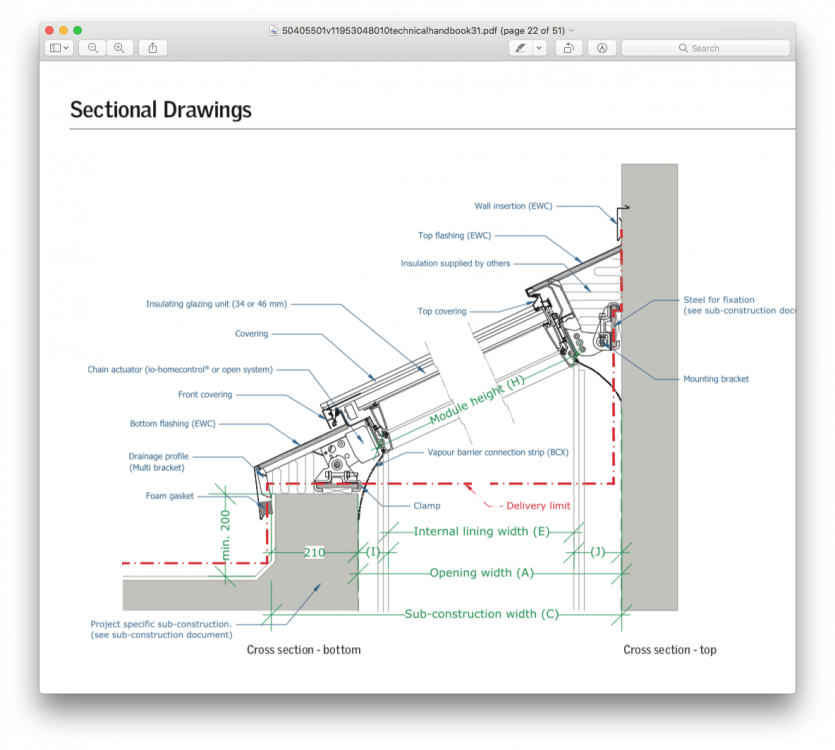
-
Paranoid about spontaneous failure of large skylight
hendriQ replied to hendriQ's topic in Skylights & Roof Windows
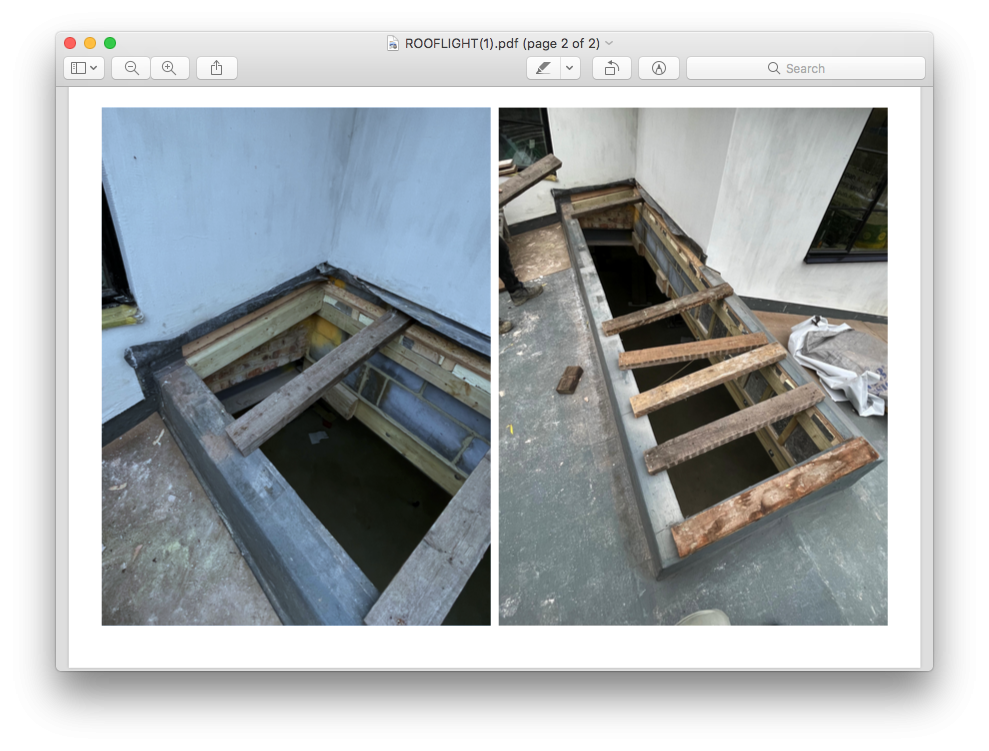
I haven't ordered the glass, so in theory you are right that everything is still possible. In practice changing things up at this stage is going to be prohibitively expensive. here are some pictures. Keep in mind the pitched roofs on either side AND the wooden upstand on the left and the top frame of the opening all the way around is ALL covered in a rubberised coating that also covers the pitched roofs. That coating insn't straightforward to re-do so moving the hole is not going to be cheap. Structurally, there are a couple of steel beams under either side of the opening. One of those beams supports both the first floor extension wall and will also support that side of the rooflight, whereas the other beam supports the rafters and the other side of the roof light. pictures: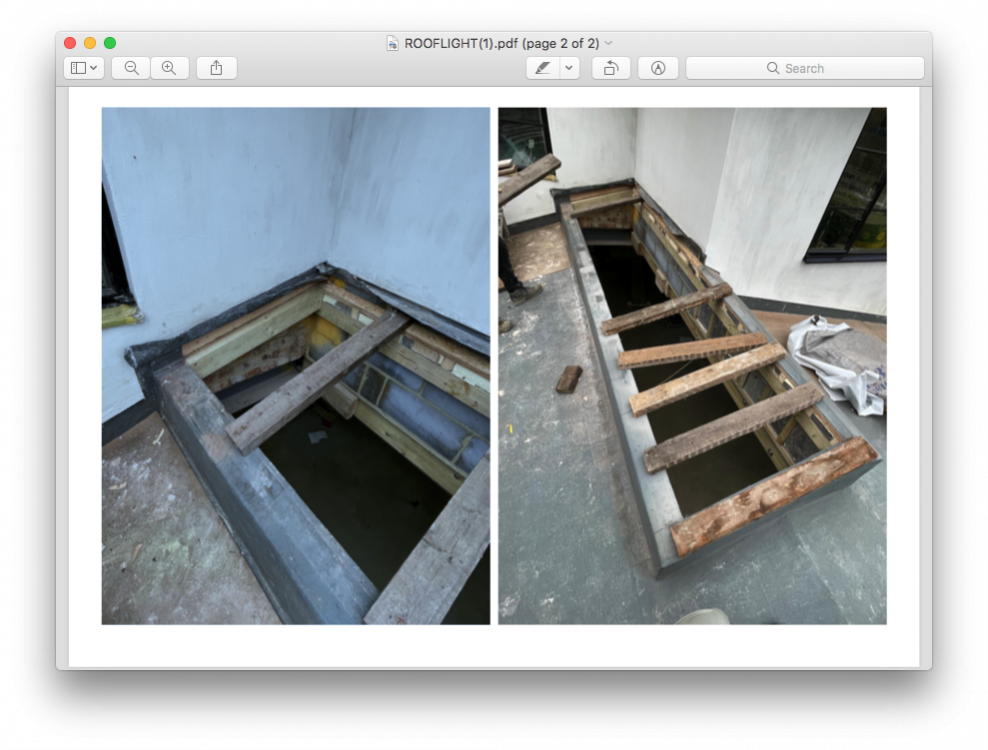
-
Paranoid about spontaneous failure of large skylight
hendriQ replied to hendriQ's topic in Skylights & Roof Windows
I'm just trying to understand what the least worst option is. The options being suggested here are that I should effectively change my opening and move it away from the wall so that I can fit an off the shelf skylight or modular system that doesn't touch the wall and therefore doesn't require flashing. I cannot really do that at this late stage because my roof has already been built, including a very expensive rubberised coating that has been applied, and the wall has already been built. So if anybody can advise on whether patination oil does what it says on the tin, then I think the solution is to apply two coats of that and then reapply every couple of years. -
Paranoid about spontaneous failure of large skylight
hendriQ replied to hendriQ's topic in Skylights & Roof Windows
Ok, so maybe it’s not as bad as I thought. The builder had thought about this and actually already installed the flashing into the wall, with the bottom hanging off the wall so that the skylight can be slid underneath it. The company supplying the skylight are also installing, together with some labourers from the builder’s team. There will be 6 men carrying it, so about 27kg each. A couple of the men are real hunks, like Brad Pitt as Achilles, so I’m not too worried about that. If they need to reach over the skylight to finish manipulating the flashing, they can build a small platform over it with scaffolding. Plenty of that on site, but it may not be necessary as I completely forgot that only part of the skylight goes up against a wall. Maybe about 1.5m of it. The rest is fully exposed on three sides (both long sides and one short side). It is a shame I didn’t know about this streaking before, as there appear to be lots of cheaper non-lead alternatives in the market. @joe90 you mentioned your lead had been oiled to prevent staining. Which product did you use for that? Maybe that’s the solution here. Is it something like this: https://www.trulypvc.com/roofing/flashing/lead-roll/patination-oil-500ml?gclid=CjwKCAiA1uKMBhAGEiwAxzvX92OO5zHc1bteNM-FPCuQWsY3_s0sxFT1HtHTv7tkRrBDBFr_vyQCDhoC47cQAvD_BwE -
Paranoid about spontaneous failure of large skylight
hendriQ replied to hendriQ's topic in Skylights & Roof Windows
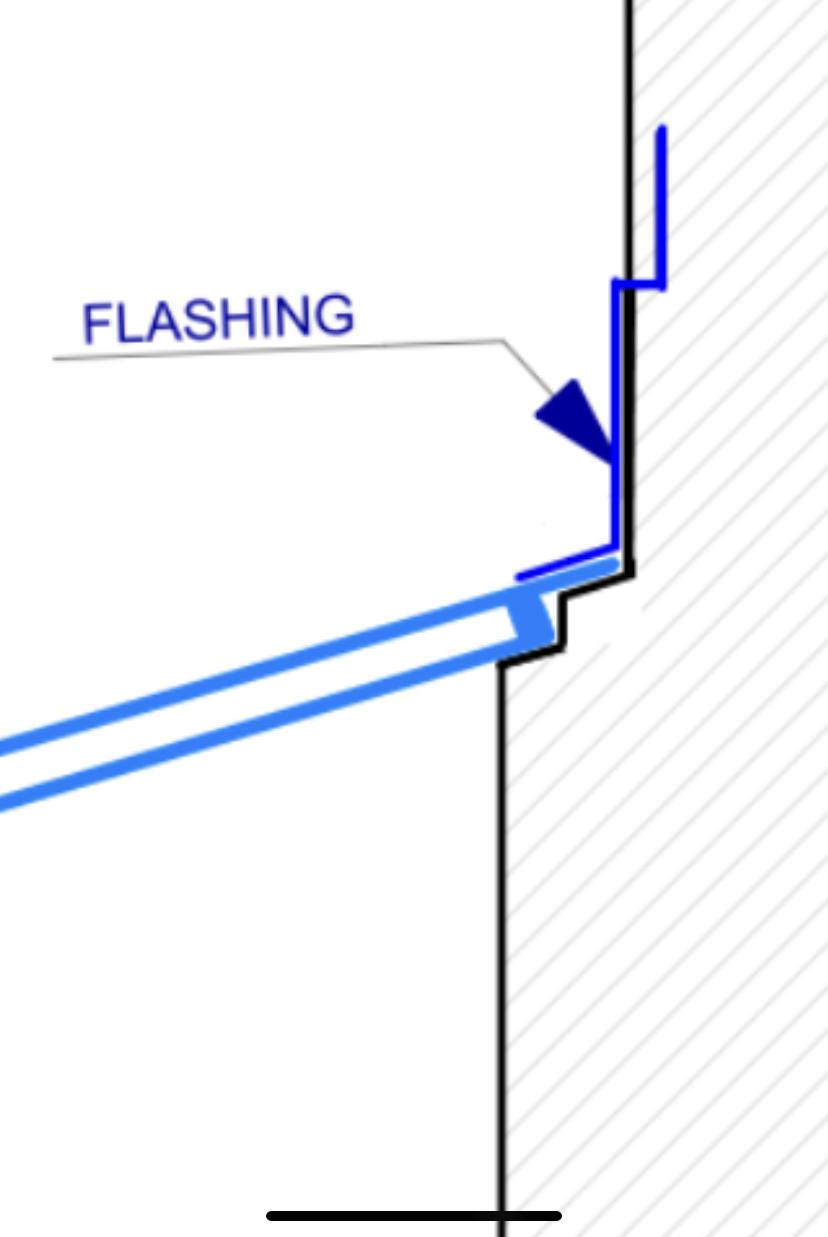
Sorry, really out of my depth here. This is a drawing of what is proposed: i now realise the angle is much more than 4 degrees. Can somebody explain the staining? How much staining will there be and how far will it spread across the glass? If it is just a couple of cm, it shouldn’t matter because there is a a plasterboard overlap internally that will hide some concealed internal LED lighting strips as well as prevent from unseeing the edge of the roof light.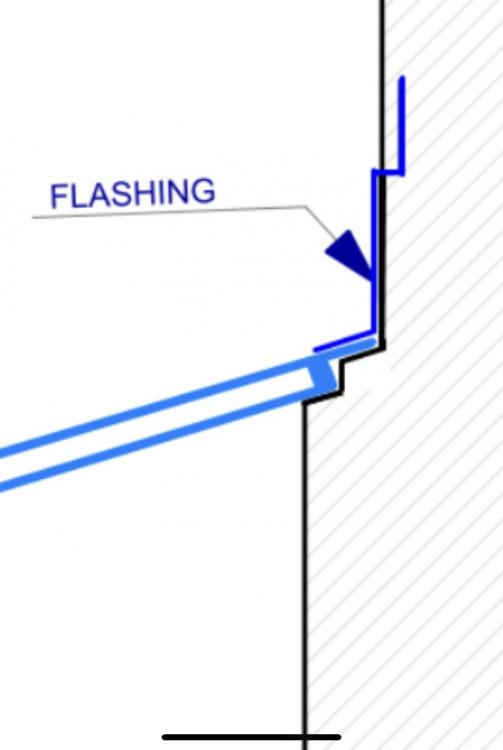
-
Paranoid about spontaneous failure of large skylight
hendriQ replied to hendriQ's topic in Skylights & Roof Windows
With wired glass, would the wires be visible, given that it will be almost 2m from head height. Because if not, that might be a great idea. -
Paranoid about spontaneous failure of large skylight
hendriQ replied to hendriQ's topic in Skylights & Roof Windows
No, it’s got a 4 degree fall to one of the sides. The other side is leaning against an adjacent wall, sort of being built into the render on that wall, then the job is being covered with lead flashing. The upstand is fully insulated with PIR. There will obviously still be heat loss, but this roof light has a u value of 1.2 so not dissimilar to the rest of the glazing in the house which is between 1.0 and 1.2. I was a bit annoyed that the architect instructed the builder to use superquilt as the main insulation in this part of the roof, as reading into that I see it’s not that great. -
Paranoid about spontaneous failure of large skylight
hendriQ replied to hendriQ's topic in Skylights & Roof Windows
I agree with that. If I could afford laminated, I would go with that. But my point was that applying an aftermarket film wouldn’t achieve the same thing. It would be pretty redundant. -
Paranoid about spontaneous failure of large skylight
hendriQ replied to hendriQ's topic in Skylights & Roof Windows
Thinking this through a bit further, why is this the case? If I cover the inside of the glazing unit with film, the film will be stuck to the underside of the skylight. I can't see how that film is going to keep the failed glass from falling down. The film is just very thin plastic. Even a sheet that is about 2m2 is not going to weigh more than a couple of kilos. Compare that to the gravitational potential energy exerted by 140kg of glass, this film might actually make things worse. Instead of the glass falling as particles or 1cm cubes, all those pieces would be kept together by the film resulting in a heavy weight that would doubtless cause serious injury. The skylight is about 2m above head height. So not a huge height to let it accumulate speed under the force of gravity, but enough that I would prefer it to fall as particles than as one large sheet. Am I missing something here? -
So went through my heat loss calcs again and came to about 21.25kW for heat requirements of the house, though this is an estimate so could be out by 10% or so (though my margin of error is also an estimate, lol). Then I checked the requirements of our 300L UVC indirect cylinder and that is 15.5kW. So adding those two up gives 36.7kW. The boiler range we're going for comes in either 25kW or 32kW. Appreciate it's rare we'll have to heat the UVC from completely cold at the same time as running the heat at full blast, but I thought 25kW just seemed a bit too low and the boiler installer was pushing me to go bigger given the very impressive modulation range of the Vitodens 200W series. Am I making the right decision?
-
Speaking to my plumber today about @Nickfromwales’s idea of using a radiator running to infinity wherever the UFH is on, as a pseudo buffer. He said that with a boiler that modulates to 1/17th of its output, given we are having a low loss header, this is unnecessary. He is happy to do it, but he thinks I’m wasting money and space on unnecessary over-engineering. I’m going to have a gas system boiler, probably rated at 25kw (though he is trying to persuade me to buy a bigger 32kw boiler, “to be on the safe side”). Thoughts on whether the low loss header negates the need for any type of buffer in this case?
-
Paranoid about spontaneous failure of large skylight
hendriQ replied to hendriQ's topic in Skylights & Roof Windows
It’s actually a bit lighter than I thought, because it’s made from 6mm glass. -
Paranoid about spontaneous failure of large skylight
hendriQ replied to hendriQ's topic in Skylights & Roof Windows
Quote I have for both panes to be toughened and heat soak tested is £3100. Quote for lamination as well on the bottom pane adds £850. Waiting for another quote from a different company, but this one includes installation which is handy because this skylight is a little awkward to fit given it weighs 170kg and is so long. -
Considering the combimate mentioned above by @Russdl and comparing it to alternative to keep a boiling water tap running limescale free in a hard water area. One I'm looking at made by Intu which has fairly good reviews and is about half the price of a Quooker. One of the only bad reviews complains about the boiling unit starting to make a lot of noise after about 5 months of use. After a back and forth with the supplier which confirms the appliance is being used in a very hard water area, the supplier states that the noise is caused by excess limescale and that the user should descale the boiling water tank and replace the filter every 3 months to prevent too much limescale build up. The tap is about £550, but the replacement filter cartridges are £32 so that is £128 a year on filters. The Combimate is now £175, not sure how quickly I'd need to buy more of those magic phosphate balls, but surely significantly less than the excessive use of filters, though surely I'd still have to replace the filters occasionally, maybe twice a year. So it's a toss up between phosphate in my tea and more use of filters. Query how much a filter can filter out limescale though.
-
Paranoid about spontaneous failure of large skylight
hendriQ replied to hendriQ's topic in Skylights & Roof Windows
Are the films easy to apply DIY? It's a rather large skylight, so might be tricky.