BartW
-
Posts
349 -
Joined
-
Last visited
Everything posted by BartW
-
Thanks for the replies. There is a quick and easy fix to thermal bridge created by the kicker block, and that is Marmox. It works out bonkers expensive at the quantity we would need, and I simply am unable to go for that. But very useful insights regarding the trench blocks. Thanks!
-
Hi guys, How do you normally resolve the untidy telescopic floor void vents on a timber frame house construction, i.e. single 140mm wide foundation block? These telescopic vents are great, but only if you have got a cavity and outer skin to put vents through. Not on this one however, as it is 140mm stud + cladding on vertical and cross battens. My neighbour is putting a "bollard vent" system, but I find it quite pricey and involving with the number of ducts needed. Anyone done it smartly? I was thinking of extending the telescopes vertically to hide behind the cladding, but then tere would be the vertical part visible right above the ground. Unless, of course, I run cladding right down to the floor. But that's not great for cladding... Any ideas? Thanks! Bart
-
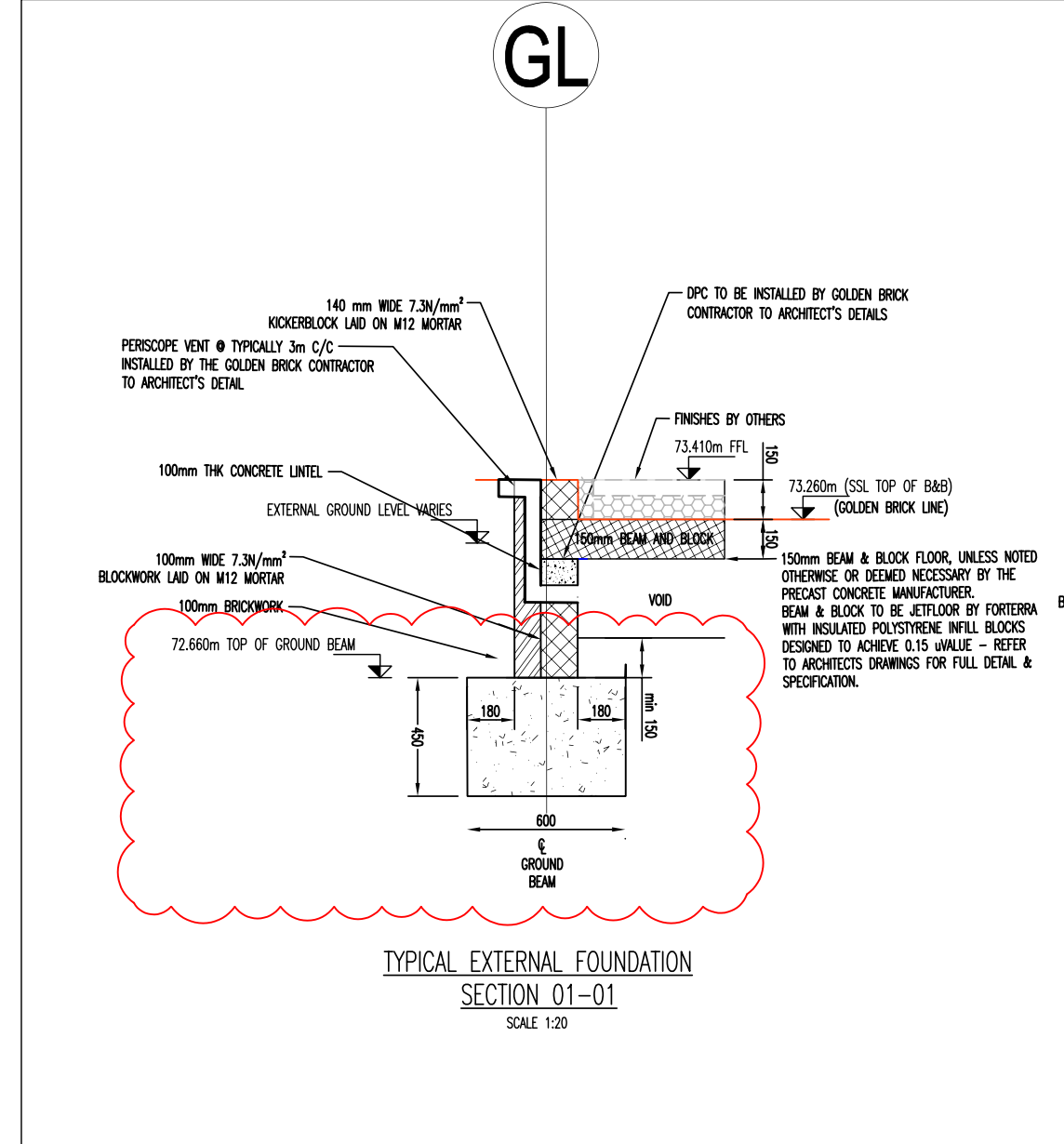
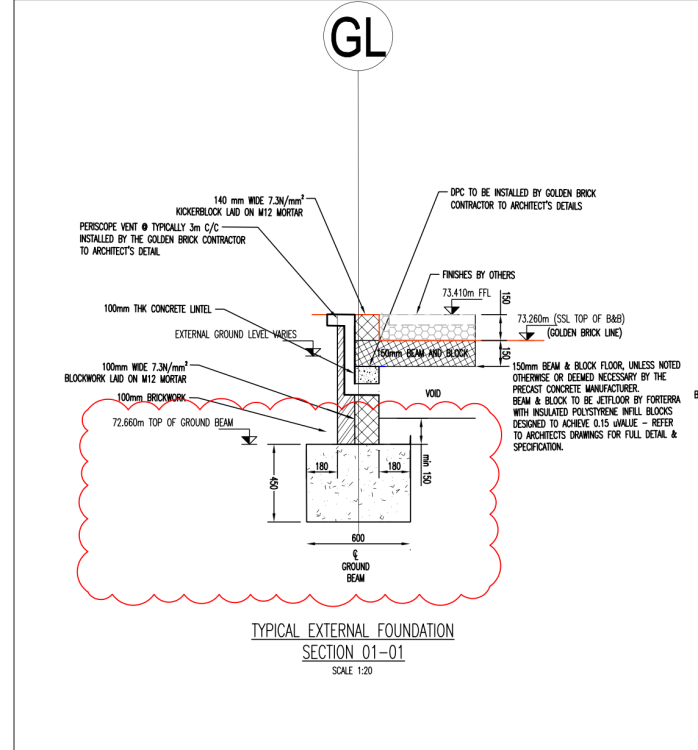
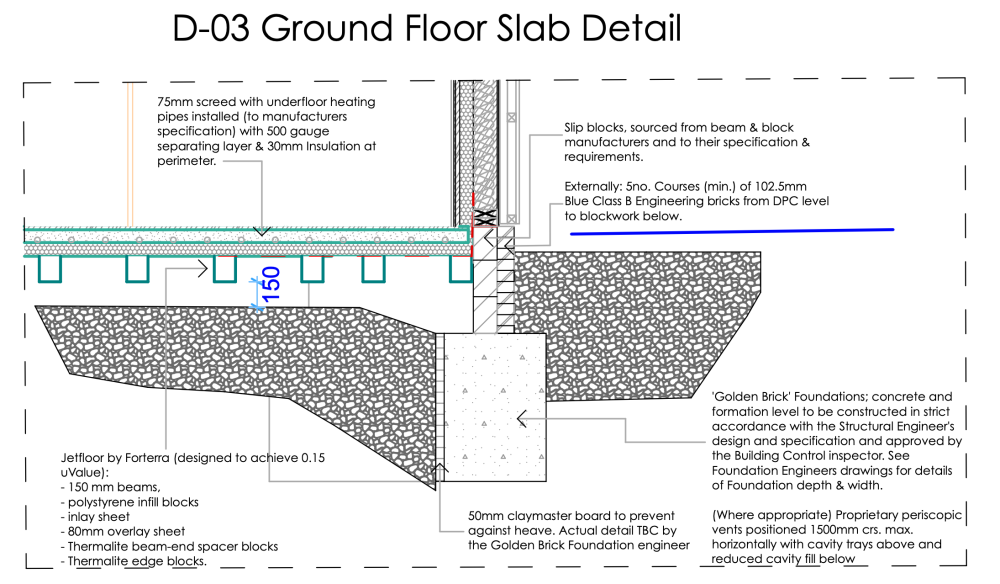
Hi, I am getting ready to have the foundation laid, and whilst studying the engineering plans there is no reference to which particular block to use, other than 7N strength. I am particularly fond of Thermalite due to their weight, and superior uValue vs concrete block. Forterra (the Jetfloor supplier) provide a standard detail using their 300mm thermalite block. We are building a TF, so 140mm in our case. The product I would use is the one here: https://www.forterra.co.uk/product/thermalite-aircrete-hi-strength-7/ Structural / foundation designer detail is as follows: Any pros and cons pls? Thanks Bart
-
Thanks All, I seem to be getting somewhere. I have dug out an old BPC proposal based on our previous floor plans. Attached here for comment. I also followed the link to the other thread and found some useful spreadsheets, one of which I edited to suit my circumstances. Attached here. It is becoming obvious that in order to keep remotely close to the 2m/s velocity rule, I will need 2 ducts to the kitchen. I am also intrigued by the flat ducts. I could supposedly use that in all bedrooms and go vertically, and install outlet on the walls? Is that wise / advisable? It would certainly give more flexibility. But what about quality of those ducts? Solarcrest pretty much slated all other products, but theirs (which from their veeeery vague quote, and inability to answer what exactly it was for). I am only guessing it is in their best interest to sell the equipment, but I was unable to compare their quoted prices, which although I was that close to parting with my money, got me go off the boil completely... Anyway, Airflex Pro is apparently the thing that Solarcrest swear by. Funnily enough, it can be bought from BPC too (and others I suspect). But it only comes as 75mm pipe. Is quietvent ok? it would allow more air / less speed. What about the ducting offered by Paul? Apparently "theirs" is the best. A lot of confusion here! Please, talk to me again BPC20-15284 BART WILCZYNSKI_Rev01-A3.pdf MVHR_Sizing.xlsx
-
Hi everyone, and thanks for the responses. a couple of answers and clarifications: - yes the unit will be positioned within the warm loft - TF supplier designs and provides steels with fabrication - we did not specify comfocool, but someone did indeed offer q450 and someone else stretched it 600. Why? - joists are pozi 254mm high - should I design it myself, or pay someone to do it? - I was planning on drilling “minor” openings for cables later myself. Is that a bad idea? - my major worry is that if I get someone to design this system for me, they will just map the routing of the pipe where it occurs to be. Will I end up with drill patterns that will make the steels impossible to pass any engineering? - can anyone spot a hand with regards to pre and post heater as well as enthalpy? - is comfocool worth it? - ceiling heights are currently set at 2.4m. I worry that adding any amount of dropped ceilings would jeopardise the feel of airiness in the rooms, plus we are running floor to ceiling glazing in most rooms. Not bad if this would create a hidden pelmet for curtain tracks and blinds - how do I calculate the unit size? If Q350 flows 350m3, supposedly that is at a certain pressure? What pressure to aim for? And how do I calculate those? many thanks again bart
-
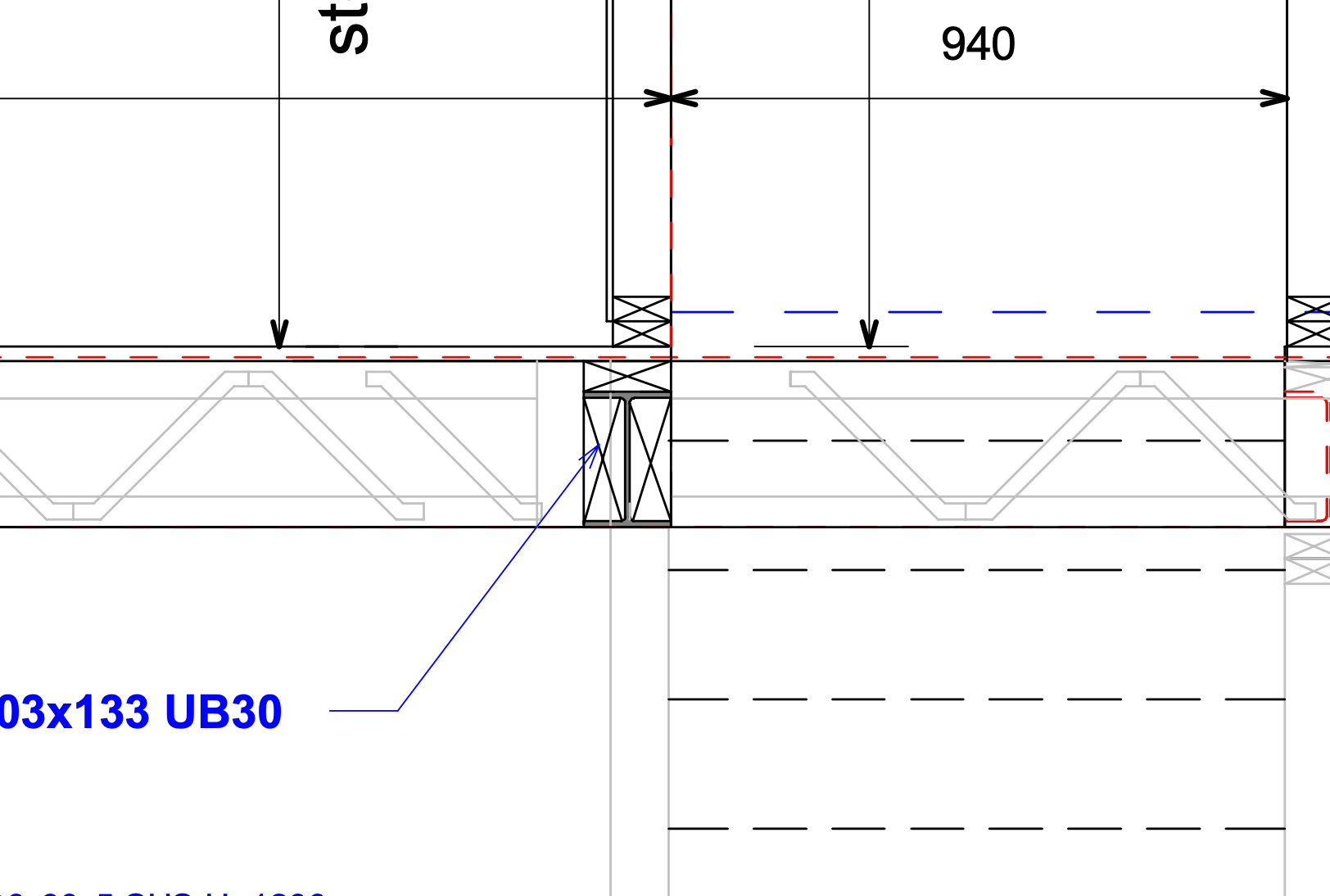
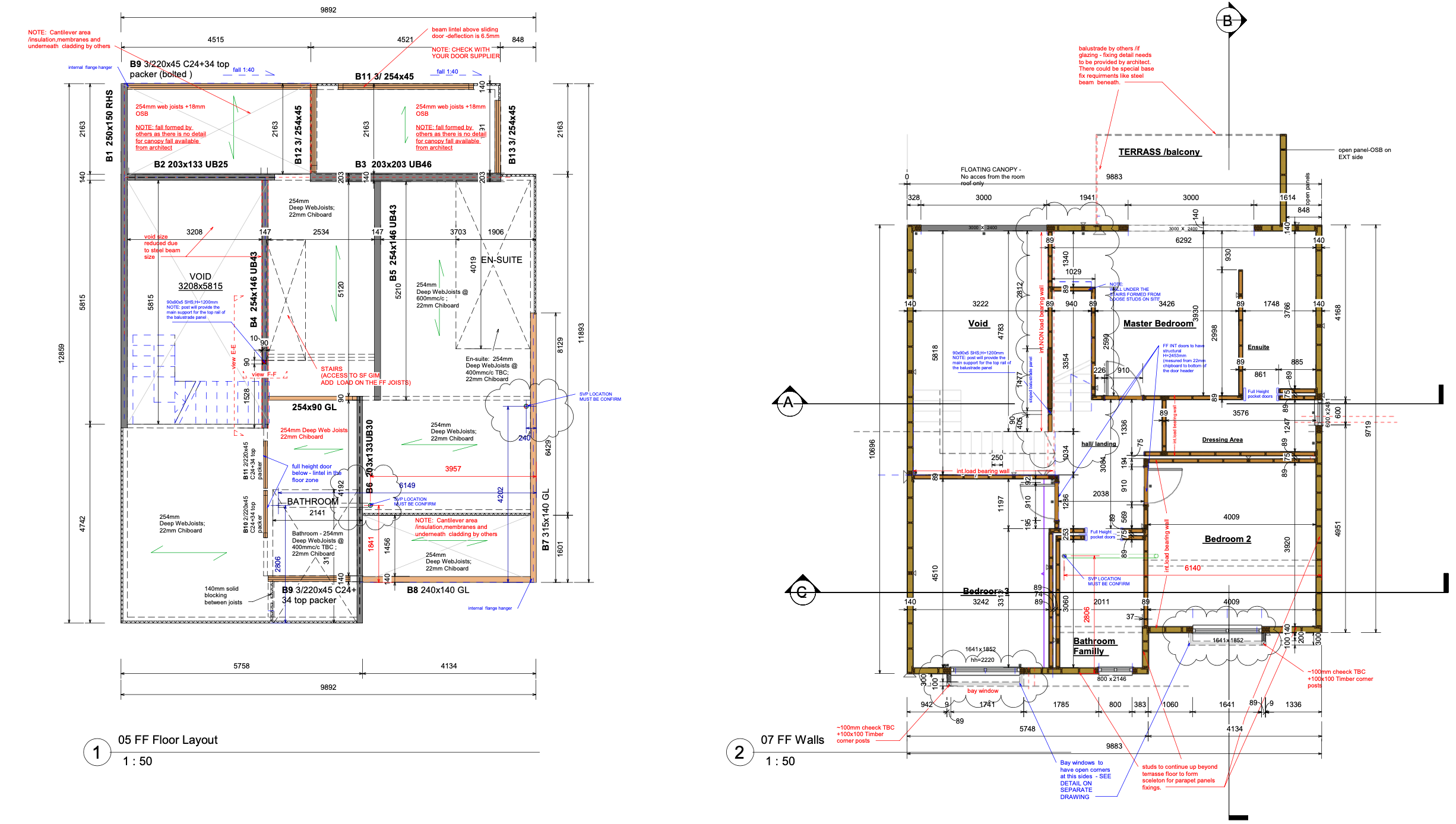
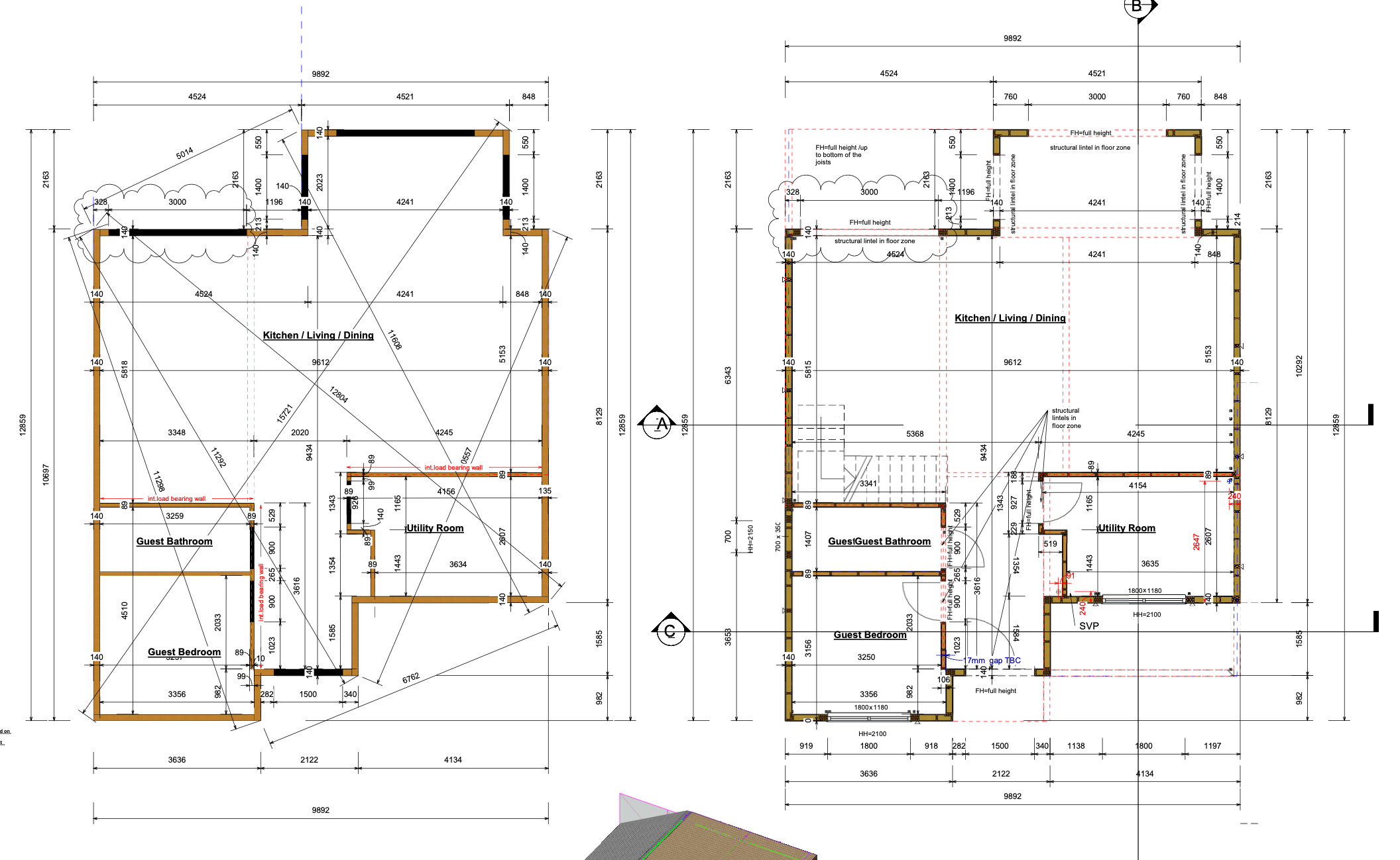
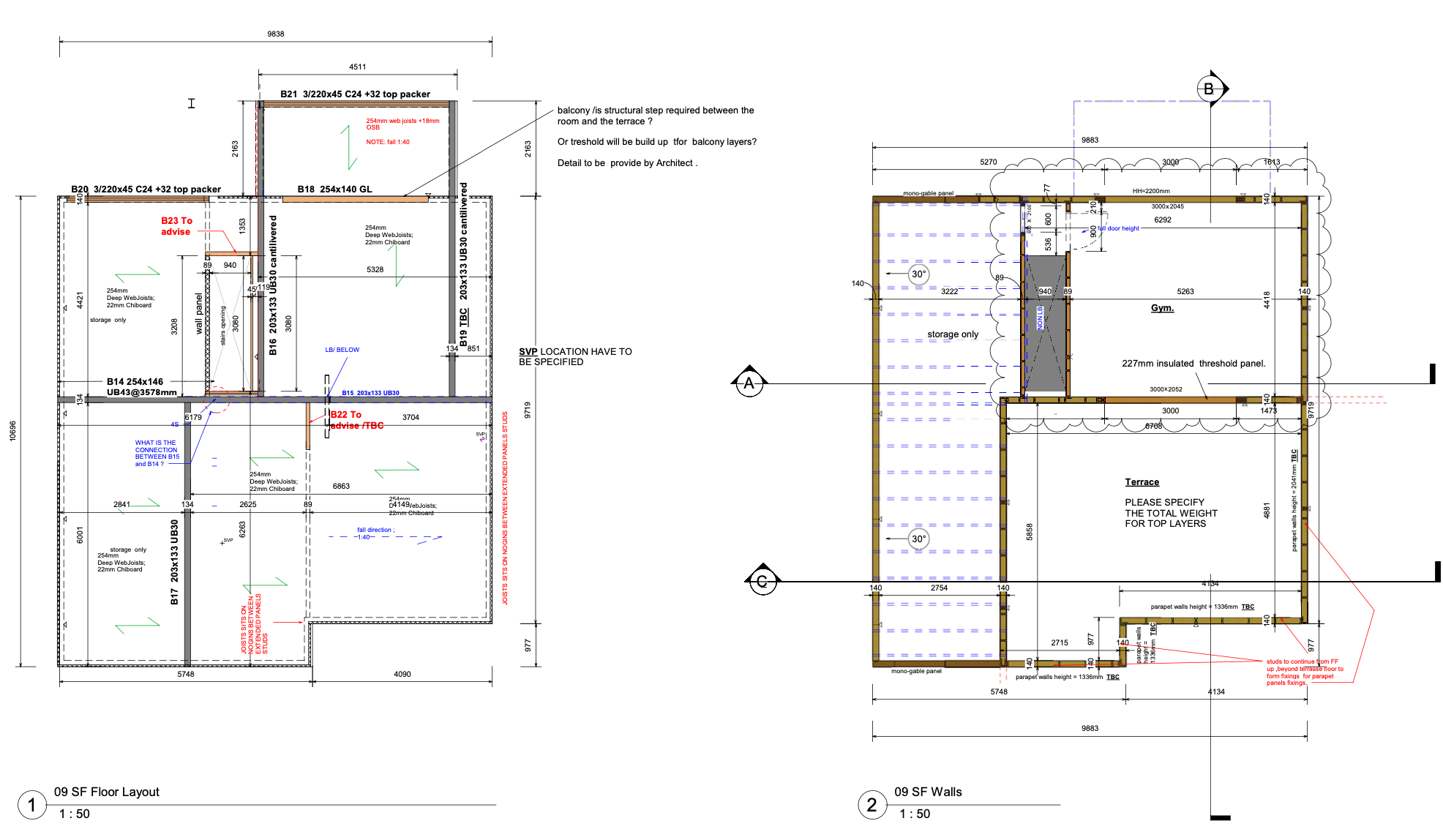
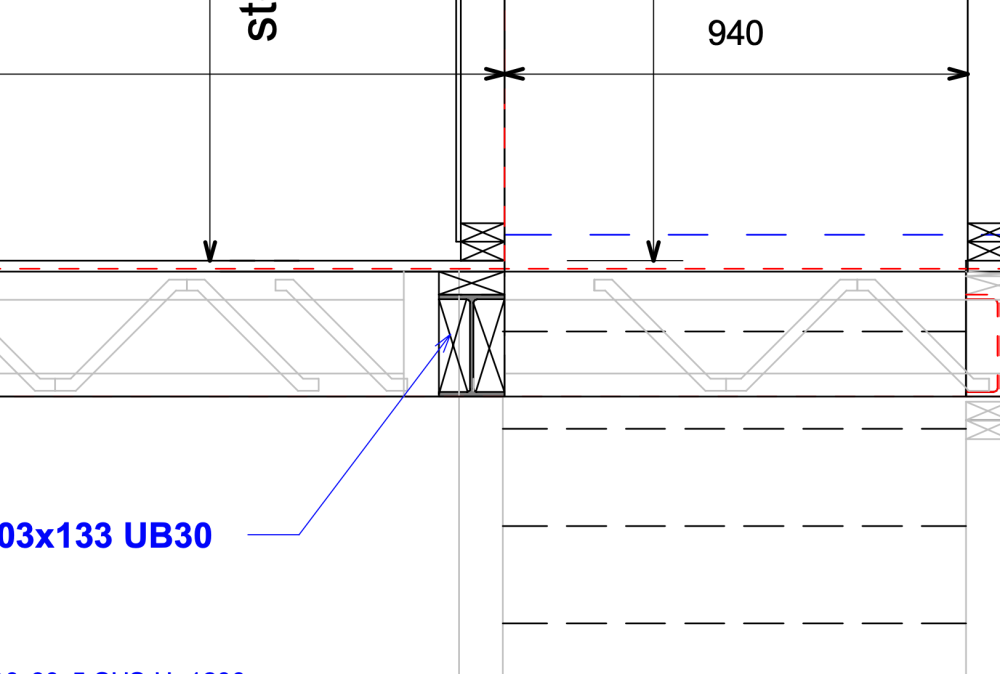
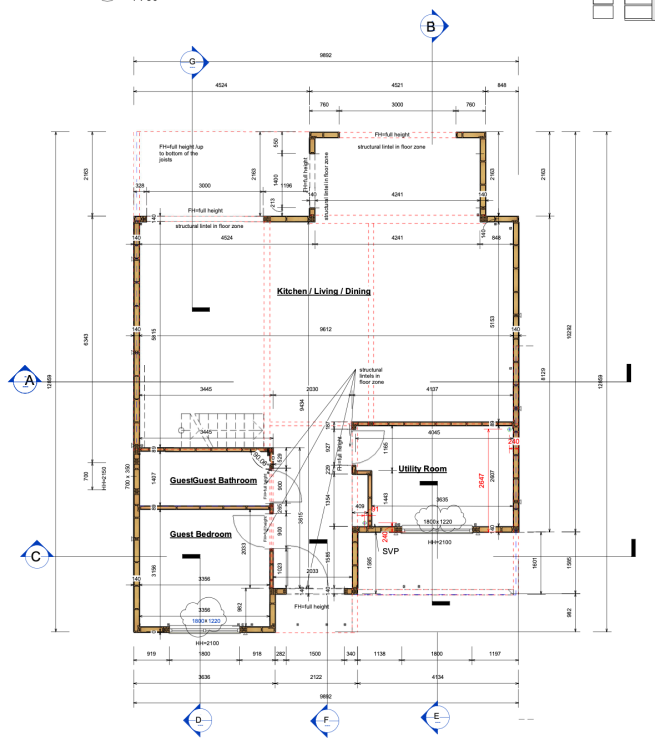
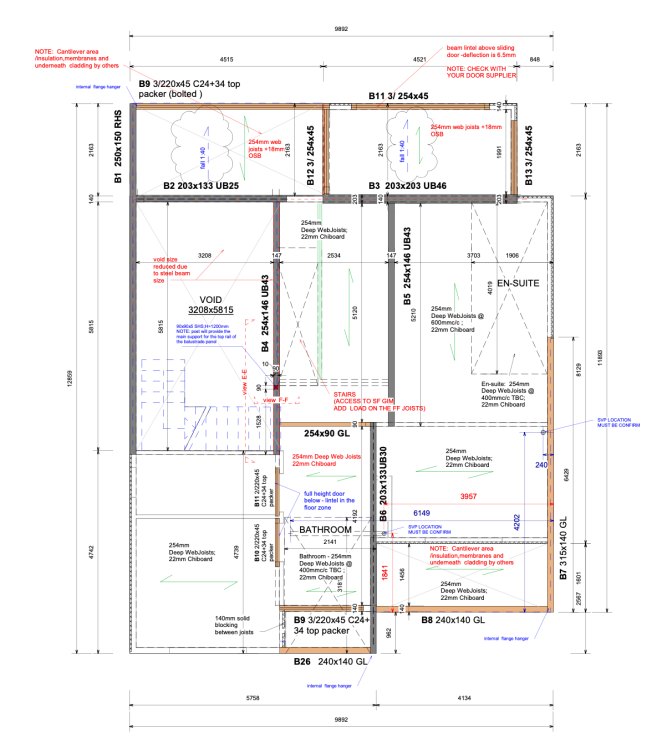
Hi guys, Our timber frame project is soon to go live, but the design involves a lot of lateral steels, which cannot be omitted. I posted before, and someone mentioned notching of steels. This is something we are considering, but there likely to be a lot of those, and I worry this will weaken the steel by the time it has been drilled with a multitude of holes... I spoke to a couple of MVHR design companies, and they all seem to be forthcoming, and willing to offer their design service (which of course is of some value), but what if they end up designing a multitude of steel penetrations that will simply not be practical... Am I better off just waiting until the frame is up, and try to find best routes, and passages that I might be able to incorporate into other voids, for example above joinery, and other "design elements"? Or, as an option would it be possible, or in any way practical to run round ducting, and change to flat oval over the steel sections (whilst removing a 2" packer above it), then change back to round? There are a few possible places where such thing may be achievable. It would involve me being on site, when the frame is going up, but out of all things, I think I would prefer it. Also, interestingly the brief we have is: - 180sq m GIA - 510m3 of air because of double height ceiling above the living room opening One company suggested Zehnder Q350. Their calculations, and how they arrive at it below: Funnily enough, another supplier suggested Q450, and yet another Q600! That is pretty much full spectrum of ranges. One could almost guess that any unit "will be ok"... Also, one suggested a pre-heater, but we are in Oxfordshire, so frosty days are rather none. Post heater? Is this to add to heating ability? Enthalpy? I have been reading about it, and the more I do, the more confused I am. ComfoCool sounds great, but one party is VERY sceptical about the benefit of that. World of unknowns, as you can see... HELP? A brief idea of our plans and steels: Removal of packing above steel as seen below? Plans: Showing ground floor, with double dotted line where steels in the floor zone above: First floor plan (with steels clearly shown on the floor level of this floor, in the floor zone): Second floor plan (with steels clearly shown on the floor level of this floor, in the floor zone):
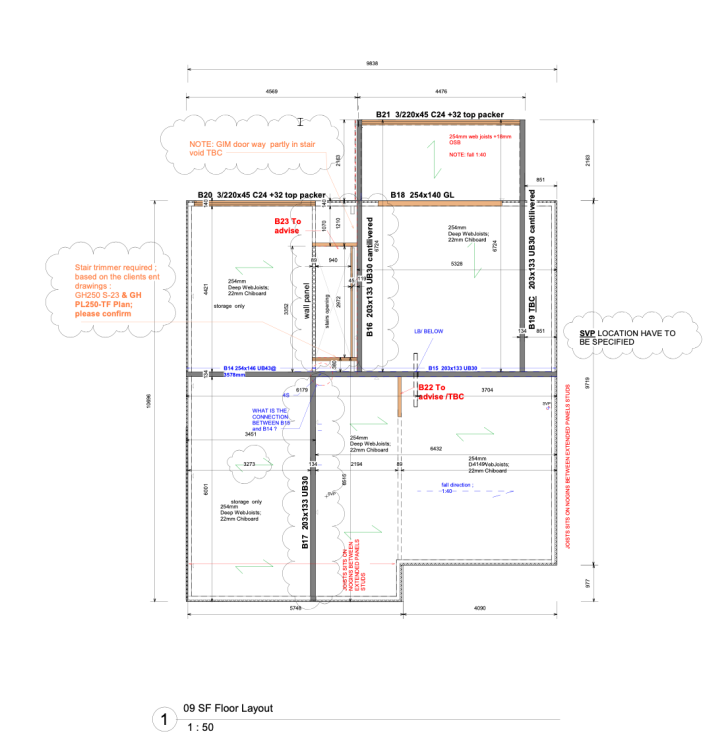
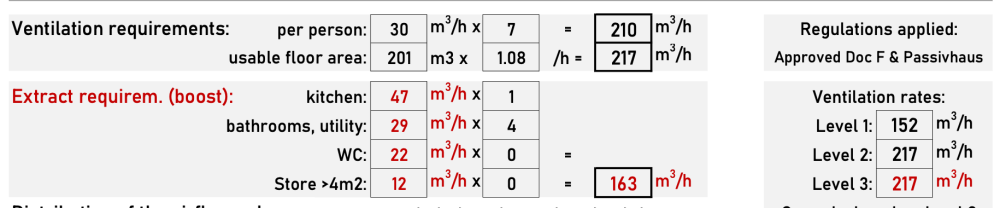
-
All I know is they brand it as Bison System by Forterra. The beams that is.
-
Had I pulled a finger out 12 months ago, this quote would have been just under £3.5k ...
-
I have literally just commissioned Jetfloor for our 0.15u Value build. Complete supply kit with beams and the insulation for £4.4k @ 98sq m. It was more cost effective than Tetris, and £150 more than Millbank (but they would only achieve 0.16u with the similar buildup).
-
Our build is at Graven Hill, and the foundation has to be delivered exactly as per the design. The stretcher bricks are what I have considered, but I would need 220no @ £2 each, so about cost neutral with the omission of the 2" timbers. I suppose my direct point is that I designed a foundation facing brick plinth that does nothing other than cost me money. I wish I had realised earlier, but I suppose these things do happen...
-
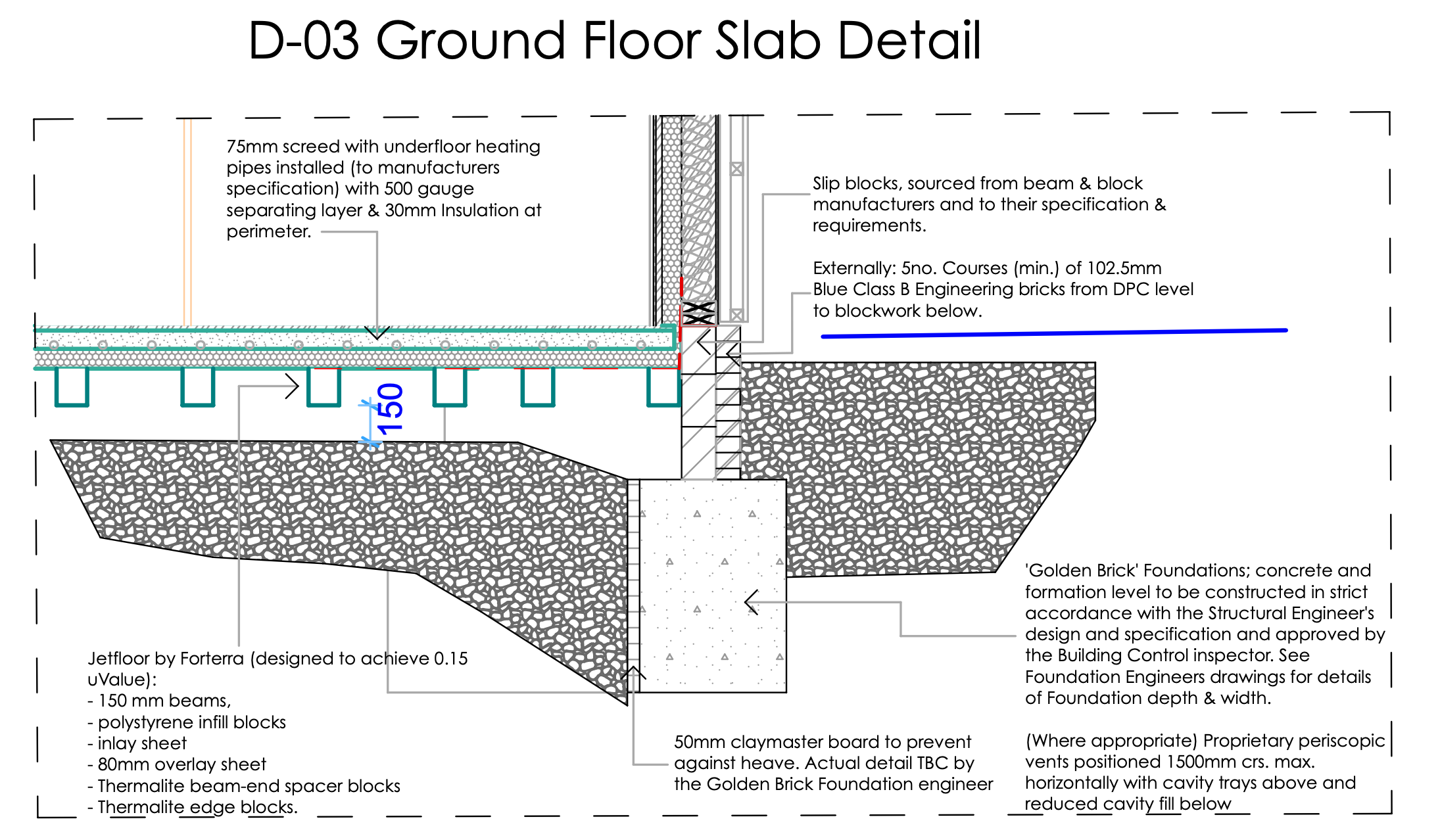
Hi All, About to start on site, but having a moment of rethink on the foundation to timber frame detail. I specified a 140mm dense block + kicker to marry up with 140mm TF. I then planned on vertical 2"x2" and 2"x2" horizontals, to then accept 20mm charred larch. This was to create a big enough cavity to hide gutter pipes from various parts of the roof. At the foot of the above was going to be a 102mm black facing brick. I am now thinking that I have made a rather expensive mistake by doubling my rain screen cladding timber supply cost about £900 + VAT in excess of what it could be with standard 1"x 2" battens, and £1300 + VAT in external brick skin supply cost, and associated labour to at least £2k + VAT worth... At the same time, changing the design and messing with the paperwork / planning / mortgage / solicitors is likely to cost as much. Should I just: - use standard timbers and create a chamfered flashing detail above (now) proud external brick face? - or just not change and live with it? Thanks! Bart
-
MVHR ducting routes...
BartW replied to BartW's topic in Mechanical Ventilation with Heat Recovery (MVHR)
Haha, unfortunately we are already building to the max permissible 8.1m with 3 storeys, so any more and I would be hitting the ceiling with my barbells when working out -
MVHR ducting routes...
BartW replied to BartW's topic in Mechanical Ventilation with Heat Recovery (MVHR)
Our ceiling heights are only 2.4m, also the interior is going to be quite (very?) modern looking with floor to ceiling glazing so this would not work here sadly, but good idea otherwise. It is a bit more complex than this. I would have gone for spreader plates under the deck, but the Timber Frame supplier has a programme that does not allow time for me interlacing with plates and pipes. Moreover, the heat output of plates below 22mm deck is a lot less than pipes sitting directly under the finished floor layer. So overall, better performance and reaction time. I thought of routing in the MFC deck, but worried it would be quite laborious, and would weaken the deck integrity. EPS adds to the overall sound absorption too. Ground floor will have in-screed pipes, and the overlay is on 1st and 2nd floor. -
MVHR ducting routes...
BartW replied to BartW's topic in Mechanical Ventilation with Heat Recovery (MVHR)
we are doing overlay eps400 with alu coating on top of the mfc deck as simpler to run pipes. -
MVHR ducting routes...
BartW replied to BartW's topic in Mechanical Ventilation with Heat Recovery (MVHR)
I remember specifying deflection at max 8mm, but that was 14 months ago, so I should revisit. I think they are 600c/c but perhaps beefed up enough to assist. I shall check engineering notes when the structure has been approved. -
MVHR ducting routes...
BartW replied to BartW's topic in Mechanical Ventilation with Heat Recovery (MVHR)
@Nickfromwales yes I have engaged with English Brothers regarding this, and it sounds that they should be able to help in this regards. Thanks for advice again -
MVHR ducting routes...
BartW replied to BartW's topic in Mechanical Ventilation with Heat Recovery (MVHR)
This is an example of not reading the first post I have not thought this would be even possible. My assumption was that drill holes in steel were only acceptable for small holes for likes of 40mm waste pipes, or cables. Nothing as big (and numerous), as MVHR ducts. But I will certainly enquire! -
MVHR ducting routes...
BartW replied to BartW's topic in Mechanical Ventilation with Heat Recovery (MVHR)
Hi, We are merely 180sq m (90 GF, 70 1st, 20 2nd floor). Sounds that I will end up with a lot of boxed out walls in the process, as the steels span the full height of the floor zones, so not like it is going to be possible to go flat ducting anywhere. -
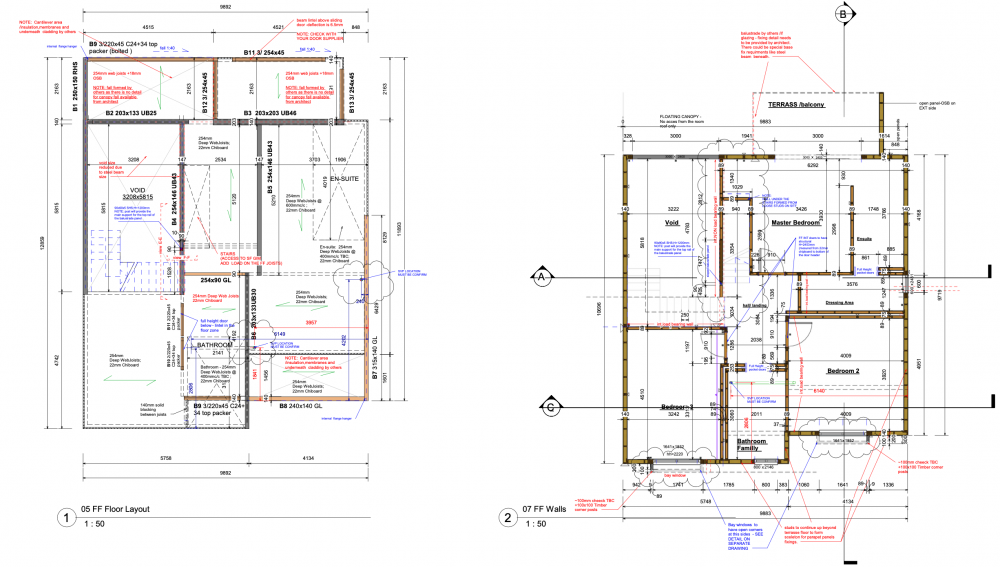
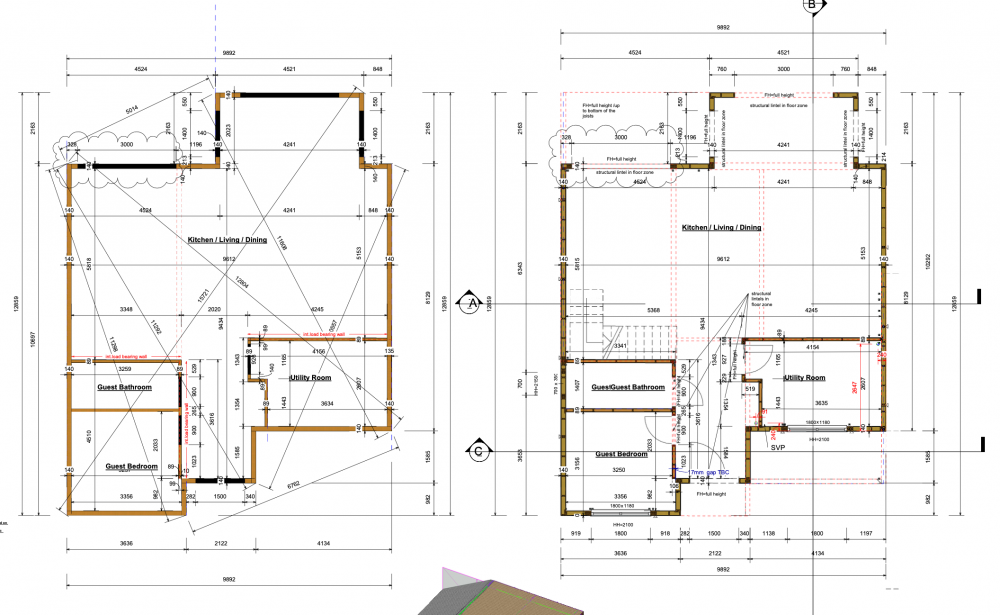
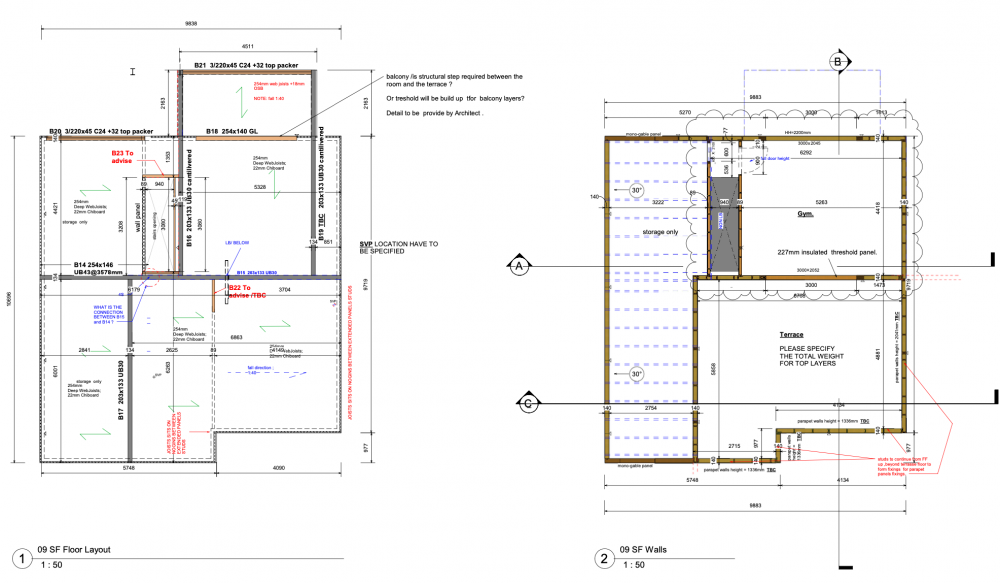
Hi All, We are a few months away from starting the hard graft on site, but I am already trying to "guess" the possible ducting routes within the building. My worry is that our timber frame structure has got a lot of steals and glulams in floor zones. One plan was to position the unit in the loft space. Alternatively, fit it inside the utility. With steels cutting across both floors north to south and west to east, I can't see how, or where else I would have all pipes running between floors and rooms without adding quite unsightly boxings in numerous locations. See the plans for more clarity. Any hints please?
-
I frequently do London to West of Poland. 860 miles. Calais to Destination bit often achieved in 8 hrs. Mind, that is "flying" where possible. And in my previous car, fuel refills every 90minutes...
-
would you say it’s in line with what you expected? Assuming you had gas before, how does that compare?
-
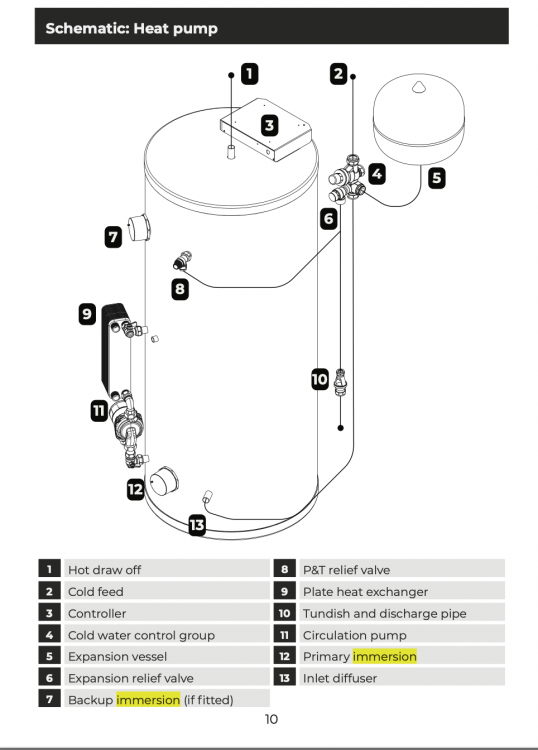
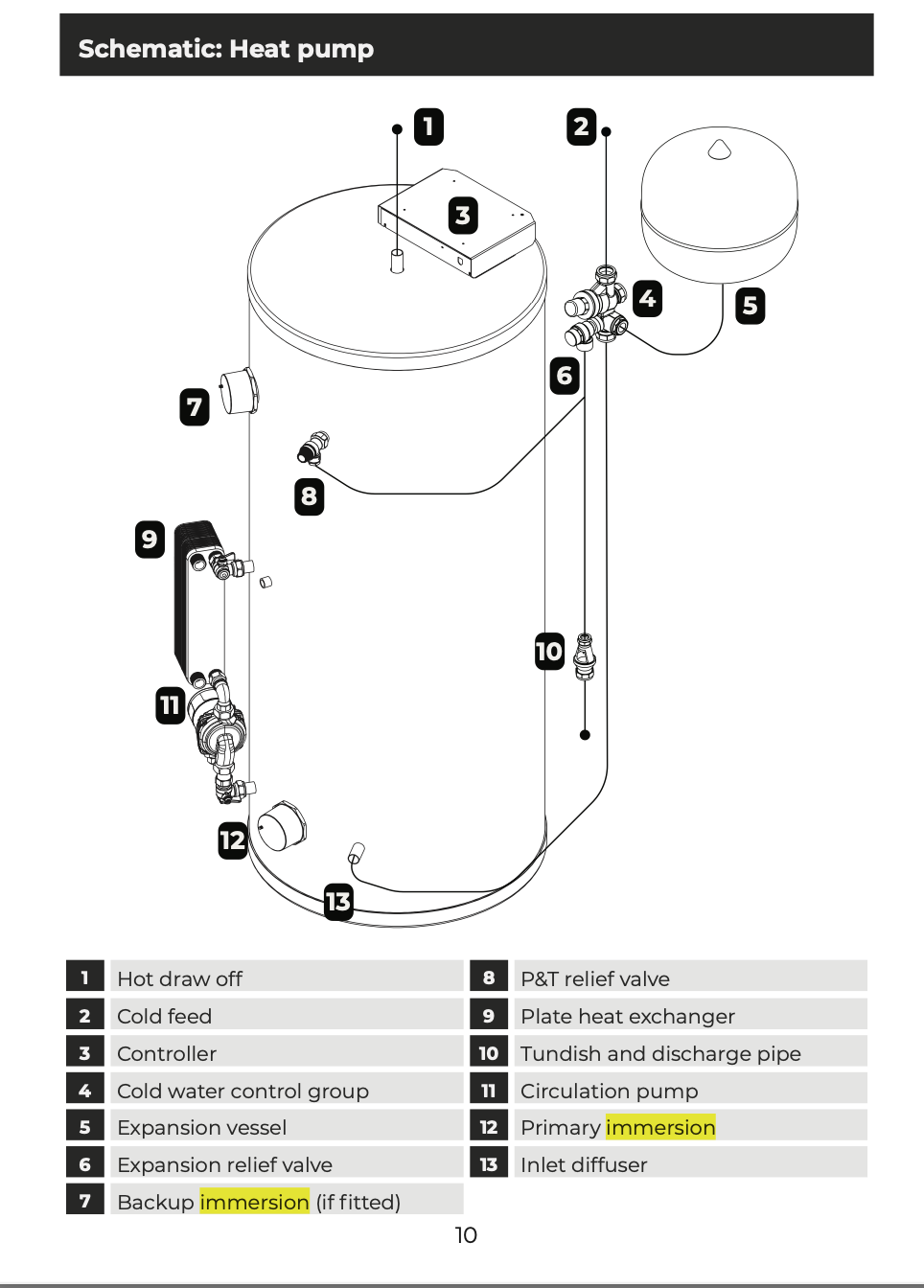
Sorry I meant to say Immersion when I pointed at element no 11 on their diagram. I see what you mean. It may defeat the object in the first place. Yes, sorry, Zypho is just one of the brands. I guess the trouble with running back to the UVC is extra lengths of pipes, and possibly transfer heat losses?
-
Ouch, I bet that hurts. Bicester to Penzance is about 5 - 6hrs. Newcastle is 5 Horus north from here. Done both as single journeys. It was tiring to say the least...
-
Oh dear, best don't read this if driving We live on site, so come for tea next time you are around 12hrs every weekend sounds like fun. Are you doing coast to coast?
-
Ok, I thought the heat exchanger was fitted as standard, as per the below: Unless I am happy to keep it running at a lower temp, right? That's what the Mixergy say on their website. Hmm... That's true. By the way, how have you got your Zyphos connected? Are they direct to the mixer, or teeing into the primary heat circuit?