bissoejosh
-
Posts
299 -
Joined
-
Last visited
Everything posted by bissoejosh
-
Mixed responses! Electric is going to be costly as I'm not on dewalt batteries so I think that probably writes it off. I'm sure it's the way all the brands will go though - just a shame Milwaukee don't do a 90mm nailer at the moment. I'm curious to find out more about air so that can be tonight's research with a bottle of something cold...
-
Any particular brands of air gun to be looking at? I don't mind having a compressor on site and it means I can add other tools pretty cheaply, fool proof is good! Noted about the glasses.
-
Our frame is ordered and I still need a nail gun or two - recommendations would be great. Paslode 350/360 seems the obvious choice and should sell easily when finished but If I'm missing other options please say! Should I be considering air guns and a compressor set up as it'll only be used on one site so less of an issue with mobility etc? Thanks
-
Nice idea, will keep it in mind if I make them on site.
-
I certainly do! @Visti Our BCO said we needed 50mm air gap beneath any sheet metal when we originally proposed standing seam. If this is incorrect I can lower it easily. Glad to see my detail isn't far out, I need to look at guttering specifics at some point
-
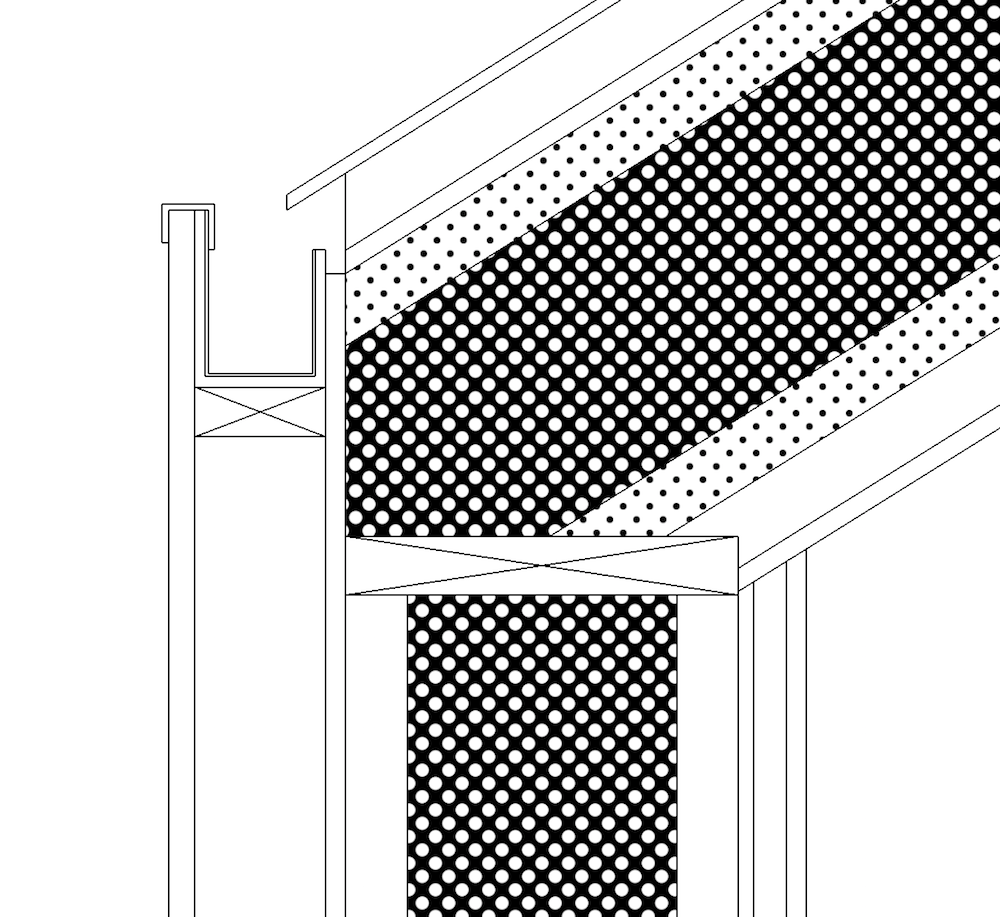
I've just ordered some samples myself, the only issue is we are hoping to use 0716 anthracite colour which I can't see as an option with the Marley product. @Crofter which brand did you go for? Just trying to get a feel of whats available. Interesting to see your roof edge @Visti have you detailed the concealed guttering to go outboard of your wall plate or sitting above it? My current aim is to batten and then counter batten to give 100mm clearance from the outside of our frame sheathing to the cladding and then fit the gutter in this space (pic below). The advantage is that should the gutter flood it will only drop down the cavity rather than above the wall plate and insulation below. I keep revising this though and I need to calculate required gutter size as I may make it in situ as per @Russell griffiths suggestion and line with fiberglass.
-
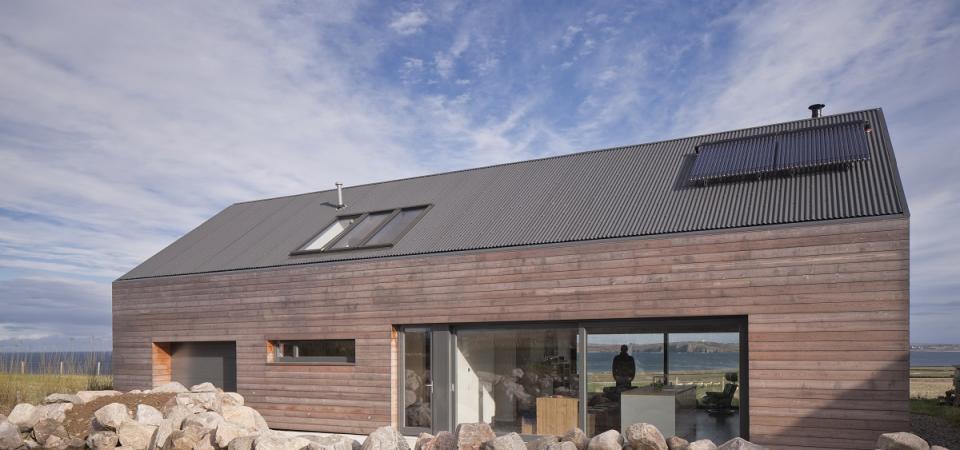
We've opted (subject to planners agreement) to switch from a standing seam roof to a corrugated alternative very much like the attached image (Dualchas design) . We're surrounded by farms and it's very much the local style. I've started looking at material options and have come across a Marley Eternit fibre cement board profile solution. Claims of noise reduction, reduced condensation and increased lifespan sound good but what would be the downsides over traditional steel options and has anyone used similar? This might be relevant to @Visti who I think is planning something similar.
-
This is exactly what I intend to do between our blockwork lower GF and timber frame upper GF in order to tie the two together - out and around the posi joist top chord before tucking into the wet plaster coat on the masonry below. For my upper GF where we have our beam and block my thinking is DPM/Radon out under the sole plate to cover the radon in the walls aspect. I'll cut a separate strip of DPM as per @A_L suggestion to make the join between airtight board and the floor DPM. Anyone see any issues with this?
-
That sounds more like what I had in mind. When you say sole plate DPM is that the same as your floor one or a separate strip?
-
So take the DPM out the building under the soleplate then add a second layer / strip on the inside which joins the floor to wall?
-
What is the preferred method of linking a floor level airtight layer (DPM/Radon in this instance) to the wall layer (Vapourboard or similar coated OSB)? My plan was to bring the DPM up the inside face of the external walls and tape it to the Vapourboard but I've seen several drawings where the DPM looks to head out under the sole plate instead, in which case how is the sole plate sealed for air tightness? Apologies if this is a basic question but I'm struggling to find confirmation with google/forum searches.
-
Thanks, that's all very useful and the prices are better than I've found during my initial research.
-
Looks great. What wood will you be using?
-
Shou-Sugi-Ban? If so I'd love to see the concept/result. I'm currently battling with my partner over Siberian Larch left to weather or be brave and ask the planners to consider a charred alternative.
-
I hope so? https://www.ribaproductselector.com/Docs/0/11530/external/ag943027.pdf Anyone else seen a more recent one? I've not heard anything to suggest they aren't BBA approved.
-
Decrement delay is certainly something to consider but if there is no BBA cert as per @Simplysimon then that decides it! I wonder what the issue is given polystyrene is such a common insulating product.
-
Thanks, I hadn't see that before. Certainly suggests its possible and a lot of the advantages are similar to cellulose.
-
I've been watching some of the Charlie Luxton build blog videos and have to say his house looks fantastic. I noticed he used I-Beams fixed externally to his block work wall and then chose to full fill them with pumped insulation. What interested me was his decision to use EPS beads instead of Cellulose. My question is does anyone have experience of using EPS beads in purely timber frame construction and how does this compare with pumped cellulose which is our current plan? Thanks
-
I did my own and it's pretty straightforward although fairly inaccurate I think. It gives an interesting insight into the system if you do your own. This might help:
-
Definitely worth checking, if they've been loaded/stacked or handled incorrectly they could have been damaged. I was told by our supplier that the beams can't handle very much unsupported overhang and if picked up incorrectly they can crack really easily.
-
Just had a read myself - awesome!
-
Beam and block,
bissoejosh replied to Russell griffiths's topic in General Self Build & DIY Discussion
Thermal performance, cost & depending on the type of build, a potential issue around sole plates. We've got beam and block for a large part of our build, it's fine and was the only viable solution but we're aware of the downsides and have had to work out solutions to some of the issues. -
Foundation Cost and requirements - is BC being too picky
bissoejosh replied to hmpmarketing's topic in Foundations
1500mm for a slab must be a typo surely?! -
Cost of creating 20 meters of site access driveway.
bissoejosh replied to epsilonGreedy's topic in Project & Site Management
Our digger driver is £32 an hour all in for a 4cx JCB so not far off your numbers but won't do half days, delivery for most plant that we hire is £25 each way. All adds up! -
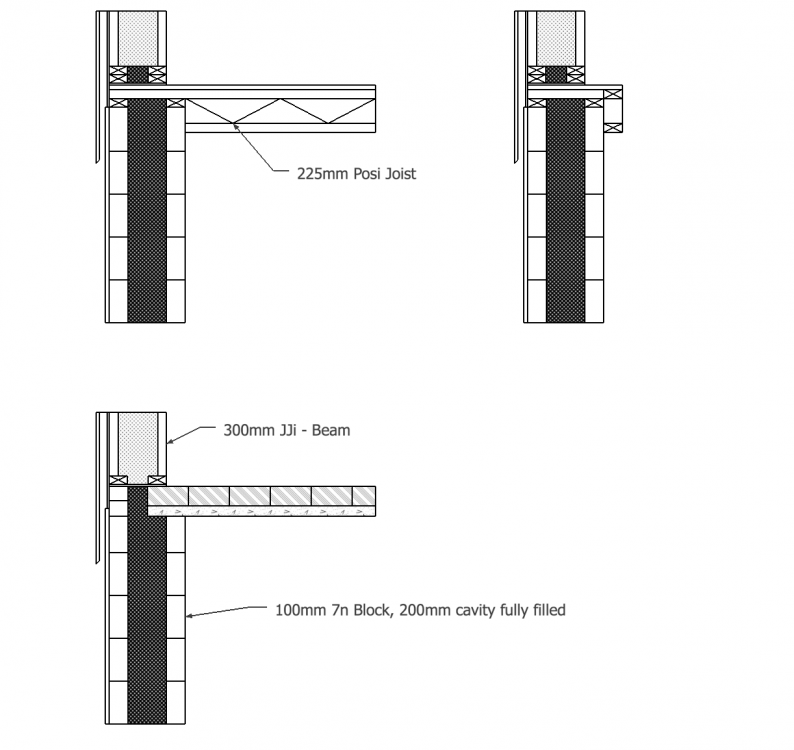
We're laying our external beam and block elements at the moment, all going fine. Whilst loading the bays I've realized that potentially I could use beam and block above our basement/lower ground floor. It would sit between the inner skins of our cavity wall and project/overhang 100mm in to a 200mm full filled cavity. This would provide the necessary support (beam and block guys are OK with it projecting a max 155mm) for our 300mm frame going above without bridging the cavity at all. Compared to our existing posi detail this is an improvement as there would always be a minimum 100mm of insulation whereas the posi top chord is currently detailed to run across to the outer skin so a small cross section but a bridge none the less. The main advantage I can see is that we would be able to run our preferred choice of flooring and UFH across all of our upper ground floor whereas previously we had to consider the join between beam and block and posi deck. My questions are what downsides does a 1st floor beam and block have with say a 70mm screed? How soundproof is it compared to our current proposal of 225mm posi joists? Services are certainly an issue but our lower basement level is pretty small and I think I can provide the necessary runs through internal walls rather than ceiling lengths. Access to install is easy as the HIAB could drive right upto the building. Detail attached for reference. Thanks