


steveoelliott
-
Posts
396 -
Joined
-
Last visited
Everything posted by steveoelliott
-
Swapping from UVC to Combi
steveoelliott replied to steveoelliott's topic in Boilers & Hot Water Tanks
So not performed any calculations yet and our current system boiler (Vailant Ecotec 637) is running fine. It doesn't appear to cycle frequently and with a crude estimate (double yours), it isn't too far off the mark. Probably don't need bigger for the CH and you are likely correct that larger would be wasteful. There isn't a problem per se. Water pressure does fluctuate between 2-3 bar at different times of day. I have a PRV with gauge on the incoming main. If we run the bath tap on full then other water outlets are majorly impacted but the same also applies for cold but not completely unusable. The reason for the consideration of swap is owing to an issue with the UVC which Baxi have agreed to swap with either another UVC or Combi Boiler under warranty. I then thought having a combi would mean one less thing to maintain, service or have the potential of leaking. It is however clear that a combi boiler is going to be a downgrade in our performance. I have no issues currently but fear I could going with a combi. I appreciate all the helpful advice and guidance folks have given. -
Swapping from UVC to Combi
steveoelliott replied to steveoelliott's topic in Boilers & Hot Water Tanks
That’s interesting, I need to look at calculations. We currently have a 37 kW system boiler running 21 radiators. I said 20 yesterday but I forgot one. Our house is around 2500 square feet. -
Swapping from UVC to Combi
steveoelliott replied to steveoelliott's topic in Boilers & Hot Water Tanks
Thanks all for your feedback. I wonder if a 40KW, 42KW or even a 50KW comes close. At Center Parcs they had a 50KW Worcester for the lodge and that did a decent job with two baths / showers. -
To cut a very long story short, I’ve been offered by Baxi the choice of a replacement 210L UVC which is currently heated by our system boiler or alternatively a Baxi 36KW combi. Initially this was going to be a 40KW combi but the largest they manufacture now is 36KW. We have 20 radiators, 5 bedrooms, 1 bathroom, 1 ensuite and a downstairs toilet. Our water pressure is ~2 bar so that’s the biggest gating factor even with a cylinder. If the bath hot tap is on then hit to any other outlet is very slow. i had thought of going to a Combi as it’s one less thing to go wrong and be serviced annually. In addition, as our UVC is in the loft, it’s always worried me it leaking etc. I became concerned that swapping to a Combi may be an issue when I wa visiting my parents today who have a Worcester 30CDI combi. When running their bath tap, I was surprised at how much cooler their hot water is. Its of course very cold today 0C but I had expected it to be uncomfortable to leave my hand in the hot water. I suspect swapping the cylinder may be the best approach after all.
-
OK, so my plumber came today and for the first time I reproduced it with him in the loft next to the cylinder. I had him out to replace the NRV, T&P and EV. Figured I'd make sure everything had been done but after hearing the noise he told me it is definitely coming from inside the cylinder. On another group a plumber suggested that the breakup of the baffle can cause this noise as it catches / releases. Anyway, I've contacted Baxi to get a replacement.
-
Guidance on Planning for a Potential Project
steveoelliott replied to steveoelliott's topic in Planning Permission
Some very good points here. Thank you. -
Guidance on Planning for a Potential Project
steveoelliott replied to steveoelliott's topic in Planning Permission
This is all excellent advice. I am delighted that the process should be much less expensive than anticipated. -
On one of the houses I currently own, I have a significantly sized rear garden with the plot extending six meters to side of the house, allowing for a separate driveway. The rear garden would easily accommodate a semi detached bungalow (2 dwellings) and with access and other recent developments around us, I suspect there would be a reasonable prospect of approval. If approved, it's likely we would simply sell with the planning in place. The challenge is I don't know where to start with this... I have been told the best thing to do in the first instance is to get outline planning permission but presumably I need an architect for that. I was wondering if somebody could outline the steps from concept to submitting for outline planning approval and rough costs. Thank you
-
I’ve decided that I’m going to remove the NRV on the top of the cylinder and replace the T&P valve whilst I have the plumber out. After that the only part not replaced will be the EV.
-
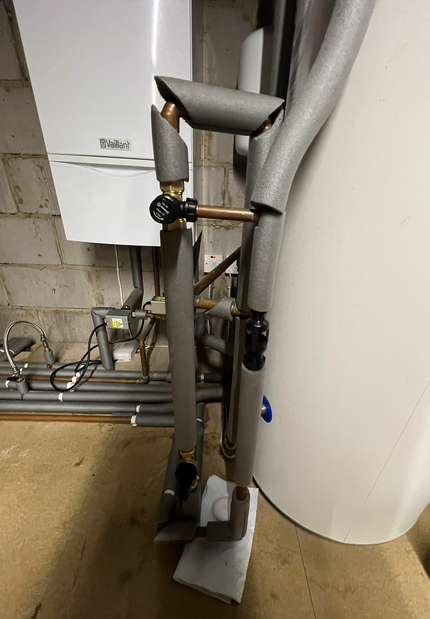
Well, I can firstly confirm the cylinder has a single check valve and not a double. @Nickfromwales I have once again been able to reproduce this issue and I am confident the external EV plays no part in this. When this video was taken a significant amount of hot water had been used since the last heating cycle and testament to this fact is the EV was cold to the touch as was the pipe between that and the cylinder. I am leaning towards thinking either a dodgy NRV or something within the cylinder. Interestingly, this time the noise was much louder and echo's. Any feedback welcomed. I've decided the next course of action is the NRV. Interestingly, if you watch the video zoomed in you can see the tundish and pipe around it vibrate with the noise. I am even curious if this could be the PRV but I can't think of any reason why it would do this. No water residue in tundish. Img 4767-1.mp4
-
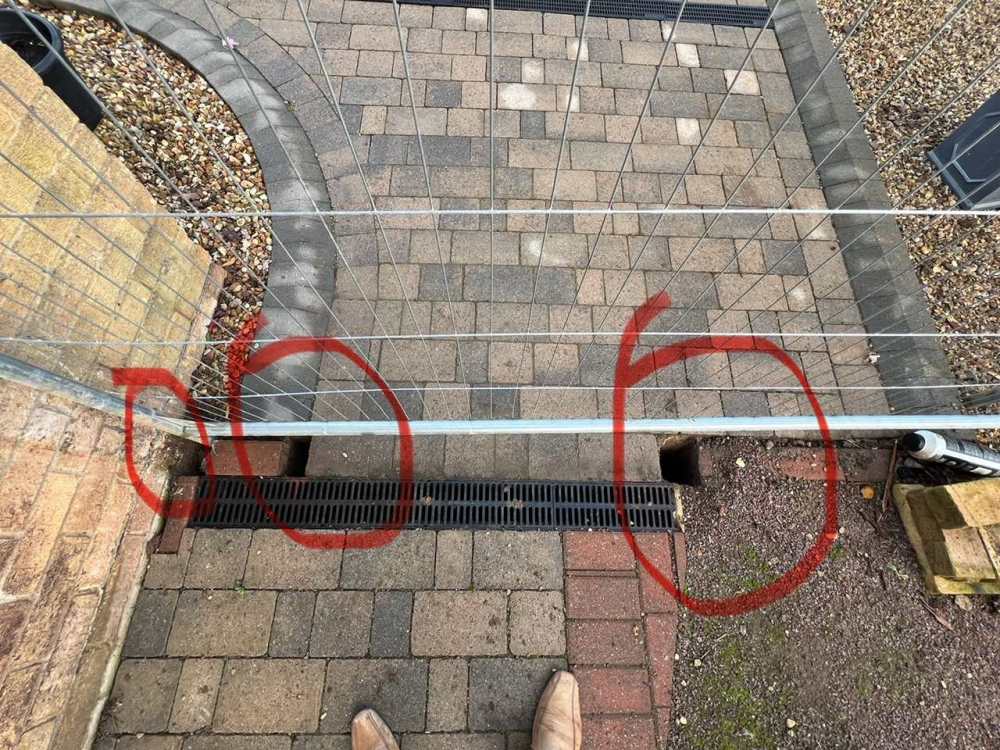
I wondered that… there is concrete around them. Looks like they came clean out / just lifted out. I wasn’t there to watch that bit but the gate had been there for years prior.
-
I'm no expert but slotting posts in those gaps surely would never work without them being properly concreted in. I also believe the posts they use are slightly bigger anyway.
-
Bottom line is, I will be there before they start work and will make it clear that this MUST happen. In addition, I do have it in writing that they will make good any collateral damage. However, I'd rather not have the pain and stress!
-
Hi Folks, I am having a new gateway and fence provided free of charge by one of the big developers building adjacent to our plot. It's a long story but it was mutually beneficial for them to do this. Per the attached picture, their groundwork's team removed the old fence posts and somehow managed to do this without disturbing the blocks. The post on the leftmost side of the picture was attached to the wall of our house with coach bolts. They are going to come back to remove the existing concrete under these blocks, which will involve them removing blocks and digging / breaking out the old concrete. Then of course, they will need to install the new fence posts and make good the block paving. Now, are there any gotchas I should be aware of with this / things I need to ensure they do... I do have water / power that runs under those blocks (middle of the gate) to the garage. I am informed by the site manager that they do this stuff regularly and have cat scanners etc. Thanks in advance...
-
Thanks… That said, it is strange that after the test I did yesterday, I can no longer reproduce the issue.
-
On another point, since running the test I carried out yesterday with the inlet valve shut, I cannot reproduce the noise once again. I imagine it will rear it's head again in time, but isn't that strange! I can't see how the 10-15 liters of water that got drained out of this whilst testing made any difference. The only thing I wonder is if something is adrift in the tank and moving around until a point it gets stuck / lodged. Pure speculation of course.
-
How would I check if it is a single vs double check? Excuse my ignorance. You make a good suggestion re the removal of the NRV. An easy thing to try. The incoming PRV on the main never goes much above 2.2 bar dynamic even wide open so that's the most mains pressure we get here. I guess it may occasionally go higher but I've never seen it.
-
Right, so today I did a new test. Shut off the incoming feed into the cylinder and was able to reproduce the problem. This in my opinion removed the possibility of anything on the inlet side. Img 4612-1.mp4
-
At which location? Between the reducing valve and EV or on the hot water outlet? I can't seem to find a pressure gauge that doesn't come as part of a PRV block.
-
A week on, this hasn't so far got any worse but it doesn't happen every time the hot water in drawn. For the purposes of testing, I always use the bath hot tap, opened fully. As an example, I drew hot water right after the heating cycle for ~10 seconds, no noise. Repeated the process after 30 seconds, no noise. On the third go, it made the noise a few seconds after drawing hot water. This to me rules out expansion and or pressure. Since they would be much higher / worse after the initial heat cycle. Baxi and my own plumber are at a loss to what this might be.
-
Annoyingly, this issue appears to have resurfaced but not to the same extent as before. The valve was replaced 3 weeks ago and of course as part of this, the system was drained. I am wondering if this will get worse over time and whether draining and refilling makes it go away temporarily. What that does or does not prove I am not sure. Just thinking out loud right now. @John Carroll Img 4587-1.mp4
-
Thanks… It is breezy up there and the roof doesn’t sweat like it used to in our old 90s build. Probably just being paranoid.
-
Thanks. Those are readings from pushing prongs into the timber rafters. However, they don’t look or feel damp.
-
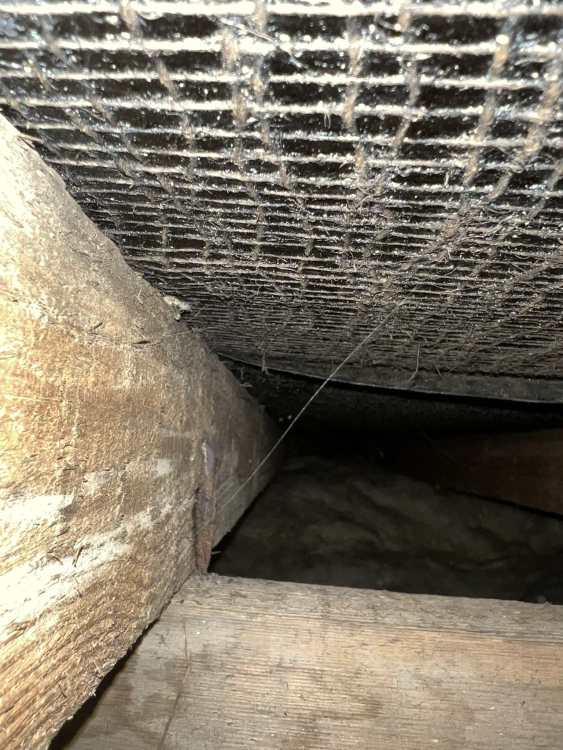
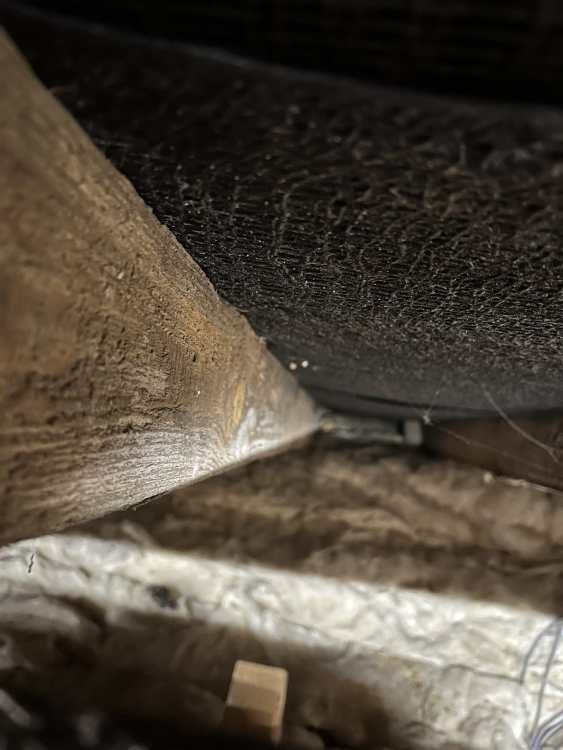
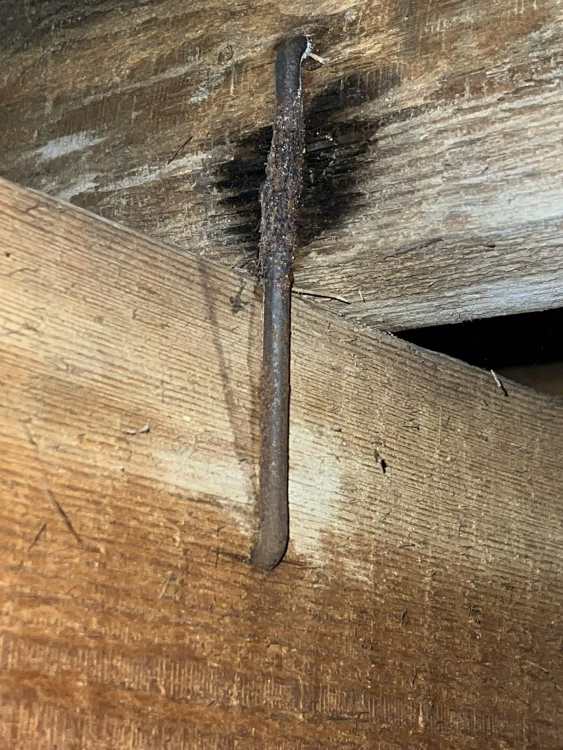
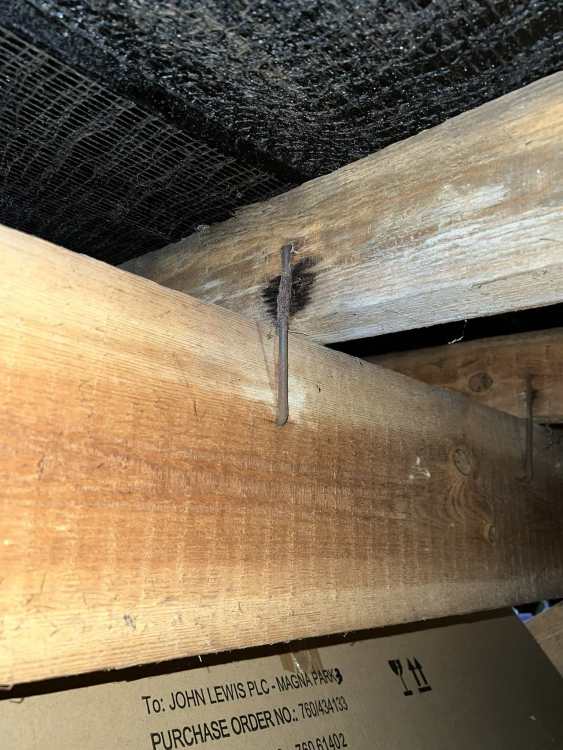
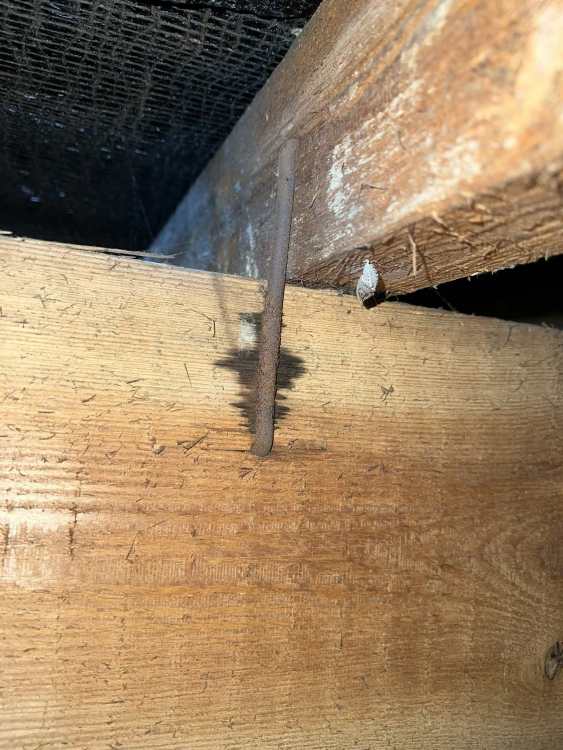
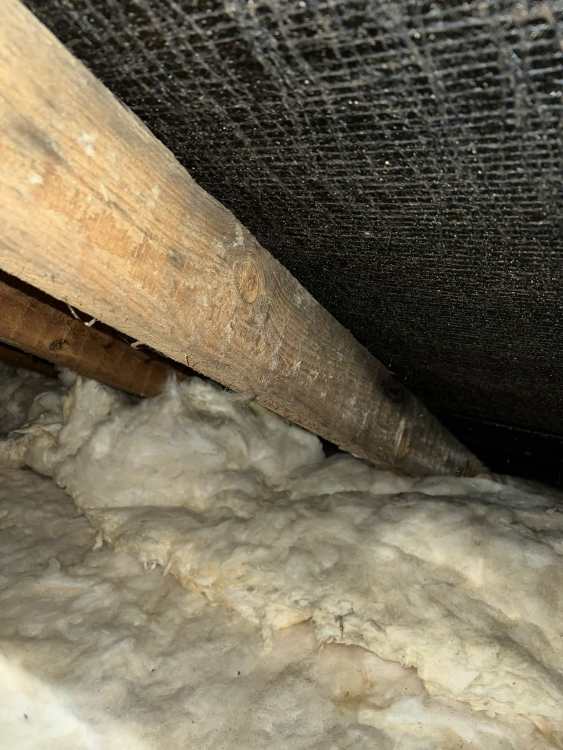
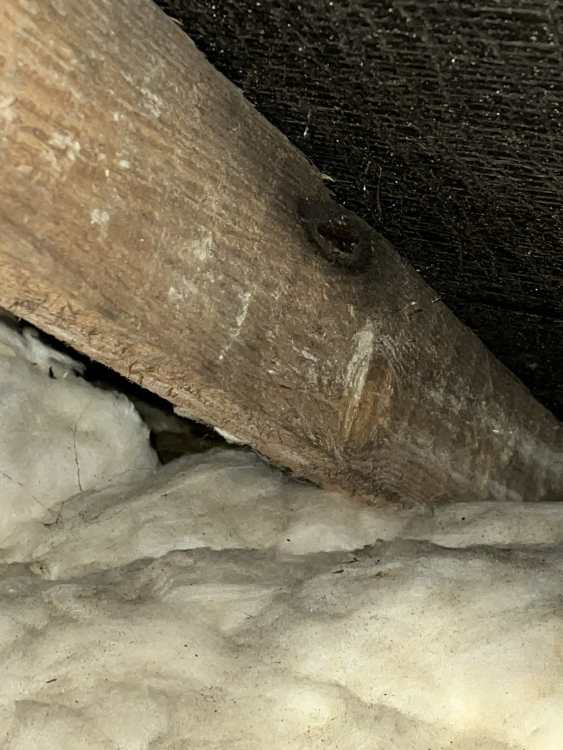
Hi Folks, I have a 1960's house with concrete roof tiles with recently rebedded ridge caps (2022). All roof tiles are in place from the outside and nothing obvious from visual inspection. Whilst in the loft I noticed what is obviously the result of dampness to a some rafters on the north facing side. They don't feel damp to the touch but are cold to touch (unsurprisingly). I have a cheap moisture meter with prongs I got from Amazon and that is reading the moisture level between 25-33%. Other rafters in the same loft space range from 11 to 16%. There is no evidence of water ingress and the loft is mostly boarded with lots of cardboard boxes etc. up there. It would be very obvious if something had been leaking, especially with recent weather. I took some pictures of the worst truss and the nail thing that holds it down has clearly suffered from corrosion as a result of the doubt (I don't know what these fixings are called) but I just can't see how these trusses have come to be wet. There is sarking behind the trusses so even if there were a loose tile or water blowing underneath, the sarking would prevent it coming into contact with the truss. I could just be worrying too much and perhaps this is the result of humidity within the loft space but it just doesn't seem that damp in there. Thanks...
-
Thanks @John Carroll for your inputs, insight and advice.



