tanneja
-
Posts
294 -
Joined
-
Last visited
Everything posted by tanneja
-
@Moonshine I offer my apologies for overlooking the dimensions in the PDF, thank you for taking the time to emphasise. I had read of others electing to double board with high density board, it seems best to assume that you would recommend follow as advised in the PDF.
-
@Moonshine how do you get to that 50mm number please? Are you recommending the GL system comes off the wall by 35mm (with 25mm loose fit ARP in cavity) then 15mm soundbloc, or just 25mm cavity (filled with 25mm ARP) then do double 12.5mm soundbloc?
-
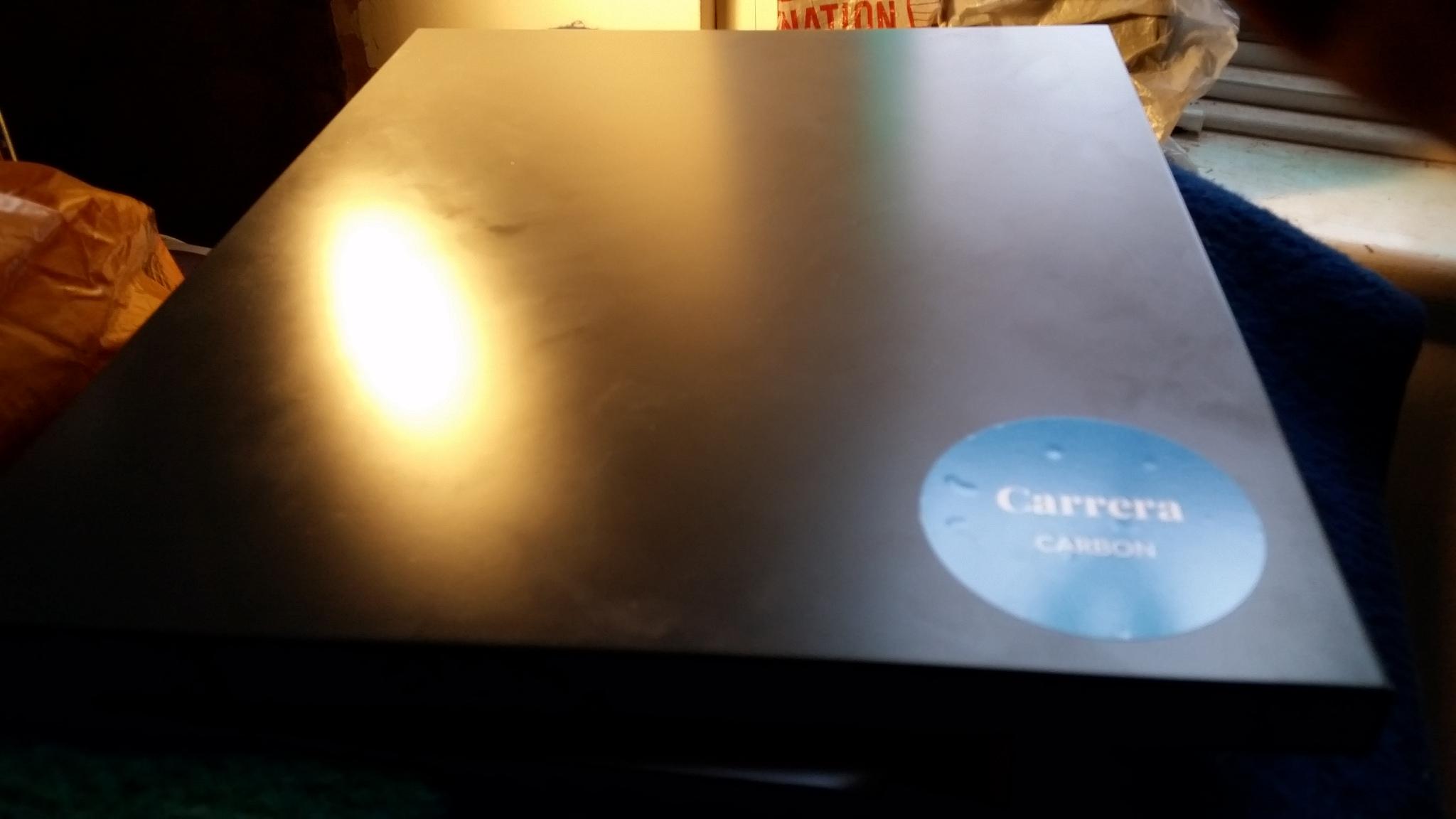
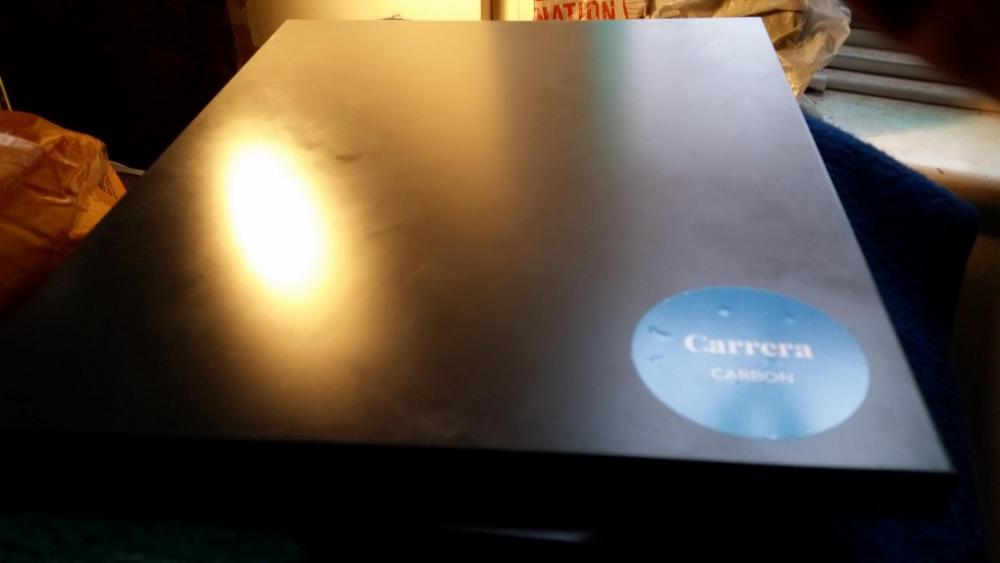
@MikeGrahamT21 maybe, it seems that touching in normal room environment leaves quite noticable condensation type marks (I'm no expert obviously). It is a dark (carbon) supposedly matt finish. This is with clean hands, but very streaky for minimal handling.
-
Just to cap this off, the DS was happy with moving the newal slightly into the void. Thank you all and especialky @ProDave for the workaround. Lesson learned for me.
-

Insulation for internal stud walls and above ceilings??
tanneja replied to IanR's topic in Sound Insulation
I offer my apologies in advance for my ignorance, but if wanting to reduce sound transfer on our party wall, and between floors, am i better off to get a mix material board like the SoundBoard4, or a couple of layers of SoundBloc? The later seems more cost effective, and both have similar thickness of wall requirement. Am I best to combine these approaches with resilient bars to isolate all type of noise transfer? -
We were det on DIY kitchen for our order, and got some matt door samples sent to clairfy colour. We were a bit disapponted by how prominant fingerprints were when you touched the door. We do intend profile handles but you usually push the door slab to close. What brands of kitchen will have minimal to no fingerprint on their matt finish? Howdens so a super matt which seems to claim no fingerprint. Plan to go to one tomorrow to hopefully see an example. Is there anything else I should be looking at?
-
Thank you @Mr Punter, that is the nuclear option, hoping conceeding on the stairway width will be enough, as chopping the joist will likely mean more paid for calcs and steels
-
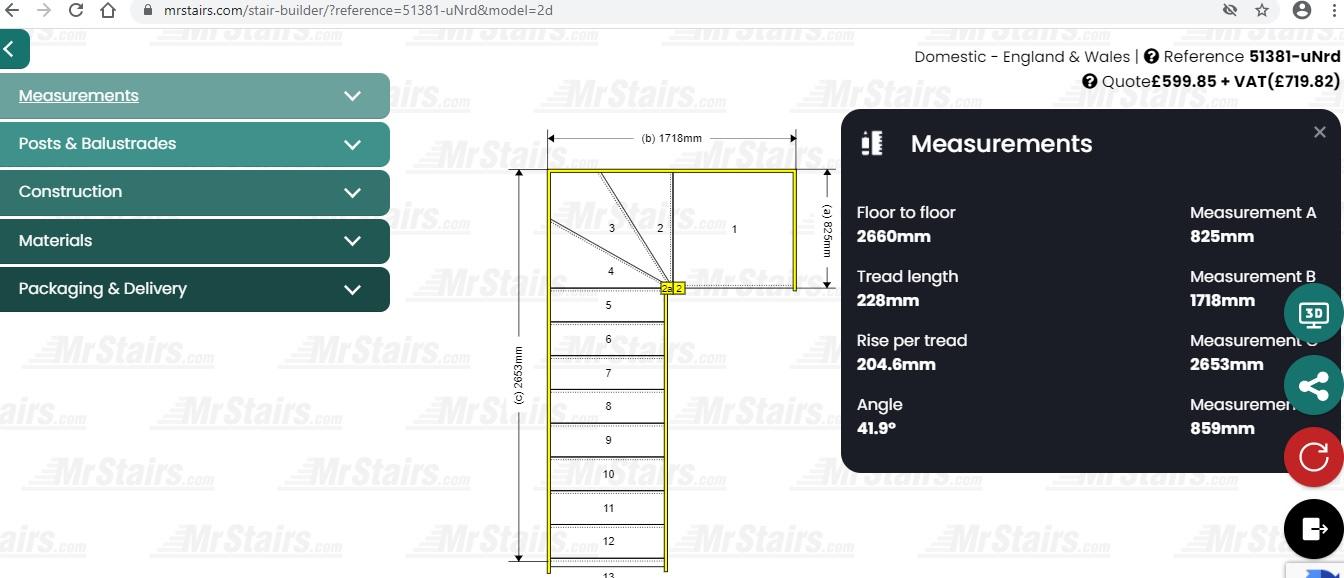
@PeterW that was my assumption this whole time, that the centre of the tread represented the pitch line, and that it was this line that had to pass the 2m headroom. However I am being told that it is any point of the stair has to pass this test, so with thr newel post positioned at the transition where thr ceiling goes from regular height to vaulted, the stairs that meet at the newel post have their head clearance are judged with respect to the lower ceiling height. I have had that confirmed by MrStairs and StairBox. I am hopeful that moving the newel into the vaulted footprint by reducing the staircase width (suggested above) will mean we can make it work. That is my interpretation.
-
Thanms @Oz07, the new plan is a 3 winder, but got a rude awakening when asking about the regs
-
@ProDave this is potentially genius! We have 860mm from the brick wall to the stud. If we make the width of the long going run to just 800mm, that brings the newel post entirely into the vaulted area. That would hopefully be quite convincing to the DS that head hight not an issue. I might actually sleep tonight. @ToughButterCup the room above is a bedroom, so sacrificing some of that for an angled ceiling would be justifiable, however the engineering to do that now would be significant
-
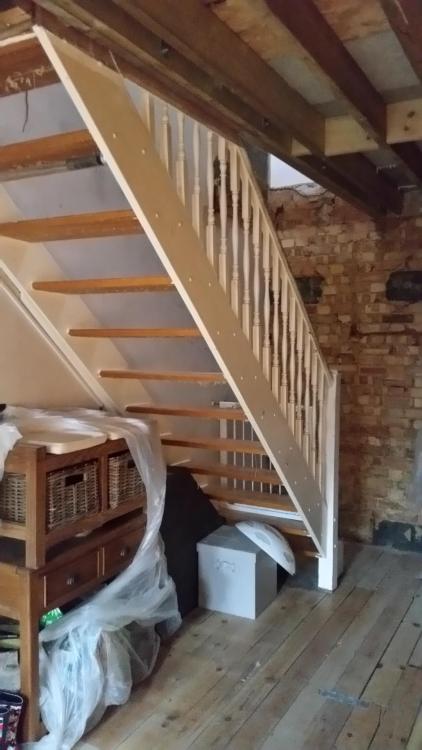
Picture of the existing area. This staircase position is being changed to start 4 steps earlier, so would emerge upstairs a corridor space earlier, giving us a nice bathroom.
-
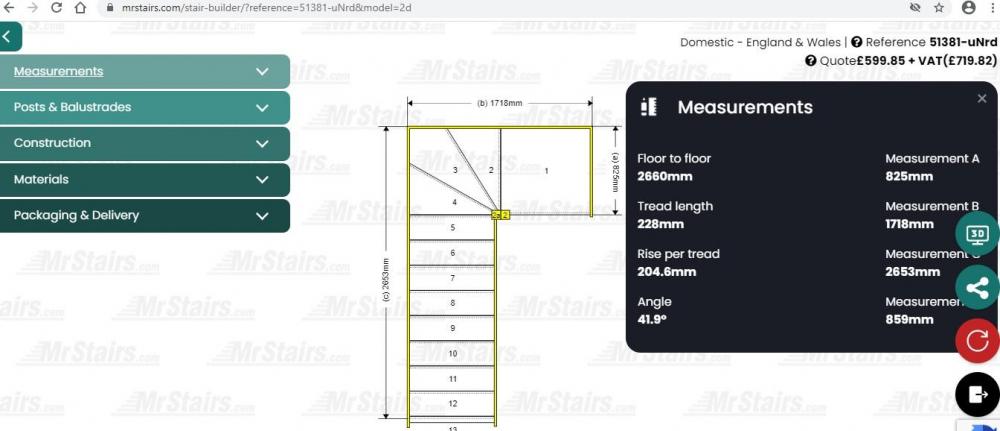
Hi All, Long story short, doing a renovation, has been done in a strange order due to living on site during the build. The joists are in, and upstairs stud work and fibreboard floor. Our architect essentially walked off the job a while ago as he changed focus to commercial, we were past planning permission so felt we could get the rest done without further input. In hindsight, that was a bad move on my part and should have had another expert on board and perhaps would have avoided these surprises. We moved the stairs location from where it was, and now seem to have a massive headroom issue with the staircase. We had planned for this staircase, which will arrive precisely at boundary of the upstairs hallway. The downstairs floor to ceiling is around 2440mm. The stairs were planned to start at the edge of the room, so the first square feature step is underneath the 2440mm ceiling area. Then, as you step onto the second step (the first of the 3 winder), the ceiling vaults up to 5m. I had assumed that, following the pitch line, I wouldn't fall foul of head height issues, but calling some stair builders I am discovering that the full length of the stairs that attach to the newel post are likely subject to the head height, so seems I need provision for 4 steps within the floor to ceiling area, that would require an extra 380mm of head room. I'm coming to terms with needing to needing to make structural changes, but those would be immense. We will mock up the first few steps tomorrow and have the DS over to look at, for what it is worth. Does anyone have any ideas for the most cost effective remedy?
-
Would fitting 4 flexible silencers off of the unit (intake from external / vent to external / to supply distribution box / from extract distribution box) be a good idea to reduce all noise internally and externally (external grills around head height at front of house)? Will I run into any airflow issues? They are very reasonable cost so if not to the detriment of the flow, seems like a worthwhile thing to do at the outset.
-
Edit: as far as looks go, the square ones here look ok to my eye (https://www.phstore.co.uk/haelix), and cheaper than the BPC sold airy valves where you need to buy the cover plate, valve and clip separately. However these ones only have 9 levels of restriction at the valve where most valves are continuous, would anyone expect an issue with that graduation?
-
For space saving reasons, I am drawn to the attached distribution boxes, they should give me the minimal run footprint for our small space. https://www.phstore.co.uk/MVHR-distribution-boxes-for-ubbink-semi-rigid-duct-systems They seem to come with restrictor rings to give someone the choice of distribution box based balancing rather than at valve. I would think the unit is compatible with any brand ducting, and could be used without the restrictor rings if we so choose? Has anyone got any real world understanding as to which would be preferable, since we would be doing the commissioning ourselves and our first time DIY. Unsure at the moment of the best aesthetic vs. cost room valves, so knowing how i will use the distribution box will narrow things down a bit. Any advice on the best valves that meets that description would be appreciated too.
-
@Bored Shopper yes ordered without internal venetians as not our thing, had to be roller blinds
-
In certain rooms we have box sections above windows (for MVR and other purposes) which we can use to recess internal rollerblinds, likely with the provision to get Somfy wired units in the future. But, mainly the bedrooms and bathrooms, we dont have box sections, and so wondering how to nicely integrate internal roller blinds. We have Tilt and Turn windows, so the roll cant be within the window recess as it would foul the opening sash. It needs to be above the opening, either wall or ceiling fixed. What are persons preferred way to integrate roller blinds stylishly onto what would otherwise be a plain wall? I have an idea i could do, but interested in what more experienced home builders do.
-
@joth i really do appreciate you sharing your experience, and am disappointed for you by the issues you have faced. Sincerely hope the house ends up as good as the progress picture implies it will be. Builder is emailing Lathams tonight. Would like to retrofit strip wood to the front of it to have the porch be a strip wood facade. Hopefully all doable.
-
If those kind of prices are not just for the blank but for the frame and other bits of kit (as stated as an offered package on the german manufacturer website) that is interesting.
-
@Dan F thank you, the standard version meaning the KlassicPlus? https://www.lathamtimber.co.uk/products/door-blanks/brands/moralt Also, does it come as a full kit as one online PDF suggested (frame, seals etc) or just the blank at that price? I was half considering taking a nice solid wood door then retrofitting a 5mm aerogel sheet and further thin sheet board i.e. MDF to the back to get me the insulated door, then it would be making sure the seals were up to scratch. The passive doors seem to have a saw tooth closure with the bank of the door returning once or twice, that would be more tricky to do.
-
@joth, my apologies if you have answered this in another thread, but did you end up going down this route? Did you find anything more economical? Many thanks
-
@A_L You have taught me, this is outstanding, thank you
-
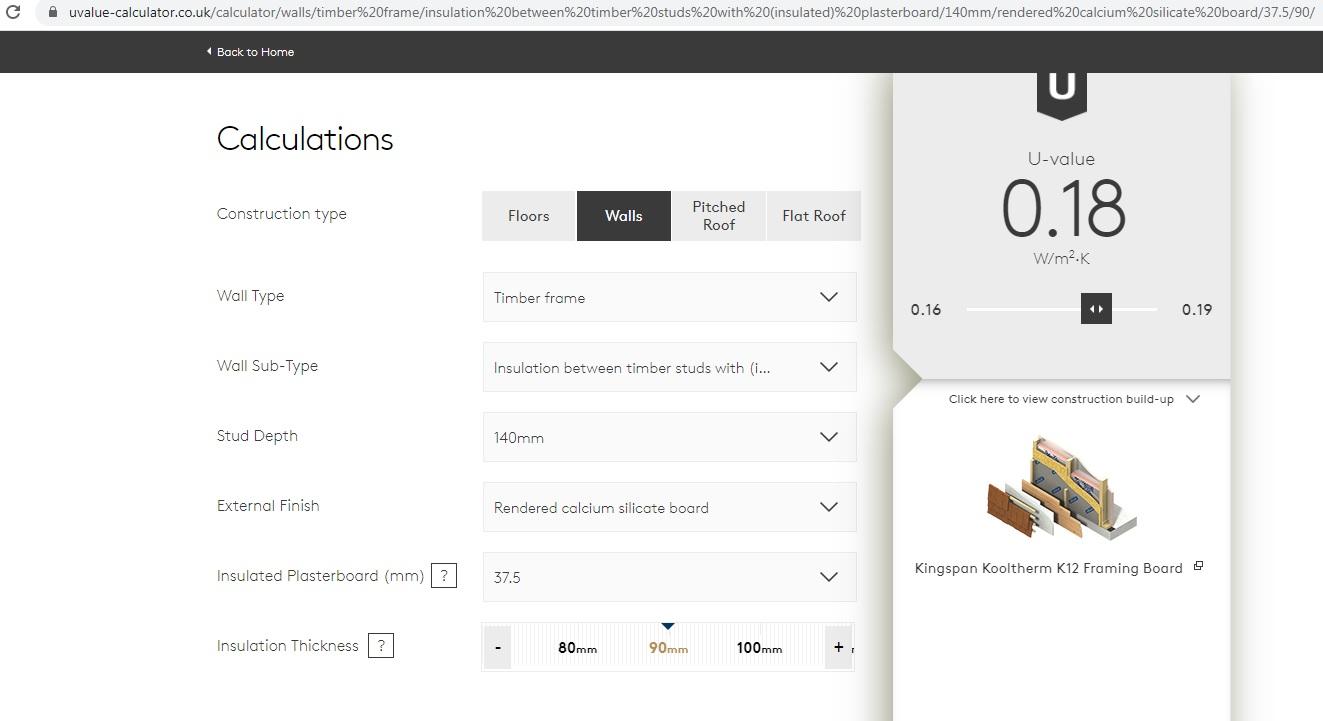
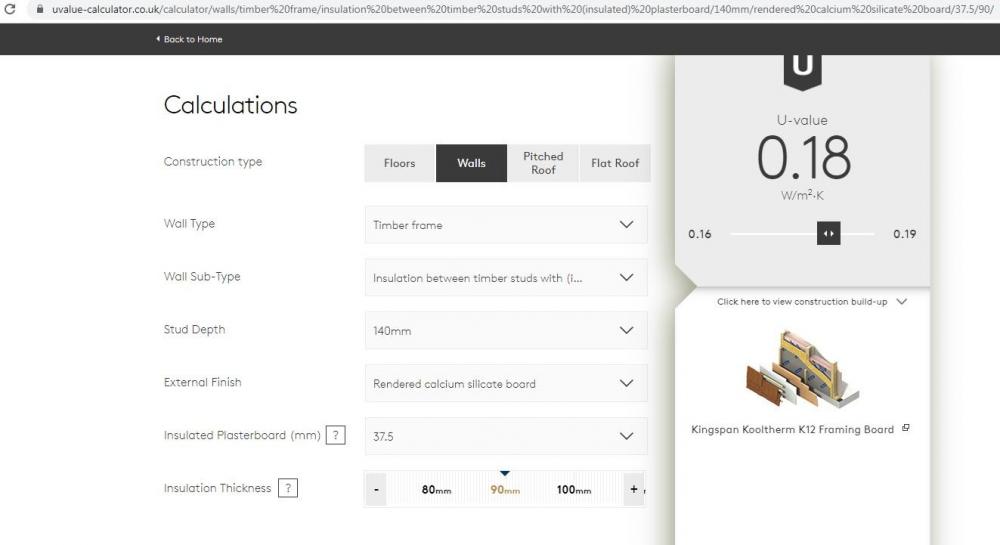
@ADLIan my apologies, but just to ensure I use these calculators correctly going forward, I see the below for your 90mm celotex and 25mm internally, getting materially different overall U value, can you see what I am managing to mess up? (fyi it says the 37.5mm insulated plaster board is made up of 12.5mm plasterboard and then the remianed (25mm) is PIR))
-
Ok, so it is weighted based on % of wall area, thats very reassuring to hear, thank you @the_r_sole. @ADLIan that is precisely what they want to do (90mm celotex intra studwork, 20mm over the top), ok, their plan is sensible for the extension work. I sincerely appreciate the education.
-
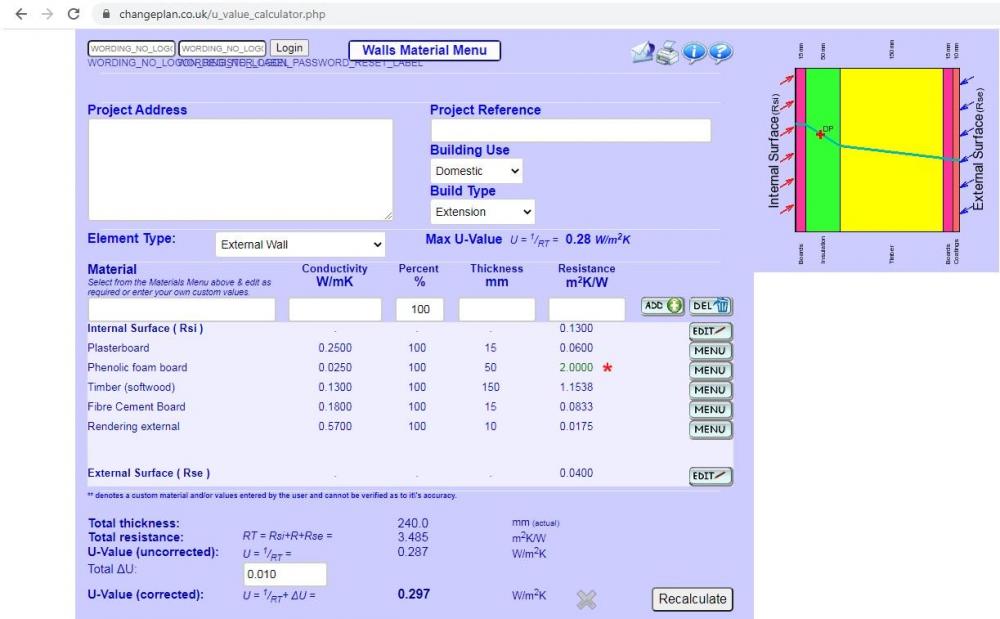
@the_r_sole This was my attempt. I am aware that this only applies to the areas where the studs are, those lengths will have localised poorer U value than the areas between them (which are packed with PIR within the studwork voids). Still it feels like that comprises a non-trivial area of the wall (10-20%) so presumably you want to bring that amount of area at least up to the extension Regs min? I may be incorrectly using the U value Calculatiors