MortarThePoint
-
Posts
2168 -
Joined
-
Last visited
Everything posted by MortarThePoint
-
Drainage lintel strength and bearing
MortarThePoint replied to MortarThePoint's topic in RSJs, Lintels & Steelwork
Clear span is about 1000mm. On the 215 blockwork they are planning to use two lintels (side by side). I don't know what Type but they look to be 100x70 with a single metal bar about 6mm in diameter near the bottom edge. -
Drainage lintel strength and bearing
MortarThePoint replied to MortarThePoint's topic in RSJs, Lintels & Steelwork
But you'd be happy with it just bearing on the blockwork or coursing blocks? -
Floor goes down before outer skin is established unfortunately. The BCO said "what does your warranty provider require" and the warranty provider said "what does your BCO require" so that's handy. Obviously NHBC aren't regulations, but they are a standard worth sticking to if possible.
-
Garage/Workshop Fantasy Time
MortarThePoint replied to MortarThePoint's topic in Garages & Workshops
I'd take it even if it leaked like a sieve. -
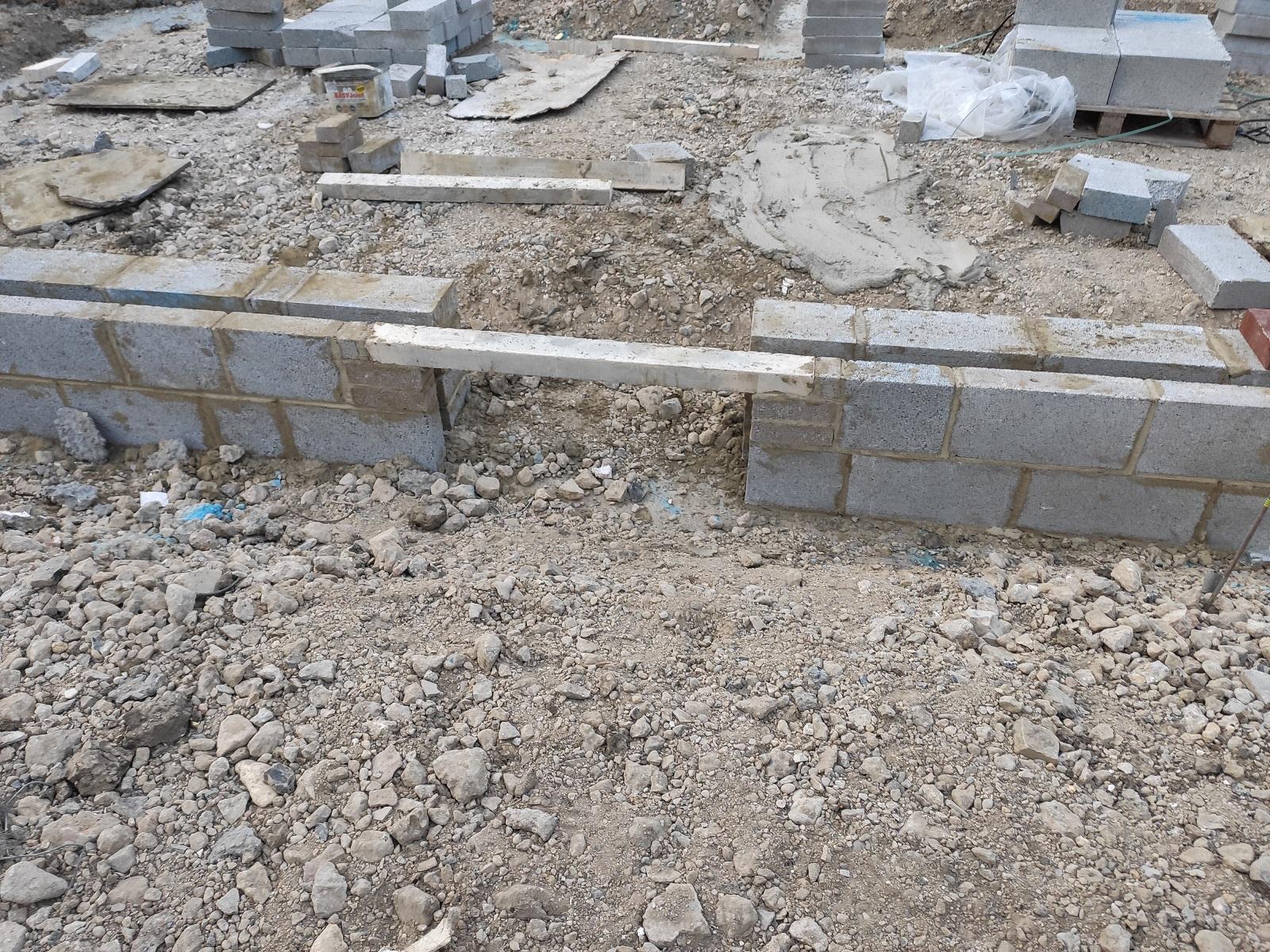
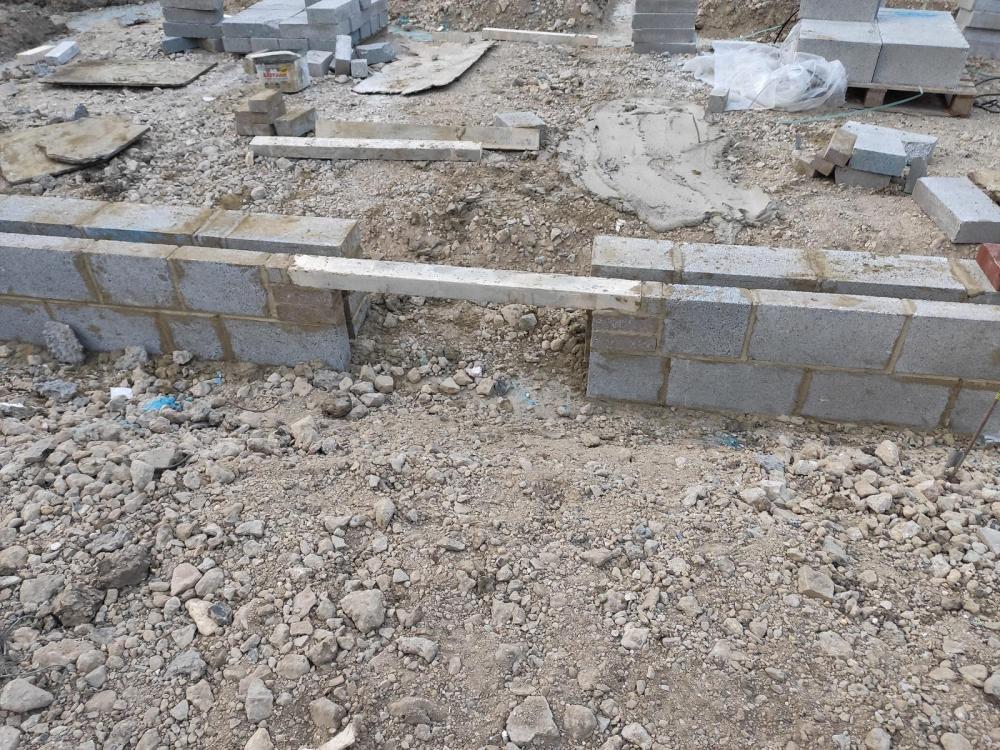
I've a run of subfloor blockwork that is specified as 190mm 10.4N blocks. The drainage pipes pass through this wall and I wanted to make sure the lintels are strong enough and have the correct bearing. They've only fitted the one in the outer leaf in the photo below but are looking to use 2 of the same type of lintel bearing directly on to the Stranlite 10.4N blocks for the inner leaf. I should have measured the span but I would guess it is 1000mm. Looking at the Structual Engineering calculations there looks to be about 6000 kg per metre length of that inner leaf so that seems like a lot of load to put on those lintels and the 150mm bearing at each end. On paper the pressure would be 60kN/(2 * 150mm * 200mm) = 1N/mm2 which is obviously much less than the blocks 10.4N/mm2 spec but perhaps that's missing something.
-
That's what I'm concluding too. I think 600mm lintels for these with a 400mm opening would make it easy. That leaves a big opening on the inside of the cavity for critters to get in to the cavity though.
-
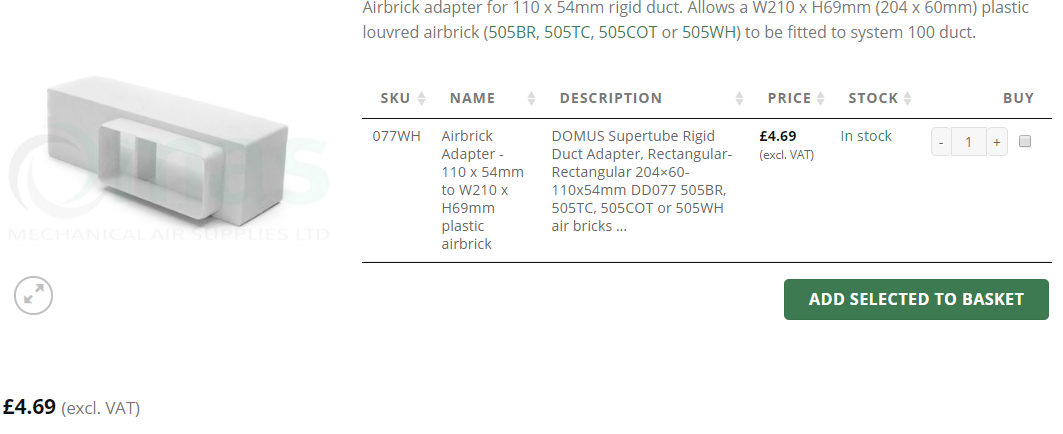
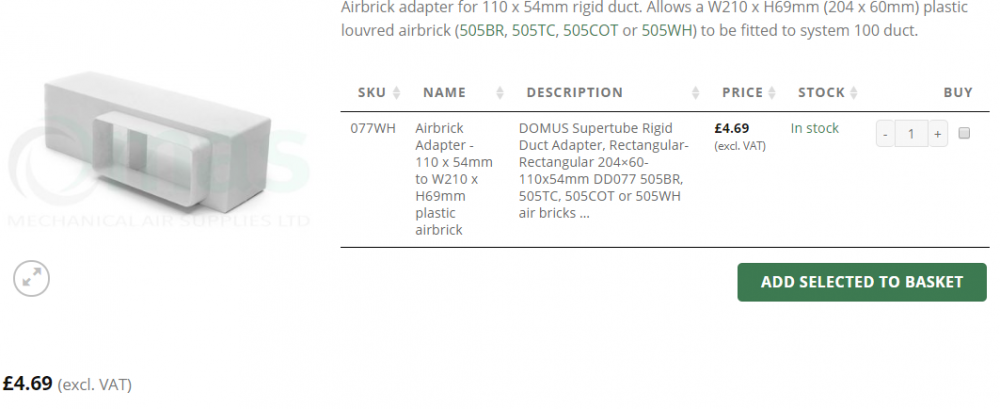
That would be good as 450mm is too tight really otherwise. It would still be good to find a 4" x 3" air brick though. I'm tempted to 3D print an adapter but that would take quite a lot of time and plastic Edit: Here is something that could possibly do the trick, stepping a brick wide vent down to half brick wide
-
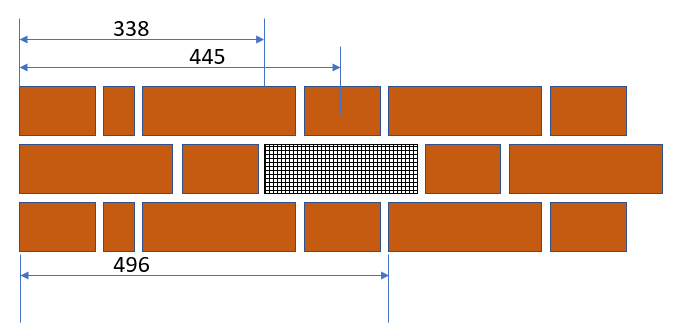
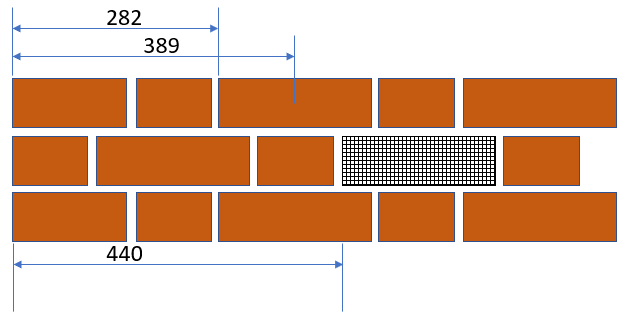
It's basically impossible to hit Flemish bond whilst satisfying the NHBC "within 450mm of each end of any wall" requirement if you have cavity walls over 338mm which is the vast majority of mine at sub floor level. 496mm is the first point on bond at which it doesn't clash with the inner leaf of the perpendicular wall. There is only one Stretcher with any part of it within 450mm of the quoin and the edge quoin side of that would cause a clash. I'm presuming the NHBC requirement is any part of the vent within 450mm of end of wall. I don't know what this adapted (no Queen Closers, uses 3/4 batts) form of Flemish bond is called but it is possible to get that to work:
-
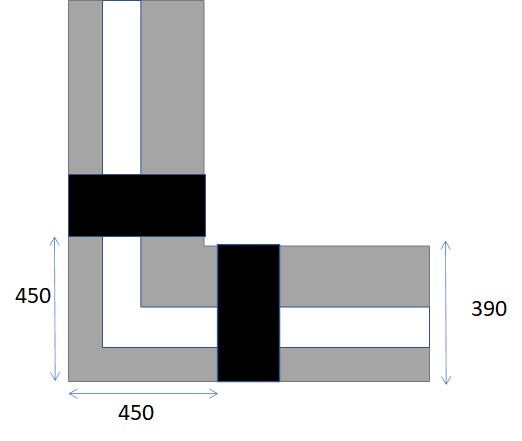
The NHBC stipulation of "within 450mm of each end of any wall" is quite restrictive as if that is referring to the outer leaf (which is where it is ultimately visible from) you have to take wall thickness away from that to see where it ends up on the inner leaf. I have some 390mm thick walls so that puts the vents right at the corner. Can that be right, looks pretty extreme.
-
As there was made ground on site the Site Investigation said there could be Ground Gas. Testing for Ground Gas looked as expensive as installing a Ground Gas membrane, so we are just doing the membrane instead. That needs a ventilated void below floor.
-
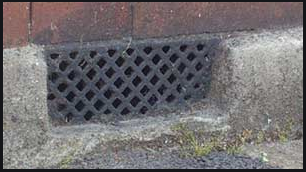
This image made me think of a possible solution. Whenever feeling the need to hide something it's worth thinking whether it can be turned in to a feature. I could get some metal grates 335mm wide and recess them in to the wall with the vent behind it.
-
Good point, I do have a bonded out drawing I'd forgotten about, I'll take a look. A half brick periscope vent would be good though. Can you get them? Full brick vents have an area of 7000mm2. Based on those vents, NHBC's maximum 2m c/c is massively over the 12 needed by area (and therefore void volume) and the 13 needed by perimeter length. A half brick vent might have 3000mm2 and that would make for 30 vents needed which ties in well with the 2m c/c.
-
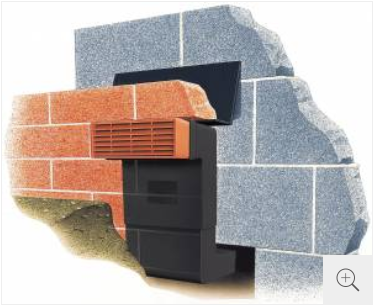
Something tricky here is that all this needs to get established before brick bond is established, so having the vent nicely in bond on the outer leaf isn't practical. If we had a wider slot in the inner leaf blockwork it would allow movement, but that would mean using narrower than header bricks either side of the vent. The vents look to be 205 wide. To allow 112.5 mm of movement hit bond(*) would need ((440-112.5-205)/2) = 41mm wide bricks either side of the vent on the inner leaf. (*) the semi hitting bond here is being accurate to within half a brick in Flemish which would allow some monk bond like fudges. Could take out two full blocks and use a 600mm lintel with more bricks but that will add quite a lot of work/expense. Can you get narrow periscope vents or periscope vents that allow sideways adjustment. Using some tilt I expect you could tweak about 10mm but not much more with the standard vent type shown here (cavity is 100mm). Ideal: Acceptable fudge:


-
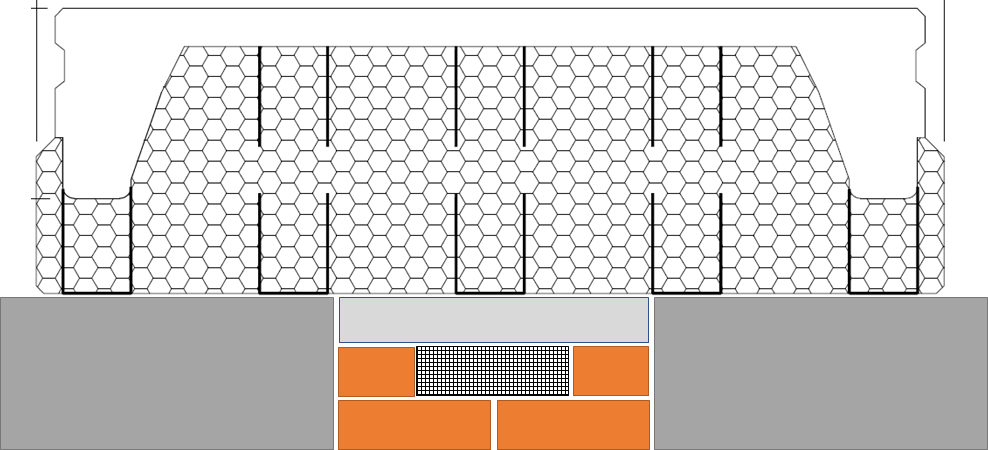
Thanks, great advice. It will be a bit more involved for us I think as we are to use a precast slab (Thermabeam) which has particular contact points. I am checking with the manufacturer but I think the vents will have to be lintelled over as shown in the diagram below. The dotted lines are the concrete pillars at the end of the beam and the honeycomb is EPS insulation. I can't see any reasonable way we can hit bond for the outer leaf which is a shame. Complicated a little by Flemish bond, but would be difficult either way.
-
I'm surprise the calculator was the lowest as it's made by the manufacturer of periscope vents so you'd expect to to come up with the largest number
-
There is some inconsistency in the number of vents I'm being told I need: My construction drawings have 24 periscope vents, but I don't think much thought was put in to those as at least 3 of them are under doors and another where a drainage lintel sits. NHBC guidance says "Voids should be ventilated by openings providing not less than 1500mm2 per metre run of external wall or 500mm2 per m2 of floor area, whichever gives the greater opening area. Ventilators should be spaced at not more than 2m centres and within 450mm of each end of any wall. Air bricks should be ducted through cavities and be unobstructed." The house perimeter is 60m so that makes for about 34 if every 2m. And this calculator says I need 12 (140m2 and 60m) (Their vents are 7,750 mm2 per unit so 1500mm2/m * 60m / 7750mm2 = 11.6 --> 12) Can I just have 12 vents, 6 on each of two opposing elevations, then?
-
Cavity ties and DPC in save bed joint
MortarThePoint replied to MortarThePoint's topic in Brick & Block
Yes fibre batts in the wall. The floor beams have insulation moulded in but are very thick. It's a pain concrete cavity fill has to come 200mm up the cavity and then there's a minimum 225mm to the DPC. -
Cavity ties and DPC in save bed joint
MortarThePoint replied to MortarThePoint's topic in Brick & Block
OK that's good to hear. The ties in question would only be 225mm above the concrete cavity fill. And so the next set of ties up only 675mm above concrete cavity fill. Concrete cavity fill is only one block course (225mm). -
Unless your parties are particularly wild the mortar won't have to withstand much 'weather' so I'd expect you've plenty of depth there
-
Looks really nice
-
Cavity ties and DPC in save bed joint
MortarThePoint replied to MortarThePoint's topic in Brick & Block
Thanks. It does make the joint pretty busy, so I can imagine issues there but the ties are only in a small proportion of the joint. Would be good to hear the 'it's done all the time' type comment though. The bed joint would only need to be shared on the inner leaf as the outer leaf can have it's DPC higher up. That will help with tie sloping outwards. -
100m down a gentle slope I hope ?
-
Could recessed not be difficult with brick slips as less brick for the mortar to key on?
-
Cavity ties and DPC in save bed joint
MortarThePoint replied to MortarThePoint's topic in Brick & Block
Is their no rule about ties and DPC sharing a bed joint then? @Brickie you must know -
Garage/Workshop Fantasy Time
MortarThePoint replied to MortarThePoint's topic in Garages & Workshops
Good point, I'll ask what the spec is for localised loads as it obviously does allow cars to be parked in there