MortarThePoint
-
Posts
2294 -
Joined
-
Last visited
Everything posted by MortarThePoint
-
Thanks. I've measure the vertical and their internal dimension is 2006mm which for a 1981mm door is 25mm over. I guess that leaves 3mm air gap at the top, 3mm at the bottom and 19mm for flooring. Does that sound about right for carpet plus underlay?
-
Should door lining kits be fitted so that the bottom of the verticals rests on screed or should a gap be left for flooring? I can imagine it may depend on flooring choice (tiles vs carpet). Sorry for the basic nature of the question, but there is a first time for everything.
-
MF Door Reveals & Lining Kit Suggestions
MortarThePoint replied to MortarThePoint's topic in Doors & Door Frames
So you've still got a screed or something left to lay after this photo was taken? -
MF Door Reveals & Lining Kit Suggestions
MortarThePoint replied to MortarThePoint's topic in Doors & Door Frames
Thanks. Looks like they have glued and screwed the door liner to the metal studs so should have a solid connection. I can't see any signs of packers so perhaps the metal frame reveal is 2 or 3 mm larger than the door liner. A couple of questions: Why don't the vertical bits of the door liner go down to the floor? Why the gap above the top of the door liner? -
MF Door Reveals & Lining Kit Suggestions
MortarThePoint replied to MortarThePoint's topic in Doors & Door Frames
Thanks very handy. They appear to be using 10mm extra for timber studs so: 838 + 2*28 + 10 = 904 Given metal frame is much more accurate than timber studs I'm tempted to just build the kit into the metal frame studs as I go, so effectively reducing that 10mm extra to zero. If you could measure with the laser that would be awesome as MF may be tighter reveals than timber studs.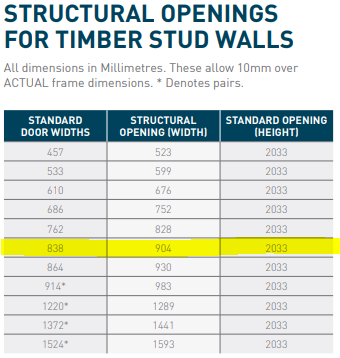
-
MF Door Reveals & Lining Kit Suggestions
MortarThePoint replied to MortarThePoint's topic in Doors & Door Frames
@Conor sorry to call you out, but do you know what your contractors did for this? Did they make the door reveals tight to the lining kit? I guess ultimately, what size gap for what size door? -
MF Door Reveals & Lining Kit Suggestions
MortarThePoint replied to MortarThePoint's topic in Doors & Door Frames
I'm wondering why not to build the door reveal with the door lining kit inside all in one go. If you prime the wood of the liner kit you can plaster skim afterwards and if you're taping an jointing it wouldn't matter anyway. -
MF Door Reveals & Lining Kit Suggestions
MortarThePoint replied to MortarThePoint's topic in Doors & Door Frames
What gap did you leave between the c-studs of the reveal for what size door? -
MF Door Reveals & Lining Kit Suggestions
MortarThePoint replied to MortarThePoint's topic in Doors & Door Frames
If so inclined, could add floor channel sleeving the C-stud at the reveal as well as bending the bottom floor channel 300mm up: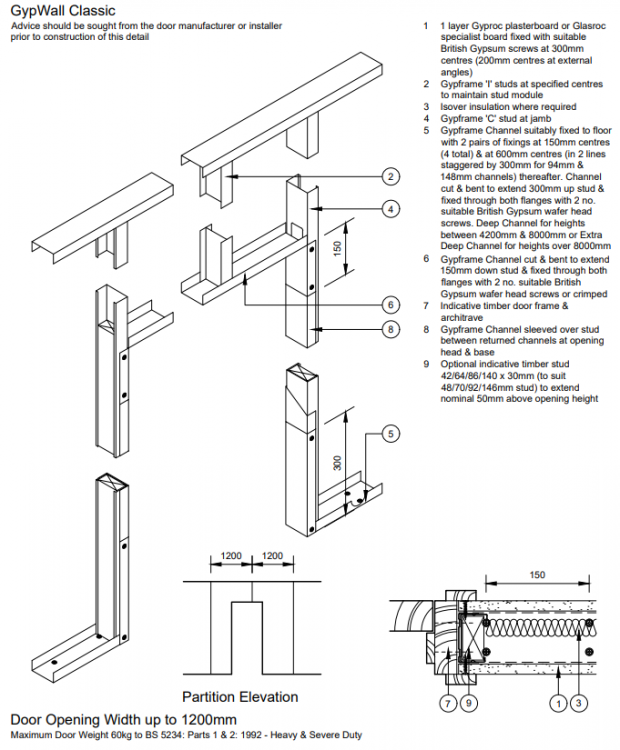
-
I'm establishing various door openings in metal frame and wondered if anyone recommended any particular door liner kit as being good. They don't appear to fully standardise on the thickness of the timber and that affects the size of the reveals to be left in the metal frame stud walls. There do however appear to be lots that are 32mm nominal which equates to a finished 27mm. There appear to be thicker ones for fire rating purposes. A 70mm stud with plasterboard either side works out as 100mm, so it's the 115mm nominal / 106mm actual lining I'll want I expect. Is the extra 11mm (12.5mm plasterboard) or 6mm (15mm plasterboard) is to allow for plaster skim? You have to reinforce the C-studs next to a door with timber and there are two ways of doing this. Either tuck a piece of timber into the C-stud or move the stud away from the reveal to have it on the reveal side. Which is best for a solid job? How much wiggle room do people leave with MF studs? One general guide copied below suggests 10mm both sides but that seems excessive for MF. I was planning to go with 5mm each side so a reveal width of 830mm. 10mm (wriggle room) + 28mm (lining) + 762mm (door)+ 28mm (lining)+ 10mm (wriggle room) = 838mm (call it 840mm) [3] https://www.selcobw.com/products/doors-windows-stairs/doors/door-frames/door-lining-sawn-metal-stud-32-x-115mm-nom-pefc https://www.wonkeedonkeexljoinery.co.uk/fitting-a-new-door/how-to-fit-an-internal-door-frame/ [3] https://www.juliancassell.com/2528/interior-door-frames
-
I don' like salmon so works for me ? . You also get to watch you food go round in a rotary one like a gameshow prize. Joking aside, the extra space does make good sense if not too much of a premium. If it adds a large premium then how often does the extra space help. If you're building to sell then bells and whistles in the kitchen can make up for a corners cut everywhere else it sometimes seems. Like awful cars with good radios with connectivity.
-
Some designers justify increased prices with increased functionality normally accompanied by increased complexity. I don't need my microwave to be online, I need fast hot food. We won't be going integrated for the likes of a microwave. I'm not a fan of the integrated look and we have space on the counter. My brother went integrated and the appliance he chose had a £200 surround so he had a local fabricator make a stainless one for £60. Looks very slick.
-
Air tightness membrane piercing
MortarThePoint replied to cwr's topic in General Construction Issues
This is an interesting note in the instruction manual: "We do not recommend mixing LEDs circuits with products such as extractor fans. This is due to the sensitive nature of LEDs and is not product specific" -
Air tightness membrane piercing
MortarThePoint replied to cwr's topic in General Construction Issues
Looks to need a minimum 40mm void depth though (extract from manual PDF at bottom of Screwfix specifications tab) This one is thin but can't see a void spec and could be low quality: https://hartingtonheath.com/product/i-lumos-led-6-watt-round-recessed-lighting-panel-ultraslim-ceiling-light/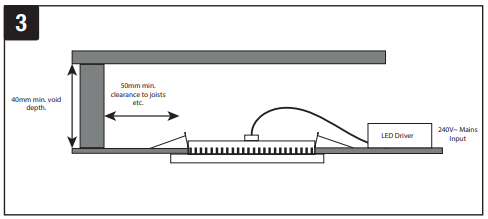
-
Air tightness membrane piercing
MortarThePoint replied to cwr's topic in General Construction Issues
+1 for the VCL inside all PIR. What fixings are you using for the plasterboard though? Interesting, do you have a link to one or some? -
Pitched Roof Counter Battens For Insulation
MortarThePoint replied to MortarThePoint's topic in Heat Insulation
This system is interesting and doing the sort of job I am after. https://www.bigmat.fr/video/ki-comble-reno-2013/ https://www.youtube.com/watch?v=kXEAGvPTJuM -
Pitched Roof Counter Battens For Insulation
MortarThePoint replied to MortarThePoint's topic in Heat Insulation
I'm considering Pavatherm as an alternative. What type of scre do you use when you fix plasterboard through PIR? -
Pitched Roof Counter Battens For Insulation
MortarThePoint replied to MortarThePoint's topic in Heat Insulation
Stand off blocks are a nice idea. PIR certainly has it's benefits. -
Pitched Roof Counter Battens For Insulation
MortarThePoint replied to MortarThePoint's topic in Heat Insulation
Too late unfortunately as the roof is tiled. -
Pitched Roof Counter Battens For Insulation
MortarThePoint replied to MortarThePoint's topic in Heat Insulation
I guess another mounting option if the GL6 has to be vertical is to add a timber batten cut to a triangle: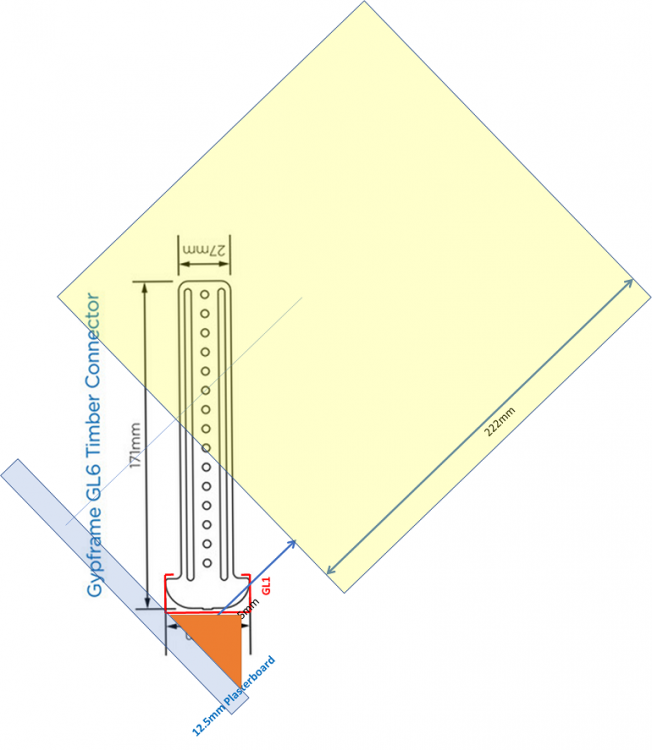
-
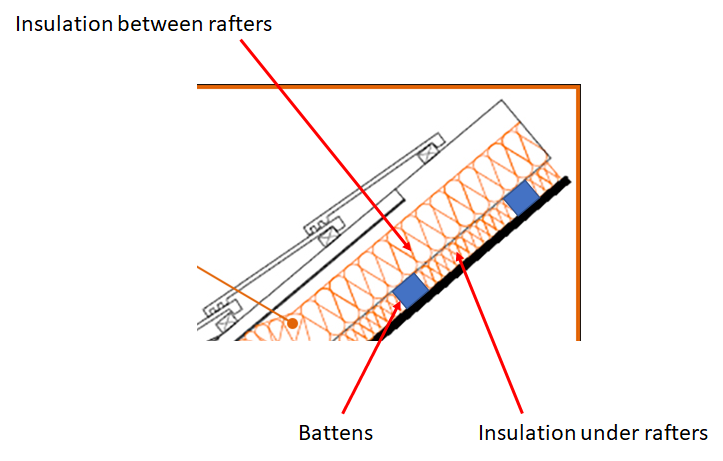
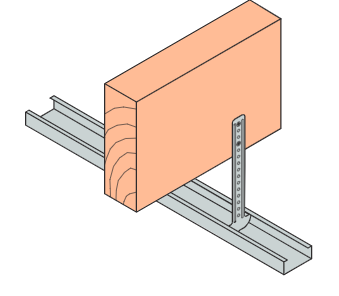
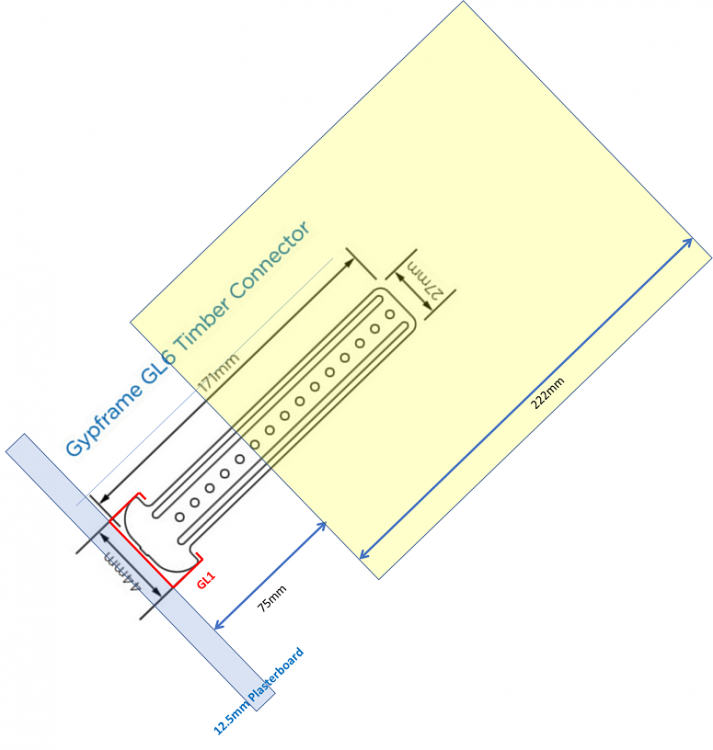
In order to have more insulation in the pitched roof sections, I had planned to use 50mm counter battens underneath the rafters. I need more than 50m now having looked at the various insulation options (can't use PIR due to design ethos). 75mm counter battens start to feel a bit crazy. I could go with 25mm battens and 50mm counter battens or v-v. A mistake not to have gone with full rafter fill, but having to roll with it now. A thought occurred to me which was to use GL1 and GL6 to achieve a 75mm gap. This would be better thermally as would avoid the counter batten thermal bridge. I have sketched the make up below. I'd be able to get 2no. screws into the GL6 about 80mm apart. I've emailed BG Technical, but don't have a good record of timely responses.
-
DPC above wall plate on parapet
MortarThePoint replied to McCracken's topic in Bricklaying, Blockwork & Mortar
Could a liquid DPC be an option that gives better bonding to mortar? https://www.toolstation.com/damp-proof-membrane/p10290 -
We all know Superman is a bit of a voyeur so it's good to know Knauf Performance Plus plasterboard has "X-ray resistance" https://www.insulationshop.co/12.5mm_knauf_performance_plus_1200_x_2400.html
-
Large 2 part window installation
MortarThePoint replied to MortarThePoint's topic in Windows & Glazing
Got it in. It was a squeeze as I had made a measurement mistake but it is in and looking good ?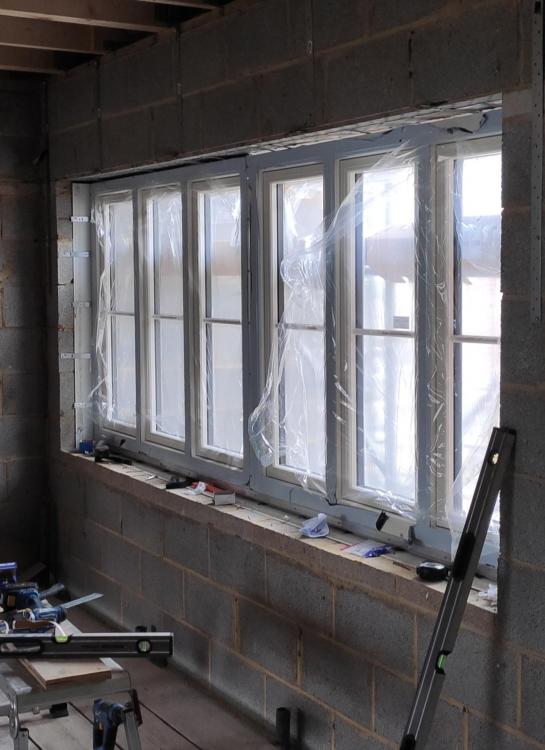
-
Thinking more in terms of walls, but it is a valid point. It's frustrating as I can see a few walls where I'd happily pay the extra £8/sh, but has to be sourced as a full pallet (38no. 2.7m sheets). Fischer have an interesting test report. Comparing various board performances with a HM5X52 fixing: 12.5mm Wallboard 0.6kN 15mm SoundBloc 0.75kN 15mm DuraLine 0.85kN 15mm FireLine 1.1kN In those last three board types and that fixing they conclude safe working loads over 0.2kN which is 20kg. "According to the Construction Fixings Association guidelines; “Ultimate load tests should be carried out and admissible loads (Safe Working Loads) determined according to the manufacturers technical policy.” For fischer this requires a safety factor of 4 for steel fixings and a safety factor of 7 for Nylon fixings."