
puntloos
-
Posts
1575 -
Joined
-
Last visited
-
Days Won
1
Everything posted by puntloos
-

How to measure the angle of a patio?
puntloos replied to puntloos's topic in Roofing, Tiling & Slating
Ping? 😃 sorry but the last question is quite important since I might have a difficult discussion with my builder: Is it reasonable for me to expect a 2% slope patio or should this have been agreed previously? -
How to measure the angle of a patio?
puntloos replied to puntloos's topic in Roofing, Tiling & Slating
OK, managed to use the spirit level app @Nick Thomas suggested. Took me a minute to realise that I didn't look for 2 degree angle but 2 percent slope. (which is, if you're using a 1m measuring stick, about 1.2 degree) To be clear though - if a patio is not 2%ish slope, would you all consider it poorly designed and/or something I can complain about? My result is as I expected which is that my patio is pretty much flat, maybe 0.5% slope at best.. -
How to measure the angle of a patio?
puntloos replied to puntloos's topic in Roofing, Tiling & Slating
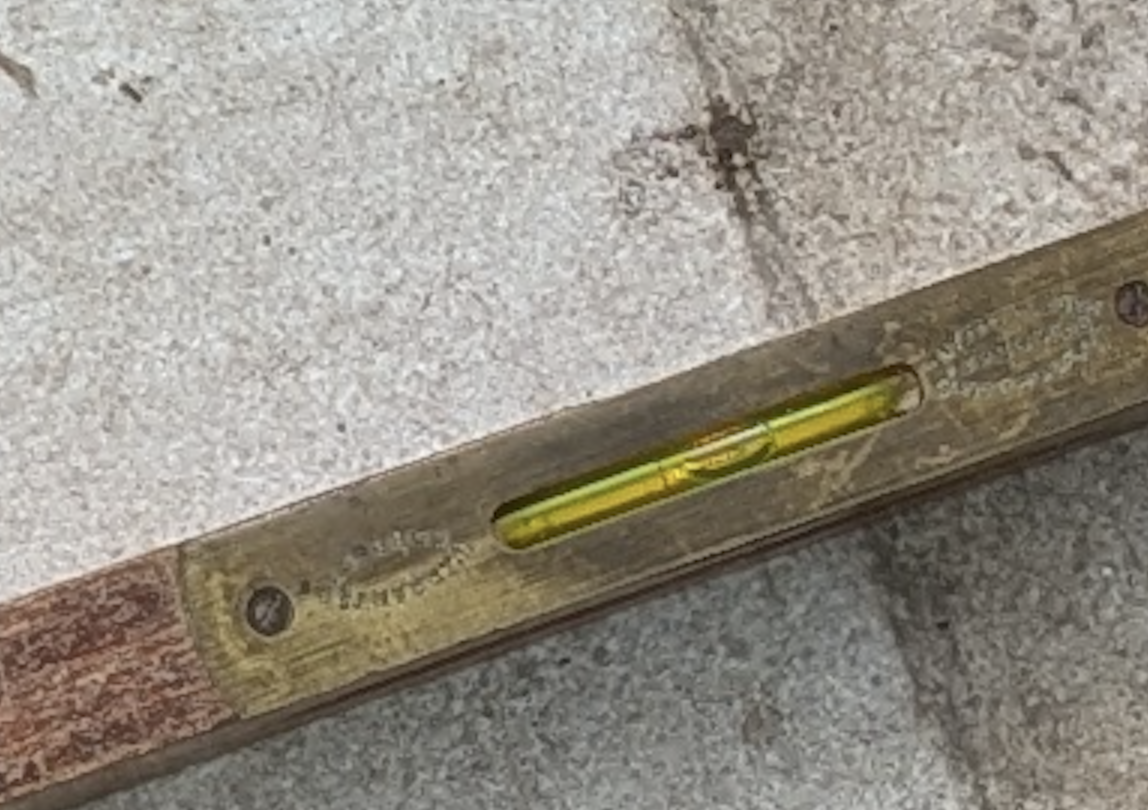
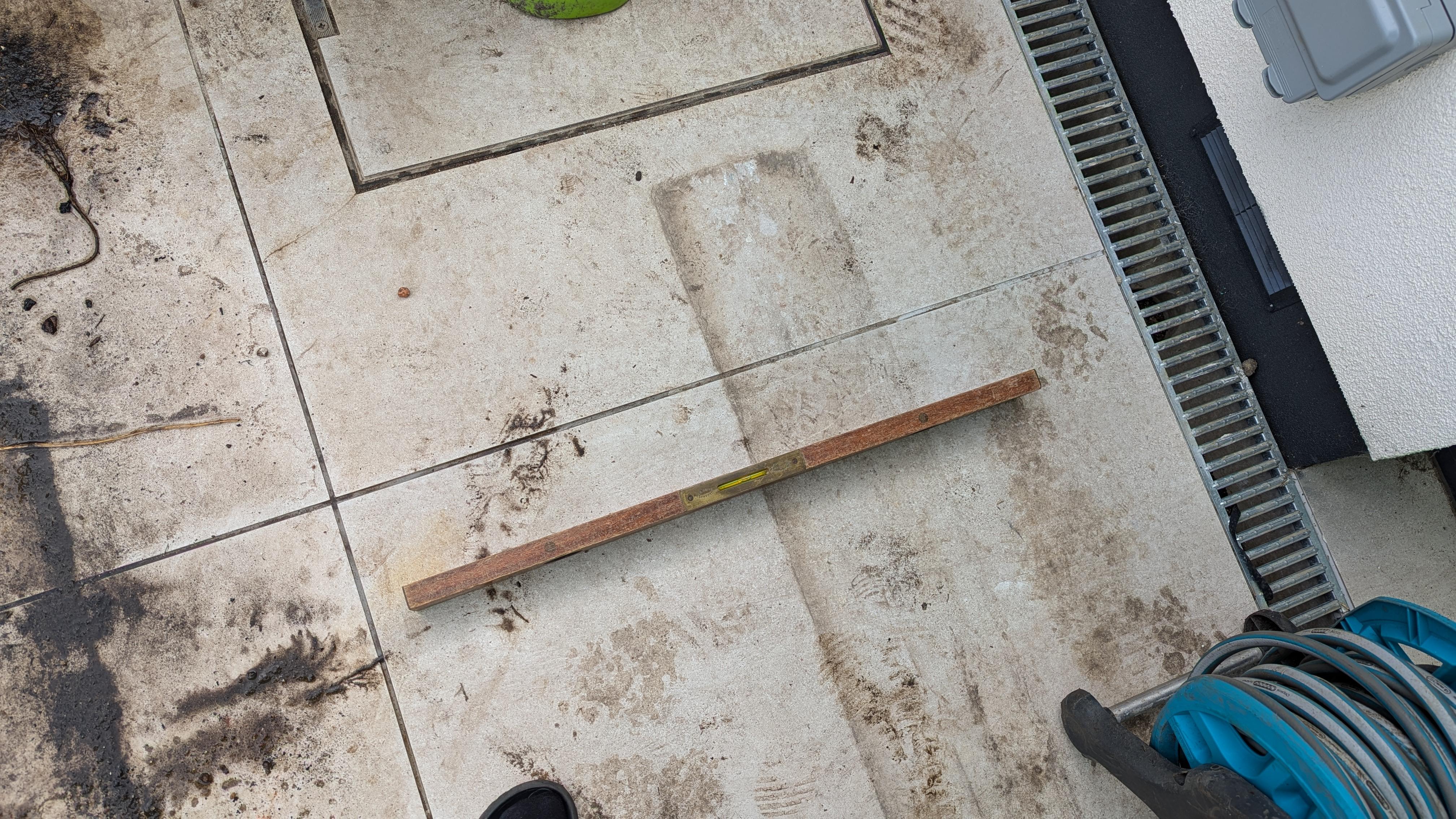
But to be clear - this is the wrong way.. the bubble is slightly 'toward' the drain, so the slight fall is towards the grass. (which is on pretty solid clay sadly so it soaks the grass) -
How to measure the angle of a patio?
puntloos replied to puntloos's topic in Roofing, Tiling & Slating
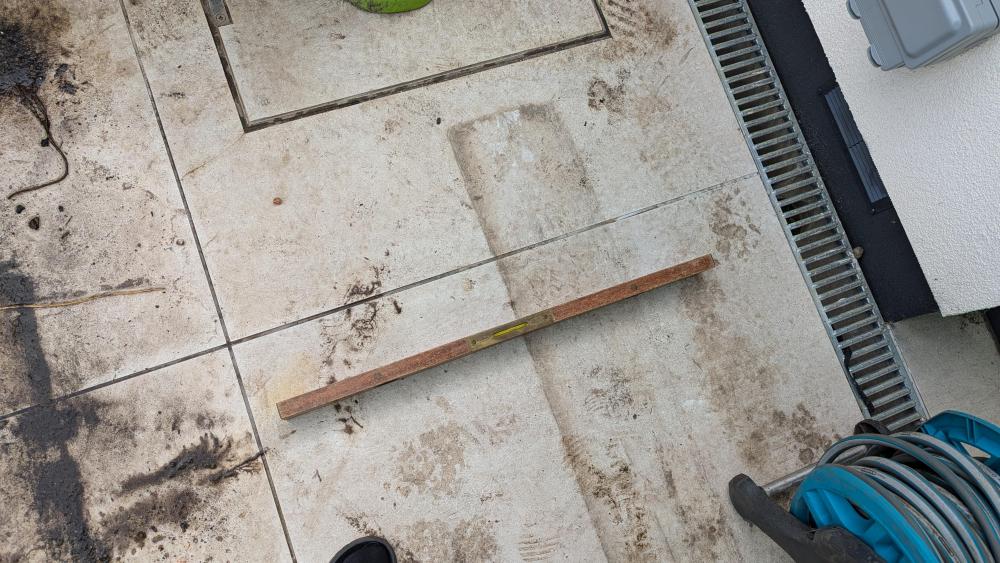
That's a great tip. Easy to do. Will figure it out. It's certainly better now, but agreed there's still some dust and grime but not really "mountains" of it. If anything the tiles are angled away from the drain: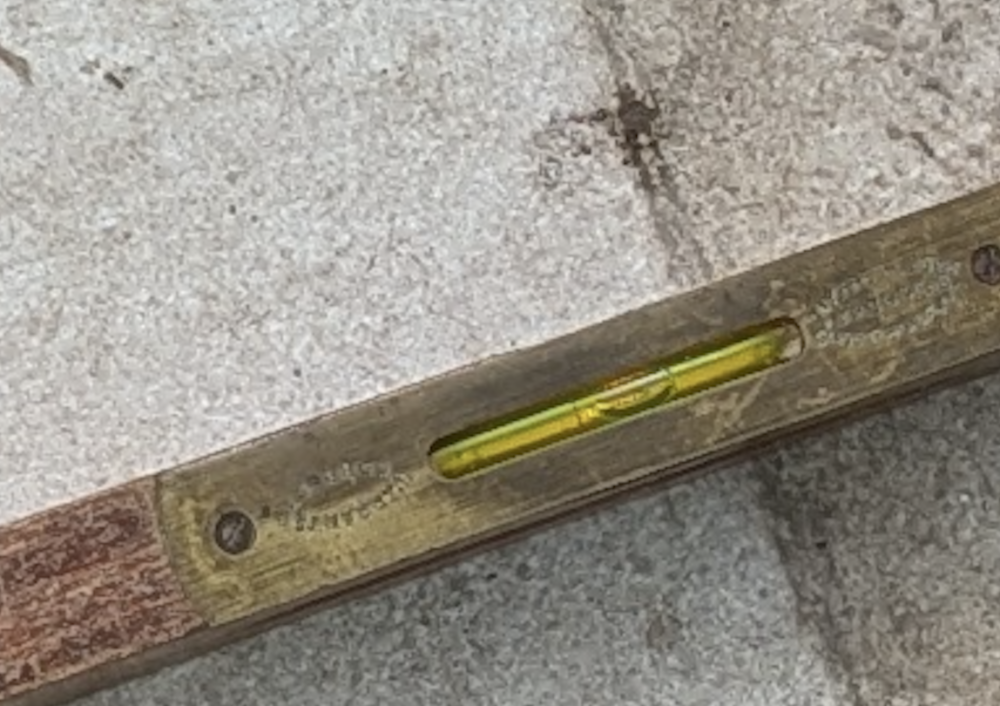
-
How to measure the angle of a patio?
puntloos replied to puntloos's topic in Roofing, Tiling & Slating
Cheers, but the challenge is more to measure what the actual angle is. I think you can't tell from a spirit level if it's 1% or 3%? Or is there a way to semi-accurately eyeball this with a spirit level? And so I take it indeed I should expect 2% slope else I can say they didn't do a good job? -
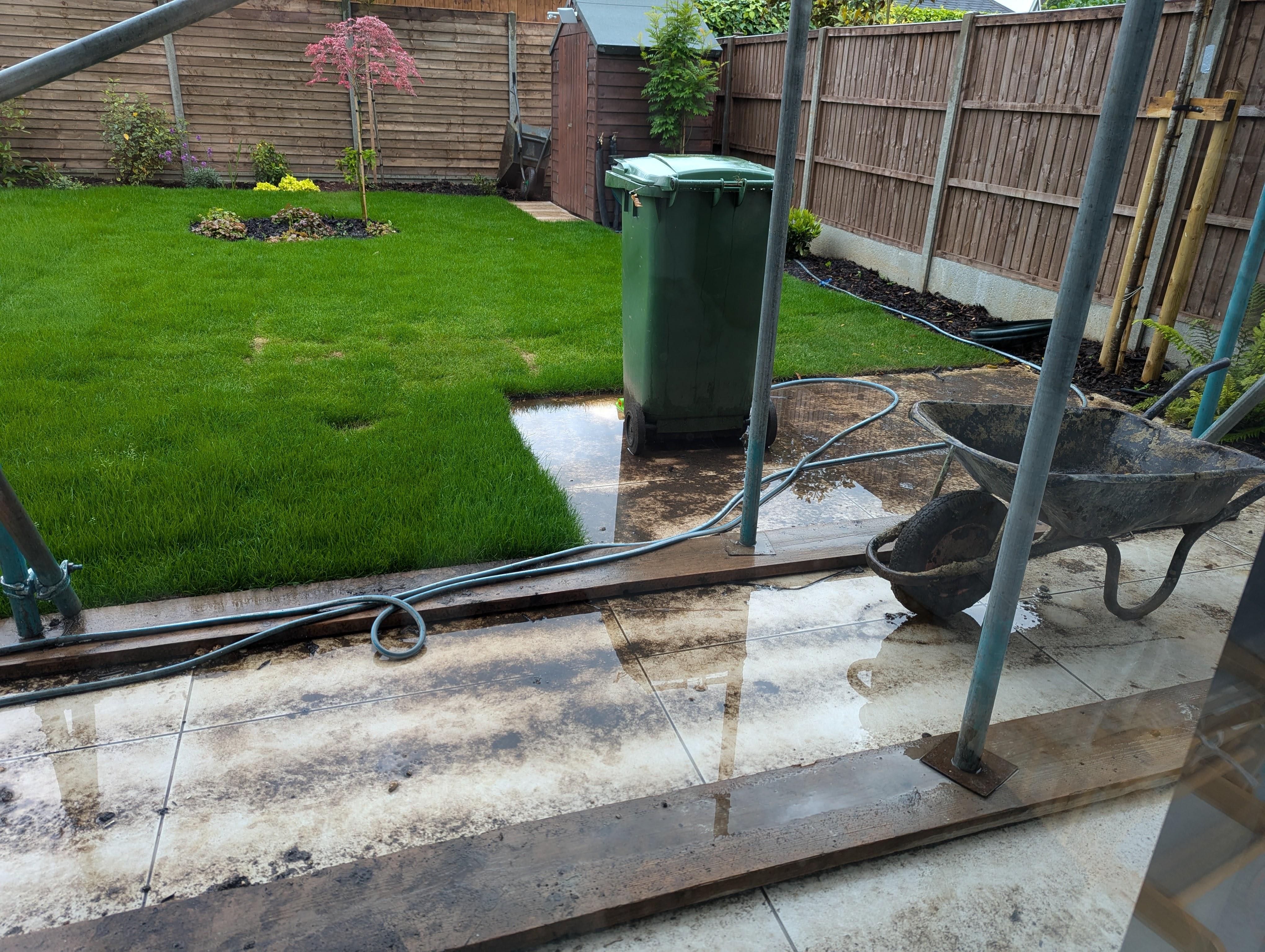
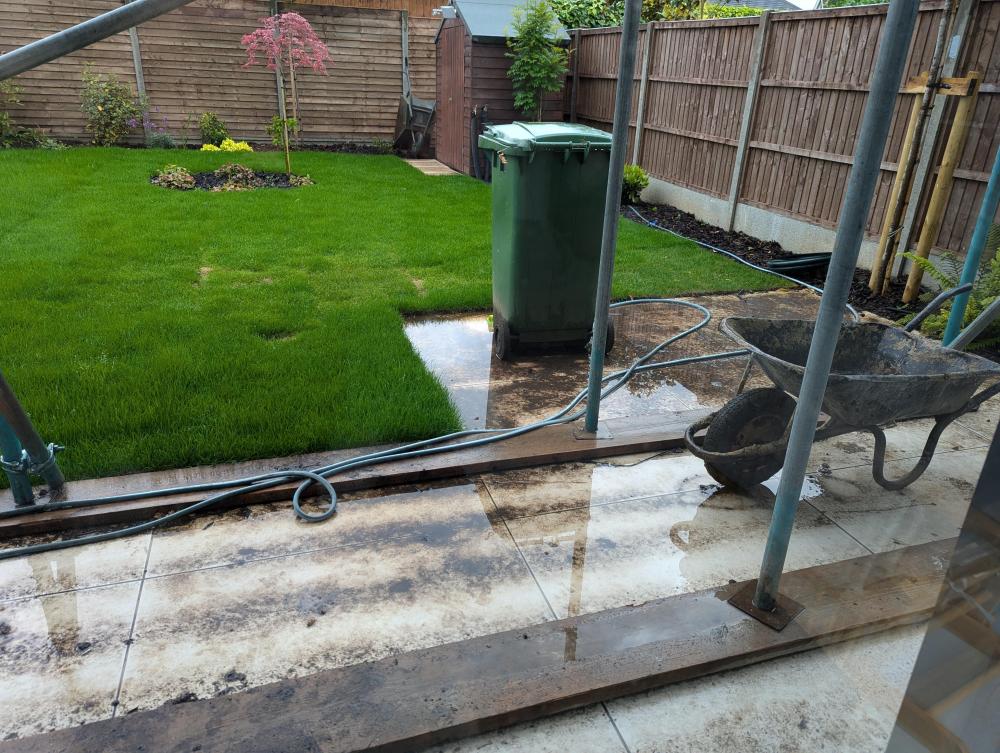
My current patio keeps standing water, even though there's a french drain next to it. Does this mean the tilers didn't put down an appropriate angle? A "random video" online tells me that for proper draining you need at least 2%, so 2cm per 100cm? Or is it not standard to angle outdoor tiles a little? What's an accurate way to measure the drain angle of the patio? Or can I just from this picture claim the patio isn't angled appropriately? (for what it's worth the scaffolding planks might've stopped some of the potential draining, although I imagine water would find a good way around it?)
-
What to do with Excess/Cheap Power?
puntloos replied to puntloos's topic in General Alternative Energy Issues
Certainly a fair point - of course I don't know what losses are involved when importing/exporting. Is a kwh exported truly a kwh? Assuming 25p important and export, is the grid a 'temporal' battery? I suppose in the end it is all about losses. If you keep your house "closed" and any losses are at least as good as they get through your amazing airtightness and U-values then it doesn't matter too much when you put it into the house. My problem is that if anything my house is overheating somewhat so cooling in summer doesn't seem like a terrible idea. -
What to do with Excess/Cheap Power?
puntloos replied to puntloos's topic in General Alternative Energy Issues
Ah but if you're a finnicky posh human then of course 0.3C above 25C is an _outrage_ -
What to do with Excess/Cheap Power?
puntloos replied to puntloos's topic in General Alternative Energy Issues
Ah but the point is, I already have AC in those rooms, my question is if it's "thermally helpful" to cool it. As in, is any cooling I put into that room (at 300% efficiency) more value for my kwh than seling it to octopus? I can imagine two scenarios: A/ Cooling those rooms means the cold air will "by osmosis" trickle down into the other rooms downstairs (where cooling would be welcomed), or would somehow "cool the whole house" to some degree, which I care about if it's a hot set of days. B/ Cooling those rooms will only cool the actual rooms, and we don't care if they are a bit toasty so it's wasted effort. No meaningful "spreading around" effect. -
What to do with Excess/Cheap Power?
puntloos replied to puntloos's topic in General Alternative Energy Issues
54sqm usable floorspace, 2.25m ceiling height. 74m2 full space (we have a large hall 'gap' thats unusable but does contain hot air) - so perhaps 74*2.25 = 166.25 m3 air to heat/cool. Temperature on the hottest day in May went to 25.3C, normal days 24.0 cold day 23.0 U-Value of the roof: 0.094 (according to PHPP, perhaps use slightly worse value (0.1) instead.. -
What to do with Excess/Cheap Power?
puntloos replied to puntloos's topic in General Alternative Energy Issues
Absolutely, I have octopus flux and in many cases I get 15p or even I think 30p during the peak (4pm-7pm). But my gut feeling is that my house "energy loss" (aka U value, really), not to mention the ASHP (AC and water/ufh) efficiency is 300% at very least so anything I can heat or cool is very likely going to yield me more value-for-energy. @SteamyTea Ah I completely forgot, yes I have an EV but don't use it a ton so often that's full too. In fact I'm actively considering building my own V2H system so my car battery can power my home. Nobody have any idea if I should cool my hot loft (even though I don't care it's hot?) -
So, on good sunny days, I have a good amount of extra power left in my PassivHaus. I have a few options: 1/ Send it to the grid. Not the best value for my money but perhaps worth it 2/ Cool (or heat, I suppose, rare..) my 2 concrete floors with UFH Perhaps beyond normal parameters? 3/ Cool the warmer-than-average loft. This is the one I'm curious about - I have aircon in the loft, but we don't tend to go there a lot, it's storage. Does it make sense to aircon warm air that we don't care a lot about? The heat, or cold (passivhaus) wouldn't really escape that much, but would it also make the lower floors more pleasant? Or am I running a device (wear and tear) for no real benefit? 4/ Heat the warm water cylinder to (say) 65C? Free de-legionella I suppose Will a cylinder retain heat long enough for it to matter? ... others? And also, what to prioritize?
-
Fan Coil Units for use with a (cooling) ASHP
puntloos replied to ProDave's topic in Air Source Heat Pumps (ASHP)
FWIW the above, smushing together pieces of tech from different makers together feels somewhat risky. Might work, might be a huge headache, and 'aircon' is a pretty proven and commodity tech nowadays so I would certainly explore getting an off-the-shelf solution. Also worth noting that for (my, mitsu M32 based) solution, the FCUs have a little more say in what to do, in particular they measure the input air temp and humidity and will scale the cooling based on that. -
35Hz Vibration noise & dampening?
puntloos replied to puntloos's topic in Air Source Heat Pumps (ASHP)
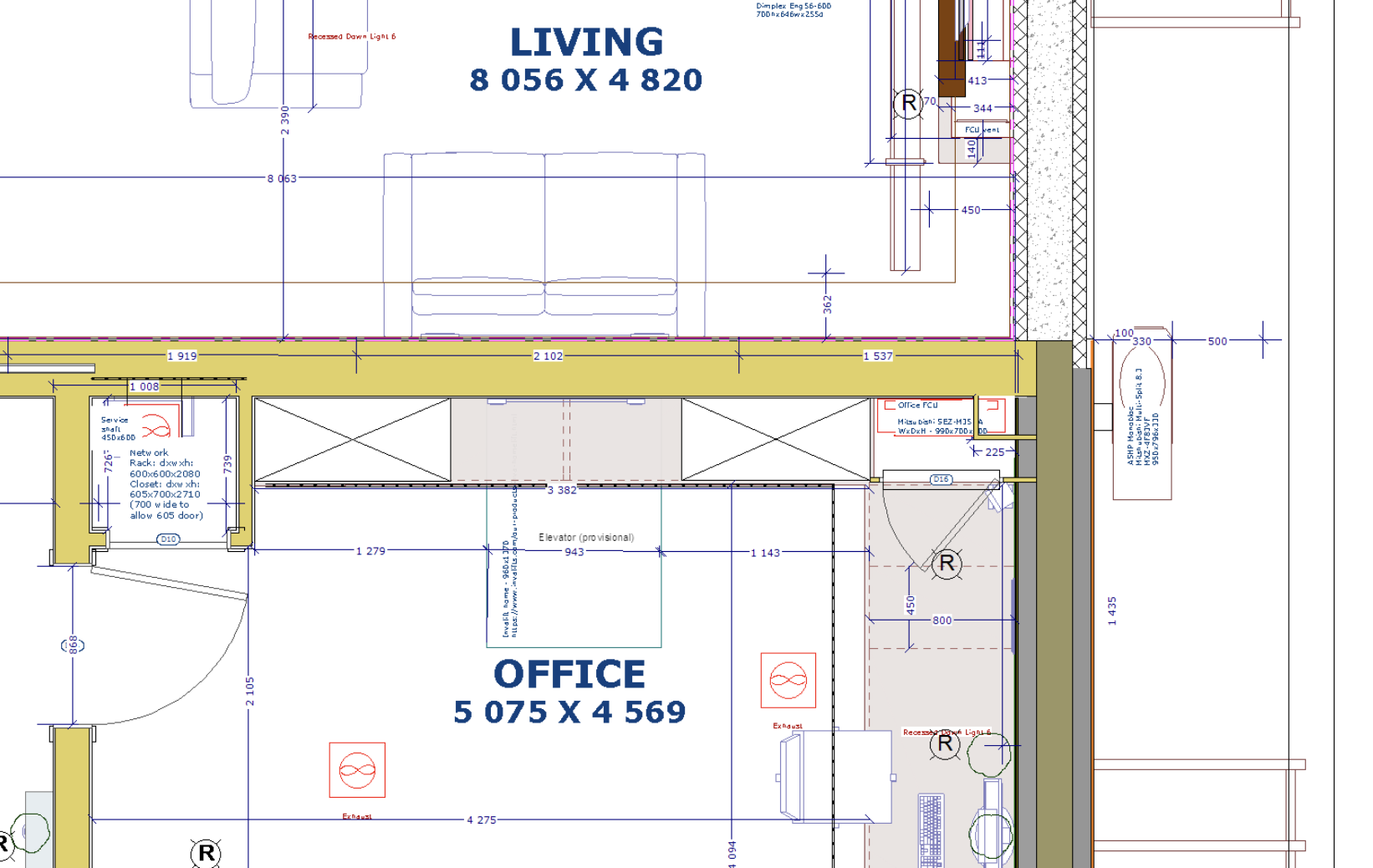
I am imagining (ha, I thought I was having tinnitus) it was everywhere, but very ambient hard to hear, but my office desk is 2m away from the outdoor unit. One day I was standing in the networking closet (far corner of the office, near door) and it was loud there too.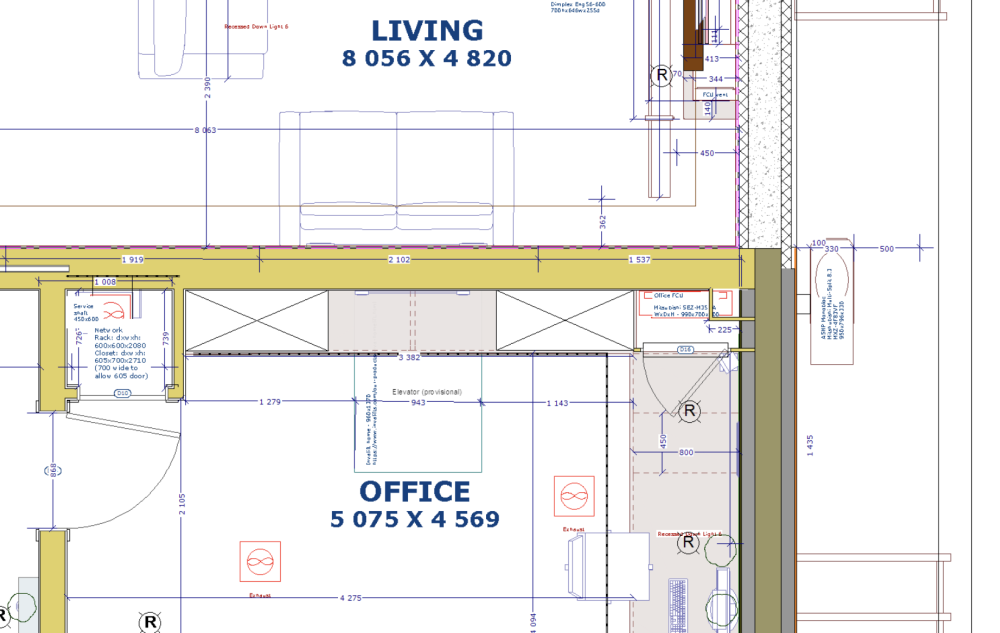
-
35Hz Vibration noise & dampening?
puntloos replied to puntloos's topic in Air Source Heat Pumps (ASHP)
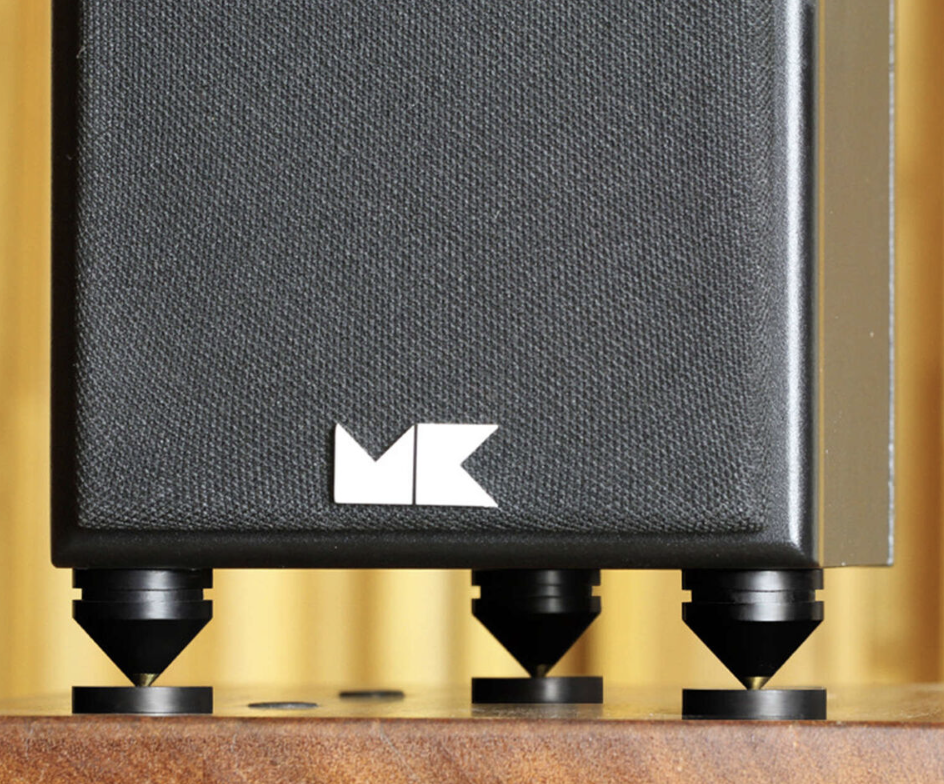
In the home cinema world, subwoofers often are put on spikes. I wonder if something in that direction would make sense? Or will most of the noise be coming through my pipes not the floor? (the ASHP is on a slab of concrete, I don't think that slab is connected to the house wall, there's a small 'gutter' at least between the slab and the wall, although maybe there's concrete under that gutter.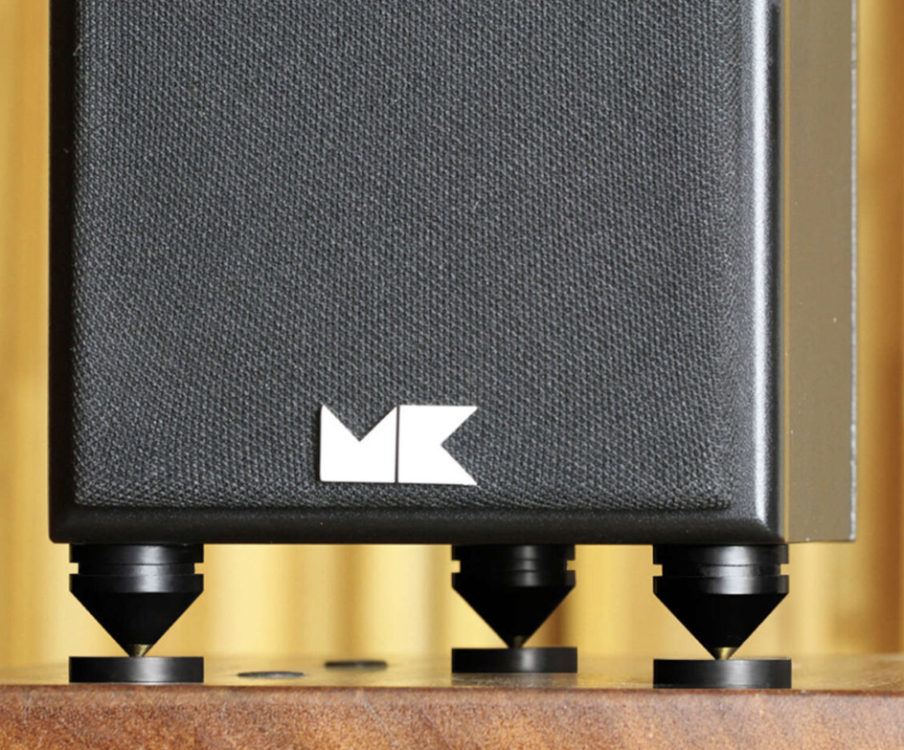
-
Actual water temperature from the tap?
puntloos replied to puntloos's topic in Air Source Heat Pumps (ASHP)
I was wondering about this. I don't know, but even if it is it would be set a bit low I'd say? This is good info for me. With this indeed I'd estimate my actual temperature at tap is more like 43-45 (depending on actual heat of the cylinder at any given time). I'll probably get a proper thermometer, as a modern nerd I only have these surface temp devices that don't wokr too accurately on anything other than skin.. -
So my ASHP is set to 52C (but of course the cylinder will fluctuate between say 46 and 52 based on heating cycles) My question: what is a reasonable temperature to expect coming from a bath tap in the farthest corner of a house, about 15-20m worth of (in theory at least) well-insulated pipe? Assuming 52 - can I expect 51.9? 50? 46? The water coming from my bath tap is *just* warm enough to be called comfortable bath, so I imagine it's about 38C? Surely if I actually got 52C it would be bad? painful even? Or just very sweaty very quickly?
-
One problem on that one is that "supposedly" (I saw it somewhere on the internet so it must be true..) passivhauses are a little harder to control for humidity, and I do indeed find that my house humidity seems to sit a little above ideal - 60-65%) Uhm so you grew up in 40C? But yes it's interesting to see lots of literature suggesting eg 18C is some ideal sleep temperature, but then wrapping yourself in thick blankets so the effective temperature of your skin would still be (say) 30C?
-
Not to mention, frankly, I find thermometers so misleading! I am still suspicious of their overall accuracy is it really xyz degrees or would a premium thermometer disagree? But even more importantly, what is "it". In my home, the temperature on our wall touchscreens is, I believe, the average of all measurements in that room, of, well, what.. I suppose these devices are measuring their own temperature, so if they're stapled to a wall, are they measuring wall temperature? Etc. But yes as you said, if you're OK, you're ok.
-
Two "conflicting" points of view, which just goes to show that at the very least there's personal differences. Whether or not they are learned or "genetic" is perhaps a different discussion, I have always assumed (for example) that people from warmer countries would want a place to be warm, but Indian friends of mine want the place freezing, and a polish friend gets cold really quickly In the end, I think the crucial part is that Passivhaus only 'dictates' a house shouldn't be more than 25C which is a reasonable maximum also given the research I quoted earlier. For comfort I seem to be gravitating to 23C but I'll admit the moment I start doing 'manual labour' in the house, eg tidying moving a sofa, whatever, then I overheat quickly if it's already 24.5. But yes, sweaters are great to wear indoor if you are doing it to keep the cost of limiting the heating cost, but it's silly to try to cool the house to be able to tolerate wearing sweaters.
-
I think it certainly goes to show it matters what you're accustomed to. But especially if you are actively (ASHP?) trying to heat or cool a place to match what you're used to, you might need to ask yourself some questions on what you're doing. To be clear, IMO a house should ideally be good for what you want rather than that you try to adapt to the house, but I've found with passivhaus there's a very new and pretty unknown (to the public) balance to be struck between trying to live low-energy and tolerating some good variation between hot and cold.
-
A lot of the "lore" of how to live in a house is based on assumptions that don't work in a new build passivhaus. For example, most recommendations I see around house temperature seem very tinted by trying to be energy efficient in a non-energy-efficient house. "dropping the thermostat 1C" is well and good if your house wants to go to 15C and you need it to be at least 20, but my house stays at 22 without much help, and for me, dropping the thermostat 1C raises the cost because it turns on my air conditioning! Instead, a recent Harvard Study - Nighttime ambient temperature and sleep in community-dwelling older adults suggests "20-25C" - so call it 22.5C nighttime ambient temperature is optimal. But then.. 22.5C, well, perhaps also because of temperature assumptions, I'm a little hot in my house if I wear sweaters. Should I take those off instead? Is there any discussion on how a passivhaus, with people in it, should behave?
-
35Hz Vibration noise & dampening?
puntloos replied to puntloos's topic in Air Source Heat Pumps (ASHP)
Vibration stops when I turn off the outside unit -
35Hz Vibration noise & dampening?
puntloos replied to puntloos's topic in Air Source Heat Pumps (ASHP)
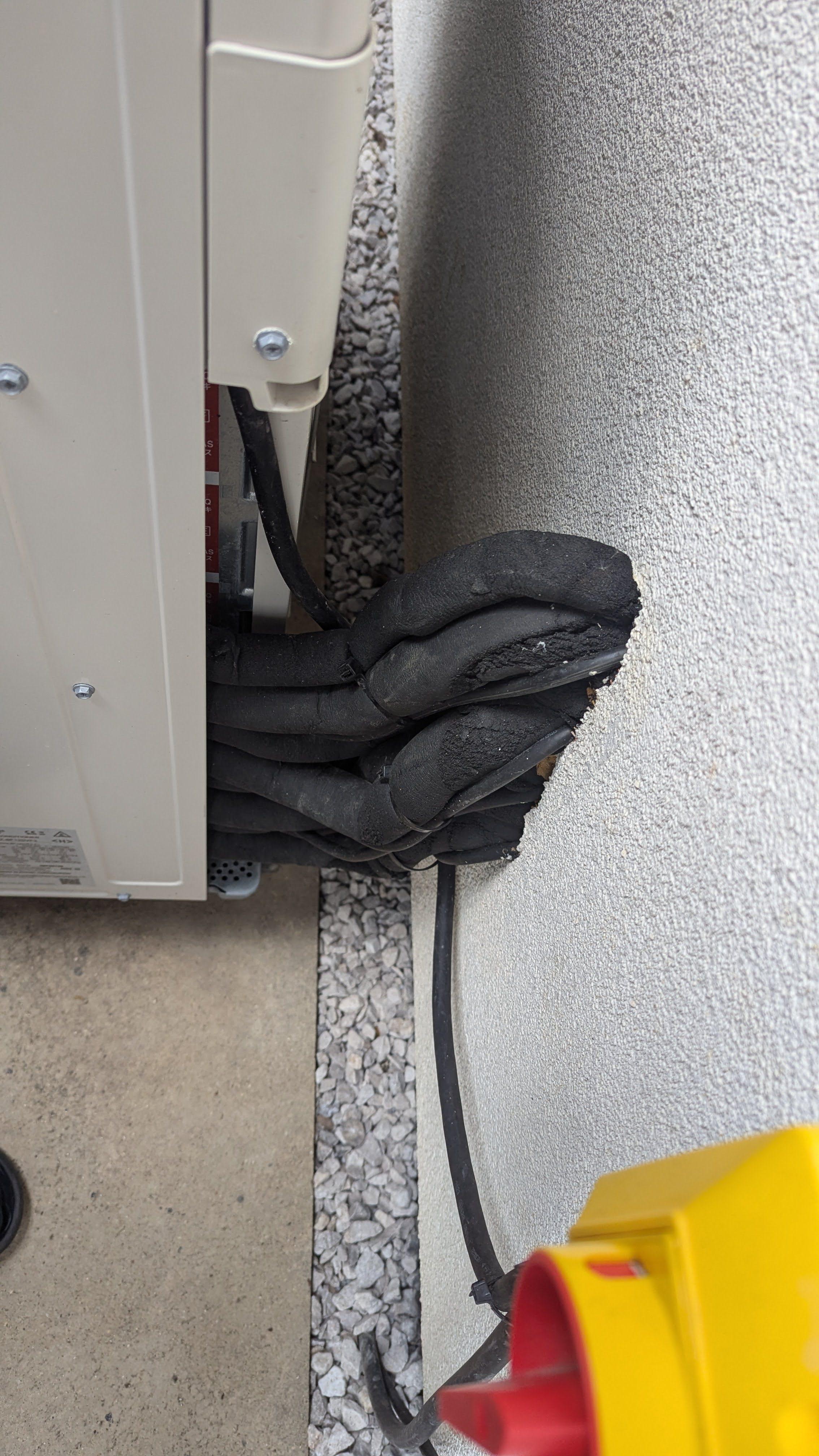
Not sure, they're R32 pipes, I don't believe anything special has been done to them.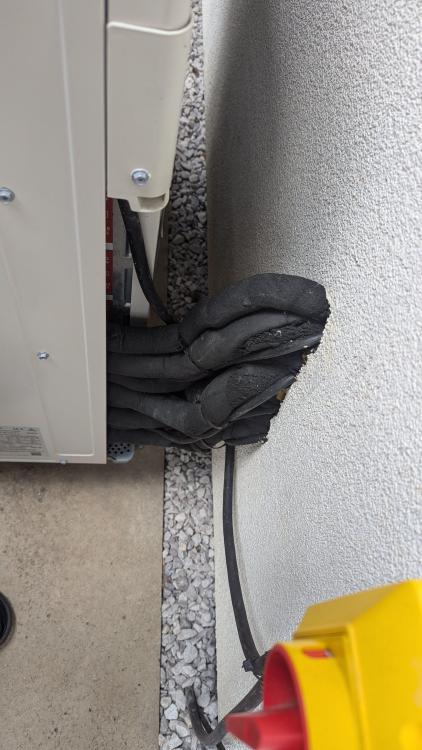
-
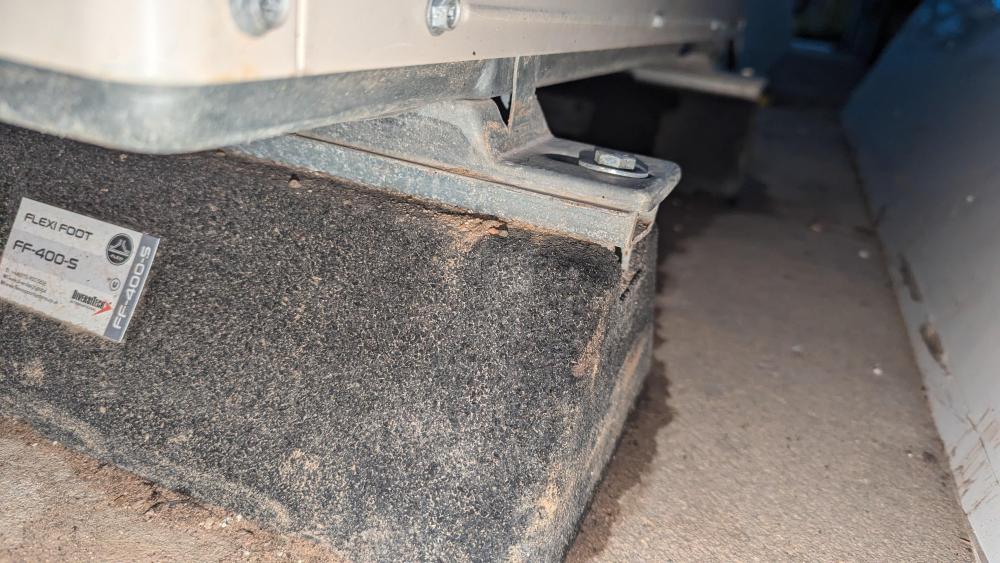
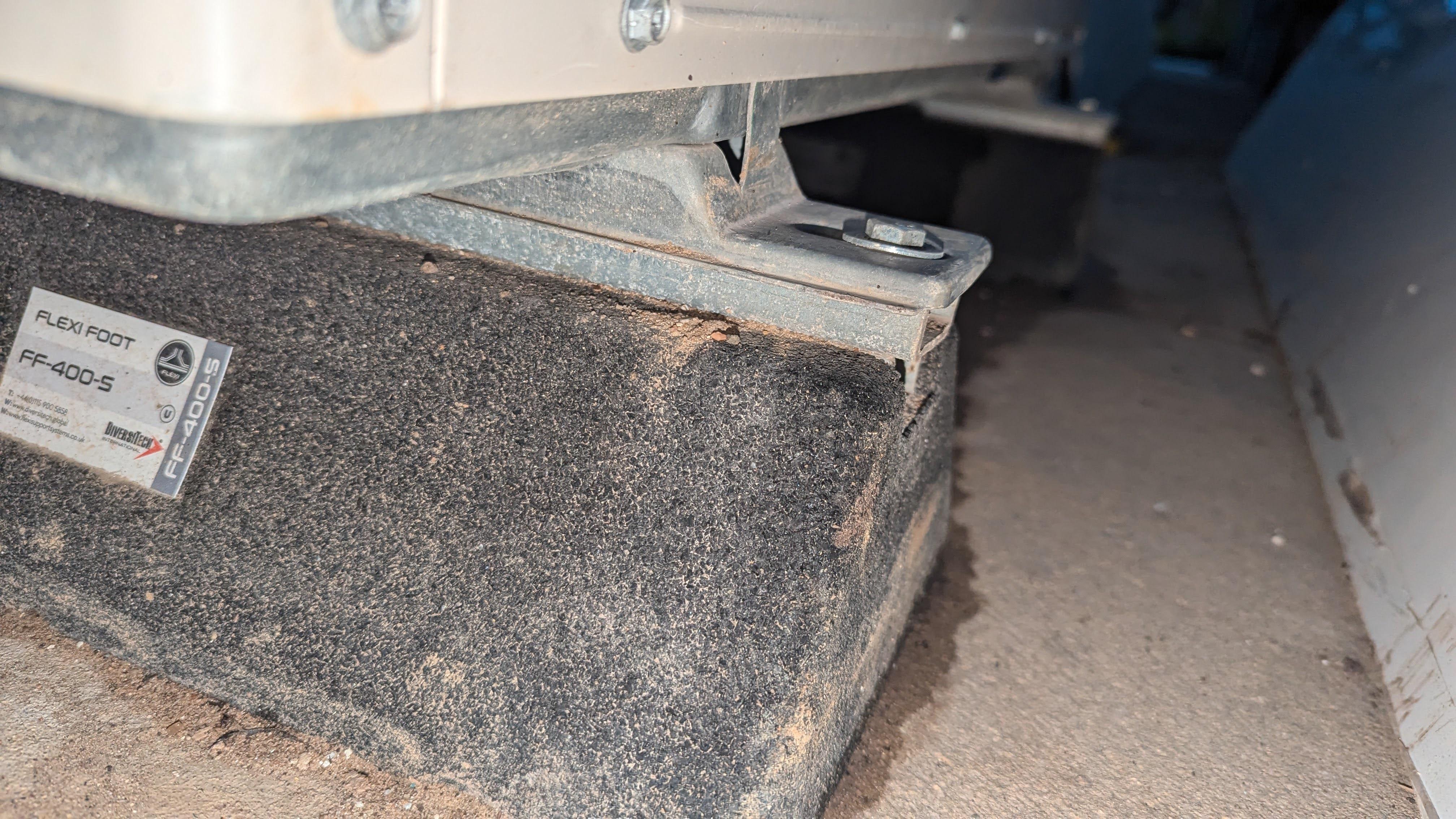
My ASHP is placed right next to the house (as I imagine many aircons are as well), on some rubber-ish feet. (thankfully not wall-mounted other than the pipes going into the wall.) https://www.dpbuildingsystems.co.uk/flexi-foot-400mm-with-strut-ff-400-s-en Apparently my device's fan runs at 35Hz since especially in the adjacent room I can feel/hear, even measure the vibration quite easily. My question - is there anything I can do to improve the situation? Any type of further de-coupling? Can I upgrade the flexi foot thing somehow?