Dan F
-
Posts
1431 -
Joined
-
Last visited
-
Days Won
2
Everything posted by Dan F
-
https://www.armatherm.com/thermal-break-materials/ You need to design steels to use this though.
-
Vaillant do a ducted heat-pump which you can put in a room like this and duct air intake and exhaust. Another client of our main contractor has just installed one. Ducting needs to support 400 m3/h, tank is 270L. But i'm pretty sure that the output (kW) is really quite low and that it only support heating the cyclineder, not for anything else. https://www.vaillant.co.uk/for-installers/products/arostor-domestic-hot-water-heat-pump-58880.html I don't know what heat output you need, but could you combine an Arostore for DHW with a all-in-on MVHR / Exhaust air heat pump unit? Or an arostore for DHW with hot/cold A2A air-con(s).
-
If your heat loss is 4kW then you may look to install a 5kW ASHP to ensure it covers you heat demand on the coldest day of the year. But, in May the same house might have a heat demand of just 500W, but no 5kW will modulate down to 500W without needing to turn the compressor off part of the time, even with a buffer. So what do you do; i) get a smaller ASHP (no because that'll be no good in the winter) ii) get a second smaller ASHP for spring (no because that's silly) iii) use alterntive method for satisfying 500W demand (why, when you have an ASHP) iv) use 5kW ASHP knowing that it the compessor will only be on 25% of the time but use a buffer, if required, to ensure the cycles aren't too short. Point is, you need to right-size your ASHP, not try to find something that will always match your heat demand. A buffer doesn't avoid cycling if heat transfer to emittters < min modulation, rather it helps ensure the cycles are longer (it's lots of short cycles which are bad).
-
We used fake GRP engineering bricks. Couple of mm thick, come in long lengths so easy to fit, and look like the real deal. Brick slips would have been more work and also a bit too deep (wanted it to sit back from render a bit)
-
It will cycle. Cycling isn't a bad thing when you need very low output, you just want to avoid it in your main usage ranges (i.e. 2-6kW) by not buying a 12kW heat pump than can't module below 4-5kW.
-
Correct, although if you have low flow temperature you'd be drawing closer to 600W at COP of 5 to deliver 3kW heat. The 7kW Vaillant can deliver 9kW at -2C if your flow temp <45C. At 7C outside it can modulate down to 3.2kW. Its up to you how quickly the house heat up on return from holiday, not them. Also you can internet conenct heating and MVHR and turn it on before you arrive if needed. I wouldn't consider this sceanrio in sizing personally! Especially if it means bigger radiators.
-
Vaillant AroTHERM 7kW.
-
I got this stuff in the end https://www.tlc-direct.co.uk/Main_Index/Cable_Index/NYY/index.html. Not armoured but it's all ducted anyway.
-
Larger units do have a higher min modulation yes, so you need to ensure you don't go too big. But slightly larger can be good i) so heat pump isn't needing to run on max ii) DHW reheat times are better. Ours 7kW unit is able to modulate down to 25% which at 7C outside and 35C flow is 3.2kW. If possible try to get a hold of the perforance tables for the ASHP you are looking at which will give you a cleaer idea or min/max output under different conditions. If it can run at more than 7kW, that doesn't mean it will need to for heating, there is DHW also though. I don't know about all manufacters but our ASHP label says 7kW, but it's maxumum output is anywhere between 4.6kW and 12.3kW depending on the outside termperature
-
I meant impossible to work with in a 20mm conduit. I have 100mm conduit from the house to front drive, but then it's only a 20mm conduit from a pit to the controls box on the gate post. Unless I just skip the 20mm conduit and throw the armoured cable in the trench under gate threshold alongside the 20mm ducts with control cables.
-
We're having some issues getting out electrcians back, but meanwhile landscaping work is processing which needs some electrics running prior to concrete being poured. I've taken on the 24v lighting, and am using a mix of 2-core 2.5mm2 and 1.5mm2 H07RN rubber cable. I'm using 1.5mm2 from each fitting to a local pit and wiska connection box, and then 2.5mm2 for the feeds back to the enclosre with all the drivers in it. 90% of garden lighting is 500mA or 700m! constant current so voltage drop isn't a major concern, but as some of the runs to the enclosure are 20-30m I've gone with 2.5mm2 for the feeds. My question though, relates to what cables I need externally for 16A supply to a automated gate. The cable will be ducted from the house to a pit in the front garden and then from there via a smaller conduit to a gate post. I don't think armoured is required in this case is it (?) and both armoured and standard twin+earth would be impossible to work with in a conduit anyway. Should I run some 3-core 2.5mm2 H07RN for this, or is there something better for the job?
-
Might be worth badgering Vaillant about alternate approach to external control as apparently there is a modbus solution that they have using (or experimenting with) with some customers.
-
It's more about reaction to fire which depend more than anything on the surfaces of the construction. We have a wooden-frame garden room <1m from the boundary and what the building inspector asked for was i) fire-rated plasterboad internally ii) a render system with a satisfactory warrington fire certification externally. If it's <15m2 and not used for sleeping building regs don't apply though, still smart to take same precautions though. If @China21is in England my experience is that it's the higest ground level and there won't be an issue, but there is a chance that diffrent councils may interept things difrently given it's not 100% clear in the legislation. In order to exceed 2.5m you need to move the buiding 2+ meters from the boundary but even in this case the eaves are still limited to 2.5m, so this may not help.
-
Whole House Cooling
Dan F replied to sargan's topic in Mechanical Ventilation with Heat Recovery (MVHR)
Well, it's constrained by the specific heat capacity of air and 3kW @ 100m3/h just doesn't work. Using the parameters in the comfopost datasheet the maximum theoretical sensible cooling power at 100m3/h is 0.52kW (1.35kW total @ 80% RH). A bigger comfopost simply can't improve on this! You also need to consider that the numbers in the datasheet assume 28C @ 80%RH. The reality is that on 18th July 2020 (when it was 37C outside) my Comfopost unit was getting around 25C due to MVHR being operational. What MVHR unit are you planning to use and what is your planned maxumum flow rate? -
It depends on the sum of forward voltages of the fittings + the voltage drop. The drivers I'm using are 230v with 2-42V output. DC->DC constant current drivers may be available, but they'd slightly less useful in terms of max number of fittings supported and allowable voltage drop in this case.
-
Nearly all LED tape needs to be run with CV though, so depends on fittings..
-
@China21 Our garden building sounds exactly the same as yours, the back right corner along boundary is about 2.4m, but the front left corner is almost 2.9m. We had a complatin and the planning department visited. I explain that it was no higher than 2.5m at the back corner and they took measurements to confirm this and left. That doesn't mean all planner see it exactly the same way, but that was our experience,
-
I haven't used this, but the details talk about RGBW so there must be a way to use it for RGBW. Yes, you can use each one of theese dimmers for 4 white LED strips (or for two tuneable white strips). So you would need 6 of these, 4 for your white LED's and another 2 for your RGBW strips. Yes, its still 8A/192W back to the driver. Each 5m LED would be 4A/96W each.
-
That looks neat. Is this in Loxone panel, or you have a seperate panel for lighting? Do these drive Loxone RGBW tree dimmers? Looks like that setup is around 500 My initial plan was to centralize everything and use DIN-mounted power supplies for LED's (potentially in a seperate/deeper cabinet), but had to give up on that idea when I realised that our electrcian had used 0.5mm2 flex for all LED locations, even those 20m away. Instead, we've now ended up with 3-4 locations throughout the the house (some in the loft, one on top of kitchen fridge etc.) that have a 5-core 230v+DALI feed from the plant room and then have fairly local HLG-series meanwell power supplies which supply 1 or more EldoLed drivers and in LED's. Not centalized and not going to look as good, but will do the job. I think I'm leaning this way tbh. more research is required. Its an attractive option if you loads is <960W, even though it's almost twice the price of a couple of 4080W power supplies, given the additional capabilities it has. In your case though, where you are up at 1.3kW, I wonder if you can assume average usage <960W and/or maybe have Loxone automatically DIM lights when total power consumption gets high. That would be interesting!
-
@Thorfun Other option for control via DMX could be these: http://whitewing.co.uk/rgbdim48.html (there is even a 96 channel one too!). This might be a good option if you wanted to centralize everything and run (correctly-sized) 5-core to RGBW strips and (correctly-sized) 2-core to white strips. This article talks about the Locone RGBW Compact, it's PWM frequency, and DMX alterantives from AliExpress. https://smarthome.exposed/24v-dmx-dimmers/ I'm using the EldoLED LinearDrive product which my LED tape supplier recommended and supplied. Mine are DALI, but looks like they do 1 and 4-channel DMX ones too.
-
I don't think anyone typically tries to use a single PSU for everything. Your miniserver will still need 24v power. So you need to plan for a PSU for minserver and all extensions. Sound right to me. Most of this is lighting. Where you put your PSU's depends on i) how much space you do/don't in cabinet or plant room ii) how long the 24v runs would be if you did centralize the PSU's iii) if you had locations around the house that are more localized to LED's where you can hide kit. I don't think there is one right answer, and you might find a mix works best for you. You could use the Loxone RGBW Compact with the meanwell PSU if you didn't want to use DMX/DALI. The loxone dimmer extension is for 230v dimming only AFAIK and wouldn't support RGBW or give PWM output needed for LED strip. You can use this for pendants/wall-lights/5A circuits etc. which are likely to be 230v.
-
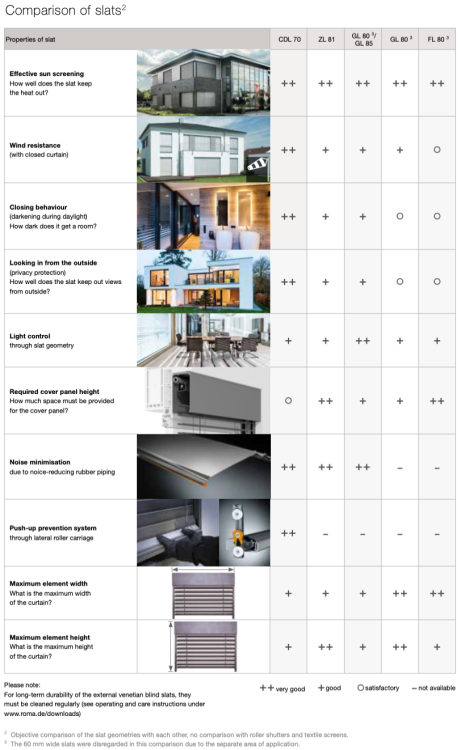
FYI @craig. BTW, I think we might have missed the "push-up prevention" which looks like a good idea on ours. These blinds are great, the only issue with them is I don't think they are available in the U.K. other than if you get Gaulhoffer windows from @craig!
-
No because voltage drop would be 10v (assuming no other loads) and RGBW compact would only get 14v. This is why Loxone do the tree cable, but there would still be limit on how much lighting you could put on a single run of this. Yes, but this is close so you could almost certainly use 5-core 0.75mm for this, maybes less.
-
Maybe I confused you. You'd need: - Almost certainly two lengths of LED tape wired in parallel (not one length) - 2 lengths of 5-core flex from a single RGBW Dimmer to each length of tape (this can probably be 0.75/1mm because i) it's close ii) each length is only half total watts). - Loxone tree to the RGBW Dimmer - 2-core 2.5mm2 from 24v PSU in pant room to RGBW Dimmer (assuming 190W worth of tape). (this is independant of if you use 1x10m tape or 2x5m tapes in parrlelel as total watts/amps is the same) To avoid the 10m of 2.5mm2 you either need a 24v PSU closer to the RGBW Dimmer, lower power LED strips, or you could look at using a 230v RGBW driver (would need to be DALI or DMX) in the bedroom rather than the Loxone Tree one. (This is all subject to spec of the tape you source though. watts/m and max length primarily)
-
Our electrician did all LED strips (some of them 5m+ long) back to the plant room in 0.75mm2 to start with! Only when I showed them my voltage drop caclulations did they agree to run 230v/DALI feeds to various locations to have the drivers more localized. So it is worth understanding the basics and checking whatever they do makes sense.