sean1933
-
Posts
88 -
Joined
-
Last visited
Everything posted by sean1933
-
Chimney stack flue choice, help! Liner or twin wall...
sean1933 replied to sean1933's topic in Stoves, Fires & Fireplaces
-
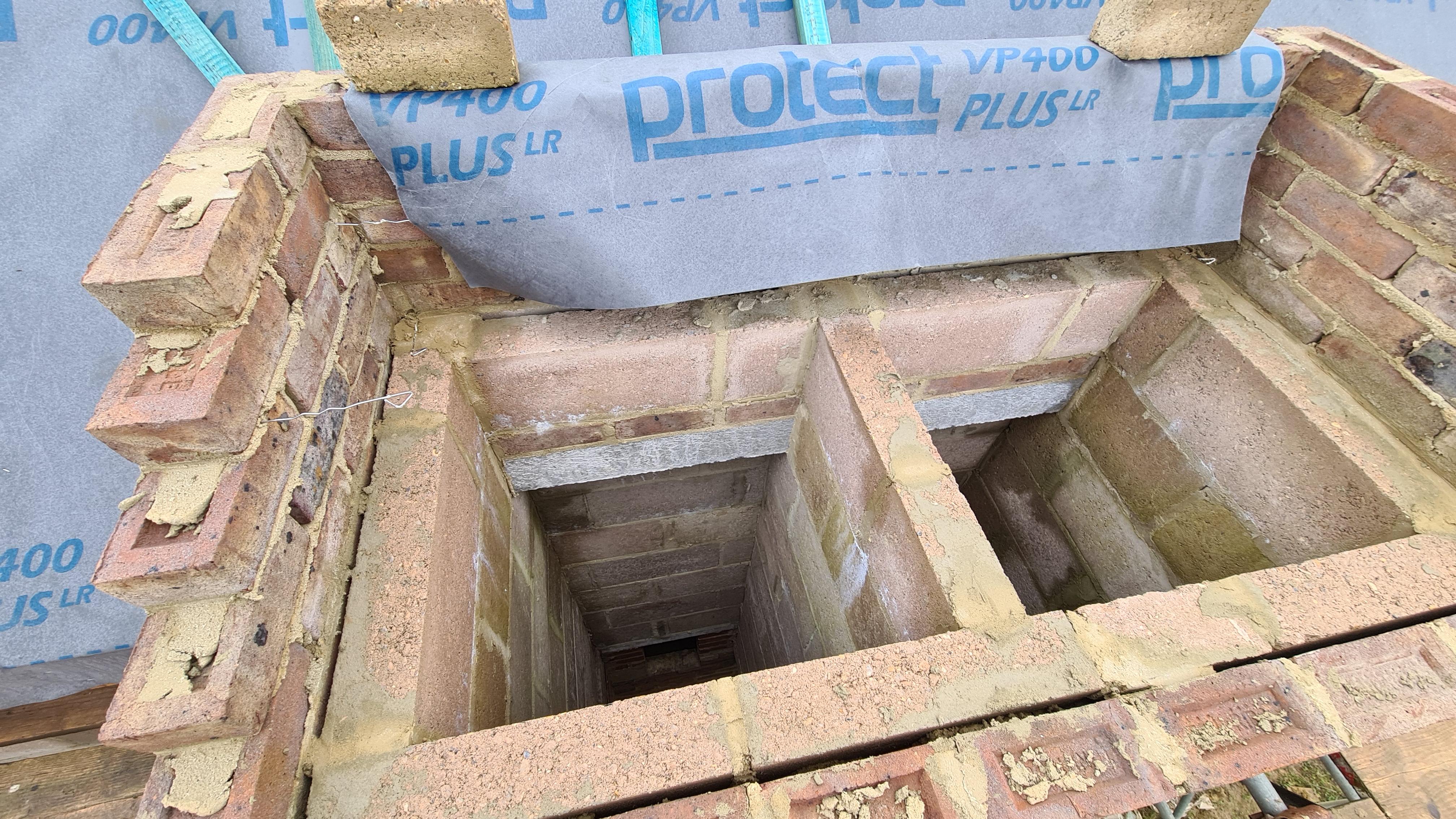
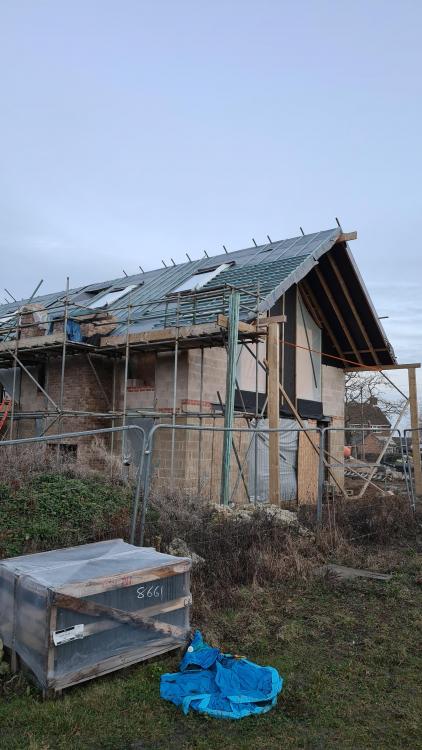
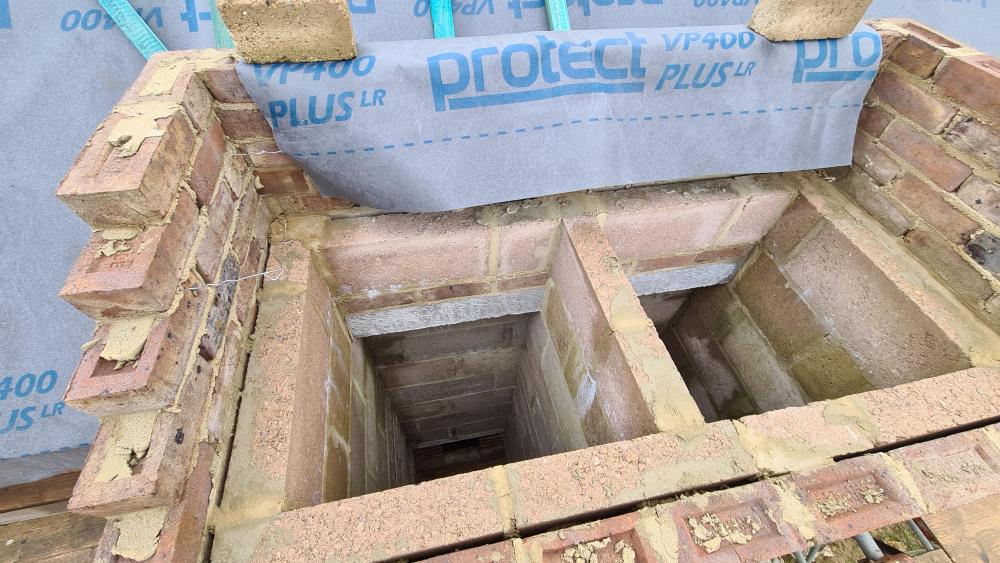
Hi all. We are just in the process of building up the chimney stack which is now at eaves height. We recently attended one of the trader fairs where my wife has now firmly shifted her log burner choice to a larger model... that requires a 250mm flue rather than 150mm. Our house is designed with a large 1800 x 900 brick stack entirely outside the thermal envelope of the insulated brick and block cavity - ie externally bolted . From the outside at ground level the stack provides an opening for a BBQ. With this in mind, above the opening the stack internally splits into 2 800x800 openings to provide individual flues for the BBQ and the other for the internal log burner (which punches through the cavity into the house with a twin wall flue. The issue I have is how to build the stack. For reasons unknown the architect and SE didn't design for weight a pumice flue liners and if we fitted on only 1 side (for log burner) the stack would be notably heavier on one side. I but this issue behind me a while ago and had come to the conclusion that I either needed to use a SS flue liner (and insulate it with wrap - the stack is too large for infill vermiculate, it would be heavy and cost a fortune) or a twin wall flue fitted inside the stack - whilst a tight fit, with a 150mm flue there would still be just enough space to climb inside the stack to fit after the event and if any future checks are needed...this is out of the question with a larger 250mm twin wall especially with slight internal narrowing once it breaks through eaves level. My options now seem to be: * Build stack as it is and add a flexi flue liner - (with an insulated sleeve) after the event. This seems by far the easiest but I have on more than one occasion been told I cannot use a flue liner in a new build - but nobody appears to be able to refer me to any HETAS guidance or building regs to say why. * Before stack goes up any further, install twin wall flue now and fit the 1m sections with the stack as it goes up. This seems more robust and I know wouldn't be an issue as it is in effect outside the building envelope so functioning just like any other externally mounted twin wall flue would be, albeit it has some bricks around it too. The problem and worry I have is future access for maintenance, repair and replacement. If anyone has any guidance, especially those that can direct me to building regulation issues it would be greatly appreciated.
-
Cheers for the heads up. Given the size of the building (8x10m) we decided at design phase to set a level floor but have 2 sump drains at midpoint to deal with any notable spillages. With that in mind it isn't a concern.
-
Hi all. I'm looking at using a similar SCC concrete product to the Agila - Cemex evolution floor for my garage structural slab (jablite beam and EPS blocks with A142 mesh). Only sticking point im having is curing agent, any recommendations for what to use on slabs? Confused as prices range from £40 to £350 per 25ltrs ! thanks in advance!
-
What goes under the door sill?
sean1933 replied to MortarThePoint's topic in General Construction Issues
I plan to use this detail as I have heavy sliders but one thing bugs me about this. If dense EPS is used in the cavity so load bearing, why is the inside skin blockwork breaching the insulation to create a thermal bridge... is this really necessary, why can't the insulation just carry through as with a normal block and beam!? -
Closing wide cavities - timber clad building. help!
sean1933 replied to sean1933's topic in Brick & Block
They are expensive so alternatively could just use cut rigid insulation I suppose ala Tony's approach ... my main concern here is getting a good solid fixing for large glazing (gables are 4.5m vertically, lounge sliders are 5m wide) - which neither can be directly fixed to. Not to mention through eave glazing appears to require direct fixture, ie no tiebacks. I am sure my inexperience is over complicating this - fact is I dont know if just tying back to inside skin is acceptable on big glazing. Or instead of using metal ties whether a half way (ie not to outside skin) strip of 12mm ply would do the same job but provide a better airtightness approach. Great - bridging the cavity at the base is what I expected to have to do to support the load. Did you tie back for relatively normal size windows, or did you use this approach for large glazing/big doors? -
Closing wide cavities - timber clad building. help!
sean1933 replied to sean1933's topic in Brick & Block
Thanks Nod. Not sure if my original rant has come across right but I'm trying to broadly follow the thermally efficient approach of midspan window/door placement as per green building store, albeit as I have large upstairs glazing and through eaves their box approach doesn't seem to entirely work. Rather than bridging the cavity with brick I assumed the fall back last resort option for me would be move to the standard position of outside skin fixing... although this seems unnecessary given the options available. Is there any reason why you do not like the idea of timber closing the cavity? Noting it is all to be wrapped in breather membrane anyway. Or are your concerns restricted to where there is fairfaced brick externally? -
Closing wide cavities - timber clad building. help!
sean1933 replied to sean1933's topic in Brick & Block
I was trying to use the same approach at all openings, but an alternative option would be to just close entirely with celotex and tie windows/doors back to inside blockwork. Using only one of the above ply approaches where through eave windows are concerned. Thoughts? I must say my preferred option at the moment is just closing entirely with 12mm ply - its simple, quick and helps airtightness. Question is does it work? -
This is a decision which has been put off far too long... one of those that I cannot decide upon a best route so ignored it until I can no longer... I fully accept this should have been decided upon before brickwork went up but I'm doing most of the build myself and working full time so decisions like this get bumped. Roof slates are going on now so I'm left with open cavities and am unsure of the best approach. Plan is for mid-cavity window/door positions. Buildup is 200mm cavity blown EPS bead, block & block in most places which will be felted and timber clad (possibly open jointed rainscreen... but thats up to the wife). There is face brickwork in some places but this is relatively limited, I'll come to that later. Our gable ends are vaulted ceilings with a 5m ceiling so are double stud timber, rather than blockwork. Some may ask why not all timber frame given the cladding - we're near a busyish road and I hate noise. We have a mix of large heavy sliding doors on the ground floor (sitting on compactfoam), and floor to ceiling windows/balcony doors on both floors. In addition there are a number of through eave windows, which is hurting my brain slightly when I think about structural rigidity of closures because of our choice of set back positioning. I have read the many threads on this topic but still remain full of indecision as I note most if not all of those discussions surround face-brickwork or rendered finish. My natural go to was the Golcar approach 18mm ply box but with already formed openings I wanted to minimise making them smaller, plus blown bead and the heavy doors/through eave windows complicates my thought process. I'm therefore greatly interested in the views of others. My starting point question (given how MBC form their twin stud frames) is... is using ply fully across the cavity really that bad thermally? Moisture shouldn't be considered an issue as the entire building (save for small facework brick areas) is to be wrapped in membrane just as a timber frame would be. Current options/thought processes: - To minimise opening reduction, simply close the cavity with 12mm ply (upstairs windows/doors to sit on 18mm/22mm ply across the cavity). Is 12mm rigid enough if crossing cavity? My main concern is, I assume this isnt thick enough to fix into...? Assuming not, glue another 12mm strip on the back (so sitting within cavity where windows will fix, or use tiebacks to internal blockwork? Note I don't think think through eave windows can use tiebacks - see HERE for usual fitting approach. - Suck up the reduction in size and use 18mm ply across the cavity. - 18mm ply box set back from outside face - close the face with celotex et al. Concern I have here is through eave windows obviously don't have a top so not technically a box - greatly reducing strength. Also weight/height of windows/doors (@ gables will be 4.5m high triple glazing) means I'd probably want support across the cavity. Note where there is brick facework if closing the full cavity with ply my intention would be to vertical DPC between ply/brick. Breather membrane/tape over the top face. Cover with powdercoated aluminium strip much like Golcar. Help!
-
Nails for Z-clips, clouts or plasterboard nails.
sean1933 replied to epsilonGreedy's topic in Floor Structures
Thanks for replying, I literally just finished laying my floor today and found exactly the same result... figured I didnt get a reply so would give it a go! ? -
Totally understandable - I should have worded differently as I did my best not to look over his shoulder and question other than to make sure we were doing it correctly (which occasionally needed correcting!). We were working together like a team most of the time I thought (I have dug the foundations, laid the floor beams, steels, floor joists, etc etc) so had hoped I had gained the right to not just be considered a 'interfering client'! Thanks for this - made me chuckle. Will have to find some time to read that properly!
-
Maybe I have gone wrong by paying a day rate rather than block rate - I'm heavily involved and almost hand holding every few hours to ensure we're going about it right (tony tray install etc) as some methods not seen on mainstream sites. 1st guy was old school 'done it all' type who was experienced but slow and somewhat stuck in his ways - such as didn't get airtightness and thought buildings should be able to breath. 2nd guy seemed more interested but clearly had other jobs he was pricing up in the background and was more interested in them, clearly more akin to short 2-4 week jobs rather than longer term - one of his parting lines was that he didn't often do day rate work. I avoided through the wall pricing as there were a lot of other little details to deal with such as many piers/reveals, lintels, airtightness details, steels etc that just didn't seem congruent with such a method of charging. Albeit now a lot of the work is now blockwork wall runs on 1st floor, but ideally I want someone with general building interest/experience, ie not a site guy that just wants to do runs of blockwork. Tough to find it seems! This problem all started it seems when my previous architect/SE convinced me away from building with ICF and to brick/block. I never originally planned on being so reliant upon other trades! It's getting that painful I'm tempted to try and give it a go myself - I've done almost everything else on the build!
-
I apologise now for the rant. So after slogging through winter and my first builder leaving after 12 months due to him having "promised another customer to start work in March", I luckily found another, albeit less experienced/younger guy to come on board. After 6 weeks of a relatively good working relationship, he just decided to not turn up one day. How dare I question is lack of attendance, to be told he's his own boss, got other work and will do as he wants. Safe to say he's gone from the job so we're now at a standstill again, just as the weather is improving and we are coming out of lockdown so every tradesperson I talk to is too busy to even be interested. I have probably 4-6 weeks of blockwork left before the chippies were due on site so I'm now at risk of losing them too if I cant get things going again shortly. What gripes me is that I constantly hear about tradesmen going AWOL, why does it seem so much of the SE community lack a moral compass or loyalty? Our build is a 400sqm 200mm cavity/lots of glazing/vaulted ceiling house with a design that should draw some desire for people to want it on their portfolio... I just don't get the lack of interest or commitment. On the off chance any of you have recommendations for brickies in the Sussex (Hailsham/Eastbourne) area please shout up!
-
Nails for Z-clips, clouts or plasterboard nails.
sean1933 replied to epsilonGreedy's topic in Floor Structures
I was just thinking about this same issue as about to fit my z-clips ... given twist nails have a fat head, wont they cause floorboards to ride on the nails and not sit flush on the joists? Clout heads usually a lot thinner...? Interested in first hand experiences. -
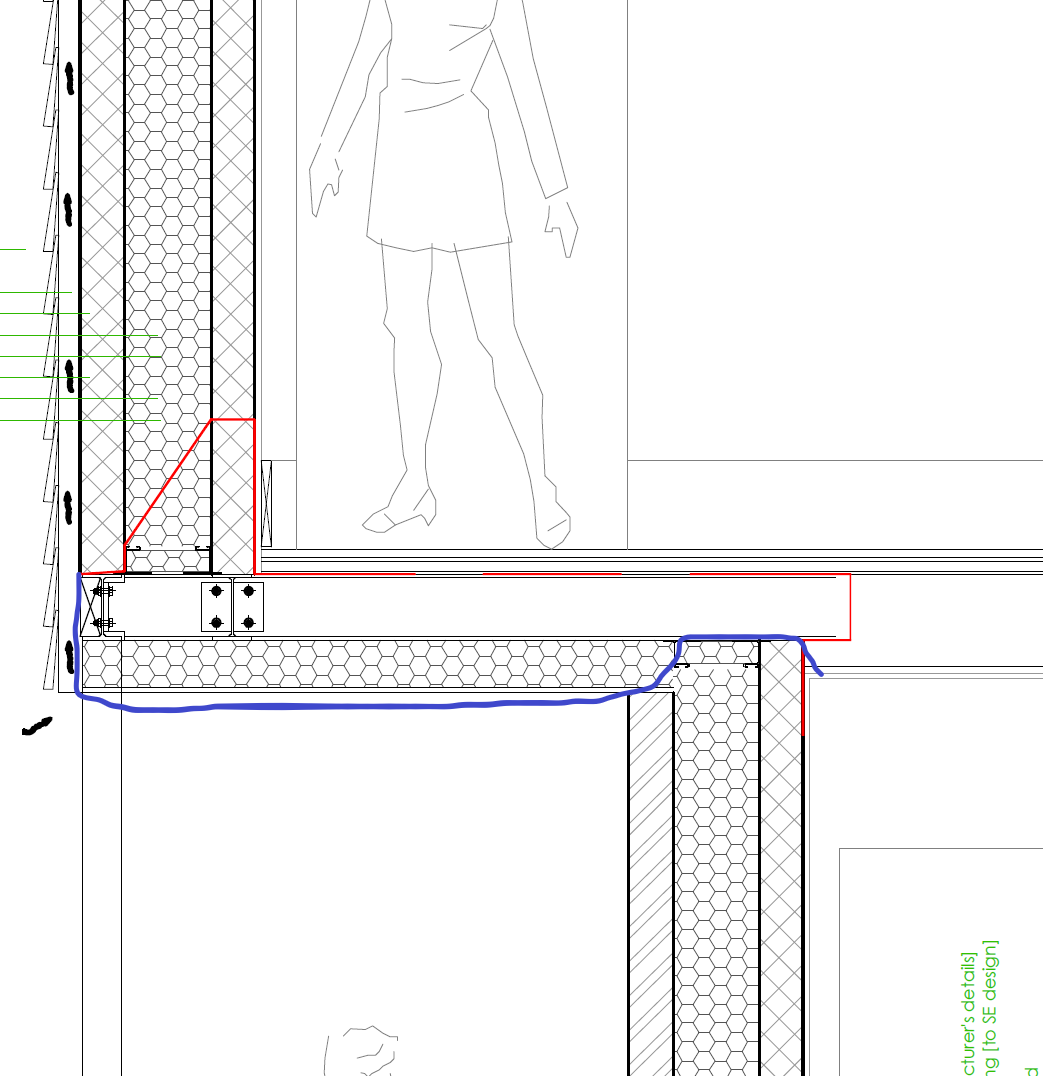
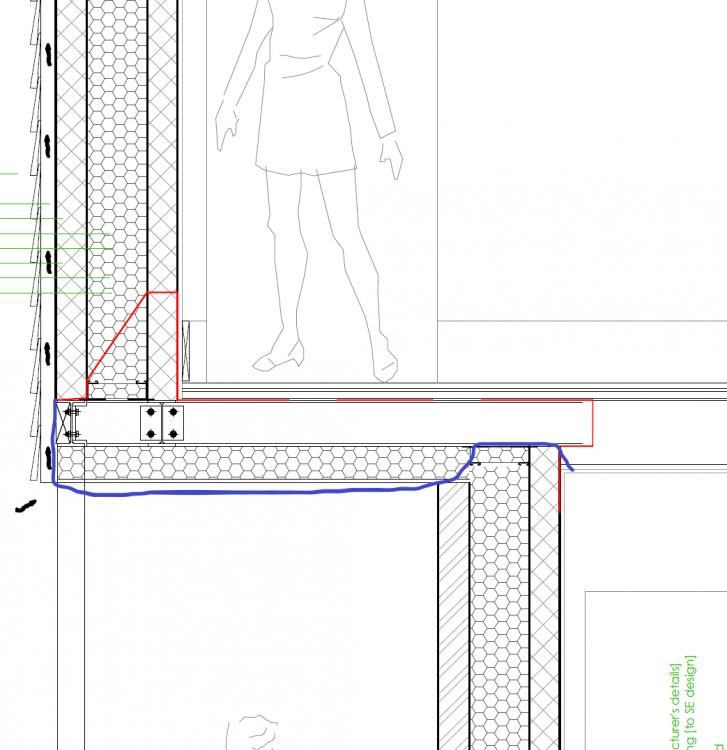
Hi all. I'm just in the process of laying the upstairs floor joists and this detail is giving me a headache. Buildup is blown EPC beads in cavity. @ overhang between joists /steels will be glass fibre/wool with 75mm sheet of PIR underneath (under boarded with cement board probably). Note the red airtightness/vcl membrane (ignore where it laps into tray - no need for this as wet plastered wall), whilst this is fine I wonder whether there should be a secondary external membrane such as protect vp400 to protect against windwashing and vapour release, or is this unnecessary in my scenario (drawn in blue). The attached link whilst for a timber suspended floor suggests there should be, but is this unnecessary where I have impermeable PIR underneath that I can tape? Note I would run the VP400/Pro Clima Solitex Plus straight under rather than draped to pickup insulation under the 1st storey cavity wall. A Best Practice Approach To Insulating Suspended Timber Floors | Ecological Building Systems Thanks in advance.
-
Went with the same local firm that did our conveyancing when we purchased the land, and dealt with overage terms etc. Think the mortgage was something like £500 + vat and disb = totalled c.£700 I think. Will PM you details.
-
Thanks for the replies alll. Turns out I was worrying about nothing - temperature was 7 degrees @ the pad and wasn't particularly well ventilated which I guess made it take a while to set. Annoyingly the sika instructions are silent on what temp the cure time is, but from looking at the same product from Weber it seems normal stated times are at 20deg, the 5deg times are 3 times as long. Thankfully gone off like a rock now.
-
Sorry for thread hijack but could really do with some help with this exact product if possible. Mixed and poured under steel post thermal break pads last night (literally midnight!) Which are sitting on levelling nuts so approx 30-35mm thick. Expected it to be rock solid this morning but it was still soft. I've now taken formwork off and cut back with trowel, it is drying slowly but 16hrs later it still seems wet but grainy and brittle. In your experience of the product, is this right? I didn't expect it to take so long to go off but curing time doesn't state temperature and I know it can impact it a lot. Worried I'm going to have to smash it all out and start again, need to be prepared as its now impeding the brickys progress. Thanks in advance!
-
Thanks Joe. I did consider the resin bolted wall plate idea but our SE wanted to start looking at full design and it became a more hassle than its worth discussion/cost. Re the roofing membrane, was this just breather membrane (such as protect vp400 - which I have loads lying around but assumed wasnt air tight)? I must say I get lost in all these membranes and tapes! If you didn't use tapes how did you join the membrane lap from each joist between joists, or was that tacked and rendered over too?
-
Hi Joe We have a 200mm cavity (plan to pump in graphite eps beads) and I'm just getting to joist fitting stage and got thinking about this. I like the tony tray idea but slightly apprehensive about creating a slip plane especially as not much load in some places above the floor joists. This got me to concluding that wrapping the end of each joist was the best way to go but now I'm wondering how laborious this is, and how easy it was to achieve. Did you just cut small sections of DPM or airtight membrane (which did you use?) then tape prior to installation? Once installed did these fold back flat against the wall? I don't suppose you have any pictures - paint a thousand words and all that. Any help much appreciated!
-
posi joist design problems - intersection with lintels...
sean1933 replied to sean1933's topic in General Structural Issues
Thank you all for your very informative and helpful posts - certainly given me a lot to consider outside of the issue at hand. Once I have the floor joist final design I'll be sure to double check with my SE, same re the lintel point loads. I cut out the suppliers 'expert' designer and went straight to Wolf (Easi Joist). Having spoken to their tech lead he advised the follow solution was easiest. They can spec a top cord bearing joist with an additional block section below (basically a piece of 4x2!) I can spec any dimension but can simply oversize and trim down on site. A simple solution which is basically the trimmable joist I was looking for in the first place, but this way it is trimmable vertically rather than horizontally. If anyone else has this problem again it is called a 'top cord web post detail'.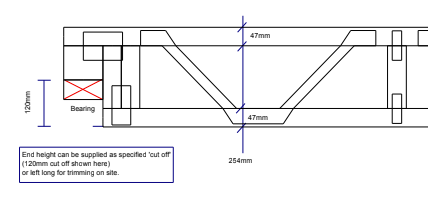
-
posi joist design problems - intersection with lintels...
sean1933 replied to sean1933's topic in General Structural Issues
thanks Dave - I can see that working for the small window but not for the big 2.4m door otherwise it would be taking a huge amount of load on 2 joists (inc a bathroom!). I'll speak to the supplier and suggest it as an option. Anyone else got any ideas, or have experience of trimming posi joists? -
posi joist design problems - intersection with lintels...
sean1933 replied to sean1933's topic in General Structural Issues
Difference on our build is that windows are floor to ceiling. Most lintels are below floor ceiling height so joists sit on the blockwork above lintel/window opening top. Reality is the SE should probably have spec'd steels here so we could use hangers, but we wont go into that! its only a very slight skim, not full bed. I am told put under steels and lintels to help with full/smooth bearing (due to brick/block inconsistencies). But combination of this skim and lintel thickness/ridges adds up to 8-10mm. -
posi joist design problems - intersection with lintels...
sean1933 replied to sean1933's topic in General Structural Issues
I could have but the blocks are already down and ready for joists (Hasn't been a major priority as only 2 week lead time on joists and a big section of the house yet to be build is single story vaulted), not to mention it wouldnt work on the external wall for the doors as face brickwork so fat joint would look awful. It's frustrating that Posi joist say I can only trim 6mm off the bottom cord, if it was 10mm all would be fine. I struggle to understand this logic as top cord would still have full thickness and full bearing.... and you can obviously spec top cord hung !?! -
posi joist design problems - intersection with lintels...
sean1933 replied to sean1933's topic in General Structural Issues
Hi Dave. Yes thats what I'm saying pretty much. Joists and the lintel are both bearing at 2.4m high. Over the window joists will be bearing directly on the lintel which is bearing on the blockwork... so thickness of lintel and pug between block and brick adds 10mm to bearing point so these joists sit 10mm higher. I also considered I could take the problematic lintels back off, cut block down underneath by 10mm then replace so bearing point is flush... but there is face brickwork on the big door opening so may look a bit weird plus is this the best option as it would mean all the other windows (where joists run parallel) would be 10mm taller.