


jayroc2k
-
Posts
61 -
Joined
-
Last visited
Everything posted by jayroc2k
-
40mm joist spacing
-
Another flooring question, builder wants to use 12mm plywood for subfloor in 3m x 3m bathroom Build up is - 12mm plywood - ditri mat decoupling membrane - 60x60 tile 10mm he says the combined would be strong as each layer adds strength, it will also improve output from the under floor spreader plates does that sound right? Maybe 15mm plywood instead? Travis Perkin sells 15mm structural plywood
-
Founds in.... and lessons from Buildstore.
jayroc2k commented on curlewhouse's blog entry in Sips and stones may break my bones...
The few bank/building societies I spoke to say that self build lending is a small component of their business and makes it expensive to have in house expertise. Normal mortgage underwriting (risk assessments) are mostly automated and in some instances where an 'exception' occurs, a human looks at the application. But normal mortgages are just tick box exercises - income - affordability calculation - house value - past history of payments (ccj, other repaid loads etc) each lender just assigns a different weight to each component with self build, development risk comes into play, more worryingly is development by a complete amateur. By using brokers like BuildStore, they relay on their 'expertise'. More importantly, if buildstore referred borrowers exhibit higher than expected defaults, the lender pulls the self build mortgage or revises its relationship with the broker. Much much easier to sit in a board room and blame the other guy (brokers) i am am not a broker -
The idea of glue worries me, if I ever need to access the pipes (herringbone requires glue), I'll have to damage to glued top floor, glued UFH insulation boards and glued OSB deck. Althought the OSB is the cheapest component. I have this worry of mice chewing cables or pipes under the joist floors
-
Thanks 18mm T&G ordered from buildingdepot for cheap. Will ask builder to screw it down i may have been over thinking this. As with all things relating to the renovation!
-
Thanks. Floor build up has been designed with 18mm floor boards in mind. Chipboard is only £20 cheaper than OSB
-
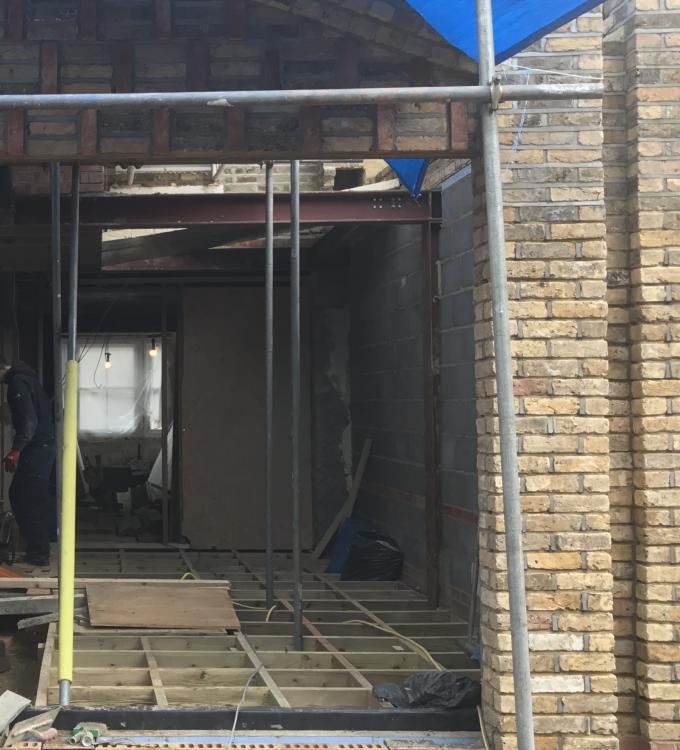
Photo of joist
-
I have costed OSB 3 T&G and it is £100-150 cheaper than 18mm plywood for structural floor on ground floor joist. Is the £100 worth saving? i just want a floor that does not Squeak. The builder went over board with noggin so the joists have a solid timber noggin almost every 800mm. Whole joist looks like lots of square boxes. All joist in C24 47x150 timber thanks
-
I have an IKEA (whirlpool I think). Used the cleaning feature once, it does work but the smoke sets off the alarm. But to be fair, I used it for the first time after owning the oven for 4 years My preferred under-rated feature is a connected thermometer probe. Set the roast to 61deg, go watch telly and the oven turns off at that temperature. Perfect for all meat and fish (different temperatures apply) Duck Breast turns out better than many expensive restuarants I have been to! yet to try a steam
-
I am at loss on how to calculate heat loss for the ground floor of a victorian house with new extension. It is an end of terrance house with the following - solid wall 220m brick on the front (4m) and side (7m) - new timber double glazed sash bay windows to the front - 70mm celotex between the joist floor - new 6m x 5m extension added, new walls full fill cavity to 0.3 u value - double glaze 3.6m x 2.4m sliding doors - 2m x 3m double glaze roof window All space is open. most heat loss calc assume a single type wall construction for the space.I need to know by next week if underfloor heating is feasible for the given heat loss. Most underfloor only give 70w/m with wood flooring thanks
-
Am I being too sensitive or should I be concerned.
jayroc2k replied to MikeSharp01's topic in Surveyors & Architects
Very true indeed, my partner and I are building an extension, she spent over 70 hours on the planning drawings and about an extra 100 hours on drawing details for the builder. In the end, the builder does not even read them, we have had to make him take down an entire wall because he missed the bridging detail. I have spent about 200 hours on sourcing materials, calling manufacturers etc (not including reading this forum) because in order to build within our budget, we agreed a labour only deal with the builder. We hired a structural engineer which I initially complained was too expensive, after all his input, i think his industry are just not charging enough! Pretty much everyone around me is an Architect (except me), not a single one of them is profitable, in my opinion, they spend 2-3x more time on projects than they bill the client, same goes for structural engineers. I have come to the conclusion that no other profession (lawyers, doctors, bankers, accountants) would do this. For a bit of fun, I would love all members to bill every hour spent on their project from inception to completion at the per hour earnings of your day job (if retired, then earning just before retiring) and add it to the project, you may find your time to be worth a lot in monetary terms. Not to mention, by the very reason you are on this forum means you have gained so much knowledge and advanced insight of how buildings work. I doubt a builder, after spending all day on site grafting would not have the time or energy to go home and spend another 3-4 hours researching new products, bridging details and ideas. On my project, i have found good ideas have come from the everyone all the way down to the labours. -
I have contacted several suppliers and the lead time is around 3-4 weeks for any PIR board. Should I consider insulated plasterboard seconds or will the +/- 10mm diff per board be hard to get level?
-
Anyone compared this to z-wave? they seem cheaper on components. I am looking into the Loxone one to add lighting in the extension only, control boiler, underfloor manifold valves, actuators for each radiator, motion sensor and sensors to check windows/doors are closed. It seems one has to mix wired and wireless, example, sensors on each windows with wires is not pretty, however, once you have the mini-server, you can run the slighting wired.n That adds to cost
-
Many thanks for all the above. One thing that every contractor/builder we asked to quote said was how impressed they were with the architect's drawings. All main sections in large prints, with text describing things clearly, it's not something they are used to seeing on extensions.
-
I am costing a renovation and is struggling to get quotes in, the odd quote has no breakdown of the part and hence i am not keen. Excluding electrics and plumbing, a builder I used in the past when he was a small time guy has suggested a day rate for his team, the works are expected to take 5-6 months, if it is 5 month it will be good value, 6 month will be just right, 7 months plus becomes expensive... i am aware that day rate is risky, any thoughts?
-
Board thickness is 21-22mm, they are the board found in any old Victorian home, nailed to the floor joists
-
Best to split it into packages, - ground work - shell (timber frame company, ICF, SIPS) - internal fit-out That way you are not too nitty gritty on management and can save on using a single contractor. I spoke to a couple who built a house in London, its their second self-build and they promised themselves that the next and final one would be a turnkey solution. The process was very painful and they estimated the savings was 50-60k at best. They also concluded that apart form then fantastic joiner, they would not recommend a single trades person they used, all had no attention to detail and did not share their passion for an well insulated house.
-
When i was considering a London build, the build cost was from £2500 (self managed, individual trades) to £3500 using a single contractor and decent finishes. Above does not include fees, build cost generally exclude fees. Reason is simple really, there are many builders doing extensions and large contractors doing multi-storey apartments, the market for one off houses is small, hence, few contractors to choose from. Also, city plots have poor access, in tight plots so you can't store much on site leading to lots and lots of small deliveries... Small plots also mean inefficient house shapes, not a perfect 2 storey square box. And of course labour cost is higher, labourers on £120 a day, skilled members on £250-£400 a day, the contractor has to add his premium and don't expect him to earn under 50k a year or he may as well become a trades man and earn more.
-
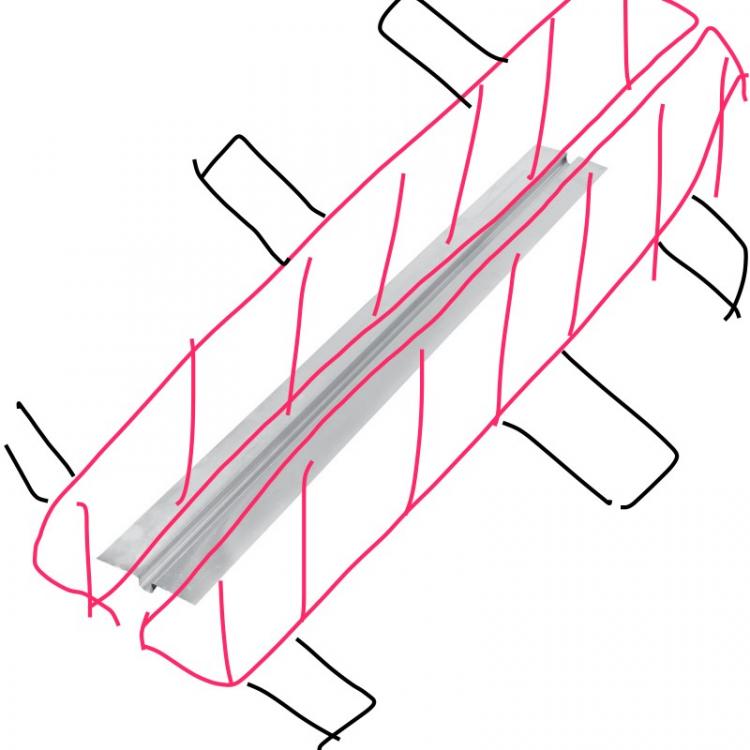
I intend to leave the void underneath the joist for ventilation. I can get in 70mm PIR by using netting/quilt blanket instead battens, it will look similar to the photo here http://javitas.info/image.php?pic=http://constructionstudiesq1.weebly.com/uploads/1/6/4/9/16490624/1364413461.png This single spreader plate will sit on two normal period floor boards spaced to allow the groved part sit in the gap (pink bit are floor boards, black bits are joists under neath), the spreader plates sit on top, not under as it looks in the pic a backer boark like this to glue down the chevron flooring as would not want to glue to the original flooring, http://www.theunderfloorheatingstore.com/prowarm-backer-pro-tile-backer-board?
-
Just wondering why you need sheet piling, they don't have structural integrity as holding/retaining walls.
-
I have just 70mm joists on sleeper walls in a victorian house, I can just about add at least 50mm celotex once they have been battened. This leaves me with the following solutions - Expensive- re joist the floor to accept spreader plates (irregular spacings), then 21mm structural plywood/chipboard and 11mm Chevron (lady is set on them) - tongue and grooved board with 12mm pipe, this requires 6mm ply glued on top for rigidity then chevron on top and my light bulb idea - 50mm celotex between joists - use existing original floorboards but space them (gaps) by about 15-16mm, - laydown singe run spreader plates for 15mm pipes - 6mm backer board on top as this will be less insulating, add a heat sink and allows for the chevron wood to be glues on top - lay the engineered chevron on top what could go wrong? no need to buy grooved boards... i feel i have missed something big here BTW - neighbour put underfloor heating under original solid floorboards 8 years ago and they have not warped.
-
I have come to the conclusion that the renovation works carried out in full by a main builder or contractor would be too expensive. I have now hired a seperate electrician, looking to get a plumber/ gas engineer but have hit a sticky point on the renovation. How to i organise individual trades for the remaining works which includes: - remove existing steels in extension - put in more steels (getting steels costed, includes 'goal post', and supports for two additional openings) - add extra 3x3 bathroom on top of existing 2nd storey bathroom) flooring and kitchens can be done by individual trades any ideas? many builders are not interested in pricing just the 'shell' as the money to be made is in the finish (although they keep saying they lose money on the finish)
-
I have been trying to find flat roof windows (roof lights) made to measure, so far its IQglass, finelinealuminium and glazingvision. Thay are all a fair bit pricey especially if you mention the "3G" word. Since I am getting my sash from Poland, are there any European companies who supply such made to measure flat roof windows (or UK companies not listed above) Thanks
-
Thanks Unfortunately, although it's free parking and London prices have started coming down (just see the number of "reduced on Zoopla not selling), I guess that does not translate to reduced builder pricing unless people start scaling back on renovations :-(
-
I have had a couple of quotes for rewiring a Victorian 3 storey house in London. Quotes have been £9-11k which seems nuts, here are the basic spec: - 4 bed rooms each with 2 way switches and 4 wall sockets per room, all single or double pendant light - 1 receptions rooms, 4x wall sockets, 1x 2-way switches, 1 pendant light - 1 extension rooms, 4x wall sockets, 1x 2-way switches, 6 spotlights - 2 bathrooms, single light, switch, wall charger socket each - new consumer unit (same location) - usual extras like fire/smoke/carbon monoxide alarms All basic MK One Logic spec (£2-£5 a piece). The actual switches won't cost more than £500-£600, consumer unit is circa £100, spotlight £30-£50 each (6 units). So all in about £1-£1.2k on items (excepts wires), is labour really £7k+? Anyone want to come to London, do the re-wire and visit Madame Tussauds on Sunday?


