


Ben100
-
Posts
182 -
Joined
-
Last visited
Everything posted by Ben100
-
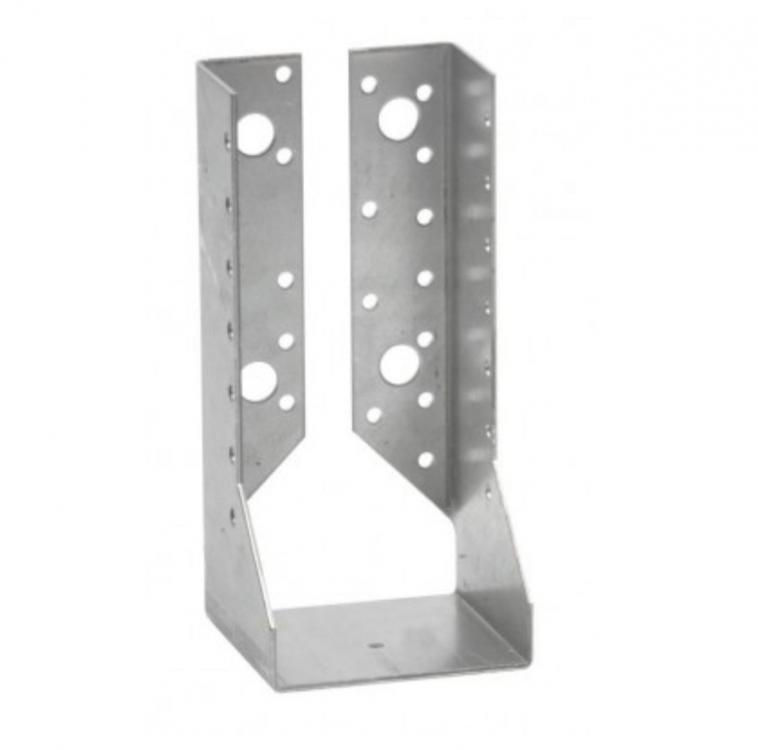
So I’ve just started hanging my first floor joists with joist hangers. What a pain these are! 20 nails in each hanger and 12 of them are hard to get to! This is going to take me forever to do at this rate. Does anyone have any tips to speeding this up? Thanks!
-
Replacing oil boiler with a mix electric/heat pump
Ben100 replied to Ben100's topic in Boilers & Hot Water Tanks
Yes, this might be a sensible option. I guess I could upgrade the hot water cylinder (as it's too small for us) but keep the oil boiler? I'm not sure the boiler would work with the new UFH though... Also, am I correct in thinking that the boiler and heat pump would both connect to the cylinder (heat pump as primary and boiler as backup/top-up)? -
Replacing oil boiler with a mix electric/heat pump
Ben100 replied to Ben100's topic in Boilers & Hot Water Tanks
The UFH will be a wet system, but just heated using electricity. I'm not on the mains gas grid so it's oil or electricity for me. The reason I'm considering high running cost electricity is I'm planning to add an air source heat pump later down the line. I also really hate the big oil tank in the garden. -
Replacing oil boiler with a mix electric/heat pump
Ben100 replied to Ben100's topic in Boilers & Hot Water Tanks
So I'm refurbishing an old property and adding a large extension to it. Almost like building a house next to an old house and knocking through. The new part will be built to a good standard of insulation, and the old property will be refurbished with insulation on the walls, between joists, etc. I've also got plenty of room inside and out for boilers, cylinders, etc. -
Hi, I'm looking at options to replace my old oil boiler/radiator system with an electric boiler/under floor heating, with the option to add an air source heat pump later on and have the electric boiler as backup/top-up. I've done a bit of research, but this is not an area I'm an expert in. I think the best option would be to go for an electric boiler with large hot-water cylinder and under floor heating. Eventually I'd like to have an air source heat pump and use the electric boiler as a backup/top-up, but as I'm in the middle of building my house I just don't think my budget can stretch to one initially. So my question is "is this possible and is this a good idea?" cheers!
-
I have a design from Cullen Timber Design and some of the fixing information from the SE, but nothing on fixing the actual 6x2 timbers. From what I've read 90mm first fix nails will do the job.
-
The TRADA site seems to have some great information, but ~£500 membership fee is a little steep.
-
Hi, is there a reference or UK standards document which details the fixing requirements for a timber frame house? For example nail types/sizes and method to use for stud to wall plate fixing? cheers!
-
should be, but I’ve emailed the manufacturer to make sure.
-
After some research I’m planning to go with the ‘140mm 3.6n Thermalite Shield Blocks’ as I come out of the ground below and above DPC. They seem like a good fit for what I need, thermal insulation, water resistant, lighter than the dense blocks, etc.
-
Interesting. I've been looking at these to address the cold bridge from the slab too.
-
4. I have a design for the wall build up (I'll try to upload the drawing later). Basically it's tanked in the cavity then filled with insulating/water resistant foam. The internal leaf on the inside also has a DPM running up it and into the blockwork above DMC. Another question I've been thinking about is is there a need for thermal insulation of the inner leaf to address the cold bridging from the slab/foundation. For this I'm considering changing from 7n dense blocks to a 7n thermal insulating block as I come out of the ground.
-
As I need to fix the TF soleplate to the blockwork with bolts it would pierce the DPC. It might not be that big of a deal, but I'm playing it safe and running the DPC a block below where the TF soleplate and blockwork meet.
-
Thanks for all the information guys. I guess I have a few question. 1. Below ground should I be using dense 7n blocks on both external (100mm) and internal (140mm) leaf? 2. As my structure is timber/steel frame the blockwork is finishing 1 block above DCP and moving to timber and steel, so almost all of the blockwork is finishing 1 block above DPC. Does this give me any chance to use lighter blocks or should I stick with dense blocks in this case? The only reason I'm really looking to move from the dense blocks is that they are heavy and hard to work with. 3. Another question I just want confirmation on. Is it ok to switch to red-bricks on the external leaf just below ground level for the plinth? Just for a better look. 4. And the last one (for now) What should I be using for the in-fill between the blocks below ground level? I guess a concrete mix of some sort? Cheers all!
-
I'm using 100mm dense 7n on the external leaf below ground, then moving to brick just below ground level and up to DPC where the external leaf will finish. The example blocks I mentioned were for the inner leaf for the TF structure to sit on.
-
Something like this? https://www.buildbase.co.uk/lightweight-armstart-block-73n-100010511-2803076
-
I'm laying the blockwork for my extension which consists of a large steel frame with timber in-fill. Most of it is single story with part double story plus roof/loftspace. The timber frame company have recommended 140mm blocks for the 145mm sole plate to sit on, which is fine. I've laid the first course using 140mm 7.3N high density concrete blocks directly onto the foundation and laid a second external skin as a plinth to DPC. I was about to start laying the 2nd and 3rd course when someone said that I was going way overkill using 7.3N high density concrete blocks and I should be using something lighter. So my question is, should I be using aircrete blocks instead of high density ones? This is taking into account that this is a masonry seat for the TF structure, and behind an external masonry skin plinth. cheers!
-
This sounds simple enough as the ground is hard compressed sand/stone and I have all the point loads from the SE, which have the safety calculations built in. I’m more concerned about the required thickness of the pads as I’m not clear on how to calculate this.
-
He's too far away, so I'd need to get a local SE to design then if I can't.
-
Hi all, I have several steel columns in my new extension which are taking most of the structural load. The SE has given me the line and point loads, so I now need to calculate the size and depth of the 'pad footings' they sit on. I've looked around, but can't find this information anywhere. Can anyone suggest a method? Cheers, Ben
-
My BC officer said just dig a hole 'roof area x 0.3'
-
On a related topic, would you bed the pipe in shingle or encase in concrete? I’ve also read a gap should be left around the pipe when going through the foundations?
-
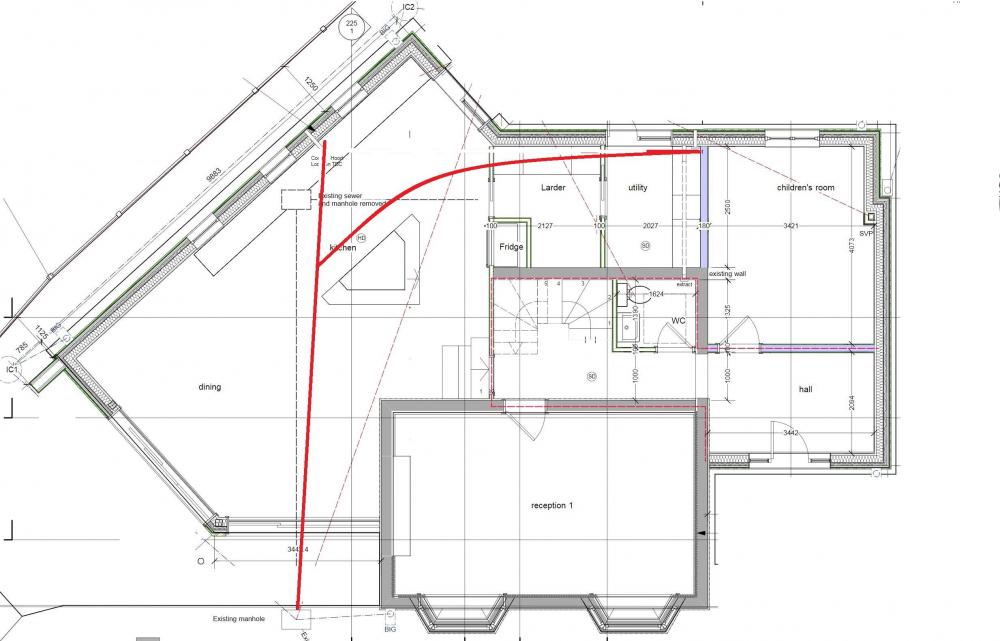
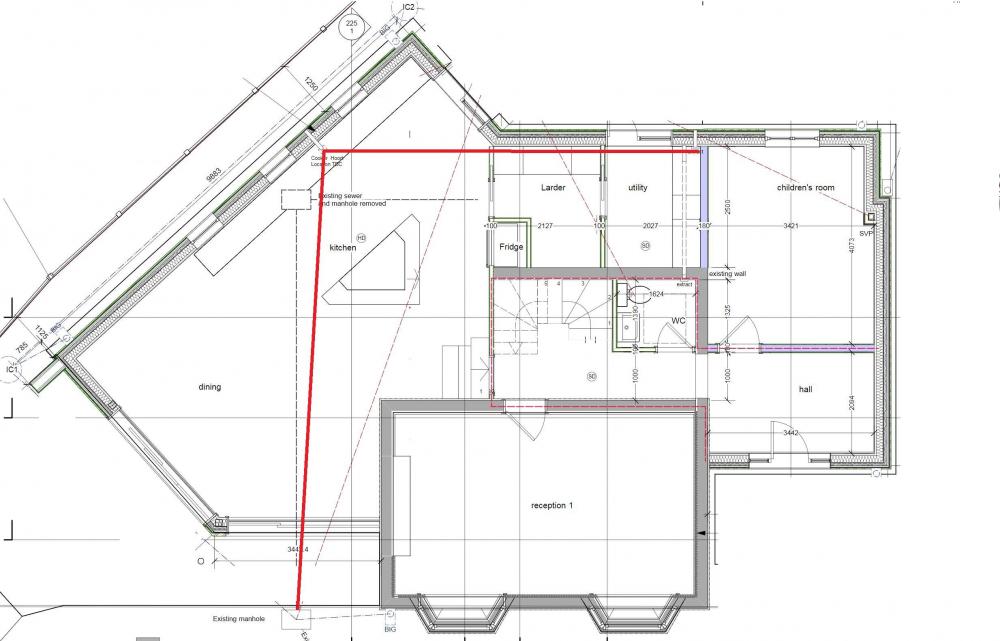
Thanks, that's good to hear this is possible! The reason for the right angle is that this is an extension, not a new build, so there is no direct route from the utility room to the manhole without digging under the existing house. I should be able to replace the right angle with a more gentle curve or 2 45 degree angles with spacing. I can then add in rodding access at the ends.
-
Hi All, I have a question on foul water pipe running through a slab. The issue I have is that the existing external drain I'm trying to connect to is quite shallow and I'm also digging down in the extension to lower the floor level. These two points mean that I don't have a lot of drop to run my new foul water pipes. Because of the shallow drop issue I'm trying to run the pipes along the shortest distance and at a drop of 1:80. I believe 1:80 should be fine as I have 4 toilets, 3 showers, 1 bath and a kitchen going through the pipe, so lots of flow. The issue I have running the pipe through the house is that at it's highest level it will run in the concrete slab, with 10cm concrete and 6cm screen above it. The pipe will then descend through the slab into the insulation and then into the hardcore layer before connecting to the external drain. The runs are mainly straight with the ability to rod. I'm not sure if this is allowed, not recommended, or just a bad idea...? Cheers, Ben
-
Reading into this a bit more, it seems like the concrete in 'strip foundations of 600mm wide and 250mm deep' is sufficient for most domestic builds. I'd be interested in others opinion on this though.


