


-rick-
-
Posts
873 -
Joined
-
Last visited
-
Days Won
1
Everything posted by -rick-
-
The UK’s electricity was the cleanest ever in 2024
-rick- replied to Alan Ambrose's topic in Environmental Building Politics
Agree with all that Steamy. Nuclear is fine if it can be done relatively quickly at competitive cost. Evidence suggests it can not. The only reason Hinkely Point went ahead is because the government desperately wanted to maintain a minimum viable nuclear industry here to support the nuclear deterent. It never made sense financially even before the cost overruns. On this point though, the AI bubble has prompted a whole load of US tech companies to pile into small nuclear. I wouldn't want taxpayers money put into it but if private companies want to push it forward with their shareholders money (and the shareholders agree), then maybe this can bring the costs down. Volume and a sizable order book creates a lot of cost efficiencies. -
This LABC doc says a hole of up to 50mm should be ok in a joist 200mm deep. https://www.labc.co.uk/news/how-get-it-right-notches-holes-solid-timber-joists 40mm should be fine for a short run of shower waste. Don't know if that applies in your situation but seems similar. The joist is also close enough to the wall that I would guess you could block out from the wall and attach the joist to the wall either side of the hole to reinforce it if needed or for piece of mind. But please don't take anything I say about this as gospel. I've gone through a similar thought process before with another bathroom but ended up not doing the work so never got to the stage of verifying compliance. Good luck with your surgery. Health should always come first, this stuff (including the plumber) can wait if you aren't feeling up to it.
-
Can you draw a diagram?
-
Good luck. Do you have room to angle the bath in the corner? If you are worried about space in front of the boiler it might be an option if you have the space on the wall with the toilet/shower. Tradeoffs might not be worth it but something else to consider.
-
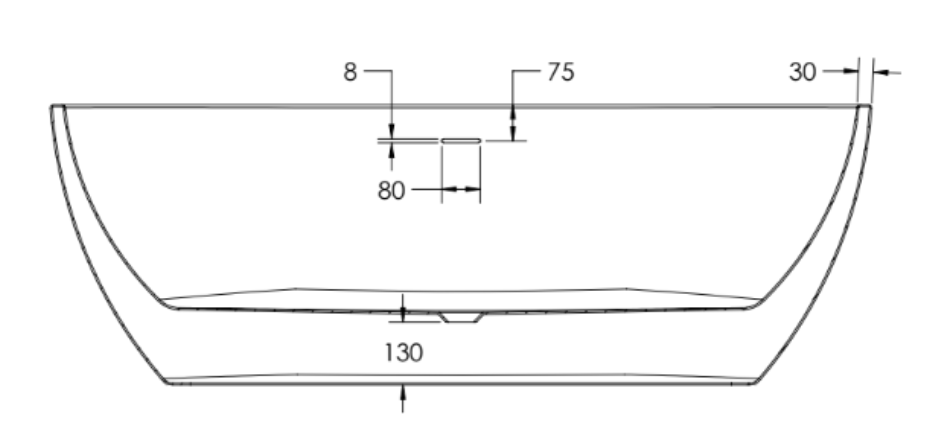
I found a random freestanding bath installation doc. Looks like this one has space under it to allow pipes to run along the floor to near the edge. Assuming the edge is near the wall you should be able to go under the floor at that point without too much trouble. Again, hopefully someone with practical experience of this will be along to confirm.
-
What's the current window setup? Most buildings from that age would be brick with a window cill at the bottom and plaster to the sides/above. If I were adding internal insulation I would expect to remove the plaster and cill, build a frame around the opening/along the whole wall to hold the new insulation. Use insulated plasterboard to over both the exposed brick and the new frame to create a new deeper reveal. Then install new, deeper window cill. Having said all that it's not something I've done and I hope someone who has done this will be along shortly. As to how to do the insulation properly, there are other threads on here with detail on that with lots of advice so I would search for them. Are you planning to do most of this work yourself or pay someone? If it's a zero cost option other than a short delay then it would certainly be my preference. If not, then maybe consider what option gives you the most future flexibility. If you install the boiler on that wall and a little away from the external wall (150mm??) then you leave space to add insulation to that wall later. Even if you had to pay someone to temporarily remove the boiler from the wall while you did it and then put back in exactly the same place, if the pipes don't need moving at that stage I doubt the labour/cost involved would be huge. Depending on the boiler it might be possible to create enough access to do the insulation by just removing it's cover (depending how much space you leave to the wall).
-
If you are going to the effort of this renovation then I would look at insulating properly at the same time, not just panelling. Looks like you have plenty of space so adding 50-100mm of insulation on the external walls should be possible without compromising the room layout and will make for a much more comfortable space. Yep. When your boiler is installed will they be installing things like the towel rail? Worth making sure they don't make things harder for follow on plumbing. It's a tight schedule to finalise the wider plan for the room.
-
Just realised I meant option 3 (second photo). I think this option solves you routing problems but is also just a much better layout.
-
Option 2 seems much better to me. Much better use of space, larger area to dry/get dressed, nicer bath position. Could add cupboard or other storage next to sink for towels, etc. Could also increase size of shower or make it a large corner style one like @Onoff
-
As a 'diy' job, whether he is fully compliant who knows. I just know in Europe it is fairly common to use the rebar in an uninsulated slab as a an earth which is obviously not going to work with an insulated slab and this is used as the alternative.
-
It's an electrical ground, in theory a better connection than an earth rod.
-
CCTV not working after internet provider change
-rick- replied to Dan1983's topic in Networks, AV, Security & Automation
Just catching up with this, might have missed something: 1. The QR code shown in an earlier screenshot will give access to your device once you get it working. Suggest you delete or obscure it. 2. Have you done anything to verify the technomate bridges are working? 3. The NVR doesn't have wifi, so I presume you have it plugged into the technomate. Any chance you could try a direct cable to your router temporarily? 4. If not, can you unplug the NVR from the technomate and plug in another device to test the connection? Laptop maybe? 5. Is there a control interface for the technomates? Can you access them? 6. Is there a technomate plugged in via ethernet to your router or were they previously connected over wifi? If wifi, have you updated their config? -
Evaluating a potential plot / Planning Consultants
-rick- replied to -rick-'s topic in Planning Permission
Thanks Alan. I did look at this at the time but was feeling a bit burnt out so took a break from thinking about it more once I'd decided for sure I was no longer interested in the site. The site has just been through auction: https://www.robinsonandhallauctions.co.uk/property/land-adjacent-to-little-heath-lodge-featherbed-lane-felden-hemel-hempstead-hertfordshire-hp3-0bt/ It sold for £190,000 (vs £30,000 guide) so whoever bought it clearly thought they would be able to get planning for a house. I'll be keeping an eye on it to see if they succeed. I wasn't interested in bidding on it without a planning consultant making positive noises and positive noises from a conveyancer about the restrictive covenants. As it turns out it went beyond what I'd have been willing to pay for it so I'm not feeling like I've missed out on something (most of my money is tied up in my property and can't sell it just yet). -
How about this for an idea: get a CCTV camera covering the door and get a traditional wired doorbell (can hook up to a HA input or ESP32 if you want)?
-
Until this thread I hadn't looked at the BSA side of this (have previously looked at the CDM/HSE side). After some looking around it appears the following document is referred to as the way to assess competence for this role: https://www.bsigroup.com/en-GB/insights-and-media/insights/brochures/pas-8672-framework-for-competence-of-individual-principal-contractors/ I downloaded it and it's pretty big, obviously not aimed at self builds.
-
Thats for the HSE role, not the new building regs role isnt it? A quick google says: The Role of Principal Contractor Oversee and manage the construction phase of the project to ensure compliance with Building Regulations. Plan, manage, and monitor construction activities, ensuring all work meets regulatory standards. Act as the central point of contact for cooperation among duty holders, liaising with the Principal Designer to implement design specifications correctly. Possess a thorough understanding of construction processes, safety protocols, and regulatory requirements. Point 4 seems particularly hard for any self builder who doesn't already work in the construction industry. You can read the building regs cover to cover, go on health and safety courses and read/watch instructions on how to accomplish specific things. But is that sufficient?
-
Single radiator not getting hot at all
-rick- replied to mreinor's topic in Central Heating (Radiators)
Sometimes the plunger on the trv valve sticks. Try removing the TRV and manually manipulate the plunger, should free up if stuck. Edit: The TRV can be removed without opening the water circuit. Shouldn't require tools. -
So the question is what does a first time self builder have to do to become competent?
-
Do fan coil radiators need a condensate waste?
-rick- replied to SBMS's topic in Other Heating Systems
I would assume that if the water circuit diverts to DHW then the flow through the fan coil would stop. However, unless you spent extra on controls the fan would keep going until the temperature in the non-flowing water normalised and at that point no further cooling would take place until the flow started again. I think most fan-coils sense the water temp so if it goes outside of range the fan stops, but it wouldn't be a big deal if it carried on - it would just circulate air, not provide cooling. -
Timber Frame with no blockwork - any downsides?
-rick- replied to North Coast Self Builder's topic in Timber Frame
Living in a flat affected by cladding issues (which we hope will be solved for us soon), I personally don't want to go near anything even slightly questionable on my next property. I know 2 storey buildings are in theory much different, but we've seen repeated tightening of rules and from what we've seen mortgage companies and insurers have become extremely risk adverse over issues related to fire. We will soon be in a place where according to the fire safety rules our building is fine, but the insurers continue to feel its too high a risk for normal insurance so we are stuck paying exhortionate rates. Even if you assume because it's two storey the fire rules won't really apply, I think the general impact on the industry is just more risk aversion and along with trending higher costs due to climate related damage and a record of shoddy construction in this country. If insurers/mortgagers are on the fench with something now the safe option is to assume they will get more risk adverse in future. -
What's the deed of covent for? We recently got asked to complete them as part of the new laws around remediation for cladding issues. There wasn't a charge for that though and we were told we only needed to complete them if we wanted to be protected from any future remediation costs. I don't think that protection is available if you are a professional landlord (>3 properties IIRC). Obviously this is irrelevant if they want the deed for another reason. As far as the fees to register tenants go, this is a thing that comes up. Some managing agents want to charge, some don't. If the lease restricts your ability to rent your place out and allows a fee to be charged to do so then your way out would be to argue the term in the lease is invalid/unlawful for some reason. I don't know how easy this is to do. ** I'm a director for the RTM for our block of flats and we are currently searching for a new managing agent. The issue of charging fees for tenant registration has come up and we are seeking an agent that doesn't charge but from the conversations we've had at least some of the agents work on the lease. They feel they have to strictly follow the lease and if the lease involves administration requirements for sub-lets then they have to pass the cost of that on - it's unfair to cover the cost in the service charge/ground rent as it's not something that applies to everyone nor on a consistent frequency. ** One of the other directors in our RTM is a landlord and is pretty firm that these fees shouldn't be needed and would be keen to argue over the terms of the lease but he is not a lawyer and I'm not sure of the actual legalities.
-
I read it as talking about new panels. So panels that have been around for a while and already have cert are ok. Though of course how long older panels are available is a question.
-
We do seem to be getting quite far away from Gary's topic so maybe should shelve this for now. At some point I'll likely start a new topic on Porotherm as the existing topics seem a bit lacking in some details.
-
Thought it was acceptance?
-
I wouldn't want to use without a service cavity for all the sockets etc. The videos I've watched suggest it is easy to cut with the right saw. Why do you say its a pain? As for coursing, I agree, I think it only makes sense if either building a solid wall with large blocks and EWI, or a block/block cavity arrangement with both leaves with porotherm.

