


ectoplasmosis
-
Posts
80 -
Joined
-
Last visited
Everything posted by ectoplasmosis
-
'Hidden Sash' Window Recommendation
ectoplasmosis replied to ectoplasmosis's topic in Windows & Glazing
Thanks for the tips... however, neither of these are timber-frame alu-clad. We're specifically looking for alu-clad timber with a clear-lacquered internal finish, to match our existing Velfac 200E units. -
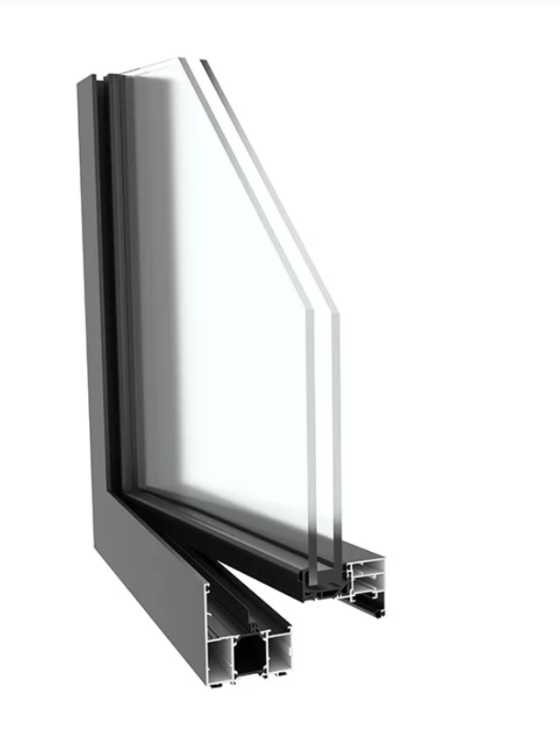
We are looking for inward-opening windows, with a 'hidden sash'/'concealed sash' design, similar to 'Cortizo COR 70 Hidden Sash' (pic attached), where the opening sash does not overlap the fixed frame at all. I can't seem to find any with this design which are alu-clad timber framed, only PVC/aluminium. Is there anything out there which suits this spec? Failing that, which alu-clad inward-opening windows have the slimmest opening sash overlap out there?
-
We have a Miele DA2578, bought brand new on eBay for £250. It’s very quiet, A-rated grease filtering, and can be linked wirelessly to a Miele hob for automatic start/stop/speed adjustment. The Miele UK outlet is a PDF file direct from their website, updated weekly.
-
Yeah, neither of those have very good specs at all. I’ve never experienced condensation dripping from my extractor hood, above an 80cm 5-ring induction hob, even with a few pots on the boil at the same time. Just get a Miele via their discount outlet list.
-
We just did this to a Victorian front door on our ~1890 house. - Replaced glazing with laminated double glazed units, 24mm warm edge spacer, argon filled. Sealed properly. - Replaced the timber door frame with a replica hardwood frame, with Schlegel AQ21 seal channels routed in along all three frame edges; AQ21 seals fitted around all 4x latch keeps. - Fitted a routed-in Norseal NOR810 automatic drop-down seal along the bottom edge of the door We also fitted a GU Secury multi-point auto-latch lock system, which uses a single Euro cylinder so no keyholes to let air in.
-
Tomato Energy - Anbody using?
ectoplasmosis replied to mk1_man's topic in Air Source Heat Pumps (ASHP)
I've just switched to Tomato Lifestyle, coming from Octopus Tracker. Switchover should be happening today... ASHP, but no batteries/PV/EV. Looking to load-shift the dishwasher, washer-dryer, and boost the ASHP set point during the 1am-6am 5p/kWh period. -
UFH flow and return switched intentionally
ectoplasmosis replied to Rubics's topic in Underfloor Heating
As mentioned, having two boilers for your kind of heating system is madness. Ditch your 'installers'. -
Except they won't be running anywhere near capacity, except for during a few of the coldest days of the year. Our 7kW Vaillant ASHP is practically inaudible day to day; the only way of knowing whether it's running or not is to feel for the airflow. It's MUCH quieter than the neighbours' gas combi boilers.
-
Vaillant Arotherm in open loop, with buffer
ectoplasmosis replied to Peter269's topic in Air Source Heat Pumps (ASHP)
If you get the wireless version, then you can stick that anywhere you like, even move it around depending on how you use the house. -
Vaillant Arotherm in open loop, with buffer
ectoplasmosis replied to Peter269's topic in Air Source Heat Pumps (ASHP)
“Thermost.” would be equivalent to Expanded I would have thought. You would need to have the VRC700 in a habitable space however; the temp sensor wouldn’t be doing much stuck in a utility cupboard. -
Vaillant Arotherm in open loop, with buffer
ectoplasmosis replied to Peter269's topic in Air Source Heat Pumps (ASHP)
You have access to the exact same settings on your VRC700 already: “Room Temp Mod”. -
Vaillant Arotherm in open loop, with buffer
ectoplasmosis replied to Peter269's topic in Air Source Heat Pumps (ASHP)
On the SensoCOMFORT controller, just configure the ‘room influence’ setting to ‘Expanded’. This will switch off all circulation pumps once the internal temp reaches your chosen set point. We ran like this during the summer, then switched to ‘Disabled’ mode once the heating season started, which enables pure weather compensation with the circulation pumps constantly running. -
please review electric floor heating plan
ectoplasmosis replied to Petar's topic in General Construction Issues
That insulation product won't be doing much of anything I'm afraid. With your current plan, it will be very expensive to heat the room. What is the current ceiling height? Could you add 100mm PIR insulation underneath the electric mat? If not, then as mentioned above, an air-to-air split heat pump system will be much more effective and cheaper to run. -
50degC design temp is too high, you should be aiming for a maximum of 45degC. Our MCS heat loss calculation document and associated emitter schedule had radiator Watt/BTU ratings listed at Delta-T 50 for ease of comparison to manufacturer's specs.
-
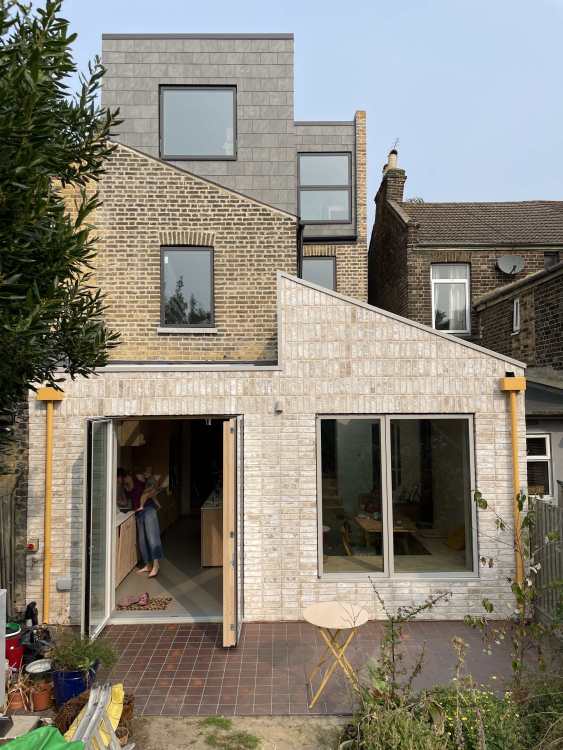
No, we looked at the Cortizo 20 sliding doors as part of an extension/retrofit. Visited a couple of installations and I wasn't impressed with the design. They look great though! Ended up with Velfac casement doors and opening picture window. Seals are very good. I've attached a pic.
-
I can't advise on installers, but having experienced the actual product (sliding doors with 20mm sight lines), I was not impressed with the design. Thermal bridges everywhere, sub-optimal seals and a poor threshold design which leaks air.
-
Ufh manifold, blending valve with ASHP.
ectoplasmosis replied to Russell griffiths's topic in Underfloor Heating
Everything is plumbed as a single open zone right now, single Vaillant controller running in pure weather comp mode, no buffer/volumiser/low loss header. Rads have been balanced. There is however a stat on the bathroom UFH loop set to close the loop if the temp in the bathroom reaches above 25degC, as there’s a large dual fuel towel rad in there as well, but the bathroom loop is tiny. -
Ufh manifold, blending valve with ASHP.
ectoplasmosis replied to Russell griffiths's topic in Underfloor Heating
Thanks again. The entire system is new, and has been designed around a 45deg max flow temp at -3deg OAT. If I were to remove the blending valve and secondary pump, then run the whole lot as a single zone at the same flow temp, would this work well? -
Ufh manifold, blending valve with ASHP.
ectoplasmosis replied to Russell griffiths's topic in Underfloor Heating
Thanks. If I set the Reliance thermostatic mixer valve to 55degC, which the flow temp will never reach, will this act as if the mixer doesn't exist? Or is the best approach in terms of efficiency to physically delete the mixer and secondary pump? -
I have just renovated a Victorian semi, and fitted a Zehnder CA 155 WM MVHR unit. I'm looking to upgrade the standard 'G3' grade filters, but can't find anything finer than G4 for the CA 155 model. Would upgraded filters from any other model fit? If not, is there a way of modifying/making custom filters? My daughter and I have asthma, so it would be great to fit F7 grade or better filters to deal with PM1 particles.
-
Can we see more detail of your terrace refurb in general? Very interested.
-
Ufh manifold, blending valve with ASHP.
ectoplasmosis replied to Russell griffiths's topic in Underfloor Heating
Thank you, very detailed and helpful. We don't have much time nor money left over to change anything right now. Will our current setup, with the Reliance HEAT970366, be OK for the time being? Floor build-up is 150mm PIR, with 100mm dry screed with UFH loops embedded, then Marmoleum lino as the finish. -
Ufh manifold, blending valve with ASHP.
ectoplasmosis replied to Russell griffiths's topic in Underfloor Heating
Yet another thread dredge… I’ve just had a 7kW Vaillant Arotherm Plus system installed as part of a Victorian house retrofit, with 3 loops of UFH on the ground floor only (rads everywhere else). Design flow temp: 45degC @ -2degC OAT. The UFH was specced and installed by a separate plumber to the ASHP installer. They installed a “Reliance HEAT970366” thermostatic blending valve, which says the following in its specs: “Hot temperature supply range: 60°C – 85°C”: https://underfloortradesupplies.co.uk/product/reliance-water-controls-thermoguard-heat970366-ufh-blending-mixer-valve/ What does that spec mean? Have I got a blending valve that’s unsuitable for my ASHP install? -
Timber Sash windows from Eurostyl Poland
ectoplasmosis replied to SarahG's topic in Windows & Glazing
We’re looking at buying from them also, on the recommendation of a friend. Would you mind sharing the pricing you’ve received?



