marshian
-
Posts
1605 -
Joined
-
Last visited
-
Days Won
6
Everything posted by marshian
-

Unlimited hot water with 4 bathrooms - is it possible?
marshian replied to Indy's topic in Boilers & Hot Water Tanks
I was being a little tongue in check with my response I was however being serious about the two tank scenario - would mean the re-heat for each tank is much shorter and finding space for two smaller tanks is a heck of a lot easier than finding a space for one 400 or 500 Litre tank (which would then require an extended period to recharge) Heating one big tank quickly is going to need a much larger boiler than is needed for CH which could potentially compromise CH efficiency if the boiler is not chosen wisely with both HW and CH requirements in mind. Caveat to that is if you go for something like a Viessmann or similar high modulation boiler then large doesn't matter when the whole range has a turndown to anything from 3.2 kWh to as little as 1.4 kWh depending on type/model of boiler. You'd need a good gas engineer to work out the logic of managing two independent tank heating processes but I'm sure it's do-able Watch the video linked by @JohnMo 120L tank heated by a 30 kW boiler in 10 mins that 120L tank at 60 deg C would be blended down to max 38 Deg C so effectively incoming cold water 20 deg, HW 60 deg for every 10 litres of shower water used 4.5 litres would come from the HW tank and 5.5 litrs from the cold As a result 120 Litre tank supplying the shower would be blended to 266 Litres of shower water - at 10 LPM at the shower head that's 26 mins of shower time without any re-heat. Caveat - I'm not saying 120 Litres is the tank size you need - just that you need to do some maths around your needs and how best to meet the demands of the house - if it's a new build then consideration to where the tank/tank could be situated and the pipework feed and return as well as proximity to the boiler to minimise losses I'd also want to know what the mains incoming flow is for the property because ultimately that's going to have the biggest impact on being able to run multiple showers at the same time (or any activity involving HW usage) -
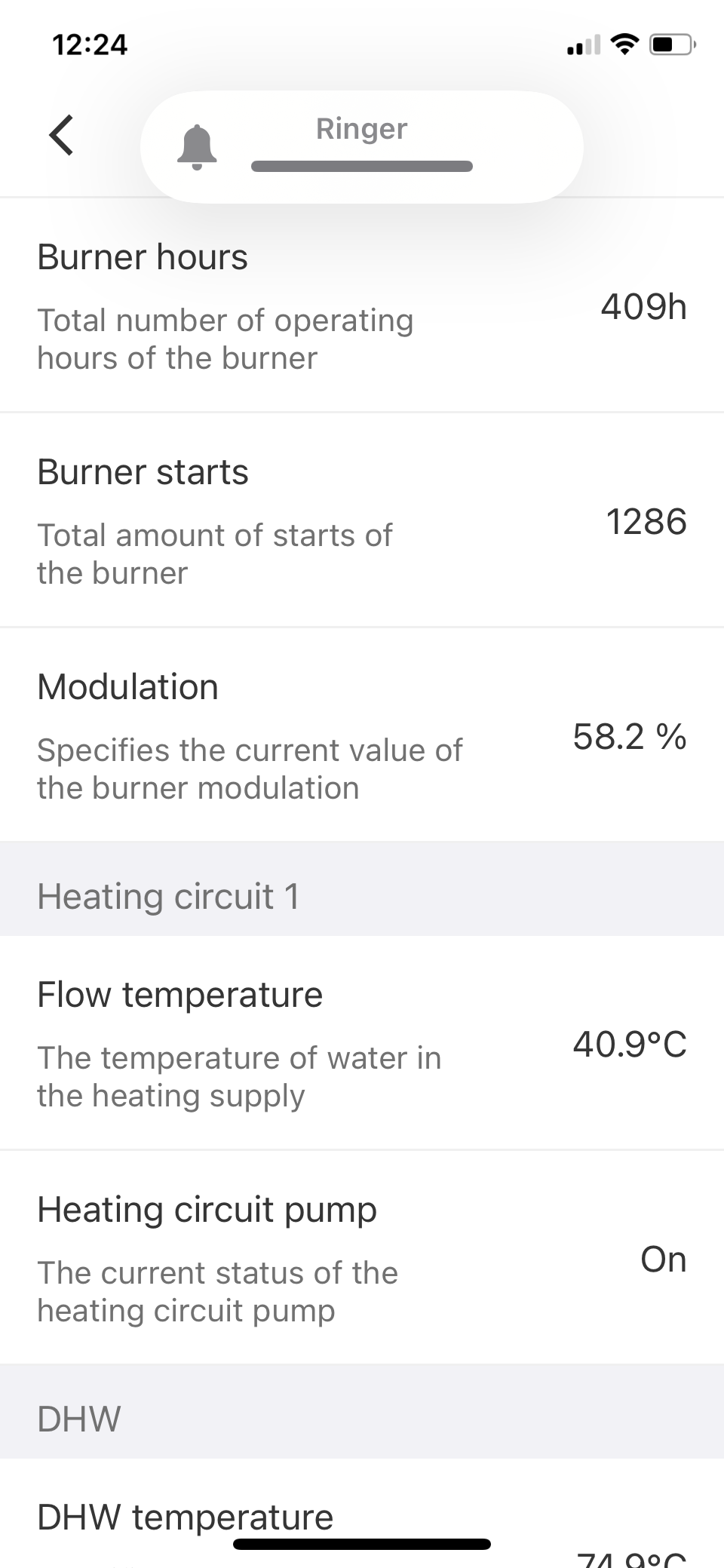
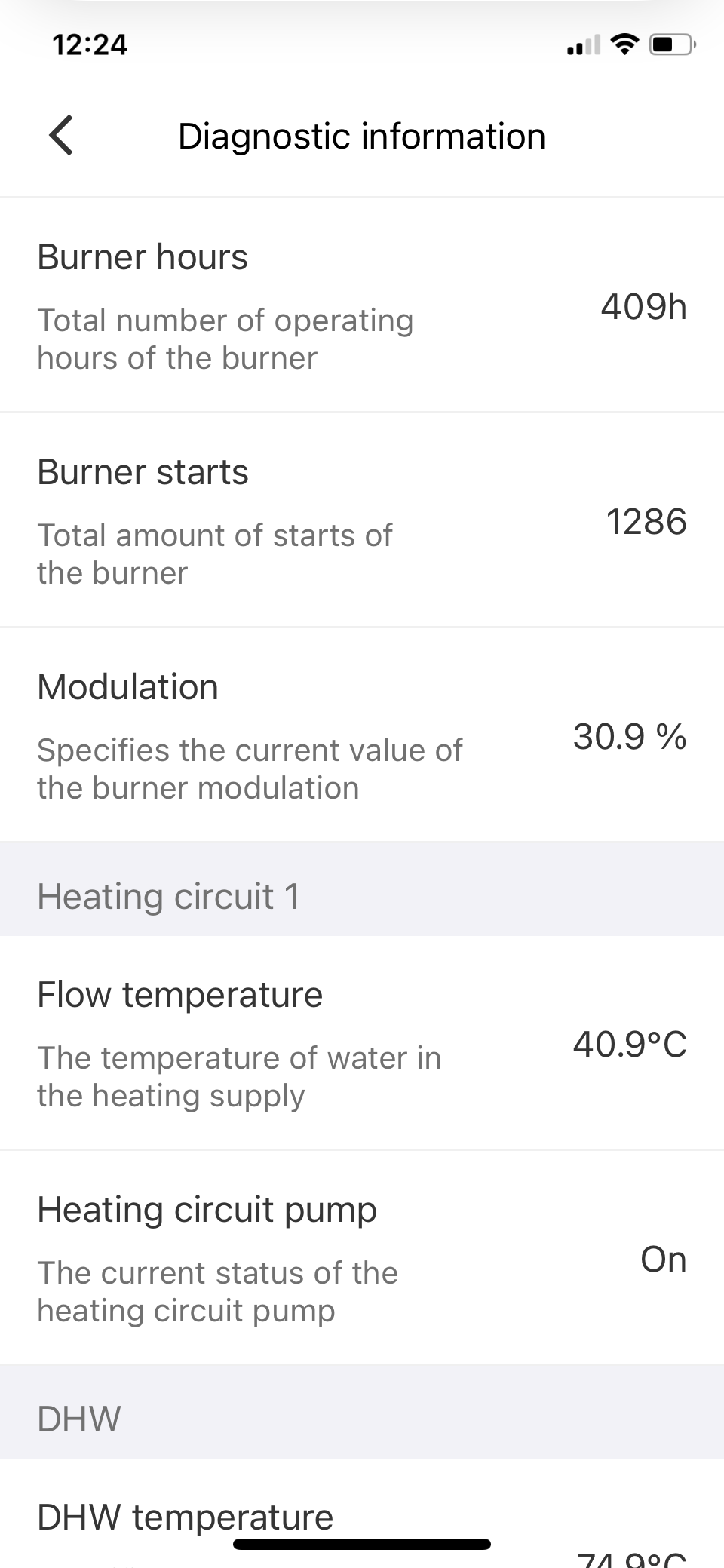
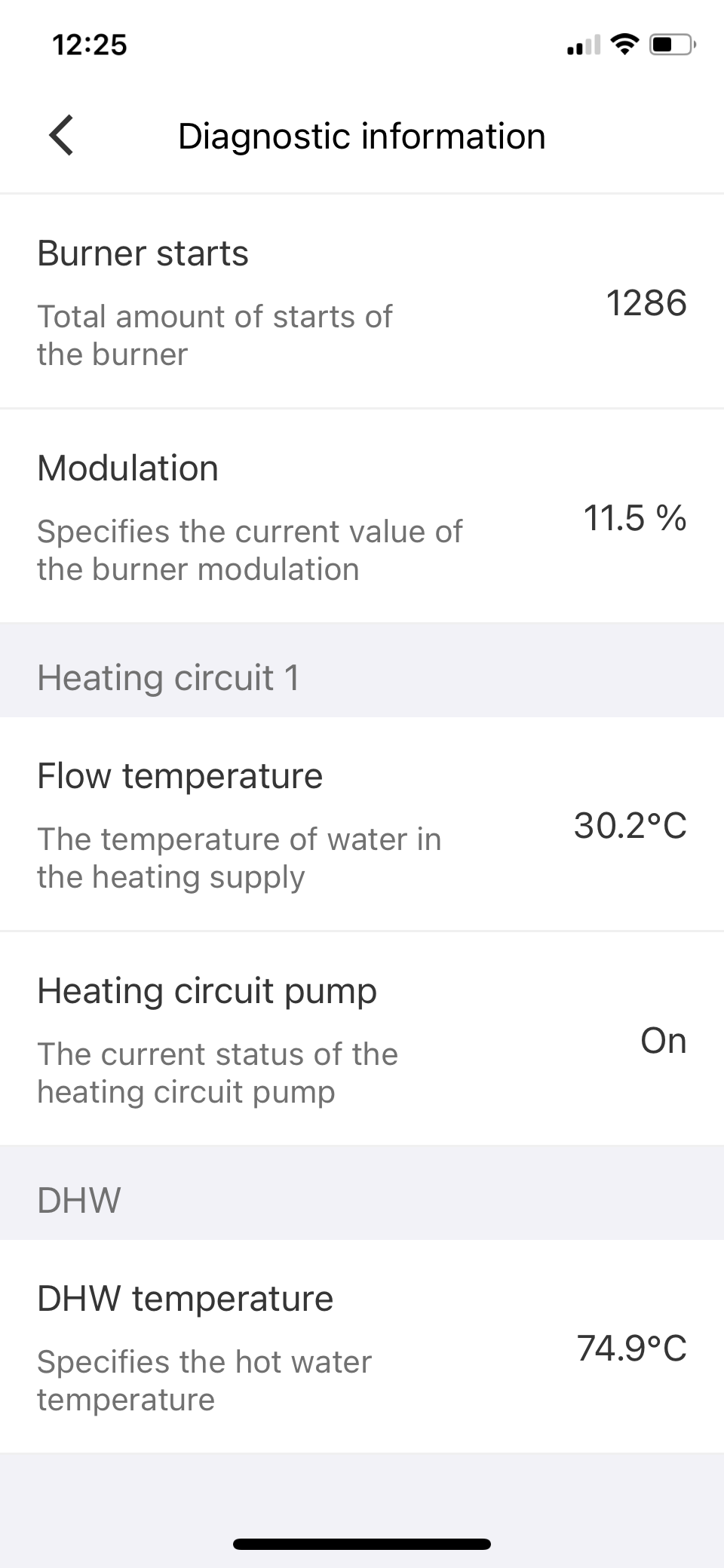
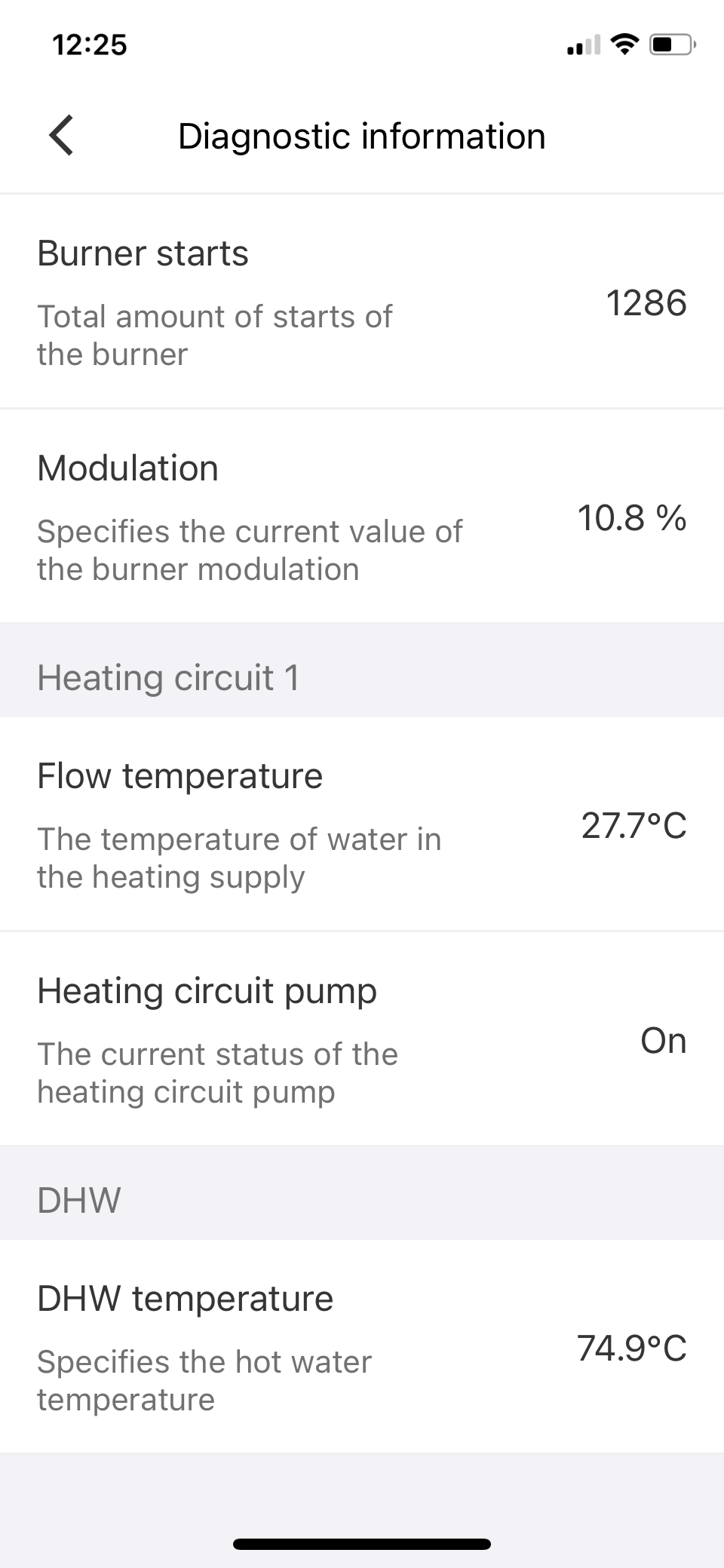
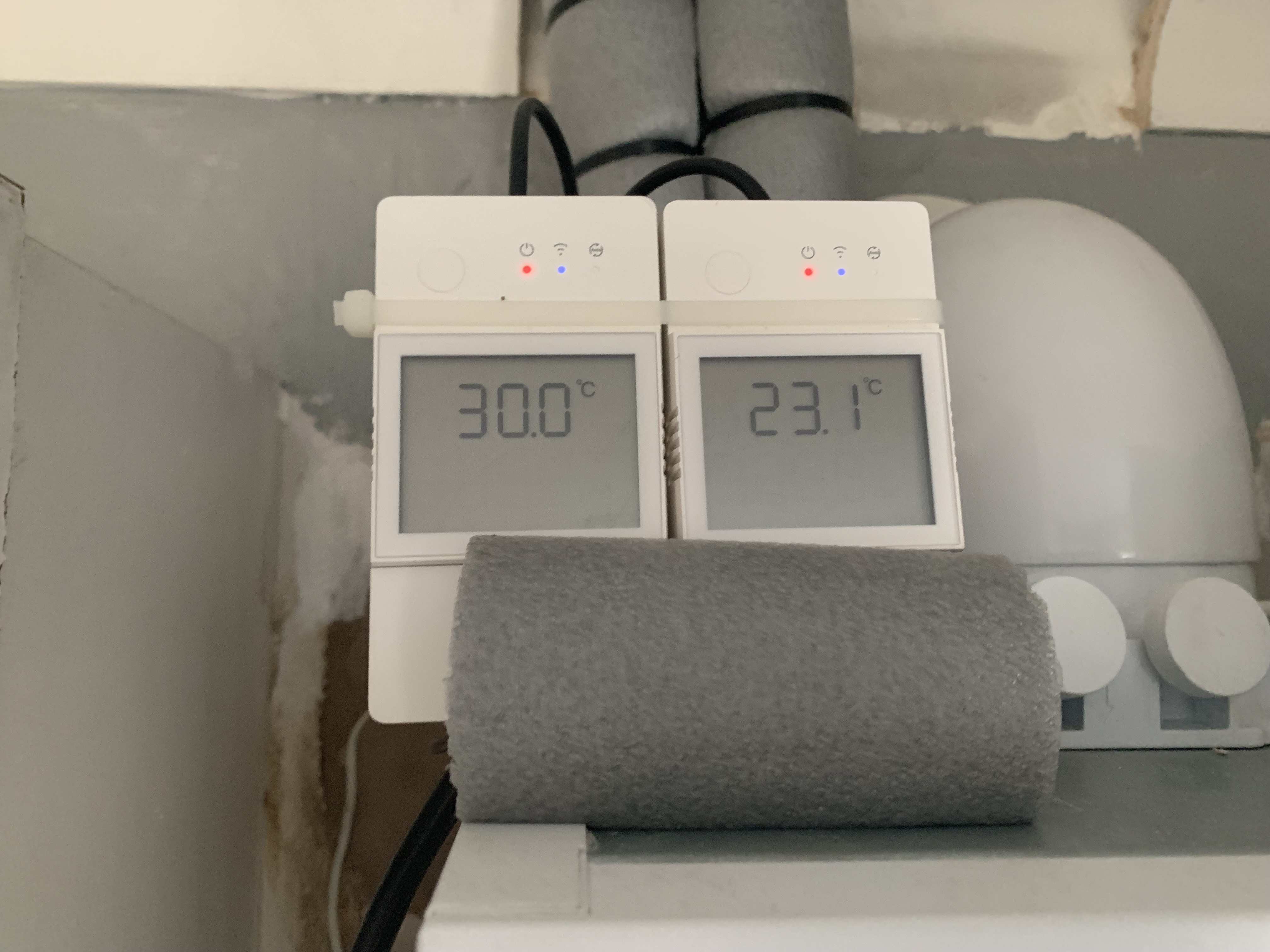
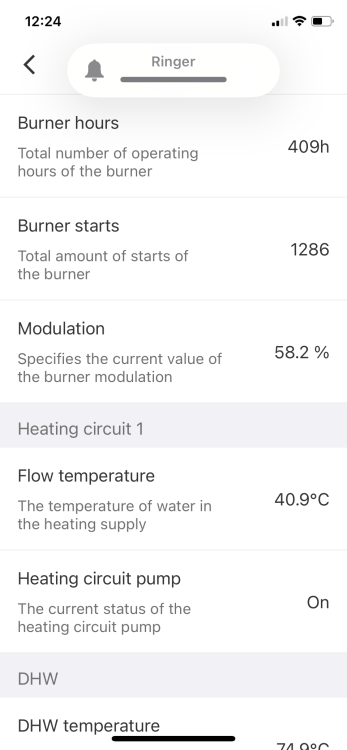
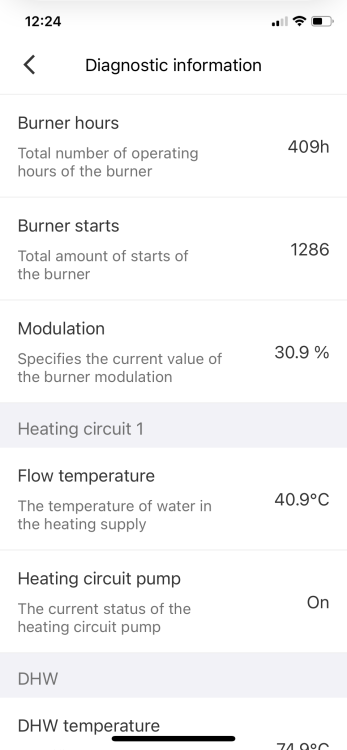
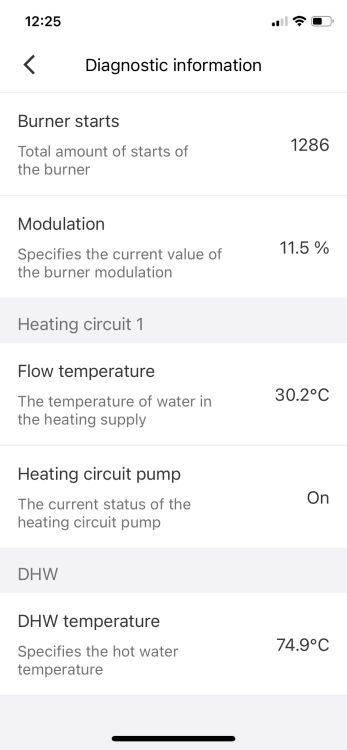
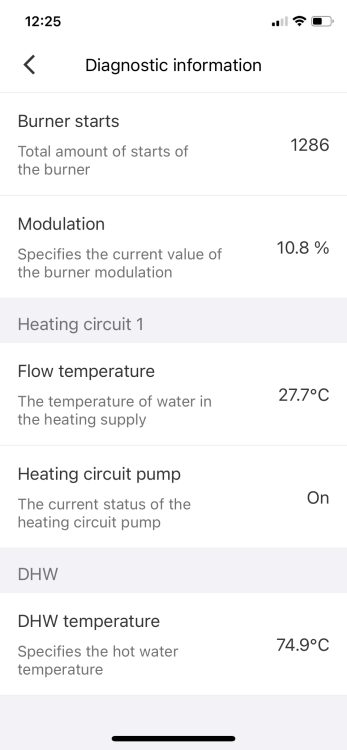
Over shoot is an interesting subject - I can only assume by observation that the in the initial purge and burn on start up the flow temp exceeding the set point is ignored as the flow temp can typically hit 40 deg C in the start up phase but the boiler ramps down to min and the flow temp stabilises at very close to the target flow temp. just by way of illustration have a sequence of screenshots on fire up initial fire - boiler modulation is 58.2 % (58.2 % = ~12 kW) flow temp is 40.9 Deg C 30 secs later modulation has dropped to 30.9 % = ~8 kW flow temp hasn’t dropped yet (due to initial heat up in HEX) 1 min later modulation has dropped to 11.5 % (so ~5kW) flow temp is dropping rapidly to 30 Deg C 2 mins after start up Modulation is at min 10.8 % (so ~4 kW) flow temp stabilised at 27.7 deg C It’s 14 deg C outside on North side of the house where the OAT is taken so the boiler will do a burn of around 8 mins before shutting down for around 60 mins Point to note - the boiler isn’t heating the house - it’s just replacing the heat that is being lost - all rooms are at or very close to target temp. fires per day are around 15 right now The burn and coast process is the same in shoulder season as it is in depths of winter (the only change is to the time the boiler runs for) at -5 outside last winter the boiler was running for 55 mins followed by a 5-10 min coast fires per day were 22 - 25 probably very similar cycles to an ASHP would operate in this house
-
Absolutely ^ that - S or Y plan is middle ages approach - X or W plan enables boiler to run two independent temp profiles depending on what it's heating (CH or HW). Or even a basic "Heat Only" boiler set up to run DHWP - doesn't need to be a system boiler - just needs to know if it's doing HW or CH and adjust the temp and modulation priority accordingly. Out of the box my Viessmann "heat only" boiler is a dumb boiler - runs one flow temp for everything - for HW I need a min of 64 Deg C so I would have to run the CH circuit at that same temp except that's high temp heating and I have mostly K22 rads or verticals in the house and one K33 rad. They don't need 64 deg C flow temps they need 35 Max. So the solution was to "Add" HWD (Hot Water Demand) box and an "outside temp sensor" and tell the boiler it's no longer a dumb boiler capable of only running one flow temp for everything but to run WC flow temps when doing CH and when it's asked to do HW to get it done in the shortest possible time with the flow temp selected for HW - in my case 64 deg for summer and 70 deg for Winter * see note Note due the variables between summer and winter 1. Tank losses being higher to surrounding temps lower - 25 deg v 19 Deg 2. Incoming water temp being 10 deg in winter compared to 20 in summer 3. I want to heat the water in 30 mins max during the heating season (so I can use Octopus download to provide exact water heating energy consumption - Outside the heating season I'm only heating water or cooking and water heating is done in the morning and cooking in the evening I can see my consumption clearly 😉)
-
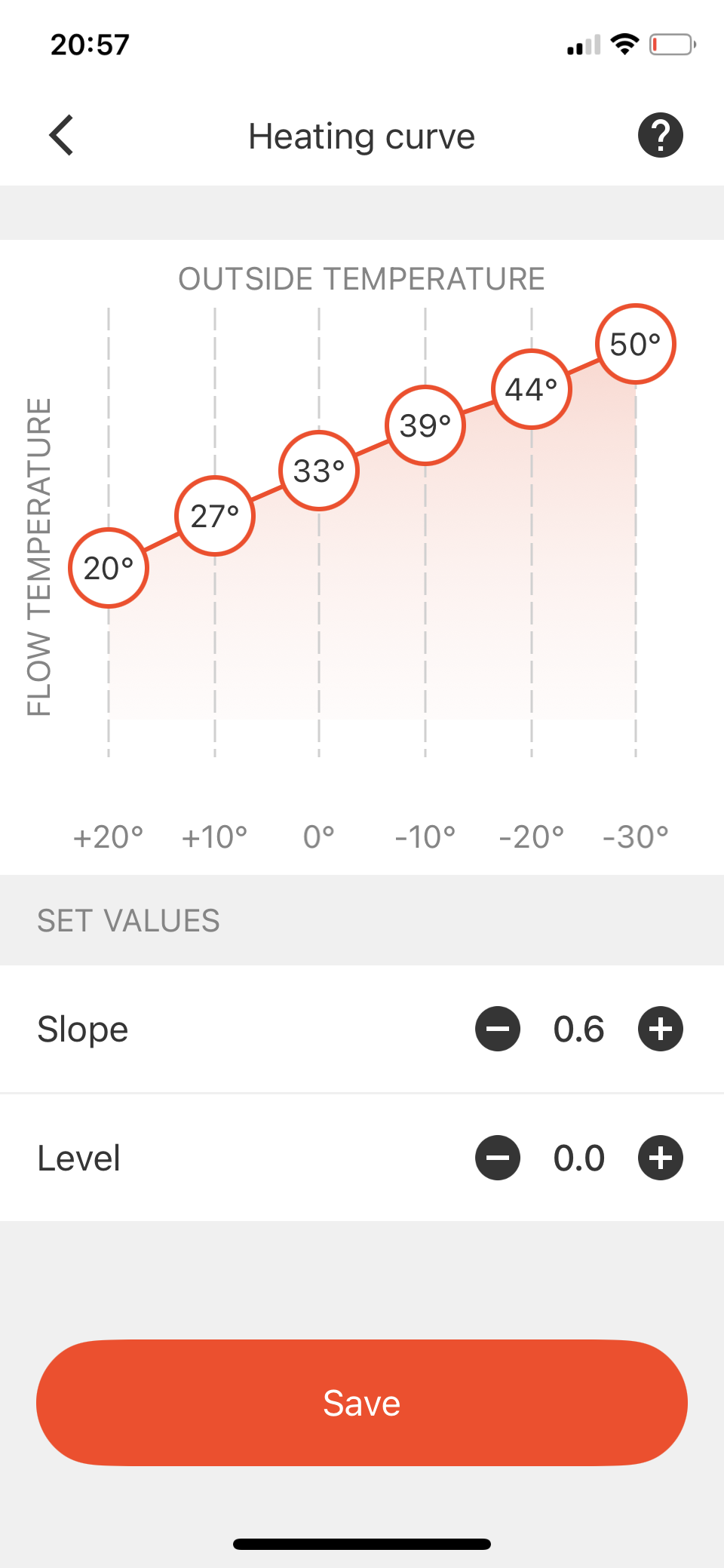
Sorry I've broken your quote down into bite size chunks to make it easier to reply too You'll have to link me to those statements because it makes no sense - the whole point of a condensing boiler is to run them in condensing mode for that to happen the flow temp needs to be 55 deg or lower to ensure the return temp is below the dew point Temp of the boiler can be set from 20 Deg C to 80 Deg C in non weather compensated mode In weather compensated mode the Curve sets the flow temp and that will be between 20 deg and 80 deg Discussion is good - it's not an argument and I have no problem explaining where I'm coming from As earlier link me up to where makers are saying stick to a 55 deg Return temp Nope not a combi - I have a HW Tank heated by the boiler - however flow temp for CH and HW are not the same - I'm running DHWP so if there is a call (or Schedule) for HW to be re-charged the boiler flips from low temp CH running WC based on OAT to HW mode - where it runs an elevated temp and modulation rate to get the HW done asap. I heat the tank to ~50 every day except one where I heat to 60 (Legionaire cycle) Mrs Alien likes a long, hot and deep bath once a week so as we only have a 117 Litre HW tank I take advantage of HW requirements on that day to do a Legionaire cycle - If Mrs Alien didn't want a bath I don't bother heating the water to 60. Over shoot is an interesting subject - I can only assume by observation that the in the initial purge and burn on start up the flow temp exceeding the set point is ignored as the flow temp can typically hit 40 deg C in the start up phase but the boiler ramps down to min and the flow temp stabilises at very close to the target flow temp. The only time the boiler "hunts" is on HW cycle for a min or two where it's trying to balance the modulation rate against the target flow temp (22mm primaries from tank coil to the boiler means at 0.6 m3/hr flow rate the rate of change is quite rapid and the boiler can get caught out by it - I really should close the gate valve a little to trim it. I don't have a ASHP to compare but I can tell you costs House is 4 bed Detached 113m2 Floor area across 2 floors, It's a stupid T shape so has a few rooms/areas that have 3 external walls - SUDG windows and doors - Blown CWI - 325mm of loft insulation and 75mm of PIR under the suspended ground floor Calculated Heat loss is 4.5 kWh at -2.5 Deg C OAT (pre loft insulation improvements) Annual Gas consumption is 9500 kWh at £0.05 per kWh (Again this is historical consumption and does not take into account the recent improvements to Loft insulation - I am expecting to get back to my previous schedule based consumption of below 9000 kWh whilst heating 24/7) That is broken down into HW 19% CH 80% Cooking 1% So just under £600 per year for all gas usage (including the standing charge - Take off £100 to the figure if you don't want it included) I'm sure an ASHP would be cheaper (especially if favourable tariffs were involved) but how much cheaper I don't think there would be much in it However capital costs (under the BUS grant) would have been much higher compared to the boiler swap/system tweak from Y pan to X (or W plan). IHTH
-
Based on my experience with containers (and box trailers) the condensation issue is driven by swings in temp and zero ventilation My concern for tools and furniture clothes and books is even ventilated there is a risk that the ventilation is defeated by a large change in temp. Before I insulated my single skin brick garage - big swings in temp would result in condensation on tools and cars/motorcycles. 200 mm of loft insulation fully plasterboarded and boarded loft area - SUDG Window and side door - plus insulated roller shutter door and I no longer see any issues when temperatures swing rapidly. In fact the garage is cool in summer and always 4-5 deg warmer than OAT in winter. So I think I would insulate the sides and roof internally? If they were long term keepers I'd have suggested spray foam for speed and cost but I'm guessing you want to use and then sell on so I think I'd use PIR and protect it with OSB - probably don't need a huge thickness to cover off all but the most extreme change.
-
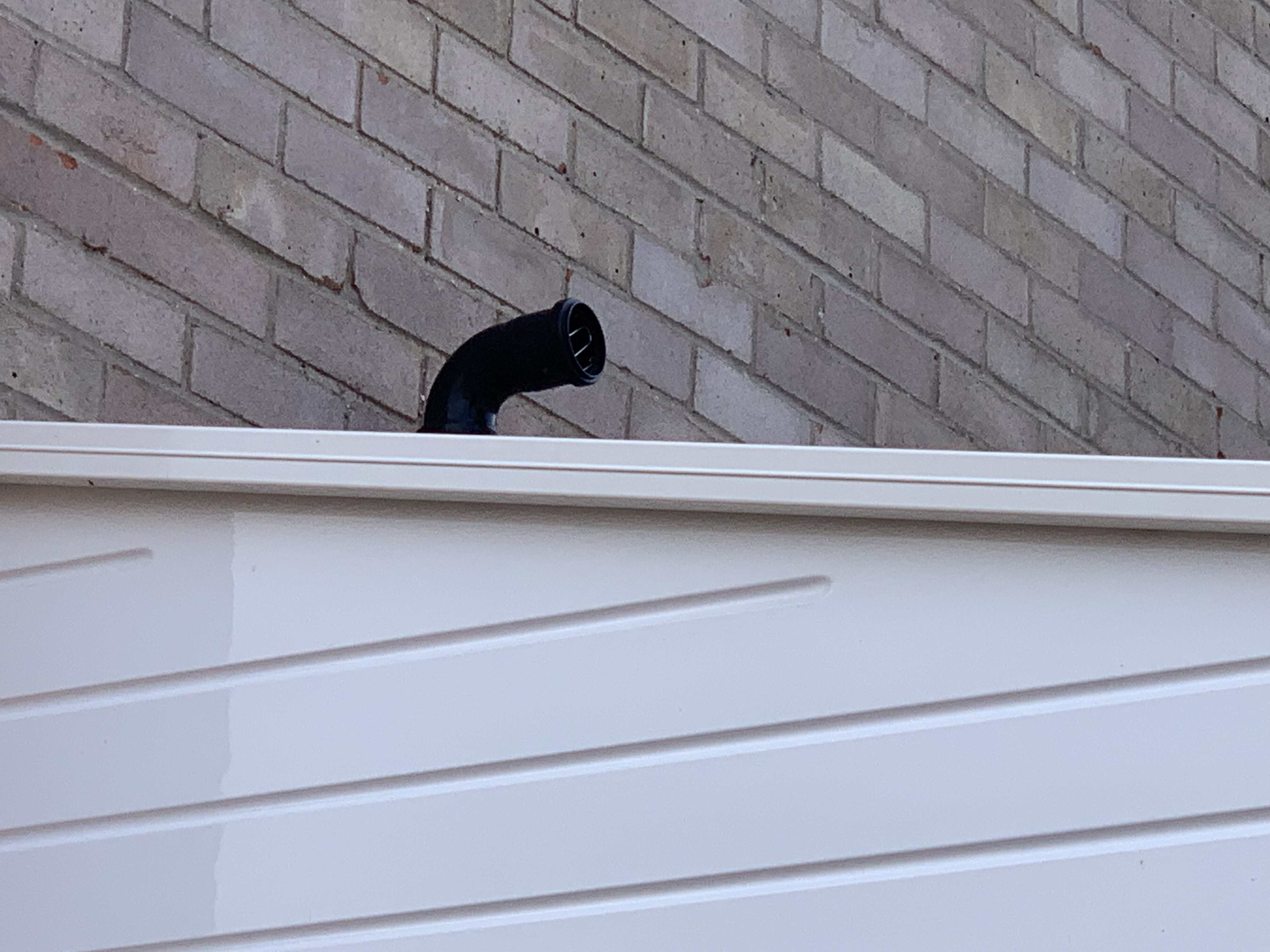
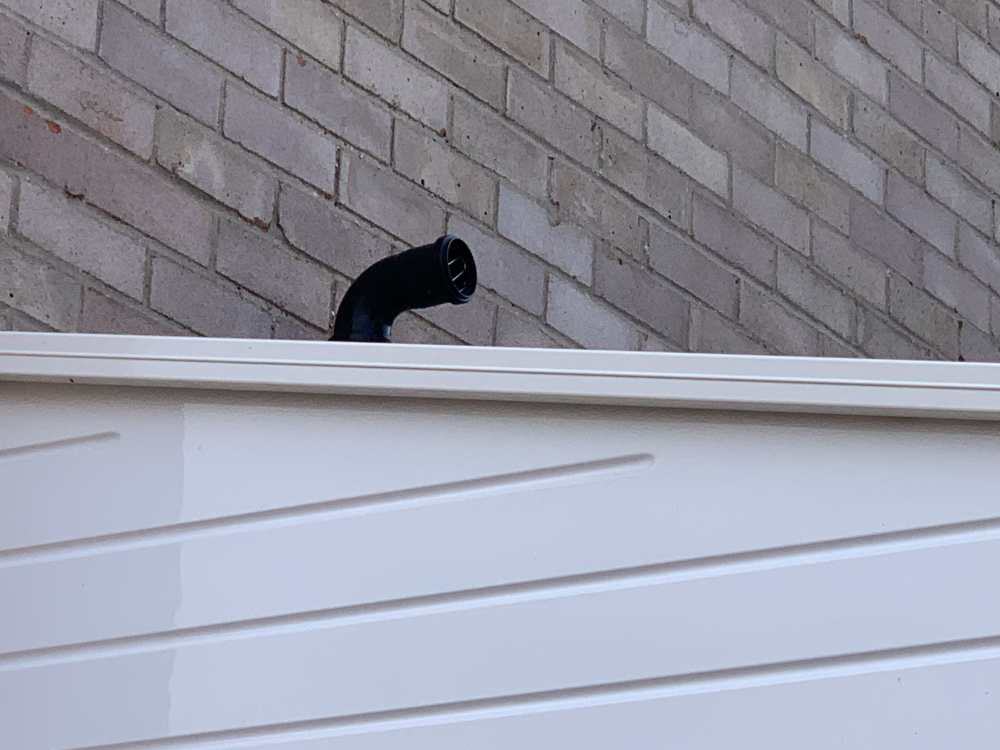
My flue on a CH cycle (just now) Boiler is running at 4kWh (min modulation 10.8%)
-
Absolutely correct - most of the time it is impossible to tell from the flue gases that the boiler is running - When you can tell it's running is below 5 deg C OAT when a very thin plume is visible or when it's re-charging HW as the flow temp and modulation level is much higher (it starts on 50% modulation and ramps up to 100% before slowly ramping down to maintain a 7 deg delta between flow and return at whatever target flow temp I've set it to) - and after the first 10 mins of the HW cycle the return temp exceeds 55 deg C and the boiler is no longer in condensing mode and my boiler flue looks like all the other boiler flues around me - chucking out a white plume but that's mainly due to a small coil in the current HW tank meaning I can't heat HW to target temp without leaving the condensing mode. It's on the list to sort - just haven't made up my mind to go with a new HW Cyl and ASHP coil or install a PHEX and circulation pump with the existing tank but we are a bit off topic now........
-
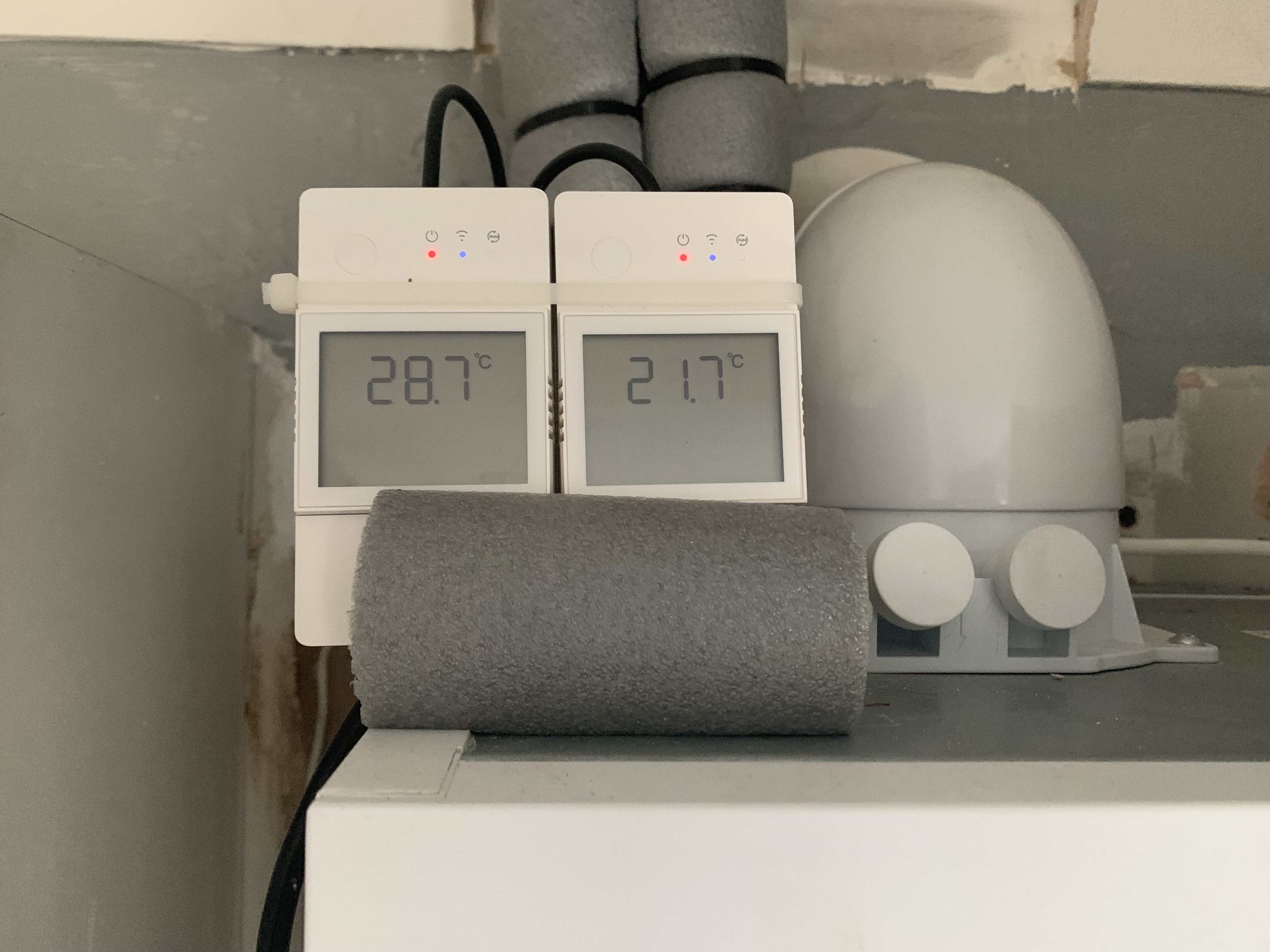
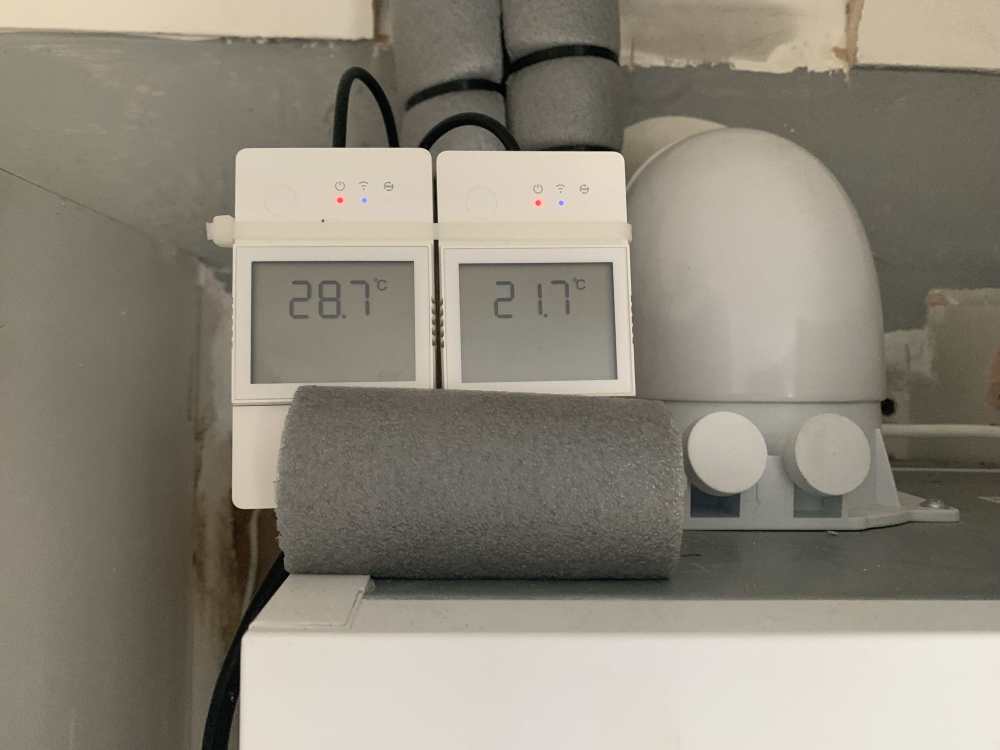
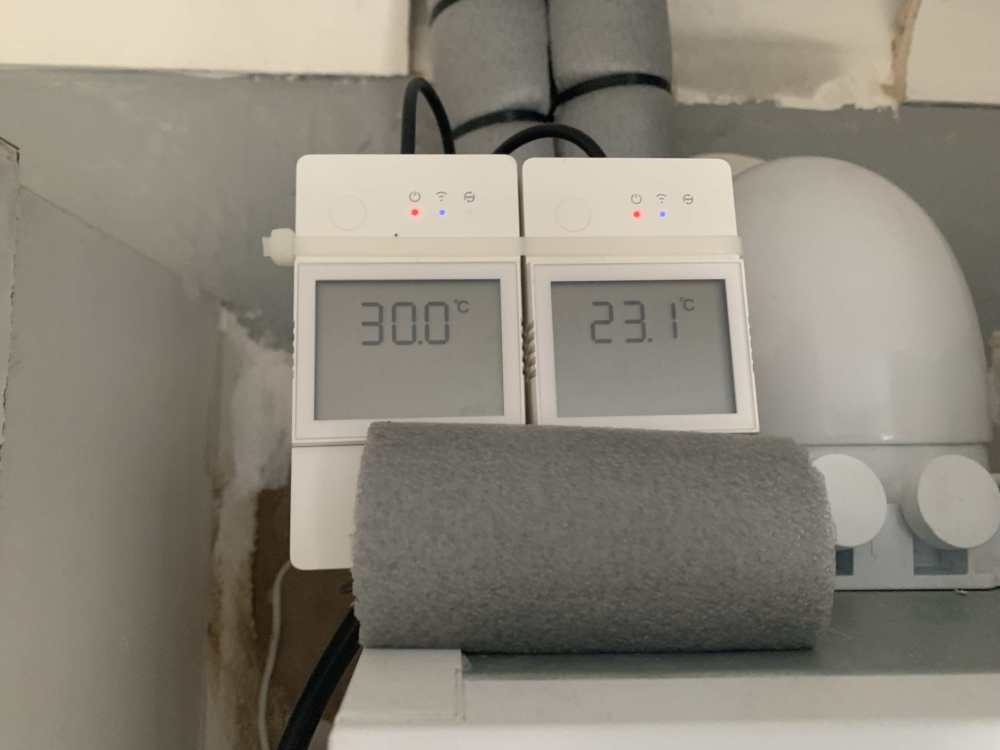
so OAT 7.0 Deg C - Weather Compensation curve says boiler should be targeting 27.4 deg C 3 mins after start boiler sitting happily with 7 deg delta (flow temp on left - return temp on the right) and maintaining a 28.7 deg flow temp at min modulation (10.4 %) at 13 mins after start boiler reaches the overshoot temp (target temp plus 3 Deg C or return temp delta below 7 deg C - I haven’t worked out which it’s using it may even be using both on either or basis) either way the boiler shuts down and waits for restart temp (Flow = Return - at 7.0 deg OAT this will be around 20.8 to 21.2) this will be in about 50 mins time It’s the 3 Deg hysterisis of the boiler that allows me to run low flow temps - it will keep a burn going for as long as it can as long as target flow temp doesn’t climb too high or delta between flow and return doesn’t drop below 7 deg.
-
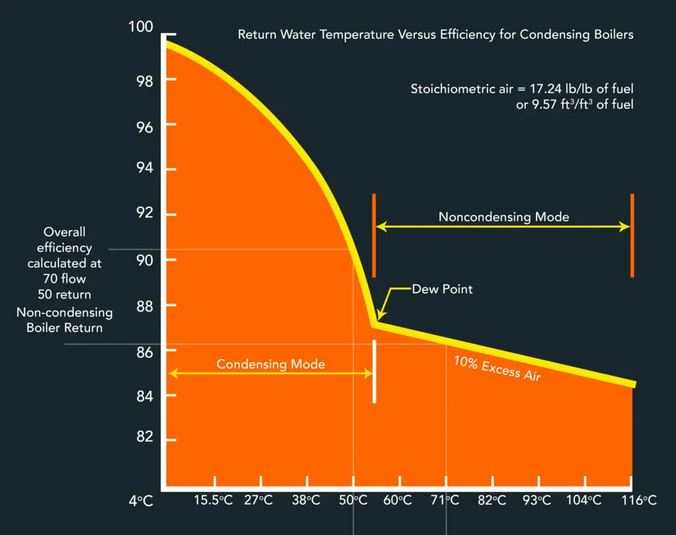
Hmmm - that sounds like you are mixing up with an issue that would be a result of running a non condensing boiler at condensing temps. The aim of the condensing process is to recover latent heat from the exhaust gases. This process is not a fixed value of say 55 Deg C flow temp it's a scale of recovery The lower the return temp the higher the % of heat recovery in the zone of condensing mode. I'm targeting flow temps in the mid 20's to low 30's and I've validated the boiler efficiency to be 97 % (that's quite a fun thing to do once you get your head around how) Anyway the boiler has a stainless steel heat exchanger with a radial burner in a boiler designed to run low flow temps - the condensing process keeps the products of combustion off the heat exchanger and sends them out via the condensate drain - it really doesn't matter to the boiler if you are condensing with a return temp of 50, 40, 30 or 20 deg - the only impact it has is on the volume of condensate produced. It had it's first service a month or so back and the gas engineer commented how clean it all was inside the heat exchanger (he was as interested in the boiler condition as I was) I'll post up my flow temps from this morning
-
It's interesting to read that someone else did a lot of background study and was very selective (and prescriptive) about what they wanted installed and how. I "chickened" out of an ASHP - I didn't have enough data to prove to myself that an ASHP would work - despite being told by a well known plumbing youtuber I was already targeting flow temps that would work with an ASHP (even if the boiler at that time couldn't cope with them very well) I made the decision to go low temp gas boiler and look again at ASHP when the latest boiler needs replacing. In hindsight maybe a poor decision but Mrs Alien and I both like cooking with gas which meant no opportunity to be rid of the standing charge and that tipped the balance further in favour of a replacement gas boiler. Incidentally the chosen Gas Engineer didn't get everything right first time but was diligent enough to work with me and requirements and get it right in the end. (I wouldn't chose me a customer if I had plenty of other less demanding customers but he took it as a challenge and he'd never had the opportunity to fit a gas boiler that needed to target 30 - 40 deg flow temps based on Heat loss calcs that was pretty much where I thought I'd end up - I was out by 5 deg)
-
Unlimited hot water with 4 bathrooms - is it possible?
marshian replied to Indy's topic in Boilers & Hot Water Tanks
I guess because the kids aren’t paying the bills they aren’t bothered about wasting energy and water I’d be going one boiler and two tanks - a smaller one for the kids bathroom - when the shower goes cold they’ll soon learn to be less wasteful with energy and water 🙂 On a more serious note one boiler - with a good turndown rate for the CH demands of the house but a decent output for water reheat times to be quick urban plumbers did a set up a while ago with a fairly small tank that could be re-charged almost as it was used - worked like a giant storage combi but not a combi was how he described it at the end. -
Oh how well I remember those days - as if it was yesterday (was actually just 14 mths ago) Full Wiser system with smart TRV's on every rad Micromanaging schedules to individual room temps to control heat loss Boiler had a 10kW min output and wouldn't cope with a flow temp below 45 Short cycled like a complete twat at anything below 50 Deg C flow temp (My record was 19 cycles in 1 hour) When short cycling it chewed thro gas putting pretty much zero heat into the house and was fundamentally puking the heat out of the flue House was either too hot after too long or too cold after spending way too long waiting for it to warm up Ahhh happy days............... PS They bloody weren't!!!!
-
No that’s the flow temps the boiler is running based on my WC curve - No thermal store, no volumiser or buffer just 135 litres of water spread across 13 rads in the CH circuit. Flow rate is 8.5 Litres per min. example below only time it goes to conventional gas boiler temps is when it’s recharging the HW tank then it ramps up to 68 Deg C says “to hell with condensing efficiency - lets get back to space heating” Viessmann boiler 100W “heat only” 16kW with WC and HW demand box I’m basically running it at ASHP temps for CH
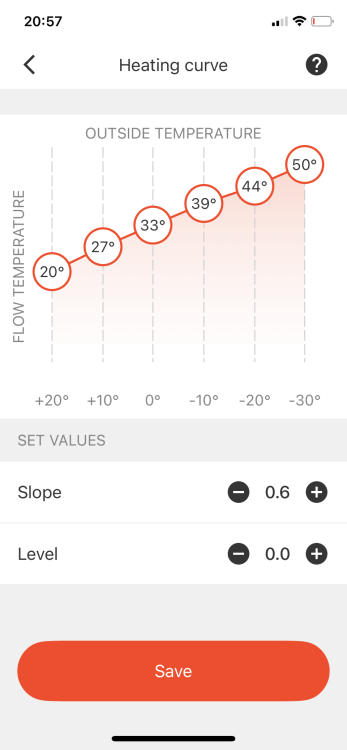
-
Your logic to me is totally sound - you want a nice big UFH slab with capacity to buffer temp swings outside if they are typically installing 50mm flowscreed in fairly modern builds with occupancy only outside working hours It would make sense - scheduled heating needs quick response in terms of warm up and a big chunk of screed is going to be much slower to respond. Perhaps that’s where they are coming from? I know I’m doing low temp (currently 21 to 27 deg C depending on the OAT) with a gas boiler and rads (no UFH and ASHP) but low and slow 24/7 to meet the needs of the house (or heat loss) makes so much more sense to me and I’m using less energy than I was last year when I was running scheduled heating with 50 deg flow temps and only heating when the house was occupied - everything is at room temp. last year when the heating went off the room temps rapidly fell this year I turned the heating off for 10 hours and the house lost just 1 deg C in the 10 hours it will take at least that time again to recover unless I raise the WC curve but it’s still comfortable so I’ll let it sort itself out
-
Upgrading upstairs pipework – 22mm vs 28mm
marshian replied to hyso80's topic in Central Heating (Radiators)
Neat solution but alternatively either Danfoss RAS-B2 will also offer fine tuning of the flow rates from 10 L/Hr to 135 L/Hr which is what I am fitting next. I'm currently using Drayton EB4 bodies which have 6 presets and in the main they've been pretty good at providing a system that is nicely in balance but I've a few rooms where one setting is too slow and the next one too fast so need a little more fine adjustment. -
Pleased to say one of our regular hedgehogs has been prepping for winter

-
You’ve replace google for me
-
Unfortunately from a stealing heat perspective both bathrooms 1. share a wall with the stairwell (18 deg set point) 2. share a wall with the landing (same 18 deg) 3. One shares a wall with a heated bedroom (20 deg) the other with a box room (18 deg) this box room has 3 external walls and a much higher heat loss hence the lower target temp 4. Both have an external wall and small window (plus extractor fan) 5. Both have 300 - 325mm of loft insulation above This conversation has stopped me making a big error and doubling the size of the rad based on 50% of wattage required - I just need to either buy slightly taller one 1800 v current 1600 or same height doubled but a reduced width. I really want to make sure I don’t end up bouncing along the top temp with TRV intervention - currently I have a DAB pump set to lowest speed on constant pressure watts 9.5 head 1.8 m m3/hr 0.5 (so 8.5 litres per min flow rate) in the shoulder seasons with current set up Boiler fires for ~12 mins in every hour and with a nice open circuit all rooms stay nicely at close to target temps again thank you for the help
-
^ This in spades for me - I do most of my DIY in summer and most of my car stuff in winter both use very different muscles but it balances out (60 yrs)
-
I've not designed for any DT - I believe the expression is I am where I am with this house I've been using DT 10 compensation factor of 0.123 to work out what the rad output is v the heat loss at -2.5 OAT and two of my rads are coming out as undersize (both bathrooms with vertical column rads) This confuses me because the room temps are actually way closer than they should be (no matter what the OAT and room temp is just 1 deg below what I want it to be 21 although on bath nights Mrs Alien would like it a bit warmer.) so before I upsize them to hit the target temp I want to be absolutely sure of the factor to apply so I don't end up going to large and then restricting the flow to trim the temps. Set up if it helps Viesmann 100-W 16kW "Heat only" range rated to 4kWh on CH with external OAT sensor running WC (DHWP takes care of HW) Heating 23.5/7 (HW cycle once a day 30 mins does what we need 6 out of 7 days 2 x HW on her bath night) So at -2.5 my boiler flow temp is 36 Deg C (that worked fine last winter and the WC curve is nicely dialed in for pretty much all circumstances) DT at the boiler is a pretty stable 7 Deg (regardless of flow temp determined by the WC curve) Two rads concerned have a DT of 6 Deg between flow and return (Pretty much all the rads run similar DT T22 and K33 are a little bigger but other towel rails are a little narrower - all the rads are set up with the correct flow to meet the room requirements using Drayton EB4 TRV bodies) Now I understand the calculation (and I take the worst case of -2.5 OAT) 36 - 6/2 = 33 33 - 21 = DT 12 13/50 = 0.240 So Heat loss of Bathroom is 210 W Current rad is 800W at DT50 This at 0.123 is 98.4 W (Just under 50% of the output I need based on heat loss calcs) 800W @ new correction factor of 0.240 is 192 W That's much closer and kinda fits with the reality I need to upsize it but not by much ( a 1000 W similar rad with a DT 50 rating should give a little more wiggle room for the Bath night ). Thanks for your help
-
I keep coming back to this thread to make sense of the calculations in Bold I can't make 35-5/2-20 = 12.5 It's driving me a bit cranky @JamesPa My issue is my heat loss calcs were done room by room and in some rooms the rads currently fitted shouldn't provide the heat required at -2.5 Deg OAT if I use the std DT10 factor for T50 Rad so I'm trying to work out what they will actually output based on my own flow, return temps Flow 35 Return 25 Room 20 DT 10 Correction 0.123
-
Put the floorboards down and make a coffee 😉 Whats the joist spacing - they look quite close together in the picture but maybe that's the camera/phone lens
-
Last year at the start of the heating season I was running scheduled heating and manually setting flow temps. I transitioned to full WC flow temps during Dec moving to 23.5/7 heating (0.5 is HW recharge) and refined the curve in Jan, Feb and Mar with a really small tweak in Apr to fix overheats on warmer days (so bottom of the curve stuff). This year I used the same WC setting I was using at the end of the heating season Comparison of kWh/HDD (based on 16.5 Deg C base line) for first 6 days of this house heating season Day Last year This year Day 1 2.3 0.6 Day 2 4.9 1.8 Day 3 3.5 4.1 Day 4 2.7 2.0 Day 5 5.5 2.4 Day 6 7.6 2.3 Avg 4.4 2.2
-
50% of my CH circuit is under the suspended ground floor - it's lagged to within an inch of it's life as it is outside the heated envelope 45% of my CH circuit is between the floors - ie it's within the heated envelope and is not lagged at all 5% of the CH/HW circuit is from the Boiler to the HW tank and CH zone valve and back - this is lagged to within an inch of it's life to keep the heat in the pipes because in summer as @JohnMo says that contributed to an increase in room temps whenever water was heated Use something like Tubolit and the largest wall thickness that you can - the glue if you buy it in 250ml cans has a dispenser brush which makes it really easy to run along a split and seal it up - I'm not sure with a decent wall thickness pipe insulation you'd get much improvement from wrapping in rockwool
-
Not going to make it - still at work.........