
marshian
-
Posts
1605 -
Joined
-
Last visited
-
Days Won
6
Everything posted by marshian
-

A booboo may have been made
marshian replied to Post and beam's topic in Air Source Heat Pumps (ASHP)
Exactly - it was a real surprise to me how effective "cold to touch" rads are as space heaters in shoulder seasons I was tweaking the balance of my rad circuit this morning (since I increased my pump speed the burn times have lengthened and rooms have started to overheat) OAT was 10 Deg C - target boiler temp was 27 Deg C but I increased the WC curve to extend the burn time so I could get round and measure all the rads Flow Return Diff Room Target Boiler 32.4 25.3 7.1 Kitchen 29.8 26.0 3.8 21.0 20.5 Dining 30.8 27.2 3.6 19.5 20.0 Lounge 31.0 26.2 4.8 19.5 19.0 Hallway 29.6 24.2 5.4 19.5 19.0 Utility 25.8 22.2 3.6 18.0 18.5 Toilet 27.6 23.6 4.0 19.5 19.0 Front Hall 24.4 18.4 6.0 17.0 17.0 Bed 1 28.8 24.2 4.6 20.0 20.0 Bed 2 25.2 21.0 4.2 20.0 19.5 Bed 3 27.8 23.4 4.4 20.0 19.5 Study 28.6 22.8 5.8 19.0 18.0 Bath 29.2 21.6 7.6 20.5 21.0 Ensuite 29.0 22.0 7.0 20.5 21.0 -
Just a random thought from me - those valves are full bore ones and not the restrictive types?
-
How to release water in combi boiler to repair a leakage?
marshian replied to LLL's topic in General Plumbing
Absolutely yes add inhibitor - without it (in the absence of properly conditioned water which on a sealed system is the alternative) you can quickly get corrosion in the system - bad for rads, pump and boiler -
When I posted comments I hadn't picked up the heat source was ASHP As I understand it the SCOP or COP improves the lower the flow temp is and it's at it's worst when doing HW at elevated temps Running it thro HW tank coil first then rads is going to be poorer COP more of the time surely??
-
Water takes the shortest path? what happens to the flow temp in the rads when the tank is fully heated? the Tank needs 60 deg C to get it to a sensible 50 temp DHWP is the process to follow to separate HW demand from CH so you can run two boiler temps
-
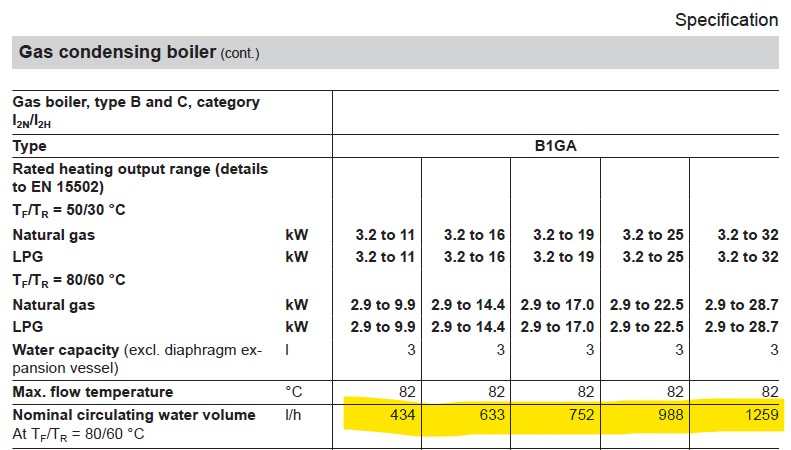
All of this post is related to CH only - not HW OK since I've had this boiler installed it's always had a little niggle where even range rated down to min (19 out of 100 so should be 3.2 kW but is actually realistically 4.0 kW due to low flow temps I'm running) it occasionally ramps up to 20% to 30% just before shutting down or even sometimes in the middle of a burn cycle resulting in an early shut down for over temp.... It's definitely worse on warmer days. If I'm in the kitchen and the boiler is on a burn cycle I can hear the tone change as it ramps up. Viessmann replaced both Main Board and WC Temp Sensor in March this year to eliminate those as a reason for the behaviour even though I wasn't convinced by this action. It improved it enough that I didn't notice it happening so much but it definitely still happened. I've tried to understand what is driving this issue but not been able to (so I've actually put it down to a "characteristic" and recently I increased the range rating to 30 out of 100 (roughly 6 kW) - logic being the boiler is ignoring it anyway so might as well give a bit more head room back Strangely and I hadn't heard it do it since - then on Sat it did it again and then again on the next cycle. I went and checked the circulation pump - I'm running it at 0.5m3/hr on CH and 0.6m3/hr on HW and the pump was 0.4m3/hr flashing with 0.5m3/hr a little lower than normal but all 4 of the rads where TRV's can and do intervene were closed. (Difference in flow rate is accounted by the lack of resistance thro the coil as opposed to 13 rads with flow controls/restrictors fitted to all of them) I bumped the pump speed from 1 to 2 and it was rock solid on 0.6m3/hr It didn't do it for the next two cycles I put the pump back down to 1 and it did it on the next cycle. I went back to the manual - I'd made the assumption that the boiler flow rate requirement would be at peak output and running a 16kW boiler range rated to 6 kW I could comfortably run at 0.4 to 0.5 m3/Hr I dislike system noise so really want to run the pump on the slowest speed but it looks like the boiler likes a little more flow. Early days but I really hope that's resolved the niggle - I might range rate it back to minimum and see if the issue comes back
-
Unlimited hot water with 4 bathrooms - is it possible?
marshian replied to Indy's topic in Boilers & Hot Water Tanks
this was why my suggestion of two tank set up - one for kids bathroom and one for the others - could schedule the reheats to be just before requirements and size the tanks accordingly - as a result you don’t end up with one massive tank that takes a while to reheat or requires a serious kW input to do it faster and the boiler can be sized more appropriately for house heating needs (plus each tank if chosen wisely with a heat pump compatible coil wouldn’t need the boiler to ramp up to very high flow temps) OP’s house still in planning stage so finding space for the two smaller tanks can be incorporated into the design -
How to release water in combi boiler to repair a leakage?
marshian replied to LLL's topic in General Plumbing
@Nickfromwales was far better qualified to answer - sorry for the delay in responding was at a funeral (Brother in Law) all day yesterday. -
How to release water in combi boiler to repair a leakage?
marshian replied to LLL's topic in General Plumbing
Hey Zeus that's a bloody annoying feature if you fit WB on a regular basis............... -
How to release water in combi boiler to repair a leakage?
marshian replied to LLL's topic in General Plumbing
Like he said - plus the added issue of if you are hot swapping something and it's goes wrong (for whatever reason) you are in a whole heap of pain and stuck with your fingers in holes trying to explain to the significant other what the bloody hell they need to do to drain the system down so you can take your fingers off the bloody pipes - which is what I meant by point 4. First time............. -
Correct.................... It might be not what you meant but I don't disagree 😉 Counter view - when the BUS grant ends the inflated costs of heat pump conversion will also end - manufacturers will reduce their prices we won't have MCS stupid rules impacting sizing and if the grant harvesters move onto something else we will be left with companies/heat engineers that do a much better job
-
How to release water in combi boiler to repair a leakage?
marshian replied to LLL's topic in General Plumbing
I've done the same before but I think there are a couple of points to think about 1. The condition of the olive 2. Possible need to PTFE tape or remove and replace the olive 3. Miss match on old nut to new fitting 4. First time.................. I'd drain down -
How to release water in combi boiler to repair a leakage?
marshian replied to LLL's topic in General Plumbing
You might require several top ups as you bleed air out of the system - that's just a consequence of introducing air into pipe work - it will find it's way to rads and as a result you will need to bleed them several times -
How to release water in combi boiler to repair a leakage?
marshian replied to LLL's topic in General Plumbing
Oh that for sure -
How to release water in combi boiler to repair a leakage?
marshian replied to LLL's topic in General Plumbing
Except that it doesn't go off like a cartridge of silicone - had my tube for nearly 10 years and it's still usable - which considering a normal cartridge of silicone is knackered after 6 mths makes me feel the product is a different formulation -
How to release water in combi boiler to repair a leakage?
marshian replied to LLL's topic in General Plumbing
I'd replace the olive and use less PTFE tape but I'm not a plumber or heating engineer like @Nickfromwales Watch this and you'll see exactly what over tightening an olive does and why it causes leaks to get worse (PS his presentation style is awful and irritating but from a content perspective it's worth a watch) I also prefer to use LSX rather than PTFE tape but either are pretty fullproof solutions to leaks from compression joints without excessive tightening https://www.screwfix.com/p/fernox-ls-x-leak-sealer-50ml/23614 No idea yet on how to do an embedded link perhaps @Nickfromwales will share that secret -
How to release water in combi boiler to repair a leakage?
marshian replied to LLL's topic in General Plumbing
I already asked that 🙂 -
How to make a shower-cubicle floor waterproof?
marshian replied to David001's topic in Bathrooms, Ensuites & Wetrooms
Oh I had the sane sort of leak from a cold water storage tank in the loft - didn’t know it was happening untill I saw the ply boards it sat on were bowing with the weight (soggy ply did well to hold it) I will state that technically it was self inflicted - house in a hard water area and I fitted a water softner - for two years I kept finding the odd leak that had never been an issue before (softened water takes back limescale from where it finds it - so some old joints that had clearly leaked in the past and had been sealed with limescale were suddenly free to leak again -
How to release water in combi boiler to repair a leakage?
marshian replied to LLL's topic in General Plumbing
Excellent spot - provided the boiler is on ground floor could you shut all the unaffected rads and drain down the problem one by opening the rad bleed as they will still need to drain to below the level of the lockshield? -
How to release water in combi boiler to repair a leakage?
marshian replied to LLL's topic in General Plumbing
How old is the house? mine was built in early 1980’s they didn’t put any drain valves in at all you can get round this by shutting one rad (both ends - noting the position of the lock shield valve, turns to close or or turns to fully open) once you’ve released the pressure in the system pick a rad pref near a door and on a hard surface like tiles or lino release the system pressure first using the bleed screw and a jug to collect the water once that’s done shut both valves - crack the union to the rad tail - then drain the rad with suitable tray or tupperware container from the cracked union (plenty of old towels to catch what misses the container when rad is empty you can normally remove the rad fit a new tail to one of the valves with a hose attached and then drain the system via the hose please ask if you want more explanation or pictures and I’ll try to pull a few bits out of my spares pile to illustrate what I’m describing -
How to release water in combi boiler to repair a leakage?
marshian replied to LLL's topic in General Plumbing
For me the first thing to establish is what is actually leaking is it A. the lockshield valve gland B. the compression fitting to the 15mm feed/return pipe C. The compression fitting to the rad tail D. The rad tail Once identified you can consider if whole system needs to be drained or if a partial draindown can be carried out For instance if the rad is upstairs then you only need to drain down upstairs to a level where a repair/replacement can be achieved without issue If downstairs then you can shut all of the TRV's and Lock shields upstairs to leave more of the water in the system (downside is it's faff and you need to carefully note down the lockshield positions so you can reset the circuit balance to as it was) I've "hot swapped" a lockshield valve before* but on a tiled floor not carpeted - not sure I'm brave enough to do that on a unvented system (I'm a vented system so the pressure is limited by the head of water in the loft. -
Not sure which post is correct but 4 bed family of 2 using 50 to 60 kWh of Electricity a week (winter higher than summer) (Yearly average is 8.5 kWh a day) Gas CH & HW - Electric Oven but Gas Hob (No EV) No battery or PV
-
Just one more point - people and their activities are the problem with humidity levels in houses - especially when you improve the leaky nature of older houses where they were never designed to be sealed up. Google says on average A person exhales 400g of water a day that is released into the air Boiling a kettle puts 10g of water on each occasion released into the air Cooking on a hob for 10 mins can generate 100g of water released into the air Bathing or showering can release 1.7 kgs into the air Total water vapour released by a single person doing all of the above daily can be as much as 2.5 kgs of water. If it isn't removed it's going to cause damp or mould The primary exit routes for PIV forced air into my house are Bathrooms (Fans are on timers but only run for 30 mins and aren't ones that close the pathway) Kitchens, Keyholes (I know it sounds mad but you can feel air coming thro them) Letterbox and 30 year old rubber seals on windows and some of the doors - all of that is enough to provide exit routes for ventilation out of the house
-
It can if you set it up badly ie too fast for the what is required. One I have fitted has 6 speeds Lowest speed is 10 l/s - Fastest speed is 60 l/s My house volume is 290,700 Litres This means On the lowest speed it's taking 8 hours to "Theoretically" do a complete air change in the house On the highest speed it's taking 1.4 hours to "Theoretically" do a complete air change in the house I have humidity monitoring in several rooms in the house and basically experimented with speed settings whilst looking at the humidity data trends to determine the speed that worked best (basically speed 3 or 4 during heating season) I do run the PIV unit differently in "Heating seasons" to "Non Heating seasons" Autumn, Winter and Spring - Schedule is as follows 00:00 to 06:30 On 06:30 to 08:30 Off 08:30 to 17:00 On 17:00 to 00:00 Off Fundamentally it's on when we are asleep or not in the house Summer (it's run on speed 6) 00:00 to 06:30 On 06:30 to 08:30 On 08:30 to 17:00 On 17:00 to 00:00 On Reason for the difference in schedules is when loft temps go above 27 deg it shuts down so it's probably off for 40% of the day and in order to hit a reasonable air changes I increase the speed It has an inbuilt direct electric heater but I don't use it - never found the need to use it (I accidentally used it for three days when on holiday and we had a sharp cold snap and I didn't like the kWh used) As I said my house isn't Built Tight it's leaky (Not as leaky as it was but no where near the std of most builds on here) and I'd rather control the ventilation in the "out direction" than "uncontrolled in" I think I covered the reason for fitting in another thread but in a nutshell I made a significant improvement to my house insulation (Suspended wooden ground floor that had a well ventilated crawl space under it) I insulated under the floors with 75mm PIR between the 100mm floor joists all 56 m2 of it I already had humidity monitoring and the readings spiked as we had lost some uncontrolled ventilation from below the floor - Condensation on the inside of double glazed windows and doors on cold mornings was typical - we hadn't seen that since fitting SUDG to replace single glazed wooden windows back in mid 90's. PIV fitted and all the humidity levels dropped back to same or lower than previous and only place we ever see condensation on the inside of windows is when cooking in the kitchen without either extractor fan on above the hob or opening a window slightly Slightly longer reply than intended - sorry
-
Heat loss predicted 6.7 kWh proposed 7kW Valiant Aerotherm £6300 after BUS grant But there are a lot of “extras” I didn’t select like new HW tank It works better as a first pass but I’m not going to proceed with £250 fee for a proper assessment