marshian
-
Posts
1605 -
Joined
-
Last visited
-
Days Won
6
Everything posted by marshian
-
 My advice is simple Keeping the boiler happy with a decent flow rate thro it is far more important than squeezing the DT out of individual rads to drop the return temp Squeeze too much out of the rads and you drop the flow rate thro the boiler Drop the flow rate thro the boiler and it'll go out on temperature much faster Every time the boiler fires you'll send a load of energy out the flue before it modulates down this is a bigger waste than running with a narrower delta at the boiler with a good flow rate
 -
Better way to control water UFH system?
marshian replied to Munchincocopops's topic in Underfloor Heating
Bingo - so the heat is going somewhere So if the boiler is firing and running for a short period of time you aren't going to get warm water back to the boiler very quickly the rads will take that without giving a higher return temp If the boiler hits temp limit and shuts down then it's going to send "unheated" water round the circuit What does surprise me is that the boiler doesn't shut down because the flow temp exceeds the return by a large margin - many boilers don't like to see difference between flow and return that exceeds 20 deg after a certain period of running. Good example of this was my my old glow worm that faulted out if flow and return went above 20 deg after 5 mins - I had to run the downstairs toilet rad at a high flow to feed back return water to the boiler - the room quickly warmed up and the TRV shut down but by that time the boiler was getting a warmed return from all the other rads -
Better way to control water UFH system?
marshian replied to Munchincocopops's topic in Underfloor Heating
Resulting in a lot hotter water returning to the boiler if the bypass has opened due to system pressure being higher than the bypass is set to Either way until we get some "firmer" temps it's probably not much point. It looks like the boiler running just UFH is cycling a lot more than is desirable - chucking heat out the flue on every start and nit running long enough to stabilise -
Better way to control water UFH system?
marshian replied to Munchincocopops's topic in Underfloor Heating
I get above but if the boiler is throwing out 60 deg C I find it really hard to understand a return temp of 15 deg - in fact I'd struggle with a return less than 40 if the UFH is only taking a little heat out of the circuit via a mixer unit. Unless there is heat being removed elsewhere?? -
Better way to control water UFH system?
marshian replied to Munchincocopops's topic in Underfloor Heating
That doesn't seem right - no circulation pump is going to like being almost dead headed What confuses is me is why it appears the return temp is so low - Avg human skin temp is 33 to 36 deg C so anything cooler than that is going to feel colder. I can only "just" feel the difference between my 30 deg flow and 24 deg return on my rads but they both feel cool. -
And here
-
Some discussion here
-
No - it's pressed up against the underside of the chipboard floor - I had to re-do a bit of plumbing recently - so removed one section - no signs of any mold. I have 3 ground floor surfaces in the house Kitchen and Utility - 18mm Chipboard - 6mm Ply over boarding, Ceramic Tiles Front Hall, Hallway, Toilet and Dining Room - 18mm Chipboard - 18mm Oak Lounge - 18mm Chipboard - 6mm Ply over boarding and 20mm Oak
-
I've now removed all the "smart" TRV's from the rads and replaced with std Danfoss ones but they are all currently set to max as now we are in winter with a low sun I don't really get any solar gain on the south side of the house anyway. Hopefully I can recover a little back by selling them on a well know auction site. The schedule for heating is 24/7 (no setbacks) In fitting the Danfoss RAS-B2 TRV bodies I've got flow control over all the rads even the ones that needed TRV control to limit the temps Pump is on CP2 - rock steady at 16w 3.1 m head and 0.5 m3/hr System noise is absent and I've been able to make a small tweak to the WC curve (slope and level) now running a slope of 0.6 and a level of -2.0 So 20 at 20 Deg OAT 25 at 10 Deg OAT 31 at 0 Deg OAT 37 at -10 Deg OAT The niggle with the boiler remains but I've removed the range rating and I'm letting the boiler do what it wants.
-
I did the insulation install across spring and summer - the RH levels spiked as a result of occupants - the "uncontrolled" ventilation had been very effective in managing RH levels (At a cost in the heating seasons) If I turn the PIV off for a few days I pretty much see a steady increase in humidity over that period It costs very little to run (it is run on a schedule not 24/7) Real clue to the uncontrolled ventilation was in the carpet edges - cream carpet was black for an inch at the skirting edge...............
-
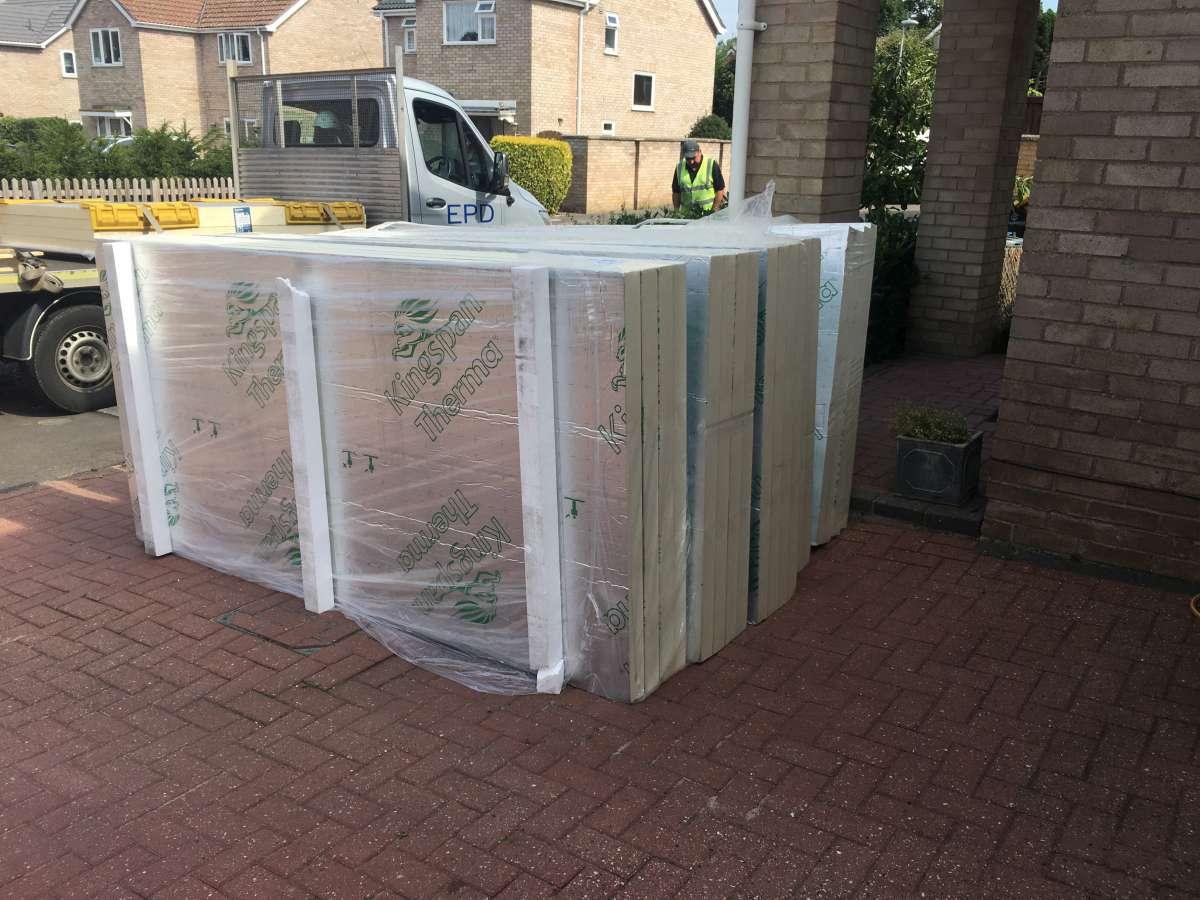
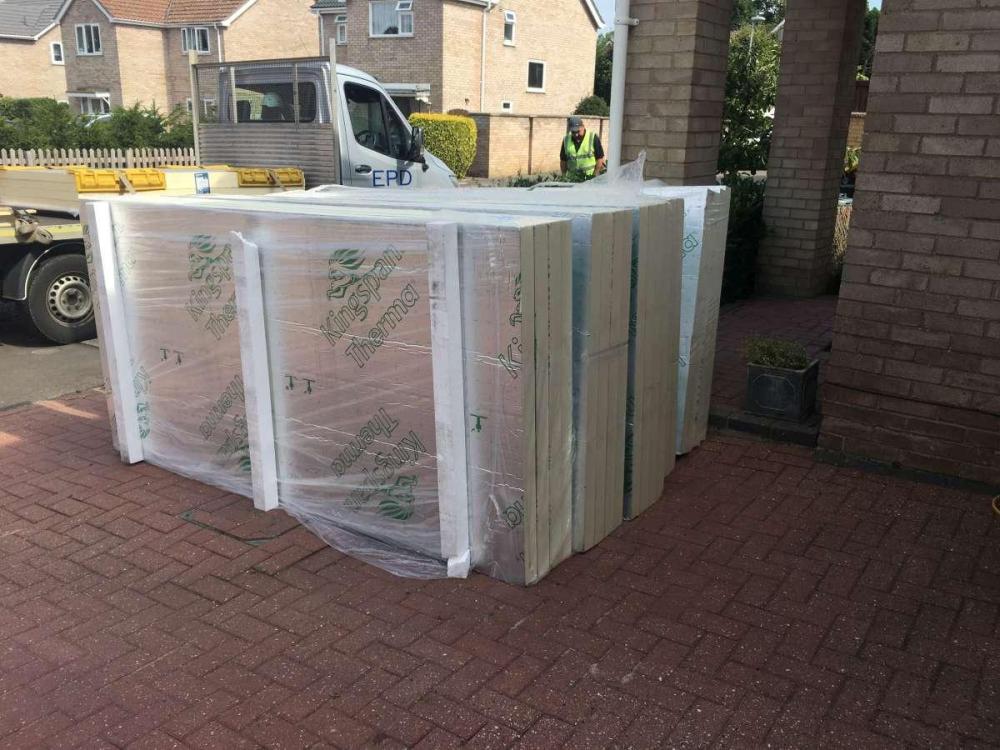
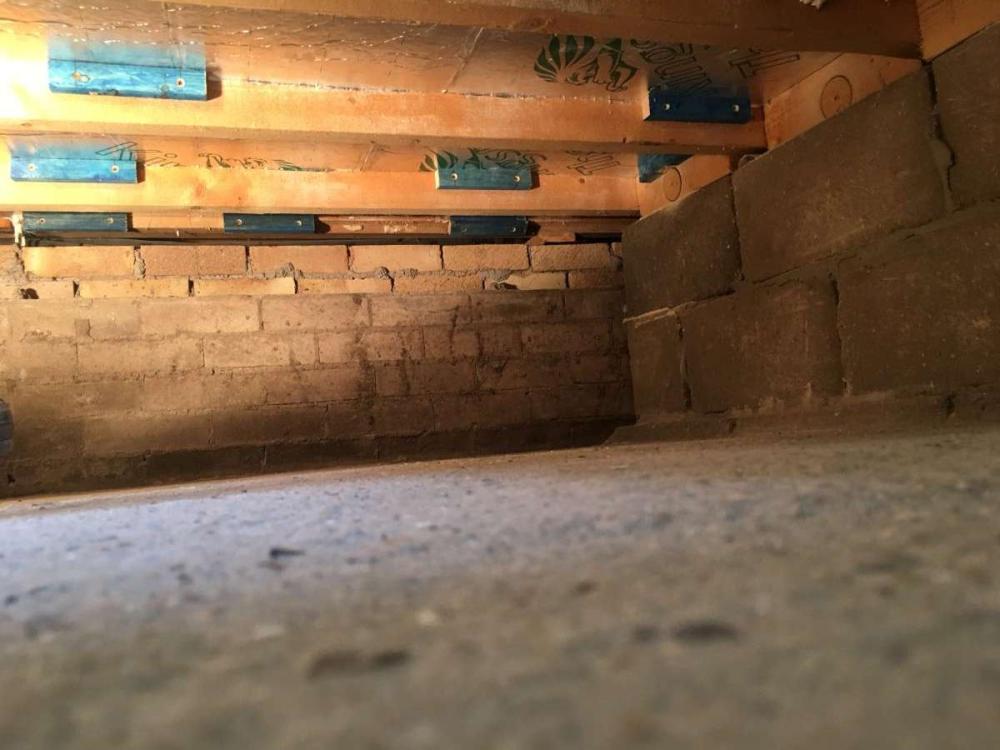
I've got a similar suspended timber floor with a 2 to 3 ft crawl space under it The void is ventilated with an air brick every 5 bricks so has a lot of air movement in winter I've insulated between the Joists with 75mm PIR held up with blocks screwed to the joists (I know it looks like I could have used thicker but the picture below was the extending part of the house with much deeper joists - the rest of the house they are just 5 inch joists It is without a doubt one of the best things I have done to improve the house However as a DIY task it sucked and took me several months to get this Cut to individual size (none of the joists are the same spacing or even parallel) and then moved to under the floor via 2 strategic hatches to limit the level of crawling around. Absolutely awful job but the results have been brilliant. I did have to install a PIV unit to take care of the ventilation strategy as a result of the insulation and drop in drafts the humidity level in the house sky rocketted but the PIV got it quickly under control.
-
I think manufacturers controls will always be better than 3rd party ones I went down the Wiser route because the manufacturers controls on my old boiler wouldn't have helped - it was already massively oversized and I went down the route of overzoning (but learnt a little on the way) Good to hear - must be a nice feeling. My current nice feelings are driven by last week I had 13 "Smart" TRV's on rads - This week I'm down to 5 - replaced with "dumb" TRV's set as temp limiters but not actually intervening at all the flow temps, room temps and circulation pump output are lovely and stable I expect to completely remove all "Smart" TRV's by next week. (They are just remote room temp monitors now they aren't even attached to any rads!!!! ) I'll end up with one room stat and a hub running a schedule that is 0600 - 0600 ON. I'm kinda loving the simplicity of it
-
Better way to control water UFH system?
marshian replied to Munchincocopops's topic in Underfloor Heating
No probs with trying to help Actually systems aren't very complicated at all - it's just warmer water in pipes or rads providing an increase to room temps (or maintaining the temps) One of the reasons I changed my boiler before it had reached end of life is I'm 4 - 5 years away from retirement - Need to ensure I minimise "extraordinary" expenditure when my income drops significantly so I'm very much in the camp of invest now to reduce risk of large capital items hitting me when I'm retired. Electric fan heater?? There is a lot to be said for a boiler in a kitchen even if it does rob a cupboard space (much to Mrs Aliens annoyance) -
Better way to control water UFH system?
marshian replied to Munchincocopops's topic in Underfloor Heating
Similar in my case - data is the key - once you have data you can make better decisions or changes to the system Few years back I was using 16,500 kWh of gas to heat my house on a schedule it was never just right it was too hot or too cold and I was using manual weather compensation (ie i changed the boiler flow temp) - the 24kW boiler was massively oversized for a 6 kW heat loss with a 10 kW minimum and it cycled like a B1tch in the shoulder seasons and not that much better in a really cold snap. Then we had the shock of gas prices rising rapidly and I knew I needed to both improve the house and manage the energy costs. Got it down to 8,500 in the end (CH and HW) but now I'm at 9,500 heating 24/7 with a much more suitable boiler - it's 16 kW with a min of 4 kW and is set up with weather compensated flow temps - house is always comfortable in every room - rads are sized to room heat loss and flow temp is managed by the outside temp sensor - the whole system runs low and slow - it so much nicer to be in the house. Not a heating engineer just someone who wanted to improve/optimise what I had I've not totally finished but I'm pretty damn close.................. -
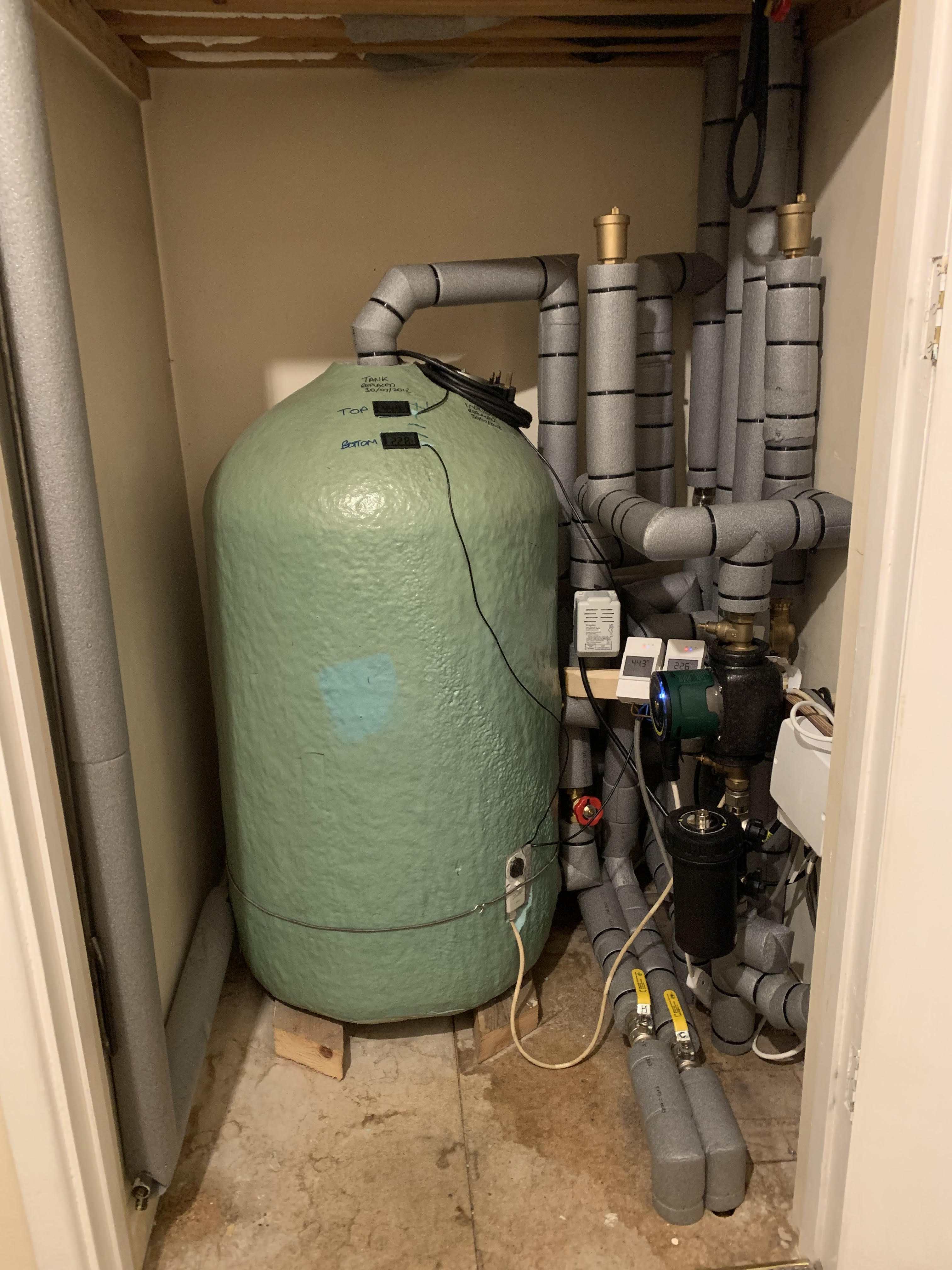
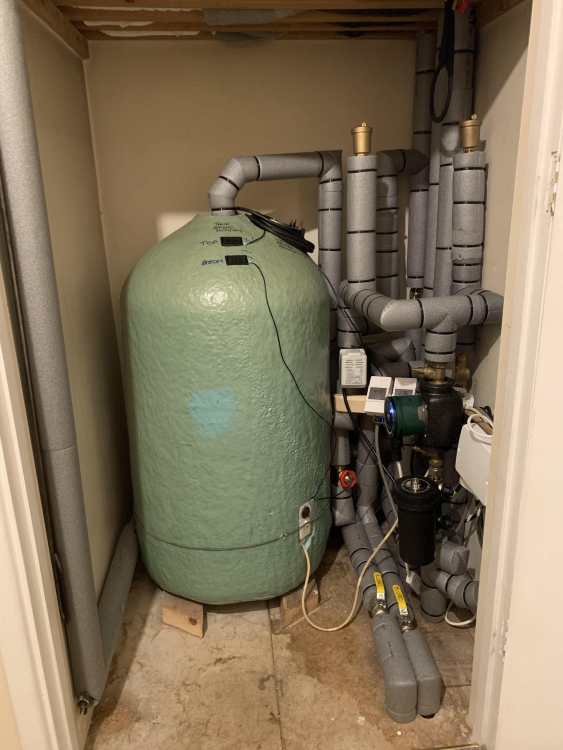
last weekend I reconfigured my plant room (aka airing cupboard) because the gas engineer that modified the existing plumbing to suit the new boiler made a horlicks of it - yes it worked but it had way too many joints where existing pipework was used and new was spliced in. It just looked butt ugly and wasn't exactly easy to lag in the old configuration It's still not great but to my eyes it's neater Oh and I don't like leaving bottle vents open and they were on short pipes so I've raised them to add a little capacity with the pipes below them - probably pointless but in my head it works
-
Not sure I'd want to start again - I'd add a radiator sized to cover the shortfall in watts running at the same flow temps as the floor?
-
Looks like the party is over....
marshian replied to Beelbeebub's topic in Air Source Heat Pumps (ASHP)
Does flammable count as recycling? -
Looks like the party is over....
marshian replied to Beelbeebub's topic in Air Source Heat Pumps (ASHP)
I'm leaving this house in a box.................. -
Baxi 105e Instant-end of service life advice please.
marshian replied to FlatMax's topic in Boilers & Hot Water Tanks
^ WHS beat me to it Valiant are catching up with their recent boiler so also worth consideration - their controls are also highly regarded Intergas are also in with a shout Whatever you go for find an installer that does specialises in the brand - boxt and other "box" movers are unlikely to get the best out of the install -
Looks like the party is over....
marshian replied to Beelbeebub's topic in Air Source Heat Pumps (ASHP)
I've discussed EPC's elsewhere on here I've never had an EPC done on my house - been in it 35 years so never needed one House near me - same size, shape and occupancy My total max energy usage for CH and HW per year is 10,000 Pretty sure if I had an EPC done it would be a similar result........ They are garbage
-
Better way to control water UFH system?
marshian replied to Munchincocopops's topic in Underfloor Heating
If your heating on demand (or to a schedule based on occupation times) then you need a powerful boiler to get it up to temp fast sounds like that's what you are doing Viessmann boilers even relatively old ones have excellent modulation (or turn down) I have a basic 16 kW Viessmann that will happily modulate down to 4 kW - I run the heating 24/7 at low flow temps with weather compensation The boiler typically fires 20 - 25 times a day When it's cold outside it runs for 50 mins in the hour at no more than mid 30's flow temp When it's warmer like today 20 mins in the hour at very low 30's flow temps My energy usage is directly related to the outside temps (because I'm only ever replacing the heat lost and the heat loss is driven by the outside temps) Problem is when you end up with a big boiler with a poor modulation ratio and you are trying to heat a small space it's unlikely to be happy with the situation Weather comp controls flow temp however it's better suited to whole house heating and 24/7 I have used it for scheduled heating and it was OK but it's not really the point. Open therm is weather comp via internet sourced local weather (or rather outside temperatures) -
Better way to control water UFH system?
marshian replied to Munchincocopops's topic in Underfloor Heating
Well reading the manual it does appear that it's capable of running lower flow temps (Although it's not a low temp boiler) 10.6 kW min output is quite poor but if you have a big drafty house with very little improvements to insulation it would be fine on a whole house heating system..... Maybe not so much heating a small area It looks like weather comp is available (as an in flue sensor) - that's something I've seen mentioned before with Baxi boilers but previously only with combi boilers. Don't know if it can be range rated at all - couldn't see anything in the boiler manual - probably not as it's made in a range of sizes and it should have been sized to the property needs... -
Better way to control water UFH system?
marshian replied to Munchincocopops's topic in Underfloor Heating
10 mins won't give you much of a clue most boilers have 3 min anticycle timer Seriously if a boiler is running more cycles than 3 per hour it's likely to be losing efficiency I did once count my old boiler doing 10 cycle in 1 hour it's one of the reasons it's now recycled into bean cans................... If a boiler is running on a 70 deg flow temp it very unlikely to be gaining much at all in condensing efficiency 88 or 89% at best Get the flow temp down to below 55 Deg for CH and it's going to be condensing all the time and in the 90's from an efficiency point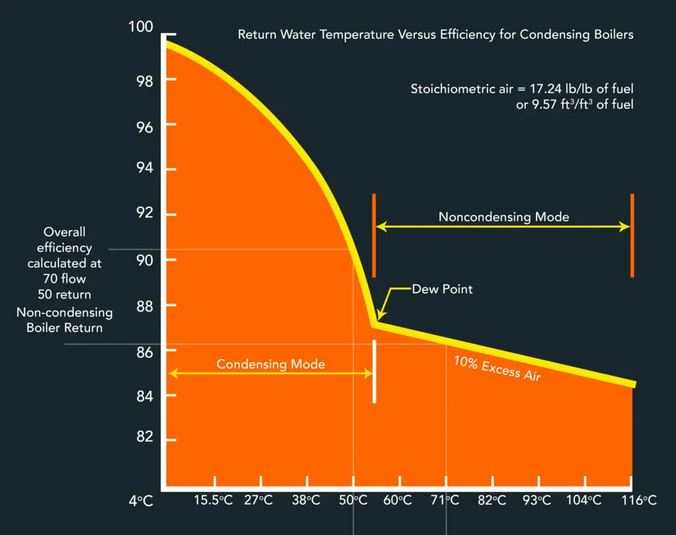
-
Better way to control water UFH system?
marshian replied to Munchincocopops's topic in Underfloor Heating
Really need to know "boiler model" to be able to find out if it can be configured in DHWP and Open therm or Weather compensated - gut feel having read a few Baxi install manuals over the recent years is it will be unlikely. UK Boiler manufacturers are mainly still in the dark ages unfortunately - only thing that will bring them kicking and screaming into the 21st century is people buying better configured boilers from Europe where they've been facilitating low temperature weather compensated flow to maximise condensing efficiency and DHWP -
If you are removing the downlighters why would you not use a decent thickness of PIR between the joists? Would be a big improvement compared to just 50mm PIR backed plasterboard