oliwoodings
-
Posts
130 -
Joined
-
Last visited
Everything posted by oliwoodings
-
Some pictures would definitely help give advice here if possible. Insulating inside and out shouldn't fundamentally create condensation issues as long as you have an appropriate vapour barrier on the inside and ventilation behind the cladding on the outside. If you insulate externally do you have enough soffit depth so that the existing roof covering continues to extend sufficiently over the edge of the new finished wall surface? Bear in mind that almost all cladding & rendering options will require 25mm battens underneath for ventilation. If you turn it into a bedroom, I believe you will at the very least need to meet building regs and get BC sign off. May even need planning, although I'm not clued up on this area myself. If they are just going to sleep in it very occasionally then might be best to just do it as an office, and oh no you accidentally put a sofa bed in it whoopsie.
-
Have you considered using cement board cladding instead of wood e.g Hardie VL? If installed correctly it won't need any maintenance for a very very long time and would probably be fine behind the steps.
-
Hard for Plants and drinking water (fridge for us). Soft everywhere else. Enjoy the limescale-free life.
-
Best smart doorbell?
oliwoodings replied to ashthekid's topic in Networks, AV, Security & Automation
Very much this. The WiFi antennas in those powerline extenders are not that powerful compared to some of the proper long range gear you can get. E.g. https://www.tp-link.com/uk/business-networking/outdoor-ap/eap110-outdoor/ or -
Best smart doorbell?
oliwoodings replied to ashthekid's topic in Networks, AV, Security & Automation
Is it too late for you to run ethernet and do proper APs? -
To expand on @Russell griffiths's suggestion of 1m threaded rod, perhaps you could bolt a square flat plate on the bottom of the rod which then gets buried and compacted down. If you were open to a little concrete you could even postcrete these in.
-
TIMBER/BLOCK/SIPS DOUBLE GARAGE INSANE £££
oliwoodings replied to Saul's topic in Garages & Workshops
Looking at your pictures again, why don't you just move the building and adjust the width so it's not within 2m of the boundaries? Then you can build up to 3m with a flat roof or 4m with a dual pitch. -
TIMBER/BLOCK/SIPS DOUBLE GARAGE INSANE £££
oliwoodings replied to Saul's topic in Garages & Workshops
Welcome to the fun of the 2.5m PD limit Why do you need a 150mm upstand? Can't you redesign the roof to not have that? What do you mean by "140mm door mechanism room"? Do you mean the actual frame of the door? In your drawings, is the roof pitching back to front? And are your big doors at the front? If so, what are the I joists going to hang off - a steel? If so, have you factored the height of that in? -
Have you tried enabling WiFi calling? Most network operators support it e.g. https://www.o2.co.uk/connectivity/wifi-and-4g-calling
-
Floor build-up partial garage conversion
oliwoodings replied to ryfly's topic in Garage & Cellar Conversions
And to actually answer your question - if you go down the no batten route and want the entire thing can be dry, it can. The only thing that needs gluing is the 22mm t&g to itself along the tongues using 5 minute woodglue (the expanding foam-like stuff). Very quick and easy, but an important step. Also you can create a decent dpm using the foil top of the PIR if you do a good job of taping using foil tape (both the joins between sheets and the perimeter to the walls). -
Floor build-up partial garage conversion
oliwoodings replied to ryfly's topic in Garage & Cellar Conversions
Personally with the battens I'd be a little worried about them locally compressing the PIR over time unless you did pretty narrow centres. Especially if you put any significant dead load on top. If you're dead set on 100mm PIR, I'd probably change direction and go with a framed floor using 5x2s on 400 centres, infilled with 100mm PIR raised up on 25mm battens. Then t&g across the top. Rock solid. Are you also insulating the walls and ceiling? If you're after cheap insulation check out seconds and co. They buy b-grade PIR from manufacturers and sell it off cheap. -
Floor build-up partial garage conversion
oliwoodings replied to ryfly's topic in Garage & Cellar Conversions
As to whether you need a dpm - depends on the concrete floor you've got there. Do you know if it has a dpm underneath already? If not, you could do a liquid DPM. -
Floor build-up partial garage conversion
oliwoodings replied to ryfly's topic in Garage & Cellar Conversions
Why are you bothering with battens over the PIR? Just do a solid layer of 125mm PIR (you could bond this to the floor with foam or certain tile adhesives), taped at the joins and perimeter, then float 22mm t&g glued flooring over the top. -
Dealing with standing water on oversized slab
oliwoodings replied to oliwoodings's topic in Landscaping, Decking & Patios
Thanks! I've found a low-slump thick bed tile adhesive I think might do the trick without faffing with sloping backer board: https://www.uk.weber/weberset-thick-bed . Given I've only got to get a slope over one tile width, I reckon it could work, especially with a jig to help lay a bed to fall. -
Dealing with standing water on oversized slab
oliwoodings replied to oliwoodings's topic in Landscaping, Decking & Patios
I've just stumbled across Marmox sloping backer board! Looks to be exterior rated - can be used for patios, balconies etc. After inspecting the installation instructions, it looks like it is designed to create a proper frost-resistant waterproof layer under the tiles, especially when used in combination with their tape and sealant. And it can be bonded directly to concrete with standard exterior tile adhesive. If I used the thinner end of the boards across my ~700mm strip, then at it's thickest point I'd still be left with a 10-15mm airflow gap under the cladding (3mm adhesive + 19mm backer + 3mm adhesive + 20mm tile = 45mm, the gap is 55mm at its smallest). For the overhang, I've also found these exterior exterior edging strips which should neaten it all up.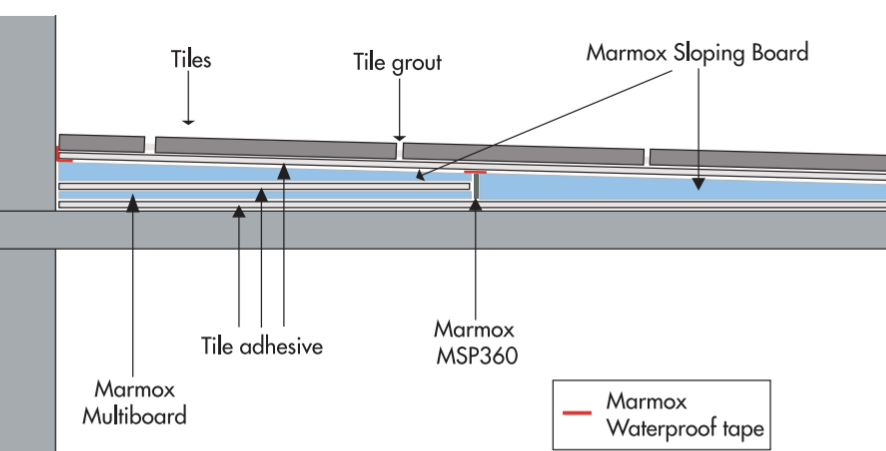
-
Dealing with standing water on oversized slab
oliwoodings replied to oliwoodings's topic in Landscaping, Decking & Patios
Looks awesome! Did you lay the whole thing to fall? If so, how did you do the fall? -
Dealing with standing water on oversized slab
oliwoodings replied to oliwoodings's topic in Landscaping, Decking & Patios
Considered this as well but I reckon it would be pretty hard to do this well, especially to totally eliminate the problem. I was under the impression that exterior rated porcelain tiles are actually more grippy than a lot of other outdoor hard surfaces. I've been looking at stuff like this: https://www.wickes.co.uk/Winterburn-Slate-Black-Matt-Outdoor-Porcelain-Paving-Tile---600-x-900-x-20mm/p/288674 stuck down with something frost-resistent and flexible like https://www.screwfix.com/p/mapei-keraquick-wall-floor-rapid-set-flexible-tile-adhesive-grey-20kg/561fu I love the lateral thinking! But I don't think it will work design or cost wise - the exterior doors from the two rooms in the building go straight out on this side. -
Dealing with standing water on oversized slab
oliwoodings replied to oliwoodings's topic in Landscaping, Decking & Patios
Yeah that's the SWA, i intentionally didn't clip it yet in case I need to tuck anything behind the housewrap as part of these mitigations. Glad to hear you don't think the flashband option is completely horrific 😅 It sounds like there are issues with the tile approach I'm suggesting (hence multiple people saying to chop it all out) but they aren't obvious to me. Would anyone mind highlighting what's wrong with it specifically? Could water get down through the grout/adhesive or something? -
Dealing with standing water on oversized slab
oliwoodings replied to oliwoodings's topic in Landscaping, Decking & Patios
Thanks for the suggestion. It's something I've been considering since I know it would be the best option long term, but I'm really worried about doing it for a few reasons: - The swa runs right along where I'd need to cut - The chances of accidentally catching the cladding seem pretty high (I'm not well-practised with a disc cutter) - The slab has got rebar in it, which seems like a daunting (and messy) task to break up enough to shift it to the front of the house - My wife actively uses the building for work 5 days a week (massage therapist), my chances of completing this all in a weekend seems slim Any thoughts based on the above? -
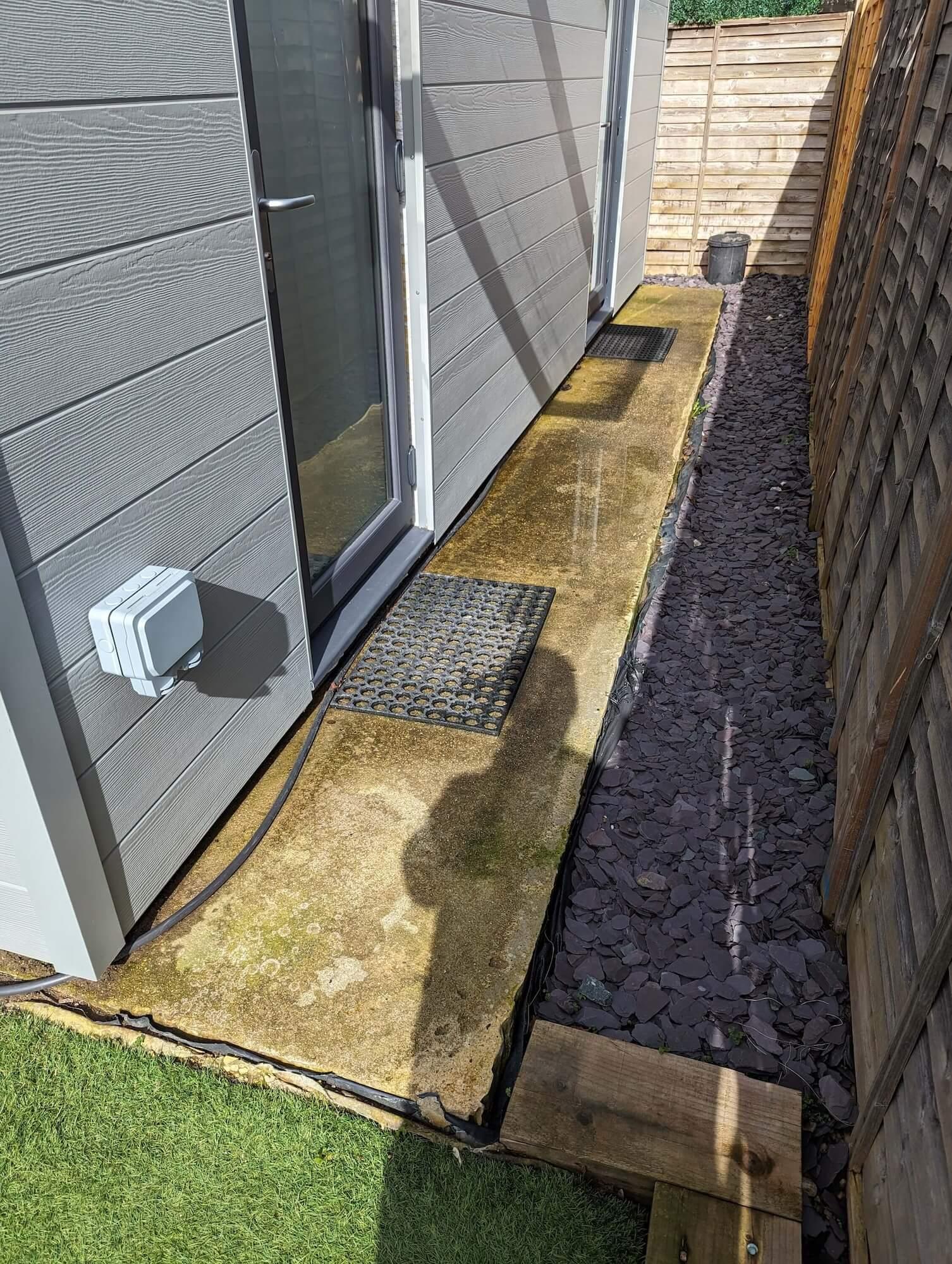
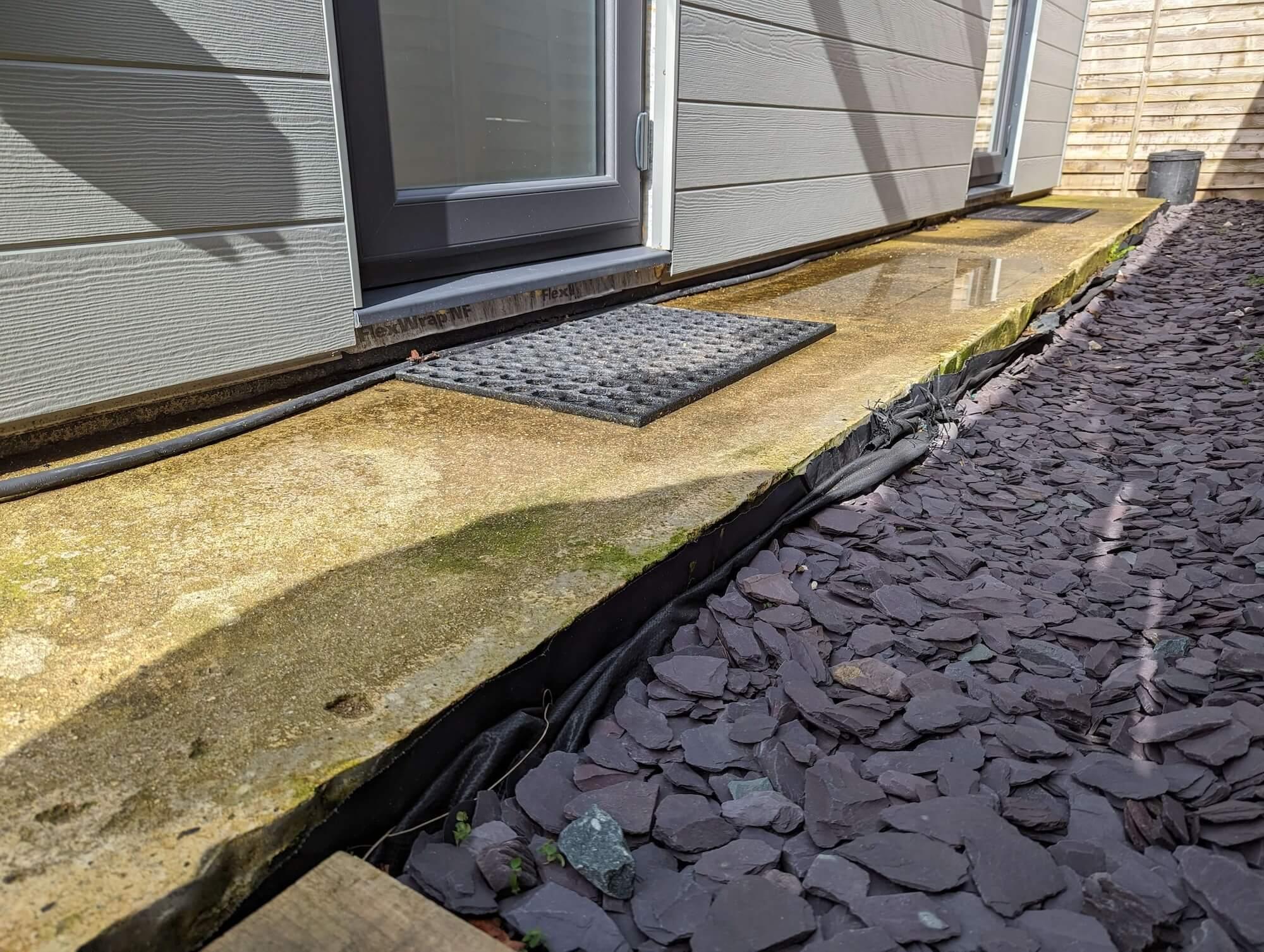
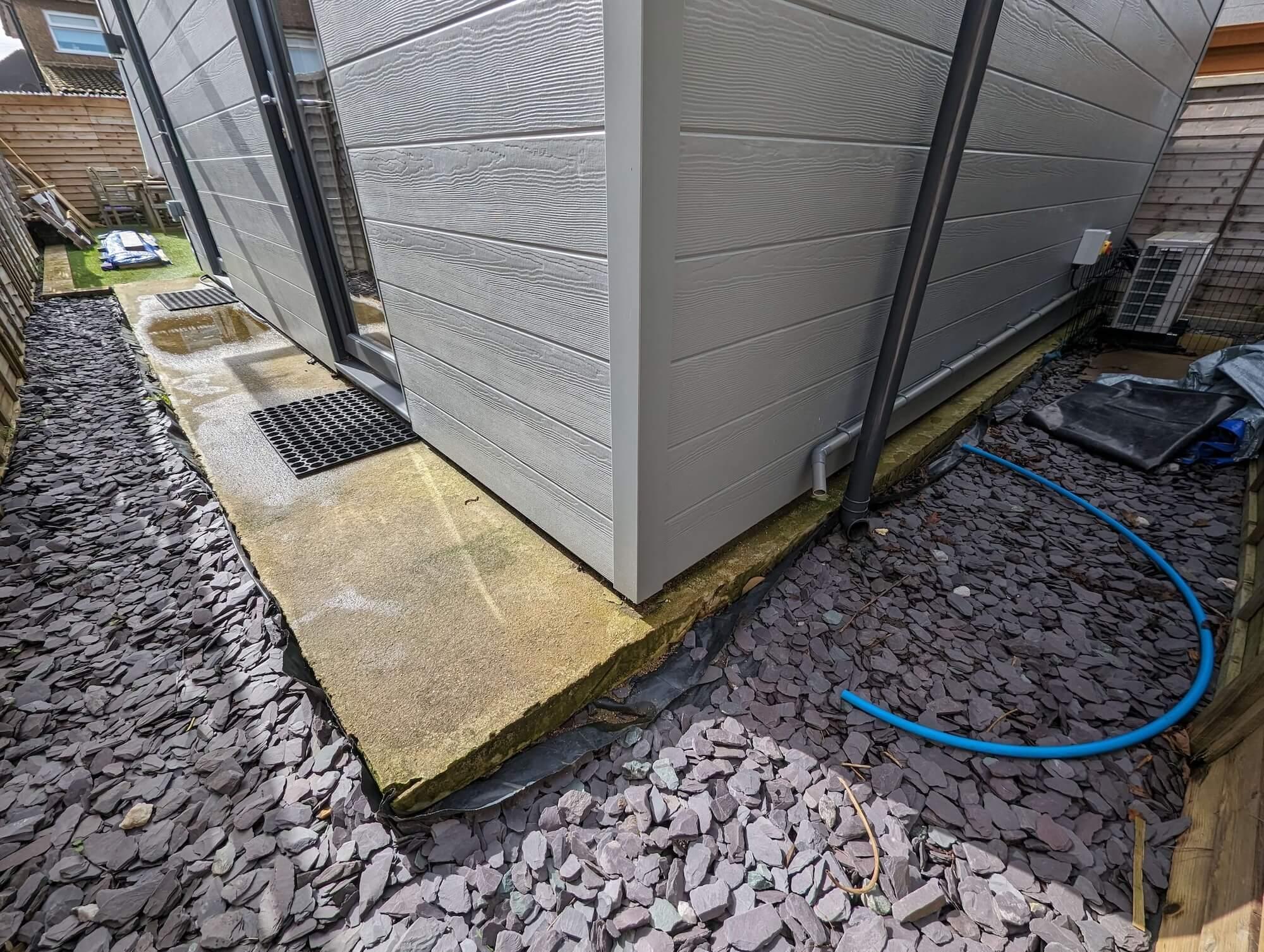
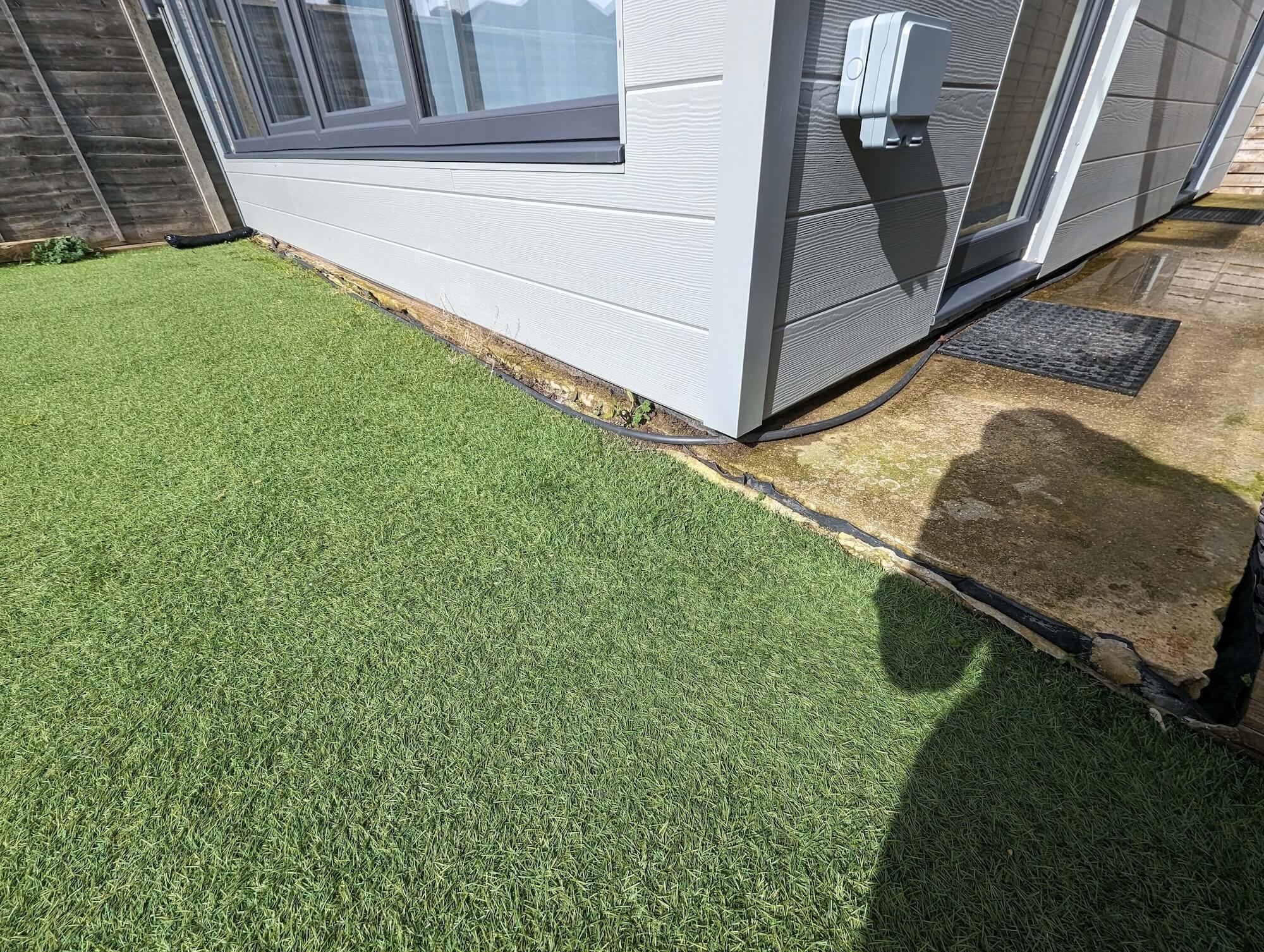
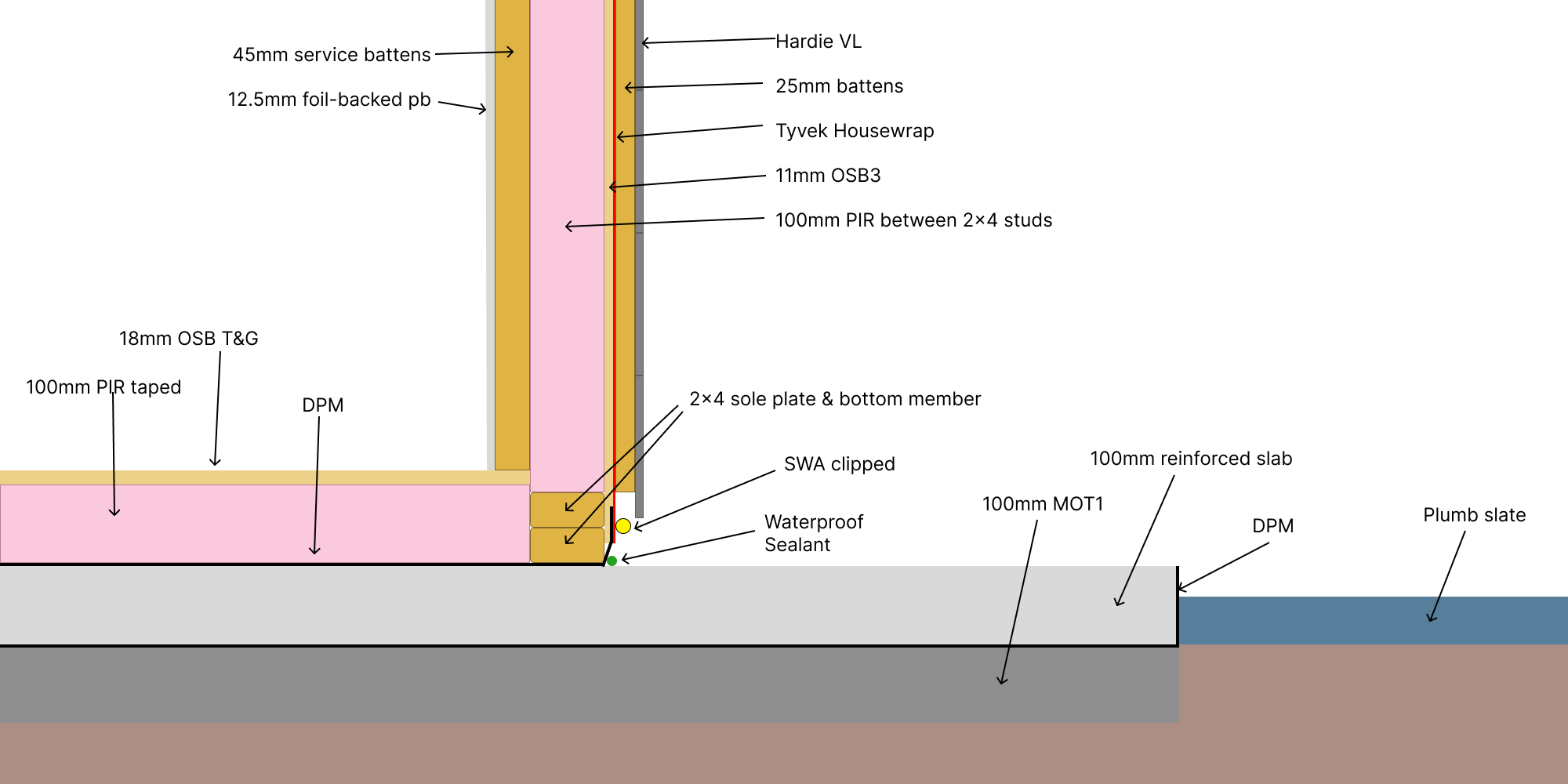
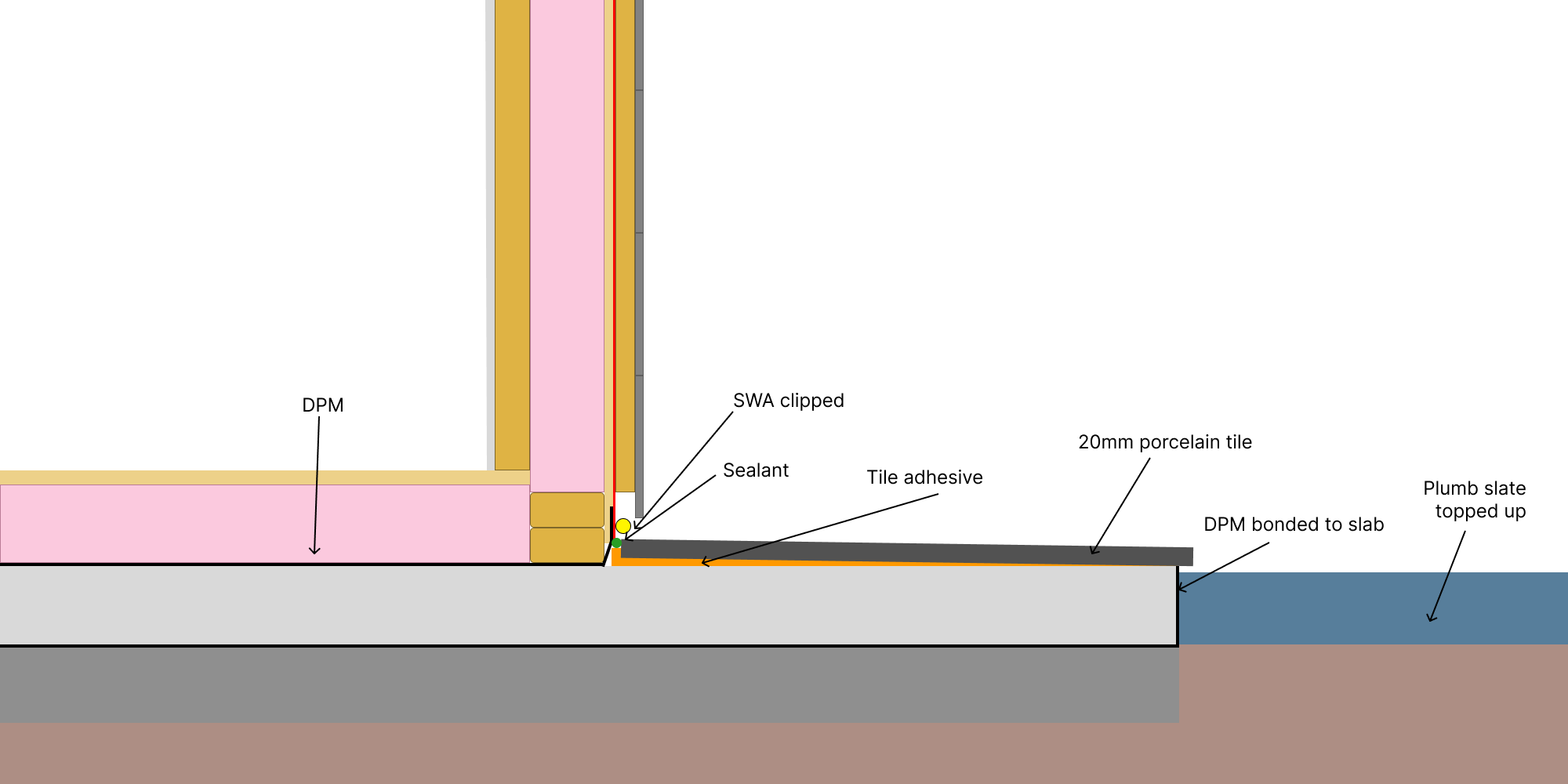
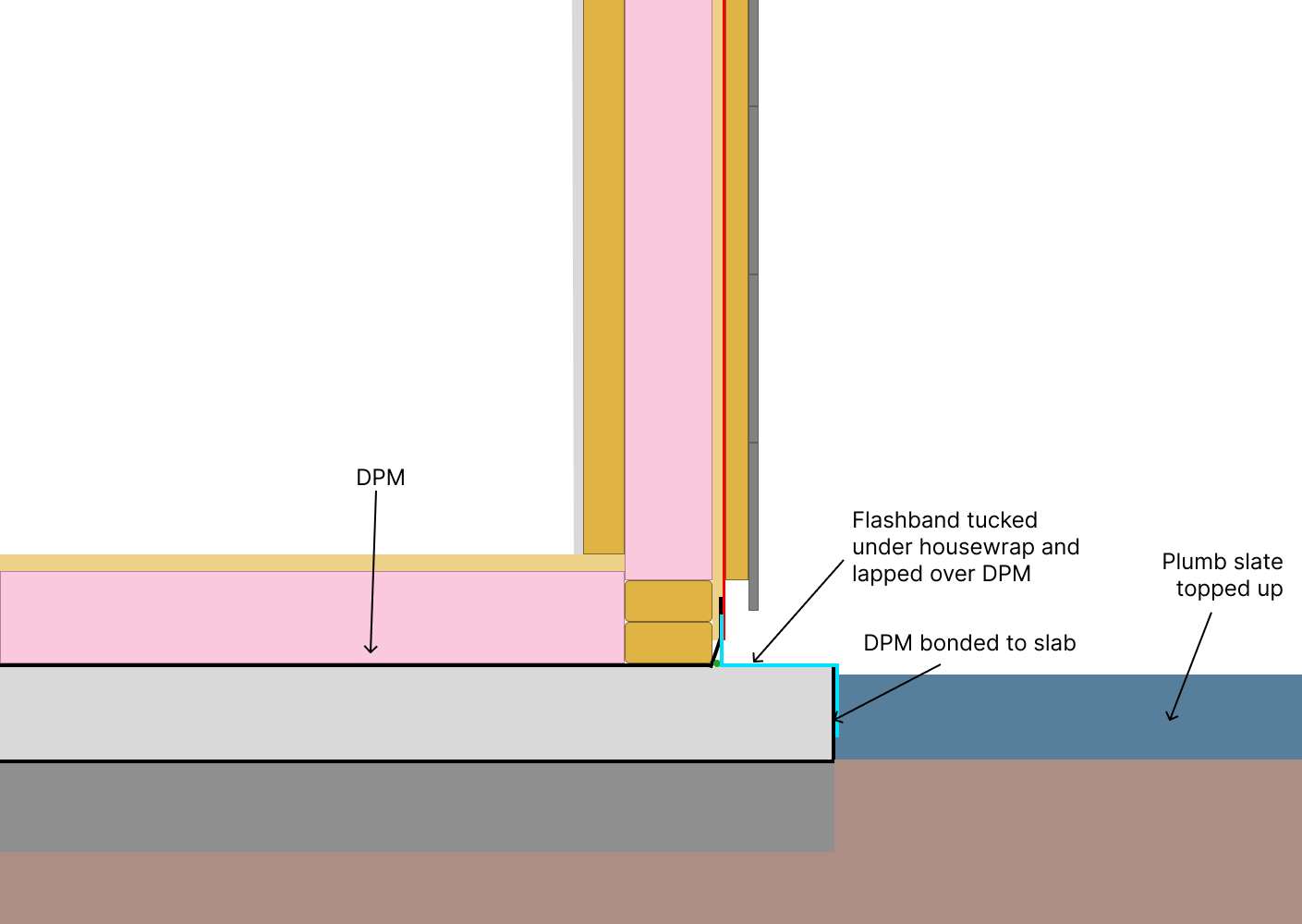
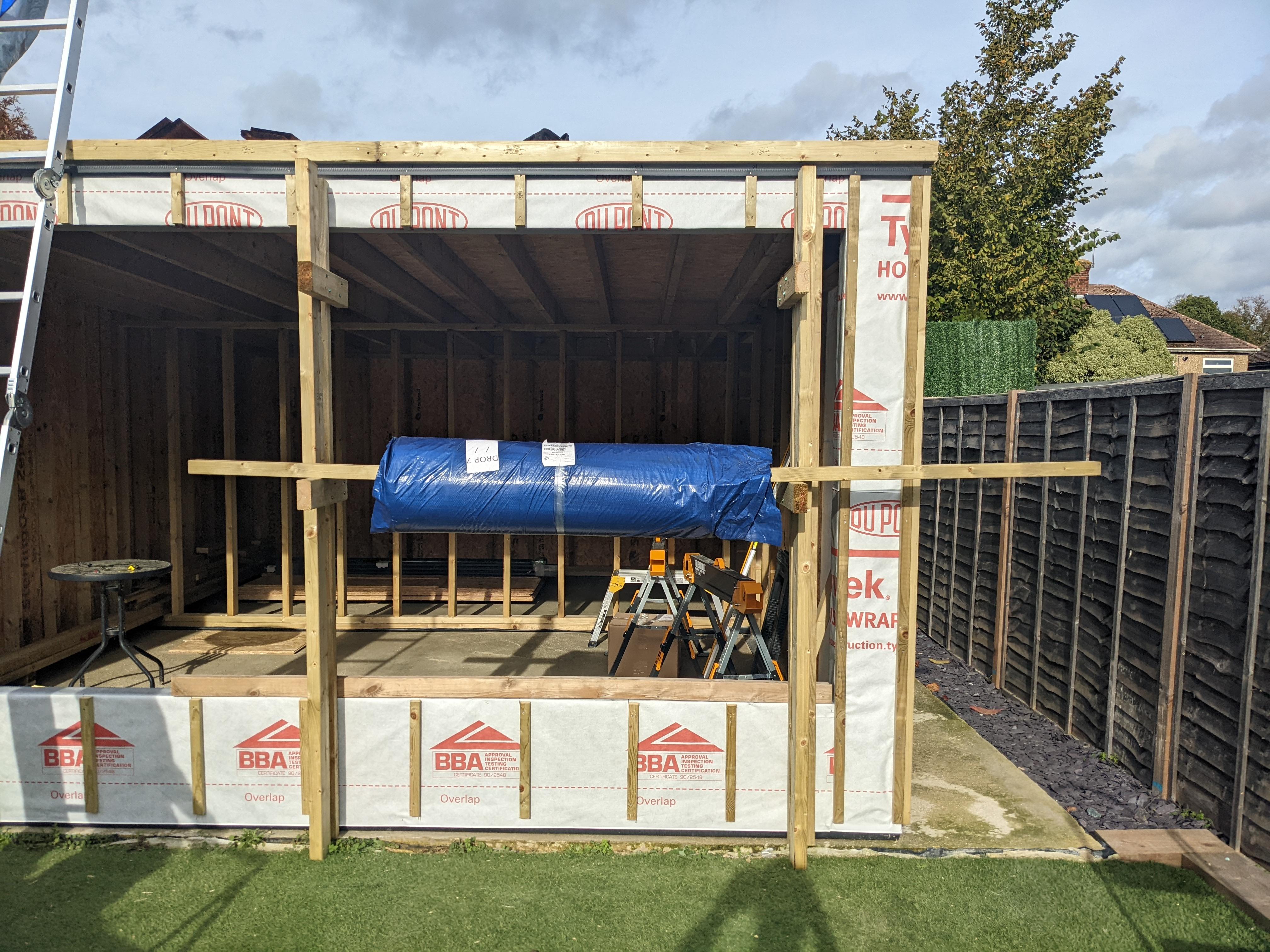
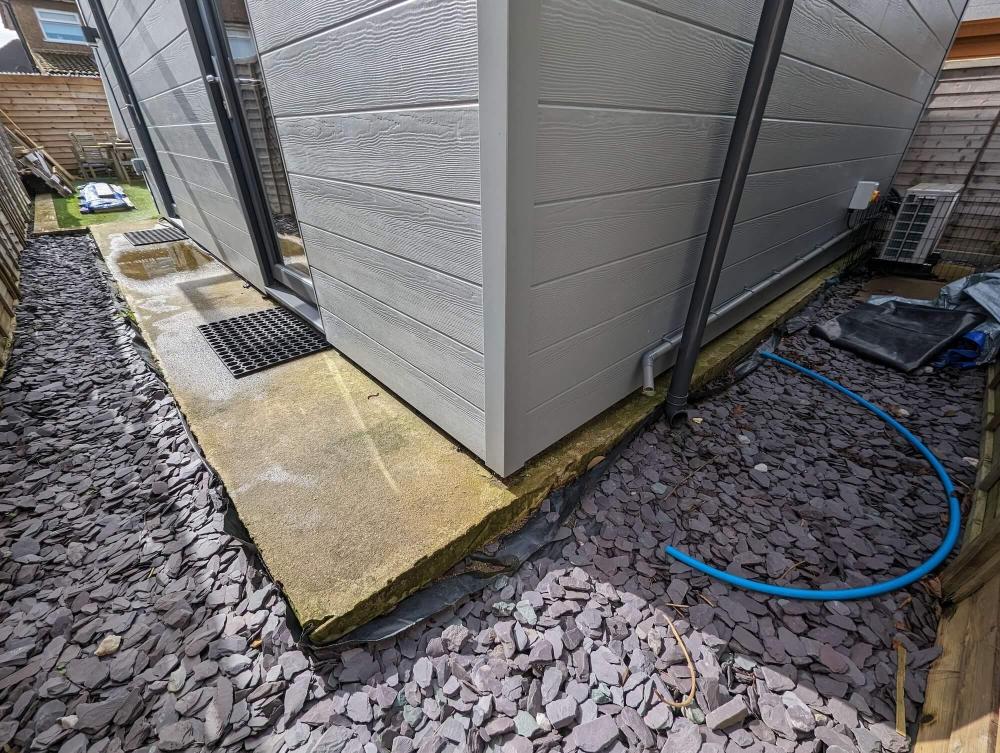
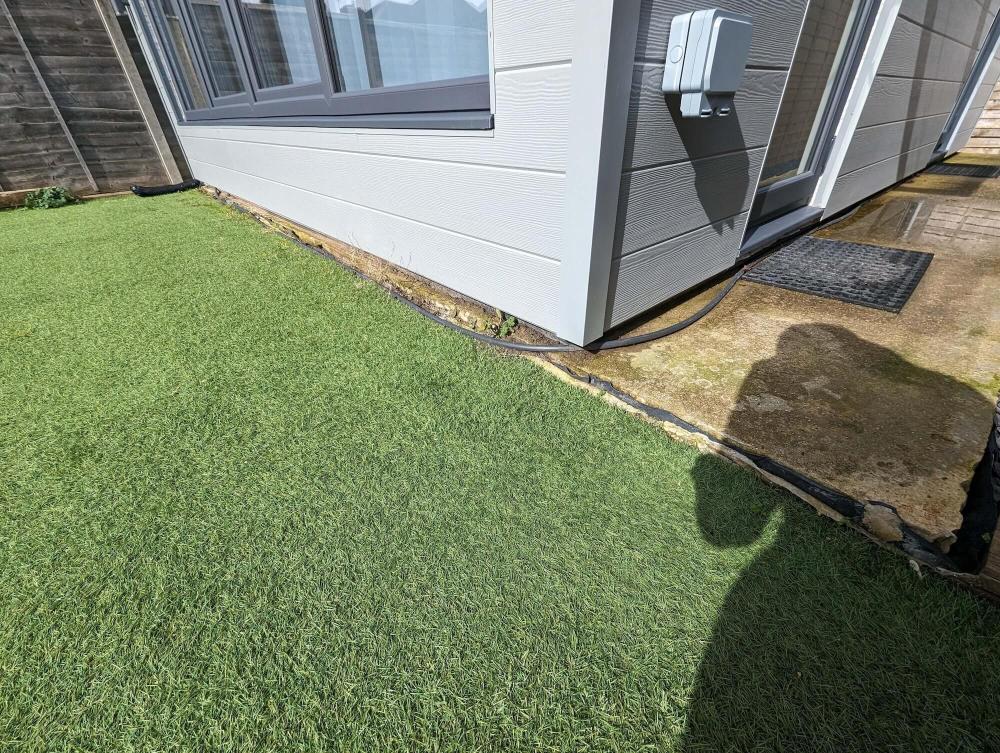
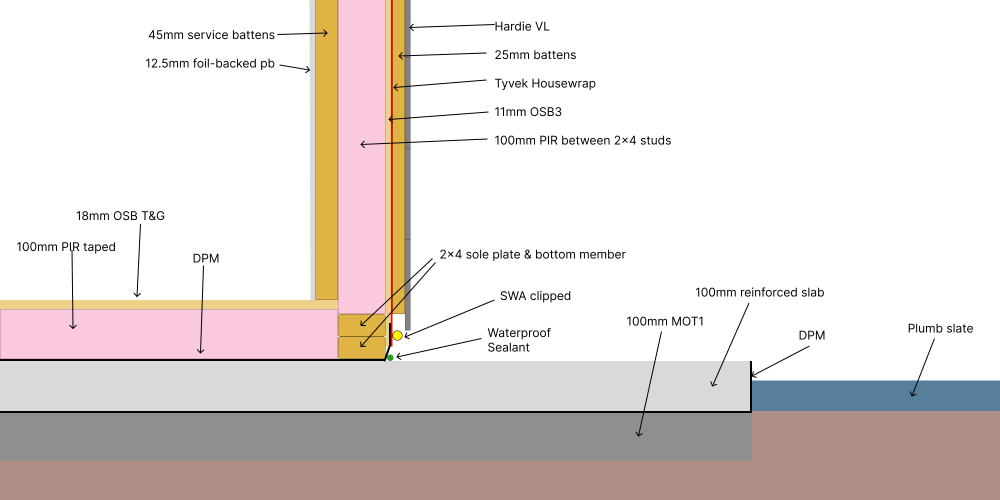
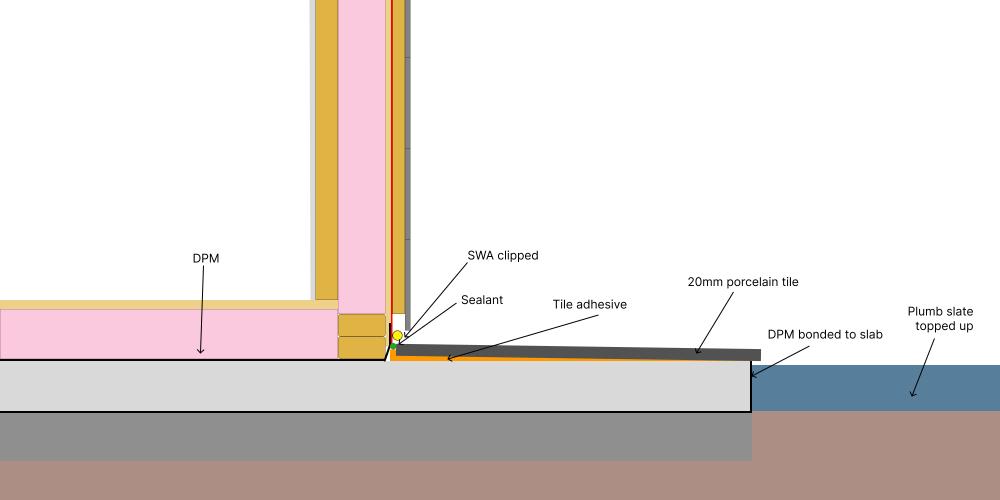
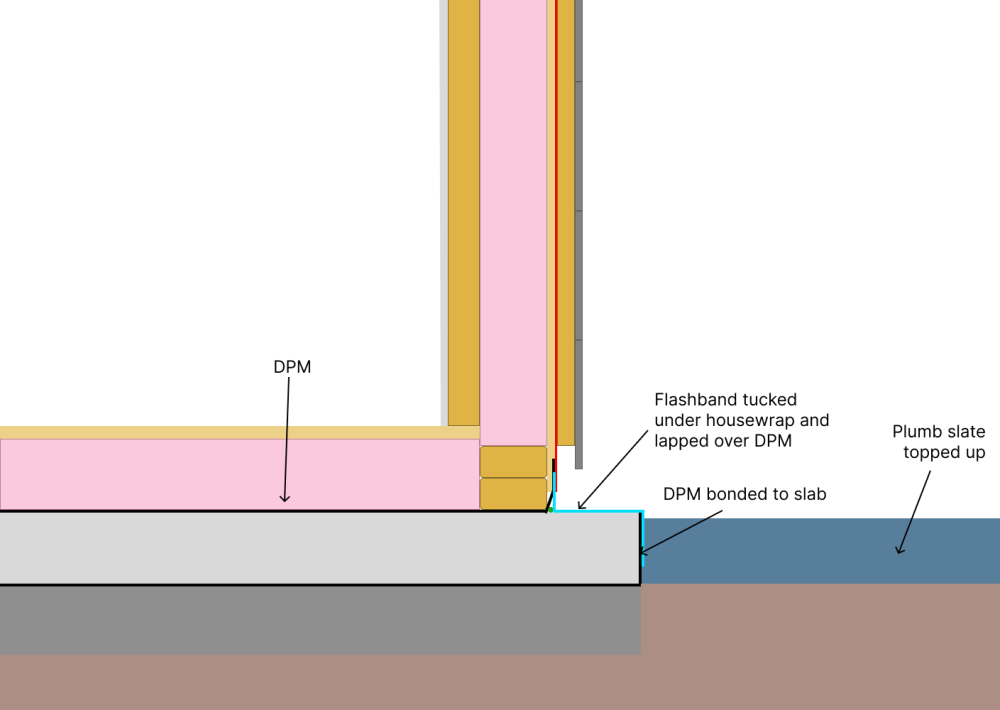
With the majority of our garden building finished, I'm now turning my attention to landscaping around to tidy everything up. However, first I need to deal with the fallout from a mistake I made very early on in the build: an oversized slab. At the time of having groundworkers in to lay the slab, I was planning a wider, shallower building with decking at the front, and I'd asked for the slab to be sized to go under this decking (in hindsight, this was silly and was always going to cause me headaches with water runoff). Then, after the slab was done, I decided I didn't like the layout so completely redesigned it 🫠 I ended up building a longer, narrower building, with doors down the side. I'm very glad I redesigned it, but it's left me with a long wide strip of slab sticking out on the entrance side, and much narrower strips all the way around the other 3 sides. The main problem with this is that water ends up pooling on the exposed slab, meaning the slab is constantly wet (it didn't help that the groundworkers did a shite job of levelling the slab, and then trimmed the DPM right down even though I asked them not to 🙄). This used to actually wick back under the building, but I've mitigated this for now by running stixall round the perimeter between the dpm (under the sole plates) and the slab. Here are some photos (including the standing water): This is the current build up of the walls, floor and slab (where the slab sticks out the most, at the side of the building): For the wider strip running down the side of the building: I'm currently thinking the easiest way to both mitigate the pooling and make the side look nicer is to lay 20mm porcelain tiles, bedded at an angle so water runs off the edge of the slab onto the plumb slate, and sealed against the building. I'll also bond the edge of the DPM to the side of the slab with stixall so that water can't track under the slab. For the tiles, I'm planning on using 600x900 ones and cutting them down length-wise to fit, with a 20mm overhang. Here's a drawing: For the narrow strips on the other 3 sides: I'm planning to bond the side of the DPM to the slab with stixall and then apply 200mm flashband tape, tucked under the housewrap and lapped over the dpm (might not be the prettiest thing, but it will be hidden by planters eventually and I think will be an effective way to mitigate the problem). Here's a drawing: I've got some questions on all the above: Does this seem like a sensible approach in general? Would you prime the slab before tiling, if so what primer? Any recommendations on exterior tile adhesive + grout, and tips for laying on an angle (it will be my first time tiling!)? I'm thinking of having the tiles overhang the edge by 20mm, is this sensible? What would you use to bond the dpm to the side of the slab? Stixall? Would you bother tiling the side of the slab as well, or just top up the plumb slate to hide it? Should I clean and prime the slab with anything special before applying the flashband? Thanks in advance
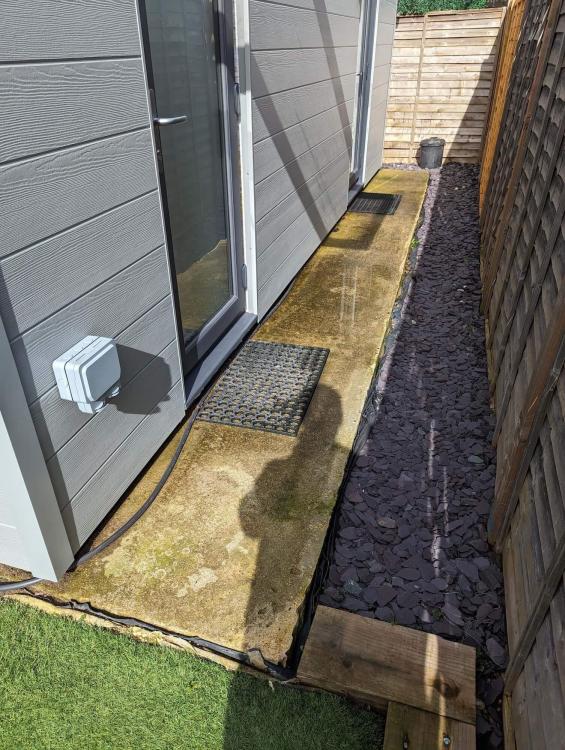
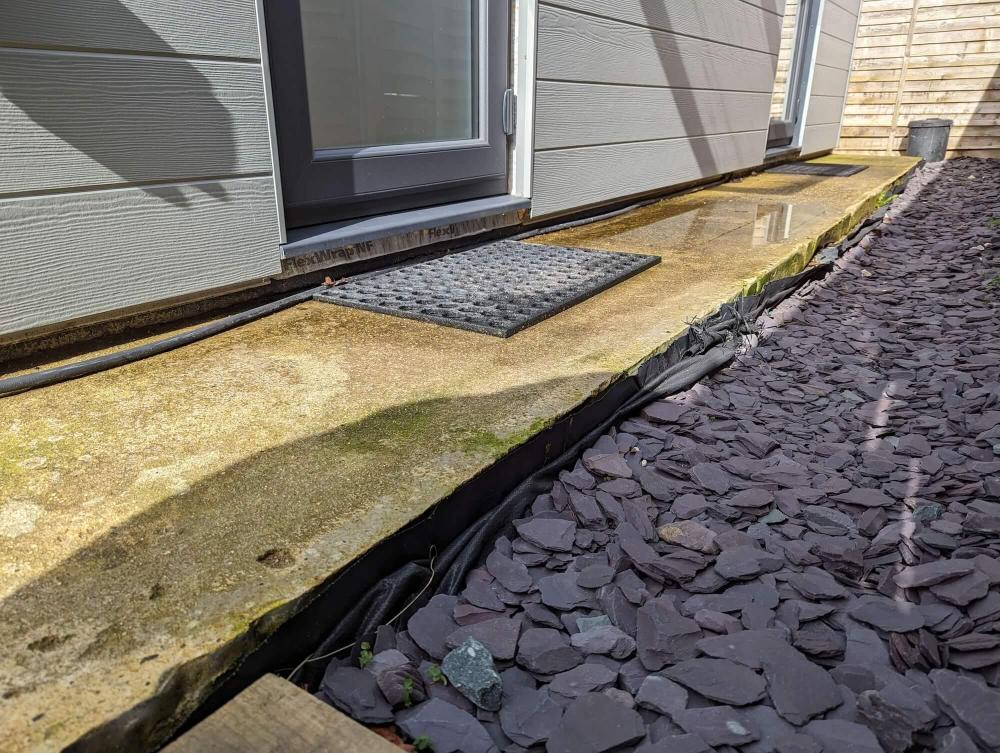
-
And more expensive
-
I believe you can get around this by leaving the garage door in place and just building a stud partition against it on the inside.
-
25mm celotex on its own won't do much, you should aim for more. Perhaps do 50mm battens, which will allow you to first run services in (electric and water if applicable), and then infill with 50mm rockwool. Put a vapour barrier over this (stapled and seams taped) before boarding over the top with insulated plasterboard (25mm probably enough). For the ceiling, we need a bit more info. You say it's pitched, is it a truss roof? Has the ceiling already been boarded out? Any form of insulation yet? You should probably aim for at least 200mm of rockwool up there - most heat is lost through the roof.
-
Another thought on your suggestion of sistered joists - I considered this as well at one point, but realised it would tangibly reduce the thermal performance of the roof (because of the amount of timber Vs insulation), unless I went warm roof but then I couldn't get it under 2.5m. Also the cost of sistering became very unattractive compared to other options like I joists etc.
-
Here's my squat rack!