Iceverge
-
Posts
4487 -
Joined
-
Last visited
-
Days Won
32
Everything posted by Iceverge
-
You had very good airtighess, well proven materials, plenty of insulation that relies on air (not gasses that migrate off into the ether) as the insulant. A sensible roof and with good overhangs. Assuming the occupants use the MVHR, keep the chutes clear and treat the windows properly it'll last forever. Much like a cathedral it will be there long after you're gone but unlike the master builders of yore at least you got to see it finished.
-
Kingspan have a way of being, well, suspect with the declaration of their products performance. https://www.bbc.com/news/uk-northern-ireland-55986486 To get 0.17W/m2K from your build up your house would need to be constructed in a laboratory with zero wind ever, They count all kinds of things like insulating plaster and theoretical but imaginary stationary air external to the boards. A really excellent install might get you to about 0.21W/m2K. In reality I would plan on something mid 0.20''s to 0.30's for your heat loss calcs. Also ask the architect how much of a back hander Kingspan gave them.
-
How about full fill cavities and an insulated internal service cavities. Its very hard get a good result with boards in the cavity.
-
You could buy high quality upvc. Cheaper and better performing. Don't skimp on the hardware however.
-
Is it too late to bump the cavities to 200mm and use mineral wool batts or EPS beads?
-
Say it runs 5 mins on average for 15 times a day at 30l/min. That's 2250l/day A continuously running dMev fan would at 8l/min would be more like 11520l/day. That's 5 times the fresh air. Intermittent extractor don't have a good track record of good indoor air quality. A dehumidifier might be 200w. An order of magnitude greater than a mechanical ventilation fan. EG at least 10 times the running cost. Also remember whilst it does remove moisture from the air it does nothing for the CO2 and VOCs in the house. All mechanical ventilation system are the same ultimately . They just suck air out or it push in. MVHR is fancy in that it does both and recovers some heat. PIV works but it has doubled in price the last few years and it creates cold spots under the vent. That Greenwood fan is about 1/3 of the cost and does the same thing. The gasses in a house tend to diffuse pretty quickly given half a chance. EG an open door for a few minutes. You've seen that with the loft. It works in reverse too. You can put your ventilation fan in any room that suits and it'll dry the whole house if run continuously.
-

Just started a self-build in Dorset. Exciting times!
Iceverge replied to NailBiter's topic in Introduce Yourself
The wonderful thing about living in the free world is that it's your money, you earned it, spend it as you please! A fact sadly not celebrated as much in the old world as by our new world cousins. Some plans might help the collective masses gather our brains around the plan. I wish I'd put mine up, lots of good advice I might have received might have saved me lots of hassle! -
Just started a self-build in Dorset. Exciting times!
Iceverge replied to NailBiter's topic in Introduce Yourself
Welcome to the forum. We moved from a 60m2 cottage to our 180m2 new build and really missed the proximity of everything. Have you done a survey on your daily movements in the house. EG how many times you go walk from the fridge to the TV to the toilet to the bedroom. I think you're going to need bicycle lanes to make it work . -
Correct but you did build your house to a high level of airtighess and install MVHR. The absolute humidity of the air in the house would have been very well controlled by the MVHR so even if air did ever get to a cold spot it would have been unlikely to have been carrying enough vapour to condense. The airtighess you did to your attic ,(OSB and foamed joints I think from memory) would have played a very important role. Think of it like blocking a pipe at just one end. It still stops all flow. Your attic would have had very little air from the house coming up there because it had nowhere to go. This isn't the case in @mjwards house as a non airtight loft conversion. Best to work with the problem in my opinion and extract the damp air from where it's causing the issue. Think of it like putting a bilge pump in the area where all the water is gathering in a boat with lots of small leaks.
-
All the adding mass in the world makes little difference if the ceiling is full of holes. Think of a 1m wide solid stone dividing wall between two rooms with a door opening. You would hear more through it than the most crappy partition wall. You could always put in a couple of layers of plasterboard above a service cavity but you're loosing ceiling height then. These are the trade offs of building.
-
The cost might be prohibitively Vs resilient bars.
-
The warm moist air from the house is coming up and condensing in the colder roof area. Put a continuous extracting fan up there pulling air out of the loft space. £50 would buy a reasonably one if you can tolerate eBay. I put a continuous extract fan in the attic of my uninsulated parents house drawing air from the landing space 24/7. Although it isn't directly connected to any of the wet rooms it has notable dried out all of the house by ensuring a steady flow of fresh air gets pulled in all the time.
-
Just put in large radiators. In an efficient setup then UFH runs below skin temp anyway so still feels cool to touch. If you have ever experienced "hot" UFH then the system is lightly to be very very expensive to run as the losses to need the high flow temps will be correspondingly large. If you do need a bit of extra comfort in the bathrooms electric UFH just under he tiles is an option. As the area is small and the run times intermittent then it won't be too dear to run.
-
Fixing Centrers for Plasterboard (Timber Frame)
Iceverge replied to benben5555's topic in Plastering & Rendering
Indulge me, what you got!? you could put resilient bars on the roof for a small service cavity for wires -
Fixing Centrers for Plasterboard (Timber Frame)
Iceverge replied to benben5555's topic in Plastering & Rendering
What is your plan for insulation and airtightness, you could be missing a golden opportunity? Any pics of the walls/ceilings as is? -
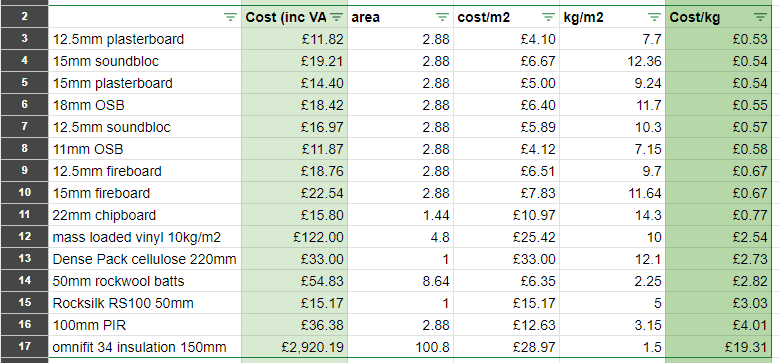
1. Block air paths. Acoustic sealant around the edges. Block all gaps. Get rid of the downlights and speakers. 2. Add mass. Just adding more standard plasterboard is the cheapest way. Soundbloc or OSB is similar £/kg. Mass loaded vinyl is much dearer as is insulation. 3. Stop resonance. Add something fluffy in the void to stop sound bouncing around. Id be happy with up to 150mm of Rockwool there with 150mm of PIR on top. 4. Stop sound transferring through the structure by breaking the physical link. eg resilient bars.
-
Can you post your raw data units used at the meter please and the period of time between readings.
-
I have about as much interest in learning this as pre decimals currency. Yup, me too.
-
Would it be sensible to size boilers/heat pumps for the modal demand rather than the maximum given supplementary heating can be supplied by cheap fan heaters for the few days a year they're needed. At the moment people are installing Ferraris when Fiestas will do almost all the time with the knock on effect on running costs.
-
A little bit lost at this one as I'm unfamiliar with the conversion factor you're using. What was the beginning and end usage difference for gas usage over what period. EG was it 50 units of gas over 72hrs??? At the moment at 140m2 with 3.3kW of peak heating load that gives a specific heating load 23.6W/m2. For comparison a passivhaus is 10W/m2. To get just only over double that on an uninsulated house seems unlightly. Is there a wonderful possibility that your gas meter is under reading?
-
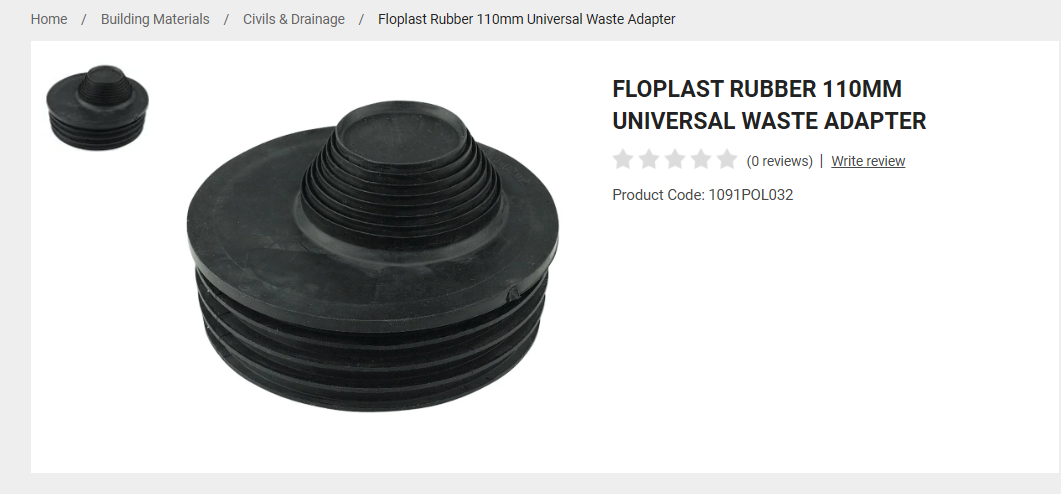
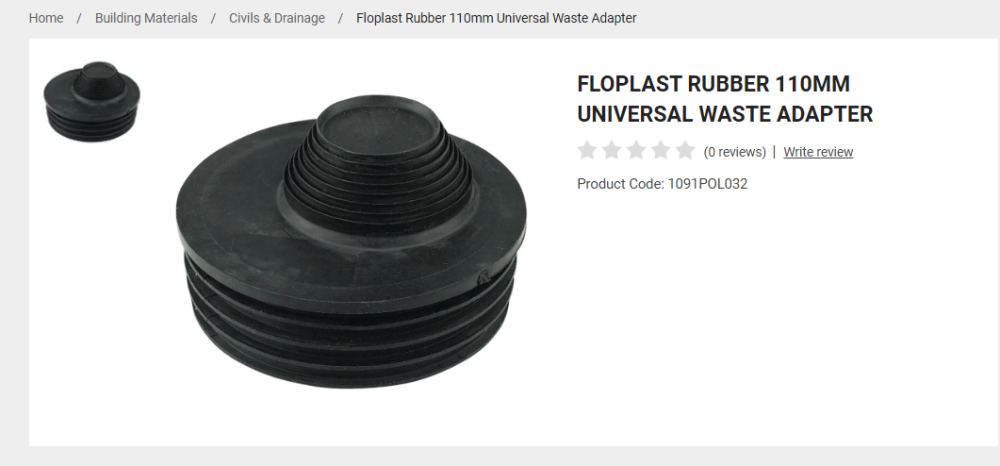
Ours used these. Seem to work ok. The Trap is on the bottom of the sink/shower/whatever to stop smells. I suppose it might leak around the rubber eventually. On the plus side the lack of "U"bend will make it easier to rod if that's ever an issue.
-
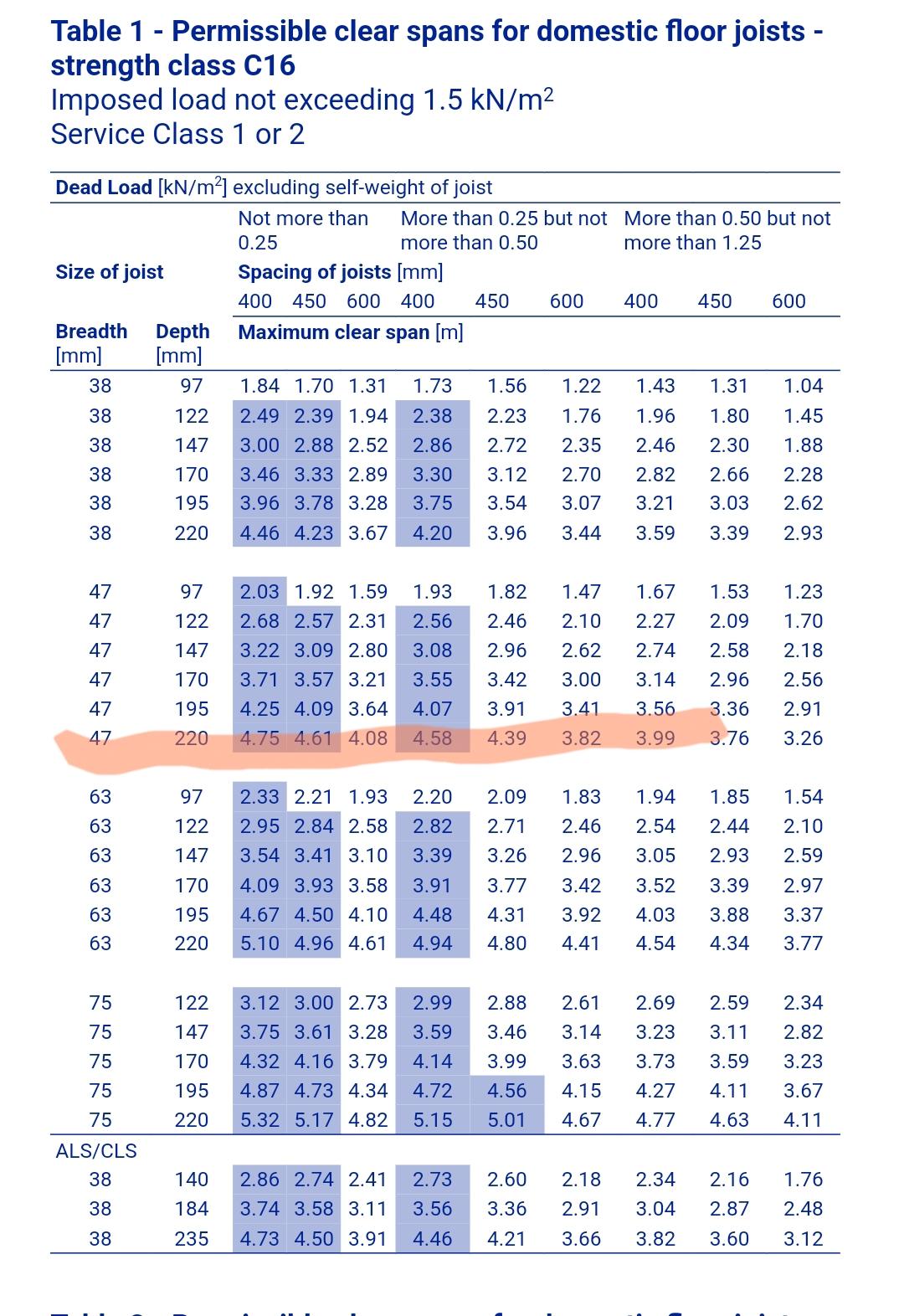
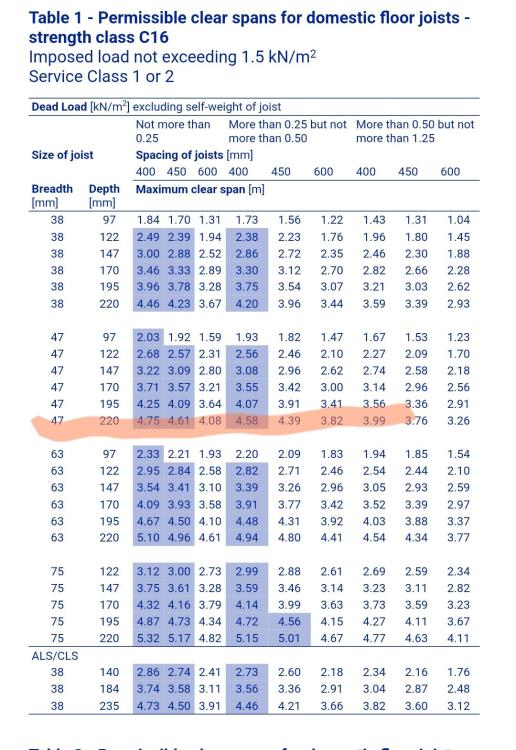
47*220mm C16 @400cc will be fine. Use 3x layers of 75mm mineral wool as insulation then. And 18mm OSB glued and screwed as decking.
-
Do you have ridge height restrictions? What is your current ridge height? Vaulted ceilings can be achieved many ways so I wouldn't worry about that. Raised tie trusses. Exposed tie trusses, scissors trusses ,A central ridge beam are all options. As to the roof you can now get tiles to go to 12.5⁰ pitch. https://www.marley.co.uk/roof-tiles/concrete-roof-tiles/mendip-double-pantile However........for durability more is better than less, overhangs also help with a buildings durability. Avoid complex shapes, valleys and flats roofs if you can. They're expensive to build and maintain properly.
-
Yes but they release a lot of moisture in combustion which can make a house feel damp and cold when not in use. Anyway I think @M-Rod has gone on hiatus.
-
High density/high rise and combustible externals are fundamentally incompatible. If your buildings are covered in something flammable it's only a matter of time. We seem to forget that with alarming regularity. https://en.m.wikipedia.org/wiki/List_of_town_and_city_fires