Garald
-
Posts
1113 -
Joined
-
Last visited
Everything posted by Garald
-
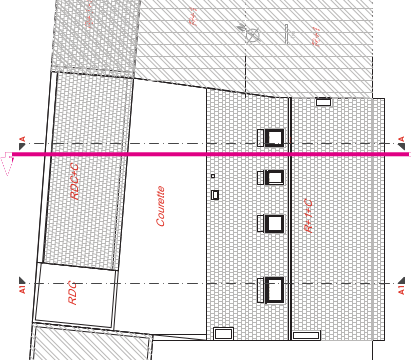
As you know from my other thread, my architect was working (since mid-October) on a design for heat-pump placement that couldn't possibly work. (I'm surprised now that a heat-pump installer either let himself be convinced or convinced her that this was possible.) Now we have two alternatives that I can see: 1) installing the external element on the roof (probably optimal, though now the architect is saying this will involve delays and fees (payable to her), as well as reinforcing the roof (why that would be necessary, given that, say, the external unit of a Yutaki S weighs 44kg, I do not know) 2) installing the external element on the courtyard (this, I understood, was her plan B, and may make her less unhappy). She never liked this idea all that much, but at least, she says, sound-pollution regulations would be respected, even though this is a small courtyard. My question: is 2) a good or even a feasible option? The (shared) coop courtyard has walls on all sides, though on one short side (and part of the adjacent long side) the walls are just one story high. Here is the courtyard. For scale, the house (labelled "R+1+C" here) is about 8.75m wide.
-
Yes, I take it for granted that this is what is meant. I will confirm.
-
I'm trying to get the architect to agree that her plans will not work. Of course she is saying now that changing plans at this late stage will result in delays, higher fees (to her...) In the end, I suspect the compromise solution will not be to install the fan on the roof (which would, she tells me, necessitate reinforcing the roof structure, permits from town hall, etc.) but installing it on the courtyard. She had already studied the matter and concluded that one can do it in such a way that sound regulations are respected. Does this seem like a good plan, given the dimensions of the courtyard (see above)? Would having the fan be 1m from the floor (say) help in any significant way?
-
Sure, that's part of the design of the Amzair (or other indoor heat-pumps): it ducts before and after air separately.
-
In retrospect, even plan A may not be enough. Reconsidering the possibility of an external heat pump...
-
Time to resuscitate the fan-on-the-roof plan, it seems. I can't remember why it was set aside; given that we will have plenty of skylights, it won't even be all that difficult to access. Of course architects do seem to hate it when one has to go back to an option they themselves considered in the past... (I'm extrapolating from a sample N=1.) (I don't own the outer surface of the roof, but the coop is very reasonable.)
-
Would this still be true if one proceeded as IanR suggested? Just out of curiosity - would this be more effective than having the inlet duct up to the door opening and the outlet open to the whole volume of the room? (Or is it that the cold air would then be more in contact with the rest of the house?
-
Would the fan of the unit as it exists ensure such a quick air change?
-
Now you are making me wonder what that double line is, but no, my understanding (looking at the floorplan I also included) is that the opening is on the 100cm side. https://www.amzair.eu/nos-pompes-a-chaleur/pompe-a-chaleur-optim_duo-2/
-
Here the open door would correspond to the walls on the sides, just as "heat" becomes "cold" in this example?
-
Is there a whole-house heat loss spreadsheet around here? I have only seen the one for a single room. Incidentally - how do indoors heat-pumps (such as Amzair and Stiebel-Eltron) manage then? Amzair in particular has a setup that isn't all that different from this one.
-
I'm not sure I understand why that would be the direction of air movement - you mean air would have to get around the heat-pump fans? The inlet would be directly in front of the opening; there would be a solid wall more than half a meter behind the exhaust.
-
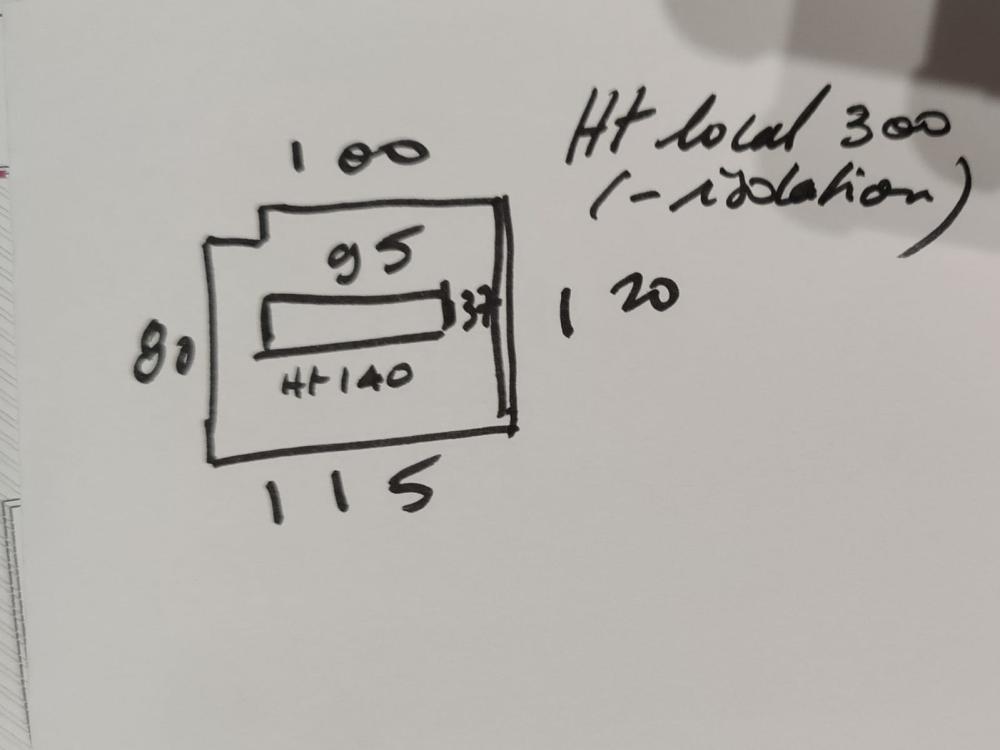
>How enclosed is the courtyard? Is the air in the courtyard still or does the wind whistle through it? Even if you can overcome the problem of getting sufficient air >flow through a grille in your door, you could end up just cooling the courtyard if it is too enclosed. It's not exactly windy; it opens on one side (well, there is a low-ish wall) onto a neighbour's big garden. My place is the one marked R+1+C ("ground-floor plus first floor plus attic"). The building on the other size of the courtyard is shorter than mine ("RDC+C" means "ground-floor plus attic"). RDC is an empty space on top of a ground floor, with a sad, forgotten soccer ball somewhere in it, as well as bits of random vegetation.
-
Yes, but there has to be some (heat) insulation on the ceiling to protect the space above it well.
-
That's my question: what is the effective throughput of a door-sized grille? How does it compare to that of no grille (so that the 120cm deep "room" would in effect be an open recess in the courtyard wall)? Some, but not for the house as a whole. This is a three-floor apartment, and the attic ceiling may eventually be raised (giving a total indoors volume in the order of up to 550-600m^3; it's smaller now - one cannot stand in most of the attic). The heat-pump has to provide both hot water for heating and for direct hot-water usage. We are insulating (nearly) everything well, but even so 11kW doesn't seem unreasonable. That's a possibility we have considered. I can put it back on the table.
-
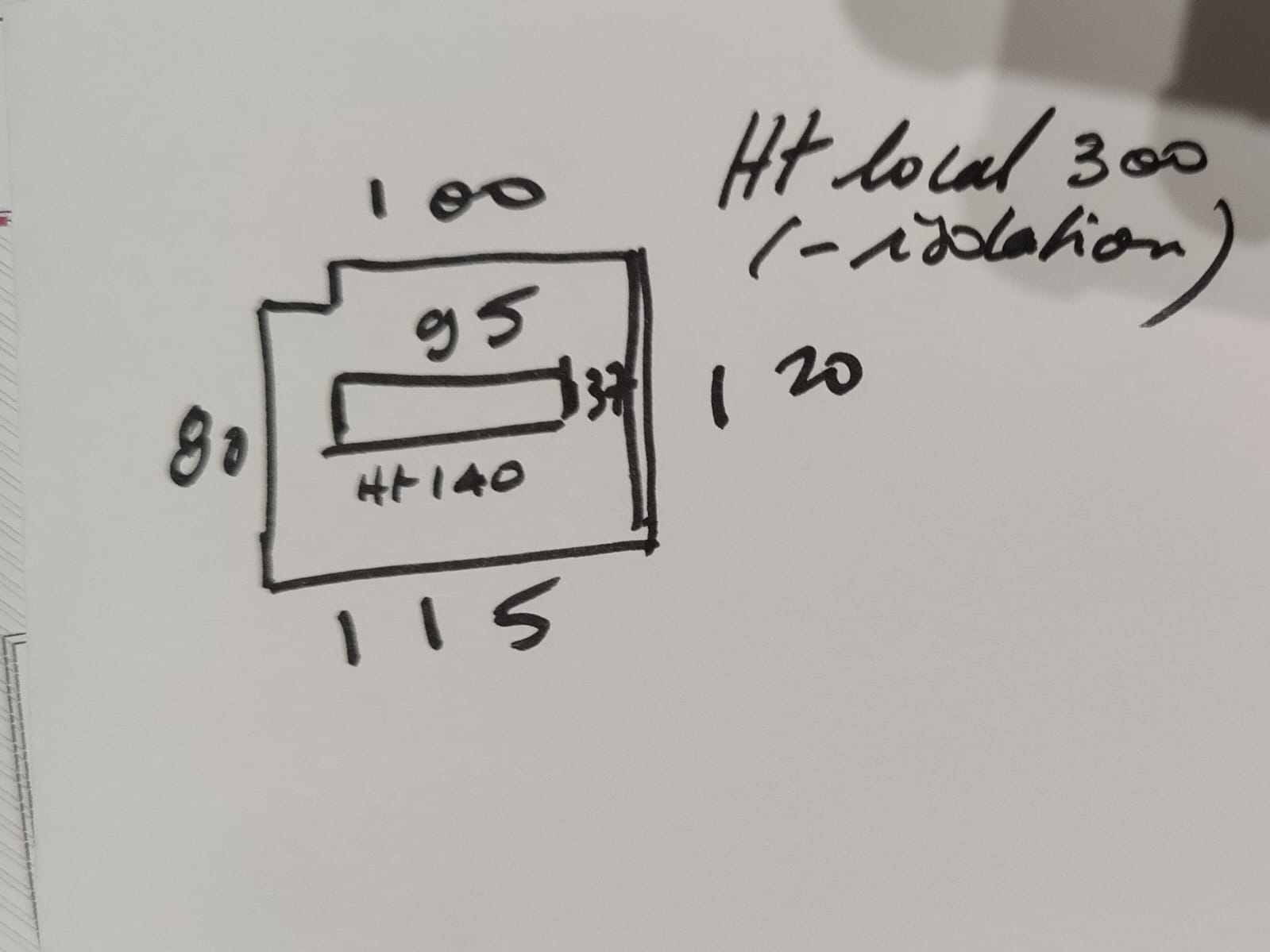
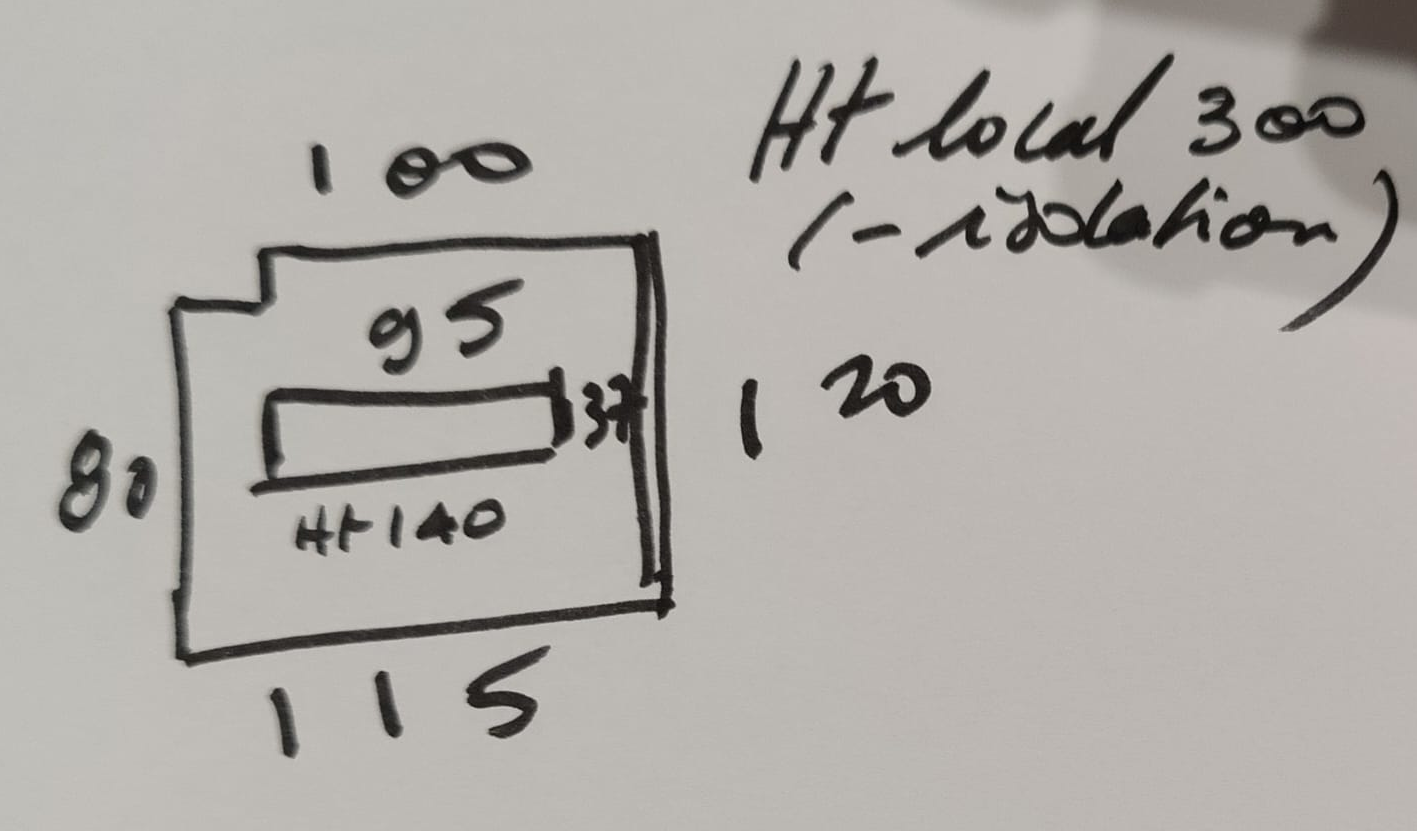
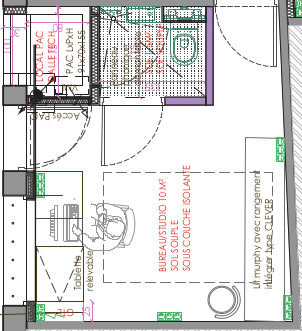
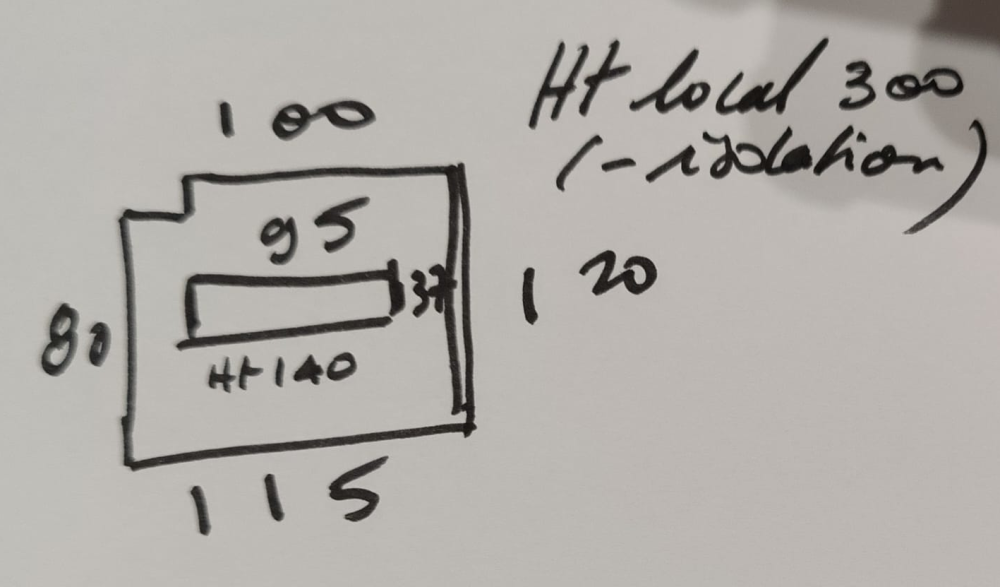
First of all, thanks to everybody for all the help. The diagram shows a space 115cm wide, behind what is now a 100cm-wide door opening onto the courtyard. It's the closed blue door here. The plan would be to replace the blue door by a ventilation grille as tall as the door is now. The slim rectangle in the middle of the diagram shows what the position of the air pump would be. My questions: a) how is a 2.5m tall grille (say) different from an open door? (Note a sound-insulated heat-pump fan outside would presumably also be behind a grille.) (b) If it is not, then how is the situation different from a heat-pump installed within a 120cm deep, 3m tall recess in a wall, with free space behind it? (c) would installing a heat pump in such a recess be a bad idea?
.jpg.27ba0acf4fac34470b8f47b350077545.jpg)
-
Context: I am (as some of you have heard N times) in the middle of a major renovation of an apartment that amounts to most of a small house, with access to a small shared courtyard. Our plan was and is to install a heat-pump in such a way that there are no outside elements, so as not to annoy the neighbors (though we have looked at heat-pump models that are quiet enough that we could legally put the fans outside without breaking sound restrictions, if we got the coop's approval). Now, manufacturers of heat-pumps that are designed for such circumstances are far and few in between - there's the German brand that has a very good reputation but whose products of this kind are both very expensive and very bulky; there's the little-known French brand whose products are still quite expensive (26k if one counts the installation - incidentally, the installer has ghosted us)... and that may be it. Fortunately, my architect came across a vendor/installer in a building fair who believes that a tiny room facing the courtyard (really the coop's broken collective outhouse, which I just bought from the coop precisely to use for my heat-pump project) will be large enough to host the "outside" element (double fan, etc.) of a Yutaki S Combi 2.0 (11kW); the outhouse's door would be replaced by a ventilation grille. The inside element of the heat-pump would then go in the laundry room. Do you think this should work? Are there any issues we should foresee or guard ourselves against? The "tiny room" has the following dimensions: The ceiling height is 3m, minus a bit we will lose when we insulate. The courtyard is on the "north" side; the door that will become a ventilation grille is 100cm broad. Here's the map of the relevant bit of the ground floor, for greater clarity: (Ignore the LxPxH dimensions of the PAC - that would have been an Amzair monobloc; what matters here is the dimensions of the tiny room.) With good luck, this somewhat unconventional setup of a Hitachi Yutaki S heat pump should be much cheaper than the alternatives; I would save about 13k eur (+taxes) in comparison to the Amzair. Of course, Hitachi is also a good brand with an international reputation and so forth, no? The question is: do I need good luck? Will there be serious issues (malfunction, loss of efficiency, etc.) if we proceed in this fashion? All right - discuss.
-
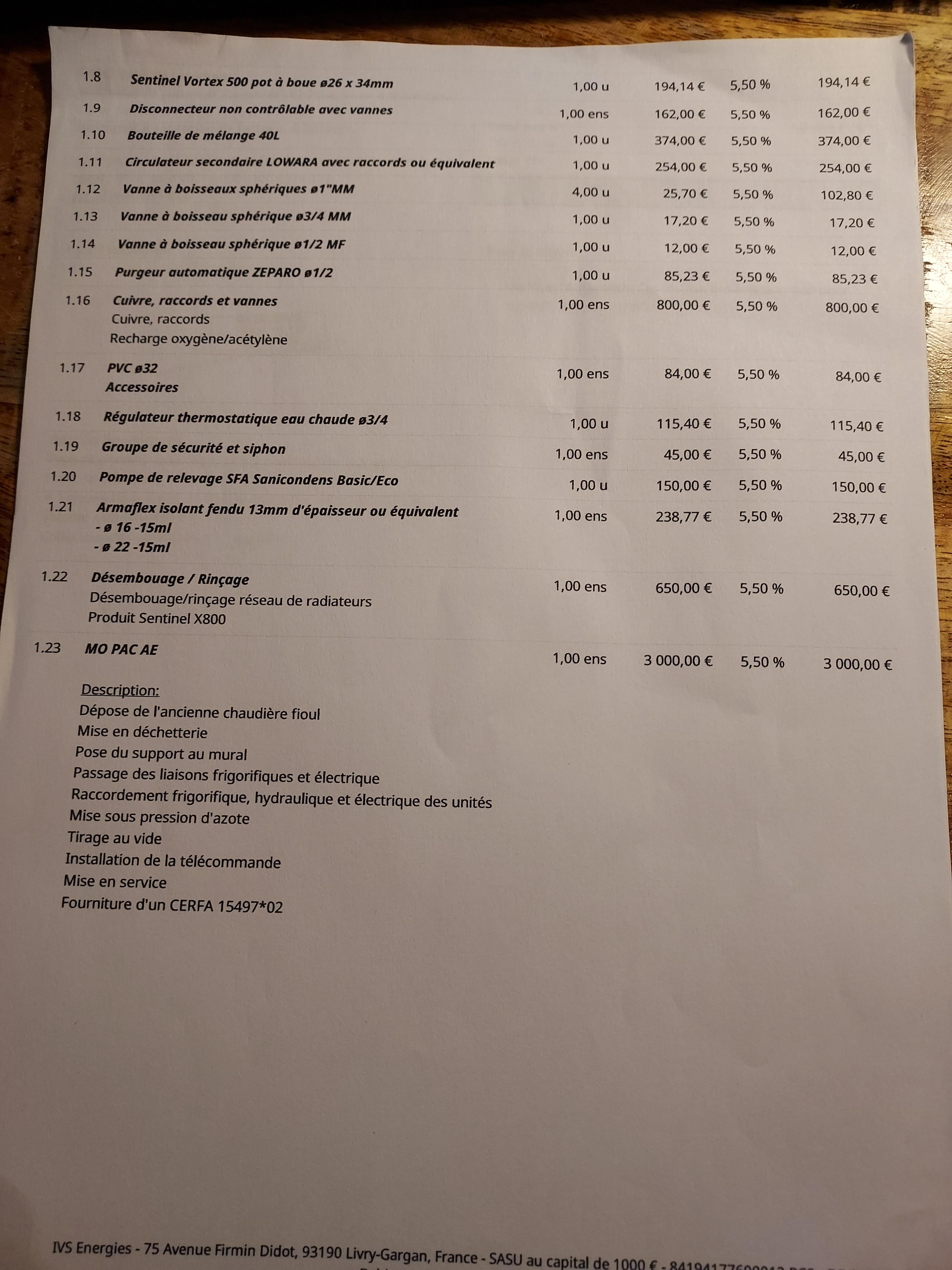
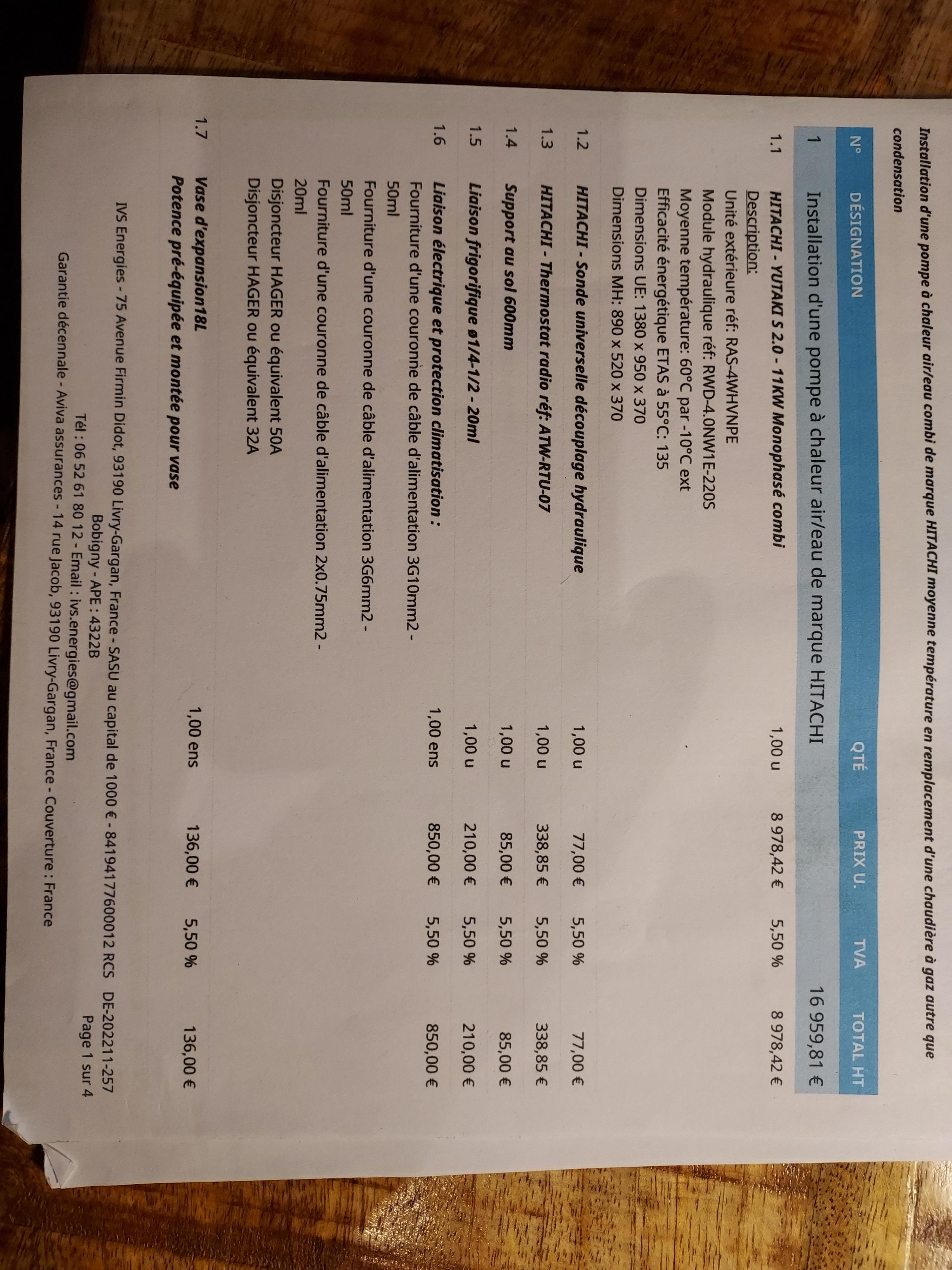
PS. My architect just told me that she managed to make the installer lop 3000eur off the price. Will the price be normal then?
-
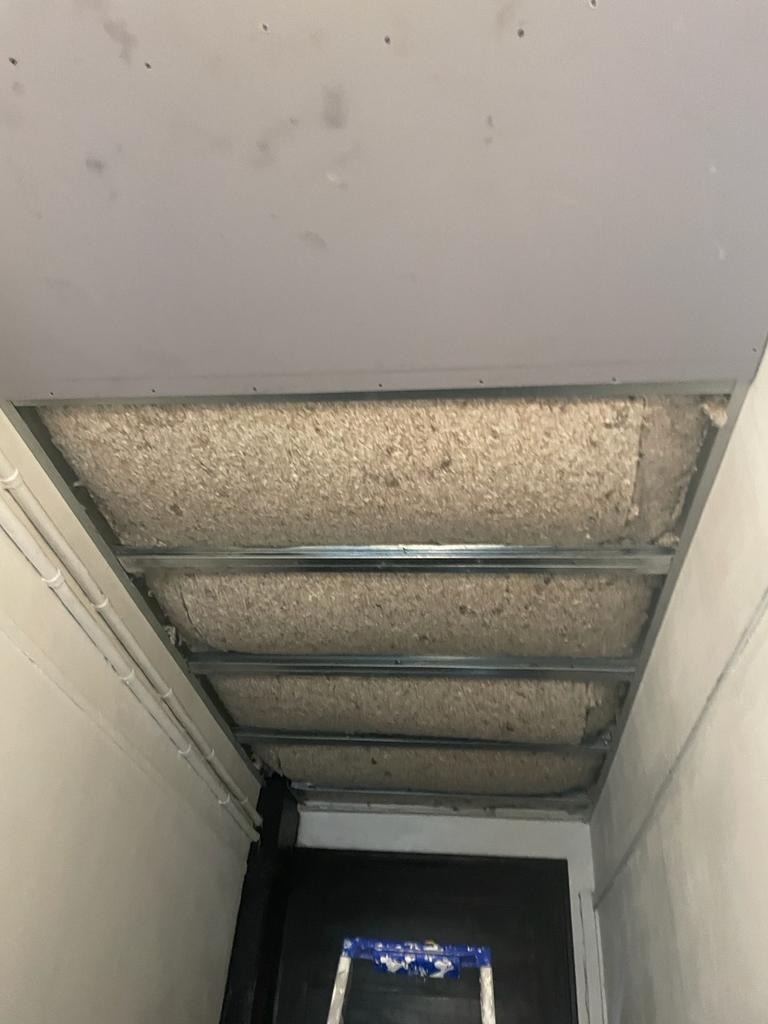
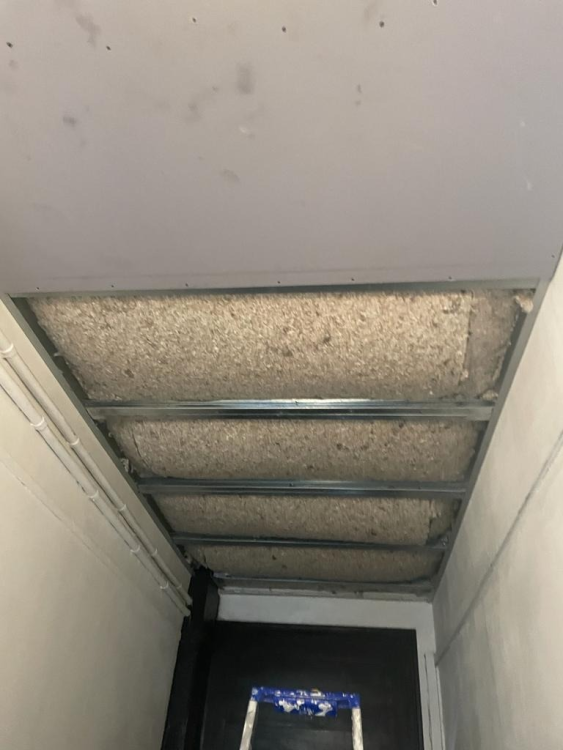
Ah, you mean that there is some membrane behind the metal frames and some membrane on top of it? Where should it be? (Maybe I am seeing order in chaos, but: I think the wall where the membrane goes on top is an internal wall - would that be an adequate explanation? Does it make a difference?)
-
Well, it looks like several pieces, but all in all very neatly.
-
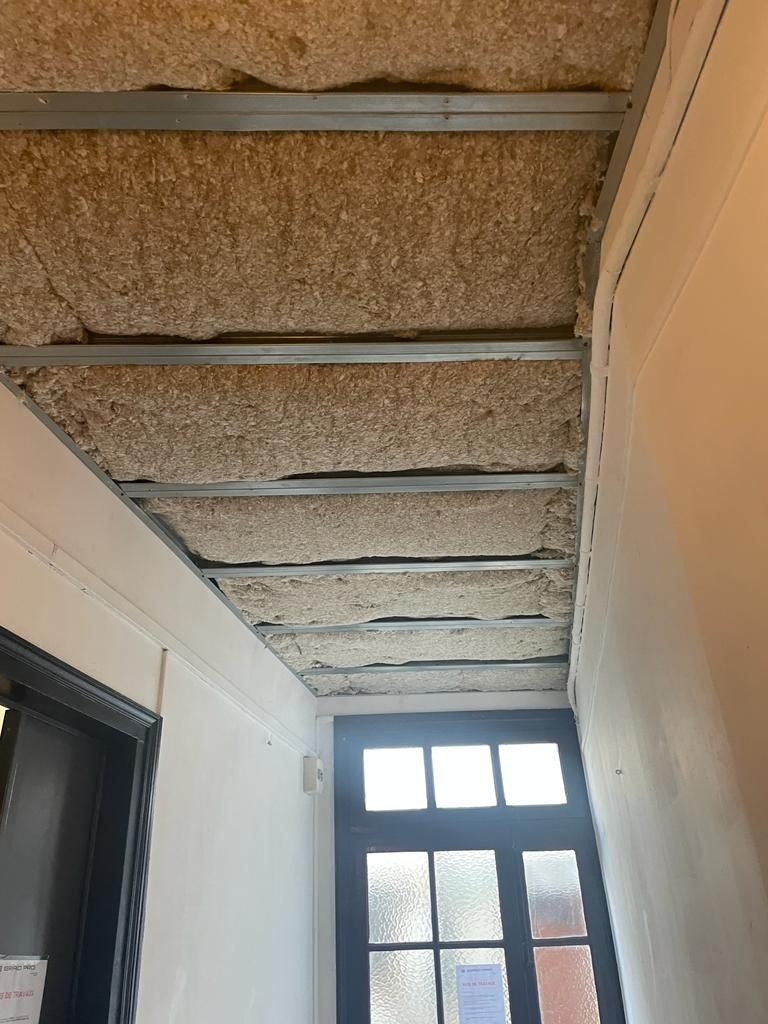
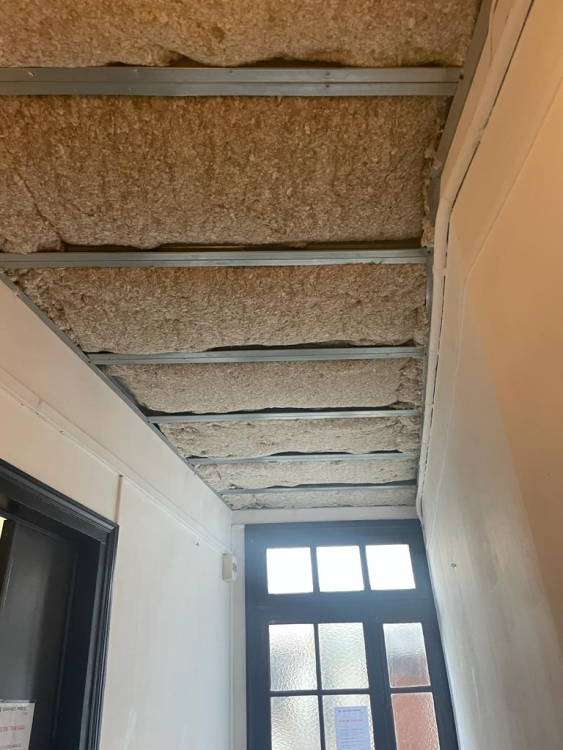
More pictures! Insulating the coop's corridor's ceiling (because my kitchen is on top of it). Does it look all right?
-
(Opinions on whether it is feasible to install an outdoor heatpump indoors (in front of a door that will soon become an ex-door, with sound insulation to the extent needed), on whether it's a good idea to combine a Hitachi heatpump and a Panasonic Aquarea PIV system (I guess so? Why would they not be friends?), etc., are also welcome.)
-
-
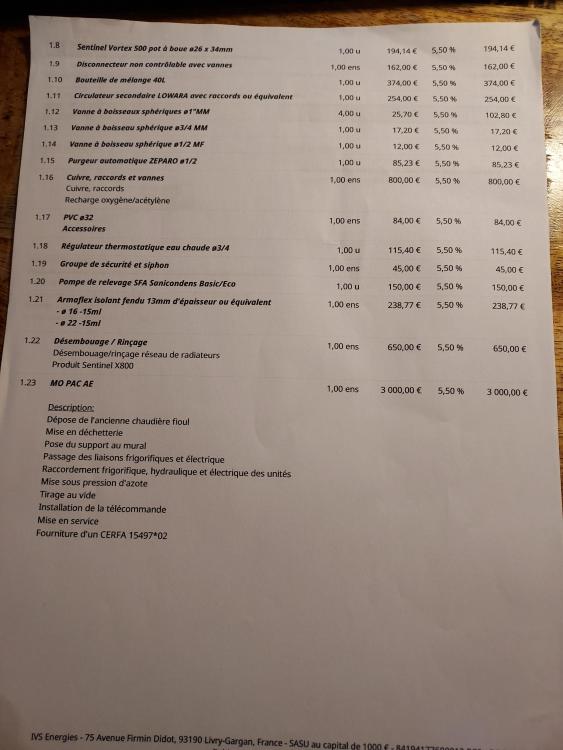
I *want* to summon the Spanish inquisition - that's why I post here. But what do you mean by MF, and for that matter by membrane detail? Sorry, newbie here.
-
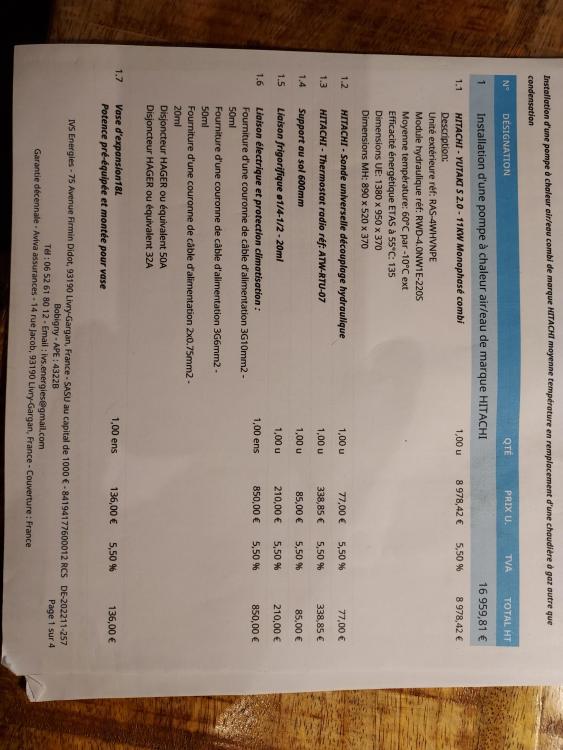
We finally got a quote for a heatpump and its installation. (Recap: we bought from the coop an outhouse adjacent to (in fact ensconced in) our new place, so as to install a heatpump there instead of potentially bothering the neighbors by instalming it in thme courtyard. We were talking to a vendor/installer that was offeeing an indoor heatpump (AMZAIR) - and then got ghosted, apparently. Then the architect talked to people at a building fair, and one of them was willing to install an outdoors heatpump inside the outhouse (which we can now resize however we want - the walls have been removed). The quote below is his.) Issue: installing the heat-pump (incl. providing various accoutrements) will cost almost as much as the heat-pump itself! Is this normal? Are there things we don't need? We should get a reduction on 1.23, since we have already removed and disposed off the old gas heater. Is anything else unusual?