


SteamyTea
-
Posts
23860 -
Joined
-
Days Won
200
Everything posted by SteamyTea
-
And a bit over 20,000 in mine. Or, at £1.25/litre £2,250/year. Now shall we compare depreciation, by car is worth about a tank of fuel.
-
Do you run the van on heating oil? My car uses about 20,000 kWh a year of Tesco's Finest.
-
Would you loose the FiT payment? You can change energy supplier without it being effected.
-
Yes, Ed is your man.
-
Right, shall trust your figures on that, saves me getting them wrong. Not if you are using extra ventilation to cool the place.
-
So that will be around 9,375 kWh, or the annual output from a 10 kWp PV sytem. Or enough to run my house twice. If it is a 5 kWh storage system, and it uses half of that a day for 'balancing', then that will 900 kWh/year, or £73/year. Am I missing something?
-
Start one, I like the idea of building your house yourself, bit like @Ed Davies is doing.
-
That will be 15 kWh/day kW/h is really dividing power by time, energy [kWh] is power multiplied by time.
-
I think a lot more information is needed. How many people are in the house. How large is the house and what is the heat load. Generally, is a system is undersized, it will not work well. Nothing intrinsically wrong with the technology, unless it is a genuine fault, just that if you need 40 kWh/day to heat your house, and after 12 hours of running the heat pump, it has only delivered 15 kWh, then your house will be cold.
-
Try using 0.25 m.K/W See if that gives a sensible answer. (What Wikipedia quotes as the RSI value for most timber)
-
Thanks @Ed Davies Never thought of that when I saw the message that it was not compatible. Yes 68. Not 86
-
Not sure if I can, will need to look into it later. It may just be a case of using a separate gpg allocation, rather that the plug in. Or wait until they update Enigmail. Not as if it is a rare and unusual thing to use.
-
Just updated my email application and Enigmail is now not compatible. The Thunderbird version is 86.4.1 Really annoying as I can not open and read my encrypted emails. Anyone know of a work around to this?
-
My point was in response to where electrical energy prices are heading, not individual usage. 15 years ago, when oil prices shot up, people where talking about $250/barrel being the new normal, but they are still at the long term average of ~$50/barrel. I have a similar sized place to you, and it comes in at about £600 a year with meter rental and VAT. I have (for my own reasons) not bothered to change supplier, though I do keep an eye on prices.
-
Have you ever compared the total efficiencies between the two systems?
-
There is a reason that low voltage[1] PV modules are more expensive and not as efficient as standard ones. [1]Not really low voltage as anything under 1000V is low voltage, Extra Low Voltage is really the right term as that is below 50V.
-
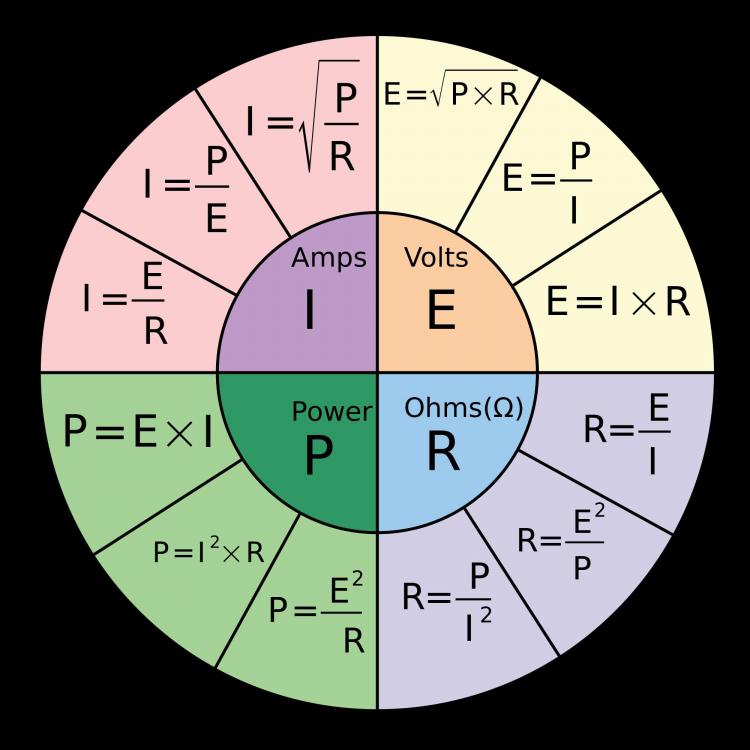
Welcome Not really about voltage. It is about power, the watts, and energy, the joule, also known as the watt-hour. But it really comes down to how much you want to spend. Across the developed world this has been consistent at around the 5% of median household income, for decades. This is mainly to do with government interventions.
-

MVHR in large volume New Build
SteamyTea replied to Triassic's topic in Mechanical Ventilation with Heat Recovery (MVHR)
We used that in some composite mining rescue gear. Forgotten about that project. Had to make covers for breathing apparatus, they had to be anti static to reduce the risk of explosion. -
What sort of floor do you have, and how are they going to insulate it to stop energy leaking though the ground/outside air. Have you considered Air to Air heat pumps. And do you know how much you use with your current heating system.
-
Ask for a smart meter to be fitted, then the shit will hit the fan.
-
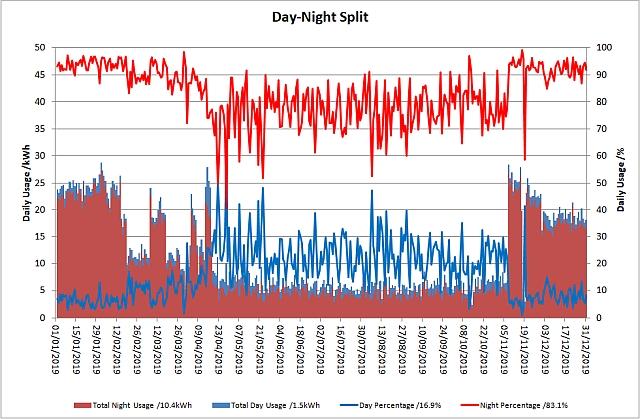
If I had a couple of kWh of storage, and a 6 kW inverter, I could probably get to 98 or 99% night usage, but with usage at under 5 MWh/year, it does not seem worth it to me. All I would be doing is swapping my horrendous EDF day rate of 22p/kWh, or on average, 33p/day, to my not so good anymore EDF night rate of 9p/kWh, so a saving of 18p/day. To get back £1000 would take 15 years. And I doubt that I could get the kit for £1000, more like £3000.
-
Load shifting is easy if your loads are higher, at the moment, because I have the heating on, I am using 90% during the E7 window. Not so great in the summer. But I still manage, on average, to use 83% at night.
-
MVHR in large volume New Build
SteamyTea replied to Triassic's topic in Mechanical Ventilation with Heat Recovery (MVHR)
Probably. Silver is a common antibacterial coating. It has a lot of electrons, but the outermost shell only has one. This is why it reacts with other atoms so well. -
Probably nothing you are doing wrong. Try pressing F9, that recalculates a spreadsheet if it does not do it automatically as you enter data. You may find that some cells need data, so which ones where you unable to fill in?
-
MVHR in large volume New Build
SteamyTea replied to Triassic's topic in Mechanical Ventilation with Heat Recovery (MVHR)
It is to do with the outermost shell of electrons on the polymer molecule. (I really have no idea what I just said there)


