SteamyTea
-
Posts
23853 -
Joined
-
Days Won
200
Everything posted by SteamyTea
-
Not yet, but my phone must have.
-

LG Therma V mono block Air Source Heat Pump
SteamyTea replied to ProDave's topic in Air Source Heat Pumps (ASHP)
I can. It can use historical usage patterns. Does your system have a buffer tank? -
Why wait, this house will be around for decades. Aim for an overall U-Value of below 0.15 W/m.K and airthighness of under 0.75 ACH@50Pa (get a test done while you can still fix things, a test us less than a bathtub). If you are going for underfloor heating, design in 250mm of I dilation now. And integrate shade free PV into the roof
-
I think 100mm of celecotex gives a u-value of 0.22 W.m-2.K-1 If your UFH is running at 35°C and the void under the block and beam is at 5°C, that is ~7W.m-2 or 0.16 kWh.day-1. Keep adding in floor insulation.
-
Basic swimming pool sand filter and a UV steriliser, or ozone injection should be pretty cheap. Make it large enough and it should help with the storm overflow. If you are digging holes, probably not that expensive to fit in a few tones of storage.
- 28 replies
-
- 1
-

-
- solar pv
- rainwater harvesting
- (and 1 more)
-
Plywood, orientation of maximum strength.
SteamyTea replied to epsilonGreedy's topic in General Self Build & DIY Discussion
JFGI http://www.woodbin.com/calcs/sagulator/ -
I still think that BuildHub should open accounts at most suppliers so we can all get discounts easier. Mentioned it before, but it goes against the 'no commercial involvement' mentality. Could help with importing stuff from the EU if it was a company. Oh hang on, most on here voted to leave.
-
Does a kitchen or bathroom 'pay for itself'? You are where you are, so just start costing them out yourself and don't look at any MCS registered fitters. You will find that without registration, and even allowing for half the PV being exported for free, it is still viable as you will not be importing at 16p/kWh. Norfolk is a pretty good county for PV production. Just make sure the angles are optimum (look at PVGIS) and there is no shading. Look on eBay for ASHPs. Check out roof integrated PV, it is better looking than red tiles. The rainwater harvesting is interesting, can that be used instead of SUDs if that applies.
- 28 replies
-
- 1
-
-
- solar pv
- rainwater harvesting
- (and 1 more)
-
All that aluminium to make flat plate solar collectors and UFH spreader plates from. But, as it is not an Avondale, not worth it. (I was the production manager at Avondale, terrible place that relied on workplace bullying as a motivational tool, I walked out)
-
Good healthy natural smells. Can't possibly be anything nasty in them.
-
Long term UFH problems: please help :-(
SteamyTea replied to jonpaul31's topic in Underfloor Heating
May be s way to sort the problem. Cause a decent leak, flat beneath will need to have ceiling removed. Then the problems can be sorted out. -
I got some ointment that may help.
-
Flippers, I need some new ones.
-
What size shoes do you have?
-
Mate of mine, who lived in a large 9 Man Artic Army tent, used a free standing kitchen from Idea. Worked well.
-
Long term UFH problems: please help :-(
SteamyTea replied to jonpaul31's topic in Underfloor Heating
Do you know who the architect was. Maybe a search on the planning portal may reveal a drawing with the architects name on it. -
Full thread v. partial thread wood screws.
SteamyTea replied to epsilonGreedy's topic in Tools & Equipment
Like these on the Spax wedsite. https://www.spax.com/uk/products/stainless-steel/flat-countersunk-head/stainless-steel-screw-4-x-35-mm-200-pieces-partial-thread-flat-countersunk-head-t-star-plus-t20-4cut-stainless-steel-a2-4197000400356/pid-2255/ -
Hi Everyone - Newbie with ASHP Questions
SteamyTea replied to Madam1980's topic in Introduce Yourself
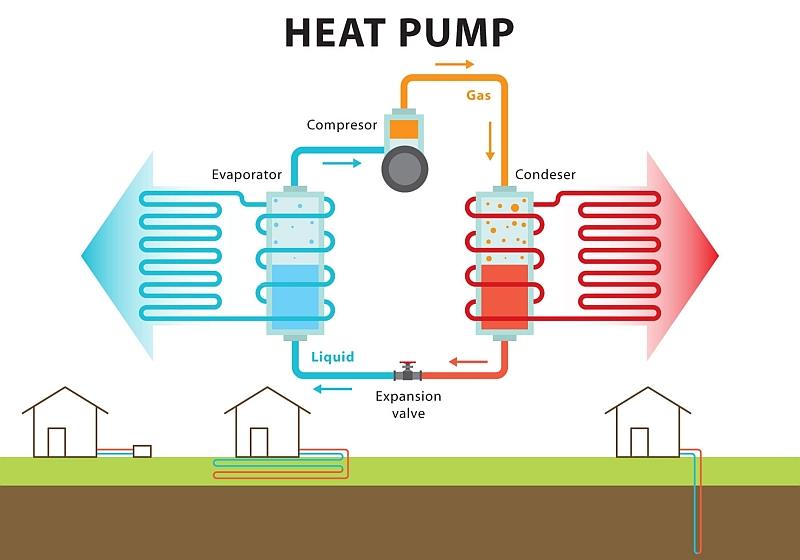
It is the Carnot Cycle Heat Engine principles. The electrical energy that you put into a heat pump just drives a compressor, fan and a water pump, the rest of the energy comes from cooling the air though the external heat exchanger. If you cool a mass of anything, it releases energy, how fast you do it is the power. Energy is measured in joules [J], power is in watts [W]. A watts (not Watt, as that was the man) is 1 J.s-1. If the ambient air is very cold, i.e. close to the temperature of the external heat exchanger, very little energy can be extracted, and what can be extracted takes along time, which is more electricity to drive the compressor, fan and pump When the compressor control gear senses these conditions, it turns on a very basic electrical resistance heater, this drops the efficiency to just below 1 i.e. more energy is going into the ASHP tan is coming out. Another way to think of it is as a lever with a moveable pivot point. When conditions are idea, a lot of mass can be moved with one stroke, when they are suboptimal, many strokes, of a small mass have to be used. So basically the compressor is spinning without compressing the refrigerant gas much, the air fan is at full speed, but little energy can be extracted from the cold air as it is almost at equilibrium with the expanding refrigerant gas in the evaporator. Luckily these conditions never last long in the UK (I expect not many people will complain about their ASHPs now that air temperatures have risen 15°C).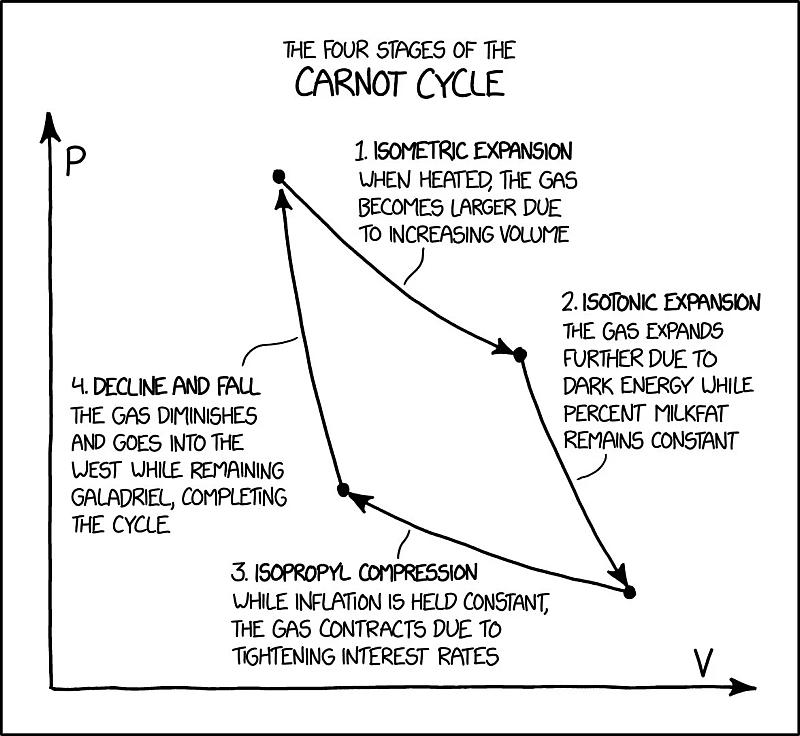
-
Full thread v. partial thread wood screws.
SteamyTea replied to epsilonGreedy's topic in Tools & Equipment
https://www.ebay.co.uk/itm/No3-4-6-8-10-12-A2-Stainless-Steel-Slotted-Flat-Countersunk-Wood-Screws-DIN-97/322452558445 There you go, I just used wood bolts in the search. -
-
It is the same joke I heard in the mid 70s about a pickled penis.
-
How to fix a breathable membrane to a block wall
SteamyTea replied to GaryM's topic in Brick & Block
With all the fuss about flammable cladding on buildings, is it really worth doing if you want to resell. It does not matter what the rules say you can and cannot do, it is the toxic element in the buying publics mind that counts. -
Long term UFH problems: please help :-(
SteamyTea replied to jonpaul31's topic in Underfloor Heating
Most domestic ones are 2 kW, 3 kW will melt the plug and socket. I got a nice 400W one from the range, keeps the place warm in the shoulder months. -
Hi Everyone - Newbie with ASHP Questions
SteamyTea replied to Madam1980's topic in Introduce Yourself
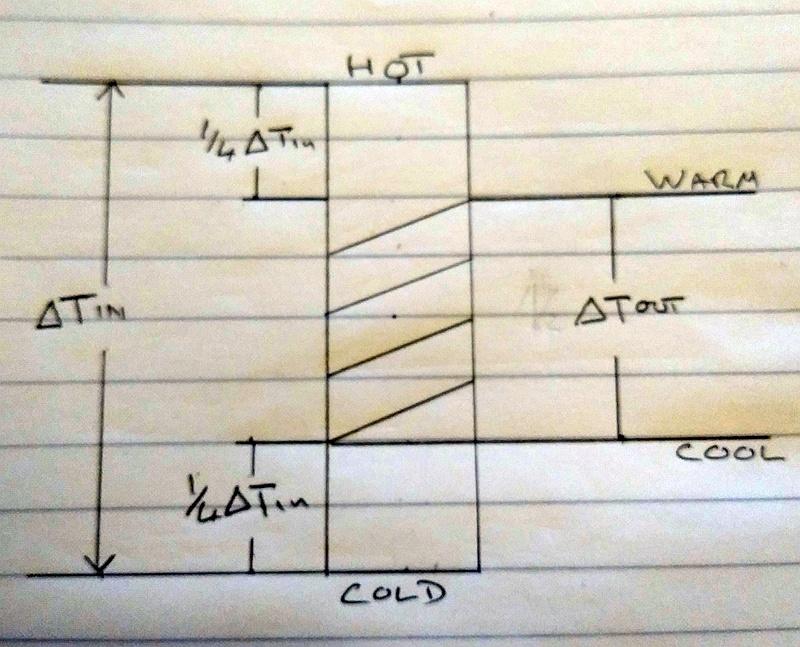
Yes, I can see it is a bit confusing. The external air temperature is constantly varying, what we know as weather. But inside the heat pump is a controlled environment, known gas volume and pressures, this leads to a constant temperature being produced (based on the ideal gas laws PV/T). So almost regardless of what the external air temperature is doing, once the cold liquid refrigerant that is pumped into the outside heat exchanger, the bit with the air fan, warmed up a bit and changed into a gas, recompressing it back to a liquid will produce the same set temperature, time and time again. It is this temperature that has to be significantly higher, or it will take a very long time to heat the water that is used for space heating or DHW. Heating is not a linear process, as temperatures get closer to each other, the time taken to transfer energy increases. This is why, if you leave the lid off an electric kettle, it will carry on boiling till it is dry. It is trying to heat the whole kitchen to 100°C. So imagine that, on the cold side of the heat pump, the gas is initially expanded, cooling as it does so, to say -30°C. As it passes though the external heat exchanger, it warms up to say 10°C on a hot day, or only to -5°C on a cold day. This 15° difference makes only the slightest temperature difference to the recompressed gas which may have a temperature of say around 70°C. But it does vary the efficiency. It is never possible to get your DHW (realistically the highest temperature you need) higher than that 70°C, and the last 10°, from 60°C upwards could take hours, so this is why heating it to a lower temperature, say 50°C is preferable. There will be a sweet spot, for any given external temperature, where you can heat the water to. This is a bit more complicated than purely a ratio between temperatures. This is because (with modern 'inverter' ASHPs) the mass of air that is allowed to flow though the external heat exchanger is constantly varied. Slow flow and more energy is extracted from the air, high flow, less energy is extracted, this is exactly the same as what happens with the internal flow rates around the plumbing system. There are two reasons to vary the air flow rate, one is keep the temperature difference between the cold and hot sides of the refrigerant gas at a maximum, and the other is to stop icing up. This is a bit of a balancing act, but usually works fine, though in the recent cold snap, some ASHPs have totally cut out, and other have frozen up, but it was extreme weather for the UK and we probably don't have the same set ups as they do in Canada, Sweden, or Japan. Possibly the second image may explain it a bit better. Worth noting that, as I said earlier, temperature and energy are not the same thing, though they are related.