SteamyTea
-
Posts
23375 -
Joined
-
Days Won
190
Everything posted by SteamyTea
-

Wall ties question- slanted or level, does it matter
SteamyTea replied to ab12's topic in Bricklaying, Blockwork & Mortar
Structurally, they will not be as strong in compression. In reality, as wall ties will buckle quite easily when compressed, it won't make any difference I suspect. Probably near enough that same in tension. Maybe @Gus Potter can answer more in detail (I find his long responses brilliant). -
You have to ask. Should be able to catch a newt or three.

-
Do you mean in series. Cold feed -- HP -- Heat Exchanger -- Willis -- Shower.
-
ASHP - how noisy are they in reality
SteamyTea replied to Walshie's topic in Air Source Heat Pumps (ASHP)
It is entropy. If you think of the current, best model, of the universe, it starts with a point that is at high temperature. As the universe expands, that energy gets dispersed over time. That is work being done, energy (heat) is moved over time. To get back to the original state (the big crunch) would need all the universe to be collected and compressed to one point. PV/T (pressure x volume / temperature) The kicker is that to do that, energy would have to be used (moving a mass a distance takes energy). That energy needs to come from somewhere. What happens is a closed system is that part of the original energy is used to collect all the particles and move them to one point. This causes some parts of the system to have a lower mean temperature, and one part to have a higher mean temperature, as this goes on, the cold parts will react absolute zero (0K) and no movement will happen (zero kinetic energy). Because there is a temperature difference, some of the energy (heat) from the hot part will move to the cold part, which then starts to move again. As temperature is the mean, free path, molecular speed (a thermometer is a speed camera from molecules), those slightly warmed particles will move again. But as it is based on a mean temperature, some will be very hot, some very cold, it is that ratio of hot to cold that does the work (power), but it takes time. So you can think of it as a box of 1000 1 kg rocks that needs to be moved 1 metre. You can do it all in one go, or move the rocks individually. The energy needed is the same 1 kJ, but energy is needed to move them, 1 kJ. Now as you know, moving a tonne of rocks is hard work and will make you sweat, so that is where the extra energy comes from. There are some peculiarities in the mathematics that involve forces, and as you remember, F = MA, force (newton) is mass (kg) x acceleration (m.s-2). So the only way to get all the power back and convert it to energy, is to do it in zero time. And that cannot happen (excluding some ideas from the quantum realm). So it is not a case of technology, just a case of it is hard to get the hot particles and move them to the hotter part. Maxwell created his daemons as a thought experiment, but that is all it is, not a real machine. -
ASHP - how noisy are they in reality
SteamyTea replied to Walshie's topic in Air Source Heat Pumps (ASHP)
So not the same thing. -
ASHP - how noisy are they in reality
SteamyTea replied to Walshie's topic in Air Source Heat Pumps (ASHP)
That is like saying that distance and speed are the same thing. -
ASHP - how noisy are they in reality
SteamyTea replied to Walshie's topic in Air Source Heat Pumps (ASHP)
So work is not the rate at which heat is used then? -
A relatively small PV array will offset ToU costs. I am starting to think that any thermal storage needs to in conjunction with PV if possible.
-
It is still 2005 down here. Always make me giggle when emmets are here in the latest fashion, or worse, what they think the locals wear. Cornish national dress is shorts, T-shirt and flipflops.
-
ASHP - how noisy are they in reality
SteamyTea replied to Walshie's topic in Air Source Heat Pumps (ASHP)
The theoretical, maximum, efficient from a heat engine. Heat is the old word for energy, so can be used in some non thermal applications. More applicable to thermal applications though. I was also thinking about why ICE engines are so rubbish while wondering about all this thermodynamics. -
ASHP - how noisy are they in reality
SteamyTea replied to Walshie's topic in Air Source Heat Pumps (ASHP)
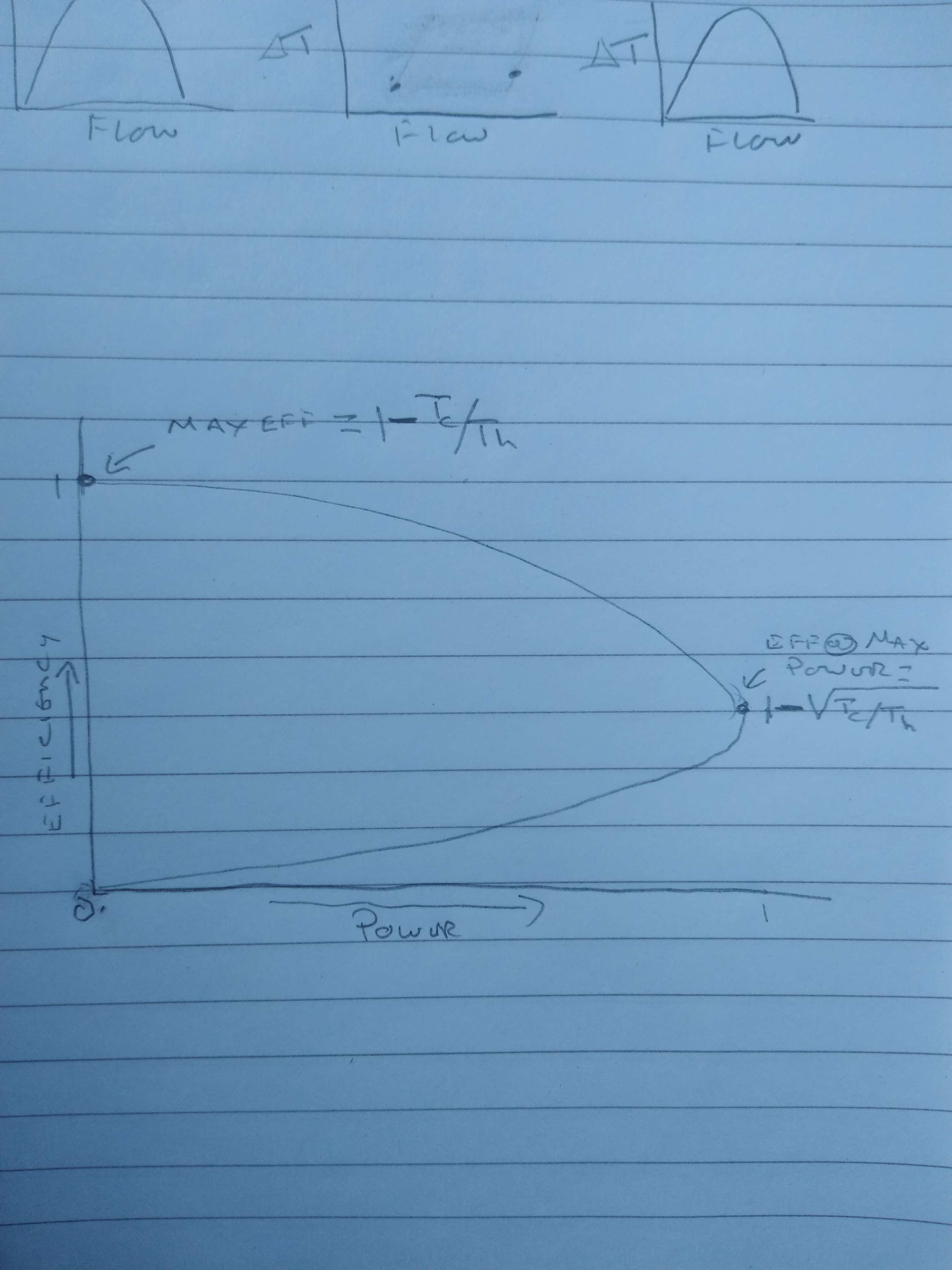
Had a while to kill, so had a think about efficiency of heat pumps. Basically there are 3 variables, Power, Temperature in the cold side and Temperature on the hot side. These should fit a curve that follows 1-√(Tc/Th) for efficiency at maximum power. I have used a simple scale, 0 is nothing, 1 is everything. Because this is a heat pump, the y-axis can be scaled to represent CoP. To establish the true efficiency of a heat pump, data really needs to be collected for OAT, IAT and flow rates (both air/water and delivery depending on setup).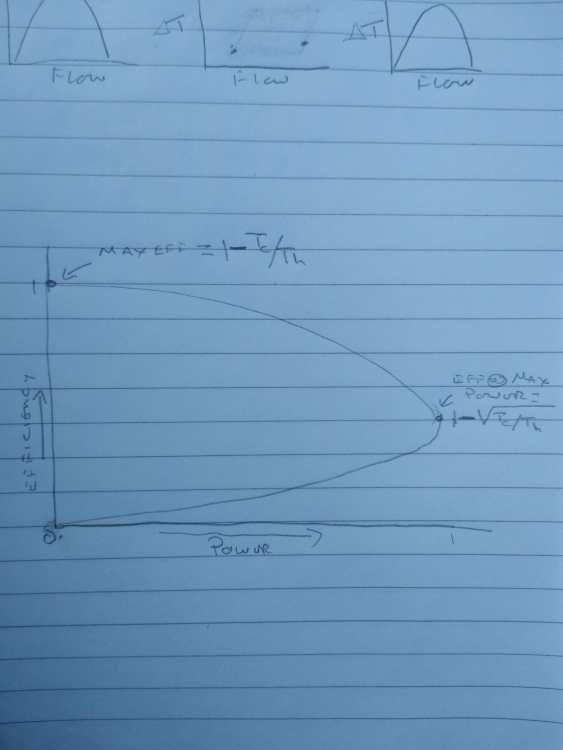
-
ASHP - how noisy are they in reality
SteamyTea replied to Walshie's topic in Air Source Heat Pumps (ASHP)
I think it can only be compared to the idealised Carnot cycle because, as you say, different systems use different control. -
CAD software recommendations?
SteamyTea replied to Great_scot_selfbuild's topic in New House & Self Build Design
I downloaded a cracked copy of Turbocad. Easy to use. -
This will be the same as fitting 4 million, 10 kWh battery system in home. https://www.pv-magazine.com/2025/04/03/largest-ever-uk-pumped-hydro-scheme-granted-consent/ Largest ever UK pumped hydro scheme granted consent Planning permission granted for 1.8 GW/ 40 GWh pumped hydro project in the Scottish Highlands. Developer Gilkes Energy says the real work begins now and is seeking “substantial capital” for the project. Gilkes Energy has secured planning consent for a 1.8 GW/40 GWh pumped hydro energy storage project, the largest of its kind to date in the United Kingdom. The Earba Pumped Storage Hydro project is located at Loch Earba in the Scottish Highlands, around 200 km north of Glasgow on the edge of the Cairngorms National Park. The proposed development would operate by transferring water between Loch Earba and an upper reservoir, Loch Leamhain. When the project’s upper reservoir is full, it would have enough storage capacity to generate 22 hours of electricity at its full 1.8 GW power rating, according to planning documents for the project.
-
ASHP - how noisy are they in reality
SteamyTea replied to Walshie's topic in Air Source Heat Pumps (ASHP)
That will be the one to fiddle with. Is it really hard to get to and read. -
ASHP - how noisy are they in reality
SteamyTea replied to Walshie's topic in Air Source Heat Pumps (ASHP)
I may be teaching grandmother to suck eggs, but is there something in the controller to set it? It may be under installer settings, rather than user settings. -
Width of brick x length of brick x mortar thickness + height of brick x width of brick x mortar thickness = volume of mortar per brick. Density of wet mortar x volume of mortar = mass
-
ASHP - how noisy are they in reality
SteamyTea replied to Walshie's topic in Air Source Heat Pumps (ASHP)
@Beau If your water pump built into the ASHP or separate? If a separate one, can it be adjusted easily? -
ASHP - how noisy are they in reality
SteamyTea replied to Walshie's topic in Air Source Heat Pumps (ASHP)
houses are different - I won’t turn my heating off until mid may normally Not just houses, regional weather makes a difference. Down here, our local temperatures are predominately governed by sea surface temperature.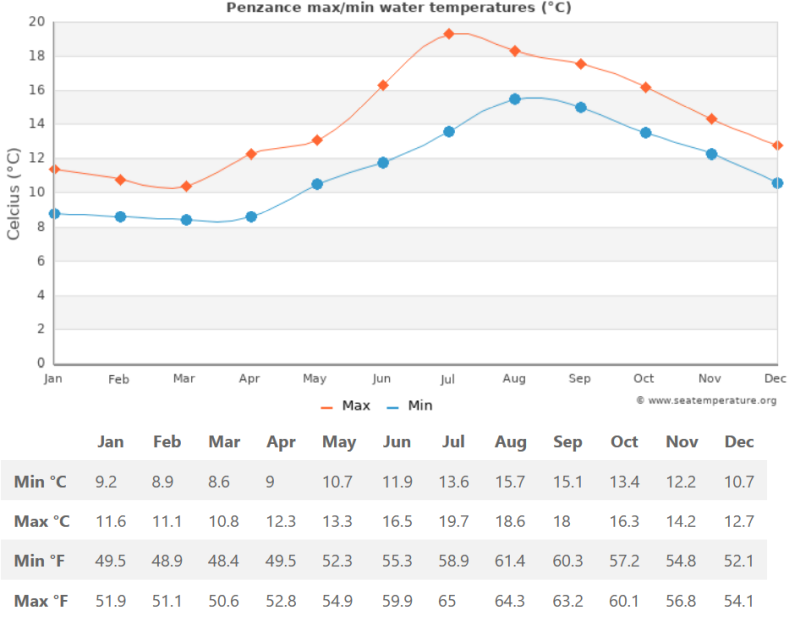
-
You live in France.
-
I got all the futurology from this.
-
Do you know your annual utilisations?
-
ASHP - how noisy are they in reality
SteamyTea replied to Walshie's topic in Air Source Heat Pumps (ASHP)
Sounds to me as if it is not set up right. What are the flow temperatures and rates? -
There are probably better ways to do that. Swapping a car to a more fuel efficient and lower CO2 emissions would make the bigger difference to my personal carbon budget. But last month, my 16 year old Mondeo Eco diesel averaged 66.3 MPG. That is about 1,700 kWh for the month. Almost half what my house uses in a year.
-
I bought a washing line and pegs from Poundland, cost 2 quid, it is the biggest saving I have ever made. When I changed my washing machine, I realised that I had not used the dryer on it for over 2 years, so got a new machine without a built in dryer.