SteamyTea
-
Posts
23401 -
Joined
-
Days Won
190
Everything posted by SteamyTea
-
I might though. I am not sure if they are still owned by Shell, but my Mother's pension is. So every months extra she stays alive (4 extra so far), she gets richer as she is uncapable of moving.
-
AKA SHELL GAS LIMITED31 Dec 1995 - 28 Oct 2011 SGL LIMITED07 Mar 1989 - 31 Dec 1995 CRUSADER GAS LIMITED13 Jun 1986 - 07 Mar 1989 SHELL GASES LIMITED31 Dec 1976 - 13 Jun 1986 SHELL-MEX AND B.P.GASES LIMITED18 Apr 1950 - 31 Dec 1976 They seem to be overdue a change of name.
-
I wonder how the WikiHouseFoundation treat the ply. https://www.vam.ac.uk/articles/building-a-plywood-house https://www.wikihouse.cc/
-

LG Therma V mono block Air Source Heat Pump
SteamyTea replied to ProDave's topic in Air Source Heat Pumps (ASHP)
How do you grad the electrical data from the Smart Meter and PV. -
My house has the original cheap 1987 kitchen. Then I had the place valued a few years back, the estate agent raved about the new kitchen. I have left my artexed ceilings alone, one day, one day.
-
5 minutes would be impressive. But it was 5 seconds. "The experiments produced 59 megajoules of energy over five seconds (11 megawatts of power)." I am well aware of the path they have taken and it is why the new research place is in France. Is 59 MJ about 16 kWh? What I used yesterday.
-
When it comes to plumbing yes. It is the dark arts, and like all arts, just goes on guesswork.
-
They were only joking.
-
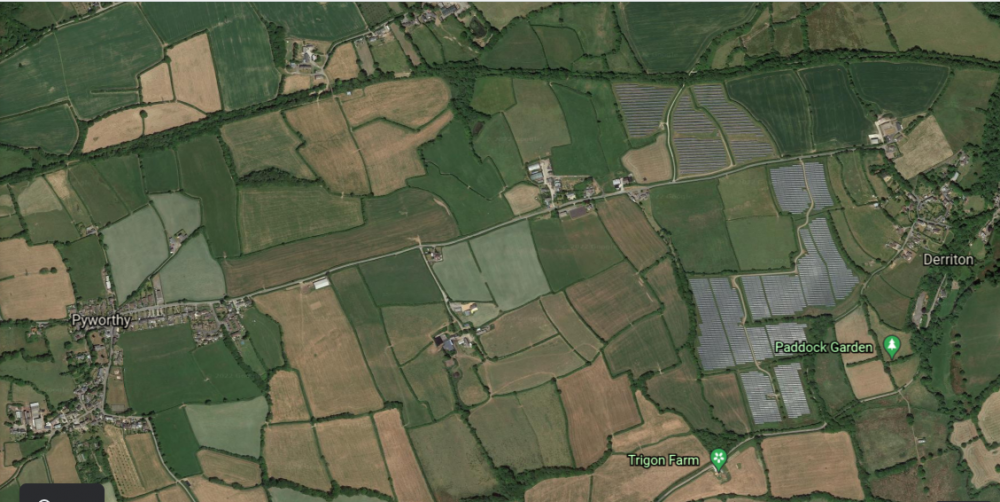
Get the PV on the garage roof, and sneak 9m2 in the paddock. We could sneak up the road and stumble upon a few free modules tonight.
-
66p.lt-1 here https://www.boilerjuice.com/heating-oil-prices/ So after efficiencies, about 8p/kWh.
-
So at 28p/kWh, rather than the cheap, low carbon, night rate. As much as I like HPs, the price advantage has totally gone at the moment, so they really need to be run at night to claw back some the the price difference. Zoot's system is going to be expensive to run.
-
I get the alt character set for nothing, and I can type this ° and this, 2 on m my phone.
-
Is the same if it uses an immersion heater in the cylinder once a week to run the legonella cycle. They may even put one in the buffer tank, just for a laugh.
-
Wasn't going to. All that hissing and popping. It was only the absence of it night before last that I remembered that I had not turned my water back on after my weekly trip away. Luckily I realised at 4:30 AM, so could listen to it heat the cylinder till 7 AM. Then a warm bath to de-stress.
-
Think of the legionella cycle, anyone mentioned that.
-
A smell from a wood burner! "No shit Sherlock"
-
Renewable Energy Shouldn’t be Blamed for Spiking Energy Prices — It's the Solution January 24, 2022 By Joel Jaeger, Tatsatom Gonçalves, Arya Harsono and Lori Bird Cover Image by: Karsten Würth Commentary Electricity, natural gas and oil prices have risen globally in recent months, causing hardship for many people around the world. Europe is at the center of the crisis, with natural gas prices increasing 400% last year, raising household bills and putting multiple energy companies out of business. Other countries like China, Brazil and the United States have also experienced higher-than-normal energy prices. Global oil prices are at the highest level in seven years. Here, we unpack the causes and the effects of the energy crisis and what that means for the future of clean energy. COVID-19: A Historic Energy Supply and Demand Shock The energy crisis has been caused by multiple overlapping factors on both the supply and demand sides, driven by the pandemic. The pandemic caused a market disruption larger than the world has ever seen before. Energy demand dropped sharply in 2020 during various lockdowns around the world. Prices fell, so fossil fuel production and investment in fossil fuels decreased. In China and elsewhere in the Northern Hemisphere last winter was especially cold, depleting coal and gas stockpiles. The pandemic also caused energy producers to postpone maintenance and repair work, slowing everything down. Then, in 2021, as demand rebounded strongly, energy supply was unable to ramp up fast enough, causing the price increases. In normal times, these market forces would have re-balanced themselves toward a price equilibrium, but with COVID supply chain disruptions, shipping delays and protectionism, global trade was inadequate to balance the supply and demand fluctuations and shortages. On top of all this, and perhaps most crucially, oil and gas producers like Russia and Saudi Arabia reportedly restricted gas and oil production for export to keep prices high and maximize their profits and strategic position. Clean Energy is Not the Problem. It’s the Solution. Some commentators have claimed that renewables are the cause of the energy crisis Europe is experiencing. They point out that the biggest spike in European electricity prices coincided with lower-than-average wind generation, but in reality this only temporarily added some pressure on electricity markets. Wind generation in Europe has resumed adequate production; in fact there were record amounts of wind power at the end of the year while energy prices continue to be high. Based on our analysis, the amount that electricity prices have spiked in a given country does not seem to have a strong correlation to its level of wind and solar energy production. China, which has about 10% wind and solar electricity, experienced a major electricity crisis. The U.S., at 12% wind and solar, has largely avoided it. Less than 1% of Singapore’s electricity comes from wind and solar, yet Singapore’s wholesale electricity prices spiked by six times in November of last year. As International Energy Agency (IEA) Director Fatih Birol puts it, the problem is not that there is too much clean energy — it’s that there is too little. The world has been chronically underinvesting in energy supply and transmission infrastructure. Global energy demand has been increasing over the past five years but total spending on energy has been flat. The mismatch between energy supply and demand is not a sign to slow down the low-carbon transition. In fact, it is a call to ramp up clean energy, energy efficiency, and infrastructure investments to ensure continued reliable and resilient supplies. This would make countries in Europe and elsewhere less vulnerable to geopolitical or economic choices by suppliers. The Advantages of Renewable Energy One advantage of renewable energy is that the power prices are generally stable. Once the solar and wind farms are built, all they need is the sun or the wind. In contrast, electricity from gas or coal requires continuous fuel supply, which is vulnerable to disruptions in production and transport. Fossil fuel price spikes like this have happened before and will happen again. Meanwhile, the costs of solar have dropped 85% since 2010 and the costs of both onshore and offshore wind have dropped about 50%. For residential or commercial energy users, investing in renewable energy, energy efficiency or other climate-friendly technologies can be a buffer against the market forces that affect fossil fuels. European households equipped with solar panels are saving an average of 60% on their monthly electricity bills during this crisis. Meanwhile, in the U.S., households heated with electricity will be largely unaffected by the crisis, only expected to see a 6% increase in their bills compared to last year, while households heated with natural gas are expected to spend 30% more. Increased investment in renewable energy will increase supply and reduce prices. According to the IEA, if the world invests enough in clean energy to reach net-zero emissions, average household energy bills in advanced economies will be lower in 2030 and 2050 than they are today. This is not to mention that renewable energy creates more jobs than fossil fuels. Challenges Renewable Energy Must Overcome None of this is to say that the transition to clean energy will always be smooth and easy. As renewable penetration grows, it will be important to invest in solutions that can address weather related variability, such as long-duration energy storage solutions. Governments also need to expand and modernize transmission and distribution grids to increase reliability, efficiency and accessibility. It will be essential to bolster energy systems with protections against severe weather-related events, such as fires, hurricanes and heat and cold waves. In the short-term, governments of countries affected by the energy price hikes will need to take measures to assist vulnerable households. This can be done by directly providing money to these households to help with their bills and investing in energy efficiency to reduce the energy burden that consumers shoulder. Then in the longer term, governments should ramp up investment in clean energy generation and storage. This is the best way to avoid future energy price spikes and address energy poverty challenges.
-
This installation will be the exception. I hear my E7 cylinder warming up, and that has no pumps. Probably going to be similar to the background noise you get in Middlesex, heading West, from Heathrow, that meets noise levels.
-
Only within very tight bounds, and not when the demand is sated i.e. cars charged up and supermarket freezers very cold. What cannot happen is a company like Tata Steel decide, on the whim of the DNO to bring in 200 works because 'power is cheap tomorrow'. We are a long way off this yet, demand is probably going to drop because of the high price and people will realise that they have been very wasteful.
-
About time I raised my game and got my first official warning. www.pocsterbikeshed.com
-
You can't sell it if there is no demand, and you have to have the capacity to generate at peak demand, why we have around 80 GW of capacity, we really need no more than 60 GW.
-
I was there, filming it. Shall I post up the video before we need age verification?
-
"The experiments produced 59 megajoules of energy over five seconds (11 megawatts of power). This is more than double what was achieved in similar tests back in 1997." 1997, 25 years ago. They said nuclear fusion power was 20 years away. The rest of us replied with 'and it always will be'
-
It is cheap to turn off windturbines, and then switch them back on. There will also be large scale balancing storage, and local, sub station storage. My feeling is let the big boys sort it out, one thing we are good at, in the UK, is electrical generation and distribution.
-
Did I leave my packet of Marlboro here? Oh, and my camera.