SBMS
-
Posts
1064 -
Joined
-
Last visited
Everything posted by SBMS
-
Patio to wall junction - help please on building regs
SBMS replied to Hilldes's topic in Building Regulations
I’m not sure if I completely understand your detailing but thought I would add that I asked my BCO (and combined warranty auditor) about this today, as we are building a level threshold for our patio and 8m of sliding doors on rear of our build. His response was that the 150mm below DPC was not relevant for a door aperture and that an acceptable detailing of a slot drain abutting the doors would be written up in his report as satisfactory. He did however say that it wasn’t his call as to whether the warranty provider imposed a restriction on the policy - though he’s not aware of ours doing so as it is a common detailing. He said with his building regs hat on he was more than happy signing this detailing off. I asked what would we do if there was a limitation imposed with a future house sale and he said it’d be relatively cheap to get an indemnity to cover this as it is now such a common detailing. -
If it makes you feel more comfortable I don’t think it’s bad advice, im just not sure how useful they are in the event of a dispute. Especially a third party contract where both parties fundamentally weren’t involve in its terms and authoring and at the end of the day need to consult a solicitor to interpret. If you’re a major construction project (see the ‘who uses us’ section of NEC) NEC model contracts are a great starting point but are they suitable for the lay self builder and lay contractor (that’s not rhetorical, I genuinely don’t know!)
-
My personal view is get clarity on the spec of what your builder will be doing, and develop a payment plan where you pay in arrears at the end of a stage. You might have to put a deposit down up front to get them going, but most of the materials they purchase and their costs will be on 30 day terms. I believe you should be looking at finding someone you trust to a high degree, and a contract is less necessary. If your builder breached it, would you really sue them? If they are a limited company they’ll have indemnity insurance that will pay defence costs anyway - could you afford to? If they’re not limited then how successful would you be and how could you prove a breach for example? Im not sure a contract is all that useful. Having really well understood responsibilities and payment terms - perhaps linked to BCO sign off is the way we went, and it’s paid off. If I was wanting to tie my build up into contracts I’d probably start wondering about how much trust I’ve built with my builder. Building is such a stressful, complex thing that in the event of a dispute you need to know you can talk and resolve amicably. Just my opinion!
-
I’m afraid you are miles out really. There was a thread a while back which was ballpark costs for a 300m2 build which I shared a lot of breakdown of our costs on: We are just getting watertight and are roughly coming in on the original budget - so our original was £1650 per sqm which is managed by a primary contractor so we are doing really well! We secured all prices beginning of year and it’d probably be nearer 2k per sqm now. Which is still reasonable. And ours is a square chocolate box brick and block, so relatively easy to build (be your aspirational pic which has more complex detailing I think)
-
Hi @ProDave yes - it was on the diagram as the Red line (150mm between rafters), then green line is 35mm over the rafters. Our rafters are 175mm so we have a 25mm air gap/felt sag, but we are using a breathable membrane (and have MVHR) so building control are happy with that setup.
-
Thanks @ProDave. Unfortunately roof is battened and tiling has begun so can't switch to warm roof. We were incredibly tight with ridge height due to planning requirements so would have been a push anyway. Do you have a view on the internal insulation of the room (yellow and pink bits on my dreadful diagram) for the MVHR?
-
Would you put rockwall in the dwarf walls (sound insulation) again? I might be missing the point here, so if we did insulate the floor and dwarf walls, would the eaves space not end up cold? Trying to work out what the actual difference between cold and unheated is... I guess eventually the heat from floor below and the attic room would end up migrating into the eaves space anyway?
-
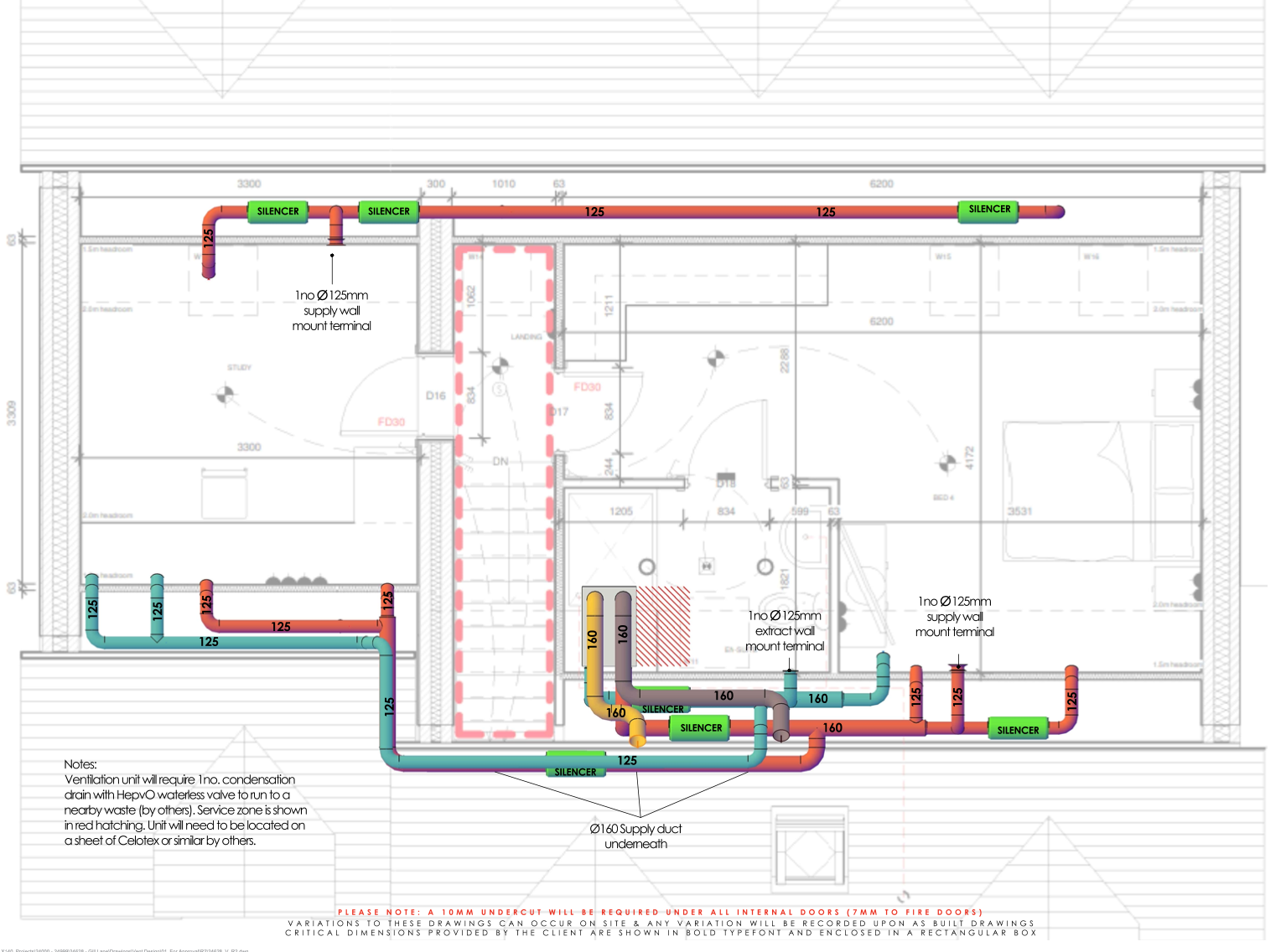
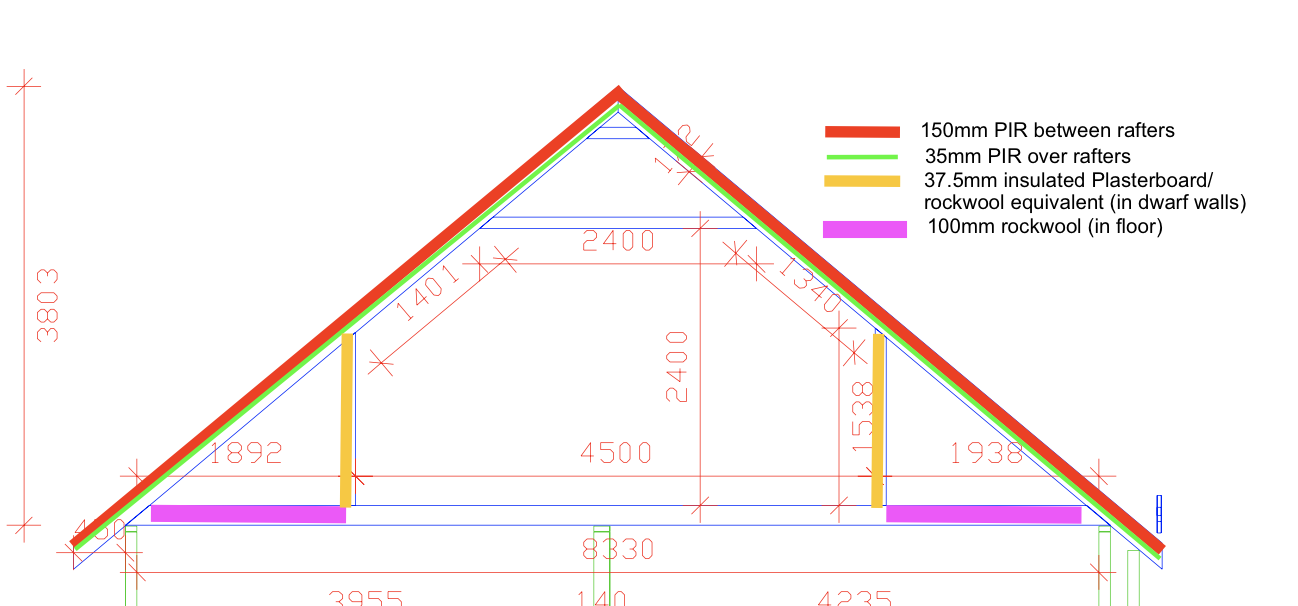
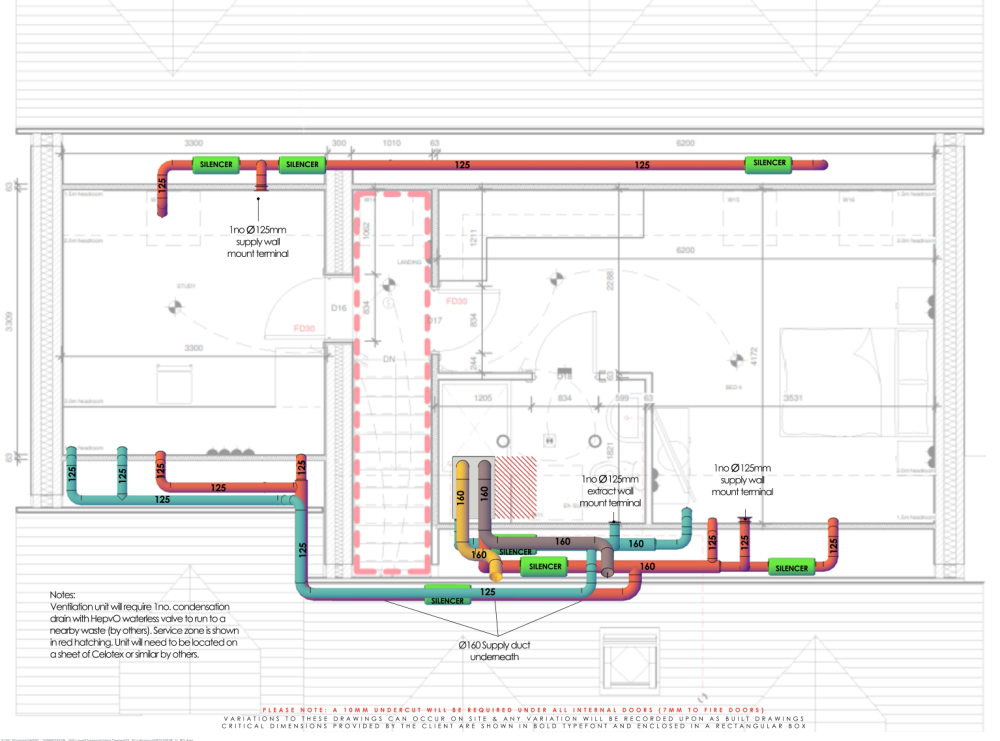
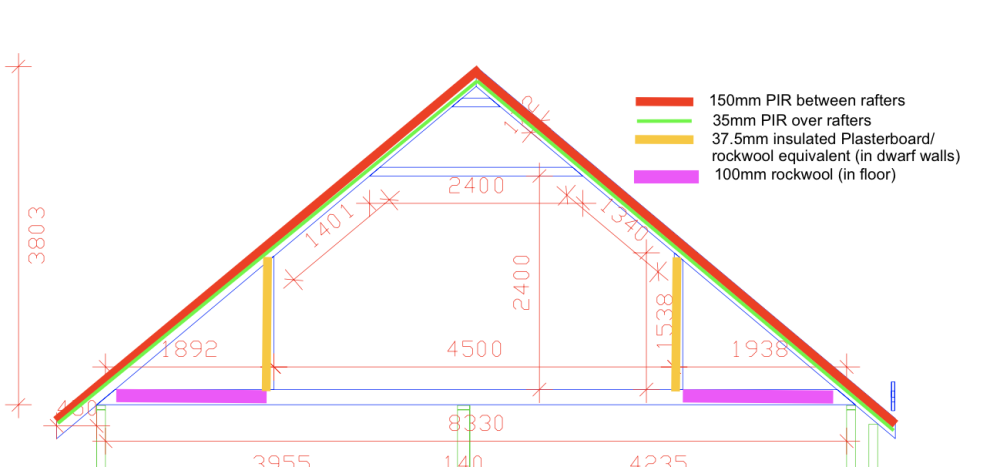
Hi On our build the top floor has attic trusses and is a fully habitable room. The MVHR ducting runs within this eaves space. There are two options from the MVHR supplier for the ducting in the eaves - make the eaves a 'warm space' (lagging just the intake and exhaust with a 50mm isosleeve), or keep the eaves cold (lagging all the supply and extract that are in the eaves): Our current plan is to insulate between the rafters with 150mm PIR, with a 35mm cross batten of PIR. We were then going to insulate just the 'room' on the top floor with insulated plasterboard, and leave the eaves cold, but are now wondering whether we should not put the insulated plasterboard on and allow the eaves to be heated from the room? I've included a colour coded view of our options - the red and green bits (rafter insulation) is fixed: So we have 3 options (plus a fourth option where we don't make the eaves warm): 1. Insulate the room on top floor with insulated plasterboard, but leave the floor space of the eaves uninsulated, so heat rising from floor below keeps it warm 2. Don't insulate the room on top floor with insulated plasterboard, but insulate the floor space of the eaves so heat from the top room keeps it warm 3. Don't insulate the room on top floor with insulated plasterboard OR the floor space of the eaves, so heat from the floor below and the top room keeps it warm 4. Insulate the room on top floor with insulated plasterboard and the floor space of the eaves, and lag the MVHR ducting with ISO sleeve (i.e. make the eaves cold) We've pretty much been left to it ourselves (MVHR company won't make the call, SAP guys won't either). Our roof UValue for SAP Calcs is provided by the 150mm PIR + 35mm cross batten so it's more a design choice for ourselves.. Any thoughts? MVHR Plan (all ducting is in the eaves space):
-
Detailing for cill drainage with a 'flush' finish patio
SBMS replied to SBMS's topic in Landscaping, Decking & Patios
Thanks @MJNewton for this, that's great. -
Detailing for cill drainage with a 'flush' finish patio
SBMS replied to SBMS's topic in Landscaping, Decking & Patios
Thanks Craig 👍 -
Detailing for cill drainage with a 'flush' finish patio
SBMS replied to SBMS's topic in Landscaping, Decking & Patios
Thanks Craig - this has been incredibly useful. I was just going to say that it seems the aquabocci system referenced earlier looks like it would work. But is also crazy expensive! Have you a link to the metal one you've posted? I've struggled to find anything that permits side entry from the door and drainage from the pavers. -
Detailing for cill drainage with a 'flush' finish patio
SBMS replied to SBMS's topic in Landscaping, Decking & Patios
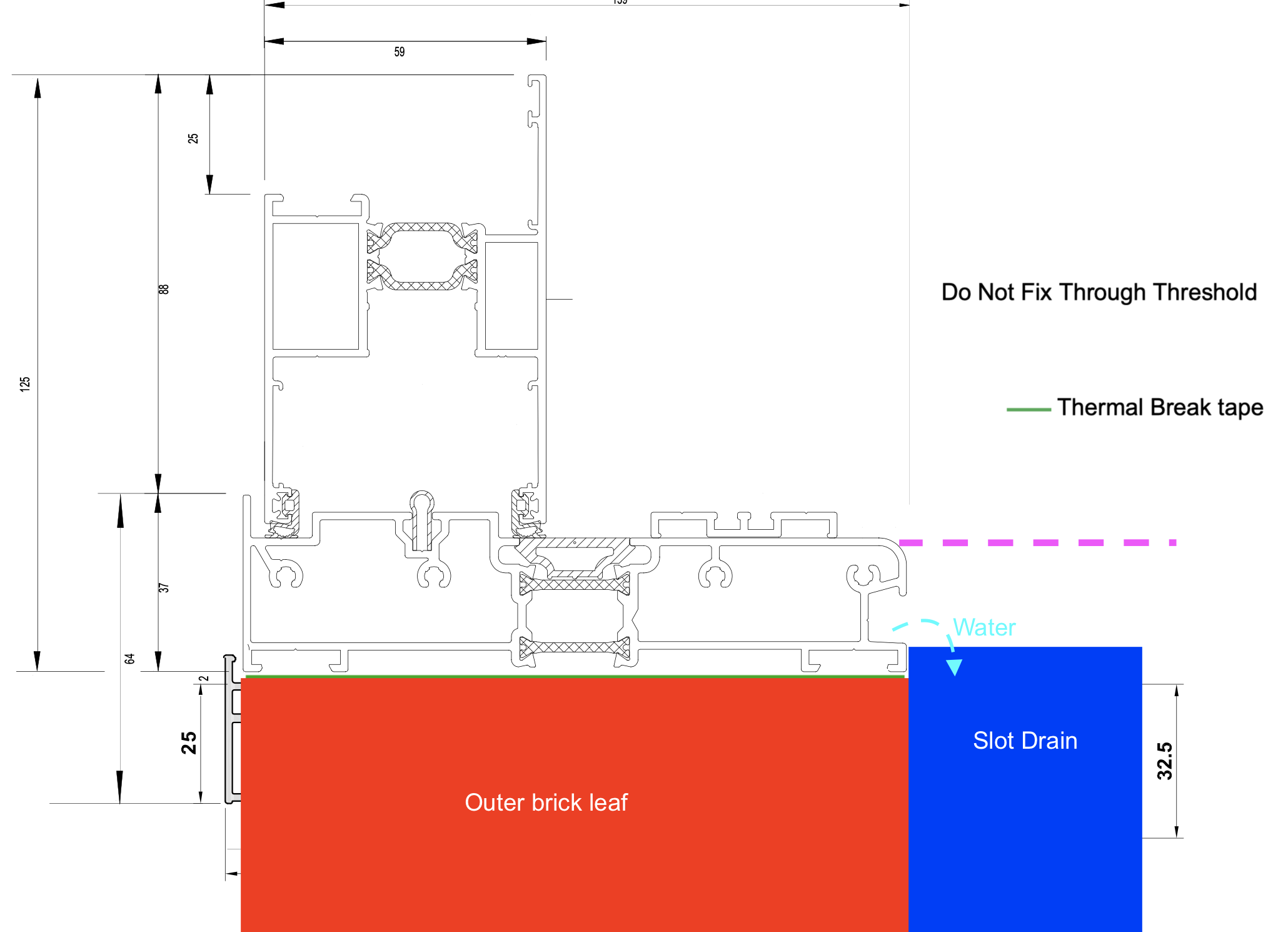
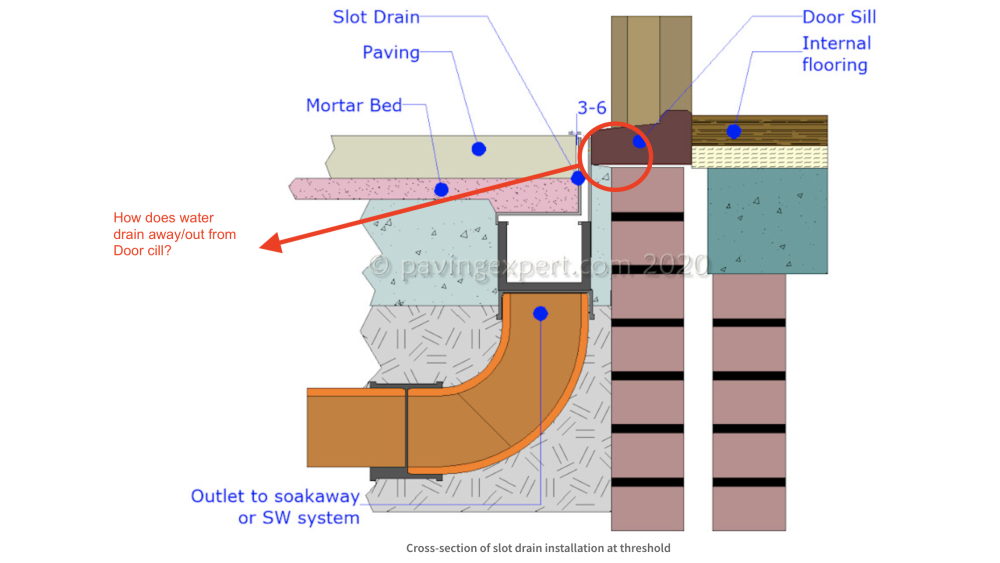
Yep, am getting that now! Tbh, we're sorted inside. as that's just about internal floor levels. It's the external bit we've struggled with. So if we put a slot drain in front of the track, I assume that the top of the slot needs to be lower than the top of the track profile, for the water to be able to leave? I'm not sure how the drain could be totally flush with the top of the track (my pink dotted line on diagram below), unless the drain took water from the side, rather than the top? (crude drawing below):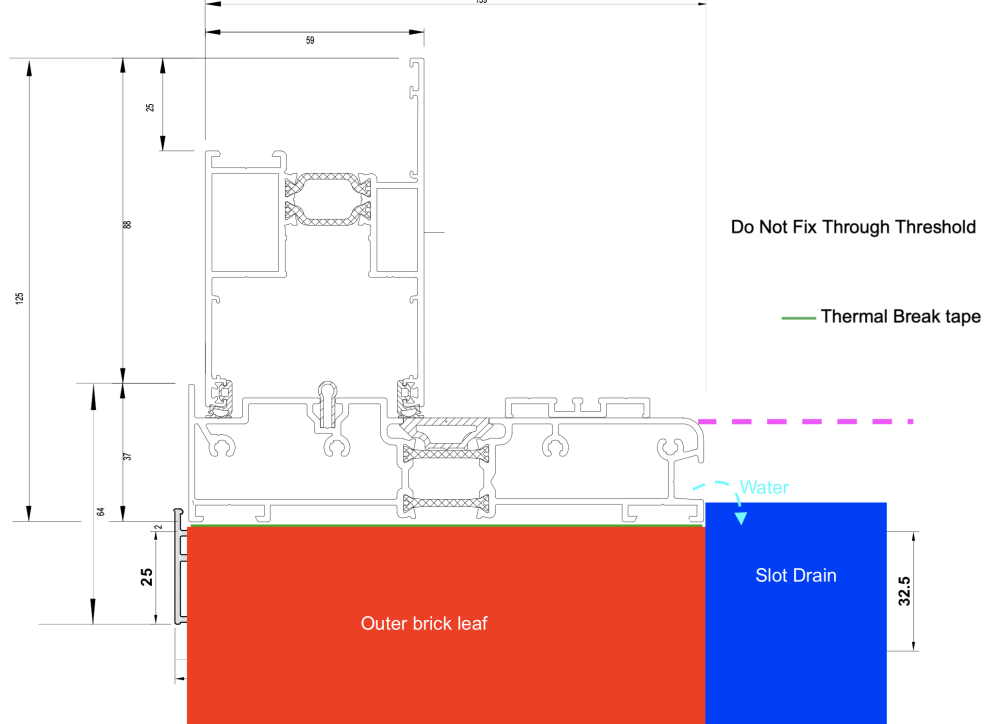
-
Detailing for cill drainage with a 'flush' finish patio
SBMS replied to SBMS's topic in Landscaping, Decking & Patios
So just to be 100% - no cill required at all? Track directly onto outer blockwork with an acro channel/slot drain/aquabocci directly in front of it?Just got a bit confused as you mentioned Raynaers do a flush cill (which I can't, now, see the point of) -
Detailing for cill drainage with a 'flush' finish patio
SBMS replied to SBMS's topic in Landscaping, Decking & Patios
OK, least I'm not going mad. Is a different type of cill required, or do you put something like the Aquabocci directly in front to take the water from the track? (or both?) -
Detailing for cill drainage with a 'flush' finish patio
SBMS replied to SBMS's topic in Landscaping, Decking & Patios
Is it just me then, or is the cill pointless? Or is it just catching the water flowing out of the track at the front and directing it away? -
Detailing for cill drainage with a 'flush' finish patio
SBMS replied to SBMS's topic in Landscaping, Decking & Patios
Thanks Craig that’d be awesome -
Detailing for cill drainage with a 'flush' finish patio
SBMS replied to SBMS's topic in Landscaping, Decking & Patios
That would be really useful I’m going round in circles trying to work out what’s best detail. How does water drain out from frame if no cill? When you say it’s one course up what do you mean? -
Detailing for cill drainage with a 'flush' finish patio
SBMS replied to SBMS's topic in Landscaping, Decking & Patios
Yes they are reynaers cp130s. I agree the cill isn’t right for outdoor flush. Do you know if raynaers provide a flush cill? Or can we put the track straight onto something like the blade drain? -
Detailing for cill drainage with a 'flush' finish patio
SBMS replied to SBMS's topic in Landscaping, Decking & Patios
Yes they are CP130s. Is there another flush or cill option? -
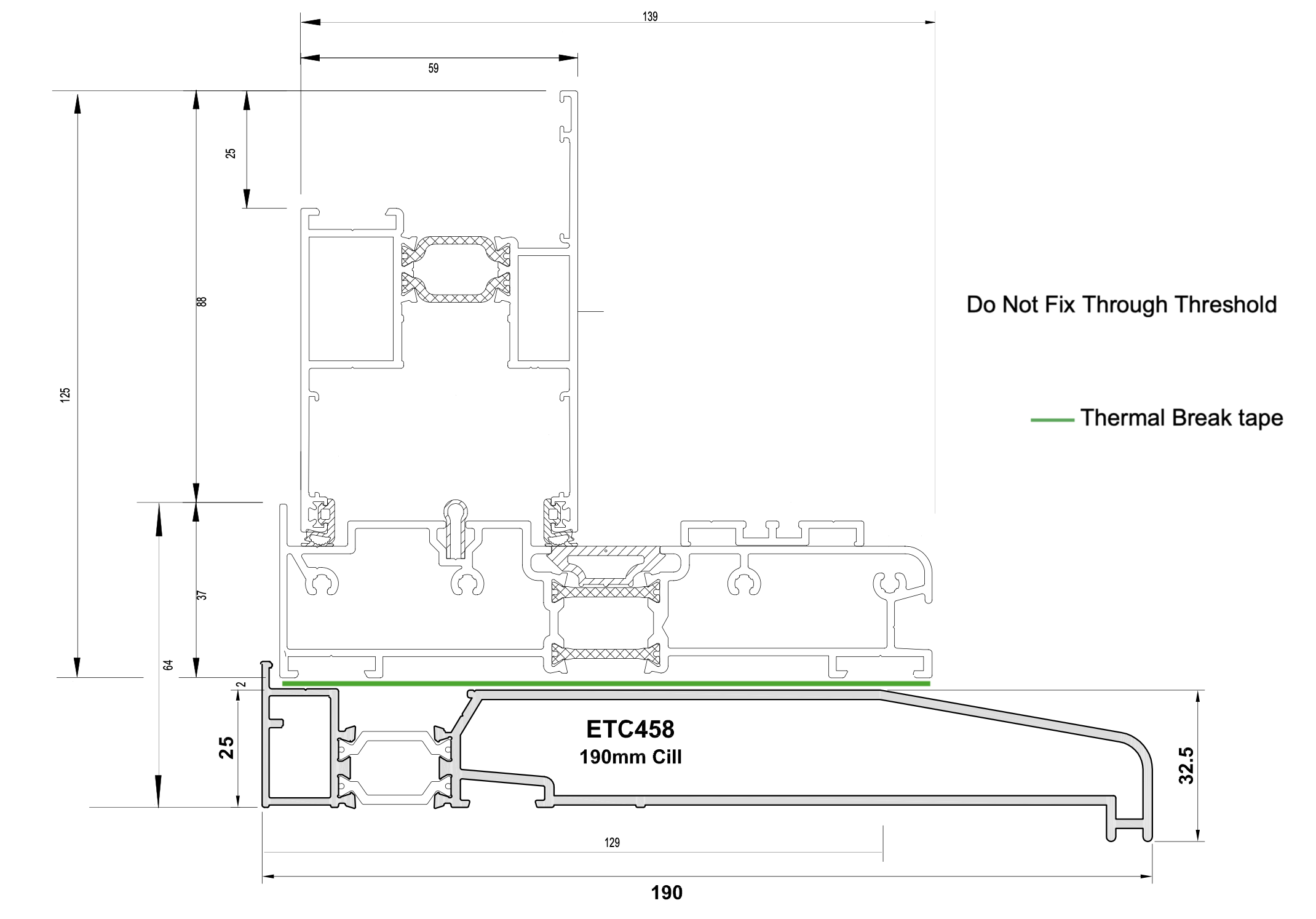
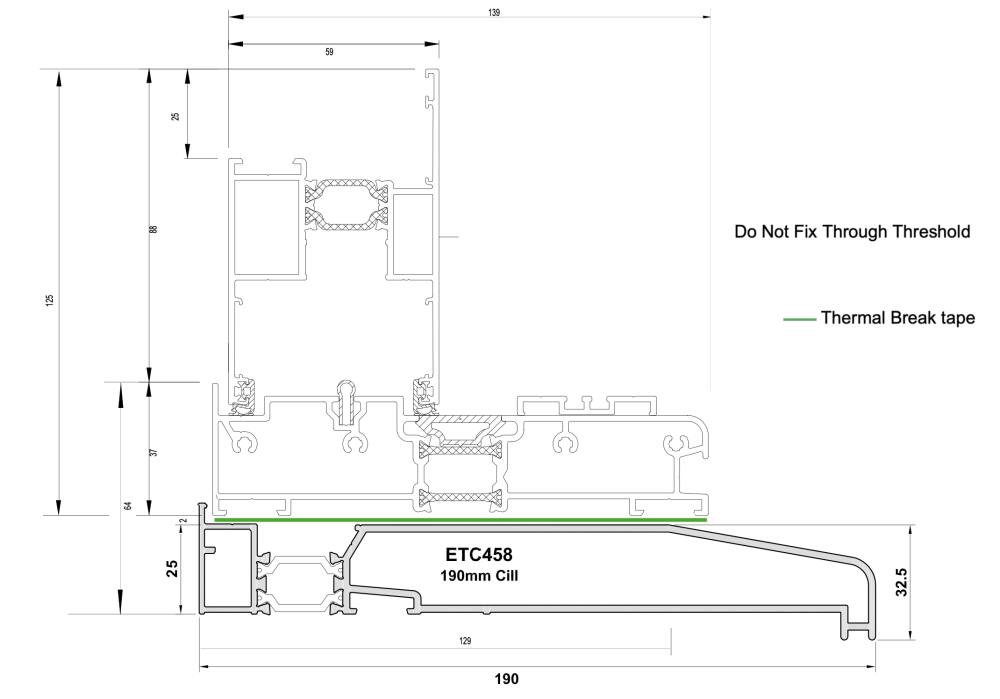
We are planning the detailing for our sliding doors. We are having the internal floor level as flush as possible to the top of the track. We have been trying to get the patio to a similar level, but am resigned probably to the fact there is going to be a step down to accommodate the track and the cill. Looking at putting an acro slot in adjacent to the cill and then tiling up to that. First Question is - I understand the cill has weep holes in bottom for water flow out from doors. In this detailing below where does the cill drain to?: Second question - is there any way for us to have a more flush finish (perhaps by losing the cill or tiling over it?) This is our threshold detail for the sliding doors:
-
We are going to run it past BC, but have decided to go with 125mm between rafters and then counter insulate with rigid insulation over the rafters. Does the counter battened insulation (just regular 50mm Ecotherm) act as a vapour barrier?
-
Thanks @Temp so there need to be a vapour control layer on the underside of the insulation/rafters? Ie under the insulated plasterboard? Or does the insulated plasterboard incorporate a vapour control layer on the underside? We are using slates.
-
Our architect designed our roof with open eaves. We are having attic room roof trusses and will be having the ends of the rafters exposed and open (no soffits or fascia boards). SAP have specified 25mm air gap then 150mm rigid PIR between rafters and insulated plasterboard below. Breathable membrane above with a slight droop between rafters for airflow under tiles. We are short on details however on how to ventilate with open eaves; wondered if anyone has done this setup and what the recommended approach is?
-
External air ventilation for log burner
SBMS replied to SBMS's topic in Energy Efficient & Sustainable Design Concepts
Out of interest - did anyone end up foregoing a WBS and opting for an electric one instead? That's my fallback as other half would like one for aesthetics. -
External air ventilation for log burner
SBMS replied to SBMS's topic in Energy Efficient & Sustainable Design Concepts
Yep.