SBMS
-
Posts
1075 -
Joined
-
Last visited
Everything posted by SBMS
-
All useful stuff but reason for asking is no good datasets for average ASHP usage exists that I can find. They exist for LPG, oil, mains gas, storage heaters etc but none that I can find for ASHP. Just as each of these could be deemed irrelevant it’s often actually very useful. Of course there are anomalies and I doubt I can get a large enough dataset on here to get anything hugely useful but some data is better than no data - especially for those trying to make informed data-driven decisions about what to invest in. That, and I just like data.
-
Hi all Wondered if those members that had installed ASHP would be interested, if they have the data, in posting their monthly kWh usage for their systems, for the past 12 months, along with construction type, Insulation levels, and sqm of property? I'm trying to do some analysis on the mean and median usage of pumps across different build types to assess the impact of a solar/battery installation and get some general data on real-world consumption? I completely understand that the numbers will vary greatly based on consumption, usage patterns, type of build etc but I am going to try and normalise those out to try and look at real world usage. If members are interested am happy to post back the analysis for any other self builders interested. Construction Type Insulation (walls/floor) MVHR? Total sqm Achieved Airtightness Month kWh Consumption January February March April May June July August September October November December
-
Hi Zak No, builder is not NHBC 'Registered' - it's an important distinction - they're not 'Approved' in the sense that there is no technical prior assessment to become an NHBC member. As I understand it, NHBC membership allows your builder to sell you Buildmark - the NHBC warranty. NHBC will still come out and perform inspections on your build, for your warranty. I think it is only large-scale house builders that can self-certify with NHBC on a development by development basis BUT NHBC will still perform inspections on a random sample of buildings on that development. I think it says it all that large scale developers can 'self certify' for NHBC Warranty, and yet often sub-contract to local gangs that can produce really shoddy work still. I think, to be honest, the whole concept of warranty is a joke, and should NOT be relied upon for the quality of your build. Remember that a 'Warranty' is basically another Insurance Policy, that tries to derisk claim payout by assessing at key stages that, across all policies sold, on average, that any claims made do not exceed the total value of the policies. They're designed to protect against the exceptionally bad work, not ensure good work. So basically, this is why I didn't bother with the NHBC Warranty, and instead chose Self Build Zone for their combined warranty and building control service at a cost of £3248 (not included in the prices I gave). Mainly because my self build mortgage required it, and if we sold in the next 10 years.
-
Hi @SarahG All my costs are +VAT - there’s not much that attracts VAT that materially affects your build cost when self building (kitchen appliances, garage doors etc) so I tend to think in +vat. Another reason to go with contractor/builder - they carry the VAT which helps with cash flow and means you don’t have to worry about HMRC arguing the toss over a badly written invoice of reclaiming at the end!
-
Got you. Whats your battery array capacity?
-
Indirectly?!
-
Any battery storage?
-
@MarvinWhats your 5.12kW system? On-roof PV?
-
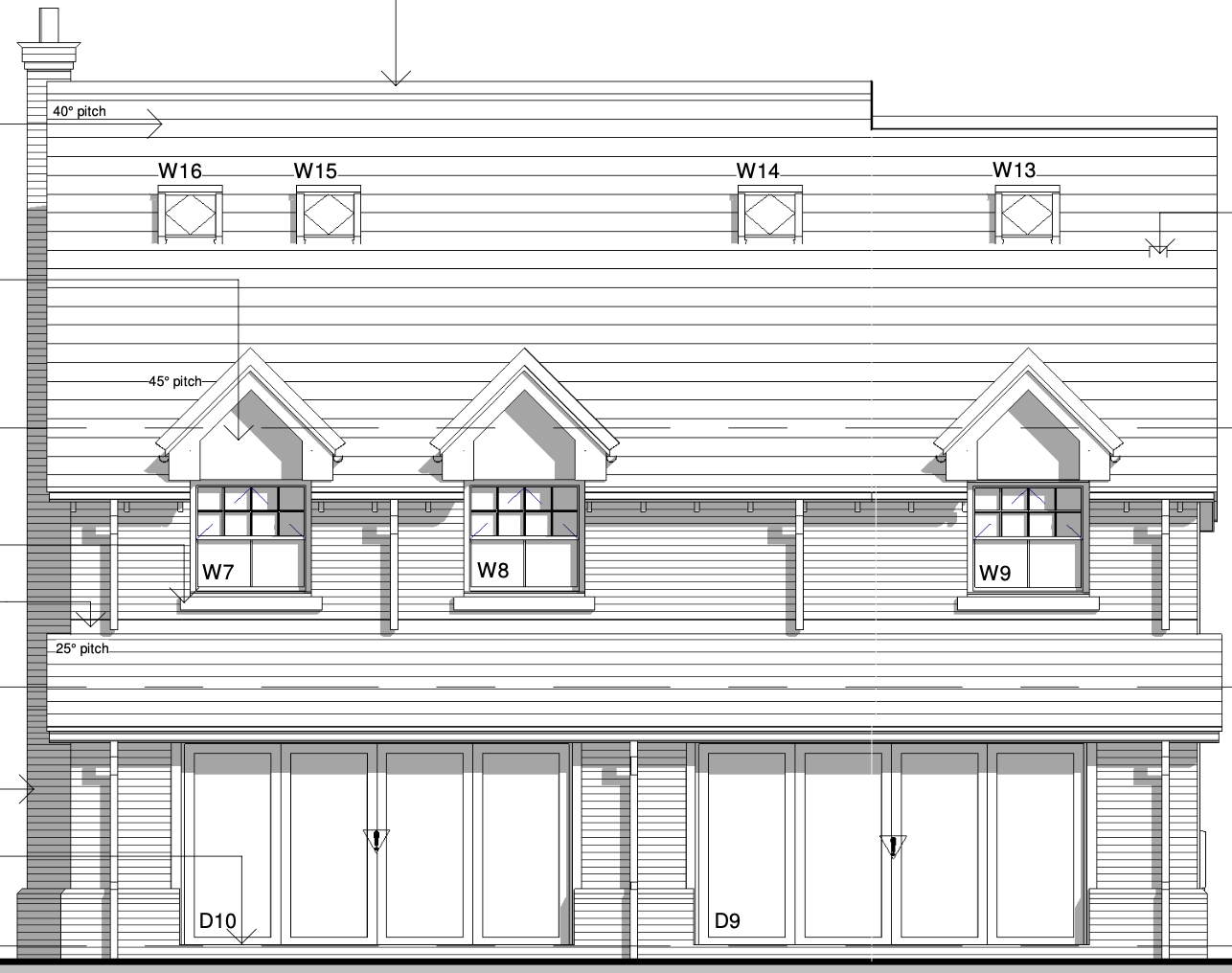
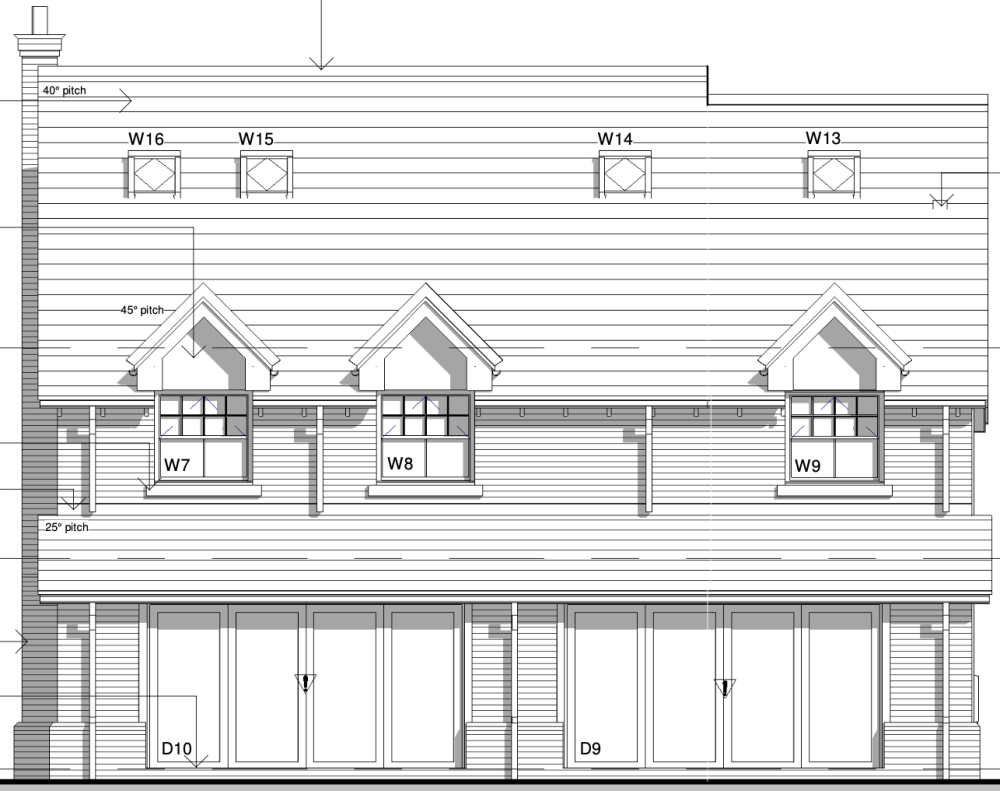
40 degrees.No shading:
-
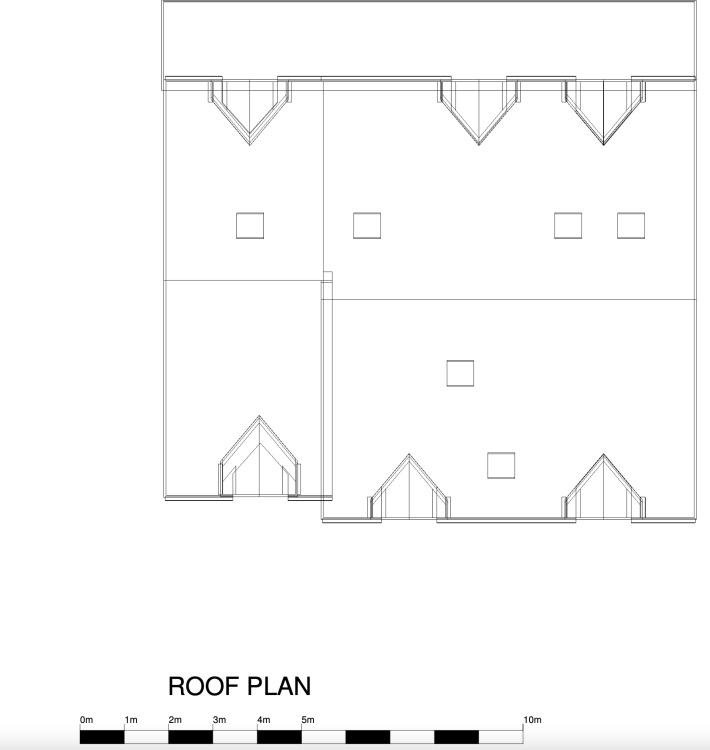
The roof with the 4 veluxes are the south facing roof. It's tight getting between the dormer window bits and the veluxes.I might be able to shift the veluxes up a bit.
-
Is there some data on this? I know EV batteries, for example, don't have this efficiency window (although the BMS does slow charging rates as capacity is reached - is this what is being referred to?) So does a "5KW' inverter refer both to the maximum power it will charge an array (AC to DC), as well as the maximum power it will discharge an array back to the house (DC to AC)? And can that power capacity simply be 'doubled' by adding an additional inverter? I can see your thinking - although does green energy not make a difference? The wind still blows midnight to 4am, power is still being generated, but the demand isn't there, so I do think that there's a likelihood these tariffs will continue - in some form. At what level, and for how long is difficult to predict, and it's the dilemma I face. My ROI analysis sees a system being paid back within 3.5 years. Hi Marvin Thanks for this - really interesting. Do you mind explaining your current setup - as you've clearly done your homework and have something that works? Our limitation is our roof design wouldn't really get more than 10 panels on which limits our system size. Whats your monthly kWh usage out of interest? We seem to use around 4500kWh in rental here - so we will likely use that, plus I'm estimating the same again to run the heat pump and DHW. Thanks
-
My idea was to store as much as possible (up to 28kWh of power) on the Octopus Go overnight tariff which is 7.5p. This would then be used throughout the next 20 hours. We have high electricity usage (predicted peaking around 28kWh per day in winter months with the heat pump). I was trying to understand whether a single inverter/charger could charge 28kWh in the 4 hour time window. I think Marvin was indicating that to get 28kWh of AC out, you would have to put 80 in, which seems strange - my electric car doesn’t charge at this level of efficiency using its inverter?
-
Hi @Marvin This is interesting. I think the inverter referenced outputs AC at up to around 20A so you’re right that would be a limiting factor. I guess multiple inverters could fix this? When you say max power you can draw from batteries is 40% - not sure what you mean here? I’m just trying to understand where the 80kwh storage to serve 28kwh of required energy comes from? Are you saying the AC to DC to AC conversion process is only 35% efficient?
-
Thanks!
-
Hi I am looking into battery storage options for a new build and as I understand it need an AC inverter or charger and then some batteries. At the moment it is looking like PV is a no go because of roof design so I am purely looking at charging from the grid. I plan on charging a 28kwh battery array on Octopus Go for the 4 hour period and then effectively running all the house off that stored energy, procured at 7.5p. On single phase I’m assuming that the maximum draw can be 32A to produce 7.4KW. My question is when looking at inverters/ chargers they have a KW rating and I wanted to understand - is this the maximum KW that the inverter will pull from the grid? I was looking at, for example, the GivEnergy hybrid which has a 3.6 and 5 KW version (https://www.givenergy.co.uk/pdf/Version 2.0/Hybrid Inverter.pdf). Would this mean that the 5 KW would, over a 4 hour period, only be able to charge 20kWh of my battery array? Or have I got it completely wrong? thanks!
-
It does. Roughly speaking its 300k for everything up to second fix, then 125k for second fix, which is broken out: ASHP (after 5k grant) £6,200.00 MVHR £7,000.00 Second Fix Joinery £16,500.00 Porch £3,000.00 Kitchen £35,000.00 Second Fix Electrics & plumbing £11,000.00 Landscaping and gardens £20,000.00 Flooring £9,000.00 Tiling £5,000.00 Decoration £5,000.00 Sanitaryware £7,000.00 The main ambitious bit is probably second fix electrics which is probably on the low side. Kitchen is designer high spec, completely outsourced to a subcontractor kitchen specialist. Bathroom second fix is through plumber, and we will be purchasing sanitaryware (so no Bathroom designer or subcontractor for that). Bathrooms are mid range (Grohe or Hans Grohe for taps, Roccia sanitaryware). Flooring is subcontracted out (LVT downstairs @ £60 sqm, Carpets elsewhere at £33.50 sqm).
-
@IndySo below are the prices per sqm and sqf as per our quote and what we are working to. I've worked out the total size of the house floors (walls included) which is the gross external, then the gross internal (everything except the external walls, so these includes studwork and eaves voids on 2nd floor) then our final actual usable internal floor space (which excludes studwork and eaves storage on 2nd floor): Sqm Gross External Gross Internal Usable internal Area Total size (sqm) 319 279 262 Total size (sqf) 3433.716 3003.156 2820.168 Total build cost (per sqm) £1,337.93 £1,529.75 £1,629.01 Total build cost (per sqf) £124.30 £142.12 £151.34
-
And do you include cost of electricity/BT connection?
-
And is the garage included?
-
Yes - although quick question for the forum. When calculating cost / sq meter, do people tend to do it off usable internal sq meterage? Or total square meterage?
-
We're just about to start construction on our self build. It's main builder led so am not doing anything ourselves. If anyone is after any prices for things (roofs, joinery, ASHP, windows, doors, aluminium sliders, garage etc) let me know as I found pricing up one of the hardest things when starting out. I ended up being miles out! Build is in Lancashire, traditional brick and block, blown insulation, traditional roof.
-
Not sure about the DPC but I believe there was evidence in the 70s and 80s of the plasticiser in the PVC cable migrating into the beads if in contact, and degrading the EPS. I don’t think that’s an issue anymore, I think there’s a chemical additive in the beads to mitigate this (anyone confirm this?). If you were really worried, then just put any cables in some 15mm pipe through your cavity - we are probably just talking about wall lights and maybe outdoor sockets? Anything else going outside should probably be armoured.
-
Lancashire
-
I did say all the TF drawbacks could be mitigated! Every construction method has its drawbacks. You’ve just listed ways to combat some of the drawbacks with timber frame. The same can be done for brick and block - or ICF - or SIPS or whatever really. They all have pros and cons. Downsides to brick and block can be mitigated in exactly the same way - but doesn’t mean I think everyone should build brick and block (and that those that don’t aren’t in the 20th/21st century ?)
-
Ah, bad luck. My brother (small scale developer) swears by the Ecodan units as a great balance between price and performance.