SBMS
-
Posts
1075 -
Joined
-
Last visited
Everything posted by SBMS
-
Detailing for cill drainage with a 'flush' finish patio
SBMS replied to SBMS's topic in Landscaping, Decking & Patios
OK, least I'm not going mad. Is a different type of cill required, or do you put something like the Aquabocci directly in front to take the water from the track? (or both?) -
Detailing for cill drainage with a 'flush' finish patio
SBMS replied to SBMS's topic in Landscaping, Decking & Patios
Is it just me then, or is the cill pointless? Or is it just catching the water flowing out of the track at the front and directing it away? -
Detailing for cill drainage with a 'flush' finish patio
SBMS replied to SBMS's topic in Landscaping, Decking & Patios
Thanks Craig that’d be awesome -
Detailing for cill drainage with a 'flush' finish patio
SBMS replied to SBMS's topic in Landscaping, Decking & Patios
That would be really useful I’m going round in circles trying to work out what’s best detail. How does water drain out from frame if no cill? When you say it’s one course up what do you mean? -
Detailing for cill drainage with a 'flush' finish patio
SBMS replied to SBMS's topic in Landscaping, Decking & Patios
Yes they are reynaers cp130s. I agree the cill isn’t right for outdoor flush. Do you know if raynaers provide a flush cill? Or can we put the track straight onto something like the blade drain? -
Detailing for cill drainage with a 'flush' finish patio
SBMS replied to SBMS's topic in Landscaping, Decking & Patios
Yes they are CP130s. Is there another flush or cill option? -
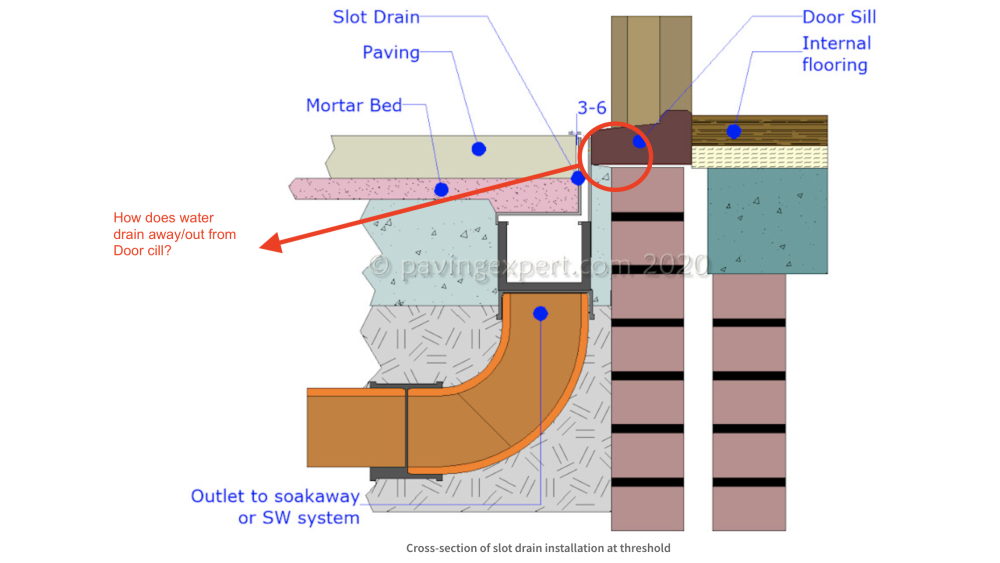
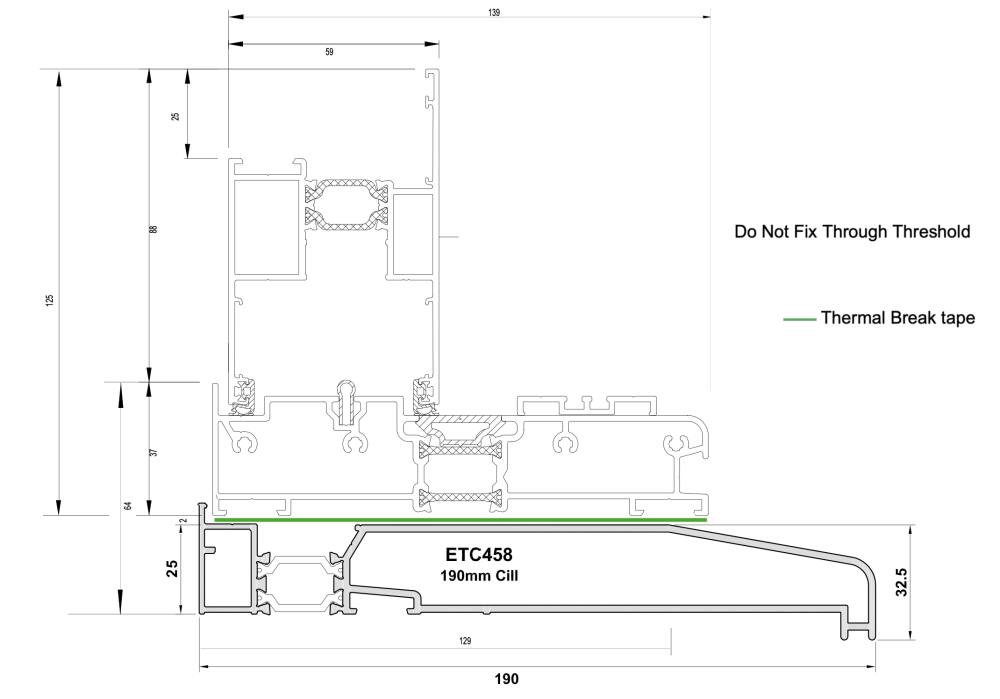
We are planning the detailing for our sliding doors. We are having the internal floor level as flush as possible to the top of the track. We have been trying to get the patio to a similar level, but am resigned probably to the fact there is going to be a step down to accommodate the track and the cill. Looking at putting an acro slot in adjacent to the cill and then tiling up to that. First Question is - I understand the cill has weep holes in bottom for water flow out from doors. In this detailing below where does the cill drain to?: Second question - is there any way for us to have a more flush finish (perhaps by losing the cill or tiling over it?) This is our threshold detail for the sliding doors:
-
We are going to run it past BC, but have decided to go with 125mm between rafters and then counter insulate with rigid insulation over the rafters. Does the counter battened insulation (just regular 50mm Ecotherm) act as a vapour barrier?
-
Thanks @Temp so there need to be a vapour control layer on the underside of the insulation/rafters? Ie under the insulated plasterboard? Or does the insulated plasterboard incorporate a vapour control layer on the underside? We are using slates.
-
Our architect designed our roof with open eaves. We are having attic room roof trusses and will be having the ends of the rafters exposed and open (no soffits or fascia boards). SAP have specified 25mm air gap then 150mm rigid PIR between rafters and insulated plasterboard below. Breathable membrane above with a slight droop between rafters for airflow under tiles. We are short on details however on how to ventilate with open eaves; wondered if anyone has done this setup and what the recommended approach is?
-
External air ventilation for log burner
SBMS replied to SBMS's topic in Energy Efficient & Sustainable Design Concepts
Out of interest - did anyone end up foregoing a WBS and opting for an electric one instead? That's my fallback as other half would like one for aesthetics. -
External air ventilation for log burner
SBMS replied to SBMS's topic in Energy Efficient & Sustainable Design Concepts
Yep. -
External air ventilation for log burner
SBMS replied to SBMS's topic in Energy Efficient & Sustainable Design Concepts
I did wonder about the air quality @SteamyTea, but also wondered how good the MVHR might be at filtering the air - and wonder what real-term reduction in air quality there is with a 2022 EcoDesign Ready burner that is designed to reburn particulates etc etc. Also, with as close a room sealed system as possible, bar opening the door to stick another log on, is there much leakage into the house from the burner? It would be for a secondary, intermittent heating source (on those really cold nights) - or when they've got a 3 hour rolling black out 🙄 -
External air ventilation for log burner
SBMS replied to SBMS's topic in Energy Efficient & Sustainable Design Concepts
Is this a direct air system (pipe through the wall connected to the burner, providing fresh air)? Did you consider or calculate any losses with thermal bridging, or with any movement of cold air from the outside to the inside (of the burner)? I don't know if I am over thinking, but have been fastidious about making sure there's hardly any external penetrations and adding an 80mm one with fresh air from outside seems counter-intuitive? "When stove is off, just select air supply off, so no un-necessary air movements." - is this a feature of your WBS or something on the exterior wall where your air vent meets the world? -
External air ventilation for log burner
SBMS replied to SBMS's topic in Energy Efficient & Sustainable Design Concepts
Thanks Gus but can you clarify what you mean by a stuffy room? We are planning on having MVHR which should be filtering and exchanging air throughout the house; and a direct air system for the wood burner would allow the burner to effectively be a sealed unit? But appreciate what you might be saying about how good the seals are. A wider question: would anyone advocate NOT getting a wood burner in a new build (I would like it as a ‘backup’ heat source; Mrs would like it for aesthetics 🤷) -
Hi all Currently debating whether to fit a log burner in our self build. We’ve got an external chimney so seems a shame not to use it and would be useful if we get blackouts! We are going for high levels of air tightness, good insulation, ASHP and are having MVHR. So we would need an external air ventilation source which, as I understand it, is a 4 or 6 inch pipe that goes out the back of the stove through the wall and cavity to the outside, to give the airflow required to feed the burner. My question is, does anyone know to what extent this compromises the thermal efficiency of the building? Is it a cold bridge? And could it be a draught source and compromise air tightness?
-
CIL exemption for new build
SBMS replied to WWilts's topic in Self Build VAT, Community Infrastructure Levy (CIL), S106 & Tax
Peter - have you got a link to the statute that the title plan must match? For example our CIL was issued against planning for 3 properties under the same title and when our plot was purchased (on a new title) the CIL liability was proportionally distributed against a notional ‘plot name’. Therefore technically our CIL liability was not against any title. Indeed our title at land registry simply refers to an area of land and no address (as the property will not be registered with the council and provided an address until completion). Guidance from our council was that the new address and council tax should indicate the address for occupation purposes but that the title provided for Part 2 is used purely for ownership purposes (not occupation purposes). Be good to get clarity on this! -
Typical interest rates for self-build mortgages
SBMS replied to thefoxesmaltings's topic in Self Build Mortgages
Around 5%. I think most are discounted off the lenders SVR. Ours is their SVR minus 0.65%. -
CIL exemption for new build
SBMS replied to WWilts's topic in Self Build VAT, Community Infrastructure Levy (CIL), S106 & Tax
Assume you requested and had your self build exemption approved prior to commencement? And that you did a form 6 notice of commencement before breaking ground? If so then part 2 is about proving that you own the property for which you are claiming self build exemption. I don’t believe there is anything in the requirements that states the title deed must be solely for the property - just that the deeds encompass the property being claimed and that you are on the title for said deeds. You will struggle to get the deeds split, completed and confirmation registered with land registry within 6 months ( required for part 2). We are waiting for land registry to confirm receipt of our plot title completed 9 months ago. Currently the backlog for title registrations is 2 years our solicitor informs me 🙄. Although you can expedite if needed. -
Completion certificate requirements for mortgage
SBMS replied to SBMS's topic in Building Regulations
Yes I think you’re right. With ours we have combined structural warranty and building control so once building control completion certificate is issued our warranty is too. Don’t know it works for those where they are not combined. -
Completion certificate requirements for mortgage
SBMS replied to SBMS's topic in Building Regulations
I get you. Do you think its current state and not finishing it impacted the valuation much? We are thinking of a similar approach in order to get mortgage sorted asap? -
Completion certificate requirements for mortgage
SBMS replied to SBMS's topic in Building Regulations
Thanks. What stage does your build need to be at to have the building control completion cert? -
Completion certificate requirements for mortgage
SBMS replied to SBMS's topic in Building Regulations
Thanks Conor. So your valuer didn’t want to see any completion certificates? How complete was your build when they valued? -
Hi all With rising interest rates I am trying to decide at what point to pull the trigger on booking a mortgage rate for our remortgage off our self build mortgage. We can secure the rate for 6 months, but would probably need it valued at the 4 month point to give time for solicitors etc to complete. We’re just about up to wall plate on the build. Obviously a key thing the mortgage provider would need is the completion certificate for completion. I have two questions, if anyone can help: 1. what is required to get a completion certificate? 2. When the mortgage company send their valuer, does the completion certificate need to be in hand? Obviously we wouldn’t want it valued too early anyway as we need to get the right figure for the mortgage but I wondered if the valuer needs it ostensibly completed for valuation purposes too? Cheers
-
Yeah we did want to do attic trusses for our roof but because we have two different roof heights we weren’t able to get the height needed with manufactured attic trusses. Very frustrating as added a lot of labour cost!