richo106
-
Posts
811 -
Joined
-
Last visited
Everything posted by richo106
-
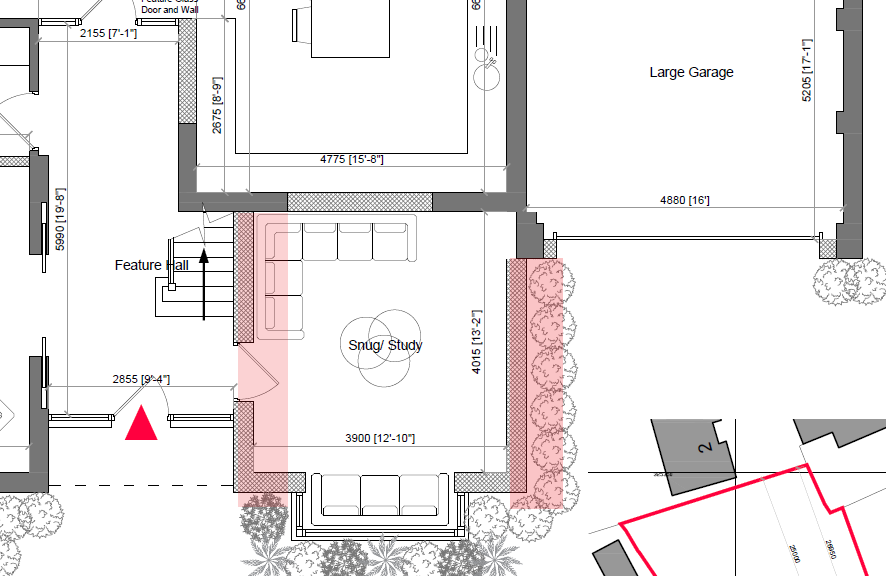
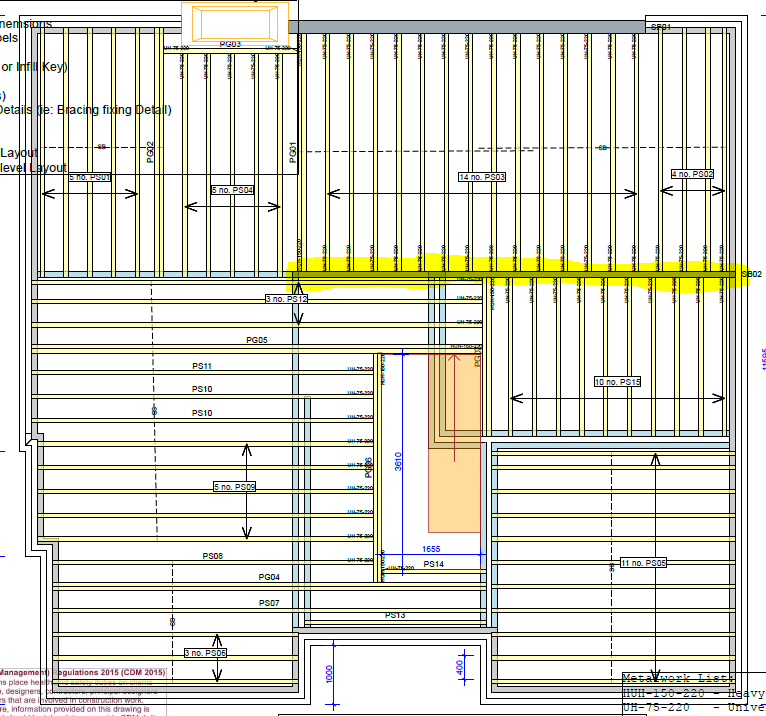
I am just going through our joists and beams etc... The SE spec'd an internal beam than spans a few walls inside as 254x102x25 UB However the posi joists have been spec'd at 225mm, the hangers that are coming with posi joists fit flush with bottom of the joists so the beam will protrude around 30mm What is the best way round this? Can I contact my SE and see if he could spec an alternative beam? I have attached the beam layout and highlighted the beam in question Any help on this would be very much appreciated
-
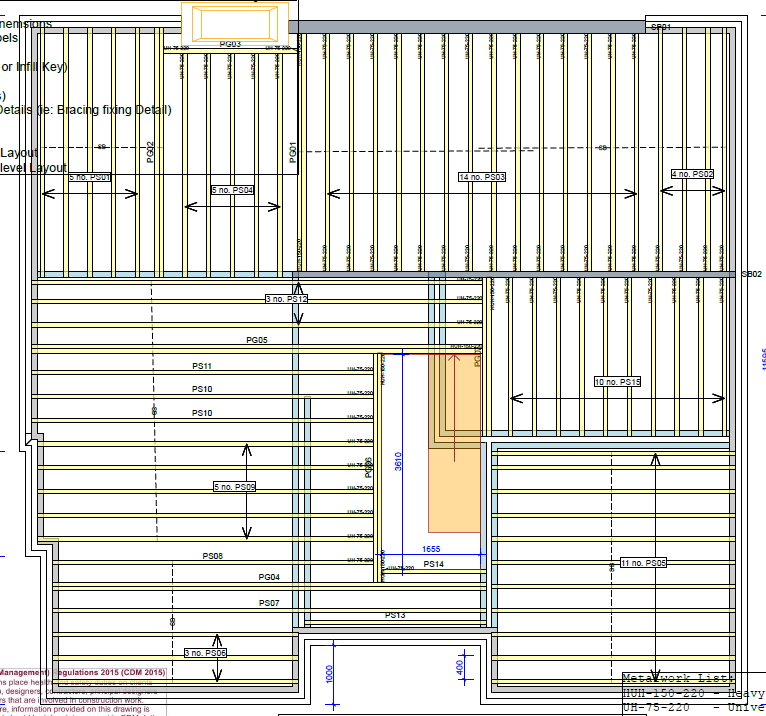
Good Morning The builders have finally started on our project and all being well will be up to first floor height in couple weeks (weather dependant) To help with times and cost I will be installing the joists along with my joiner mate The joists will be 225mm deep and the plan/layout (see attached) I have from the joist company is too drop the joists on the inner block work. Is this the best method to do this? We are focussing on air tightness also so was going to ask builders to point around the joists (I am happy to sort after aswell) but is there to consider when installing them? Daft question: - Do the builders leave a gap to drop them in or do I drop them all in first so they can brick around them? Are they heavy enough to stay square or do they need some kind of fixing? Would people wait until all steel beams in place or take measurements from the blues/drawings? The drawing is slightly wrong as the beam for bi fold is lower so joists will run on top of that? My only concern if we wait until everything in place then it will hold everything up 4 weeks while waiting for delivery Any advice/information greatly appreciated Cheers
-
Ok thanks, do you know if these are usually supplied by the window suppliers so they colour match? Many Thanks
-
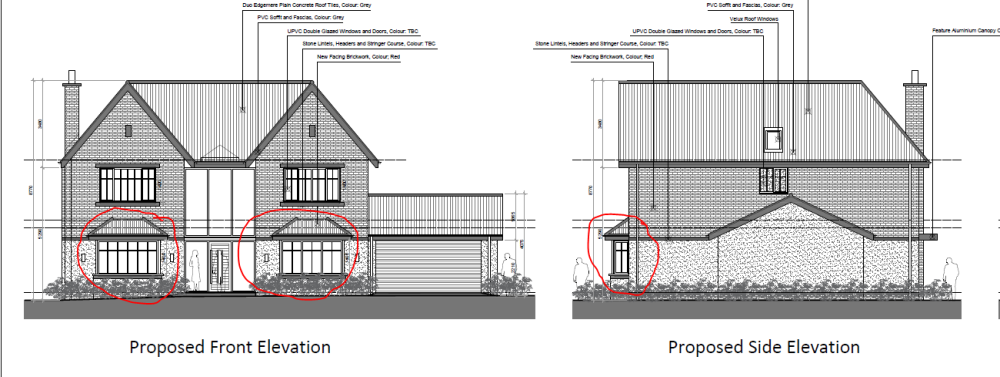
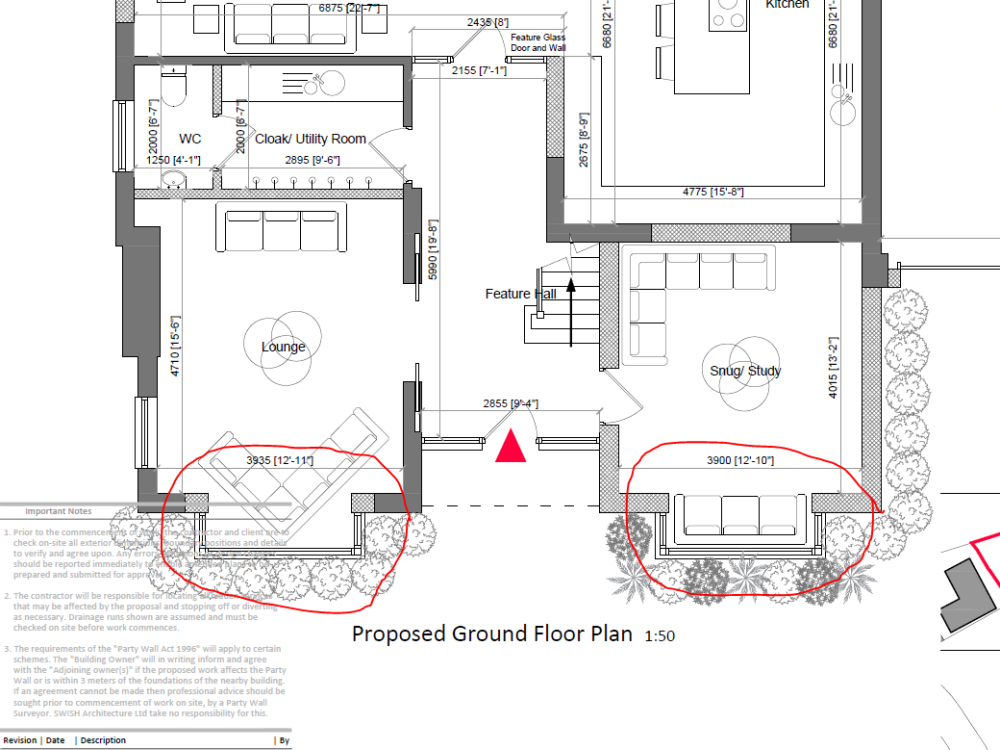
Hi All We are just starting the build on my project and my question is how is the small roof above my new bay windows supported? The windows we are going for are flush casement. Do the bay windows have structural posts? Or do i need some framework going up? Any advice greatl appreciated Thanks again
-
Hi again I have spoken to a local fitter recommended to me, it’s looking very likely I will be going with him. He says he fits the panosonic mono aquarea T cap 12kw R32, he did say it might be slightly oversized but would make hardly any difference and would mean less stress on the ASHP Has anyone installed this ASHP, any reviews/information at all? Many Thanks Panasonic Mono Aquarea T cap 12kw
-
I have spoken to the guy who did my SAP for me and he didn't include that I had MVHR so he has altered that. As he has also done 2 examples one with air tightness of 3 and one with 7 It shows a good difference and the impact of air tightness 3 - CombineReports_007400_001_2022-10-24_13-27-34.pdf 7 - CombineReports_007400_001_2022-10-24_13-12-49.pdf
-
Yes I can do that I will just wait until I have an plastered shell, I can then accurately measure and get my SAP altered accordingly Testing throughout sounds good to me! Sorry to be a pain but I thought I seen a method for that somewhere on the forum. Is it just seal the door with an air blower and board and run the blower? what’s the best way to detect the leaks when the blower is running? thanks again for all the replies
-
https://coolenergyshop.com/collections/invertech/products/cool-energy-invertech-ivt9-air-source-heat-pump-ce-ivt9 This the one? Thanks again
-
https://www.theheatpumpwarehouse.co.uk/shop/heat-pumps/air-source-heat-pumps/mitsubishi/mitsubishi-8-5kw-r32-1ph-mono-ashp-uq-standalone/ Something like this? Would it be worth jumping up to the next size brack 10-12kW if I struggle to get the air tightness i want? Thanks again
-
Thanks for the comments so far, my one concern is that the SAP is calculated with me achieving an air tightness of 3. If this is not achieved I am guessing this will add more demand to the heat pump Cheers
-
Thank you
-
Hi, We are adding another floor to the existing bungalow to create a house. Does this help with building regs? Many Thanks
-
Hi All Naively I thought it would be quite easy to decide on what size and type of ASHP i needed, spoke to a few different contractors/sales teams and they have all said something different..ranging from 8.5kw, 11kw and the latest one was 16kw. Firstly my house is around 250m2 (125m2 floor area) it will be insulated quite well and have UFH both GF and 1st Floor. I will be focussed on air tightness (but not aiming for completely air tight but best i can with my building fabric) and will be having MHVR I have a full SAP done on my proposed house (attached), what information is the critical information that I need to be looking at that to make a decision on size, this is something i am complete novice in. My next dilemma is what make and type of ASHP. Either split or monobloc The brands that have been mention to me are Valliant, Mitsubishi Ecodan, Daikin Altherma 3, NIBE Any advice at all on this matter will be greatly appreciated CombineReports_007400_001_2022-02-04_07-35-42.pdf
-
Hi All We are installing flush casement windows in our project. We went to try and get it as air tight as possible. The window company are more than happy to use what I ask for when installing. I was thinking of putting the air tight tape on after installation (contega solido SL) What can be put on during installation? Would it be worthwhile specifying which foam I want them to use? Any recommendations on that? Many Thanks
-
Hi All In my renovation project I will be having a complete new concrete slab and the floor build up will be: 250mm Hardcore/Sand layer DPM 150mm Concrete 200mm PIR Insulation UFH Pipes 50mm Screed My question is whereabouts within this slab buildup is best to run services? This includes: Power to the kitchen island (going to put a duct in for it) Water supply (in new blue pipe) Happy to duct this also Another question would you expect to have A393 mesh in the 150mm concrete? All replies very much appreciated
-
Ducting sounds good to me, I have some lengths anyway which will be suitable. I will bury this in the hardcore. Will the builders seal the DPM around this duct? Am I ok to just bring it through the wall and concrete it in to seal it? Thanks again
-
House was built around 1960’s I will dig back and hopefully found it then. Would you run the new pipe under the new slab buried in the hardcore? (Floor make up: hardcore, 150mm slab, 200PIR and ufh/50mm screed with DPM’s etc) Do you protect it with anything? Just a hole in the wall then concrete round it? Many Thanks
-
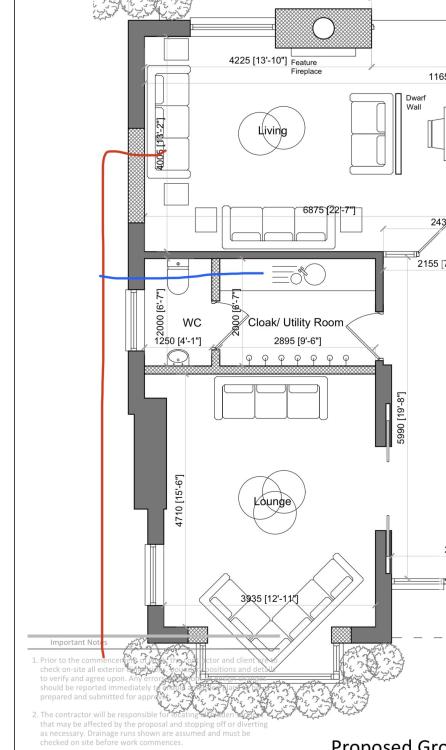
Hi I currently have 15mm copper water pipe coming into the house and need to move it in a different room on the same side of the house (see pic. red is existing and blue is where I need it to be) I was going to excavate the pipe over the weekend to expose it and see exactly where it goes. what is the best way to joint this underground? Would people join it to blue water pipe incase I want to replace it all in the future? I want this to go underneath the new slab (currently excavated out ready for the new slab) what is the best way to bring it through the wall and under the slab? what options have I got? any advice/information greatly appreciated
-
Many thanks Marc All sorted
-
Thank you, I have googled it but not sure exactly what to use Could you recommend any tool to use to do this? Thanks again
-
I have just spoke to my SE and he is happy with a 300mm footing next the ‘cock up’ one. He said I will need to expose the side of the foundation (1m deep) and scabble it to expose the aggregate. do people think 300mm is wide enough for me to get in and get to it to expose it or would be better to do a 450mm bucket for excess?
-
I was thinking a strip of around 300mm, when you say depth over the footing…how much would be?
-
Correct, I have taken the roof off the existing bungalow and discovered the discrepancy
-
No I don’t want it to join offset, that bit I have moved on the drawing is how it is in real life. But as I will be adding another floor on top of it all, the outer walls need to line up. I am either explaining this terribly or I am being very daft
-
This is how the drawing should be though