


JackOfNoTrades
-
Posts
40 -
Joined
-
Last visited
Everything posted by JackOfNoTrades
-

Feedback on timber extension structure
JackOfNoTrades replied to JackOfNoTrades's topic in Timber Frame
Good point. I assume you mean to the left of the bifolds. That part is a bit of a challenge - there is actually no fully binding top plate at the moment because of the shape of the ceiling. I've removed the joists in this image to show what that looks like. The current lintel is 75mm too high to sit under a top plate. I can't raise the top plate because a joist needs to sit on top of them .. unless I do have a higher wall and a thinner joist running along the top?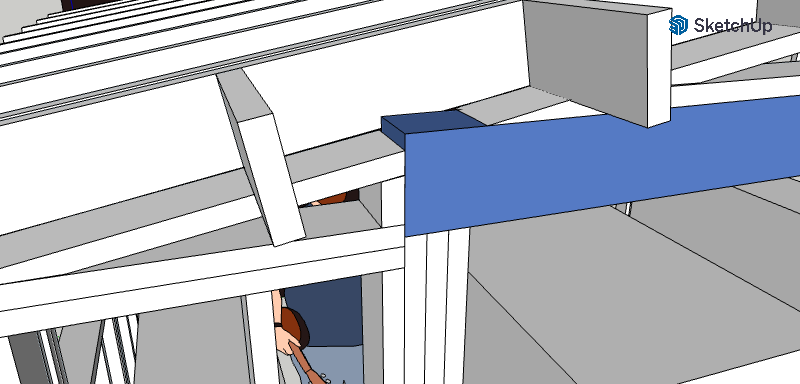
-
Feedback on timber extension structure
JackOfNoTrades replied to JackOfNoTrades's topic in Timber Frame
Good point about the upstand matching at 50mm. Will look into that. Will also check out the switch form flexi to frame slab. Think I only defaulted to flexi because someone claimed it was easier to install. To be honest, I have made no decision about what to cover the STS with. I just know I don't want to be looking at breeze block and thermoblock. There's a strong chance I'll render it, but I was hoping to hold off on that decision until I'd seen the rest of the cladding on the building. A little worried to hear your flitch for a smaller span was similar. I'm really hoping it doesn't need to be much larger as it's already a pain. -
Feedback on timber extension structure
JackOfNoTrades replied to JackOfNoTrades's topic in Timber Frame
That's great to hear Stu. I had a go at designing the flitch beam but to be honest I'm not convinced I got the deadloads right. My estimate to put under the nose of the SE is Timber C24 47 × 195mm Steel S275 10 × 180mm Timber C24 47 × 195mm I'm hoping it wont need to be any deeper as it's already encroaching into that roof. Re thermal bridging - yes, I can have 50mm of PIR in front of all of those beams internally to help with that. I've got a continuous layer of PIR in my wall build up. (Included here for ref)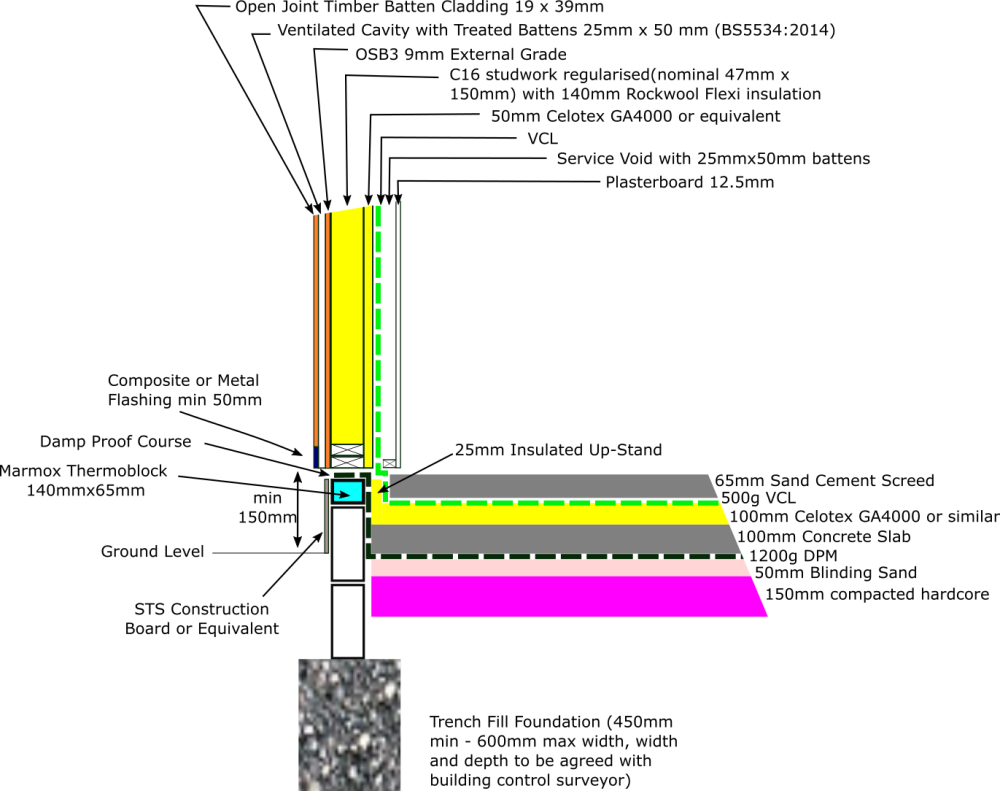
-
Feedback on timber extension structure
JackOfNoTrades replied to JackOfNoTrades's topic in Timber Frame
3300mm Was originally going to be wider in the planning permission drawings, but it clashes with where I need the other support beam to be for the roof -
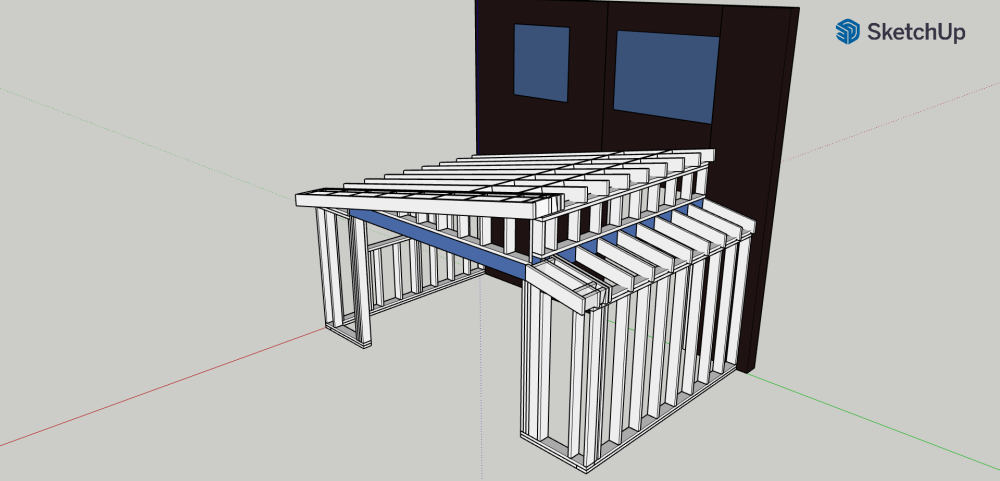
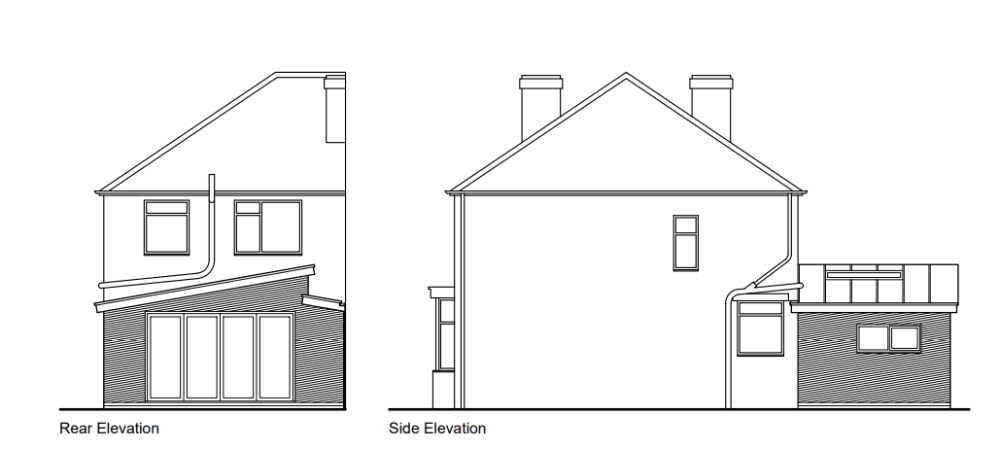
Hi all, I'm just about to start doing a stick build kitchen extension with timber cladding and standing seam roof. I have had my first stab at a timber structure and wanted to run it by a few people before I send it off to the structural engineer. In the 3D mock ups, the blue beams are flitch beams - precise depth to be decided by the SE. I've also included the drawings that got me planning permission so you can see what it's building up to. As much as possible I'd love to keep it timber build and not introduce RSJs, which would be easier if I was just going for a box and not the roof shape we settled on in the planning stage! A few areas of trickiness: - currently the flitch beam for the bifold pokes into the roof structure on the left hand side as viewed from the front. It will require a little notch on the end joist that is fully supported by that wall. - To the right hand side of the bifolds, I have support for the bifold beam AND the beam supporting the roof. This gives me about 32cm of studwork which is a pretty big thermal bridge. - might need to double up some of the roof joists as there will be a small rooflight installed. (smaller than in PP) - I have supported the flitch beam that goes into the original opening of the house with timber studs going onto old house foundation instead of putting the beam on a new RSJ across that opening. This is because I want to keep that original opening in the house as high as possible. Any thoughts would be greatly appreciated. Cheers everyone!
.thumb.png.59044e8ce93c85da3f13e5ea211e180a.png)
.thumb.png.38c957c96040b769e88e5e47792cc443.png)
.thumb.png.ce5d7cb52251e46dc55806f5135f7c91.png)
.thumb.png.3accb086e328416ff17aeeeb94b227d7.png)
-
I received a sample from him just the other week so I presume so!
-
Hi all Can anyone help me bounce around ideas for a sheathing and cladding option for the boundary wall side of my timber frame kitchen extension? There will be a very small gap between our extension and the neighbour's, not enough to do maintenance, and I'm looking for a long-lasting, flame resistant option there. My initial thought was whether I could use a fibre cement board as the sheathing on that side and then fibre cement cladding over this, but adding the cladding and necessary battens feels like an unnecessary extra thickness to a wall in a side of the kitchen where every bit of space counts. I was wondering if there is a product that could act as both the sheathing and the cladding, or another option that provides fire-safety, weathertightness and longevity in the minimum possible thickness. So I guess my questions are: - Does anyone know of a fibre cement board or similar material that could be used for both sheathing and as a final cladding surface? - If the above doesn't exist, does anyone have any recommendations for me as to the best cladding for that side of the extension that can never be accessed for maintenance except for a pole to scrape out any leaves? Thanks so much for your help everyone! Jack
-
Thanks Tennents, I really appreciate that. What you see there is pretty much my first attempt at carpentry, so I'm pretty darn proud of it. Hands up - not everything was that neat as the build went on! Cool to hear that you've been in the disability advocacy space for 20 years. I'm much newer to the field but learning new stuff every day. My uni is Glasgow by the way (where I see you're from).
-
Hi all, I've done a bit of searching on this but can't find an answer to this particular question. There's lots of discussion about reducing rain noise inside when you have a metal roof, but can anyone tell me how noisy it will be from the outside? We are about to build a standing seam roof on a kitchen extension, but the roof will come up to about 30cm below my first floor bedroom window. Is the noise of the rain going to be OK from within the bedroom, or will it drive me up the wall? Thanks for the help everyone! Jack
-
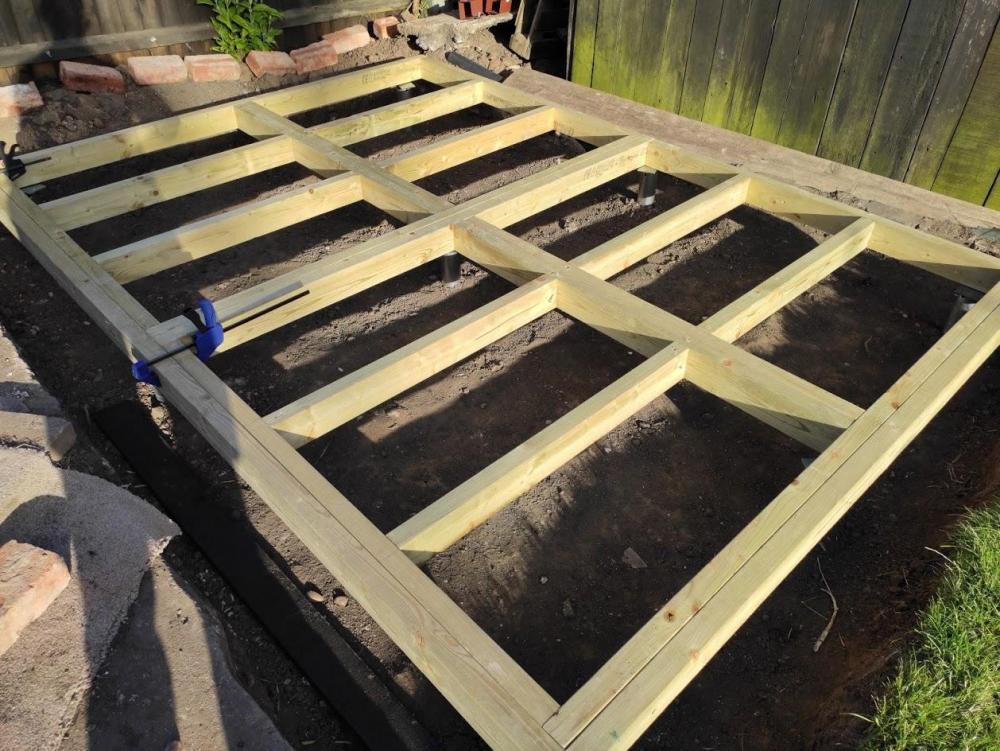
I used The Groundscrew Centre. What they were offering was enough for my soil type and structure. It came to about £450 all in, including delivery and the tools/drillbit required. I know I could have done concrete pads for cheaper, but this was so much easier to get perfectly level in an afternoon.
-
A written thingy in the field of disability and careers. The more I study the less I understand it. Actor and variety entertainer. So ... whichever one pays.
-
I try to avoid concrete where I can. This was totally dry and totally DIY - after getting advice for the right screws that would support the weight of this building. I did have to scan the ground first though - I was petrified about screwing into a pipe or cable so wanted to make 100% sure. Here's a sneak peak of the floor before the insulation went in. You can see the ground screws underneath.
-
Thanks Mike. No signs of me being called back into an office for quite some time... ? I'm doing a PhD and travel with shows. But yes, it is a lovely place to work. I've already benefited from the forum over the past year, so I'm looking forward to contributing where I can.
-
Hi there all. Long time lurker here so thought it was about time to sign up and participate. Based in Leicester. No building background, but I have just about finished a garden office (screw foundation, timber frame, 80mm PIR insulation, UPVC window and door, EPDM roof, cedar shingles) where the only thing I paid someone else to do was the electrics. Because, you know, the law. Now hoping to self build a timber frame kitchen extension. Terrifying, but I know I can count on you lot for some sage advice. Thanks all!
-
Joining timber framed extension to existing brickwork
JackOfNoTrades replied to SeanDean's topic in Timber Frame
I'm NOT an expert in this, but I have been searching for an answer to a similar question, trying to work out if I need a movement gap. I found two things mentioning this: 1. An article in Homebuilding & Renovating magazine says that with brick to timber extensions it's "usually" achieved by steel channel ties. (I've found no evidence to back this up given my inability to find a supplier who does a steel channel tie compatible with brick to timber.) 2. A thread on screwfix about attaching timber extension to brick wall and allowing for movement says the OP is overthinking it for a small extension, and the recommendation there is to just bolt the timber frame to the brick wall with a DPC. One reply said he could maybe leave a few mm leeway in the hole in the timber for the bolt to allow for any expansion. For flashing, the H&R article suggests filling in any gap with a flexible sealant, again to allow for movement. Sorry not to have a definitive answer, but seeing as you haven't had any replies I thought I'd share where I had got with my search. Best of luck with your project. I'm currently planning a very similar thing!


.png.0b585fd1c0aebb861f68bfcb7f40bf6f.png)
.png.b81a27cbdd618a49e86de4e8af8d7b7c.png)
.png.e5f44fb5b5e4d560a0ba7d7ad3cf523b.png)


.png.80f39f6fa59ee390404a3c3295da289d.png)

