


saveasteading
-
Posts
11094 -
Joined
-
Last visited
-
Days Won
98
Everything posted by saveasteading
-

What's wrong with a SIP extension (self build)?
saveasteading replied to Apache's topic in Structural Insulated Panels (SIPs)
That to me is decent justification. A kit reduces risk for the beginner, just don't try to change anything from a proven form. It depends on more than that though. Geometry, the ground and topography, how it links to the existing...and more. -
Time for some new Makita goodies- any good deals on?
saveasteading replied to Crofter's topic in Tools & Equipment
Tell more? -
On reflection I'm not thinking to add redundancy thtough extra piping, but to avoid petty savings. Eg does the utility room need any ufh? Miss it out, or half of it and save £30? Space the pipes further apart in some rooms? Likewise. There are places to save hundreds or thousands or tens of thousands and this isn't one of them.
-
Measured by bucket or bag, not by shovel until you have a total feel for how much a shovel holds. If you shovel the mix to different spots there is less brushing. It's not hitech but very important so that blocks are locked really solidly.
-
with a fan drawing air from the adjacent areas every time it is used.
-
Joists have dropped - sister joists & ply??
saveasteading replied to dan_cup's topic in General Flooring
I agree with @ProDave that bolts are advisable, not expensive either. But it might be tricky to drill unless you have a 90° drill. ring shanked nails or fully threaded screws at 150 cc, staggered. -
I'm no expert but we are having a big area designed at present. There are additional pumps at manifolds.
-
Joists have dropped - sister joists & ply??
saveasteading replied to dan_cup's topic in General Flooring
You should have lots of fixings. The whole floor load, where raised, is resting on the fixings. -
Advice required on Polished concrete floor alternatives
saveasteading replied to Jakekibb's topic in General Flooring
On top of what? Can you recall the price level? -
Time for some new Makita goodies- any good deals on?
saveasteading replied to Crofter's topic in Tools & Equipment
I was tempted by a pruning chainsaw at the local market. Incl 2 batteries £30. But my sensible self decided it would be poor, maybe dangerous. -
With experience now of the steading stove. Externally fed air makes for extremely efficient combustion with even a single log glowing brightly. The tiny amount of ash confirms the efficiency too. So it doesn't have to be a huge blaze with multiple logs as in old draughty burning boxes. Is it justifiable? The steading is rentable and gorgeous, so it's a big plus. Although it is highly insulated the heat isn't excessive and is controllable Plus it's a backup in case of power outage.
-
Concrete floor as a finished surface. The results are in.
saveasteading replied to saveasteading's topic in Floor Structures
Client didn't want or need it, or want the cost.... I'm guessing it's about £40/m2 extra. And like, presumably. Try spilling some red wine on that. I've nerdily done that on tiles we are currently looking at. -
Advice required on Polished concrete floor alternatives
saveasteading replied to Jakekibb's topic in General Flooring
I've posted a real floor after 15 + years as a separate post. Dryshake I've used once. It makes the surface harder and can add colour, but it still crazes. If a domestic client wanted a concrete look I'd recommend large porcelain with that effect ( very realistic, as concrete tiles really could be made crack free). £50/m2. Resin does not, of course, look like concrete. If budget is of interest, you don't need concrete over concrete at all. -
This was a project of mine about 15 years ago, maybe more. It is used by a company you all know. I was there recently as a customer and asked if I could look at the warehouse for interest. I'm really pleased how this is performing after the years of forklift use. No cracks other than the controlled joint which has barely widened. But look closely at the micro cracking of the surface. This is normal and is always there unless covered by paint... and then it isn't exposed concrete. This is why I don't recommend concrete in a house unless desperate to impress on Grand Designs ( who won't return to see it with stains and cracks years later.) And this is a very good floor by utter experts. Bte the few tiny indents are caused by lignite which we get in aggregate.
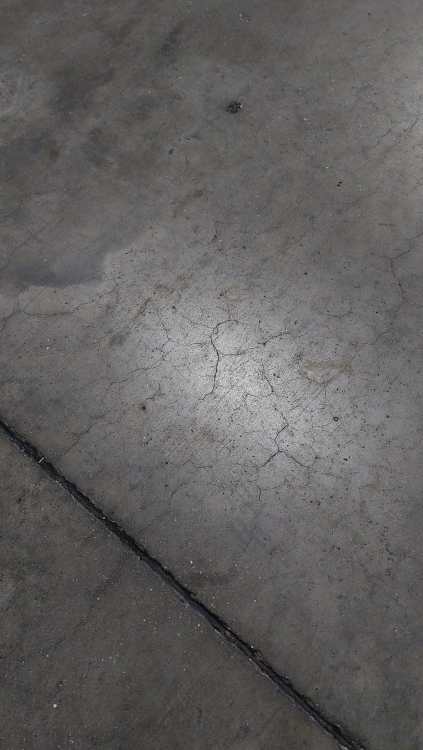
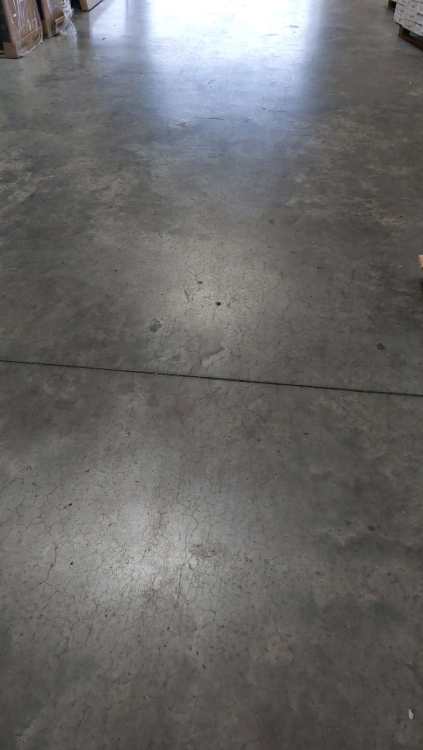
-
Advice required on Polished concrete floor alternatives
saveasteading replied to Jakekibb's topic in General Flooring
So a very heavy warehouse for forklifts and racking? You can do almost anything over that. Your internal walls and even steel columns could go straight on your floor with SE input. Above that I would have minimum 150 pir then a screed with ufh. As prev discussed I don't see the attraction of a polished slab in a house, perhaps because I've built hundreds and see them as functional. I'll find a photo to emphasise this. -
What are you finishing the floor with? Are the levels generally OK apart from ridges and raindrop marks? How soft is the top? Can you scratch it?
-
if you dont have them I think Wickes would too, or a small builders' merchant maybe.
-
Joists have dropped - sister joists & ply??
saveasteading replied to dan_cup's topic in General Flooring
absolutely. I was going to say to use treated timber, but spraying the existing joists is wise. Woodworm and rot. -
Time for some new Makita goodies- any good deals on?
saveasteading replied to Crofter's topic in Tools & Equipment
Or two. My drill will work for hours (days) on the 2Ah battery. Hedge cutter 20 minutes. My new leaf blower uses a 6Ah battery in 10 minutes. The weight of battery matters a lot if working with the tool raised. -
Joists have dropped - sister joists & ply??
saveasteading replied to dan_cup's topic in General Flooring
Some houses are built like that because the builder couldn't use a spirit level. Others move quite a lot more than we would like to think. So in your case, there is no sign of rot at joist ends? That's OK then. -
Time for some new Makita goodies- any good deals on?
saveasteading replied to Crofter's topic in Tools & Equipment
I was lucky enough to win a set of Einhell stuff. Including a drill including hammer, and a small sds. I previously didn't appreciate the vast improvement an sds provides, cutting a hole easily in seconds instead of minutes. So I recommend you add this to your set. I'm very happy with Einhell, and having a bank of different size batteries is a must. But if I was using any of these tools professionally I'd probably go upmarket. I see deWalt stuff doing the most amazing functions. Nail gun firing 90mm nails for example, with so much lighter a tool than a gas one. -
Joists have dropped - sister joists & ply??
saveasteading replied to dan_cup's topic in General Flooring
Do you know why? We should overcome the reason for this at the same time. -
Acoustic rail / resilient bar is useful in stopping vibrations carrying through I once had a roll of a bitumen sort of sheet with lead trapped within. It was made for medical aprons to stop x-rays. Very heavy but also flexible, and I used it on a party wall , hung loose behind the plasterboard, to great effect. It isn't available and would be crazily expensive, but some other heavyish loose material could be used. thick polyethene etc.
-
Why we need "Net zero"
saveasteading replied to Beelbeebub's topic in Environmental Building Politics
maybe sell credits? It could be deposited in empty coal mines which would be a bit like full circle. It is remarkable how little substance is in the branches and foliage. When I cut the hedge or prune the shrubs I put sticks through a grinder and smaller stuff piled on the ground and put the mower over it. What would have been 5 or 6 brown bins become half of one, even though it is still uncompressed, goes on the compost heap and is compost in 6 months...which rots and we are full circle ..again. -
What is the work or spec change suggested? Does it make sense that this is an improvement, or is it a quirk of the program? I'm out of touch now, but we used to have the epc assessment program and we played with it, finding all sots of inconsistencies. Also, having met the people who put it together it was clear that they followed fashions rather than reality, and didn't know much about construction. The cheapest way to get a better result is quality control throughout, and a very thorough sealing of vents before the air test. The tester may say that they do smoke tests and then pressurise gain, but more likely they want in and out asap. The best way to get genuine results as performance is quality control and common sense over theory.




