Adsibob
-
Posts
3609 -
Joined
-
Last visited
-
Days Won
10
Everything posted by Adsibob
-
 Yep:
Yep: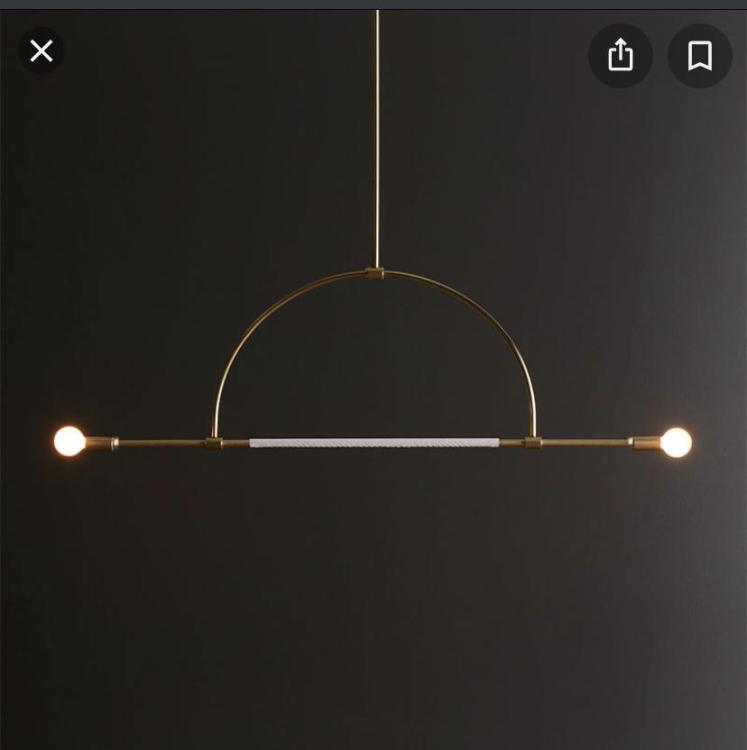

-
Our screed is about 75mm thick. It was poured in early October. Apart from one 3.5m long, but very thin crack which developed on day 125 or so, it seemed to cure very well. Around day 70 we started putting gentle heat through it. Well, I say gentle but my manifold can only do 35C as a minimum. Maybe that was a bit early and what caused the hairline crack, I don’t know. Around day 150 the company that was going to install microcement over the screed came and “stitched” the crack and also filled a couple of small holes that I’m not sure how I missed because they were almost 2cm in diameter. We also did about 2mm of self levelling compound to raise a very small area near a threshold. About 2 weeks later they installed the microcement, which consists of a thin mesh, topped with various layers of microcement which adds about 3.5mm to 4mm to the Screed. The microcement was laid during 3.5 days and sealed on the last afternoon (first coat of sealer) and on the 4th day (second coat of sealer). The installer said I could walk on 2 hours later without shoes on, and with shoes on the day after. He told me to leave it uncovered for a week so that it can breathe. I then had a dispute with the company because I realised the installer had ruined various walls that had been painted a month ago by not using low tack masking tape. So there hasn’t been much by way of aftercare in terms of customer service. The dispute caused me to read the small print of their website Ts and Cs and I spotted that it is recommended that during the first 72h after installation one maintains the ambient temperature in the room above 18C. It also says not to do this with UFH or with any heating that will dry the air. Not exactly sure how one is meant to do that. The house isn’t fully air tight yet, so even with UFH heating on in the two areas adjacent to the room where we have had microcement installed, it doesn’t get Enough heat into the room with underfloor heating. At night, the microcement is around 11C and during the day it gets to 15.5C. I found another website which talks about curing microcement in general and it also says about keeping it above 18C for the first few days, but also says that if you can’t do this all that will happen is that the curing will happen more gradually. The company who installed the microcement say that after a well one can turn the UFH on gradually. Should I delay that by a few days to account for the slower curing time at 11C to 15.5C ? What about floor deflection? I’m due to get a stove installed next week which will sit on a heavy steel plate that will be supported by three concrete plinths cast onto the floor. Total weight of the steel top and stove is about 150kg, though it is spread out onto the three plinths which are about 70cm long each, so shouldn’t really cause too much deflection I hope. Would you delay the stove installation to allow the microcement to fully cure?
-
Yes, possibly. This is what we are going to try and do next time the electrician is on site
-
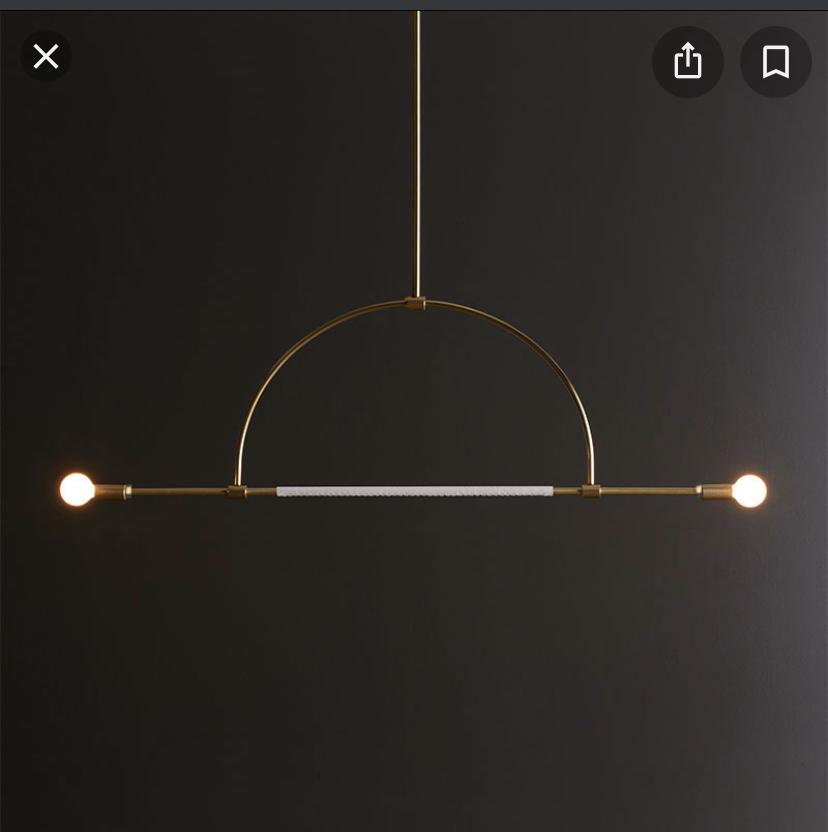
I need two bulbs. It is not the only light in the space, but it is the main light illuminating the kitchen island
-
Amazon was my first port of call, but unfortunately they don't have what I'm looking for. The bulb needs to be: E12 LED dimmable 2500K to 3000K at least 3W but preferably a bit more as we really need at least 1200 lumens per bulb opaque/pearlescent ball shaped (ideally golf ball size, but could be slightly bigger) Very happy to be corrected, but I don't think Amazon do anything that comes close to fitting all these requirements. Doesn't seem to be an issue in E14 or E27. It's a light fitting where the bulb is very prominently on display, so needs to look nice.
-
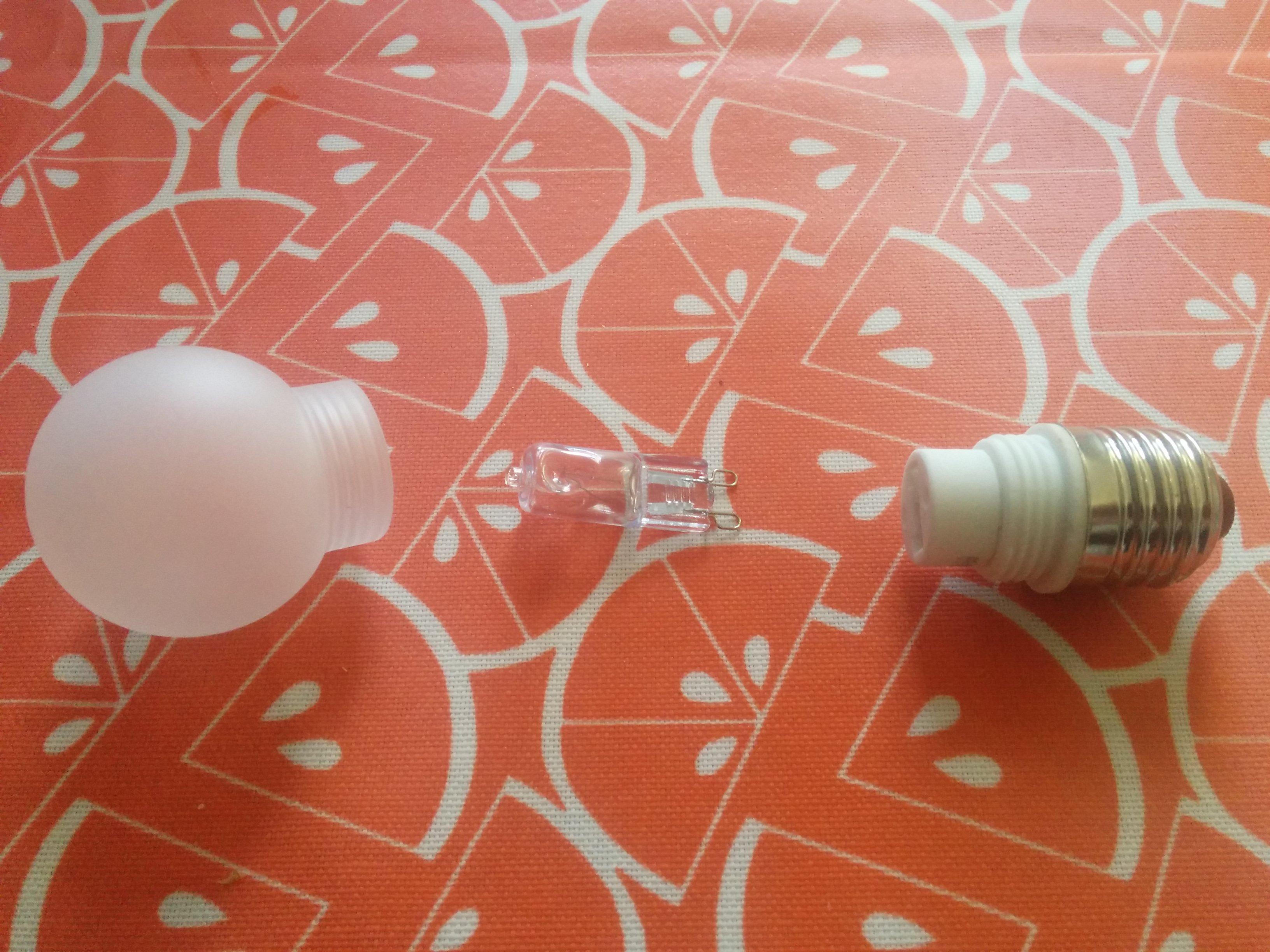
I've tried and an e14 bulb doesn't fit. There are some cheap e12 to e14 adaptors, but they are pretty ugly and will impact what was quite an expensive light fitting. Options are to either rewire the fitting and hope i can squeeze in a bigger e14 bulb holder or to try and find a e12 to GU adaptor and cage, something like this but in an e12 size:
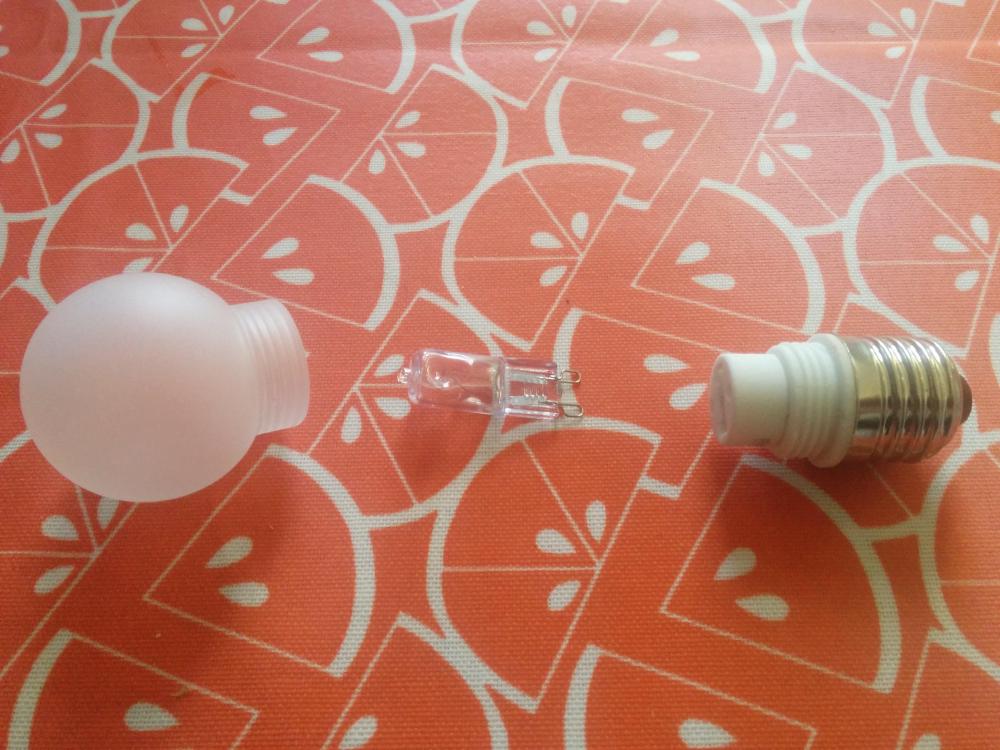
-
I measured the diameter of the screw base and it is 12mm. Does that correspond to an E12 bulb? Cannot seem to find it anywhere in something with a frosted golf ball glass or similar. It seems only E14 are available here!
-
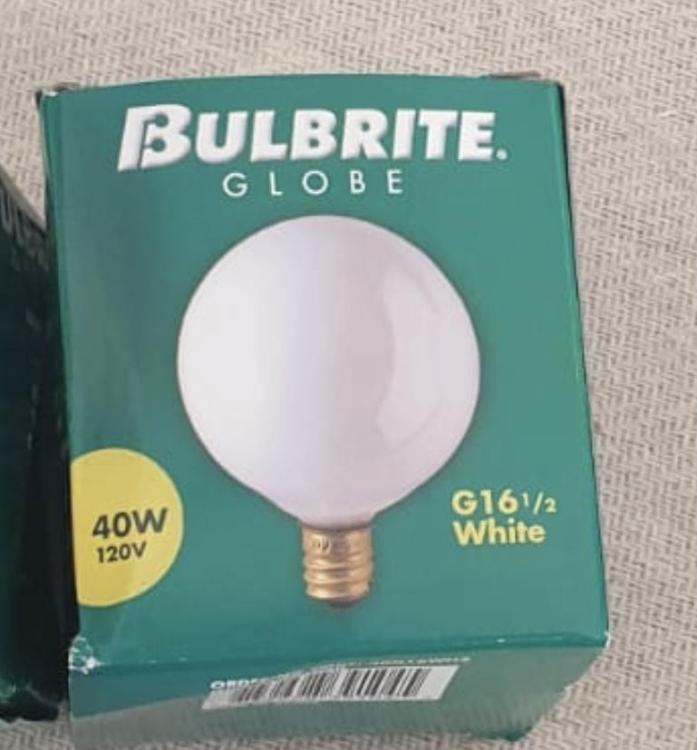
I have a problem. Wasn’t banking on the light bulbs the fitting is designed for being a funny American size. This is what came with the fitting: anybody know what the UK equivalent of a G16.5 bulb is? Been googling it for a while and they appear to be conflicting answers.
-
Why, what did the salt do?
-
What stone do you recommend for the steps then? I need something fairly light coloured, a light grey or off white, that isn't too expensive and has good slip resistance. No, the driveway is completely granite and completely impermeable. I was also confused by this, but having looked up the local requirements it seems my council only "recommends" that it is permeable. The reason for this, i suspect, is that the entire borough sits on London clay which is notoriously impermeable to water, so if I were to have a permeable driveway, all that would happen is the water would drain down through the cobblestones and then sit somewhere on top of the hardcore underneath, as below that is dense clay which just does not let water through. I consulted a RICS surveyor about this and he recommended making sure I have sufficient drainage channels both at the top of the driveway and at the bottom, so we've gone for an aco drain channel top and bottom as well as a french drain at the bottom. Actually, it's worse than a 1/10 slope. A 1/10 slope, if I understand you correctly is that for every run of 10m there is a fall of 1m. The inverse tangent of 0.1 is about 5.7° and my slope is closer to 10°. Not much I can do about that. Nice entrance!
-
Yeah, issue is that my setts will be laid on a 10 deg slope. We will have a separate stone staircase, probably made of sandstone, for accessing main door of house from street, but to get to and from the car will require traversing the inclined gravel. Interestingly, the attached document from Westminister council says they have "excellent" slip resistance. It is absurd. We get a 16% discount through a friend, but it still works out crazy expensive. I will look elsewhere!
-
okay, but was it a smooth surfaced granite you slipped on or a tumbled / riven surface?
-
hmmm... what kind of granite was it? The one we're looking at is either this expensive one which has the following on its data sheet: Slip Resistance 89 Dry / 79 Wet Or this one which has a cropped surface but no data sheet. Obviously don't want to slip in the rain, but the impression I got from both suppliers is that the rough edge ensures they are not slippery. Am i mistaken? Sorry to hear about your hip and Pentax. Did the pentax sustain any damage? As K-5 owner, I have been surprised how hardy they are. I dropped a wide angle lens on a hard airport floor once and nothing (discernible) happened to it.
-
We are laying a patio out of rough edge granite setts (or cobblestones). One supplier, London Stone, is quite expensive and has also recommended their pre-sealing service where they seal all faces of the granite sett with Dry Treat Stain Proof so that they are delivered ready sealed. Their marketing blurb says: "Sealing stone prior to installation will help to protect against efflorescence (a white ‘bloom’ which appears on the surface of the stone after installation as a result of salts from the bedding layer travelling through the stone to the surface). Sealing prior to installation will not completely eradicate the possibility of efflorescence occurring, however it will reduce the risk significantly in comparison to unsealed stone." Another supplier, has said that they don't pre-seal and that sealing all faces is also not required. Instead, they recommend installing the setts and then sealing just the exposed face with a product called "Wet and Forget". This is significantly cheaper than Dry Treat Stain Proof, and the supplier is also quite a bit cheaper. What have people on the forum who have laid granite outdoors done about sealing? Do you do it before or after installation? And how do you stop weed growth? Is it simply a case of laying a geotextile membrane between the hardcore and the sand and cement bed for the granite?
-
Good advice. It’s actually not that slippery, so at least for the time being we aren’t going to do anything.
-
Incredible, thank you!
-
I'm not too bothered if it is rocker or toggle. I just need it to be screwless, architrave, retractive one way, matt black and preferably with rounded edges.
-
Thanks @Temp. This one looks like it could work. When it says it needs to go onto panel mount. Which mounts are compatible?
-
And there I was thinking you guys could out-Google me. But you can’t. You are all just as bad (or just as good) at using Google as I am.
-
I don't think there is a difference. Retractive switches come in two types, a one way or a two way. I need a one way, which is in off mode by default and can be pressed momentarily to on, but retracts to off as soon as depressed. A two way is in off, but can be pressed on in either of two directions. A two way is what you would use for a blind for example. Had a look at the Farnel website. It's impenetrable.
-
As far as I can tell, I would need to get a retractive module from the MK Electric Grid Plus Grid System and then fit it in a front plate. Although they do black modules, their front plates are only white or silver and not in architrave size: https://www.discount-electrical.co.uk/section.php/110463/1/mk-electric-grid-plus-grid-system
-
very funny, but not sure SWMBO will like it.
-
I'm trying to find light switch that meets the following requirements: matt black screwless curved corners architrave size retractive toggle switch. It can be be a dolly or rocker switch but it must be a retractive one of the on/off variety, like a door bell. Effectively, I need a matt black version of this: https://www.corston.com/products/1g-architrave-retractive-toggle-switch-bronze I've been looking for 45 minutes and still can't find one, but I know that @SteamyTea, @Onoff, @PeterW or someone else have much better skills than me!
-
Just wondering where everybody buys their LED bulbs these days? I'm looking for an online supplier of high quality dimmable LED bulbs in various sizes, all with 2700K to 3000K colour.
-
What’s the worst mistake you’ve made on your build?
Adsibob replied to Adsibob's topic in General Self Build & DIY Discussion
So SE has said it will take him 7-9 hours to design a change and wants to charge me his hourly rate. Seems excessive to me. Can a design change really take that long?