Ommm
-
Posts
77 -
Joined
-
Last visited
Everything posted by Ommm
-
Fan Coil Units for use with a (cooling) ASHP
Ommm replied to ProDave's topic in Air Source Heat Pumps (ASHP)
It's a generic Chinese unit, the likes of which are all over Alibaba: https://www.alibaba.com/product-detail/KDGD-OEM-vertical-exposed-fcu-radiator_1600180479418.html https://www.alibaba.com/product-detail/Ultra-thin-floor-fan-coil_60529885215.html https://www.alibaba.com/product-detail/130mm-floor-standing-ultra-thin-fan_1600180883756.html The specs will mostly depend on the dimensions, as they come in about 5 different lengths. This vendor doesn't specify the size (would need to ask), but it doesn't look like a large one. Plumbing: I think there's two threaded water connections to the coil (I'd guess DN20 aka 3/4" BSP like mine): any valve work is your problem (I think there's some space for valves inside the unit - it looks like the ebay listing comes with a valve). Condensate wise, there's no view of the tray but the Ali pics show a corrugated condensate drain pipe - I think they can be ceiling mounted, but worth checking. Electrically, they're mostly AC motors so they usually have three speeds controlled by energising separate mains windings. The controller on the top is generally a bit basic, as depicted in the last Alibaba link: there's some relay contacts for the valve and for the fan speed, there's a thermistor going through a small hole in the side for the room temperature, and some buttons for temp +/- and fan speed +/-. It's really just a basic thermostat with some fan buttons. I'm not 100% but I think the place where the controller sits is a standard size so can be swapped out for a different standard controller - there are versions with wifi and RS485 on Aliexpress. I think you can also get them without panel where you just wire the motor and valve directly from another controller. There's really nothing fancy: it's pretty simple really. Most fan coils are quite simple - they might work standalone, but if you want to integrate them you need to do a little plumbing and electrical work. But there's not much to it. -
Fan Coil Units for use with a (cooling) ASHP
Ommm replied to ProDave's topic in Air Source Heat Pumps (ASHP)
If anyone wants a Chinese radiator-style unit, this seller made me an offer for £250 + £28.55 delivery and seems to have lots of stock, so I'm sure would be amenable to others making a similar offer: https://www.ebay.co.uk/itm/403556834346 -
Fan Coil Units for use with a (cooling) ASHP
Ommm replied to ProDave's topic in Air Source Heat Pumps (ASHP)
Judging by this pic of the innards from Hitachi Singapore: it looks extremely similar to my Aliexpress special upthread. I assume this is a rebrand of some generic FCU, possibly Chinese. From an image search, it is notable that it shows up on the website of Hitachi Hong Kong, Singapore and Thailand, but no European websites. I'd expect it's a bit like buying cylinders from boiler manufacturers: they don't make them, they just subcontract somebody else (perhaps to special order) and rebrand. It's quite possible every country or region has their own local supplier, to save transport costs. Here's a brochure from the Philippines which has some part numbers, although looks different: http://www.jci-hitachi.ph/uploads/download_catalog/163_2.pdf My general experience is the Italians (and their UK agents) are easier to deal with, because it's not infeasible to ship stock over from Italy, whereas delivery from Asia is going to involve a container ship. However every quote I got was in the region of £500 per (radiator-style) unit, so not cheap. -
Fan Coil Units for use with a (cooling) ASHP
Ommm replied to ProDave's topic in Air Source Heat Pumps (ASHP)
4 pipe is if you want the same FCU to do heating and cooling - in commercial environments you have a separate boiler and chiller, so you run two sets of pipework around the building. Particularly important if some rooms want heat and some want cooling at the same time. (eg server rooms always want cooling, even in winter) You'd need to check the valve and control arrangement. If you're running a single loop from an ASHP that switches from heat to cool depending on the weather you only need to plumb one set of pipes, but you need to ensure whatever valve is on there is set up correctly. I suppose you could plumb both loops into the same source (in series, in parallel?) if you wanted. Typically FCUs have a 4 port valve, basically that means you have a position where the water flows through the FCU loop and another position where the water bypasses the FCU. You then loop the water from the chiller through every 4 port valve around the building. I imagine a 4 pipe unit will have two 4 port valves. I'm assuming you'd need to wire your own thermostat for the 4-port valve and the fan (there are plenty of standalone and wifi FCU thermostats on Aliexpress, I bought one... it's nothing fancy but looks ok) I don't see anything particularly wrong with a second hand FCU, I'd just look for signs of corrosion and look at giving the motors some TLC when you receive it. I'm not sure what the situation is with replacement parts if any are needed. -
Fan Coil Units for use with a (cooling) ASHP
Ommm replied to ProDave's topic in Air Source Heat Pumps (ASHP)
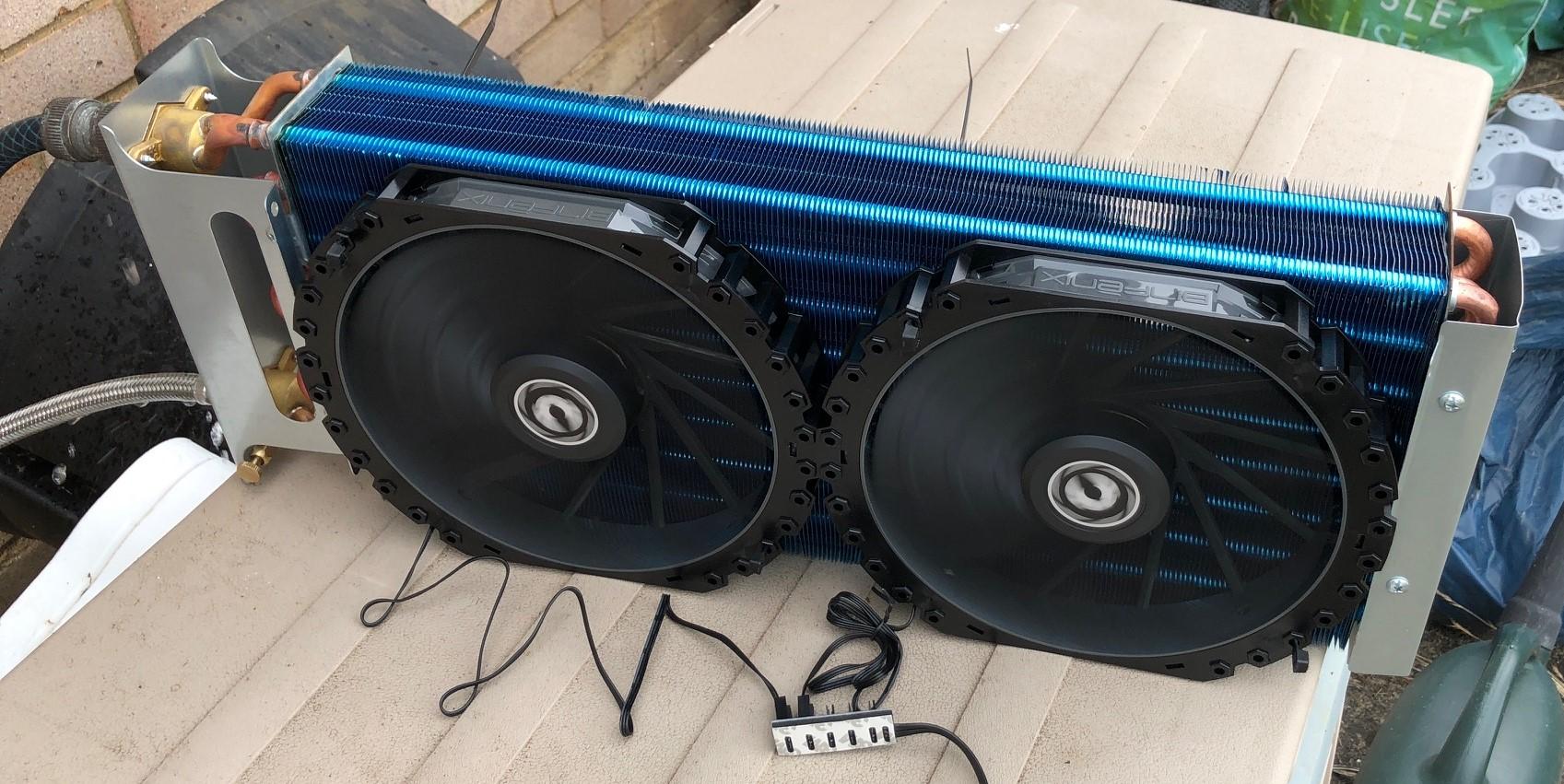
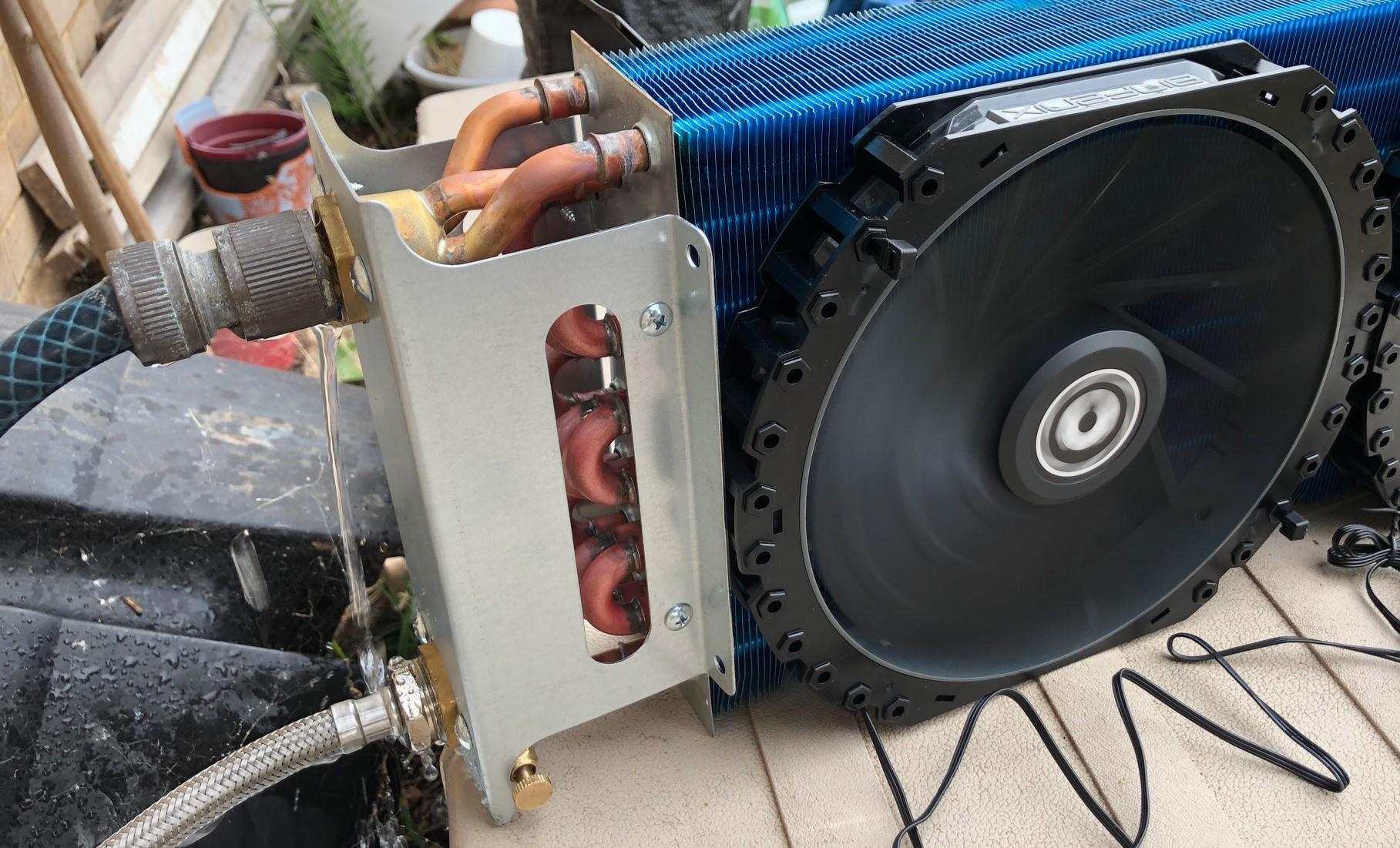
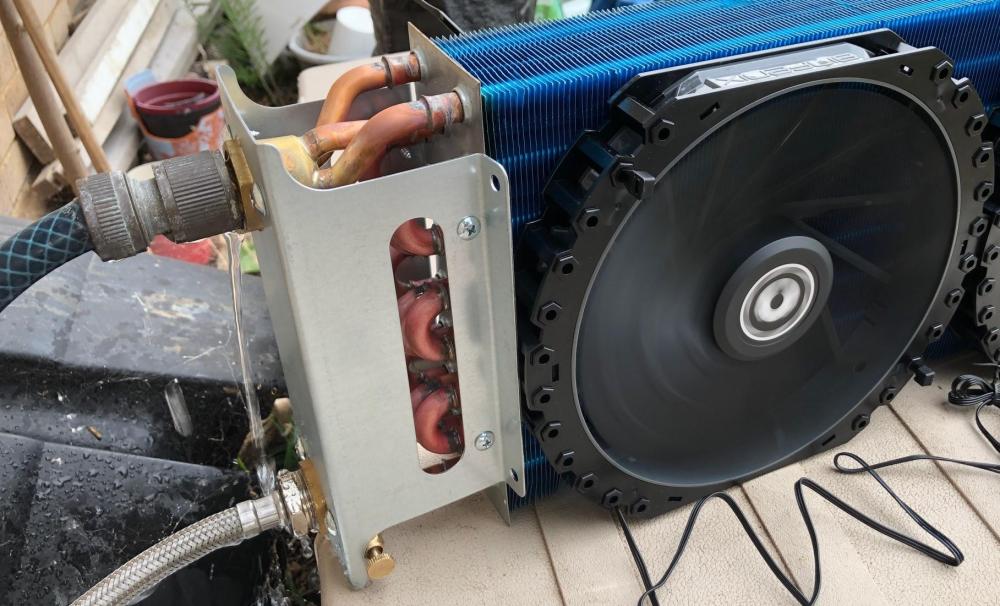
Well, sorta. Things have been somewhat complicated by my "customer" not being able to tolerate even tiny amounts of noise, especially when sleeping. That rules out a lot of commercial units, especially those Alibaba specials who are a bit sketchy about noise levels. I suggested a ducted unit in the loft, but that was not acceptable. However, on my travels I came across this: https://www.aliexpress.com/item/1005004090666621.html which is the wet guts of a 460x200mm fan coil unit, minus the fan. It was about $90 delivered, so I thought it worth a punt. Took about 10 days from China, which was quite impressive. And here it is: (yes it's leaking, that's because my garden hose is useless, don't judge) That's with two Bitfenix Spectre Pro 230mm computer fans on it. It's almost inaudible when connected to a car battery at about 12.6v (at least in comparison to outdoor ambient sound) It's a 3 row coil: at the intake (at the bottom here) the 3/4" fitting splits into three rows of copper coils, which go around in serpentine fashion before emerging in the 3/4" fitting at the top. When fed with mains water on test (not sure what temp it comes out of the pipes in the summer, something like 12-13C?) there's a pleasant cooling breeze come out of the other side if you put your hand within a couple of inches, but it's not very strong. I'd rather like the fans to be a bit stronger, but I can't seem to find quiet but more powerful fans in this kind of size - it's overkill for PC cooling. These ones are each 160cfm at 900rpm and 1.81 mmH2O static pressure - I'd really like something about 3-4x that CFM. Or possibly another fan downstream to 'throw' the air into the room so that it mixes properly. I could I suppose try a battery of smaller fans - that's something else to test. To be continued...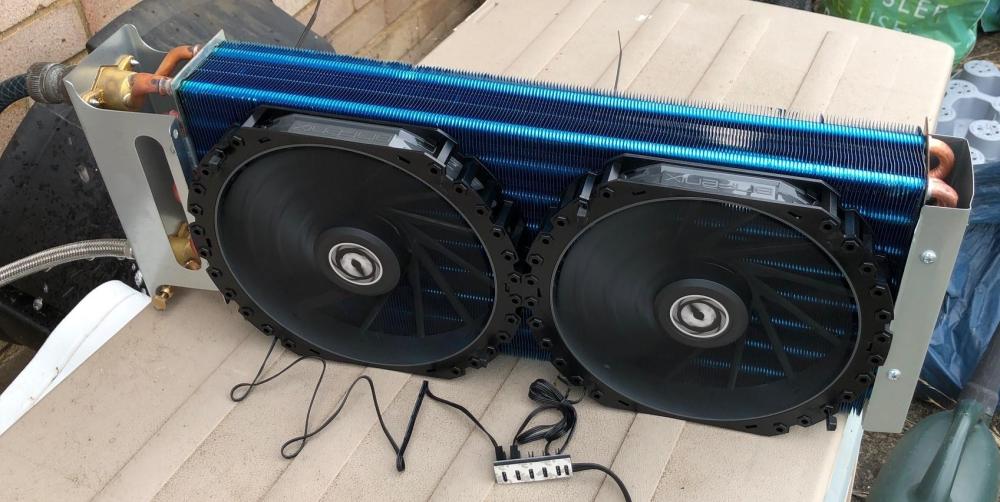
-
Fan Coil Units for use with a (cooling) ASHP
Ommm replied to ProDave's topic in Air Source Heat Pumps (ASHP)
Well yes, which is why they normally have an enormous fan mounted behind them :-) -
Fan Coil Units for use with a (cooling) ASHP
Ommm replied to ProDave's topic in Air Source Heat Pumps (ASHP)
There aren't generally pumps inside each radiator, which is what you'd need to avoid stratification. Of course the pump is moving water around the system, but that doesn't distribute heat/cold across the surface of the radiator - we rely on convection inside the radiator to do that. To do it for cooling, you'd either need a radiator with inlet and outlet plumbed at the top (cold water sinks, pushing up hot water) which would be no good for heating, or you need a serpentine tube making the radiator a long pipe run rather than a vertical body of water. For example this is sold as a 'transmission cooler radiator' for a car: https://www.amazon.co.uk/Transmission-Cooler-Auto-Manual-Radiator-Converter/dp/B08JGQQLYY/ and it doesn't matter which way it's mounted as the fluid flows through the whole loop. A central heating radiator isn't like that - you can 'short circuit' from inlet to outlet and bypass most of the water inside. -
Fan Coil Units for use with a (cooling) ASHP
Ommm replied to ProDave's topic in Air Source Heat Pumps (ASHP)
You’re mad, but not for the reason I expected. I’ve been playing with 80mm fans on top of radiators with the ASHP on cooling. The problem was not condensation (which isn’t very bad) but limited surface area and lack of convection. They don’t really cool at all. The convection issue is the fatal flaw. In heating systems you feed the radiator with hot water at the bottom. The hot water rises and, at the other end the cold water sinks. The outlet from the radiator is the cold water from the bottom of the other end, resulting in the heat evenly distributed across the radiator. When you use the same setup for cooling, the cold water stays at the bottom, and the hot water stays at the top. Hence you get a strip of cold maybe 6” high at the bottom as the water passes from inlet to outlet and the rest is cool but not cold. Condensation only forms on that strip. When putting a fan on top you’re mostly passing air over the cool part, and the cold part is untouched. If you put the fan at the bottom the condensation drips on it. The radiator fins also aren’t very fine and so you’re mostly sucking air past the radiator (I can’t seal well enough to go from only the closed part of the fins). Result is a cold wet radiator but not troubling the room air very much at all. So unless you’re willing to turn your radiators upside down in the summer I don’t think they’re going to work. -
I suspect the 4YH noise is due to the aluminium crossflow fan barrel spreading out as it spins due to centifugal force, which then sets a resonance up against the plastic casing. It only seems to be at particular speeds (which includes both of the speed settings). I'm going to send it back, otherwise I would take it apart to investigate. 45 degrees is a good thought - would stop it interfering with curtains etc over the radiator. I did wonder about 80mm guttering for that (in white): https://www.floplast.co.uk/product/offset-bend-3 although probably a trough style arrangement a bit like the 4YH case but wider would be better. Might be possible to make something neat with white uPVC sheet eg fascia board, perhaps on a wooden frame. Or possibly large-section electrical trunking (also uPVC).
-
@ian192744 Your setup's really interesting - I hadn't realised computer fans were so cheap (I'm used to buying the full CPU cooler). The Arctic fans are about £4-5 each which makes it cost effective to fit loads of them. I bought a couple to try out: the non-PWM versions of the Arctic F8 and the Arctic P8 (my rads are 60mm deep so need to stay small). At full 12V power the background sound with the fan off was about 29-30dBA at 1 metre and with the fan on 32-33dBA. That's just holding the fan in my hand and pointing the airflow towards my phone measuring sound. I couldn't measure a difference between the two models on the phone, but when holding them the P8 sounded slightly louder. Each fan took about 0.09A at 12V, so about 1.1W. So those are much better sound wise than the 4YourHome unit. I haven't compared them for airflow yet: I suspect I'd need several fans to equal the output of the 4YH (which has no specs for air volume, but is rated at 12W) - the F8 claims 52.7m3/hr at 2000rpm, the P8 claims 40.3m3/hr at 3000rpm with higher static pressure (which it was not experiencing in my test). For cooling I'll have to consider the mounting. I'll have to mount them on the top of the rad so there's space for condensate collection at the bottom (gutter and water bottle?). Maybe it makes sense for them to blow cold air up, to encourage room air to mix and warm air to come in underneath (fighting convection). Or maybe a room fan is needed to destratify the room. Things to ponder...
-
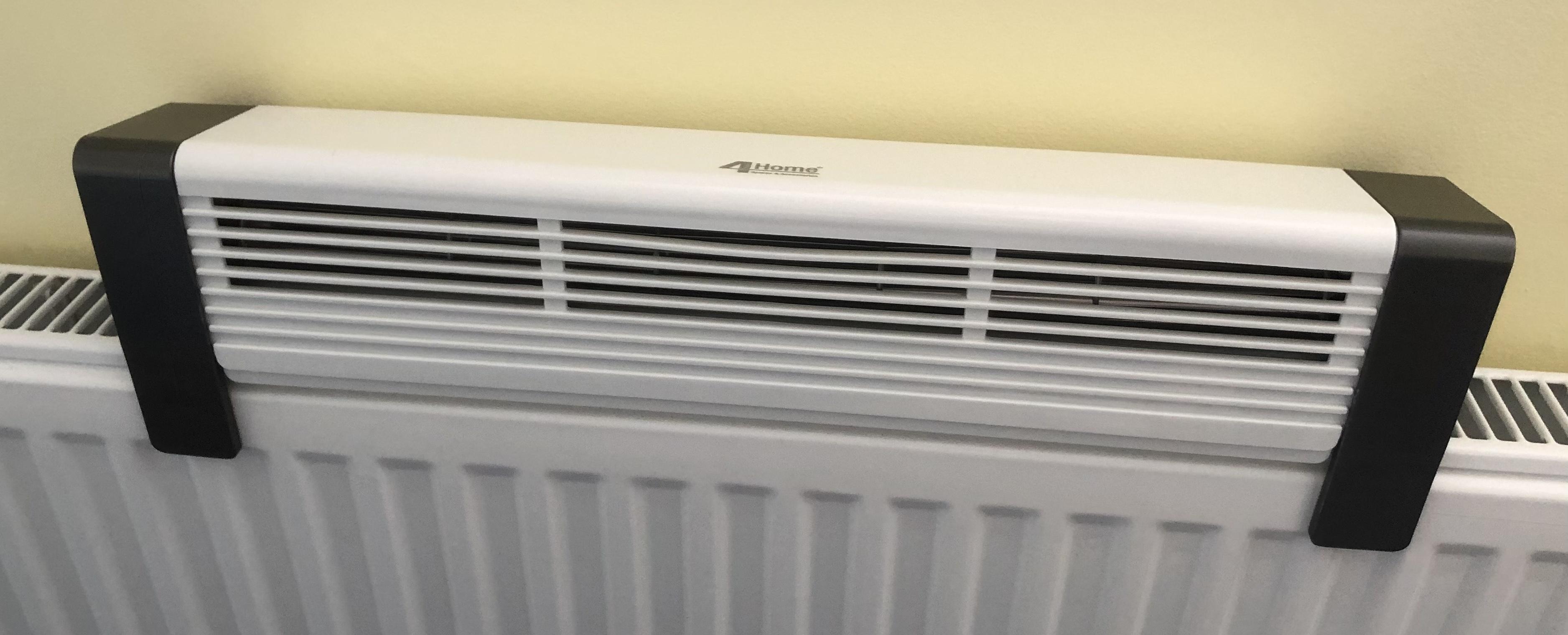
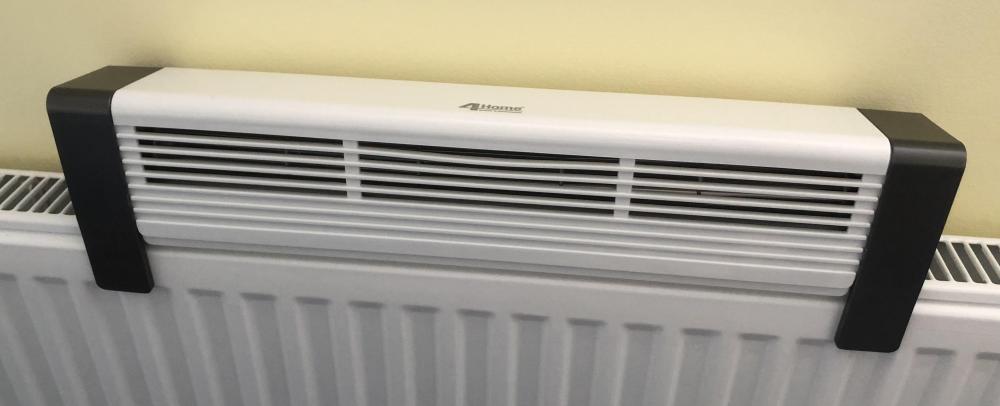
and in ‘action’:
-
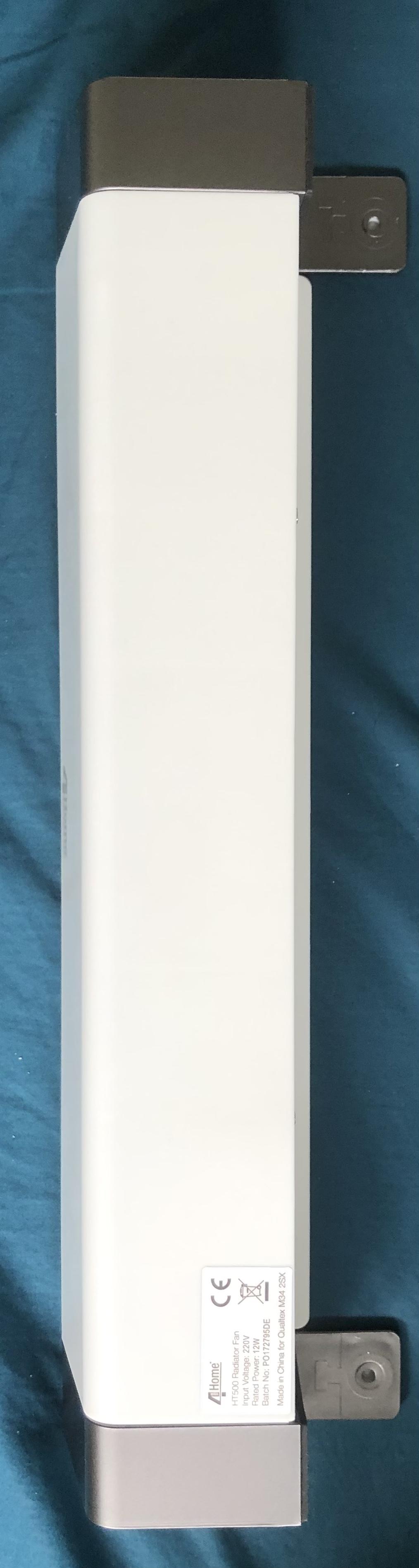
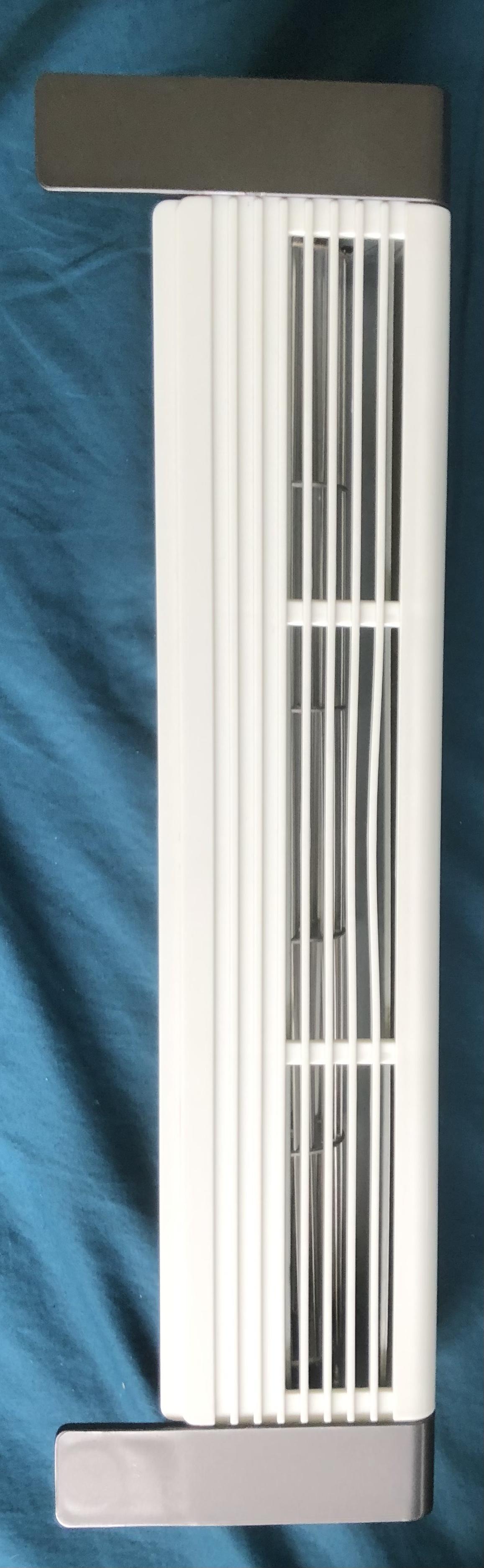
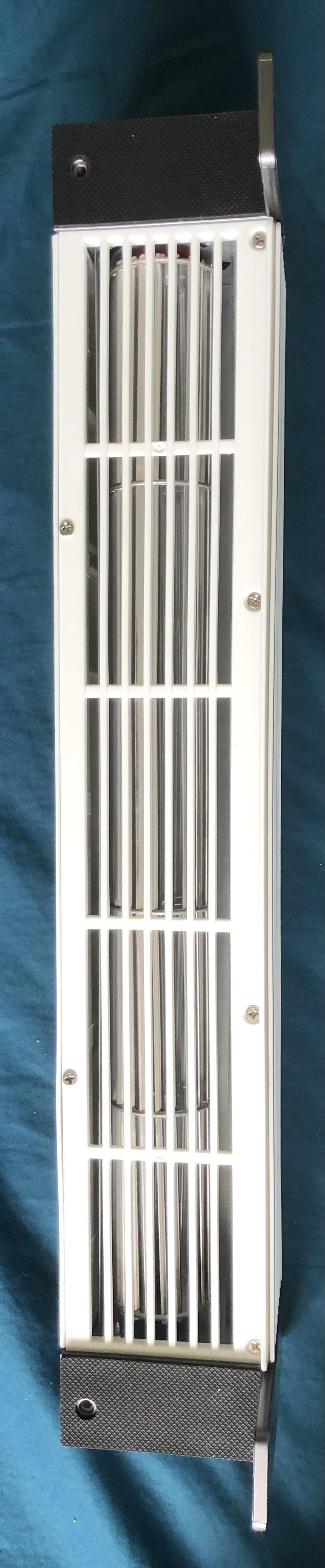
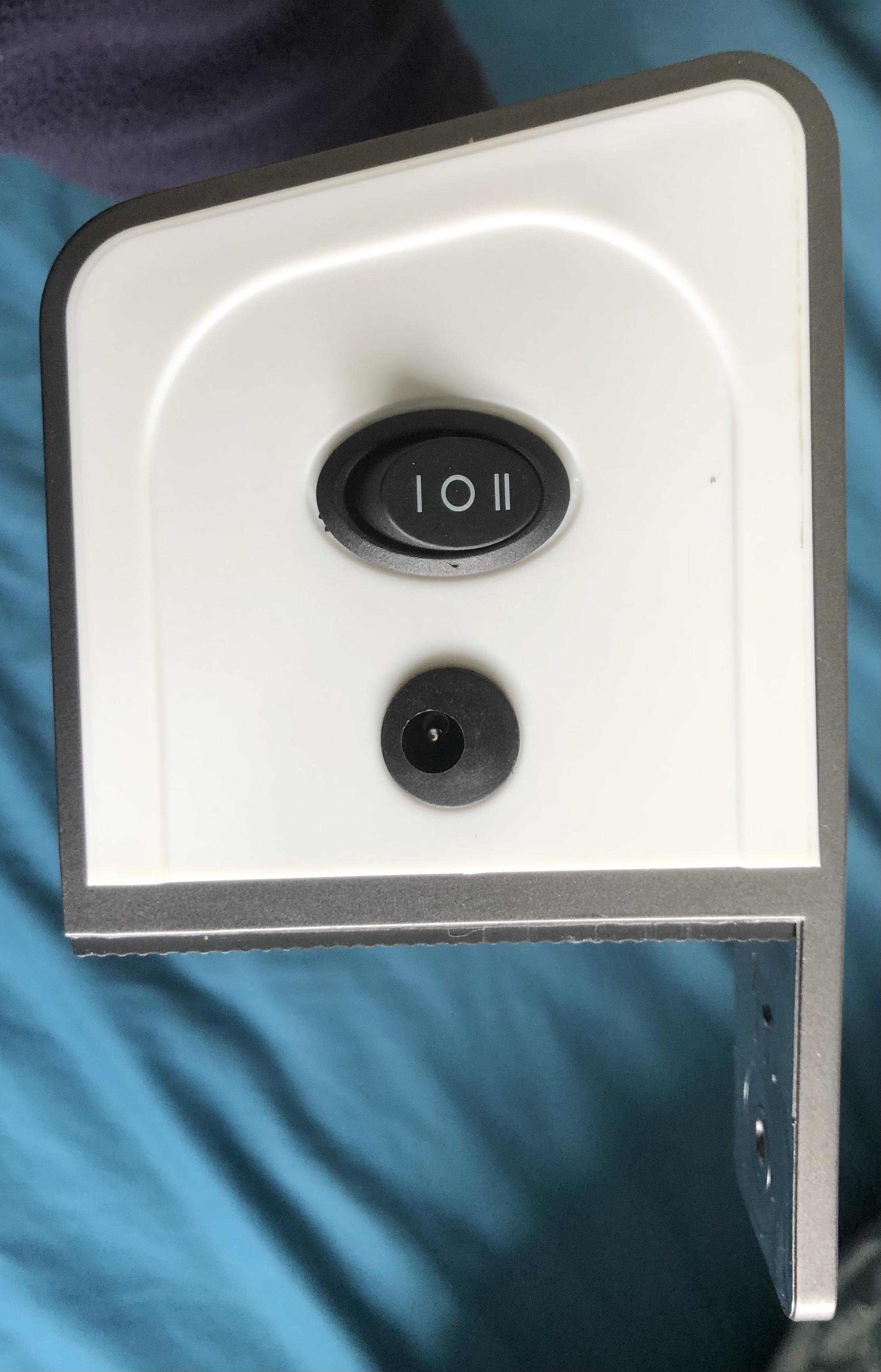
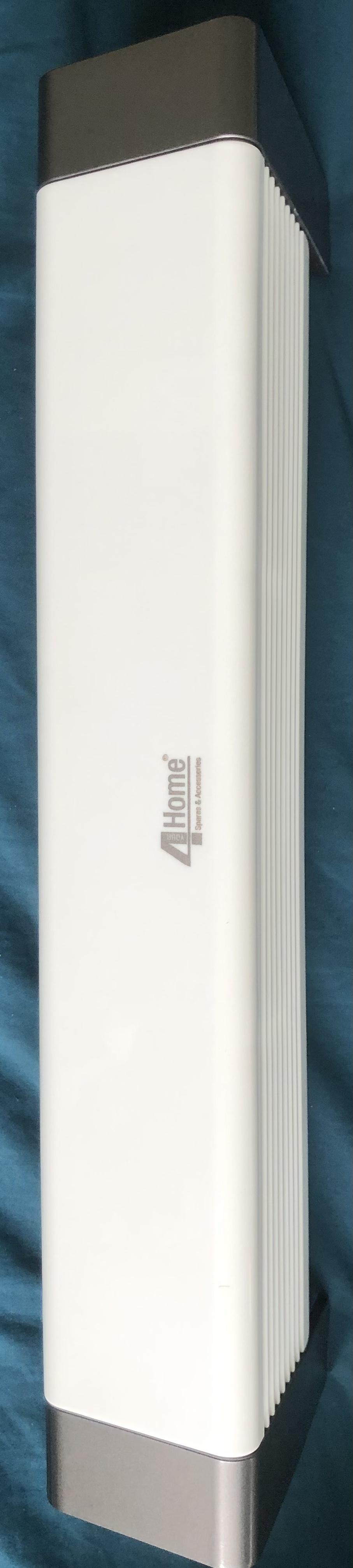
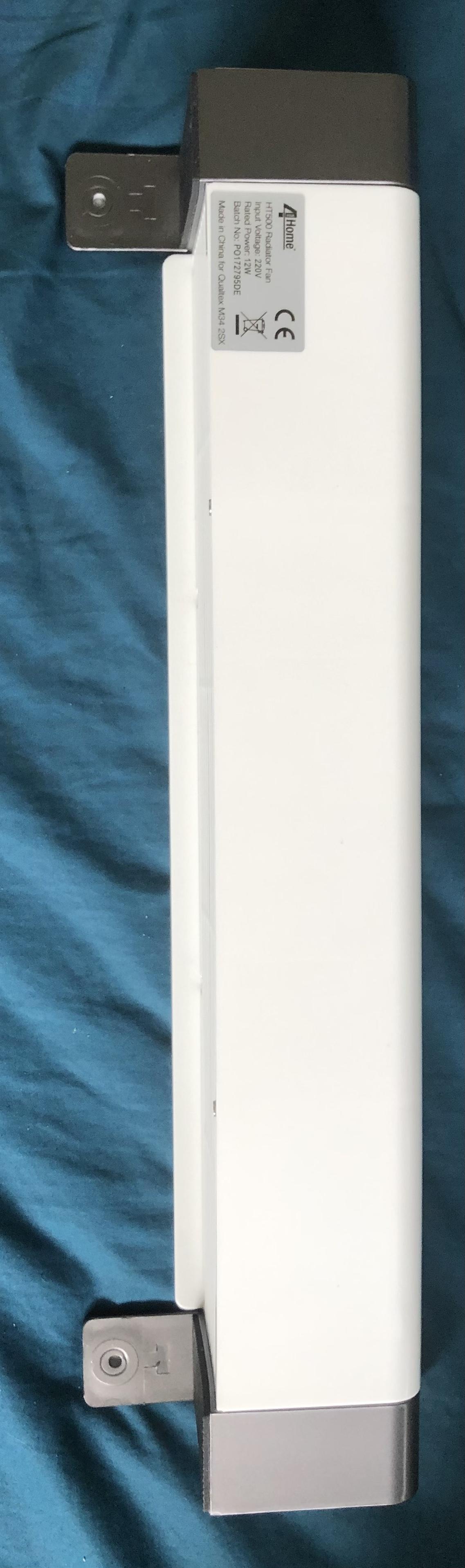
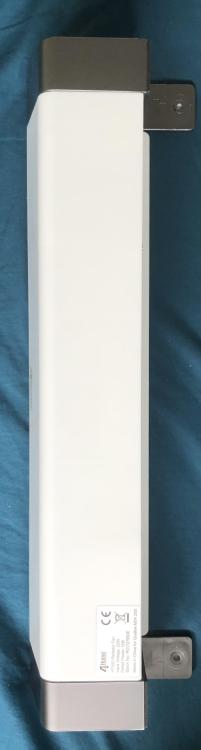
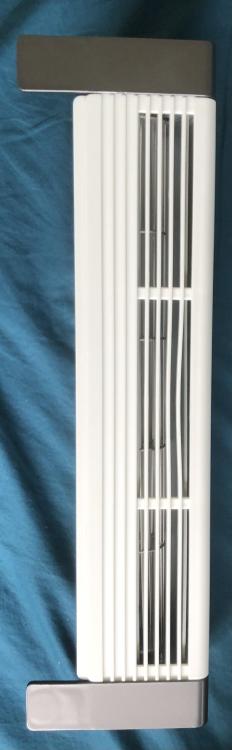
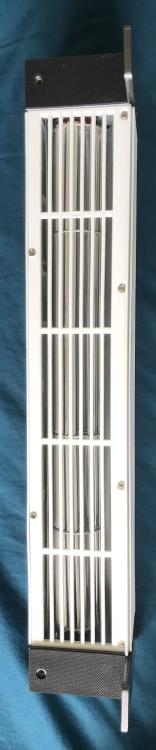
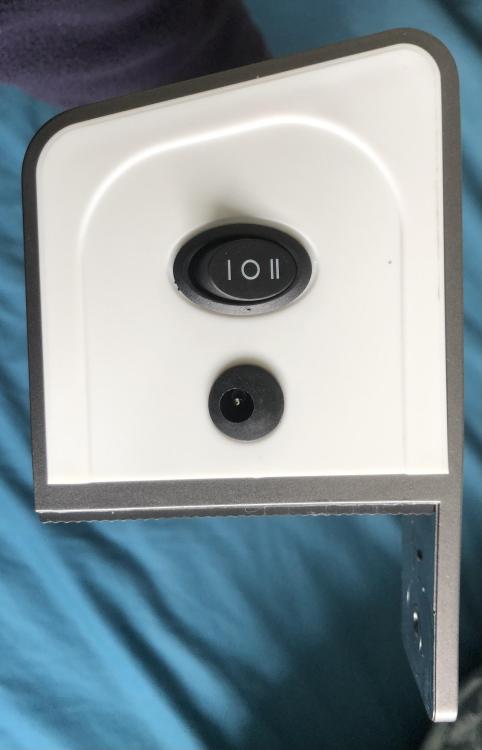
Out of skepticism I thought I’d give the 4YourHome HT500 sit on top fan a try. Turns out it’s imported by Qualtex who supply appliance parts, hence sales by ‘white goods spares’ shops. It’s a centrifugal fan along the whole 500mm length, rather than some others which just have computer fans every 300mm or so. Probably 50mm diameter of the cylinder. The cylinder has a bit of wobble in it, possibly it’s not fixed perfectly on axis. Some pictures below. A quick test measured 32dBA at one metre with the unit off (NIOSH SLM app, iPhone 8+), 40dBA on speed 1 and 43dBA on speed 2. The noise appears to be directed out the front, with a whiny component: can’t decide if it’s resonance of the cylinder or coming from the motor/far end bearing. I think it might be the blades buffeting air against the plastic grille at certain speeds. At that distance you can’t really feel the draught, but you can closer in. I don’t have a good feel for airflow, but probably ‘not a lot’. The air does feel cooler, being drawn past a radiator full of water that hasn’t been on, compared with ambient air which is about 20C at the moment. Will have to wait for a hot day and radiator cooling to see how it performs.
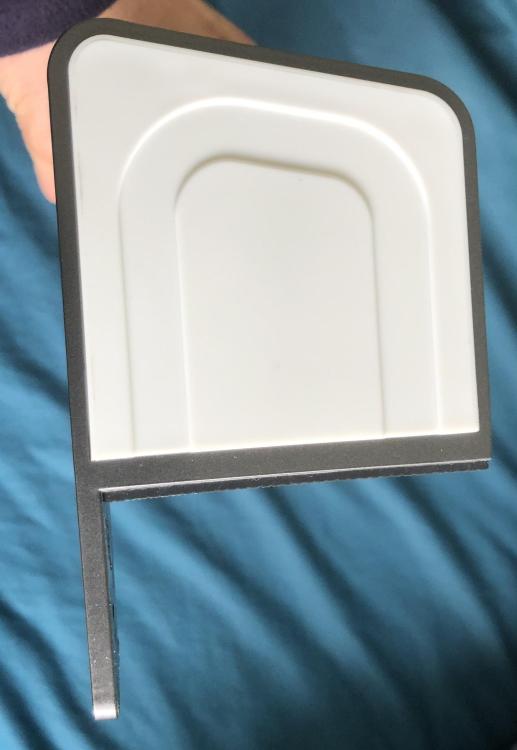
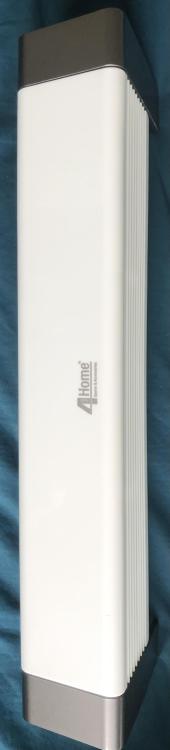
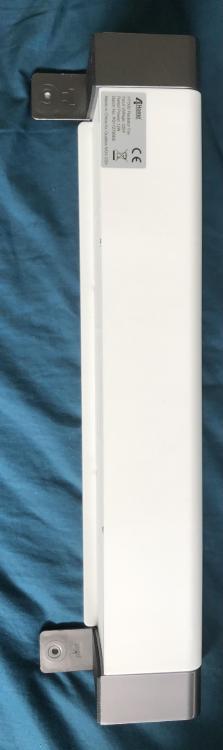
-
Having looked it up, the instructions for the Grant units say not to combine them because of different flow requirements. I presume that if you put a fan coil and a radiator in parallel, one will take all the flow leaving the other one ineffectual. I think it might be helpful to put them on separate pumped circuits so that flow is achieved through both (bit like UFH manifolds often have their own pump) (I don't have a good handle on whether the FCU or the rad will take more of the flow)
-
Air-to-air ASHP replacing warm air heating
Ommm replied to Gooman's topic in Air Source Heat Pumps (ASHP)
I am a novice at this, but if I understand it right the Aquair is just a big fan coil box: hot water goes into a heat exchanger, fan blows air over the fins, heat is transferred from the water to the air. In an air2air system the emitters are roughly the same, only with refrigerant fluid rather than water. As discussed on other threads on this forum recently, fan coils don't seem very complicated to make. It's a case of having a suitable fan/heat exchanger combination to do the transfer, and sizing it for enough airflow/heat exchanger area to transfer the amount of heat at the flow temps that you want (I agree it's not obvious how to calculate this). Fan coils for ducts are very common in commercial premises. As you say, the diameter of your ducts is going to limit how much air you can deliver and the temperature of that air how much heat. But you can still increase the airflow (until you hit limits like noise) and the flow in the fan coil. Perhaps you might be able to divide your ducts and install multiple fan coils in strategic locations - that increases the total heat exchanger area and so each one has to work less hard. For cooling, if you can get at the outside of your ducts you can (and should) insulate them. If they are buried it would seem to me condensation is less of a problem - there's no free air hitting the outside of the duct. You might eventually cool the concrete/etc to the point where it drops below the dew point, but that might take a lot longer and offer more chance for evaporation if you aren't running the system continuously. -
I had looked at those commercial radiator fans: currently the ASHP is plumbed into radiators and I can turn it onto cooling mode and it makes the rads nice and cold, but that doesn't do much for the rest of the room. I wondered if they would be a short term fix for cooling, before I can plumb in a better solution (needs a complete new zone fitting). But they're quite expensive for what they are, quite small fans and hence likely noisy, and I don't think a K22 rad is going to be much good for cooling (maybe OK for heating). The Amazon reviews aren't very good, and I'd really want a horizontal top mounted one (condensate would drip onto a bottom mounted one, and blowing air at the ceiling isn't much help) So personally I'm looking at ceiling mounted units, which makes the aesthetics more tricky. But I could definitely see a built in piece of 'furniture' with integrated FCU having some potential. There are also commercial FCUs designed to be integrated (to be boxed in or otherwise), if the DIY plumbing approach doesn't cut it. Although... looking at: https://radiatorfan.co.uk/radiator-fans/ it doesn't look like it would be impossible to 3D print the end pieces, and then you just need some strip plastic and the blower to go inside. Somewhat tempted to get one of the 4YourHome ones to play with and return it if unsuitable, but can't help but feel it's too small for the job.
-
Ah, that's an idea. Seems the search term is a 'cross flow fan' and there are quite a number on Aliexpress, although mostly <500mm long. As to whether they're good or quiet I have no idea... There isn't actually a whole lot to a FCU, and I was wondering about DIY options: fan, heat exchanger, condensate collection (when cooling). Seems like the heat exchangers are available on Aliexpress (search term 'fin tube radiator' or 'condenser'). There are also heat exchangers in a ducted box: ebay.co.uk/itm/203459846544 - I was previous pondering using one in a ducted form with an external fan, but now back to looking at wall or ceiling mounted boxes.
-
There's also: https://www.plumbnation.co.uk/site/smith-s-ecovector-ll1200-low-level-hydronic-fan-convector/ and https://www.ebay.co.uk/itm/403556834346 which looks like it's Chinese, one similar to these: https://yuexinlengnuan.en.alibaba.com/productgrouplist-907113836/ultra_thin_exposed_fan_coil_unit.html I've asked a few companies for quotes for radiator FCUs (Daikin, Systemair, Aermec, Olimpia Splendid, probably some others), they all come in roughly at £500 kind of ballpark. Which does make the Alibaba option somewhat attractive.
-
I was expecting the Cool Energy fan coils to be some Alibaba special, but it seems they're Italian and the Reverso range made by Aerfor: https://aerfor.com/ventilconvettori-idronici (the engineer's name is on the wiring diagrams and they're on LinkedIn ;-) I've never heard of them so no idea if they're a reliable make, but perhaps worth talking to them if you get nowhere otherwise. The specs look decent and the pricing isn't terrible, so I'm a bit sad they're not up to scratch. In general Italy seems to be the place to look. This place will supply to the UK: https://www.shopclima.it/en/hydronic-system/hydronic-fan-coil.html but a lot of theirs are out of stock at the moment. Pricing not massively different from the Reverso. Otherwise time to take your chances on Alibaba? Cheaper, but plus shipping, and an unknown quantity...
-
Fan Coil Units for use with a (cooling) ASHP
Ommm replied to ProDave's topic in Air Source Heat Pumps (ASHP)
Agreed. The main issue with wall-hung FCUs (either radiator style, or traditional A/C wall units) seems to be that they try to pack everything into a small package, which means forcing air at moderately high pressure through relatively small apertures. Whereas I'm looking at 200mm ducts, which means it may be possible to dial down the fan speed to keep the airflow noise down. Also avoiding flexi ducting should help. However many of the basic heat exchanger boxes don't have good datasheets so it's hard to know the relation between airflow and cooling power. Might just have to experiment. -
https://github.com/aerona-chofu-ashp/modbus There are some slightly unusual default baud rate settings (by default 19200 bps, no parity, two stop bits), but it's enabled by default. Modbus is a request-response protocol, so if you don't send a valid request you won't hear anything back. Once I had the baud rate settings (and got my +/- the right way round) it worked straight away.
-
Haven't been on here for a while, but that's my text cut and pasted from above. Full heat loss was done, came to about 5kW if I remember, which i was a bit dubious about. I did the calcs myself and it came to 8kW. So I think 10kW would have handled it. But the 10kW Grant is 3dB noisier than the 13kW and noise was a critical factor in our install. Also, we have to have the house dead silent at night so we have to start the ASHP from cold in the morning (we don't turn it off but setback to maybe 13C at night time so it only kicks in when it's really cold) - the 13kW should in theory be able to warm it up faster, although it's no gas boiler. Probably take a hit for efficiency but it modulates down (by default) based on return temperature, so if the emitters can't emit it won't consume so much power ('normal' electrical power is about 3.5kW when it's on (eg in DHW mode), going down to about 1.5kW based on return temp and weather compensation). The price delta wasn't very much and am generally happy with that choice. TPI is a problem because it takes the first maybe few minutes of 'on' time spinning up, only for TPI to then tell it to turn off again a minute or two later. Which makes it noisy and maybe interferes with the modulation. On the Lyric the best I can set it to is 20 minute TPI periods, which is better than the defaults but still not ideal. I'm happy with it as a unit; it works; I'm happy with the efficiency; it is generally configurable if in not the most user friendly way; the way it has been installed could be better. Which is partly the fault of the 'it's a boiler' mindset rather than a problem with the unit itself.
-
Fan Coil Units for use with a (cooling) ASHP
Ommm replied to ProDave's topic in Air Source Heat Pumps (ASHP)
Just to note that I've written some notes on how to enable cooling on Grant Aerona3 ASHPs: https://github.com/aerona-chofu-ashp/docs/blob/main/guides/cooling.md I've only tested it, haven't plumbing in cooling for real yet. The main blocker is noisiness of FCUs (one resident is ultra noise sensitive) and so I'm trying to design a system to be as quiet as possible. This may require some 'creative' design and experimentation, which I have more scope for on my A2W system than a traditional A2A system. Will have to see what they can tolerate. -
A bit late to this thread, but I *think* it might be possible to have an external source adjust the weather compensation curves on the Grant/Chofu via Modbus. I see the values in the table that's been reverse engineered, but I haven't tried changing them. If this is of interest I can investigate and report back. You'd still get a two-point straight line, but you could then adjust the two points dynamically, eg over the course of a day. Then you'd need something to send the Modbus commands - fairly simple from a Raspberry Pi or similar. Rather depends what you want to do with them from then on.
-
I'm plotting putting in some fan coils for cooling from my ASHP. To plumb this the easiest way is to split off one insulated pipe per fan coil (my existing radiator loop isn't suitable). I had a look around and a neat way to do that might be with an UFH manifold: [source: Emmeti] The T1 types are 'radiator' manifolds, expecting to have a TRV further down the run. But it would be advantageous to use the T2 types, because then I could use regular UFH actuators to control each circuit and have them all together for easy wiring. The problem I can forsee is that the UFH is typically limited to max 5 litres/minute per loop, while my ASHP demands a minimum of 15 litres/minute. I have a buffer tank so not achieving that flow isn't a showstopper, but a higher flow would provide better cooling. I don't know what a good level of flow actually is (I haven't selected fan coils yet, and some of them don't have very good data) so this is a bit guesstimate at the moment. So is there a way to remove the flow restrictor on a T2 manifold, while still having the ability to balance each loop? Could I maybe swap the valves over from a T1? Or would the UFH actuators throttle down the circuit too much anyway? I haven't a particular vendor of manifold in mind, but any info on any where this might be feasible with greatly appreciated. Suggestions of alternative ways to achieve this also welcome...
-
I have a 1960s bungalow with a 1970s loft conversion. The vertical walls are constructed roughly like a 1970s loft: plasterboard inside, then timber uprights with 80mm rockwool batts between, held in with string. Performance of those isn't terrible, but there are inevitably gaps, and a chimney effect through the gaps. Behind the wall is a cold loft, with venting at the soffits. The floor under the conversion (downstairs ceiling) is just the regular joists but with the gaps stuffed with rockwool. One of the issues with the construction is its lack of thermal mass. It gets very hot in summer and cold in winter as soon as night falls. The walls are east and west facing so see a lot of solar gain in the morning and evening. We're having a heat pump fitted soon so I've been thinking about insulation in general. I've thought of a couple of ways to address the thermal mass issue and the gappy insulation. One is to replace the rockwool with tight-fit woodfibre boards, which have more thermal mass and reasonable insulation. Another is hempcrete blocks, although those are potentially harder to install. What I'm trying to understand is the moisture implications. Currently the plasterboard provides a moisture barrier from room air, and the timber is exposed so that it equilibrates with the loft. I'm wondering whether the woodfibre or hempcrete would be more hygroscopic and so hold moisture close to the timber, which would seem to be bad? I also wondered about using woodfibre for thermal mass and then adding PIR for further insulation (both conducted and blocking solar radiation via the foil). But then the timber/woodfibre would be trapped between two impermeable layers - won't that be a damp reservoir? (Given it wouldn't be feasible to entirely seal the edges) Is there any other material I should look at for thermal mass and insulation that would be compatible with being butted up against timber in this kind of environment?