Ommm
-
Posts
80 -
Joined
-
Last visited
Everything posted by Ommm
-
A bit late to this thread, but I *think* it might be possible to have an external source adjust the weather compensation curves on the Grant/Chofu via Modbus. I see the values in the table that's been reverse engineered, but I haven't tried changing them. If this is of interest I can investigate and report back. You'd still get a two-point straight line, but you could then adjust the two points dynamically, eg over the course of a day. Then you'd need something to send the Modbus commands - fairly simple from a Raspberry Pi or similar. Rather depends what you want to do with them from then on.
-
I'm plotting putting in some fan coils for cooling from my ASHP. To plumb this the easiest way is to split off one insulated pipe per fan coil (my existing radiator loop isn't suitable). I had a look around and a neat way to do that might be with an UFH manifold: [source: Emmeti] The T1 types are 'radiator' manifolds, expecting to have a TRV further down the run. But it would be advantageous to use the T2 types, because then I could use regular UFH actuators to control each circuit and have them all together for easy wiring. The problem I can forsee is that the UFH is typically limited to max 5 litres/minute per loop, while my ASHP demands a minimum of 15 litres/minute. I have a buffer tank so not achieving that flow isn't a showstopper, but a higher flow would provide better cooling. I don't know what a good level of flow actually is (I haven't selected fan coils yet, and some of them don't have very good data) so this is a bit guesstimate at the moment. So is there a way to remove the flow restrictor on a T2 manifold, while still having the ability to balance each loop? Could I maybe swap the valves over from a T1? Or would the UFH actuators throttle down the circuit too much anyway? I haven't a particular vendor of manifold in mind, but any info on any where this might be feasible with greatly appreciated. Suggestions of alternative ways to achieve this also welcome...
-
I have a 1960s bungalow with a 1970s loft conversion. The vertical walls are constructed roughly like a 1970s loft: plasterboard inside, then timber uprights with 80mm rockwool batts between, held in with string. Performance of those isn't terrible, but there are inevitably gaps, and a chimney effect through the gaps. Behind the wall is a cold loft, with venting at the soffits. The floor under the conversion (downstairs ceiling) is just the regular joists but with the gaps stuffed with rockwool. One of the issues with the construction is its lack of thermal mass. It gets very hot in summer and cold in winter as soon as night falls. The walls are east and west facing so see a lot of solar gain in the morning and evening. We're having a heat pump fitted soon so I've been thinking about insulation in general. I've thought of a couple of ways to address the thermal mass issue and the gappy insulation. One is to replace the rockwool with tight-fit woodfibre boards, which have more thermal mass and reasonable insulation. Another is hempcrete blocks, although those are potentially harder to install. What I'm trying to understand is the moisture implications. Currently the plasterboard provides a moisture barrier from room air, and the timber is exposed so that it equilibrates with the loft. I'm wondering whether the woodfibre or hempcrete would be more hygroscopic and so hold moisture close to the timber, which would seem to be bad? I also wondered about using woodfibre for thermal mass and then adding PIR for further insulation (both conducted and blocking solar radiation via the foil). But then the timber/woodfibre would be trapped between two impermeable layers - won't that be a damp reservoir? (Given it wouldn't be feasible to entirely seal the edges) Is there any other material I should look at for thermal mass and insulation that would be compatible with being butted up against timber in this kind of environment?
-
Grant air source heat pump = Chofu of Japan?
Ommm replied to Ommm's topic in Air Source Heat Pumps (ASHP)
Having done a lot of reading of the service material, I'm actually reasonably impressed with Chofu. Grant claim to offer a 7 year warranty which is nice too. I think installers like them because they're just like a system or oil boiler install - all the controls are on the outdoor unit, with just a small control cable to a wall mounted keypad inside. I do have some wonders about support though: it looks like Grant would be the only source of parts, and otherwise you're left dealing with Japan. In theory Grant should provide all you need, but sometimes things don't turn out like that... -
Thanks, I've been posting to that thread I thought I'd start a new one as that thread has rather got into the specifics of sourcing and installing fan coils, whereas I'm more interested in performance of ASHPs against air conditioning. What are you using for emitters for your ASHP in cooling mode? (We're east-facing with no shading which has lots of solar gain problems, but when you want to cool below night time air temp no amount of shading will help)
-
I'm speccing out an ASHP system with radiators at the moment. One of my requirements is cooling in the summer for a couple of rooms (ideally want temps <20C which no amount of passive measures are going to help with). While it's not advertised or supported by the installer I think I know how to put the ASHPs being offered into cooling mode, so I seem to have two options: Fan coil radiators on a separate ASHP zone, insulated pipework, condensate drains. Going to cost about £300-400 for each radiator plus associated electrics/plumbing works Separate multisplit air conditioning unit with refrigerant pipework to each room, wall mounted fan evaporator unit. Maybe £800-1200 for the A/C unit plus installation (perhaps some DIY but need F-gas for the refrigerant side), let's say another £600. ASHP is cheaper but not enormously so. The ASHP is easier to expand to other rooms by fitting more FCUs, although insulating all the internal pipework and running condensate drains would be annoying it wouldn't be impossible. ASHP is potentially quieter than a typical A/C wall unit. But I'm wondering about the relative effectiveness of each approach. With an ASHP in cooling mode you're pushing around cold water at 7C, and your temperature change is dependent on how much air you can blow past the heat exchanger in the FCU. With a refrigerant system the heat is being absorbed by the refrigerant evaporating. I can't help but think that the phase change of evaporation is going to be more effective than just shipping around cold water. So I'm wondering if anyone who uses an ASHP in cooling mode has any advice as to how it compares to 'proper' A/C?
-
On an iPhone 8 Plus I have the app NIOSH SLM (sound level meter) which has been calibrated against real sound level meters on specific Apple hardware, and I've been using this to measure various noise sources like our portable a/c unit. I'd be very interested to know what kind of noise figures people are getting. Not sure what a comparable app would be with Android - since there are so many phones it's hard to calibrate.
-
My installer has quoted for a Mira Element EV, which is pretty bog standard thermostatic. If I happened to want to play with this, can this or other thermostatic showers be swapped to a non-thermostatic mode? For example by tweaking a lever or swapping cartridges? I would still want temperature control, of course.
-
Fan Coil Units for use with a (cooling) ASHP
Ommm replied to ProDave's topic in Air Source Heat Pumps (ASHP)
I had a look through the sites and most are Italy-only. I did find: https://www.promoclima.it/ who will quote for delivery to the UK (for 1x large-ish radiator fan coil about EUR60, which sounds about right, for 3x is EUR215, which is a bit steep but probably what it costs for 3 parcels to go UPS. Their list prices are probably ex-VAT, plus customs fees). They list shipping for most of the EU but not Ireland for some reason - worth asking, or presumably UK includes NI and maybe you have a friend across the border... (whether they will actually go through with a transaction to the UK is another question, but they let me get as far as payment) For the FCU that was EUR215 plus EUR60 delivery, Sabiana UK quoted £324+VAT plus delivery (which for 3 FCUs was £70+VAT). So not a huge deal in it if buying multiples. The alternative is one of the 'parcel forwarding' companies intended for online shopping that can consolidate onto a pallet. I asked SourcingItaly for a quote but they said they're out of warehouse space at present. I might try others, but not sure it'll be much improvement on EUR215, and probably pallets are a bit too big for many of them. Might make sense for more units though. -
This is a bit clearer (my bold): https://www.ofgem.gov.uk/sites/default/files/docs/2021/03/drhi_essentialguide_forapplicants_mar2021_v7.pdf
-
I've had no end of problems switching supplier where they got the night and day readings mixed up (in different properties too). I'm waiting for Octopus to line me up with a smart meter so that they can push an E7 tariff to my meter if they want to, but will probably stay on the regular tariff. Although you could do something funky by switching tariff mid-year: E7 for the summer, regular tariff for the winter? Even more interesting if you have solar PV where you can offset the expensive day rate with your own generation. Still probably makes more sense to be on Octopus Agile or one of the EV tariffs though.
-
It is mentioned under a strange heading: https://www.ofgem.gov.uk/sites/default/files/docs/2021/03/drhi_essentialguideforinstallers_mar2021_v6.pdf It's unclear if that's solely about MVHR heat pumps or applies to heat pumps generally. If it was about MVHR the third sentence doesn't really make sense (MVHR forbidden, MVHR with cooling still forbidden, non-MVHR ASHP allowed?)
-
What size cylinder would you recommend for a 3/4 bedroom house (1 bath+shower room, possibility of another shower in the distant future) out of interest? Bearing in mind sizing for the property rather than the current occupants if you ever plan to sell it, and not assuming those future occupants having any particular usage pattern.
-
Air-to-air ASHP replacing warm air heating
Ommm replied to Gooman's topic in Air Source Heat Pumps (ASHP)
I don't have any experience in this area, but just to note that this setup is common in the US where it's called 'central air conditioning'. They use it for both cooling and heating - although some units eg in Texas only have resistive heating because they don't use it very much, they use heat pumps in places like Missouri where it gets cold and hot in different seasons: https://www.consumerreports.org/cro/central-air-conditioning/buying-guide/index.htm I can't recommend UK suppliers but I would imagine that it's more in the skillset of commercial A/C installers, where you might already have ducted air in say a hotel or office building. I would talk to people who do commercial HVAC and see what they say. -
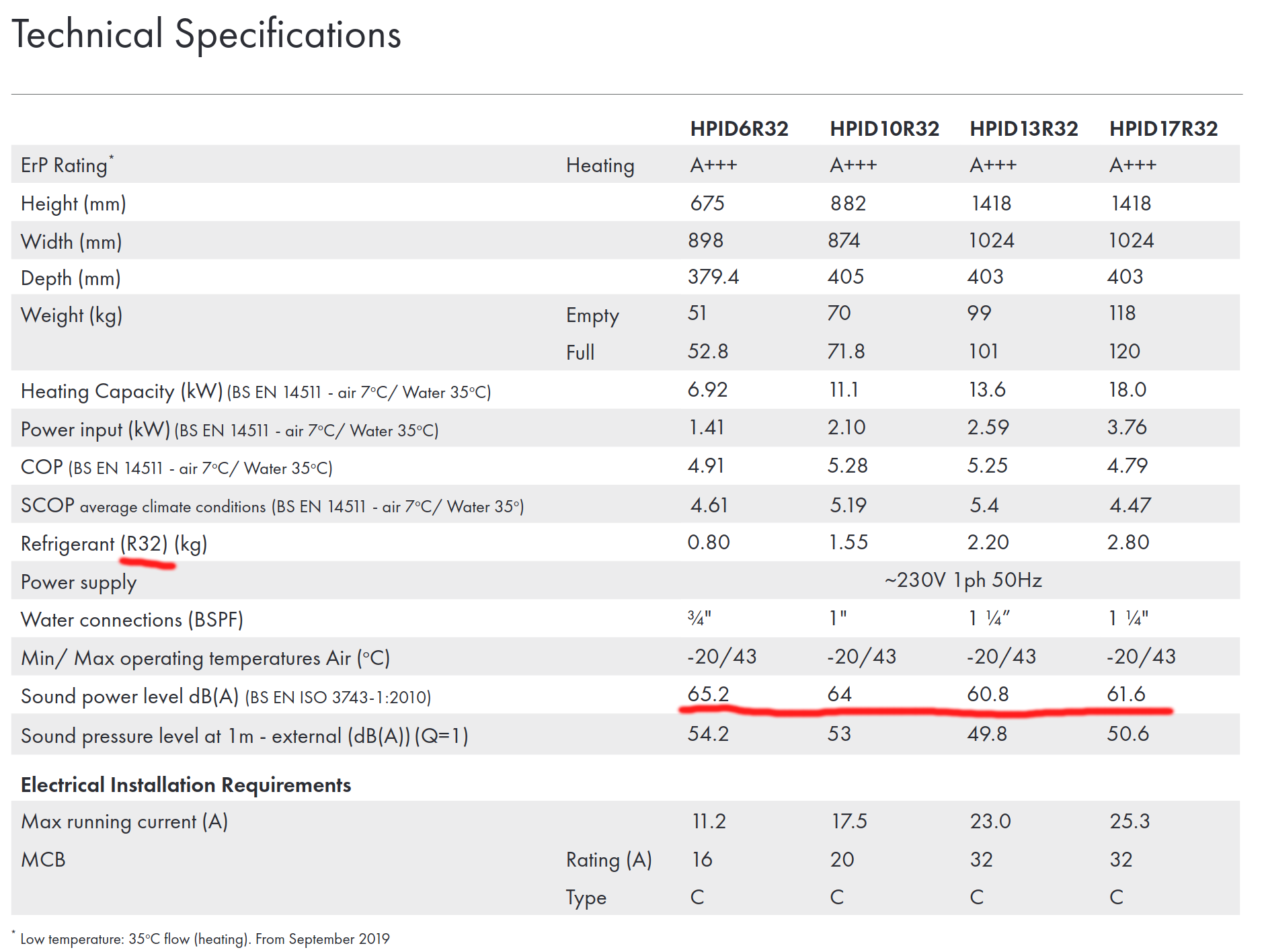
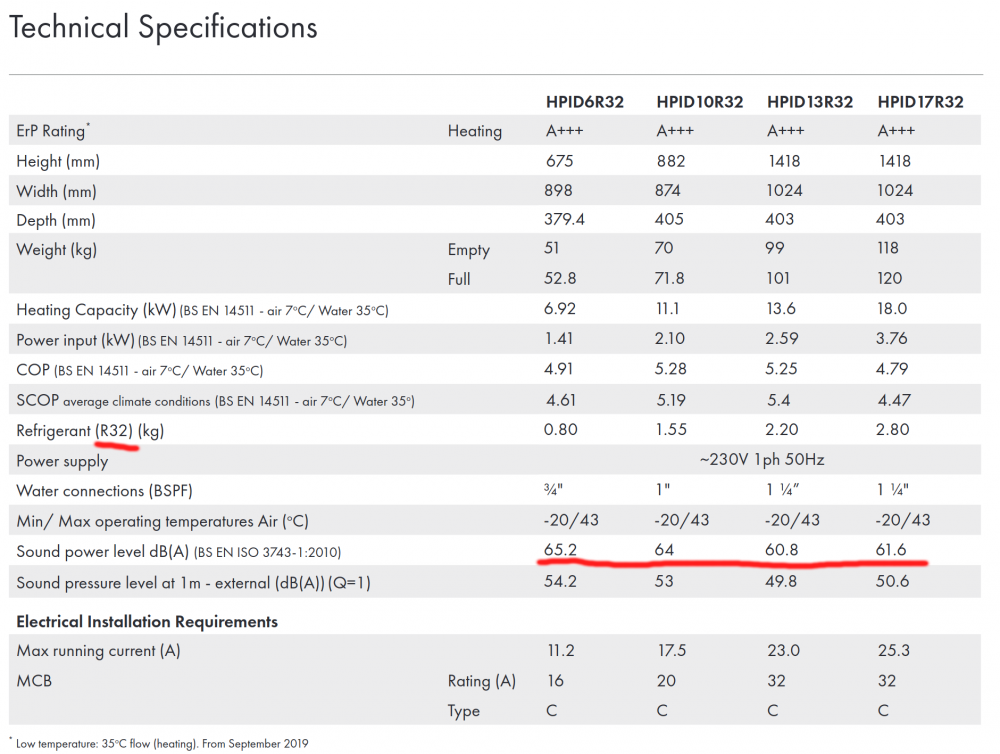
While I have it open, this is the info for Grant. It's why I'm not entirely happy going with a Grant system:
-
Thanks. Looks like Horne only have hospital-style enclosed shower units, or mixer valves that are designed to be hidden away. But good to know low-difference mixers exist.
-
Fan Coil Units for use with a (cooling) ASHP
Ommm replied to ProDave's topic in Air Source Heat Pumps (ASHP)
Look up 'ventilconvettore' - there are quite a number of suppliers in Italy, where they seem to be popular. Here's a price comparison for example: https://www.trovaprezzi.it/prezzo_climatizzazione_ventilconvettore.aspx (for examples of suppliers that list prices, rather than the specific models they have there) As to who will ship to the UK post-Brexit, that's another question... (perhaps need a freight consolidator in Italy? Or drive to Calais...?) -
At present we have washing up water come from the hot water cylinder which is only run when someone wants a bath. The dishwasher does 90% of the washing up, and other times there's usually a recently-boiled kettle next to the sink. So lack of hot water doesn't bother me - if it did, instant-heat taps aren't that expensive and running costs relatively minimal given the sink doesn't use a lot of hot water. If you run your cylinder at 48C, how hot can the shower water go?
-
Now I understand that if you have an unvented cylinder it's a regular hot water system and you can drive pretty much any shower. But I wondered... an ASHP runs more efficiently at a lower temperature. Yet thermostatic mixer showers tend not to work if they can't mix in some cold. One I looked at said it expected a 12C difference between hot in and outlet out. So you heat the water up to 50C and then mix it back down to 38C again. This seems crazy to me. Obviously, you need a thermostatic control because sometimes you're on the legionella cycle and the water temp really is 60C. And having cooler tank water means you get less runtime compared with mixing in some cold. But is there a mixer that requires less temperature 'headroom', and so if the input is 38C it would output something like 38C and not 26C?
-
Grant air source heat pump = Chofu of Japan?
Ommm replied to Ommm's topic in Air Source Heat Pumps (ASHP)
I'm familiar with Carrier - they and the Japanese/Korean big brands are the air con units that we install in the middle east when it's 50C outside, and they keep going for decades. Many others can't handle it. Which is why I'm biased towards brands that sell lots of A/C units because they've been in this game a long time. That's why Chofu puzzles me: I've not come across them (they don't appear to sell a lot internationally) which isn't encouraging, but on the other hand they're not Chinese (which fall apart in middle east conditions). Lack of volume makes me worry about spares though... -
I'm not sure if anyone makes vented cylinders with ASHP-suitable coils? So I suppose that reduces the choices down to how to boost the mains pressure...
-
My installer has recommended a Grant ASHP over a Mitsubishi 'because it's the better product'. I've never considered traditional boiler manufacturers for ASHPs - much prefer to go with a known air conditioning vendor who has been doing this for years. Anyway, I did some digging around and I think the Grant heat pumps are made by Chofu of Japan. Compare the diagrams from the Grant installation manual: https://www.grantuk.com/media/3710/grant-aerona-r32-installer-uk-doc-0136-rev-2-0-september-2020.pdf to those of the Chofu: https://www.centralheating.co.nz/assets/resources/Chofu-Operating-Installation-Manual-R32.pdf - they're identical in many cases. I've not come across Chofu before. Anyone have any experiences? Or with Grant themselves, for that matter? So I'm wondering how much to push for a Mitsubishi. What would you do?
-
Currently looking at an ASHP to replace an oil boiler and electric shower. One thing that's arisen is we have quite low mains pressure - 2 bar and 10 litres/min flow. What would be a sensible way to address this? It's a bungalow with a loft conversion, so there's not a lot of space for a header tank (~150 litre cold tank at present) nor much headroom, and access to the remaining loft is awkward. The hot cylinder is currently level with the shower so there's no head of hot water. So we won't have a lot of head for a vented cylinder or much mains pressure for an unvented cylinder. I see there's various accumulators that can be added as a reservoir, but how big an accumulator should I expect to need? I was looking at the Stuart Turner Flomate range - they have an accumulator (for increased flow) and pump (for increased pressure). We only have the one shower so how much runtime would you get before the accumulator is exhausted? Are there any other ways to make this work? Are all ASHP cylinders unvented?
-
Fan Coil Units for use with a (cooling) ASHP
Ommm replied to ProDave's topic in Air Source Heat Pumps (ASHP)
I'd definitely be up for a shared order. I was talking to these folks: https://yuexinlengnuan.en.alibaba.com/ as they have a radiator-replacement FCU for ~$150: https://yuexinlengnuan.en.alibaba.com/productgrouplist-823836568/ultra_thin_fcu_radiator.html They do ceiling ones too - do any of these match what you need? (see also the other categories) https://yuexinlengnuan.en.alibaba.com/productgrouplist-823312868/ultra_thin_concealed_horizontal_fcu.html They quoted ~$320 for UK shipping. That's likely air freight. It'll cost roughly the same for a pallet to go by sea (~40 days) but multiple units could fit on a pallet. Do PM me for further plotting ? -
Fan Coil Units for use with a (cooling) ASHP
Ommm replied to ProDave's topic in Air Source Heat Pumps (ASHP)
Having done some digging around, I find there are plenty of fan coil units on Alibaba in the $100-200 range: https://www.alibaba.com/trade/search?IndexArea=product_en&CatId=&fsb=y&viewtype=&tab=&SearchScene=&SearchText=fan+coil+ They appear to be imported into the EU and rebranded as various local brands (found some in Greece, Bulgaria). Of course the suppliers are in China so you need to pay shipping and import taxes (but shipping from Italy might not be a lot different - how much does a FCU weigh?), and the unit price for small volumes may be higher. The main thing that's hard to judge is the quality. But a fan coil isn't that complicated, just a motor and some metalwork, so I wonder if it would be worth the risk?