Trw144
-
Posts
748 -
Joined
-
Last visited
-
Days Won
4
Everything posted by Trw144
-
So the moral of all this is don't tie my house up to an exposed harbour
-
For reference, I just called celotex and they have done a comdensation risk analysis that shows it passing with the vcl between the insulation. The lady said the lines are somewhat off each other and therefore it would be pretty safe going for this route.
-
I had spec'd a Ventaxia Highflow for my house (roughly 300m2) and planned on installing myself. However, with quite a bit on at present I had contacted a local installer to offer me an install price. He has done that, but also offered me an alternative that he supplies - Titon HRV 1.75 Q Plus. The question is, how does the Titon compare to the Ventaxia, and is it better two have one large unit or two smaller units?
-
The issue is about the air tight membrane and whether it can be between the timber frame insulation and the additional insulation, or needs to be on the inside of all the insulation. I believe I read somewhere that it was ok provided the internal insulation was no more than 30% of the total - not sure where I read this or if it is accurate
-
It you look at page 9 on this link, this is how Trada show it (different construction I know).... https://www.trada.co.uk/downloads/publications/Timberframeconstruction.pdf Can this risk be modelled by someone to see if it is ever likely to happen?
-
I ll give them a call and see what they have for this - only issue is I don't have a lot of height
-
The instructions on Stixall suggest it's suitable for this application. Used for marine applications, joining external cladding etc. I assume it's the Stixall extreme power?
-
The other potential possibility is to fix in from the side using a slightly different profile. The issue with this route is trying to clad over the channel so that it looks neat.
-
Could you sketch/show me a link to what your thinking?
-
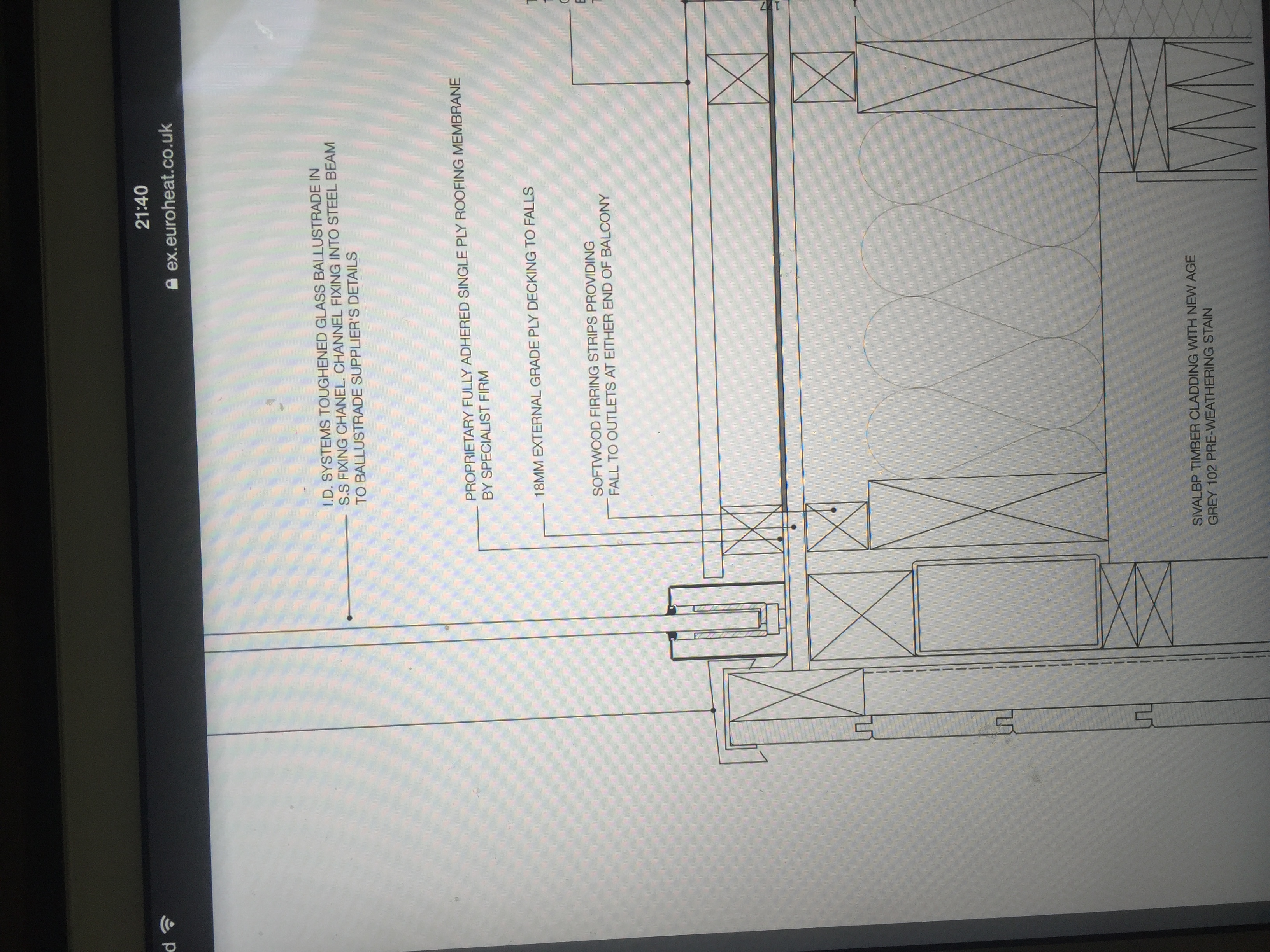
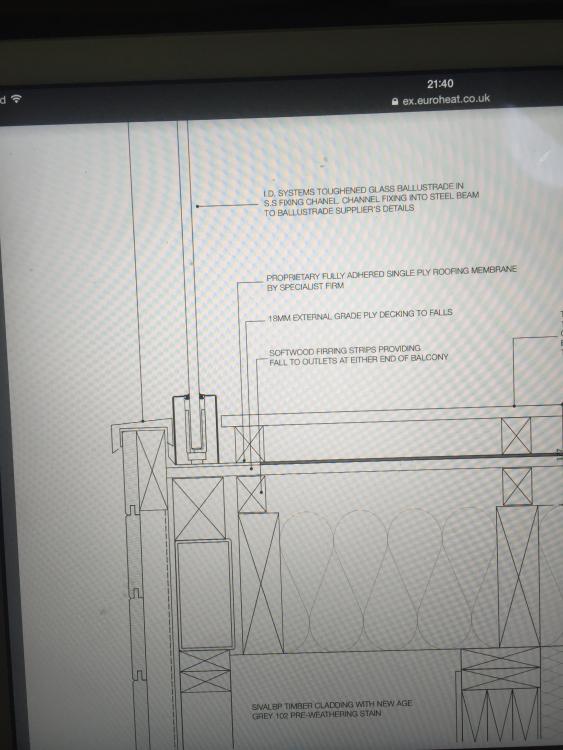
Picture to help explain although I will put a timber under where the railing is to raise it from being where rainwater would collect.
-
We will be having a glass balcony on the rear of our property - however it ultimately means that the epdm membrane must be bolted through in places to allow the balcony channel to be fixed to the steel beam below. Assuming no one has an alternative way of doing this, can anyone recommend the best sealant to use to try and ensure this detail remains weathertight for as long as possible. Something that can withstand both sunlight and cold temperatures. The epdm will be raised at this point so rainwater should be kept to a minimum.
-
I'd say now, I think the upside we would see in sterling if we stay in is largely factored into current exchange rate, whereas if we leave then I can see 1.15 pretty quickly
-
Can I also recommend Passive House Sytems for the supply of tapes and membranes at a good price (gerband). Also, fantastic service - I ordered some for delivery last Friday and they the carrier failed to deliver it. As I was desperate for it for the weekend, the guy at passive house Sytems arranged for someone to travel 1 1/2 on the Saturday to deliver it to me. Life saver
-
Ok, sounds like I can go for it and gives me the weekend and next week to work on it.....
-
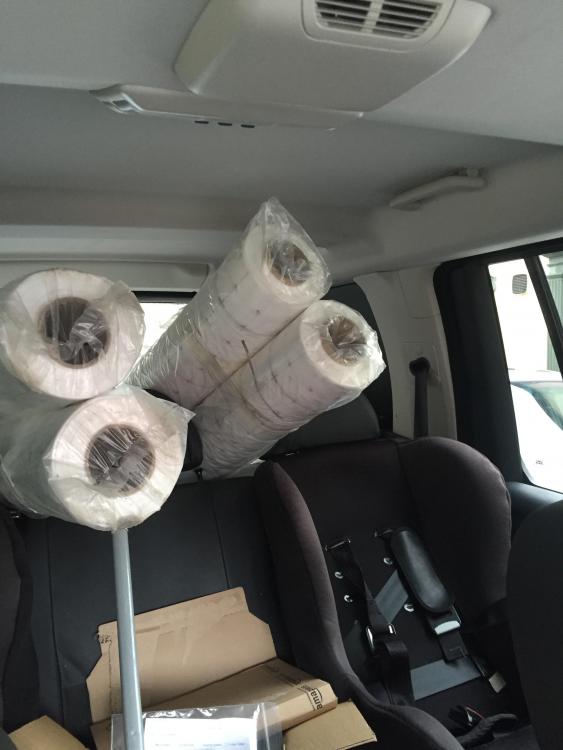
I like the idea of a separate membrane as opposed to taping the insulation and as my car boot currently looks like this, I m using it!!....
-
This was a subject bought up on the old forum... My timber frame/insulation is 140mm frame, followed by an additional 30mm pir, battens for service void and plasterboard. My question is, whilst I know the general consensus was for the air tight membrane on the inside of the additional 30mm, would it be that bad to put it between the insulation? The person adding the insulation for me cant do it for a few weeks, after which I have a window of opportunity for first fixes, but it does nt really give me time for adding and taping up the air tight membrane. My additional thoughts are that in places I need more space than the normal void will give me and I can simply take back the 30mm insulation in these places without worrying about the air tightness, additionally the membrane will be protected my the insulation when first fixes etc are taking place and is less likely to be damaged.
-
There's also a benefit in kind - you can't just live in a house and not pay the company any rent. Either you pay rent to the company or you pay tax on the "free rent" just the same as if you had taken that money as a salary. I m in the position of building two houses - one as a self builder and one as a company. Assuming you are staying in the house then the self build route is the one to go for every time. The only benefit for the company route (which is far outweighed in terms of tax disadvantages, accountancy costs, and administration costs) is that you can claim your input vat back quarterly instead of at the end of the build.
-
I m another for whom the forum died just at the wrong time - just as my timber frames were being erected. So what's happend in the meantime - the frames are now up, my cantilevered stairs in, and most of my roofs insulated and covered (epdm), my windows and doors have been measured, and I ve contracted some Welsh guy to design my hot water system ?. I put the second house on the market hoping to generate some interest ready for when it's complete, and have agreed a sale less than a week later (now it's with solicitors but hoping to exchange/complete this week). Next up is a quiet few weeks whilst windows are made, followed by floor insulation and ufh, and the start of first fixes.