


djcdan
-
Posts
139 -
Joined
-
Last visited
Everything posted by djcdan
-
I am also leaning towards option 3. One of the windows we have is 3.6m wide, but the largest sill is 1.8m. I presume the best solution here is to install two against each other and paint over the crack/use some form of filler to smooth the crack?
-
Unloading finished, and no return transoms. But the supplier has apologised and shipping out the missing pieces expected to arrive next week. I've already arranged for a few mates to come over Saturday to put the scaffolding up, so the returns won't have arrived by then. I'm therefore planning to install the runs in place with a transom and change around to a return transom when they arrive. So I can install the runs the correct distance apart, could I ask someone with Kwikstage up to measure the distance between the two runs so the return transom can slip in to place once arrived? Cheers ?
-
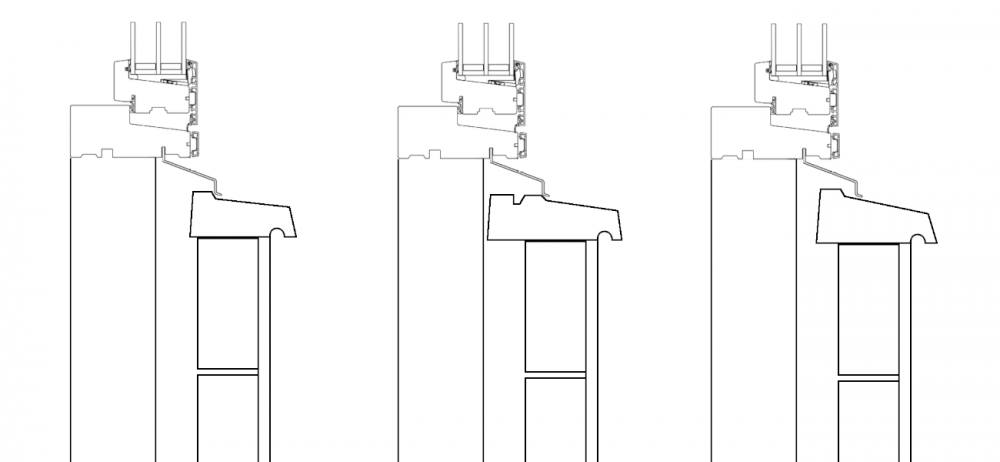
Before potentially ordering the incorrect external sill size, I'd like to check I'm ordering the correct size. Below shows three concrete options available to us. Our timber frame will be blocked in a 100mm skin with a 65mm cavity. The window would be pertruding out from the frame by 50mm. The aluminium sill leading to the concrete sill is to scale and taken directly from the manufacturers drawings. We'll have a 19mm render and in each of the drawings shown, the overhang is 40mm as per building regs. My questions mainly relate to installation positioning and the amount of 'overhang' required between the aluminium sill and the concrete 'lip' on the main sill. Personally the third options seems best, but I am unsure as to whether the sill should be installed this far in to the cavity position? If the inside edge of the sill should be installed near-enough flush to the inside edge of the 100mm block, then the first option seems best. The shape and installation of the middle option doesn't seem to suit, but could be wrong on that.
-
Maybe this is what the supplier has done. Return transoms were on the invoice however.
-
Not so far. 2/3 of the way through unpacking and if these are normal transoms, the return transoms are currently no where to be seen. The majority of the transoms I have are the two pieces welded together as you mention.
-
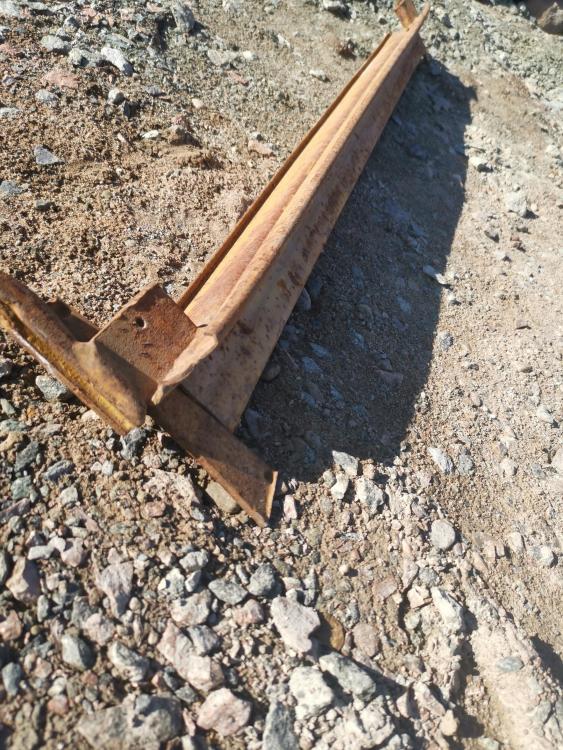
Can anyone identify this piece. It is a transom, but ever so slightly lipped edges. I ordered some return transoms, but was expecting there to be a more obvious manner of connecting to the perpendicular ledger such as what I'd seen in online demonstration vids. Can anyone advise on this?
-
@PeterW @Russell griffiths Thanks for that. I've adjusted our schedule to suit your suggestions. Roof on first. Lucky bastard getting screed at £17/m2 ?. We're paying near double this as we're rural so our screeders are doing a 290 mile roundtrip!
-
Yes, TF inc window and doors. I was wanting to have trades inside whilst I'm up on the roof. I'm allowing myself 4-5 weeks to have the roof complete, and pushing this first of all (with nothing happening inside) would essentially delay the project by 4-5 weeks. Our funding has come through the Scottish Government so has a deadline attached - after which the interest is hiked - so cannot really take a 4-5 week delay if that can be avoided. If it's advisable to get the roof on asap, how about: TF Roof Electric/Plumber Insulation UFH Screed Studwork MVHR Or if all studwork needs to be in place for the plumber/electrician, have the studwork slotted in to the schedule after the TF?
-
Hoping to get a little guidance from some of the experienced hands here. Our TF is going up in a matter of weeks and want to understand the best order to schedule the trades immediately following the TF going up. It is worth noting that I am planning on completing a number of the jobs; laying floor insulation, installing UFH, installing MVHR and laying the roof covering (interlocking tile). Initially, I had expected the following order of works: > TF finished > floor insulation > UFH > install MVHR > screed > plumber/sparky/chippie > lay roof covering The thought behind this would be to get the floor structure finished so trades could move around the build on a solid floor to complete first fix. All tasks immediately after the TF going up would be completed by myself, and once the screeders come in, move up on to the roof and allow the trades inside. Issue 1: Is it better to secure studwork to the slab (therefore before screeding and insulation) or directly on to the screed (65mm screed if this makes a difference)? Issue 2: I had a site meeting with our TF erector over the weekend who mentioned to get the roof covering on before the screeders come in. They said the main reason for this is for weather tightness - they'd have the membrane and sarking installed, but without the roof covering, it wouldn't be 100% weather tight. If it therefore rained, leaking on to a wet screed, it could affect the surface finish. Q - I presume the surface of the screed is only susceptible for the first 24-48 hours until it firms? On the above schedule, screeding would be expected mid-July, so more likely not to rain than rain (he says!), so worth taking the gamble? I'd like to avoid delaying the plumber/sparky/chippie coming on site, so could move the screeding later and having studwork completed first of all (if that is advised): > TF finished > studwork (if securing to slab is advisable) > floor insulation > UFH > install MVHR > plumber/sparky/chippie > lay roof covering > screed The only issue I see with this is: i) it involved trades working over exposed UFH pipes potentially leading to issues with pieced pipework, and ii) the joiner isn't yet organised (it is a nightmare to get a joiner in our area) would likely need to complete studwork myself on this changed schedule. I'd like to avoid taking on too much, but would consider completing studwork if required. How have others found studwork to complete? Easy with care or best left to the pros? Hopefully things become a little clearer with advise and discussion here. TIA
-
It seems noise is a major downfall of the aluminium cills, so will probably swing towards concrete. and good to know this is an option Thanks all.
-
Good point. Would this still apply with triple glazing?
-
I hadn't given this too much thought, but it's come to the point of confirming external cill specification to our window supplier (Rationel). What is better; concrete cills or aluminium supplied by Rationel? I'm leaning towards aluminium as you can tell from the list below, but happy to get other opinions. Pros of aluminium: requires less maintanence doesn't require painting initially cill matches the colour and finish of the glazing frame cills installed at the time of kit erection reducing the workload on the brickie Our largest window (sliding door) is 3.6m wide, potentially quite costly to supply and with little access to the rear, difficult to fit Pros of concrete: Allows for a shorter profile aluminium cill to potentially look more streamline Does anyone has opinions or feedback on this?
-
Nu-Heat do supply only on Nibe ASHP's.
-
We're having trench foundations. To get to the plant room (less so of a room, but more store cupboard housing the cylinder), it needs to go across two trenches, and therefore through two sets of 100mm block underbuilding Thanks. I've dropped an email to our heating engineer who's installing the ASHP and cylinder. I feel like the only reason this wouldn't be the suitable option is a lack of space in the cupboard. **I have no idea the amount of space required at the mains entry point**
-
Our foundations are currently going in and our groundworkers and I have been in discussion regarding routing of services beneath the slab. For the entry point for water, we have two options; beneath the kitchen sink at the edge of the property, or routing the entry point in the cupboard housing the water cylinder, which is in the centre of the property. It'll cost a little more to get the supply to the centre of the property as we'll require lintels, but it would be my preferred entry point as it would simplify the plumbing job later in the build and would reduce the amount of plumbing around the kitchen area (in comparison to a mains entry point beneath the kitchen sink). Does anyone have any feedback, positive or negative about bring mains entry to the water cylinder store cupboard?
-
We instructed our meter installation on 22nd June 20. It was installed Monday this week! In part, that will be because of our decision to use Scottish Power. They're best avoided...
-
I am torn. We'll be installing the Zehnder Q350, but unsure whether to purchase the pre-heater with it or not. We are based on the west coast of Scotland, right on the coast. We very rarely get snowfall or frosts (although it was frosty for a few days shortly after New Year) and winter temps very rarely drop below 1-3 deg - even overnight - as a result of the gulf stream affect. However... despite all this, it is still Scotland and who know what the weather can throw. My gut is saying no, but head is saying yes. Any thoughts?
-
Integrating an MVHR to our build
djcdan replied to djcdan's topic in Mechanical Ventilation with Heat Recovery (MVHR)
Yes, certainly does. For the time being, I see hardware advances slowing whilst advances in communications and technology such as blockchain advancing everyday use of tech. I read somewhere on BH it was needed to sell electricity back to the grid.... Yes. Would be good not having a massive bank of batteries in the corner. As we don't have gas available where we are, I'm keen to have battery storage on site so that in the event of a power cut, we can still heat the house (no wood burning stove). The longest power outage (according to neighbours as it predates us living here) is just under 2 weeks. 2 weeks during winter - it'll bound to be during winter - with no heating and particularly hot water could be an experience! -
Integrating an MVHR to our build
djcdan replied to djcdan's topic in Mechanical Ventilation with Heat Recovery (MVHR)
Perhaps. It just feels like covering a roof to generate 30p per sunny hour doesn't offer the mature solution that the world currently requires. If a product was launched with x5-10 efficiency at a strong price point, it would revolutionise the industry over night. If there is money to be made, you can be sure someone is working on development. Nethertheless, even if the tech remains the same, the government will eventually need to support installations, which they currently don't do. In Scotland, an ASHP that would have cost me £10k in 2020 will cost me £2.5k in 2021 as a result of grants. Support for PV will come. Eventually... And plus, I need to wait for smart meter support in our area anyway. ? -
Integrating an MVHR to our build
djcdan replied to djcdan's topic in Mechanical Ventilation with Heat Recovery (MVHR)
Going back to the PC analogy, I am not comparing a PC running XP (2005) to a PC running Windows 10 (2015). I am comparing the movement of the general technological shift from PC to smartphones/tablets/ultrabooks. With the amount of focus on green energy, new technology will enter the space to meet the demand of this growing sector. There has never been an industry, product or sector that has completely plateued technologically speaking, especially one that still seems relatively young in the growth cycle of that market. -
Integrating an MVHR to our build
djcdan replied to djcdan's topic in Mechanical Ventilation with Heat Recovery (MVHR)
Ideally, I'd just cover the garage roof, which is already preexisting so the roof is already there. If we were to cover the section of roof on the house, it would be a £200 saving. Yes, can see the benefit of that. I don't dispute the price decline, just the technology and the efficiency of that technology. If it takes 10 years to pay back, I can 100% guarantee that the tech will significantly mature well within that period to the point where the current models are relics. It feels like purchasing a PC circa year 2005 and then having to use that PC until at least 2015 to get your moneys worth. In that 10 year span, tech had moved on so far that the units purchased in 2005 where obsolete. The tech still doesn't do what we all want it to do - become self-sufficient (unless you throw £££ at it - but that will come. I would rather pay £10k for a system in 5 years and gain an £8k grant from the government (which will be offered at some stage as they chase their green targets), so a net cost of £2k, to get a system that does what is needed - generate enough electricity to be self-sufficient, rather than be stuck with a system installed now that partially does the job and spend more money to do so since there is no grant or FiT (or similar). Good to know that. Cheers. The store cupboard door is a skinny one - 686mm. Which would there make it a 11mm gap. -
Integrating an MVHR to our build
djcdan replied to djcdan's topic in Mechanical Ventilation with Heat Recovery (MVHR)
I looked in to PV and honestly, can't see the hype in current circumstances. We'd have enough space for a 4KW system spread over a southern facing roof on the house and the southern facing face of the garage roof. It would take 10 years to pay back and without a battery unit (which is unaffordable on current budgets), a portion of the electricity generated will be lost. We aren't able to fit a smart meter in our location at the moment, which I believe was a prerequisite to have electricity fed back to the network. PV and battery technology will be unrecognisable in 4-5 years compared to what we see today and will gain significant awareness as the government chase their green targets. My plan is to have this retrofitted when the technology has matured with grants and offers similar to FIT return. Ideally, we would just utilise the roof space on the garage (since this is out of sight of the property), and fit the battery units in the garage where the meter position is. In practice, our build has a lot going for a PV installation; we have uninterrupted southern facing roofing and have a three phase supply fitted to allow us to optimise overgeneration to be fed back to the network. But on tight build budgets, for technology that will inevitably improve in a few short years, can be retrofitted and currently has no 'perks', I don't see this as the time to install. In 5 years, we'll likely be in a position to own an electric car, we'll have better batteries installed and would be able to fit a 16+KW system where I currently am able to fit 4KW to allow the system to be a little more self-efficient and cost effective than it currently is. -
Integrating an MVHR to our build
djcdan replied to djcdan's topic in Mechanical Ventilation with Heat Recovery (MVHR)
We'll have a 10mm gap beneath the door. -
Integrating an MVHR to our build
djcdan replied to djcdan's topic in Mechanical Ventilation with Heat Recovery (MVHR)
70w is pretty decent. Around 1p an hour. She has a thing against tumble driers... Damage to clothes and unnecessary power consumption. But throw a new born in to the mix with the increased washing load, and I can see that opinion quickly changing!! -
Integrating an MVHR to our build
djcdan replied to djcdan's topic in Mechanical Ventilation with Heat Recovery (MVHR)
Yes, the COP of the ASHP but as we had no UFH upstairs the work/grief was not worth it for the short time they are on and only in winter (IMO). Ok, so overall the cheapest way to run these rads is to use water, and taking advantage of the COP offered by the ASHP. However low wattage options are available. What are the wattage of your elements? But the better temps and simplest route for installation is electric. This cuts out the need to take any heating solutions from the ASHP upstairs saving on the plumbers time needed for the job.


