


Pocster
-
Posts
14433 -
Joined
-
Last visited
-
Days Won
29
Everything posted by Pocster
-
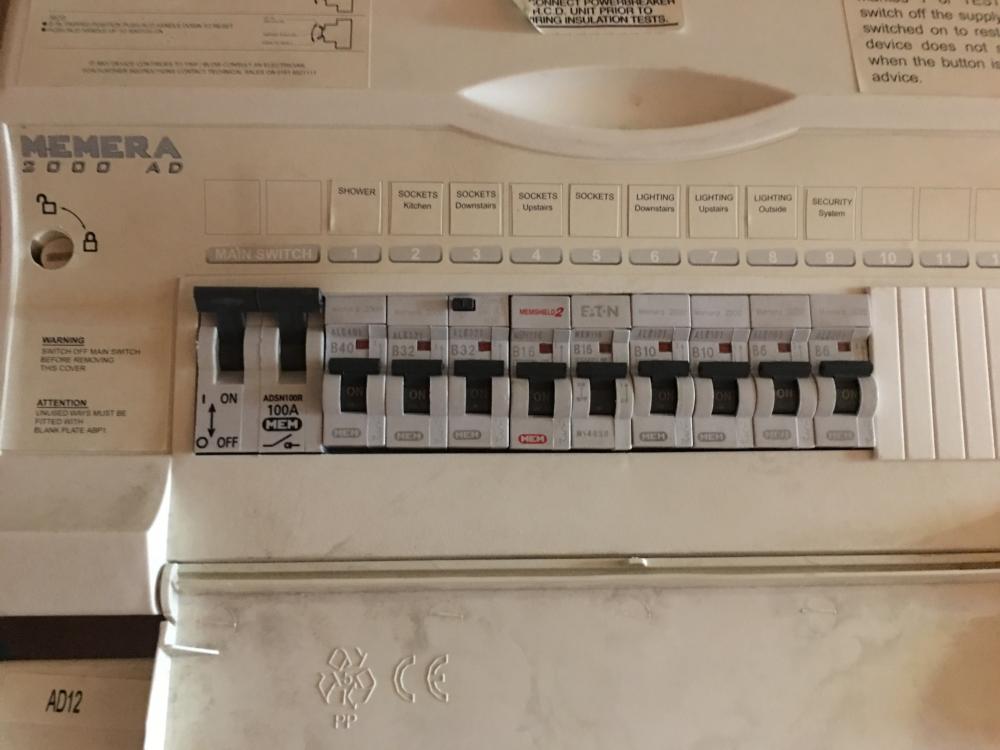
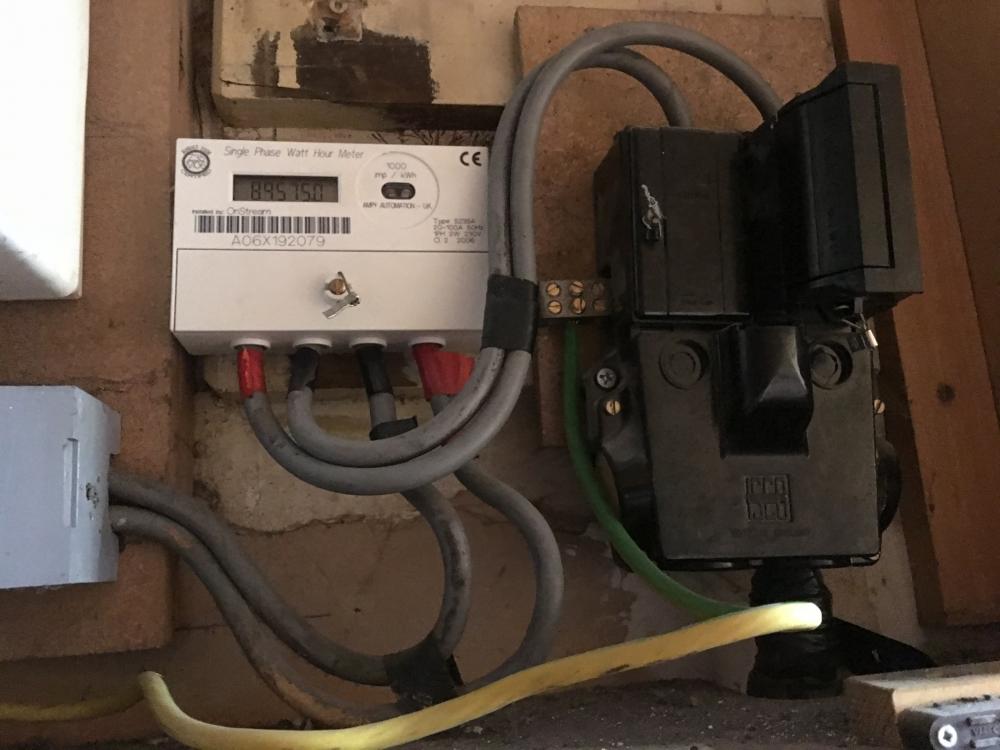
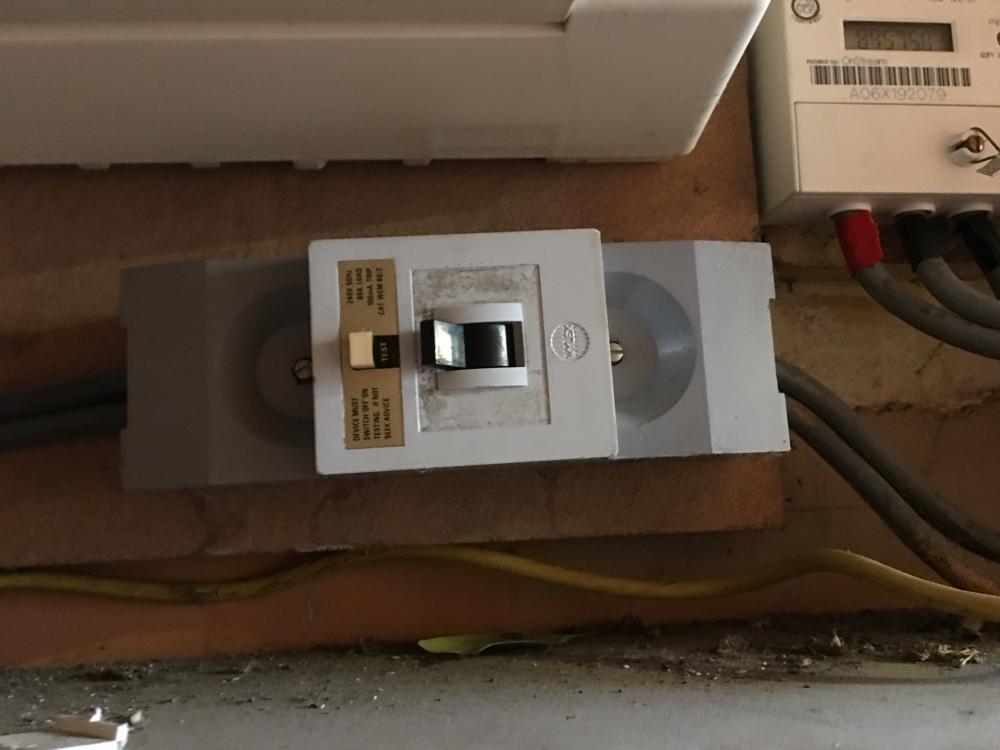
Here you go !
-
Photo of CU today I promise :-) I spoke to him today and challenged him about the 500 for stickers and an RCD. He 'claimed' (can't recall the exact wording) it needs a new unit and that it needs 2 breakers outside that. So that in event of 'some' issue not all the power is lost. The photo is going to help you guys I think - stay tuned! Will source other quotes!!! Cheers
-
Much appreciate your feedback my gut feeling was I'm being taken for an expensive ride ...
-
-
Here's the full report! - probably more helpful! 16 Laxey Road.pdf
-
It's an rcd / rcbo type b apparently:-)
-
Oh yeah another electrician. But then I'll have to pay another inspection fee !! - I assume he won't just take the previous one for granted will he ?? will get a photo of the cu unit. No electric showers or anything unusual . i only have one em ; apparently that's faulty and I need more I.e 1 on each landing thanks !
-
Right! Some figures! The first thing that seems expensive (though I maybe be wrong!); They won't issue an electrical pass certificate unless I pay £500 for... RDC 100mA rated should be 30mA no voltage label no periodic inspection label no cable colour change label no RCD test label Now!; £500 for a new RCD and some labels after a £300 inspection fee doesn't sound right! By contrast! EM lighting 1st floor landing, 2nd floor landing , ground floor and reposition entrance hallway one (all EM's replaced) 215+VAT I feel like I'm over a barrel because just to get the electrics passed will cost me another 500. Surely a new RCD and some labelling isn't THAT much work??? Fire alarm at 3k+VAT!; I'll just get other quotes for!
-
Very helpful! Will post the report when I get it. I did assume he was going all overboard because it's a nice earner for them and also it's a belts and braces approach. I am going from memory on the points as he reeled them out over the phone - and I was in shock from the 3k quote!. I find it VERY strange he says you *need* sounders in each occupied room but not a smoke alarm!!! Cheers
-
Oooooooo I'm in Brizzle! Very interested!! Hey I got planning for a semi underground house in the most contrived area in Bristol (BS9) ; fighting the council and neighbours for 5 years. I know the game!!
-
Hey all Right!; I've read up conflicting things on this. 1 exterior side of my build is a masonry leaf. So I assume needs cavity trays it's entire length with weep holes (ontop DPC????). There's also 1 window; so I assume a lintel and cavity tray across that with weep holes also? I've read that cavity trays should be placed above all openings. I have cladding at the back and render board at the front; How do I install cavity trays in those exterior structures??? Cheers
-
OK!; tbh we've had mega rain and it's bone dry on the ground floor (section below ground is a swimming pool). I was more worried about the floor screed going over some sliding doors (if they were installed) ....
-
OK! So the roofs on!. Do I get glazing in to make the thing almost water tight or sort the underfloor heating next? Does it matter?. I'm *guessing* glazing next..... especially as lead time will vary.....
-
:-) No not started that bit yet. I still might move the ensuite door or make it a pocket door; depends on how all the ensuite furniture 'sits' with the space. Cheers
-
Lol you're a little late to the party :.) physical commitment of structures has happened :-) !!
-
Also need siren in each room !! . Decibel level must be a certain value in the room with fire door closed . Apparently fire alarm should be a panelled type .... estimate cost 3k !!!!
-
From memory ( full report to follow ) not enough EM and also they were 240v and should be 12v I think ....
-
Well they produce a kind of certificate I.e the council accepted it ...
-
Thank-you! I think it will because I don't need to rely on any other trades!
-
RIGHT! After a lot of grief and almost a fight the roof is finished. Verge; *all* edges were nailed; I witnessed it. Plastic is fitted pretty darn neat. 'Roofer' tried it on for 'more cash' ; so it got messy at that point. Indeed for the final payment he refused to come and collect it (I would of busted his jaw); so had to pay one of his men. The guy who did the plastic wasn't the 'money man' and as far as I can tell did a 100% first class job. So!; I have a well installed roof finally!.
-
Hey all! It's my 5 year HMO electrical inspection check! The wiring passed (hurrah!); but he failed the emergency lighting and fire alarm. He said they don't meet the regs (exact details to follow once I receive them(. What concerns me more is that he says they failed the regs from 5 years ago! i.e. when the original installer put them in. My question is assuming he is correct do I have a valid legal case to pursue here? Council 'approved' his paperwork - but obviously the installation was incorrect. technically tenants would have been living in a property that breached fire regs for 5 years; though not the landlords fault surely!!???? Any advice welcome!
-
Well he did another roof for me about 2 years ago . So I can assume those aren't nailed either - though that roof has had no issues . i personally would of staggered the tiles . To be fair our house ( which is next door to the new build ) doesn't have staggered tiles . Indeed looking out my bedroom window I can't see a roof that does !!
-
Thinking about this there is some kind of lesson to be learnt. I can't do it because of the height; that's the only reason. Watched enough videos , got this forum and it's not rocket science . I would do it correctly and anything I was unsure of I would get checked. I could do a better job. But because of the height and 'fear' of getting it wrong and doing a bodge job I employ a 'professional'. He in turn has no fear of heights and effectively does a bodge job. Will the tiles blow off; unlikely . Will the roof leak unlikely . So for him it's a "job well done" i.e. profitable and quick. Is it sub standard?; yep. Does he care?, nope. BCO care? ; too be honest and based on my experience probably not TBH. So!. The lesson is simple. DO IT YOUR F*ECKING SELF! as long as it's not high He's coming back Tuesday to 'finish'. I've withheld cash (yes; it's one of those jobs); so I have leverage. As a landlord I get lied to and attempt to be manipulated all the time with BS. I shouldn't really of expected any difference here. Let's at least get *some* tiles nailed in! - the verges should be easy!. Anyone else in the future reads this thread then take heed. Watch every tile go up and make sure you see some nails. Assuming his 'experience' is greater than yours , whilst seeming common sense might not be.
-
He said he will sign a declaration that the roof tiling meets regulations as of today . at least I'm covered !!
-
Now I'm worried again ! i ( if I had done it myself ) would have nailed every tile regardless . no sleep for me tonight !


