


MortarThePoint
-
Posts
2294 -
Joined
-
Last visited
Everything posted by MortarThePoint
-
The bricks are due today and it occurred to I should ask what's important to check when they arrive. I obviously need to check they're the correct ones and the quantity. How do I easily check for breakage as there will be 26 pallets of them? They are coming direct from Wienerberger who I've been told pack them well. Is there something else I should be checking? Excited but nervous seems to be my default state at the moment.
-
They look nice. Is that lime mortar as well?
-
Thanks @LA3222 ! What are the bricks called?
-
An advantage of the Engineering brick is it feels more weather proof, but ultimately if a brick is going to suffer at 45 degrees it will suffer if vertical as well
-
I wondered about that, it would look something like this:

-
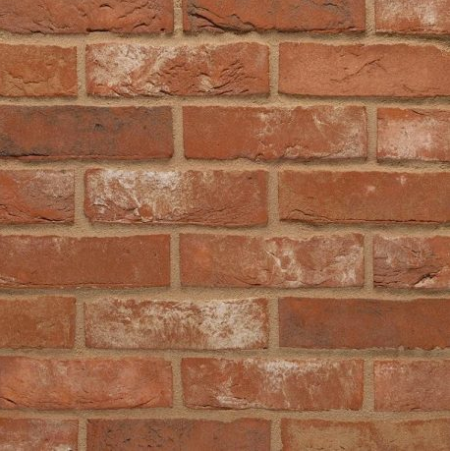
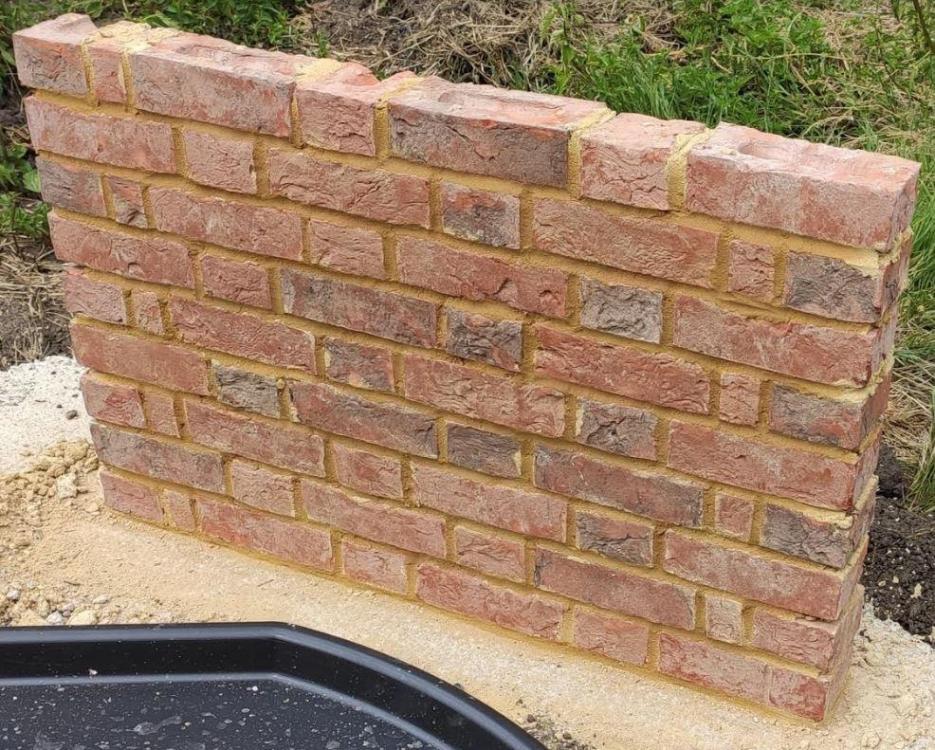
Yes that's what they say are available. For facing brick, we're using Wienerbrger Pastorale Multi: And they have Warnham Red Stock (L) and Sandown Red Engineering (R) available quickly: Though somehow bricks never look like the manufacturers website. Here is a panel I put up of Pastorale Multi: and what I expect the Engineering brick to look like:



-
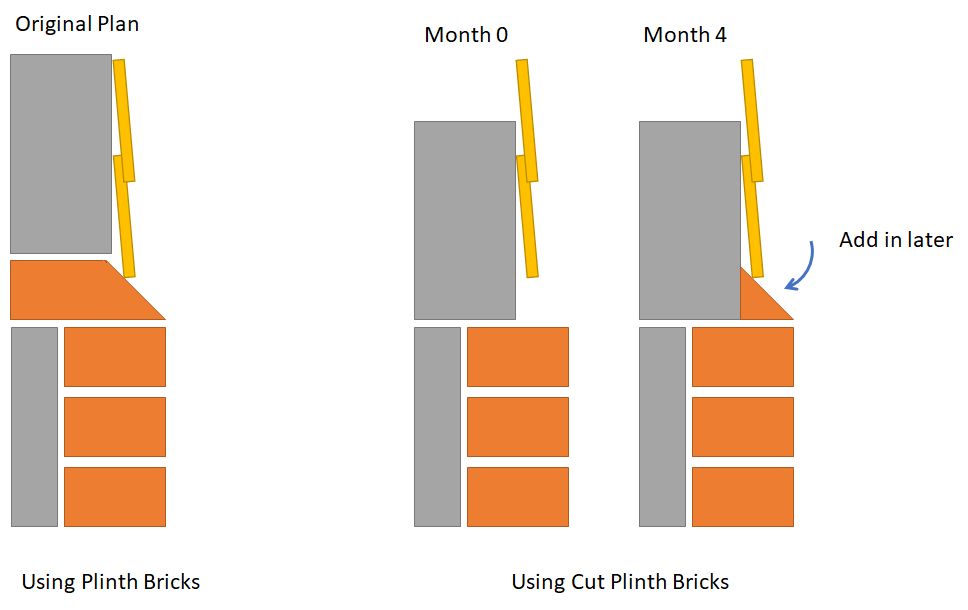
Thankfully this is only for the garage, but I have been quoted 16 weeks for the plinth bricks. There are some slightly different bricks that are available quickly as well as engineering type ones. Cut and bond doesn't look great in the photos I have seen so far, if someone has some better photos that could help convince me otherwise. Another option I was wondering is how difficult would it be to lay temporary bricks that are there for a few months until the replacements arrive and then swap those in. It may sound like madness, but I'd like to consider options as I'd like to finish the garage as soon as possible for storage etc. A third option could be to add in just the angled part (cut off a plinth brick) later on. I've sketched this below:
-
I went with Capital Valley Plastics High Performance DPC as it is rated for 3+ storeys and I could get in next day. I don't need its gas properties, but its Radon proof as well: http://www.capitalvalleyplastics.com/product/radbar-high-performance-dpc/
-
Thanks @nod High load: Do you remember the brand you used? I've seen this commonly available, but no idea if any good: https://www.ikogroup.co.uk/product/iko-hyload-original-dpc/ 600 mil: I read that as you used a 600mm wide DPC folded up over the beams, sounds like a nice approach.
-
We're using Thermabeam rather than beam and block, but the compressive load under the supports will be similar. As there are concentrated loads, do I need to use a specific type of DPC? What DPC do people use for beam & block beams to bear directly on?
-
It also does feel like it would be hard to bed the bricks properly without trimming it back.
-
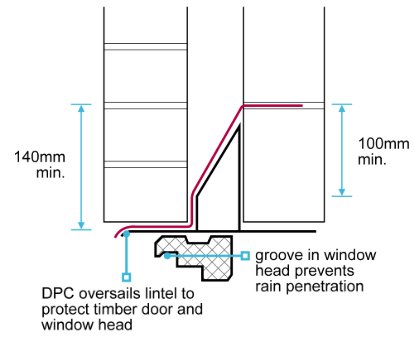
The NHBC guidance documents show the outer edge of the cavity tray DPC going past the edge of the lintel (see below). I've not noticed this done and have seen it trimmed back from the edge, for example this video. What did people do themselves here? I'm not sure which presents the greater risk of capillary action drawing water into the cavity under the DPC of the cavity tray?
-
Looks very smart, good job!
-
You're right, it was just a new thing to think about but as you say you won't notice it as it's in shade anyway.
-
That's a good option. I wondered if anyone does a sort of sleeve that can tuck over the lintel, it could even have the cavity tray built in
-
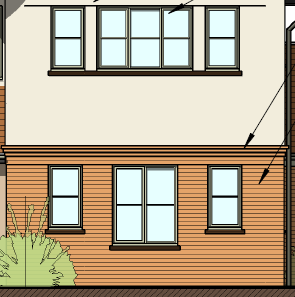
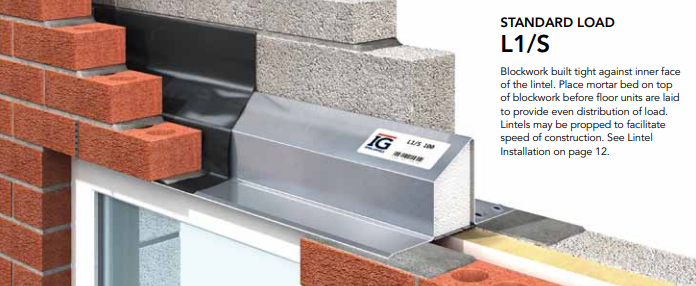
This may be daft question, but how do you conceal the outer part of a window or door lintel in brickwork. The brickwork above the lintel is sat on top of the lintel and I don't want to be able to see the metal underside of the lintel when finished. What are my options? I know you can get special soldier course lintels but we don't want a soldier course. Feels easier to hide it in walls that are rendered, but bare brickwork walls feel harder to hide the lintels in. Do people just paint the lintel? More RAL charts with the wife if so which isn't my favourite activity.
-
Brickwork and Blockwork Labour Cost Estimator
MortarThePoint replied to MortarThePoint's topic in Brick & Block
I'm confused now. Is that 250 bricks a day then when the going is hard and then 650 bricks a day when running in? -
Brickwork and Blockwork Labour Cost Estimator
MortarThePoint replied to MortarThePoint's topic in Brick & Block
I'm clearly in the wrong line of work ? 250 a day and 650 per thousand bricks equates to 380 bricks a day which feels a bit pedestrian. -
So did the 5 months dry out the block throughout and then it was important to make the surface wet to help the plaster?
-
Brickwork and Blockwork Labour Cost Estimator
MortarThePoint replied to MortarThePoint's topic in Brick & Block
Is that £650 labour cost per thousand bricks laid? That's £39/m2. -
Drainage lintel strength and bearing
MortarThePoint replied to MortarThePoint's topic in RSJs, Lintels & Steelwork
Out of interest, do you know if the Naylor P215 is a composite lintel or not? -
Drainage lintel strength and bearing
MortarThePoint replied to MortarThePoint's topic in RSJs, Lintels & Steelwork
Yes it is only 65 deep. Thank you for the insight. -
Drainage lintel strength and bearing
MortarThePoint replied to MortarThePoint's topic in RSJs, Lintels & Steelwork
I just looked and a P215 appears to have an unfactored UDL of 27kN/m, but would that be in the A frame scenario? -
Drainage lintel strength and bearing
MortarThePoint replied to MortarThePoint's topic in RSJs, Lintels & Steelwork
Thanks @Gus Potter, very informative. There is a door immediately above the floor slab that bears on the lintel. The load from that is 17kN/m but there's no scope for composite action. They did swap it to a P215 lintel. There is a helper pillar breaking the span into 2 spans, a 650mm span and a 300mm span. There's concrete packing underneath the lintel but of unknown quality and therefore unknown strength. -
Brickwork and Blockwork Labour Cost Estimator
MortarThePoint replied to MortarThePoint's topic in Brick & Block
Thanks nod. That amounts to a higher cost per m2. Bear in mind a m2 price would often be quoted already having factored in time spent doing openings etc. 600 bricks a day doesn't feel a stretch if not doing openings etc, but I speak without much experience other than watching videos and laying bricks myself as if I have two left arms and someone turned out the lights.


