


SuperJohnG
-
Posts
1260 -
Joined
-
Last visited
-
Days Won
5
Everything posted by SuperJohnG
-
@tonyshouse I dont mind the grey, I'm going to clad our annex in Siberian larch. @scottishjohn you have a good idea with fibre cement. Higher quality than PVCu and nice finishes in any colour with a relatively low cost I think. I had previously looked at cedral cladding for the house some time ago but never really followed up much. But it might be the perfect match for that no-maintenance/quality/cost triangle @Russell griffiths mentioned.
-
unfortunately I would agree (sorry Tony), which is exactly what I would like to avoid. I'm in west coast of Scotland - it's constantly wet. I did fit a new fence to my current house about 4 years ago, specifically bought tanalised wood so I would never have to paint it and could leave it to weather knowing it would last a long time with no maintenance,
-
@Russell griffiths I know the triangle well, and my normal emphasis is where possible maximise on quality and finish where possible and budget allows. I just hadn't considered fascias and soffits were of that much importance (which I am now finding out they are). The architect has them down as grey, hence I was assuming what was the point in having them timber at all as they will just look like plastic. I would have assumed timber would have been the worst thing to put up there to be honest. any links to pictures? @nod it just seems to make more sense to use plastic as a more suitable material (Aluminium would be nice...but I knew that wasn't even possible at the start, ?) great @tonyshouse perfect timing.
-
I'm just finalising our change of house type and the planning application is due to go in next week. The architect had put down timber fascia's, which i thought surely this should be PVC as it's zero maintenance - however he thinks that it should be about high quality materials as we are in the countryside. Surely timber is a complete pain in the arse? I cannot be bothered repainting ever years/couple of years??. I'm trying to minimise maintenance at all points but also want it to look good, however as with everyone, budget is important. what did everyone else select and why? thanks, John
-
Great weather for a kite if not for getting any building done. ?
-
This is a great idea, I have searched quite a lot but it can be struggle to get all the info, hence following @LA3222s raft execution very closely to make sure I don't miss anything. @LA3222 I have to take the time to commend you, doing an absolutely brilliant job and the fact that you take the time to share it with us is mega helpful for me and others who will be doing the same. Really helps demystify the process and gives a confidence boost to me that it can be done. Well done to you and the missus so far and thanks again.
-
Cracking job @LA3222 fantastic.
-
The build costs are entirely different for each build and it's very hard to say a budget will work for the size. However some have built for 800/m2 so it is achievable! However... my advice would be to spend a LOT of time reading and researching here and othe places to learn as much as you can and find the risks to your own individual project and finances. The more risk you can mitigate the smoother the build will go. My comments would be: 1. You seem to be doing a lot of the work yourself, if you work full time already...how will this fit in with life? Are you prepared for it to take 2-3 years to complete?. Most of us would love to build yourself and if you can do it great. But be realistic in the first instance.and plan plan plan. 2. Sizing - 200m2 seems small for the amount of things you want...these rooms are going to be very small if you dont compromise somewhere. I had planned 200 aswell and had less requirements than you...I am now at 250 not including my attached double garage... 3. To keep it cheap try ensuring the design is as simple as possible. A square box with straight walls will make it cheaper and easier here. 4. Good luck! Enjoy the process
-
Passive raft vs traditional (strip/trench) costs assesment
SuperJohnG replied to SuperJohnG's topic in Foundations
thanks @LA3222 as you know, I'm following your build intently! Helpful to understand how you went about it. I need an SER certificate here in Scotland. I need to spend a little more time understanding what is required here. I'm envisaging that once I figure it out I'll just let the architect deal with it. I am hoping to do render board (I've assumed less hassle and easier/quicker than blockwork) and siberian larch cladding, so guessing I wouldn't need that external ring beam. what is your finish? any reason you went blockwork? -
Welcome @FraserK. I'm in Scotland hoping to break ground later this year. Enjoy the forum plenty of great information to be found. Good luck
-
Passive raft vs traditional (strip/trench) costs assesment
SuperJohnG replied to SuperJohnG's topic in Foundations
Oh yeah will stick with him for planning for sure (and probably the BW stage too) and just to clarify and be fair, he is doing a good job and the attention to detail is really good. I just like to know what people are doing and what should be expected and this SE area seems to be a little confusing. -
Passive raft vs traditional (strip/trench) costs assesment
SuperJohnG replied to SuperJohnG's topic in Foundations
@Bitpipe again thanks for your input. The electrical and plumbing do't concern me too much (unless BC want to see) as it's straightforward, I will do plumbing alongside friend who is a plumber and electrically another friend will complete and sign off. I suppose it is the fear of the unknown here and what value people add at what stage. I'm happy to pay the right money where value is added and where I need guidance. We actually already have planning, but we are going back with a change of house design which the architect is going to do (I could submit to planning myself, as I have previously and it was straightforward..now I'm questioning this). I supposed I had assumed that I needed the architect to do all these things, but the waters become muddy when you have are specifying a kit and specific supplier. We are actually out for preliminary pricing from kit suppliers just now based on our initial design drawings. -
Passive raft vs traditional (strip/trench) costs assesment
SuperJohnG replied to SuperJohnG's topic in Foundations
thanks @Bitpipe . This is quite interesting as I have my architect (actually architectural technologist but I'm happier with that) who has done a house design for us which we are very happy with. We have completed stages 1/2 with him and the next stage is for him to submit to planning and get approval. The next stage was for him to do building warrant (more reasonable costs than yours of £3400+vat, which I am happy with) but I assumed I would absolutely need this stage as it would give me all the section details, call out all the electrical detail etc and handle the building warrant process, but I suppose he would be pulling together the kit suppliers drawings? -
Radon underneath EPS only? No DPM (Insulated raft)
SuperJohnG replied to SuperJohnG's topic in Foundations
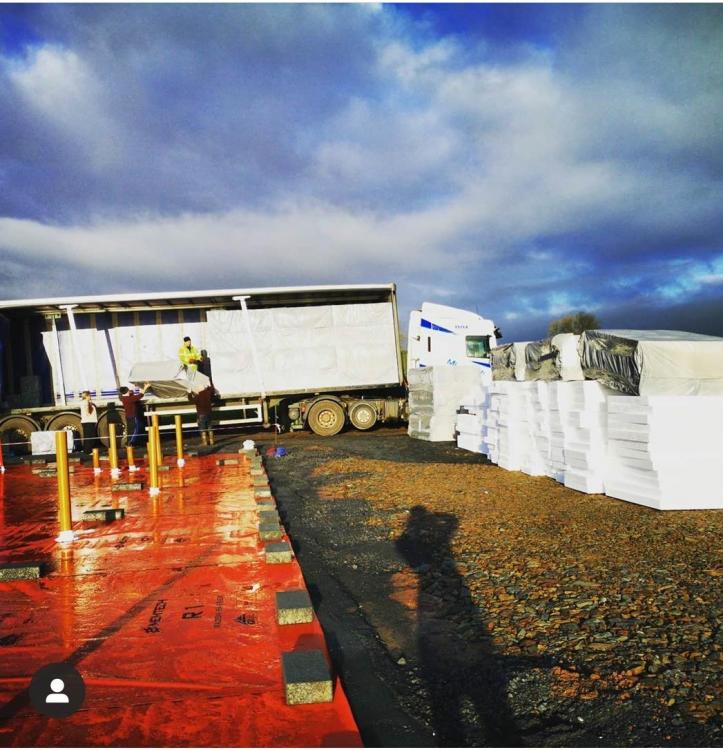
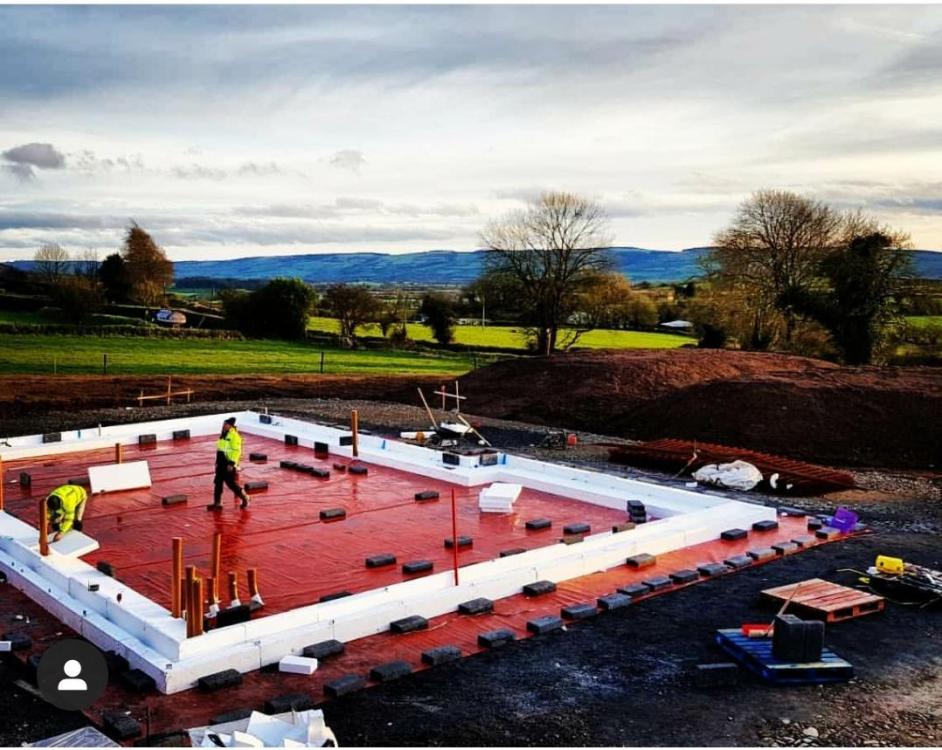
The radon barrier makes sense, I was more wondering what they are doing for DPM? I assume it will go between the soleplate and slab, but surely water can still pass through and come up to the finished floor? -
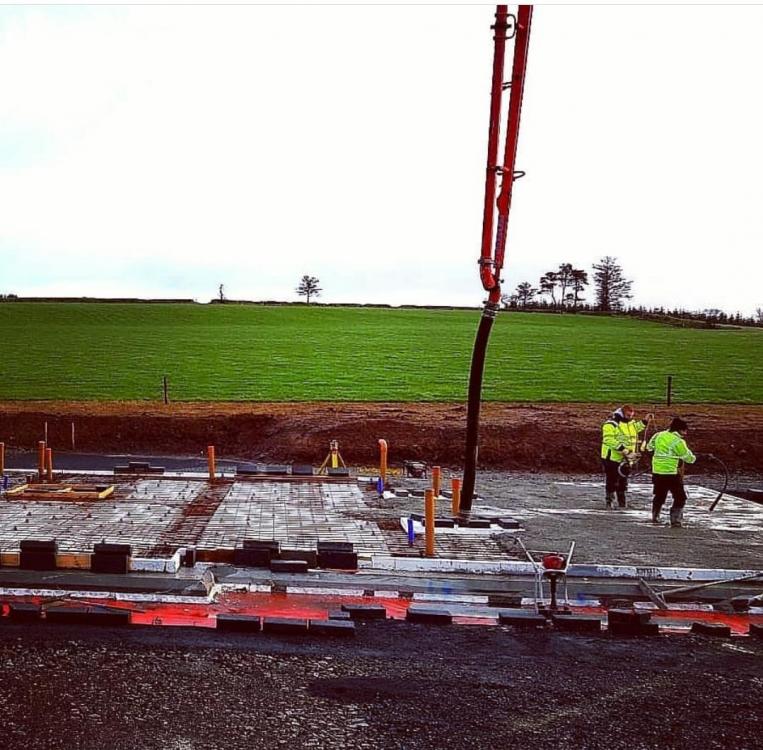
I follow an instagram account who are currently building a passive certified house in Ireland. One thing that has intrigued me is that they lay the Radon barrier on the sand blinding which is above the hardcore, then put the EPS raft on top, put in the steels and then poured the raft (seemed to do ring beam first?) All of the others I have seen have the DPM on top of the EPS then steels and UFH. I know the design was done by tanners. Is it normal to do this? it would seem to me then water can get between the radon barrier and EPS and also to the concrete which would then cause issues? I'm sure it is OK and I'm not questioning the approach, but rather I'm quite intrigued and want to understand more.
-
Passive raft vs traditional (strip/trench) costs assesment
SuperJohnG replied to SuperJohnG's topic in Foundations
@joe90 This part I'm actually struggling with to understand how I approach it. As I will be timber frame / SIPS. How many SE's do I need? feel as though my architect needs one, but If i have a kit supplier surely they would do it for kit, Then i would need an SE to witness test digs, but if they didnt understand insualetd raft, then I would need tanners or something. Then as I am in Scotland i need an SER certificate which my architect can do, but i would need to pay them again?. It's an area I feel really exposed on and don't feel i can get straight answers currently. That's very helpful thanks @Jeremy Harris -
Passive raft vs traditional (strip/trench) costs assesment
SuperJohnG replied to SuperJohnG's topic in Foundations
@Bitpipe thanks fro your comments. 1) No ground investigation report as of yet, and there are no neighbours within 400m. I've attached the plot topo fo r reference and an aerial picture just fer referecne sake, hosue will be positioned at the highest point pretty much in the middle. I am envisaging a few hundred mm of topsoil then firm to stiff clay, but obviously this will be confirmed once this is done. My plot sits at the lowest point of some hills hence, the burn running through it. 2) I am aiming for as close to passive as I can get, but I don't know how close that will be. Hence trying to work out the budget. I would ideally like to be well towards passive. The bigger picture partly being here is the ease of the passive raft when compared with normal strip type. I won't have a main contractor and I don't want to have to manage and complete multiple steps to get to the same point. The way I view it is, once we have that passive slab done, we are ready for the kit to go up and then we can crack, rather than getting kit up and still have three/four steps of time consuming steps that take a while. Topo.pdf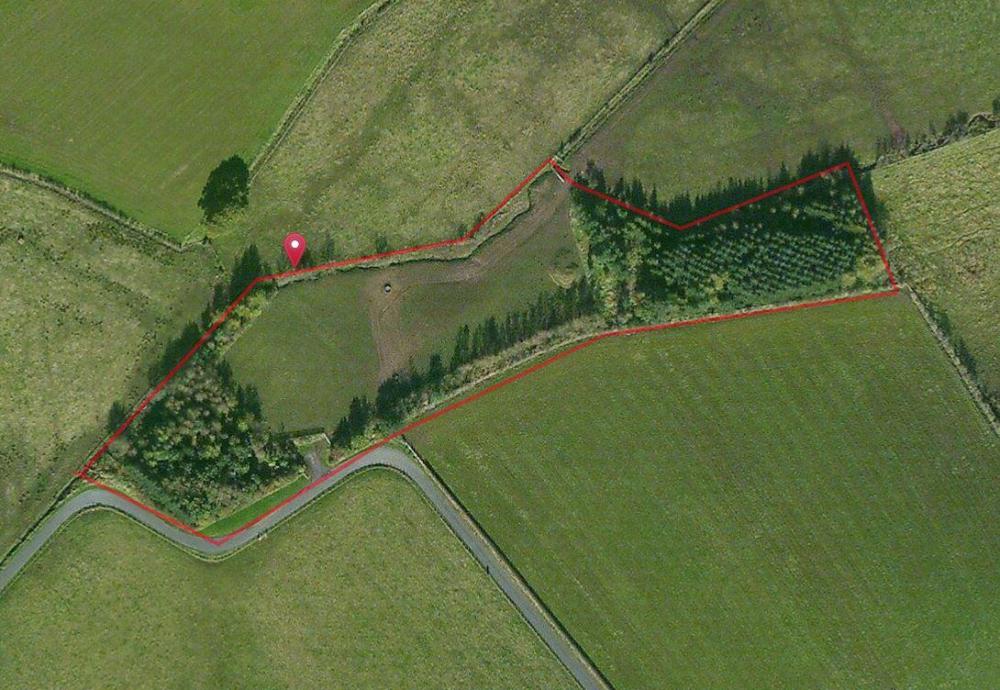
-
@LA3222 I imagine a number of expletives were used at that very moment. ?
-
I've been back and forth on what foundations I would like to use on our plot and I am really keen on a passive insulated raft. I had originally liked the idea, but then went off it as assumed too expensive, then read more and believe it should theoretically should be cheaper/ less hassle but I have never quanitified this. Hence I am going do a cost vs benefit analysis to see what the actual costs are and from there assess the benefit. E.g it might still be more expensive, but if it means less labour and less delays then still works out better. Before I start did anyone else do this? and have any existing excel sheets or similar or input they want to add? My thoughts are it might be a higher upfront cost but it has to work out similar in costs by the time you factor in all the stages required to do a normal type strip foundation with ground bearing slab and then adding insulation, membrane, UFH, screed etc. I understand every house and site will be different, and ground conditions will have a factor, But I have a pretty large open plot, lots of space to store muck and use later on, it is pretty much flat and there are no major trees or any ground issues which are currently known and it would seem unlikely there is anything going to come out of left field and surprise me.
-
Fingers crossed for you @LA3222 . Albeit a pain for you it's very helpful for me as I am hoping to do my own just like you but in 6-8 months, so understanding the downsides or things to look out for is very helpful.
-
@Mike_scotland Assuming the obvious that you're located in Scotland. I recently got a quote from SPEN (Scottish power energy networks)...and didnt get these questions. Is that who is asking? Similarly it is not something I would expect anyone to understand unless they had an engineering background. So I would question what they are asking and if you're getting the right quote. As above 1 would be your kW motor rating. 2 would be single phase. I would assume its DOL (direct on line)at these small sizes. 4 could be 5-10 times bigger than your base kW rating it's called 'inrush current'. Again I'd reiterate....doesn't seem like questions they should be asking domestic clients imo, so a little strange.
-
First Self Builders on Pilot Scheme in Glasgow!
SuperJohnG replied to Joanna Susskind's topic in Introduce Yourself
@Joanna Susskind that would be cool, I think we are about 6-8 months from breaking ground but you'd be more than welcome. I'll keep updated on insta as your build is very cool, all the best and fingers crossed all goes smoothly now. -
First Self Builders on Pilot Scheme in Glasgow!
SuperJohnG replied to Joanna Susskind's topic in Introduce Yourself
@Joanna Susskind I'd seen that had happened, not great but seen you guys had just brushed it off and got stuck back in, good on you. I'm actually Superjohng on insta - but we (wife and I) now share our 'official self build insta which is self_build_ayrshire. I'm always trying to remember to switch accounts when I comment. ? Can't help with the pavaflex stuff, but I do know that @ProDave used a woodfibre type material to put his render on, if it's the same stuff. -
House naming..need inspiration
SuperJohnG replied to SuperJohnG's topic in General Self Build & DIY Discussion
Great idea.. -
Rooms above garage - Thermal envelope?
SuperJohnG replied to SuperJohnG's topic in New House & Self Build Design
This kind of plays with my plans a little. I am hoping for an insulated passive insulated raft - so woudl I put the garage floor in the raft or not - or can I have two levels in a raft? just for clarity - this is in Scotland.




