rh2205
-
Posts
173 -
Joined
-
Last visited
Everything posted by rh2205
-
Boundary wall repair dispute advice needed
rh2205 replied to HappyDays80's topic in General Structural Issues
We had a wall almost exactly like this, it didn’t change in 8 years, I reckon it will look almost the same in another 10 years. Never bothered repointing it. It was just on rubbish footings for clay ground conditions aka not very well built. It was more than adequate & I didn’t lose sleep over it certainly wouldn’t of entertained repairs because it would of been a waste of time & money unless I’d considered rebuilding it from scratch. We had some 6ft hedges next to the wall too, the same hedge ran along front of our house same distance away from it and the house was fine. -
Didn’t even know you could retrofit a passiv slab? Doesn’t sound cost effective. I know you can make a existing house passiv using other measures but if you’ve dug that much of it up you might as well start again!
-
You need XPS below DPC, no one wants to install this stuff below DPC. It is a do it yourself job if keen around here, I visited some open ecohouses last summer which have just done it themselves given they also couldn't find any installers either. Its the last of the jobs and we plan to do it in stages. 30mm is usually recommended, there is a best practice guide from INCA and there you can have a 30-40mm drip detail added to achieve that recommendation, this is not the preferred option though and as such it is better to just keep your EWI 30mm away from the fascias if you've got enough depth anyway or extend the roof line.
-
We also have CWI on our 1960s bungalow, we are adding EWI albeit only 90mm as was genuinely concerned about shadowing as the low soffits had an affect on the space and I didn’t want to recreate the problem given those soffits have now disappeared above a new floor. Probably depends on your sunlight orientation to the main living spaces could be a benefit south facing! I am all ears on how to improve airtightness internally on an existing masonry structure though? As much as we try to come up with a solution it all seems pointless when the walls get chased for radiators to keep them away from the uninsulated concrete floor (we are EWI’ing below DPC).
-
New 1st floor extension - improving air tightness help?
rh2205 replied to rh2205's topic in House Extensions & Conservatories
£400 to cancel the order from the merchants as already loaded (it was quite a big order) any saving in materials worked out about the same in labour. Turns out VCL was specified in one of the cross sections I’d not looked at so now that will be going on albeit after all the insulation. Our light scheme is a basic single pendant arrangement. Any recommendations for sealant around the cables given we aren’t going to redo the electrics now? Just got to go in at the weekend and tape everything for peace of mind that this sleepless night over some insulation was worth it! -
New 1st floor extension - improving air tightness help?
rh2205 replied to rh2205's topic in House Extensions & Conservatories
@Russell griffiths Thanks your input has been invaluable. It does mention a surge of PIR orders on insulation hub website so as much as maybe orders can be fulfilled in some way but not with the same product so I do believe what he is saying is true and probably depends on what merchant he is speaking to, we do not have an architect so effectively you could say he is also the PM for it and therefore it would be very time intensive for him to shop around considering he does also do physical work on the site and manages a few multi skilled employees under his set up also along with the subcontractors. Seems he can maybe say that extra man hours cost to cut double the stuff and man hours are expensive in this part of the country so I am still not sure whether it will be cheaper in our case. Is there any effective solution to work around the cables as we definitely don't want to undo this part as the wiring that has already been done over a pretty large roof? Not looking for perfection but something than goes a bit better than what is currently being done especially if it does transpire the insulated plasterboard order has gone in. Unfortunately this is pretty much an all in contract so it gets a bit messy when you try and change things unless you are the one to physically do the changes which is what we were hoping for in this case - for instance us going in and fixing on a VCL on the internal roof or taping joints before plasterboard goes up would be quite a clean way of rectifying the matter if that makes sense. -
New 1st floor extension - improving air tightness help?
rh2205 replied to rh2205's topic in House Extensions & Conservatories
If it transpires we can get PIR boards without great difficulty and builder hasn’t ordered the insulated plasterboard then will the cables improve impossible to work with without resulting in damp patches? Obviously this may not be able to be undone in terms of ordered materials but they definitely haven’t arrived on site yet. Also not sure what thickness we will need as the Insulated plasterboard was 42.5mm thick k118 stuff. Always on the back foot of everything! I am also certain none of the external PIR wall boards were taped?♀️. But this layer is a lot less unbroken anyway and there’s two membranes so I am kinda hoping for the best as it’s a slightly better insulation arrangement. -
New 1st floor extension - improving air tightness help?
rh2205 replied to rh2205's topic in House Extensions & Conservatories
@Russell griffithsIt’s too late, unless we want to pay for the electrician again ?. Is this the only alternative for resolving? I think I spoke to the builder last week. It is not easy getting hold of materials at the moment, he said there wasn’t other cheaper options other than the insulated plasterboard as he didn’t want to use it as bloody expensive and obviously in contract with him I think the order went in when we spoke. Basically covid and Brexit we are going to really suck at this rate.. plus that’s really what made us hurry up, didn’t feel we were in good conditions to be organising the perfect design. What can we do now that we’re probably already stuck with the insulated plasterboard design? -
New 1st floor extension - improving air tightness help?
rh2205 replied to rh2205's topic in House Extensions & Conservatories
Sorry for the multiple posts but I am reading different things on different websites regarding what is a warm roof.. maybe we do have a warm roof but what we are missing is the vapour control layer no.6 in diagram attached otherwise our roof structure is identical to this image with the addition of insulated plasterboard. However I am slightly confused as we are not using just plasterboard rather insulated plasterboard do we still need this air tight barrier before the insulated plasterboard goes on or can it just be taped like normal for plastering as a 3mm skim will be going over it all?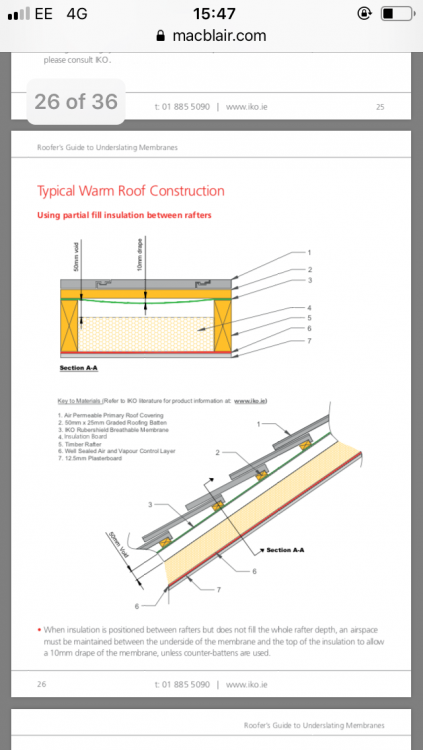
-
New 1st floor extension - improving air tightness help?
rh2205 replied to rh2205's topic in House Extensions & Conservatories
@Russell griffiths I enclose some images of the most complicated roof structure we could have chosen (or rather to appease planners). As you can see the roof detailing for airtightness has not been considered properly in hindsight & I am not sure I grasped what a warm roof was but it turns out that’s not what we’ll have rather a cold roof oops! Considering this is all new roof we could have done better but oh well. I see that I need to tell the builder to not stuff little bits of insulation in gaps like that as they haven’t finished & maybe tape it ourselves as not specified but this might be pointless as no squirty foam used, there is then some insulated plasterboard covering over it all. Is it ok to use an airtight membrane inbetween the rafters and the insulated plasterboard or will this create damp? I also don’t know how we easily tape a membrane over such a high complex vaulted ceiling my YouTube searches have been fairly unsuccessful in figuring out how we do the second option if it’s pointless to attempt option 1 as foam hasn’t been used? The new external walls (unfortunately only to 3 sides as asymmetrical dormer pitch) don’t suffer quite this same problem as I guess they are effectively warm walls if you can call them that, but obviously the junctions between the cold roof and warm walls have not been considered at all so still a screw up as anything we do now to improve can be internally only with difficulty.. we do have some downstairs EWI going on existing masonry which can maybe improve the junctions slightly but probably not totally. The guides I’ve found don’t seem to help me especially for the cold roof as we also have old joining onto new and some sensible new warm wall arrangement with a less sensible new cold roof coming together! Thoughts on last minute additions for upstairs before it’s all boarded in plasterboard !!?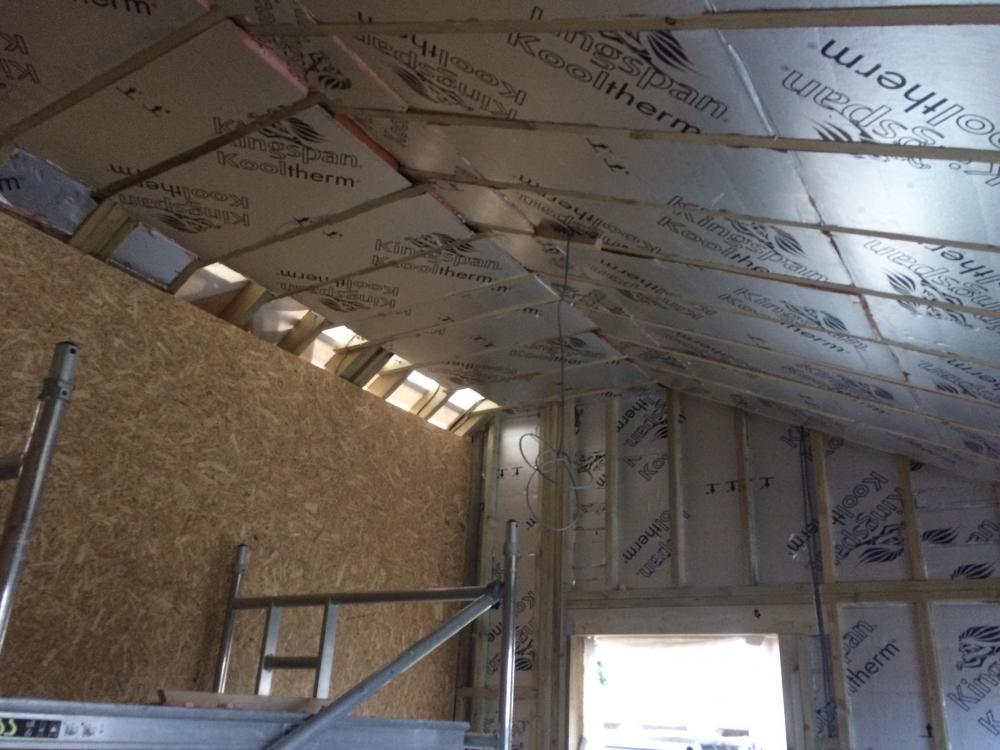
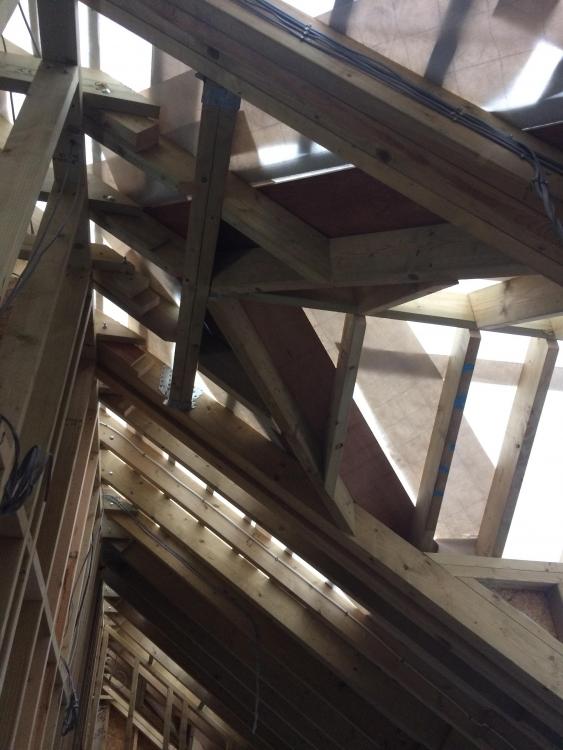
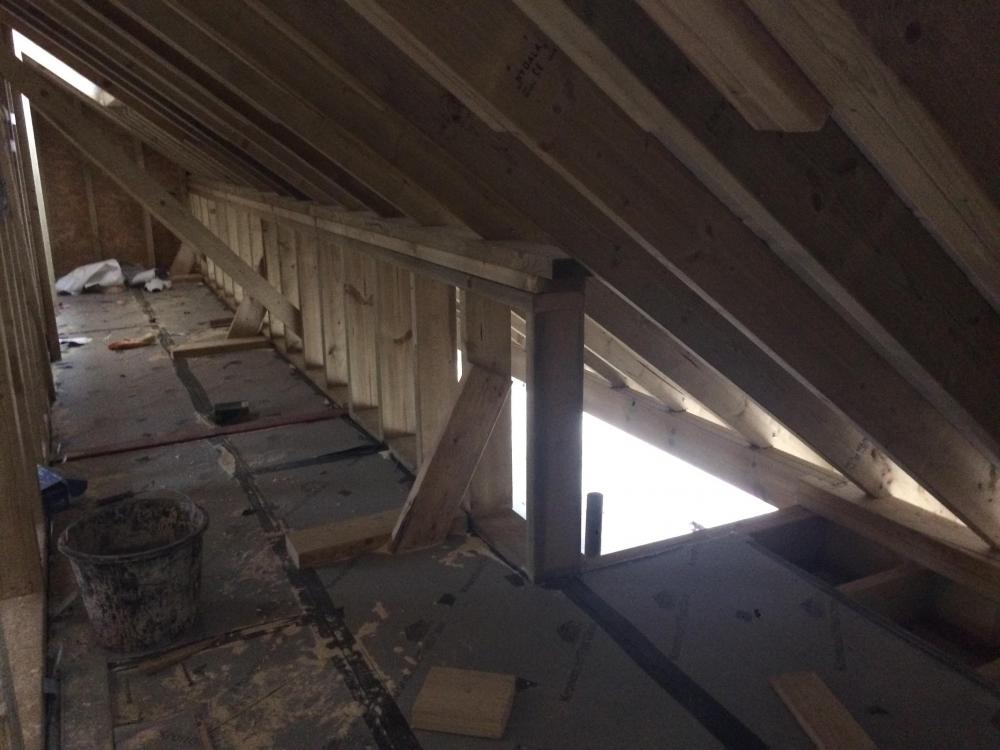
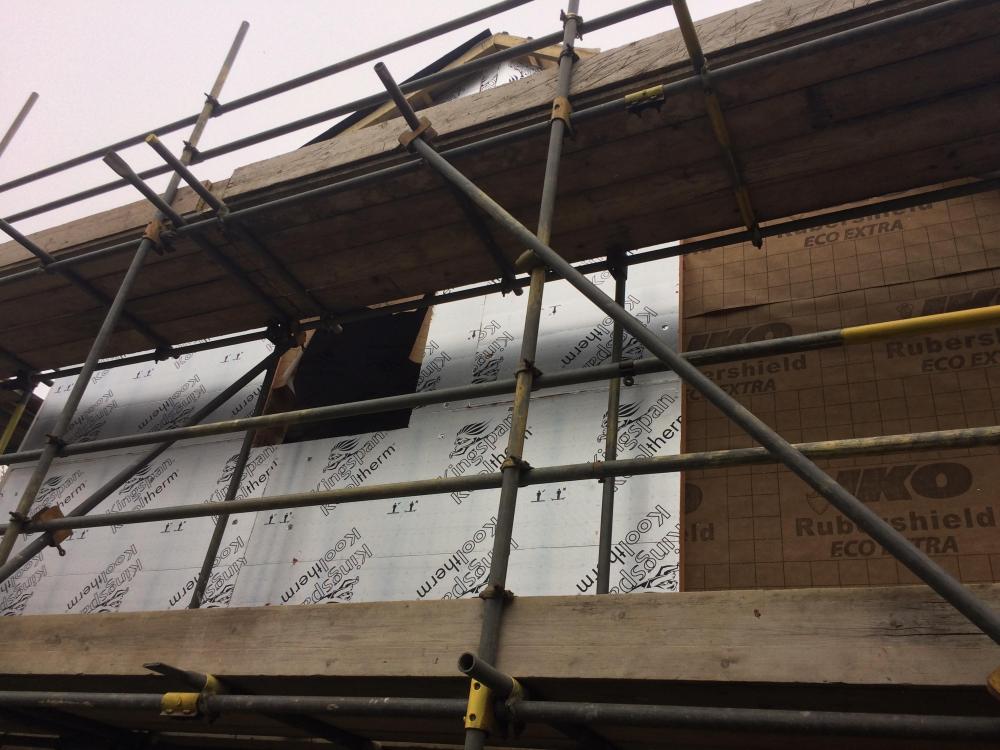
-
New 1st floor extension - improving air tightness help?
rh2205 replied to rh2205's topic in House Extensions & Conservatories
@Russell griffiths @Onoff? roof rafters will all be overboarded with some pretty expensive phenolic insulated plasterboard, can we make this layer into the airtight membrane or is this impossible? The insulation cut and installed between the roof joists has not been inserted with squirty foam gah! I don’t see any internal membranes or tape on the roof internally.. The entire outside walls including studs (but not the roof ?) have been wrapped in big boards of PIR, they used a membrane to wrap the house before the external PIR went on and then a Kingspan one after - this was the insulation brand . I didn’t see any tape but it all overlaps, surely all these membranes are for airtightness or manufacturers wouldn’t sell it?!? They also both looked more like a breathable membrane than a plastic looking one compared to your images. There is also PIR cut between the wall studs but the studs are very thick so insulation not flush and again pretty sure no foam used.. the walls will just be plasterboarded no fancy insulation plasterboard... Pretty worried now that our expensive insulation is about to go to waste but also at least the wall build up sounds a little different from the usual approach or am I wrong on that too? Why aren’t there better guides for this and why don’t architects understand the principles pretty sure they are working exactly to as drawings described ? -
Morning, Probably a bit late in the day to be posting this but our architect didn’t really have much knowledge of the area & our builder just does things the old way (much more common in the refurb area than new build I know)! The new roof & 1st floor is a warm roof formed of 100mm PIR between the rafters with 50mm air gap & roof membrane & then 50mm phenolic insulated plasterboard below rafters. For the walls it is 70mm PIR between the studs with membrane, then 70mm PIR externally with another membrane on top before the cladding. Outside walls & roof etc done but insulation still exposed on the inside/not finished as pretty big area for them to cut between. Anything we can do internally at weekends at this late stage to improve airtightness? We have ended up going with a air source heat pump as no gas but are now concerned we should be doing more on airtightness as nothing else other than the description above put on the drawing so I presume it won’t be particularly air tight hoping others have some suggestions as really struggled with information on what we can do to reduce leaks? FYI downstairs is a refurb with 90mm EWI & 50mm EPS cavity fill we are having velfac windows set out using lugs into the insulation but doors/patios are another leaky conundrum and have to be set on the bricks (not even in line with cavity due to some old steel lintels we hadn’t considered & render not being able to go over these). We know this is a cold bridge issue but window orders are done so cannot bring insulation into the reveals now & velfac sashes have no fixed frame it all moves so cannot overlap at all externally. Would some Xtherm 20mm insulated plasterboard on the door internal reveals make this situation any better or is this just throwing more money after bad? These are all things we requested to be added on insulation wise with architect but really we are not experienced in this & have just been trying to make sure we could get it built quickly given we are renting so our ideas may be somewhat of a halfway house. Basically we think other than the downstairs door screw ups we had some kind of insulation plan just execution might now not be right as I get the impression from reading it’s actually the details that matter especially to stop air leaks?
-
Morning, Probably a bit late in the day to be posting this but our architect didn’t really have much knowledge of the area & our builder just does things the old way (much more common in the refurb area than new build I know)! The new roof & 1st floor is a warm roof formed of 100mm PIR between the rafters with 50mm air gap & roof membrane & then 50mm phenolic insulated plasterboard below rafters. For the walls it is 70mm PIR between the studs with membrane, then 70mm PIR externally with another membrane on top before the cladding. Outside walls & roof etc done but insulation still exposed on the inside/not finished as pretty big area for them to cut between. Anything we can do internally at weekends at this late stage to improve airtightness? We have ended up going with a air source heat pump as no gas but are now concerned we should be doing more on airtightness as nothing else other than the description above put on the drawing so I presume it won’t be particularly air tight hoping others have some suggestions as really struggled with information on what we can do to reduce leaks? FYI downstairs is a refurb with 90mm EWI & 50mm EPS cavity fill we are having velfac windows set out using lugs into the insulation but doors/patios are another leaky conundrum and have to be set on the bricks (not even in line with cavity due to some old steel lintels we hadn’t considered & render not being able to go over these). We know this is a cold bridge issue but window orders are done so cannot bring insulation into the reveals now & velfac sashes have no fixed frame it all moves so cannot overlap at all externally. Would some Xtherm 20mm insulated plasterboard on the door internal reveals make this situation any better or is this just throwing more money after bad? These are all things we requested to be added on insulation wise with architect but really we are not experienced in this & have just been trying to make sure we could get it built quickly given we are renting so our ideas may be somewhat of a halfway house. Basically we think other than the downstairs door screw ups we had some kind of insulation plan just execution might now not be right as I get the impression from reading it’s actually the details that matter especially to stop air leaks?
-
Hello, I know this is an old thread but still seems relevant. How many of you spray painted your house after the 1st fix and didn’t use a professional? Really looking for advice about a non professional doing this! The upstairs to our new first floor is approx 100sqm has 3.5m high vaulted ceilings (its an asymmetric pitch with 3 smaller dormers with nearly the same maximum height to them as the central ridge). I was intending on painting this myself the typical way with a roller, but I am a very slight and not particularly tall or strong so I am wondering if really spray painting might be my friend now I have seen just how far away a lot of the ceilings and walls are, I’d obviously need to hire something for it. Concerned I will struggle to do it the traditional way without getting back/shoulder injuries especially given the height. Intention was probably to buy a small scaffold tower whatever painting route is chosen.
-
You’ve guessed it from the title any companies which manufacture aluminium or aluclad windows in the uk? Need quite a wide bi parting patio door as part of order. I don’t think we’re going to make the Brexit boat following a site visit today, whilst we can live with some (but not significant) delays I just don’t think the financial risk merits the hassle to our renovation of extended delays or large custom hits. We were going to order from Velfac or ideal Combi but have been in cuckoo land ignoring everything wrong in the world until I read the Brexit t&cs this evening - cuckoo land is definitely the best place right now in current climate!
-
Oh great! @PeterStarck 200mm is that just all you had or would it have been possible to go thicker? We really have no clue how much it will make when crushed & have not counted up the garden slabs on top but know there must be a at least 40sqm of the stuff. We were going to load the crusher manually and eventually shift the patio material around manually too as young and stupid, or do you really need a mini digger for this exercise to get the most out of the crusher hire? We’d of course hire a plate compactor as the manual compactor in our shed will not be sufficient for this job ! Also got an existing conservatory concrete slab we were going to leave in situ & bring all the other levels up around, but there’s still another 45sqm which needs building up. Maybe another one of our ill thought out ideas ?
-
We have some quite large areas of house to demolish, we currently have a drop between the back of the property & existing ground levels (an extreme renovation with only a few walls left & the slab) wondering whether we agree with the builder to knock off some of the waste disposal costs if we keep the concrete tiles approx 200sqm and bricks approx 40sqm (this is the area these materials currently cover) to crush on site ourselves to help raise the levels for a patio out the back by 400mm. Is this a stupid idea? Can we raise levels only with this material by that much assuming it’s enough or can it still only be used as a standard thickness mot. We are not builders so pretty clueless but will need to do the patio ourselves slowly to save money as it’s too expensive to get a builder for the patio and it isn't time critical like the house. The garden is large and has a load of ugly standard concrete slabs laid badly all over the place so figured we could add them into the mix for crushing too. Thanks for any ideas in advance!
-
Thanks for this feedback. This seems to mimic what our architect was saying mostly sending out the drawings as small builders price in different ways and they won’t read a massive lift of items. He thinks if we pick out all specific items for all finishing details and spec the plumbing ourselves rather than going on the advice of the builders heating engineer we might find prices come in high or if the installation doesn’t work it will be on us as we requested it! As you say Nod it seems the usual route for small builders is to go through the finer details with one or two of the most competitive/favourite responses and go from there to agree all the details before signing a contract.
-
Hi all, We are looking to prepare documents for tender of a renovation job roughly in the 150k territory. We are struggling to know where to start we have our building regs drawings, structural plans & electrical plans but these do not have detailed fitting information. Struggling to know how to go about the documentation for the tender. We don’t want to over complicate things with lots of paperwork & mean we get less tender responses. We are also hoping to break it down into two parts with wind and weather tight being the first price and the rest in the second part (In case it’s too high we subcontract rest). Plus we do not have detailed information on the plumbing side of things yet other than where radiators are going. If anyone has any examples they can share with us that would be really helpful. I have experience of using JCT contracts but it’s mostly always been in the context of a fully spec’d job and commercial not domestic. We don’t want to delay things by picking out every single product now so thinking some allowances route will be needed but at the same time we are working with the 5% vat renovation so there ‘could’ be a cost saving if the contractor buys these products for us. This would obviously be a much simpler process if we just said client to source x and contractor to allow for fitting costs. Still not sure having a contract for a job is really a good thing even though I keep getting told it’s the sensible thing. I’ve seen unforeseen extras overpriced in so many ‘main contractor’ contracts but once you have a main contractor arrangement there’s only so long you can disagree for if you want to keep things moving. Obviously we are feeling very apprehensive on this next stage as it’s a major refurb with a new floor so we’ll be an easy target for unforeseen extras. Any guidance and tender templates /examples much appreciated so that we hopefully don’t end up in too big a pickle later down the line!
-
We have a 15% VAT reduction empty home on supply and install so that does offer some savings so the decision to demolish is more grey but it remains to be seen whether contractors will just try and absorb any savings in their profit and there will be limited scope for DIY savings as it is specifically contractor supply and install only (not that we really have much time for DIY with family and working full time but people on this forum have made that work). Also with the remodelling being so extensive with so much structural work its touch and go as to whether we really can even project manage all the trades as a retrofit does seem more complicated on research to date which means we could end up with a principal contractor and some very high sqm costs...
-
We were planning on underfloor heating and then we started looking up costs for reinstatement, materials, labour etc as its about 117sqm of existing slab and started thinking it might be a bad idea... We might have more news on what we find at the weekend as we're hoping to prize up the bizarre floor tanking system put in the large retrofitted mobility access wet room which will leave a big hole and hopefully some clues at the edges.. We are still intending to put in a planning application for replacement, not sure it that will really help with the objective of saving money but it might just mean things are much less risky albeit will probably take longer but a better house at the end. Either way we need a fall back so doing what we can ourselves now as bungalow needs stripping and possibly even roof off to get rid of the maze of load bearing walls even if we have to retain it. We have certainly learned our lesson on what not to buy and we haven't even really started!
-
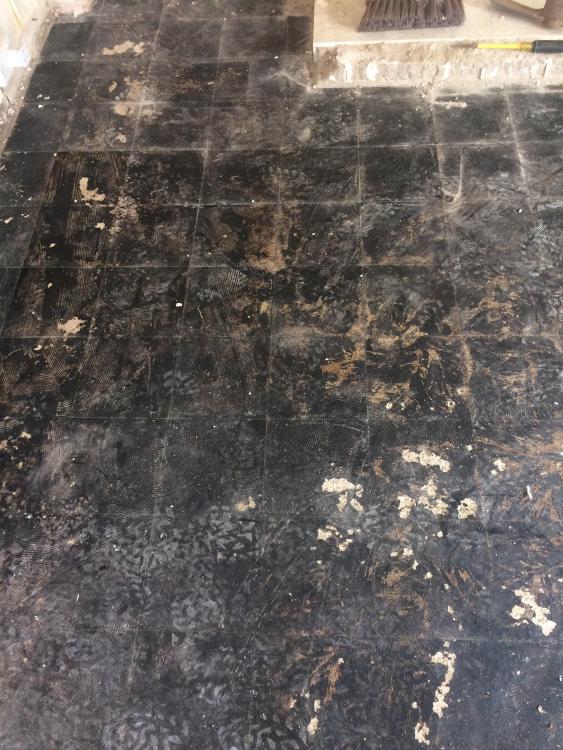
Thanks for info yes tiles are gone came up whole. We had considered initially digging up the entire floor for insulation & heating purposes but it sounds very costly having to reinstate everything like dpm, concrete, screed, hardcore. I was reading that there possibly isn’t a DPM layer anyway and the tiles and bitumen stuff might be all that was used along with 100mm concrete groundbearing slab (pretty cheap 1960 council construction). I wasn’t sure if the waste from the concrete would still be considered hazardous and the process of digging up floor might make the trace asbestos airborne. Maybe we’re overthinking it and with all the new plumbing it’s going to make very little difference how much of the floor is removed?
-
Great thanks for info. We need to dig out at least some of the concrete floor for new soil pipe and heating pipe work etc so not clear on what this means for asbestos concerns as sealing it won’t solve the whole problem. If we get a asbestos survey will they want to test this part of the property even though black glue is basically ingrained into the concrete floor?
-
This is the floor, tiles are gone, concrete below
-
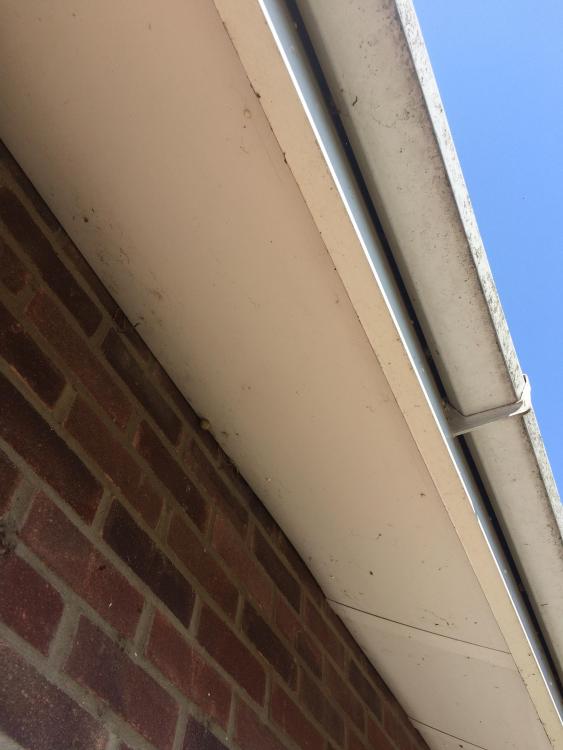
Just wondering whether there is anyone on here with experience of renovating a 1960s bungalow either extensively (floors/ceilings removed) or full demolition. There were some asbestos vinyl tiles and we are trying to work out whether the black bitumen stuff is likely to trigger specialist removal requirements too? There hasn’t been any obvious panels or other surprises either in loft or garage so far and we’re keep our fingers crossed about the fascias as they look fairly recent...