
Great_scot_selfbuild
-
Posts
409 -
Joined
-
Last visited
Everything posted by Great_scot_selfbuild
-
Fabric and ventilation heat loss calculator
Great_scot_selfbuild replied to Jeremy Harris's topic in Heat Insulation
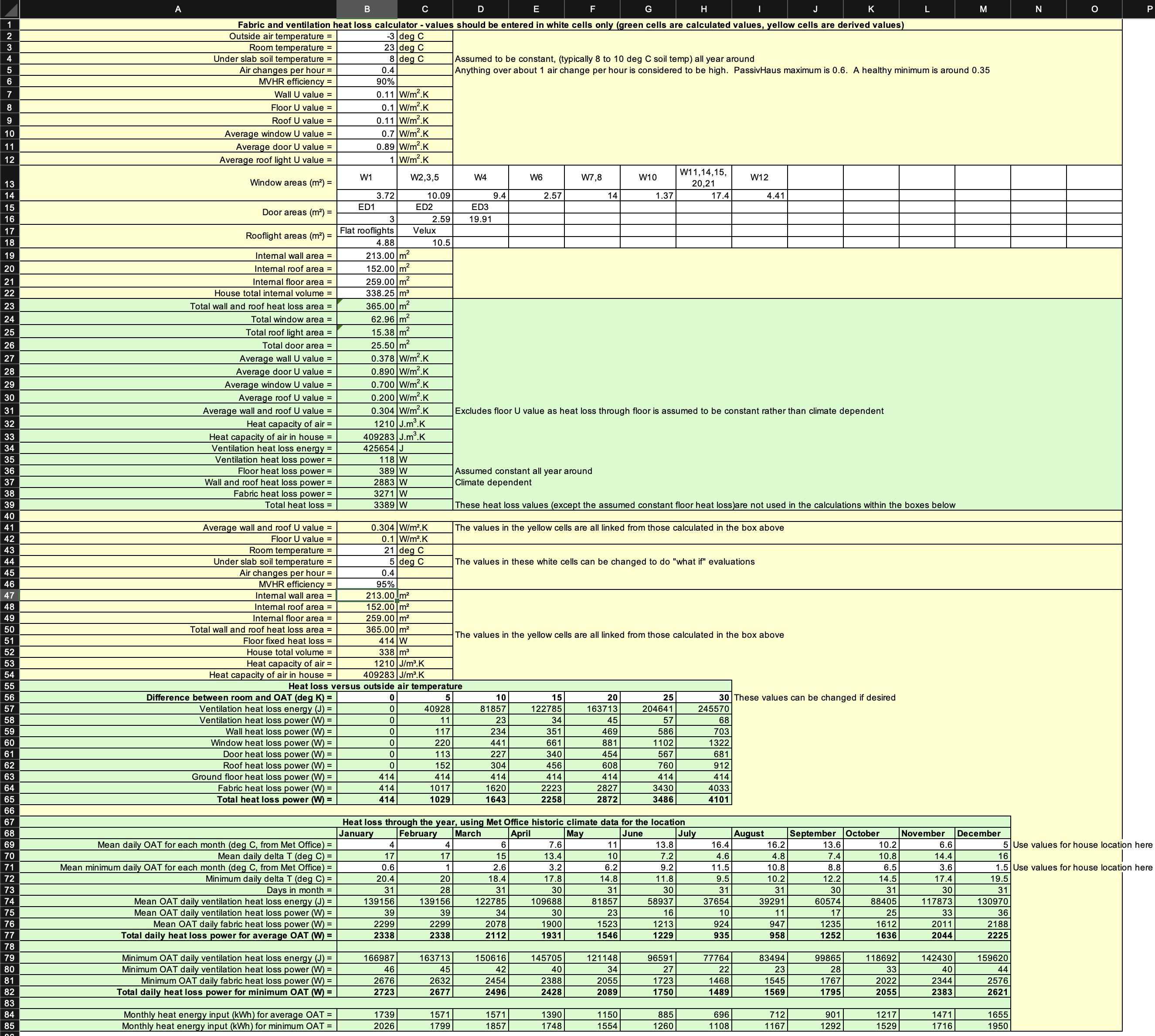
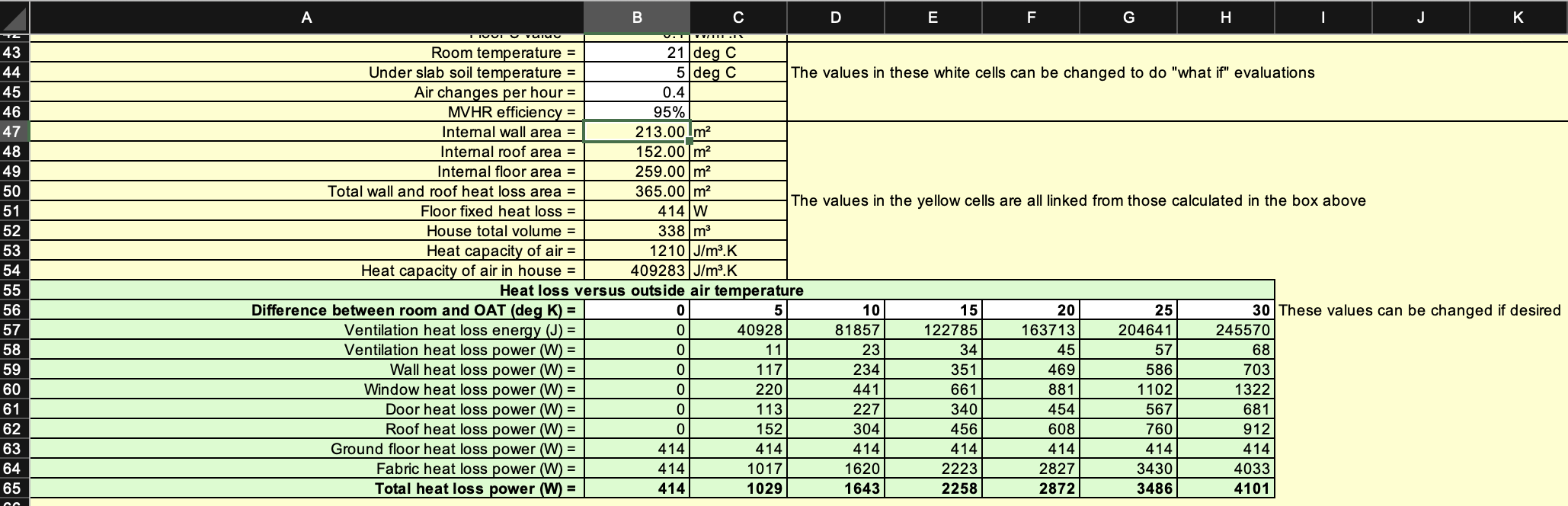
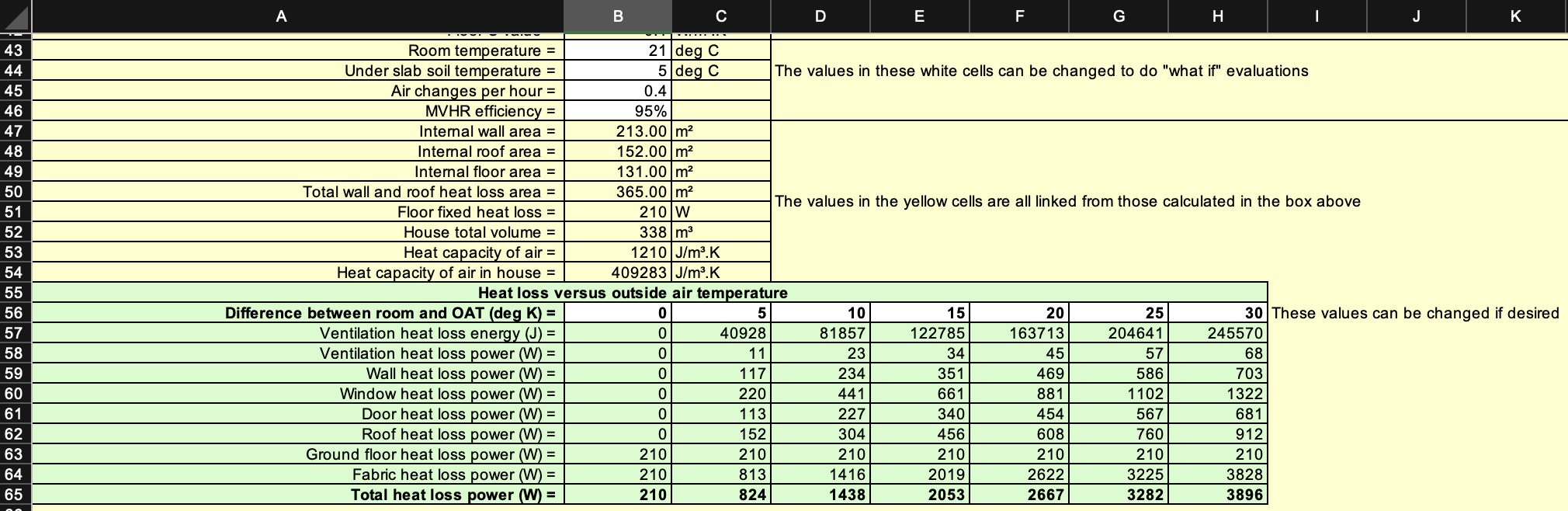
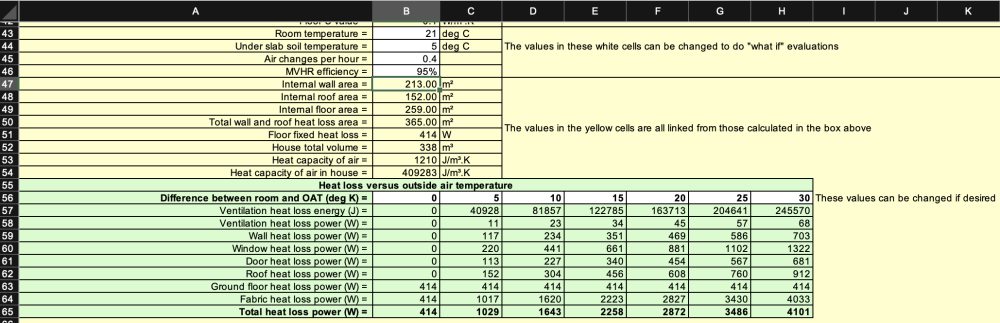
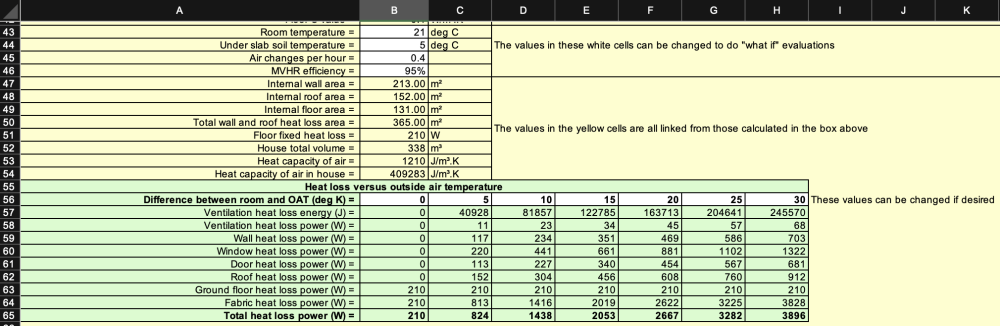
@JohnMo I've just been revisiting my earlier posts on this thread. I'm so pleased I wasn't rushed into making a poor decision earlier and have revisited this after going through some detail about our UFH design - I'm re-visiting this thread because none (literally none) of the UFH suppliers asked for any details about heat loss in working out their proposed design, and I realise better now exactly why I need to start from a solid foundation of properly understanding our heat loss, the resultant ASHP and then looking for the right emitter sizing/specification. I've now re-read this thread and although I'm close, I'm not entirely there in understanding the modulation (your earlier reply was really helpful in prompting me to pause and start to question this more, but alas I am being slow and could do with it spelling out, if you or someone else is willing to?). I've so little confidence in what I've been provided by the companies (the slightest question to them ends up with them going very silent and figuratively 'pointing' at the results that their over-simplified tool has output; they just want the sale and to move on). So, having read and re-read this thread (not just my questions), I'm of the view that our insulation will be good enough that the down-time required to heat the Domestic Hot Water Tank (looking to get a 250L / 300L one), doesn't really require us to size-up the ASHP noticeably (@jack's earlier reply about the ASHP heating the DHW for a few hours in a day could be almost imperceptible - I think this could apply to our build). I'm currently looking to improve the quality of the floor insulation, and so have re-run the heat loss calculator sheet (2 screenshots - close-up in the text and the whole version is attached). Summary questions: 1. Going over this calculator, I've just realised that I need to confirm an entry - the internal floor area I have input is for both floors, rather than just the ground floor - should this not actually be just the ground floor? as the intermediate floor won't contribute to heat loss as it is within the warm envelope? (I had populated it as the 'default' approach when asked for house size as being the area of all floors). 2. @JohnMo (or others), would you mind explaining ASHP modulation and what I should be looking for in the spec sheets of a heat pump, and how does this translate to what suppliers/manufacturers state as being a '6kw ASHP' (is this in the middle of the modulation range, or the peak performance of the HP? 3. Should the Heat Loss calculator value for 'Floor Area' be just the ground floor, or combined floor areas? (if just the ground floor, the summary table comes out as follows): 4. We plan to only install UFH (wet) downstairs, with upstairs having electric mats in the bathrooms. All the UFH suppliers have stated that we won't achieve BR spec with UFH downstairs only and we'll need at least some emitters in the bedrooms. I'm inclined to prefer the option of specifying some limited electric UFH mats in the bedrooms which could be simply left turned off, but provide a backup in case we've miscalculated and find that the rooms do need some extra heat (I'd really rather get the calculations right though, with this group's help if possible?). I know some of you will have encountered something like this - what are your views? If challenged by building control, how do I rebuff their request for us to demonstrate compliance (as suggested by the UFH suppliers)? This post has become much(!) longer than I set out to write. Thanks for getting to the end and I hope some of you are able to comment / advise. Great Scot! Selfbuild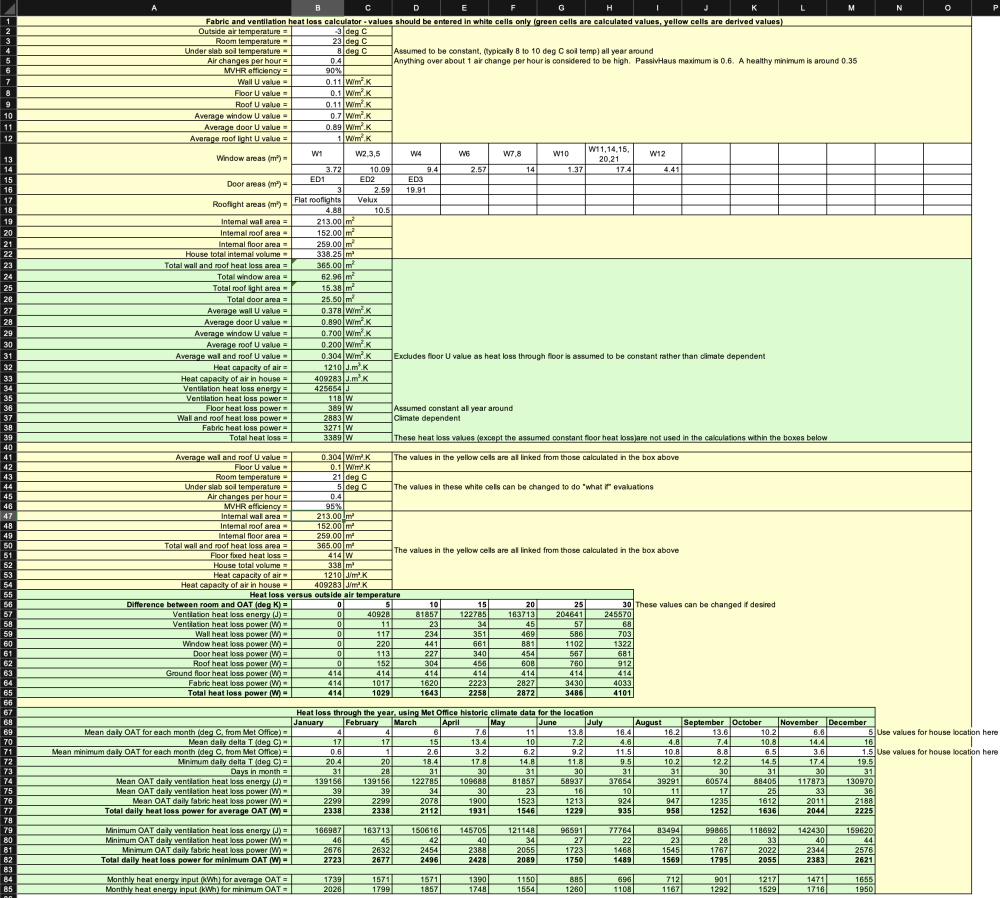
- 204 replies
-
- 1
-

-
- heat loss
- ventilation
- (and 4 more)
-
Thanks - this is what I was missing! (Because I can’t use loopCAD I wasn’t aware of the inputs it required, and they never asked for any thermal performance inputs, so god knows what they’ve based their LoopCAD design on. How on earth is any customer meant to navigate this industry with such levels of poor customer service and engagement (I’m sure the very expensive consultancies make their money on the basis of this ‘quality’ elsewhere in the market.
-
The simplest summary I’ve heard - TVM.
-
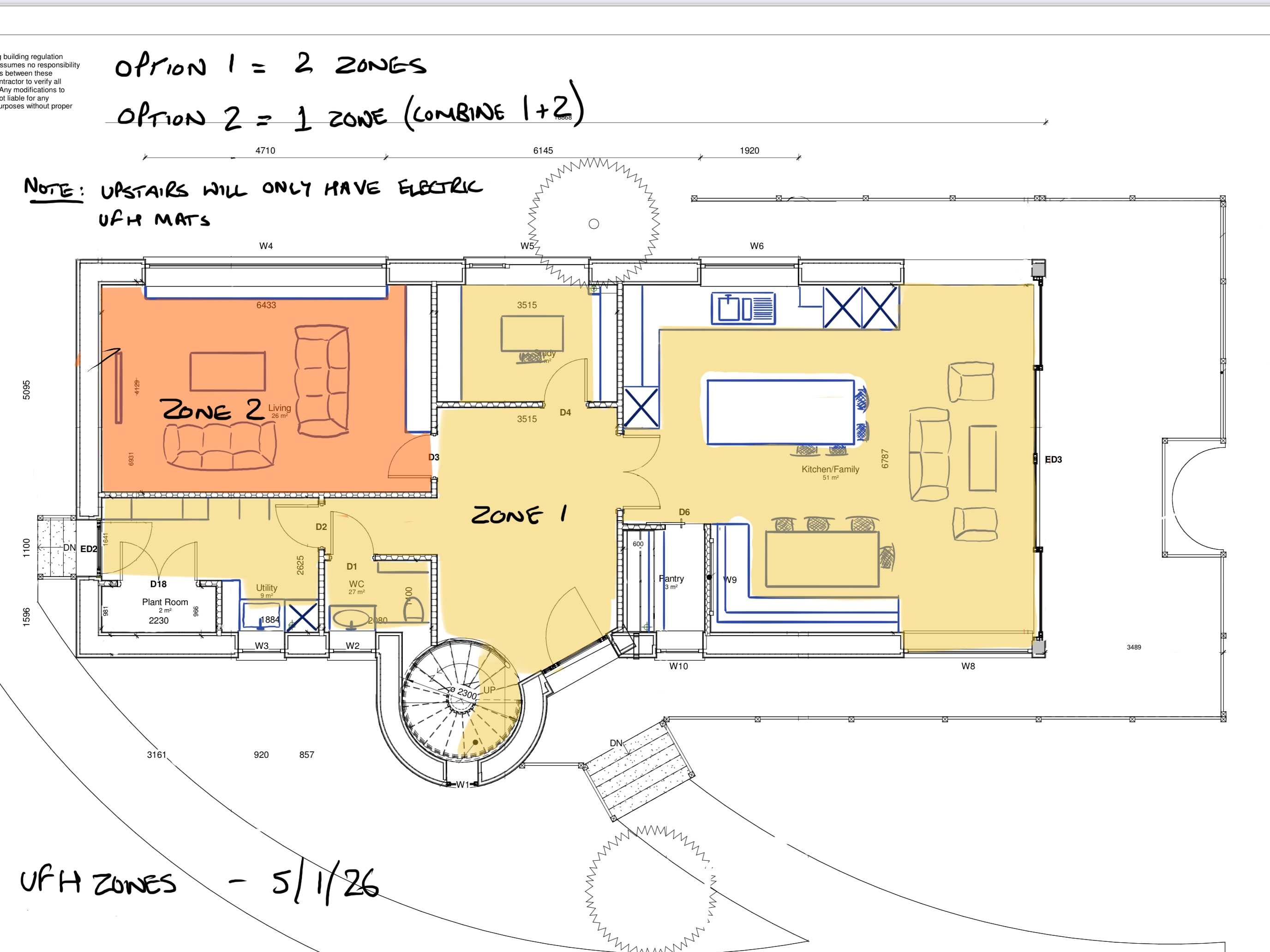
Hi all, I must be at a good stage in our project, because I have lots of detailed questions (that's the way I'm looking at it anyway). I feel like some of this is ground I've partly covered before, but I'm now closing in on some final supplier selection and critical decisions, but struggling to find a company/supplier that I can wholeheartedly trust for having covered the detail to the level I am wanting. Which comes first - chicken or the egg / ASHP or the UFH I've got a UFH quote based on the floorplan and I was pleasantly surprised to receive a detailed (to my view) LoopCAD design with spiral layout (as I requested), showing plenty of circuits (it's a single zone for the entire floor). However, the water supply table states a temperature requirement of 46 degrees, which seems exceptionally high compared to all the discussions I have previously had with ASHP suppliers who have emphasised the preference for aiming to have a low temperature. Our house will have a passive-level of thermal and airtightness performance, so I wasn't expecting such a high temperature requirement for the UFH. So, what's my question? The UFH water temperature and flow table subsequently outputs a kW load (just over 7kW); I was planning to work through the heat loss calculator spreadsheet this weekend to do my own ASHP / Heat loss checks. How should I take this UFH table into consideration when it comes to setting the specification of the ASHP (and allowing for the DHW 300L tank)? Grateful for your thoughts and experience, as always... GREAT SCOT!-Drawing.pdf GREAT SCOT!-Water Supply Summary.pdf
-
UFH design - help / recommendations?
Great_scot_selfbuild replied to Great_scot_selfbuild's topic in Underfloor Heating
I have ‘binned them’ for exactly that reason, confirmed by the fact they couldn’t explain how they had calculated it. just about to post a new thread with some different but similar queries. -
UFH design - help / recommendations?
Great_scot_selfbuild replied to Great_scot_selfbuild's topic in Underfloor Heating
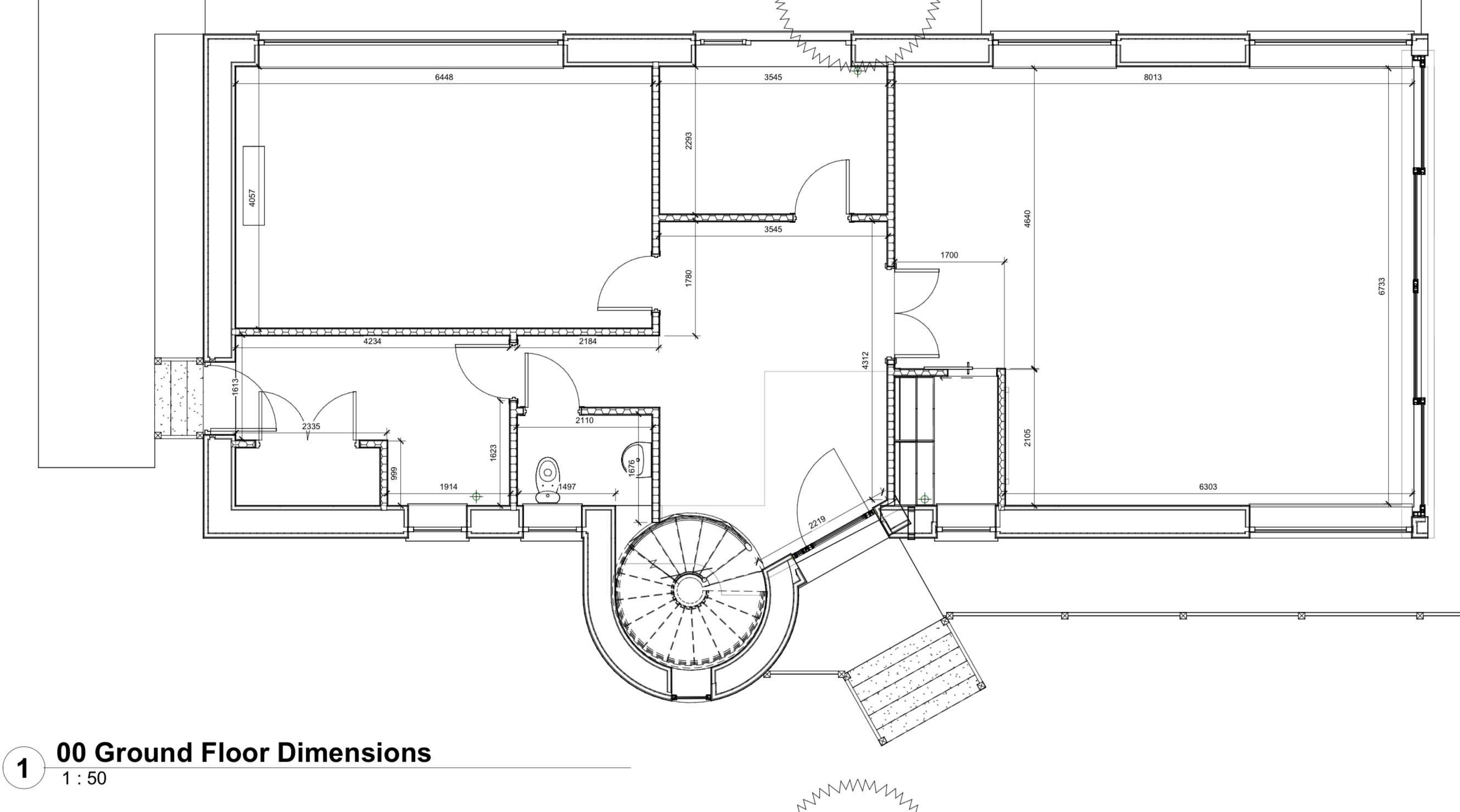
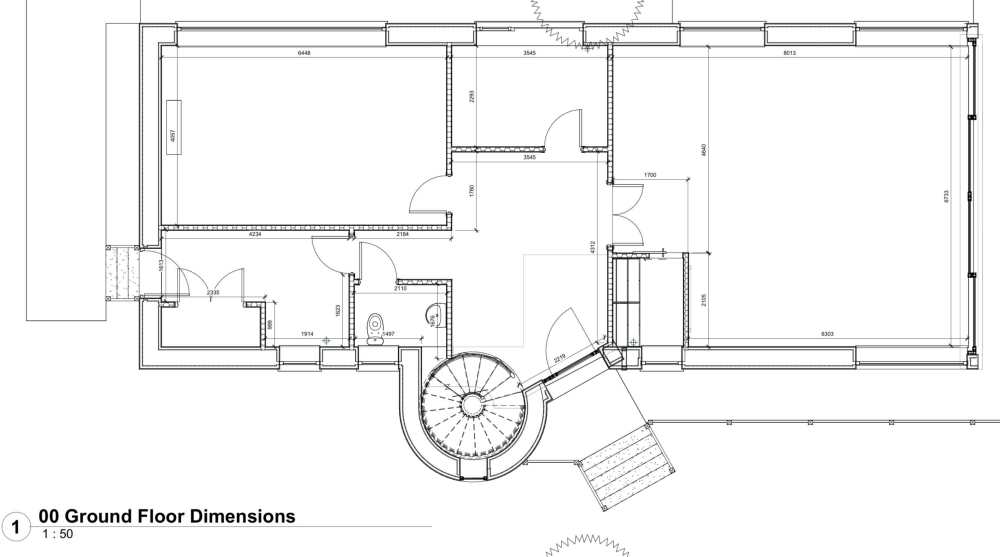
circuit vs zones.yes, aware of the difference which prompted this thread - I was surprised the company had only recommended one circuit for a rather large zone. We don’t have a design yet - that company just gives an initial quote but then you have to pay for a design (I’ve found someone else who I’m waiting on a design from now). Pipes are only in the coloured areas - i.e. not under permanent fittings such as bench seating and island. I was expecting multiple loops simply because of the pressure losses (building being 18m long means a single circuit would be huge!) We’ve had a full part O modelling done, so all good for the solar aspects. You’re correct - the X is a washer & drier stacked. -
UFH design - help / recommendations?
Great_scot_selfbuild replied to Great_scot_selfbuild's topic in Underfloor Heating
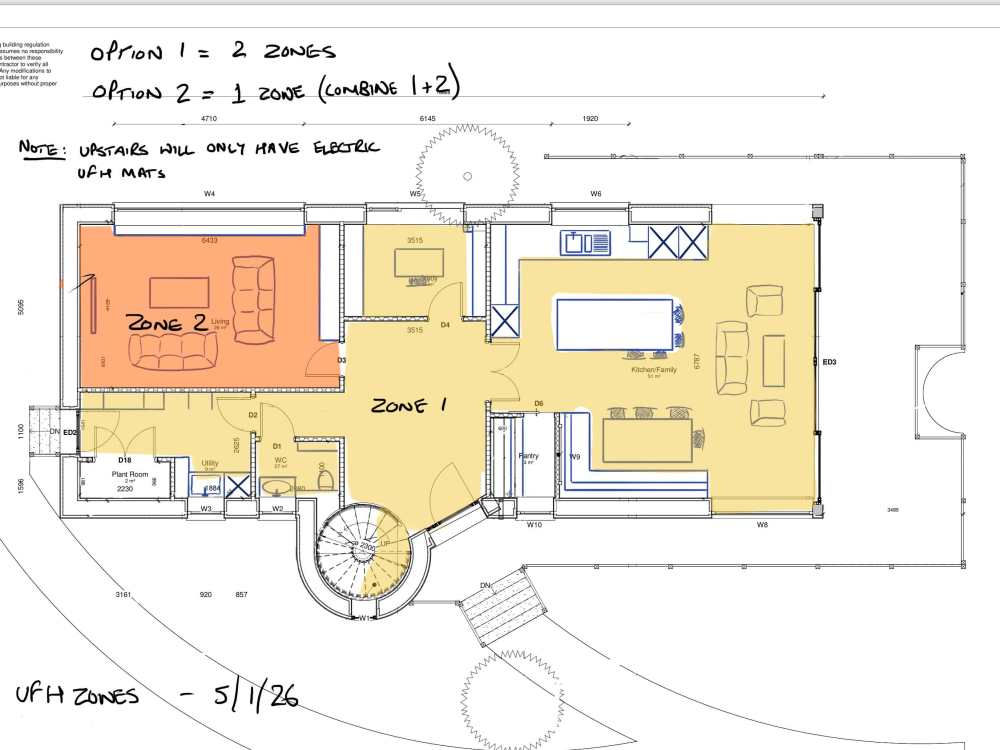
Thanks @JohnMo I am inclined to go for single zone, but we were just hesitant about whether the living room would heat up too much (no opening window - relying on MVHR). Yes, it’s a big hall, but that ship has sailed into the distance now, and it does feel like a good space. -
Happy New Year all, I thought I had a good solution for my UFH, but having re-read the quote (111 sqm, 2 zones) it only specifies 2 circuits. I was happy with the quote (£1083) but I’ve not yet paid the £120 for the UFH design as I have heard of others offering this as ‘free’ (though they will undoubtedly wrap the cost up in other ways - such as another quote I had for £1600 with a free design included). Another reason was that when I asked how they only calculated 2 circuits, it turns out this estimate was based on their simple tool that uses the total sqm and when I questioned about pressure loss over a long circuit, they clearly didn’t know (could have just been the sales person lacking knowledge). I had intended to use LoopCAD to do my own checking but I now find that it only works on Windows OS (yet another reason for me to be frustrated at committing to Apple…). So… I’m looking for some help to check what i should be expecting from a UFH design, advice on different circuit designs (spiral / serpentine etc.), and any recommendations for a design or design & supply service (I’ll be installing myself). Thanks 😁
-
Fabric and ventilation heat loss calculator
Great_scot_selfbuild replied to Jeremy Harris's topic in Heat Insulation
I’m in this position too. I’m certain I'm being pushed quotes heavily oversized, and I don’t want a system that keeps turning on because it’s not been properly calculated and sized. I just have very little time outside of work to do it whilst also keeping tabs on the work being done (where I keep identifying issues that need my attention immediately 😭). following, and will update as I progress myself. -
Do you get the previous PC to sign off for the work up to that point? If I brought in another PC, and they were expected by Bldg Ctrl to sign at the completion, they would surely not be expected to sign for the earlier stages of work? (or if they are, how would this be managed? have you had to do this, or seen it done?)
-
Does anyone have any experience of this, or advice please?
-
Just thinking through options - we've had a principal contractor from the start, whilst some specialist contractors have come in for different elements of the build, the PC has remained constant. If we get to a point where we look to finish the internal fit-out ourselves, how does the PC role and (specifically the Building Control Principal Contractor sign-off work? I'm aware that the PC definition for CDM and Building control uses the same term 'Principal Contractor', but has a different definition and responsibilities. My main focus is related to the PC Building Control sign-off, though I am interested in the CDM aspects too. Grateful for your experience & thoughts. I'm trying to make sure I have a clear contingency plan in case we a re finishing the build and fit-out by ourselves.
-
Getting my head around Part B and K for our windows
Great_scot_selfbuild replied to MikeSharp01's topic in Windows & Glazing
@MikeSharp01 useful thread - we're going through this atm. The plan had the windows above 800mm, but because the timber frame designer didn't mention he'd moved the windows down when a deeper rafter was installed, we've now got a design change / compromise with the windows being down at 650mm!! (apologies for the rant...) -
@alexo I know this is an old thread, but I have exactly the same situation and have internorm windows being fitted. Could you possibly upload some photos or a video of this turn restrictor showing how it works? (hopefully you'll see this...)
-
Buildhub for the win again! Thank you @Nickfromwales & @Kelvin
-
Thanks for the advice @Nickfromwales. Can you explain about fitting the trailing socket - I can't see or find any details about what the end fixing is on the Defencer lights (here - https://www.screwfix.com/p/defender-22m-led-festoon-lighting-chain-10w-8000lm-110v/4693T?gclsrc=aw.ds&gad_source=1&gad_campaignid=22605815174&gbraid=0AAAAAD8IdPzAOvlf0h99fWKcI5vmuavk_&gclid=CjwKCAiAlMHIBhAcEiwAZhZBUq7WHfNLT9emuDmtdSAF-7MrzRbsVmZfgfMe9Fbjf8cNGA6BSrjFxRoCjDcQAvD_BwE) Is it as simple as wiring a 110V socket onto the end of the festoon trail? (couldn't find out much about the end of the festoon lighting).
-
I'm looking to get some 110v lighting. Our timber frame is going up quickly and soon (in addition to the days getting shorter), the build team will benefit from lighting inside the frame - especially once the roof and upstairs floor boarding goes on. I'm looking to buy some (rather than leave it to the team to provide their own) as I know I'll need it for ourselves anyway. I've come across quite a few different types and one of the versions I wasn't aware of until just searching were the daisy-chained LED bulbs, which I thought could be rather useful especially once internal walls are covered. Here are screenshots of the examples I'm coming across (just examples, I've not gone through the specifics yet - just wanted views on what type/style/power rating people have found good or bad). Image of our site to give an idea of how shaded we are - hence this will really start to make an impact. IMG_5224.JPG IMG_5151.JPG

-
They don’t have to be. We have a steel ring beam and columns - they have 2 coats of zinc oxide and 2 coats of bitumen. Galvanizing would have added a lot of time & many thousands £££
-
This is (slightly) encouraging. Do you have any photos of this by chance? Was the internal face of the steel covered or were both sides left visible/uncovered?
-
Yes, ordered. Frustratingly, there were many design discussions where this should have been raised by those who do it for a day job (and were being paid to…). I’m more than a little angry😡
-
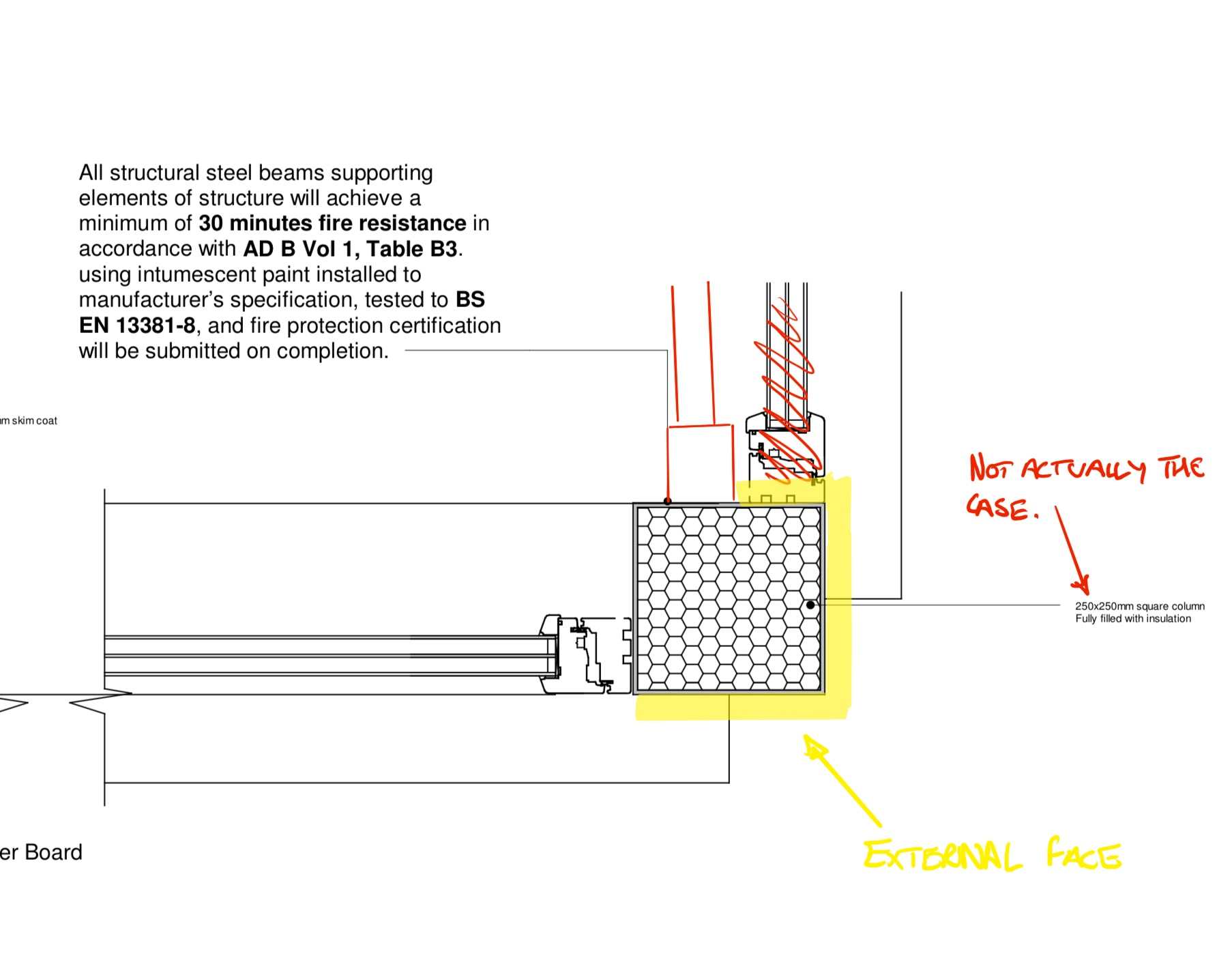
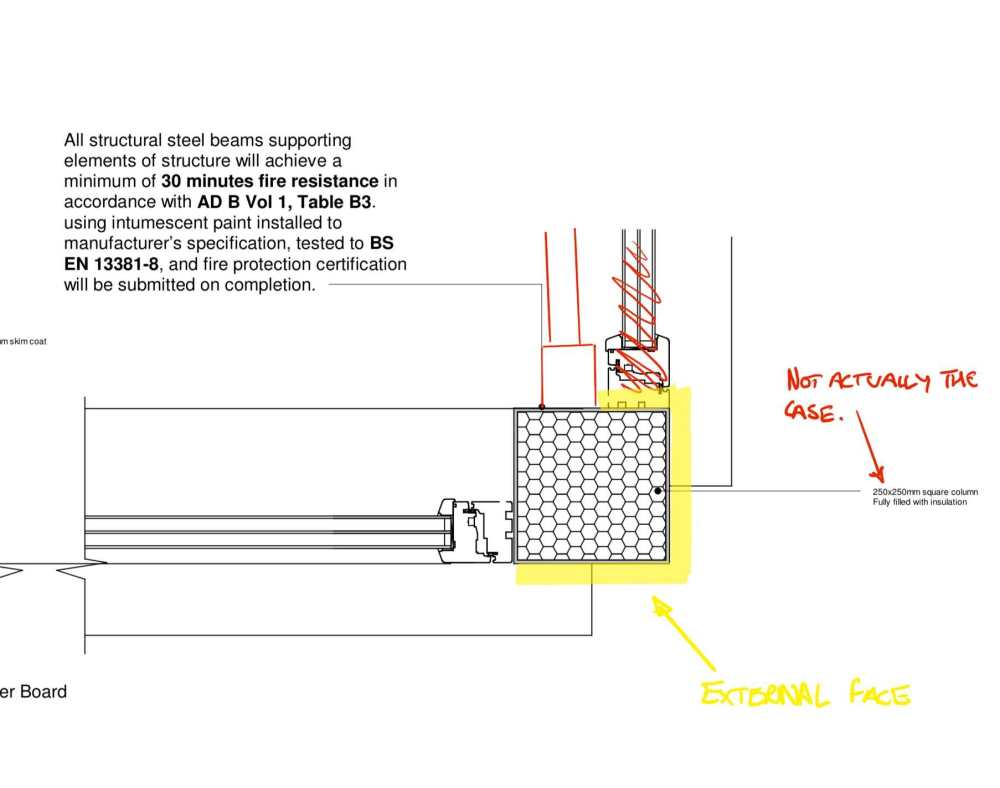
The original design was for the column to be inside the windows, but the timber frame structural engineer stated that it ‘had’ to go in the corner. TBH this really hacked me off that they weren’t able to calculate a small cantilever for the loading. Ultimately I trusted the collection of design professionals involved in the whole build / design (and I had them all join joint design meetings). I’ve got to the point where it can’t be changed now, and in the general scheme, we can come up with a solution I expect using the Aerogel type of product. Yes, it’ll still have the steel passing through, but the internal being empty wouldn’t help. Thanks for the link to an earlier thread - I’ve only read part of it so far, but it’s already giving me confidence in finding a solution. TVM!
-
We have steel columns (250mm square cross-section) in the corners of our timber frame with steel lintels which allows for glass on 3 sides. The steel is visible inside & out, and although I’ve been asking for the detail for some months, only now that we’re very close to installation have I established that none of the design team (Principal Designer - architectural designer), Timber frame manufacturer (designer, structural engineer, production manager…) has mentioned it until I have pointed out that there’s no insulation in it (on the drawing). The drawing I'm concerned that there's been no design discussion about how they will be prevented from becoming a very significant thermal bridge. Cue silence… In the interest of now finding a solution rather than playing a blame game (adds no value), I’m seeking this group’s thoughts and experience. One suggestion has been to drill holes to inject expanding insulation into the column, with holes positioned in line with where the window frames will go (this method would need more than one hole to get it in far enough and fill the full height; the holes could be subsequently weld-filled afterwards, and this would obviously need approving by the structural engineer). AAAAARRRRRRRGGGGGHHH!!!! So frustrating….
-
Warm or cold roof design for our flat roof?
Great_scot_selfbuild replied to Great_scot_selfbuild's topic in Flat Roofs
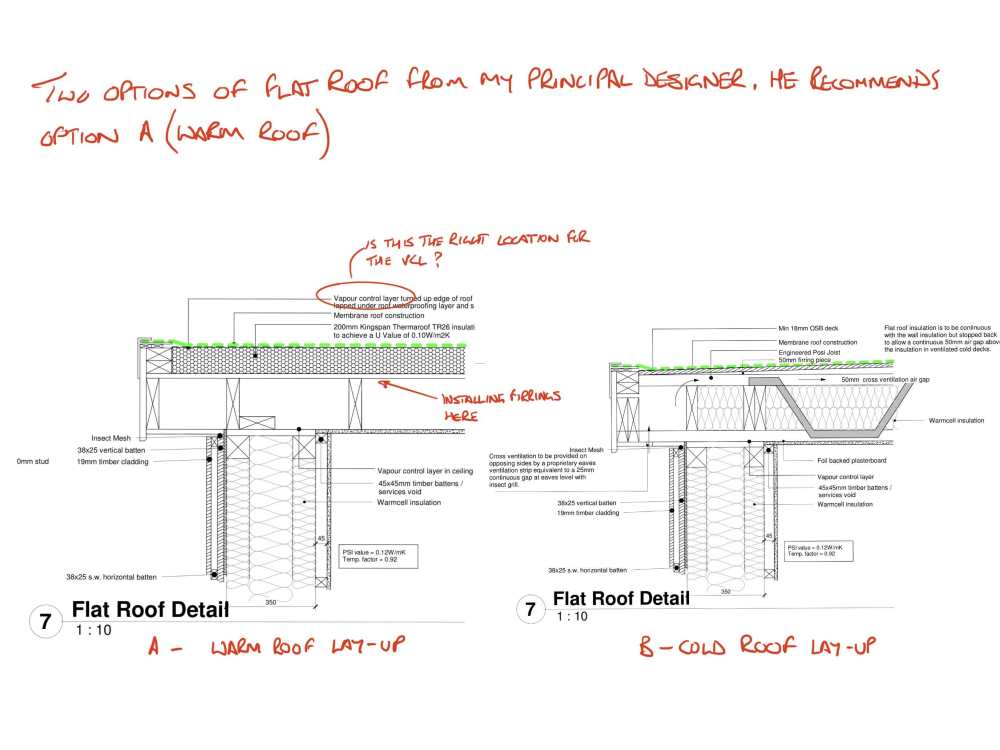
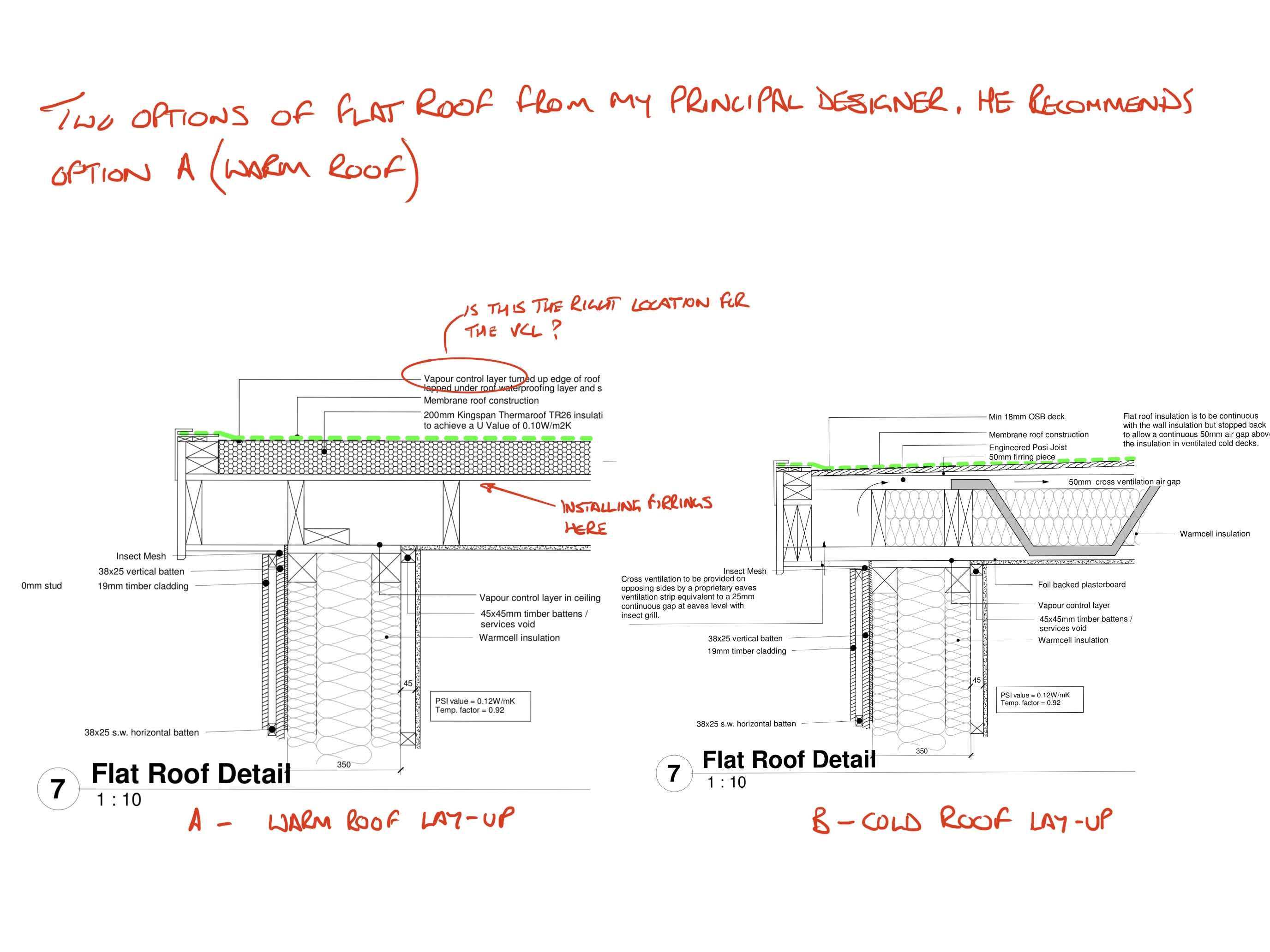
Do you mean upstand above the flat roof? If so, there will be a lip of some sort for the guttering. With your warm roof, did you just take the wall insulation up to the underside of the roof board (rather than this drawing showing it stopping at the underside of the joists)? -
Warm or cold roof design for our flat roof?
Great_scot_selfbuild replied to Great_scot_selfbuild's topic in Flat Roofs
I had wanted to go back to option B, but the flat roof and ventilation gap will be a paint to sort, so I’m thinking the option A - I think it’s just a case of taking the wall insulation up to the top. Worth adding that I only received this warm roof design earlier today (5pm) and haven’t yet had a chance to ask him this question - but it will be with him tomorrow! -
It doesn’t feel like I’m getting very clear advice from our principal designer. Any comments on these options? Thanks in advance.