

TerryE
-
Posts
3806 -
Joined
-
Last visited
-
Days Won
30
Everything posted by TerryE
-
Meaningless. I did my build in 2016. What's the value of knowing the price of 6 apples in 2016 if you want a dozen Clementines starting later this year. As I said our local stone skin cost me more than the TF + Slab + design + all engineering calcs for the BInsp.
-
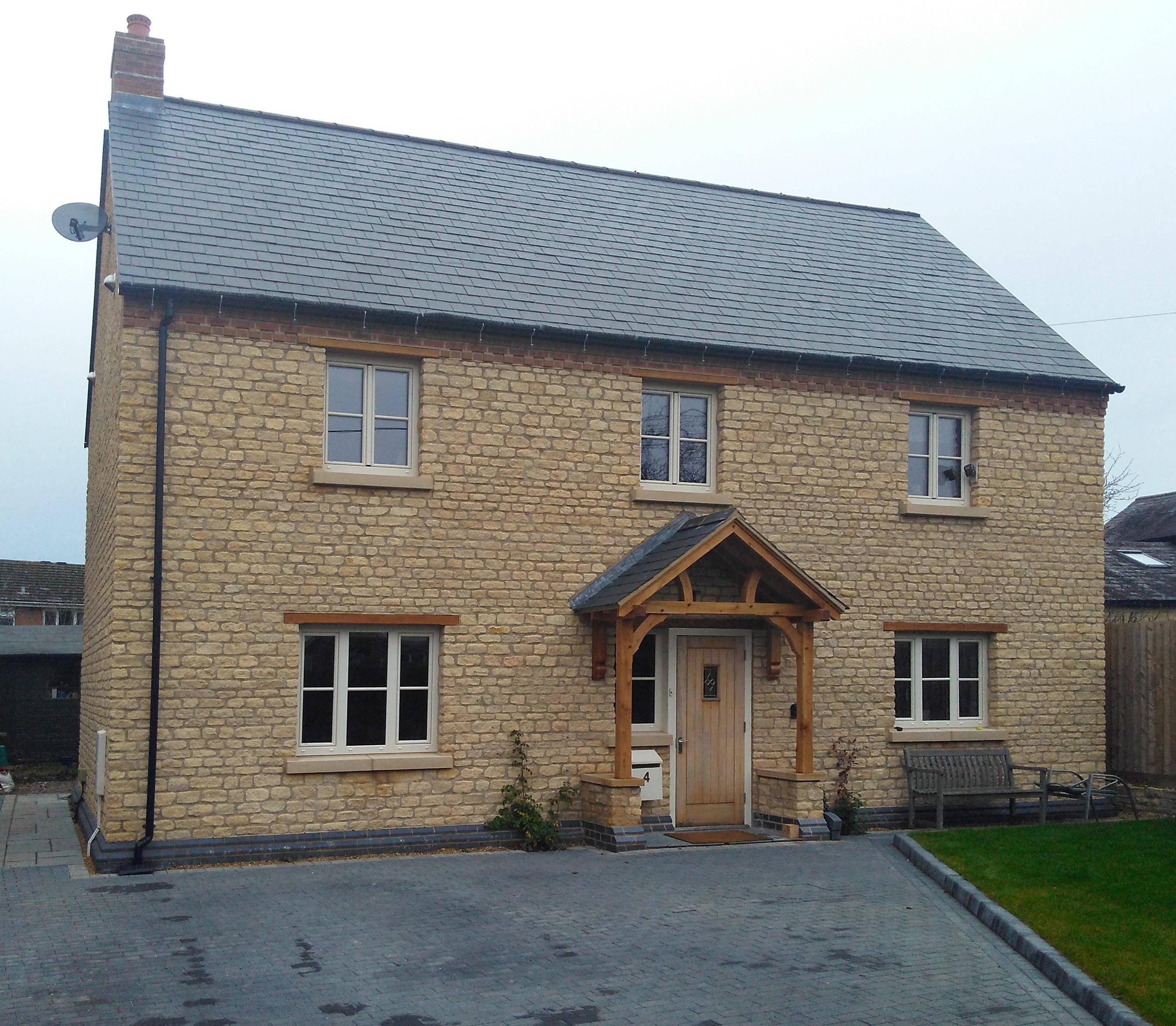
@SBMS It is difficult to do an apples and oranges comparison here. The fact that a lot of members including me chose the MBC route means that it can be an excellent price for a given set of circumstances. The best thing is to talk to the vendor direct In my case I felt that MBC offered a pretty well rounded passive offering: custom slab and TF design including fabrication and onsite construction. The MBC design and the construction guys onsite really understood the implications and detail of building to passive class. You can be confident in getting a complete airtight (say to 0.4 ACH) and well insulated build -- all in one package. Yes, you could multi-source and reduce the nominal costs, but only then to find that you need to take on a lot more detailing yourself to hit the as-designed spec. As point of reference we have a natural hand-dressed stone skin on our house (to comply with Local Planning requirements); the materials and labour for this cost us as much as our MBC bill.
-
My plumber is going to commission my new OSO UVC on Tuesday. At that point I will have 2 × SunAmp PVs going spare either to give away to someone who is interested or to scrap. One is fully working and is used as our main HW system until this Monday. The other one died (thermo failure on the PCM heating loop?) but is a good source of spares and should be repairable if you know what you are doing. I am willing to give them away as-is, without any warranty from me to anyone willing to pick them up / arrange collection. Alternatively if no one is interested that it's a case of scrapping them. Any suggestions on disposal?
-
UVC Retrofit: Tundish D2 Discharge Pipe in a Passive House
TerryE replied to TerryE's topic in Boilers & Hot Water Tanks
In our case the UVC is free-standing in a utility room, which is basically a corridor from the hall to the back door with sink, worktops and whitegoods along one side. The OSO UVC fits in a gap behind the hall door, and is in open view. Because the room is only about 8m2 area inside a passive house, a conventional UVC would be unsightly and would turn it into a hot room. As for the extra £400 or so, IMO this is a small price to pay to keep Jan happy and maintain harmony in the household. I am fitting a couple of digital thermometers on the tank, so I can use these to tune the Immersion timing. -
UVC Retrofit: Tundish D2 Discharge Pipe in a Passive House
TerryE replied to TerryE's topic in Boilers & Hot Water Tanks
The wonders as formed vacuum panel insulation. 🙂 -
Microcontroller based power switching revisited in 2024
TerryE replied to TerryE's topic in Boffin's Corner
I've been burnt by a mindfart when wiring up the new UVC installation -- or at least decommissioning the previous 5V switched SSRs box because the UVC pipe runs have to go along where it is mounted I've been reusing the existing dedicated redials but repurposing some of them. Unfortunately they were wired 2 + 1 onto the two sides of the consumer unit (protected by separate RCBs), so the Neutrals were wired likewise 2+1 -- except that I swapped the role of one of the cables so that a LH Live was returning to a RH Neutral. Powering it up trips both RCBs. Duurrrrhhh! Idiot. A quick shuffle fixed this. LH is LH and RH is RH now. It struck me that you could easily fall into the same bearpit with the power monitoring multi-relay boards such as the Shelley and Sonoff ones as these are wet contact. -
Just started a self-build in Dorset. Exciting times!
TerryE replied to NailBiter's topic in Introduce Yourself
@Thorfun, that's because their warm slab is an on-ground insulation-wrapped slab. A warm basement is a completely different design requirement. -
UVC Retrofit: Tundish D2 Discharge Pipe in a Passive House
TerryE replied to TerryE's topic in Boilers & Hot Water Tanks
Thanks Nick. The direct distance UVC to stack is ~3½ m so even with the elbow reductions we are well under the 9m limit for 22mm. -
Just started a self-build in Dorset. Exciting times!
TerryE replied to NailBiter's topic in Introduce Yourself
By way of 2016-17 prices, our village plot was worth about £150-200K, bought-ins about £350K, labour and profession fees save by our contribution maybe another £120K giving an effective total of £650K which was about what roughly comparable houses were selling for in a village setting at the time. OK, splitting the plot off probably lost us only about £50K off the selling price of our old farmhouse. We have no CiL then and saved on stamp duties so probably saved ourselves maybe £250K on buying a "comparable" previously built house in the area. Except of course that you could buy a passive-class house and certainly not the exact spec that we wanted nor to the build standard that we actually achieved. There were some major cost elements imposed by the LPA, e.g. local stone exterior skin, and natural slate roof, that added to our bought-ins. At today's prices we would probably be looking at £750-800K to do a custom build to this spec. Can I suggest that it might be worth looking at an MBC twinwall TF build as an alternative to ICF at least for the main living space? Their warm slab and TF design patterns have been well tuned to a passive-class standard over more than a decade's refinement. I agree that if you've run your own building company, then you and whoever else in your family that worked in it will have lots of relevant experience, and you will have many areas of expertise in-house that you can either use directly or to enable a decent level of quality control. One thing that many here evangelise is achieving a passive class build as this has major running cost savings, as well a far more comfortable living environment. We are in our early 70s now, so we appreciate this as we age. We keep our entire house at 21-23 °C (the first floor bedrooms are a couple of degrees cooler than the ground floor) 24 × 7, and really miss this when we visit our children and other relatives. I personally would recommend that you or one of your close family really gets their head around the implications of building to passive class: where the heat goes and (through solar gain) where it comes in. Relevant contributions of: slab losses, external walls, roof, fenestration, air exchanges. Get a good feel for the impact of U values and how these reflect unit costs and performance; air-tightness and air exchange losses, and so on. You will need to make various trade-offs to optimise costs vs achievement off your overall spec, and you or someone you really trust has to make these decisions. Achieving this class of house requires an attention to detail both in design and in construction. It is not unusual for two houses with the same nominal as-designed spec to vary in as-built performance by a factor of 2. An example "close to home" is that my daughter's living room is impossible to heat economically: the large panel of bifold doors leading onto the garden have a poor U-value and leak terribly; areas of wall and ceiling insulation are missing. You haven't mentioned your age, but I infer that you are getting close to retirement and therefore this will be your property "to retire into", so living comfort will be important. You've mentioned a gym and workshop but what you have mentioned in bridging space to the exterior: a conservation or atrium. I am not talking about the 5 × 4m bolt on the side of an existing property, but in your case you have lots of area to include a decent spacious environment that to could properly integrate into the building fabric, and that could connect you to the garden. OK, not needed in the summer where you are planning to build, but this could extend you comfortable "outside-ish" space for another 3-4 months of the year. BTW, even Nick (@SteamyTea) would admit to being a tad irascible at times; yes, he is also very particular about units, dimensions etc., because the implications of kW vs kWh, etc. are a lot more than a little "h". He is also well respected for his contributions here by the forum regulars. 🙂 -
Just started a self-build in Dorset. Exciting times!
TerryE replied to NailBiter's topic in Introduce Yourself
I entered this thanks to a poke from @MikeSharp01. What @NailBiter is going through now is a journey that we started back in later 2013, with us moving into our new build in Dec 2017, a 3-storey passive-class (almost) house were we live on floors 0+1 and my son has bedsit style area in the warm loft on 2. This is about a quarter of what NB is planning. We've been living in the place for over 6 years, and we are still amazed at how well it has all turned out in terms of performance as built against design expectation, and also in terms of its extreme durability and ease of maintenance. We build on a split plot by selling the other ½ with its 17-19C stone farmhouse. We saved a lot of money by doing a lot of the design, procurement and internal trades ourselves. So the entire process was extremely profitable My rule was only to take on tradework where our standard of build / finish would be at least as good as we could get from local tradesmen, and since we kept a very tight control on compliance and quality, the overall build standard is consistently high. Overall we put in over 3 person-years of equivalent effort. This was a big percentage (effort and therefore saving) of a 230m2 build, though it took us years to recover from putting in this effort and the general strain/stress. Our sort of input just wouldn't dent a 1,200 m2 build. You are going to have to rely on buying in at a realistic commercial rate a far larger percentage of trades and professional services. Also guessing your extended family size, I suspect you have an expectation of a lifestyle, per-person use and general quality of finish that is also on a different level from what most members here aim for. I make this comment with no criticism intended, but more of a level-set from my experience and costs at 2015-2017 prices: my instinct is that you are at least 100% out on your budget expectations. I would strongly suggest that you have the entire project plan and scope independently reviewed and costed by an experienced quantity surveyor: your overall project scope needs to be realistically matched to your finances, as there is not point in running out of cash with a half built project. I have a few technical comments, but I will defer them to later posts. -
@vik2001 you need to tread carefully here. The Land Registration records the accepted boundary, and in practice the boundary is where is boundary is, unless you have prior photographic evidence that your neighbour has subsequently erected his fence within your curtilage, and in doing so possessed some of your land (without your consent?) This could easily escalate into a formal boundary dispute. You need to decide your priorities: do you want to get into a boundary dispute with your neighbour, or do you want a supporter of your application? Even if you both agree that the current fence does not reflect the actual boundary, then you'd probably need to offer some sweetener to remedy this: e.g. offering to replace the fence as new on the actual line, plus .... A difficult one to navigate.
-
They probably do, but why do you say this with 100% certainty? It is the LPA that decides. An expert such as a planning consultant who is familiar with the LPA's process and practice might have a relevant informed view. It is dangerous putting in a PA "blind" because rejection kicks off what might be an extremely long process - a year+ delay, if not indefinite. IMO, far better to have a dialogue with the Planning Department, and then submit an application that has a local officer's support. And the officer might just say "this doesn't need an application", in which case a CoLD is essential to protect the owner.
-
The LPA might be willing to issue a Certificate of Lawful Development in which case the issue is solved and you've got no worries. IMO, what you need is to establish a constructive dialogue with your LPA planning dept. sooner rather than later. You might need to get your case together first. A local planning consultant might help if you are worried about approaching the LPA. (These firms are often staffed by ex-planners who have gone private because the money is better.)
-
I am curious. You've had plans drawn up, commissioned a builder and started work. Why did you conclude that it wouldn't need PP? I am assuming that you have read the "Permitted development rights for householders, Technical Guidance" before starting the development (I see that @joe90 has already given you the link.) As far as I can see, the PD limit for an infill extension is 8m not 10m. You've also got the side elevation within 300mm of the curtilage and added two fenestration openings directly overlooking the neighbour. IMO, stop and start talking to the planners.
-
We've just bought an OSO SX250 UVC to replace or 2×SunAmp PV for the G3 plumber to fit sometime this next month. I have it sitting in situ in the utility room, though still unconnected, ATM. (It is really a nice piece of kit: I was initially planning to put a folding door cupboard in front of it but now that it is in situ, we agree that there is no point as its aesthetics are no worse than any other white goods unit.) My plumber has done one quick site visit, but I am just getting my ducks in a row and trying to anticipate issues before we finalise his work plan. The main hassle is the tundish discharge pipe (D2) run because doing a new open external discharge would will be a total PITA because of (i) our MBC 300mm twinwall + ext stone skin, and (ii) not having an unsealed opening screwing up our airtightness. I was wondering if anyone has used one of the new G3 compliant integral tundish + dry traps (e.g. this Altechnic one). This neat piece of kit kills quite a few issues such as maintaining airtightness, and being able to run 22mm copper D2 drain along a wall (which would allow us to snake behind a freezer) direct into Part G compliant branch. @JohnMo, you posted on OSO's. Do you or anyone else have a view?
-
@dnb, Sorry I missed this. NodeMCU Lua runs on both the ESP32 and the older single CPU ESP8266. The JS equivalent Espruino environment only runs on the ESP32 variant -- preferably the later versions that have PSRAM as well as Flash. The ESP32 Tasmota builds also include a comparable Berry scripting environment. The Expressif RTOS include wired Enet support and some boards include a wired header
-
Microcontroller based power switching revisited in 2024
TerryE replied to TerryE's topic in Boffin's Corner
Thanks everyone, @dnb @jack @joth @Mike @MikeSharp01 @ProDave @SteamyTea for your input and advice. I think I am happy with the solution that I've picked and I will write it all up as a blog post when done. Throughout my build, I must have had maybe 10 or so brainstorming topics from building issues, to plumbing and CH, to home automation where discussing the specific issue in depth with knowledgeable members of our community has enabled to to get my thoughts in order and come up with an effective solution to each of these issues. This has saved me a ton of grief, and TBH a lot of wasted cost and avoided rework. In return I do the Sysadmin to keep the forum running smoothly, but this is still a good deal as far as I am concerned. I've also rescanned the posts to see if I've left and dangling points that I want to pick up on. It is indirectly related to joth's comment, though I also want to respond to this. IMO one bain of budget home automation is the unintended consequences of service dependencies on critic network management functions. For example if you are using IP services and stack as core components then your devices can depend on services such as DHCP, DNS, NTP to work and may fail if these aren't working. In my case here for example, you need to make sure that everything can restart gracefully after an unscheduled power outage, and in my case I have sorted out service dependencies so that this happens. But what happens if a critical component such as the main home router fails to restart successfully, then what cascade failures can occur? Losing the Internet is a hassle, but we can live with this for a few days. However, losing my CH and DHW systems for a few days during winter would be grim. I think this issue merits a Boffin's topic in its own right, so I will defer further discussion to that. As to the specifics of security vulnerabilities etc. I am a bit more sanguine (maybe falsely so), because I am a reasonably experienced sysadmin. My home network is pretty well locked down, as I only present my VPN, HTTPS and cert only SSH on the Internet and these are served from pretty locked down LXCs. I don't use any application cloud services for home automation etc. as everything is served locally. My LXCs typically run minimal Alpine stacks which only run the internal services needed to support their function. My CH+HW control runs on its own dedicated RPI which runs a minimal server software stack needed to support its core function, and boots from a read-only OverlayFS. I typically update this about once / year at the same time as I do functional changes. -
Microcontroller based power switching revisited in 2024
TerryE replied to TerryE's topic in Boffin's Corner
If you are willing to wait for ~4 wks shipping delay then you can get these direct from the supplier's AliExpress store here at about half the cost of the UK agent through Amazon Prime. Note that there are various options: Internal or external antenna. In most inside uses the internal variant will work fine. Bare board. or with case. Two power in variants: 90-240 VAC or 7-36VDC. Two ESP32 variants: 4Mb Flash or 16Mb Flash + 8MMb PSRAM. Tasmota will run on happily on the first. The second is really only needed if you are doing serious embedded app development on the board e.g. using Berry or reflashing with MicroPython, etc. If you need to control more than 4 devices, then there is also an 8-relay extender module. I am using 4Mb Flash version powered by 24 VDC and have ordered a second for spare / testing. -
Microcontroller based power switching revisited in 2024
TerryE replied to TerryE's topic in Boffin's Corner
Better and better. What does Elon Musk say? "The best part is no part". I don't need to use Berry at all for what I want to do. Here is a Node-RED snippet that cycles around the relays turning each on for a defined duration with a 2 second gap between The test1 function posts a set of messages to my cmnd/CHrelays/BACKLOG0 topic. Backlog0 is just a way to do multiple Tasmota commands atomically; PulseTime1 and Power1 set the on-time and power state for relay 1 etc. const DUR=12, N=4; return [[...Array(N).keys()].map(i=>({ delay: i*(DUR+2)*1000, payload: `PulseTime${i+1} ${100+DUR}; Power${i+1} 1` }))];
-
Microcontroller based power switching revisited in 2024
TerryE replied to TerryE's topic in Boffin's Corner
I've now had a chance to look at this in more detail. Berry is a fully featured scripting language that is comparable to Javascript, MicroPython and Lua. The language is Python like except that is uses lexical scoping (blocks are terminated with an end keyword like Lua), rather than indent scoping. It was initially developed by a Chinese developer, Guan Wenliang (Github: skiar) 2018-2020, with the Tasmota port largely done by another Tasmota developer, (Github: s-hadinge), though Wenliang is still actively involved. Looks pretty good but yet another language to learn. The runtime (under 50Kb) is similar to NodeMCU Lua, and it has got a lot of the IoT friendly features that we added to NodeMCU Lua, such as read-only objects are memory-mapped from ROM so that only true RW variable content gets stored in RAM. Perhaps the main difference is that Tasmota provides the core API, MQTT and WebUI asn well as all of the I/O device support so you only need to use Berry for event-based triggers etc. -
Microcontroller based power switching revisited in 2024
TerryE replied to TerryE's topic in Boffin's Corner
The ESP chip (wiki article) supports microSD (via Quad and Octa SPI) as well PSRAM. A lot of boards either have an SD slot of module or as an addon. However you don't need it for most use cases because the firmware is loaded from FLASH, and there is typically a small FlashFS that is used for configuration data. Most standard firmware such as ESPHome and Tasmota just post to MQTT and leave it to another client listener to log the data. You'd really need to start using MicroPython, Lua or Arduino development to make use of on-module storage. -
Microcontroller based power switching revisited in 2024
TerryE replied to TerryE's topic in Boffin's Corner
This wrong on both accounts. All ESP32 binaries include Berry scripting by default, and Alexa integration is disabled by default, though it is configurable. I've just used the out-of-the box Tasmota to wire and test the control path. -
Microcontroller based power switching revisited in 2024
TerryE replied to TerryE's topic in Boffin's Corner
I've now got the 4-relay ESP32 board that I discussed in an earlier post. I've still to test it out, but the general design and build quality is very good. I bought it on Amazon with Amazon delivery for ~£50. The same board is available form AliExpress (plus other variants and options) for around half that, but on a ~2 week delivery. It comes with a pre-installed Tasmota firmware that was vendor-built and configured to its hardware setup. This build includes some components that I don't want (e.g. Alexa integration) and missing some that I do (e.g. the on-device simple scripting). Nonetheless, it is easily usable out "of the box", so a good way to get started. However, there is quite a learning curve to being able to build your own custom Tasmota binaries -- enough to deter me and I have a lot of experience of building custom ESP8266 and ESP32 binaries, so I guess that only a few % of board users would be confident to go down this path. The other main OS firmware route is to use ESPHome. It's strengths and weaknesses pretty much compliment and contrast those of Tasmota: you can't get prebuilt standard binaries for ESPhome, so you need to configure and build your own. However, because everyone has to do this, the whole process is a lot slicker and simpler. If you use Home Assistant, then a couple of clicks will install the ESPHome add-on and this adds a docker container to HA that includes a complete build environment. You configure each ESPHome device through a YAML file that follows the HA configuration guidelines, and the add-on includes a Python script that converts this YAML and orchestrates the device firmware build. So doing these builds is pretty pain-free. For this board, the vendor even provides a step-by-step guide on how to configure their boards under HA. By default ESPHome connects back to HA and even uses this connection and a health heartbeat, so the board will enter a safe (all relays copen) state if HA dies for more than a configurable timeout. However this is also configurable and you can run the firmware with optional or no HA integration. It is also trivial to add simple interlock and other scripting rules. I will add an update when I have this all working. -
My corresponding as designed figures are around 0.12 for the first three and IIRC 0.9 for the last. As I discussed on some of my blog posts, the total heat loss from air exchange is about a quarter of that that of the combined loss from the walls, roof and windows, but that is because I have an airtight house (~ 0.5 ACH) and MVHR. But this would not be the case with a leaky house built to typical 2008 air-tightness standards and no heat recovery. This would increase this element of the pie maybe 5-fold and would become the biggest single source of heat loss. Do the quick check, eg. a JSH style spreadsheet of Σ A×U×Δt, to get the as-designed heat loss, but I suspect that your losses are so high because: The as-built performance is nowhere near as good as the as-designed spec. IMO, most builders are often very slapdash if not under tight quality supervision. It's just that their general ethos does value good thermal performance. Jeremy Harris once did a walk-around a new estate near his house (on a very cold Feb evening IIRC) with a decent FIR thermal imager and there were whole wall and areas of roofing with missing insulation, major leaks and hot spots around fenestration, etc. It is very leaky so your air-exchange losses are significant. That's why I suggested you borrow rent or buy a FLIR add-on for your mobile or even buy a cheap spot IR thermometer. Work out why your house is leaking heat like a sieve first before spending 10s £K on getting a more efficient way to generate that wasted heat.
-
If you are using ~120 kWh per per day heating a ~180 m2 house at ~0°C, then it has 3-4 times the rate of heat loss compared to my house which is a bit larger and which we maintain at about 23°C. OK ours has a near passive design, but it still seems as if it has been built to a poor insulation standard especially for a 2008 build which if build to code would include 100mm insulation in the walls and some form of insulation under the slab. I would be tempted to get a remote FIR sensor and camera and do a survey inside and out to see if there are any quick wins that you can do to improve the general thermal performance. Example include: Missing or poor insulation and cold bridges. Some remediation might be possible, especially in roof voids. Bad air leaks and air circulation behind dot and dab plaster boarding Poor window performance. The challenge is that fixing these during build is cheap and easy so long as you have decent on-site inspection, but doing so in retrospect is a lot more problematic and can be costly. Whilst ASPH installations aren't cheap (as you know I can't make the numbers work for me and I designed my house to be ASHP ready). The 3kW A2A units are pretty cheap and you should be able to get one or two installed at around £1K ea. These have a CoP of around 3 and can also be used for cooling in the summer. They aren't a complete solution as they can be quite noisy, but they can dump heat into the house interior quite cheaply. At some point a ToU (Time of Use) tariff option might become available which will allow you to shift heating to cheaper ToD (Time of Day) rates. This will give you a grater ripple on room temperatures, but using in-room heating (e.g. I use an oil-filled electric rad connected to a smart socket in the living room). This is at a CoP of 1 (the same as your electric UFH) but more responsive and localised to the rooms that you are sitting in. PS. use the @name trick if you want to notify a member about your post.🙂


