
Adam2
-
Posts
793 -
Joined
-
Last visited
-
Days Won
1
Everything posted by Adam2
-

Just moving the house a few degrees & making holes
Adam2 posted a blog entry in Wedding Cake Re-build
So we had planning approved and were feeling good about being able to link up our engineer & architect to get started on the details....and then.... had a re-think. We started out planning a re-model and changed our minds as the compromises were too many and the costs were getting high so a rebuild (esp with VAT bonus) was making more sense. But, we didn't really go completely back to the drawing board - we should have. Post-planning we had a good look at the plot, house position and neighbour's new house and realised we were losing an opportunity to improve the view, the plot usage and potentially aesthetics. Turning the back of the house ~15 degrees would open up the views and make the house run more parallel to the plot's rectangular shape which will mean a new planning app - based on feedback from the drop in session with the planning dept. So, to avoid wasting too much time we're now linking up the architect and engineer so they can work together on the modified plans and also on detailed design/structural plan so we can move forward quickly post the next approval (fingers crossed). But we have made progress of sorts - had the ground investigation holes today. It always seemed a shame to pay for holes and a report when you know (based on the house 7m away) what the ground is. Today proved that the ground is surprise surprise..... compacted sand which the drillers could only get 3.5m deep into despite a lot of machine noises! I'm hoping this bodes well for a concrete raft without needing too serious strip foundations. The trial pits and smaller sampling rig also uncovered the same ground across the site. Probably not a lot to see happening the rest of this year ? -
PP includes demolition. Is this part of the "development"?
Adam2 replied to howplum's topic in Planning Permission
From a meeting with my architect today there is a word of caution I'd like to pass on. Our situation is we have planning permission for a rebuild which will increase m2 by about 40m2 so only an incremental potential CIL liability and that for a self build can be removed if forms filled correctly. BUT, we're planning a few changes which will likely mean a new planning application gets submitted - considering risk for approval as v low. We're keen to get moving by starting demolition before new planning is approved and this may be an issue. When the new planning is assessed if there is no existing house then there may be no incremental element so all considered as new construction with a high CIL charge - which, should be OK for self build but any mistake made in that could result in a big CIL bill. Will look into this more to fully understand the risk of starting early. -
I had a large tree down in a very difficult position - 1100 after negotiation. If you get a tree felling co to review it and quote they will often do the tree work application (if has a tpo) for free.
-
Any use of Warmerwall / Polysteel
Adam2 replied to Adam2's topic in Insulated Concrete Formwork (ICF)
Well I came across this (from a company that seems to sell EPS and not XPS!): https://www.plymouthfoam.com/eps-vs-xps-you-be-the-judge/ And also this which seems more balanced with a long term trial of EPS/XPS https://www.concreteconstruction.net/how-to/materials/comparing-eps-and-xps-insulation_o I'm happy with either but would probably go with EPS if all else was equal due to cost and expected longer term performance benefit in damp conditions. My question re Warmerwall was more to do with the fitting mechanisms and the use of steel bracing - still looking at build companies so will of course take their views on this based on practical experience. It's great that there is so much choice but sometimes in life less choice is helpful! -
Hi again, narrowing down (well I thought I was) choice of ICFs and came across WarmerWall - no mention that I can find on here so far. Interested to hear feedback from anyone considered them and used or discounted them for any reason? A difference to most others that I've looked at is the use of steel connectors between the EPS with steel supports for fixings. Company seems v helpful and responsive. Also interested now in the Velox discussion.........
-
@JSHarris OK thanks, so with the WC extract do you connect into the room extraction or run a separate duct to the manifold? I assume the former. Presumably all the water must empty the tank and at that point the air can be withdrawn from the bowl? Or am I missing something? Thanks
-
ICF Queries/concerns from Architect/Structural Engineer
Adam2 replied to Adam2's topic in Insulated Concrete Formwork (ICF)
Thanks so much for the great information and food for thought. My views are below, will evolve as we get more professionals involved and you guys /girls of course ? Waterproofing - agree, it's a challenge and ICF means you can't check quality of concrete - hard to know how real an issue that is. If you waterproof the outside of the ICF then that should be less of a concern. Plenty of houses on hills even with ICF so will note this as a concern and will apply a lot of focus on this during design to ensure appropriate solution and warranty though using your warranty in this scenario is never going to be a happy outcome! Large openings - not concerned too much, you can use wider ICF if the requirement is more rebar and beams if needed. Anticipating hollow core for the largest non-slab bearing floor area and timber for upper floor to mitigate weight. See what SE (with more ICF experience) has to say. Kitchen/bathroom fixings - surely you use structural OSB or bracing behind plasterboard ? Not concerned Detailing - seen plenty of ICF houses with a sharp/contemporary finish so not concerned Skills levels - we are not building ourselves, will select an experienced ICF builder and SE. Though will be keen to monitor what is happening ? Great feedback, plenty to think about. Next step is selecting SE and finding ground investigation co/conducting that pre meeting with SE and architect to kick off the detailed design. For sure will be back to read & post more questions! -
ICF Queries/concerns from Architect/Structural Engineer
Adam2 replied to Adam2's topic in Insulated Concrete Formwork (ICF)
@Alexphd1 What was the reason for not rendering down past the dpm? My last house was rendered (traditional not acrylic etc) and that was down to paving level around the house -
@JSHarris I like your work on the WC ? Can I ask, did you also have a room extract?
-
Ahh Great, I'm new!
-
Yes have 20m of glass balustrade to put on eBay as well!
-
ICF Queries/concerns from Architect/Structural Engineer
Adam2 replied to Adam2's topic in Insulated Concrete Formwork (ICF)
So many helpful and informative responses - thanks to you all. I'll add some more info here. That's an interesting idea and we could simply re EPS it - if needed considering the ground is on the other side so probably limited value in that. We are at the top of a hill and have free draining non-clay soil with a sand mix - a neighbour (not ICF) has built a place which is much larger so will also discuss with him the technique used for retaining walls. We will probably need some investigations pre-demolition to determine the extent to which retaining walls and foundations can/should be left in-situ to prevent earth movement. It may be that new retaining walls are built outside of the existing - a mad thought - if done with ICF possibly they could have a membrane attached and pushed back into position, as i say just a thought and will leave that to the SE. Talking of which I have an SE I am considering with significant ICF experience + some stepped builds so if engaged should add a lot of valuable experience here. The existing house from the 30s and the neighbouring house are fairly tight to each other - also partly a consequence of being at the end of a dead end road. Good point re costs and I am in the process of talking with builders and SEs to get a handle on how we go about this and set a budget before we get too far into this. No - will use a builder - if we use ICF (still the plan :-) ) then a builder with demonstrable ICF experience and as you suggest, possibly combining this with other strategies if required. Many thanks for the kind offer. We will take you up on that - we also have a Nudura build near us and saw the project (3rd floor concrete just in) which was very helpful though a much simpler site. OK thanks for this, I will take a look at Sika, Amvic are one of the suppliers under consideration. -
So a few snaps from Google Earth of the before images - these may be the current images also for a few months. of course Google does mangle the views and the walls are straighter than they appear!
-
Many thanks @JSHarris
-
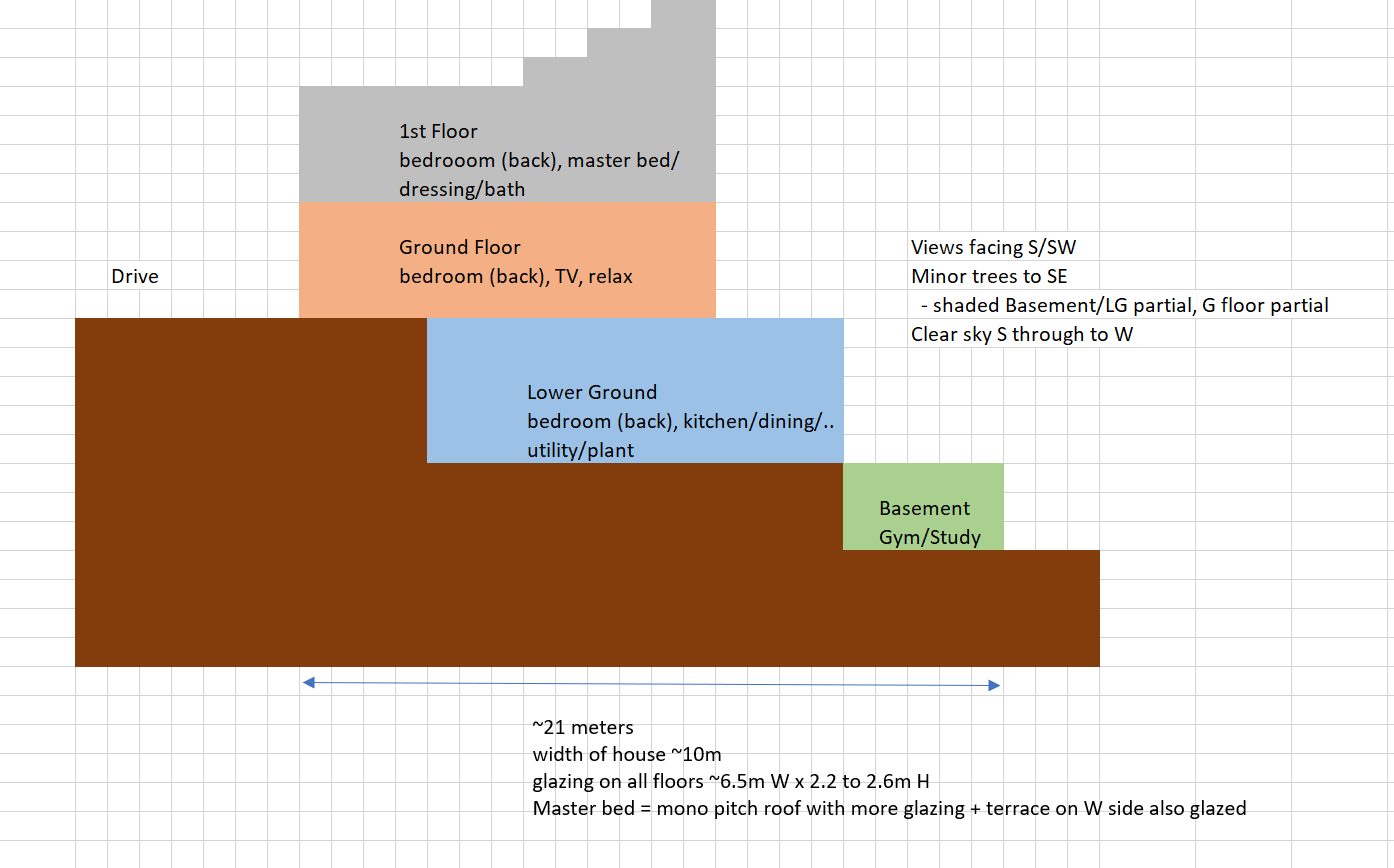
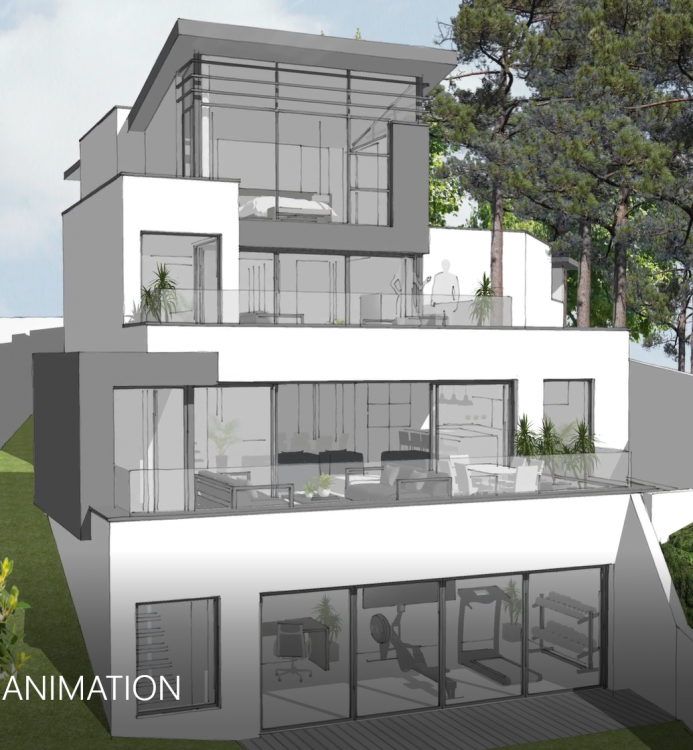
A couple of images loaded here in prep for starting the blog
-
@BuildHub Admin - please can I have access to create a blog Thanks Adam
-
OK - so I posted this under a more general topic in the heating as part of a discussion on heating/ventilation and it was suggested that I re-post the points below here for discussion :-) We're at the planning approval stage on a house re-build. It's a bit of a complex site as runs down a hill. We're re-building in pretty much the same foot print of the current house - will be guided by a SE on appropriate options re foundations/retaining walls. Will add a couple of pics to a blog in a minute. Reason for this post is to share some concerns raised by the SE that our architect has contacted re using ICFs. We're happy with our architect's design work though they have limited and not very positive experience with ICF from a project some years back. I don't know what real experience the SE has with ICF - which is what I had expected the architect to be finding out. I'm talking to other SEs myself to select one to work with on structure/detailed design/building reg. Concerns they raised are below, appreciate your thoughts on these. Adam The main concern on this project would be the waterproofing system. With an ICF product, how would the product be guaranteed? Typically the crack widths would need to be no bigger than 0.2mm. These are controlled by the amount of reinforcement and the cover to the reinforcement. With ICF both the amount of rebar that can be incorporated with the wall and the cover tend to be fixed or difficult to change. How would the walls be checked to make sure that 0.2mm crack widths have not been exceeded. The house has a lot of large openings. These could be difficult to prove using ICF due to the fixed width of wall. There are only so many bars that can be placed within a certain width of wall. This could mean that steel beams and or columns are required, causing further issues with detailing around the interfaces between the two. Care needs to be taken when installing kitchen and bathroom units as the fixings need to be taken through the polystyrene and into the concrete. The insulation could compress causing the units to be un level and out of alignment. Detailing of structural elements can prove difficult trying to comply with the detailing code. The system is advertised as low level skill required to construct the system but in reality tying of rebar and pouring of concrete are skilled jobs and need skilled labour to carry them out.
-
Yes- I had seen the posts mentioning that. When I feel ready for a laughing session I'll ask for a quote for the bedroom and ground floor (where the TV will be)! I think we're a few years too early for this product to drop in price but would love to know some indicative costs for this - I think @NSS you were an early customer so had a good deal?
-
It won't be multi-millions else I'm in trouble ? Good guess re location - not in Sandbanks, much cheaper than there but nice views as we're on top of a hill and get some views over Poole harbour
-
Thanks, such helpful responses. @lizzie yes I was reading your challenges there on the film. @the_r_sole that could be a sensible approach ? there may be some economy there as well - for example bringing the wall up to the roof line and in slightly more on the left. The views are quite amazing though so we need to ensure we get the balance right (for us) regarding glazing/views/heat etc. Thanks @Nickfromwales will look into that - it is new to me. As the real issues are (usually) confined to 1-2 months of the year I was thinking AC prep would be a bit of risk mitigation for bedrooms. It's great to have suggestions to make us review (again) the design, after all - this is the cheapest time to do it! I'll have to study a bit more the effectiveness of different glass treatments to see how they can help with the top floor as there we are unlikely to need any solar gain in the winter.
-
Good to hear. We met with a local who is doing a Nudura build (just finished concrete pour on top floor) who is also enthusiastic. Our architect and their often used (hesitant to say preferred) SE firm are pretty negative about ICF through lack of experience - for example their response back to the architect is below - nothing is probably actually 100% wrong (though I don't recognise some of the issues/terms used!) but indicates their view. Needless to say, I'm talking with other SEs that have ICF experience. The main concern on this project would be the waterproofing system. With an ICF product, how would the product be guaranteed? Typically the crack widths would need to be no bigger than 0.2mm. These are controlled by the amount of reinforcement and the cover to the reinforcement. With ICF both the amount of rebar that can be incorporated with the wall and the cover tend to be fixed or difficult to change. How would the walls be checked to make sure that 0.2mm crack widths have not been exceeded. The house has a lot of large openings. These could be difficult to prove using ICF due to the fixed width of wall. There are only so many bars that can be placed within a certain width of wall. This could mean that steel beams and or columns are required, causing further issues with detailing around the interfaces between the two. Care needs to be taken when installing kitchen and bathroom units as the fixings need to be taken through the polystyrene and into the concrete. The insulation could compress causing the units to be un level and out of alignment. Detailing of structural elements can prove difficult trying to comply with the detailing code. The system is advertised as low level skill required to construct the system but in reality tying of rebar and pouring of concrete are skilled jobs and need skilled labour to carry them out.
-
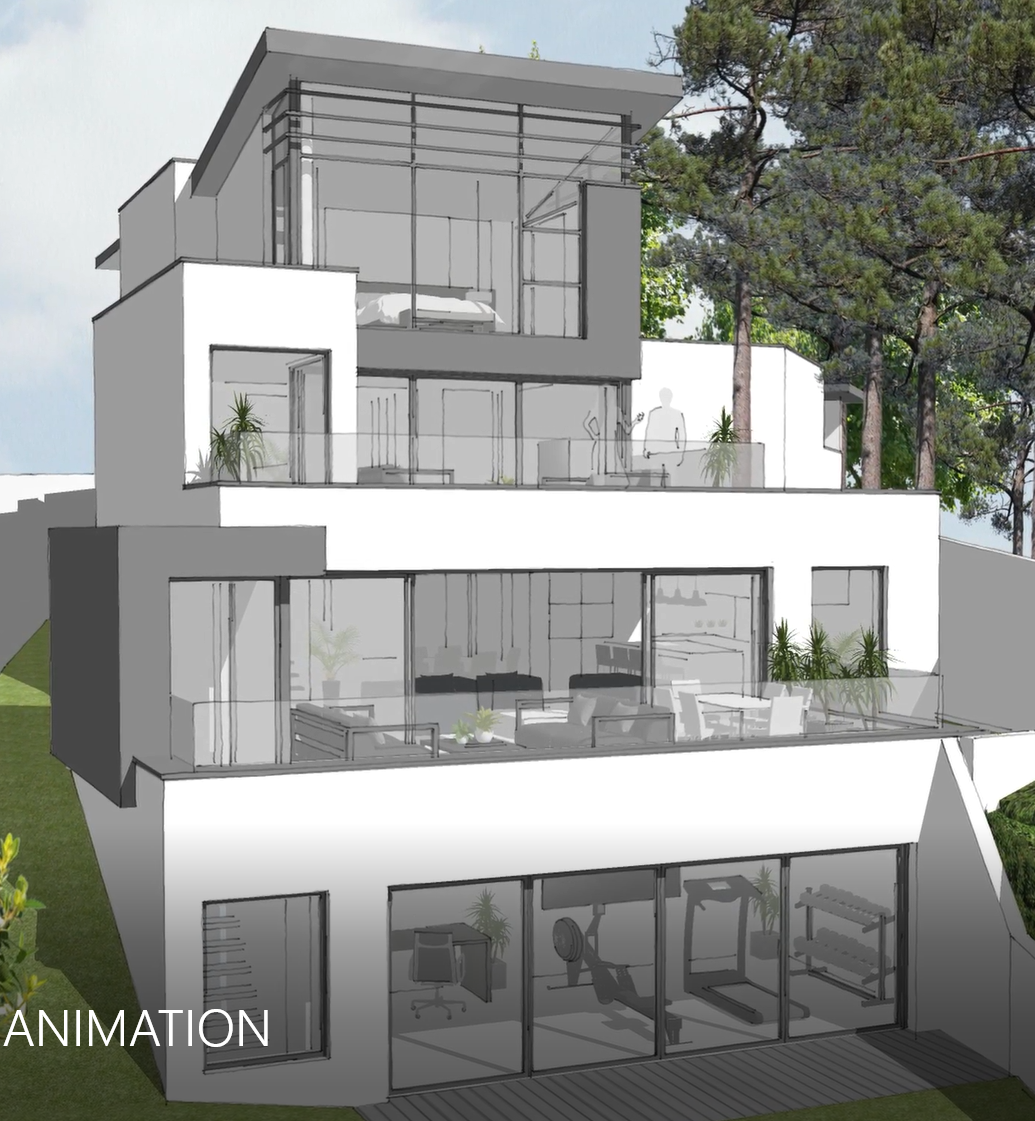
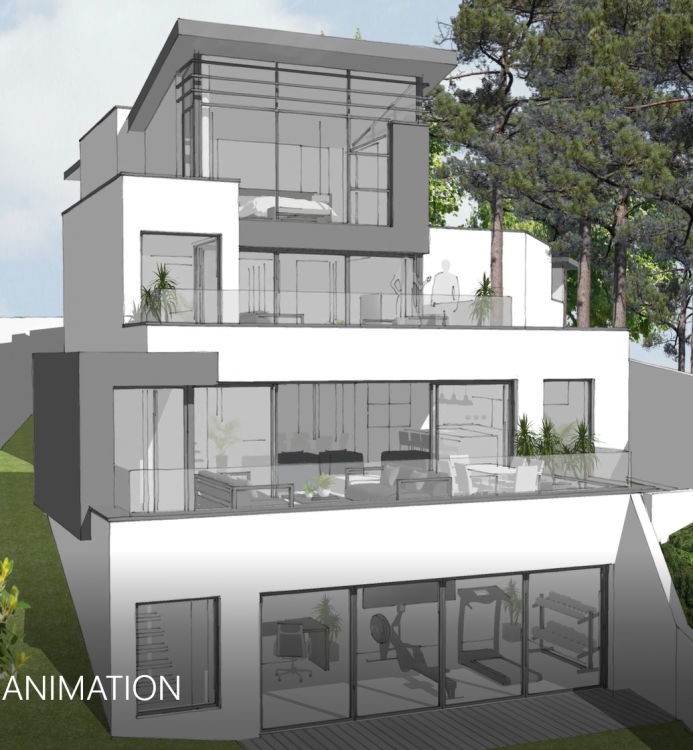
Hi, yes exactly - it is a design consideration ? Glazing does face south. The existing house has ~75% of the planned amount of glazing in this aspect compared to the new one, will ask my friend that is staying there how he has coped during the summer! Current glazing is pretty old Natural shading/buildings providing shading: Basement level = very high cover so not concerned here LG level = partial shading from East through to S GF = somewhat less shading than LG 1F= not much shading For LG & GF we may need glazing that stops solar gain at the expense of losing some of the benefits in winter + the use of external measures - brisse soleil and possibly external blinds - any links and info on those appreciated. for 1st floor probably maximum solar reduction in glazing as we will not need the solar gain in the summer. Louvres in design for upper window and may consider roof projection a bit further but this is limited help as slopes upwards but in peak season may be beneficial. Have been looking at split single room A/C units and possibly we should incorporate wiring/conduit for these should we feel they would be beneficial in future. Not sure if there are add-ons to MVHR that could improve cooling ability if needed later. Having UFH with single floor zoning may be benefical in evening temp from S and N areas of the house? Thanks Adam
-
Thanks, we're very pleased with the design but the vision is a long way away still.... ICF - talking with 3 Nudura, Logix (local to me) and Amvic.
-
Managed to grab an image from the animation that may make this clearer to grasp (from a solar gain perspective). Some changes since this was created.
-
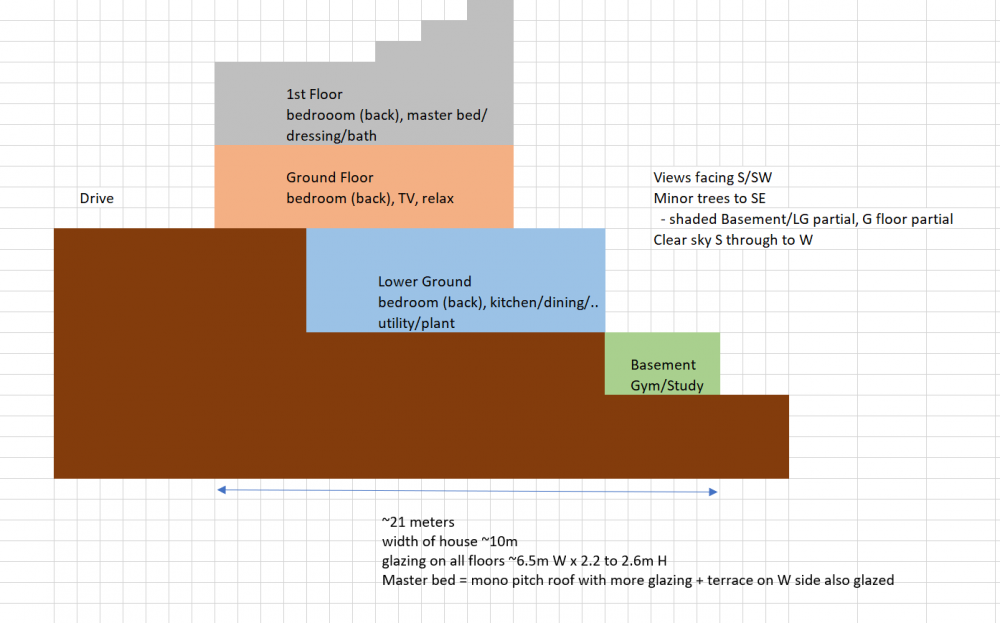
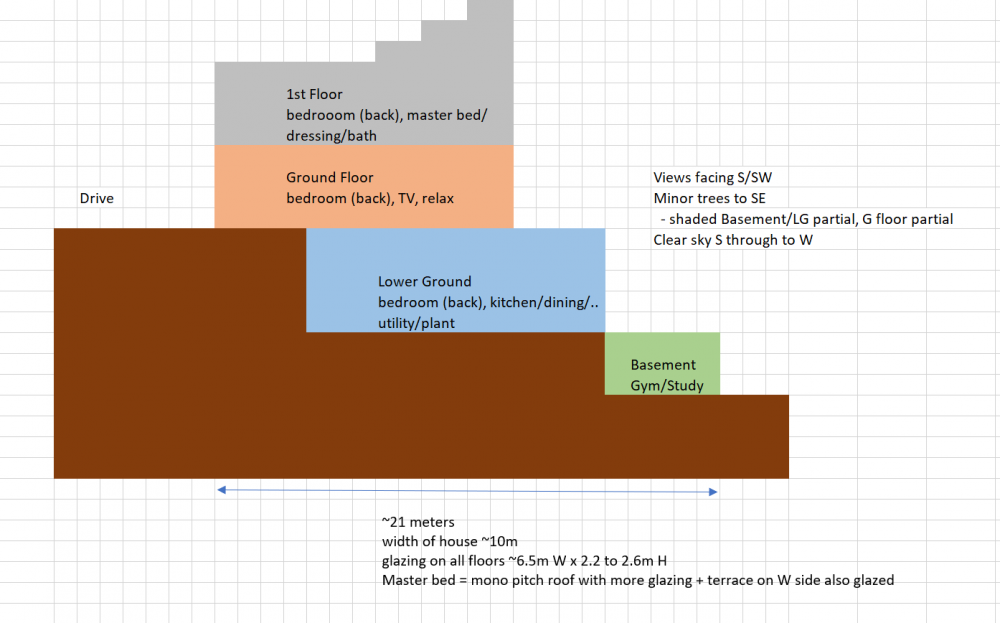
Well, my default option of a gas boiler and TS + UFH is probably going to change :-).... so much reading done, so much more to do I suspect. Here's my scenario: ~320m 4 floor house with 4 beds, 4 bathrooms, 3 adults + guests (& dog and cat) House is yet to be built (current house is similar footprint but remodel is not wanted) planning on ICF, hollow core for ground floor, possibly timber for 1st floor (to reduce weight) - this floor will be wood finish not tiled) foundations/slab a bit complex as house is stepped down a hill so effectively has 3 ground levels - see crude attached image. Terraces above the blue box and green box floors I appreciate there is a lot of glazing so need a strategy to handle solar gain. Am thinking here a combination of brisse soleil, appropriate glass, possibly interior blinds UFH is planned to all floors - appreciate top floor may not need this but incremental cost is low No need for gas as happy with elec hob but house currently has gas if needed Thinking of - ASHP for UFH - DHW I was thinking Roof mounted PV excess going to a "store" of some sort SunAmp, UVC that would be "charged" by PV and mains as needed, was planning on gas boiler but now not sure that is needed if it won't get used very much would save on purchase at cost of some higher electricity. DWH capacity - very unlikely we would use more than 2 showers at the same time Like the simplicity of using ASHP just for UFH + the cooling benefits I read about here ? Also will have MVHR to assist with heat re-circulation/minor cooling effect (I believe it is minor) Planning a 1m roof light on top floor above stairs to help with heat loss in summer and given S coast location expecting often to have some through house wind ventilation if needed It's a complex project start to finish ? Foundations, retaining walls etc etc but will be worth it. I'd appreciate suggestions if I've missed any sensible options re heating/DHW. I like simplicity not hung up on no gas but if the ASP + PV + SunAmp/other store works as efficiently (within a few %) then am happy to skip that. Have not got around to looking at sizing of PV setup/ASHP/SunAmp etc that I guess is next. I'm not interested in FIT/RHI based on what I've been reading re cost differentials so need something that can be installed by a competent electrician/plumber. Thanks Adam