


Bitpipe
-
Posts
4118 -
Joined
-
Last visited
-
Days Won
53
Everything posted by Bitpipe
-
I do think this is an architect design failure. His suggested compromise will likely lead to staining of your rendering stone as the wind will blow the water back onto the surface. I doubt your render warranty would be valid either.
-
When you say middle, do you mean ground floor? That's the only floor that has UFH in our house so basement is constant temp and needs no additional heat injected (appliances, people etc generate enough). GF UFH comes on a few times over the winter and second and attic floors have no heating apart from in the bathrooms (electric 150W under tile mats + wet towel rads). Rooms in roof are always warm due to solar gain from the roof and velux, even though there are binds etc. I've noticed that if I go into the spare bedroom on 1st floor it feels cooler as its never occupied but within 15 mins it's as warm as the other bedrooms.
-
As was mine, however once the rest of the house was watertight, insulated and occupied the basement reached its current temp and has never wavered over 5 years. I'd worry that when your ground floor needs heat, you need to warm it up via the basement which may make it uncomfortably warm.
-
Well done, you've saved yourself a lot of stress as laying UFH pipe is not as easy as you think, especially when you're on a deadline and doing it first time. I had planned to do my alu spreader plates on GF joists and lay pipe as a DIY job over a weekend. The TF crew just stepped in and took over the pipe laying as I was too slow - they'd done it dozens of times before and did a great job. Cost me a few bacon sandwiches but that was it!
-
Is yours in a basement or a regular GF? The basement should not require active cooling either as solar gain will be limited or non existent - we have the largest GRP lightwells we could find (MEA's 2000mm x 800mm) one per room and while bright, they are never in direct sunlight, most of it is diffused off the interior of the lightwell.
-
Chill Can you get a refund on the UFH kit you bought? I had the same dilemma and at one point of the build even considered retrofitting electric mat heating, but glad I didn't. Since we moved in our basement has never, ever been cold and has never overheated - always a comfortable 20oC year round. To be honest the ground floor heating rarely comes on either. Try addding up all the watts that your basement electrical kit will generate (especially in rooms like cinema, gym, music, comms & plant room etc) and that's probably more than enough heating input before you add humans to the mix. Remember that your exterior is a consistent 12 degrees or thereabouts so do some thermal modelling based on that. For peace of mind, you can get your electrician to make provision for a few panel heaters (i.e. just fused spurs) or just 13A sockets and add those later as a worst case measure (you won't need them). If you're tiling the WC floor, plan a 150W electric heating mat under the tiles. You don't seem to have much in the way of natural light in there though - no light wells at all or just not reflected in that drawing?
-
Thanks all, makes sense. Looks like garage is the place then, initially anyway. I expect I could relocate the PodPoint at a a later date if I really want to . Just need to get the car delivered - lead-times are shaky, may be October, may be Feb22!!
-
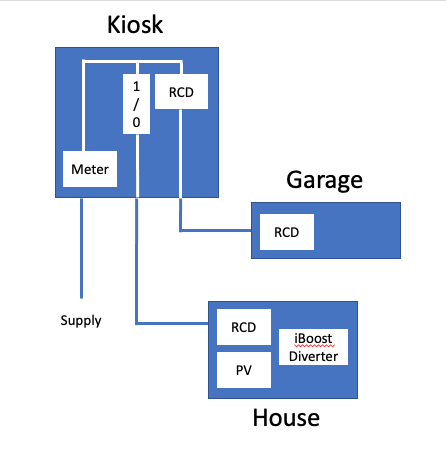
So this is what I'm trying to understand. We have a PV diverter that detects export and diverts it to DHW generation (until DHW is at max and then export continues). If the PodPoint is connected to the garage circuit then do I still benefit from PV (assuming the iBoost is not diverting to DHW)? From @MikeSharp01 I think the answer is yes, so interested in what advantage the Zappi gives over the PodPoint - does it have it's own equivalent of a PV diverter?
-
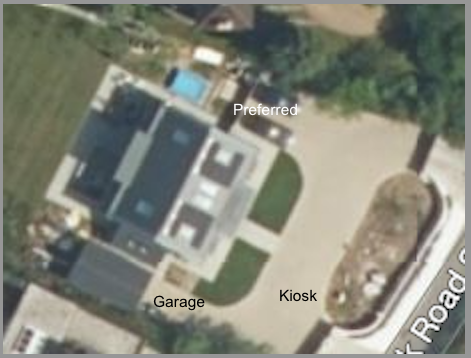
That's useful to know - wifi likely not that strong near the garage, best at the preferred parking location. Will have a read - thanks Herb!
-
We have Gaulfhoffer windows and minor doors but the front door is RK as it met the aesthetic. It is a feat of engineering and arrived in a fully installed door set - there must be about 4 grub screws to balance every hinge and get the 900mm wide door perfectly level and flush. I think this would be the challenge from a DIY perspective.
-
It depends if it's going into landfill (expensive) or a friendly farmer is taking it (free). We were quoted £34/m3 for excavation and disposal.
-
Taking the leap into EV world (Audi E-Tron) and will be getting a free 7KW PodPoint installation. Won't be arriving until October at the earliest (may even be as late as Feb 22), however want to get ahead of the curve on install options. As ever, nothing is simple Our electric main comes into an external kiosk, non smart company meter from which there are 3 main circuits - house (on an isolator) garage and external socket on inside of the main wall next to the Kiosk (both on a RCD panel). The latter used to feed the container so just re-purposed the cable run. Kiosk also has RCD circuits for the gates and driveway lights. The garage feed is chunky as it used to supply the caravan and now just runs a few sockets and lights in the garage but there is provision to take it from the rear of the garage to the bottom of the garden if we go ahead with a cabin etc, sparky said that it could support a small house if needed. Main circuit comes into house basement plant room (adjacent to garage) where it meets the PV circuit (4KW system). Now, from a convenience point of view, the preferred location would be to the side of the house where we actually park the cars. It would be difficult to get new power from inside the house to a new external location, however there are a set of external 13A sockets on the wall currently so no idea if that could be re-purposed. The armoured feed leaving the rear of garage could be split and a new run put across the lawn to the preferred location - would really be the cost of new cable and hassle of burying it. It would be easy to put the Podpoint on the front of the garage itself and it could probably also be put adjacent to the kiosk socket on the wall also but that would not be ideal. It should be possible to join into the cable that currently powers the wall/kiosk external socket and run that cable back to our preferred location using some ducting that's used for driveway lights. My main question though is can I avail of my PV generation benefit outside of the house circuit (i.e. from garage or kiosk) or would I need to have the PodPoint somehow connected back inside the house supply?
-
 As heat rises with convection, I'd think that heating downstairs while cooling upstairs would be difficult to achieve. I would second trying a fan to see if the air movement generates a sufficient cooling effect.
 -
I have 10-15 years to plan everything... how would you use the time?
Bitpipe replied to JayUK's topic in Introduce Yourself
Exactly what we, and many, others did. In our case a 3 bed detached 1950s house on a 1/2 acre plot. Although, must be said that in 10-15 years, the economics of self build may be better (govt grants, more aligned finance & vendors) or worse (change in 0% VAT scheme, increasing materials & labour & land prices, increased CIL, interest rates etc.). I would struggle to build our place on a similar budget as we sourced about 40% of the cost from EU (everything from frame to windows to slates to doors etc etc) and the drop in the GBR / EUR ex rate from 1.4 to 1.15 makes a significant difference. I would say you need to be making a move about 3-5 years ahead of when you would like to occupy. -
I have 10-15 years to plan everything... how would you use the time?
Bitpipe replied to JayUK's topic in Introduce Yourself
Firstly accumulate as much money as possible, while still enjoying life that is. Some building technology changes slowly, some very quickly so keep abreast but don't obsess on one method over another just yet. I think your challenge will be to design a property that serves your needs in retirement. Uncomfortable as it is to consider, you need to think about future mobility, health and independence - a property that can adapt as you age and can be reconfigured will be invaluable. I think the suggestion to think about locations is good, do you know where you want to spend your future years? We bought the plot we developed 10 years ago (2011) and it took a couple of years to get planning and then another couple to get the finances in order and be in a position to start mid 2015. Actual build took a year and then landscaping etc another couple after that. I'd say we were finished the major works in 2018. -
I don't think that's much of a surprise - the specific heat capacity of air is low so you need a lot of it moving from A to B to transfer meaningful heat (or cool). If you've ever been in an American home that uses central air heating, the ducts are huge and the flow rates considerable. MVHR is designed to ventilate, not heat or cool. It supplies/extracts air at a sufficient rate to keep rooms fresh and remove stale / damp air. It's normally barely noticeable unless in boost or purge mode. The heat recovery is transferring the majority of the heat in the extracted air to the incoming supply to avoid wastage. I would only expect MVHR to have a meaningful heating / cooling effect if the house had extremely high levels of insulation and airtightness - effectively acting as a trim function. I would focus on how the bedroom is heating up in the first place. What is its orientation? How big are the windows and are they shaded in the daytime? What's underneath it?
-
Thanks, it's the members that make this place what it is - which includes you You may well be entitled to claim some of what you are doing as a legitimate business expense, but just double check first - if your book-keeper seems a bit too relaxed then talk to an accountant, I expect many would give you some time for free. You can always take the chance that, irrespective of what you're allowed, you bang it through the business and hope it's never noticed - plenty of folk do this but if caught the consequences can be severe and I suspect that HMRC will be out to get every penny these days to help plug the deficit! I'm quite risk adverse in that respect and don't sail too close to the wind where tax is concerned.
-
Boiling Water taps. What and where to buy.
Bitpipe replied to ProDave's topic in Kitchen & Household Appliances
Five years in and our Qooker is starting to get a bit erratic, seems to switch itself off and needs a reset at the top to rechearge. I descale twice a year and the plastic housing is starting to crumble around the bolt locations, cosmetic but annoying also. -
When I started my business a few years ago I looked into claiming for home office running expenses but advice from accountant was that the benefit was marginal so I didn't bother. If you go for the dual use and the business paid for the office (to save VAT and permissible costs) then using it as a gym will attract a Benefit In Kind (BiK) charge so I suppose it's swings and roundabouts.
-
Interested in the tax position, assuming you're a company director / limited company. As far as I can see, you can claim VAT (if you buy the building through the business) but only if it is exclusively for business use (so no summer houses). This is from the link below: If your limited company is VAT registered, then it may still be advantageous to pay for the cost of the garden and build through the company despite not being able to offset any costs against your corporation tax bill. Some costs can be recovered through reclaiming on VAT. This option would not be available if you were to pay for the garden office personally. For those who use the VAT flat rate scheme, be aware that you will need to ensure the cost of the materials and the cost of the construction are separate. Furthermore, the materials should be bought all together and charged as a single transaction that is at least £2,000. Under the flat rate scheme, only capital assets for individual purchases at a minimum of £2,000 can be reclaimed. This means VAT cannot be reclaimed for services, so be sure to avoid package deals where materials and installation are sold together. Another note of consideration is that VAT cannot be reclaimed where there will be any significant personal use of the garden office. If there will be some minor personal usage, then you may only be able to claim back a portion of the VAT. Although there is no allowance that will help cover the initial cost of the garden office, the cost of instillation for utilities such as electrical wiring, plumbing or thermal insulations can be covered as a capital allowance. This means that the cost of these can be deducted from your company’s profits to reduce your corporation tax bill. The plant and machinery allowance does not apply to anything that is not outrightly owned by the company, so if you hire any equipment such as air-conditioning just over the summer months, this cannot be claimed for. Other capital allowances that can be claimed include furniture such as desk, office chair, shelving, floor lamp etc. https://www.ridgefieldconsulting.co.uk/advice-and-news/how-to-claim-tax-relief-on-your-garden-office/
-
Yep, I've rubbed them away moving blocks, digging holes etc. However I always carry a key, maybe use once a few months. Kids not mixing much concrete these days.
-
We spent a *lot* on a RK door but it was passive standard, thermally broken with all the seals and gaskets etc. Amazing hinges allow door to open 180o (if there hadn't' been a wall in the way, doh) and fingerprint sensor which has worked flawlessly for 5 years - no keys for the kids to loose.
-
Week 3 - a big hole almost finished
Bitpipe commented on Thorfun's blog entry in West Sussex Forever Home
Great to see the progress - makes me nostalgic I also remember pouting the slab for my kiosk and hand mixing concrete - I did it in the dark with a head torch and it turned out ok. Not in the ideal place now that everything around it has changed but what can you do ! I also hand dug the 10m of trenching for the electricity re-direction and the jointing pit - the self build game does get you nice and fit! -
Is it a detached house? Have you considered demolition and rebuild? You say the project is all but this step so you should think it through. We wrestled with the same decision before knocking down our 1950s detached and building a new, airtight and well insulated replacement (with 50% more space). The big advantage is 0% VAT on the project (excluding professional fees). Your build is more likely to stay on budget as there are fewer unknowns compared to a refurb - you also don't need to compromise on the layout and work around the existing. Demolishing a house costs about £5k, you'd need to calculate if the new costs would be addressed by the 20% overall budget saving. I know that in our build, the frame and exterior finish probably accounted for 25% of the overall budget.
-
Mine (a 25ft shipping container) sat on three railway sleepers.

