
LiamJones
-
Posts
257 -
Joined
-
Last visited
Everything posted by LiamJones
-
Going down to 150c in bathroom has allowed me to drop flow temp by 0.5c (apparently) and get a lower DT 🏆 ufh.04.PDF
-
I guess for just one small room they can avoid standing on pipe, right. So yeah, i'll get the bathroom down to 150c, but probably leave the kitchen at 200c and reduce flow rate if i need to?
-
Thanks you, am i getting to caught up on the 200mm spacing lining up with the a142 mesh size? any diversion from that and i'll have pipes running through the spaces in the mesh. I'm worried about the concrete pour and them standing on unsupported pipe?
-
Not tried warmup, tried a couple others and they've been 💩, I trust this forum more than the wider world.
-
Hey, thanks for feedback. Yes, it's ASHP, no zones, fully open. Has about 50L volume, ASHP likely to be 5kW and i've read rule of thumb is 10-15L/kW, so should just about be okay, i think.
-
Thanks all, i've decided to not complicate things and get the drainage out the build ASAP, rather than combining it all inside. I'm going to go over the foundations then drop to a lower level outside the building.
-
UFH will be installed in 100mm self compacting concrete slab tied to a142 mesh (hence 200mm pipe spacing to line up with mesh). 200mm PIR below. ASHP, flow temp 31.1c, DT 3-5c, heat demand for whole house 2600W. 'm hoping to not have heating upstairs, so have aimed for 26W/m2 over the 100m2 ground floor. ufh.01.PDF
-
Double branch like this is fine because they’re swept in rather than in at 90. I think. So they’re not technically opposing.
-
Fabric and ventilation heat loss calculator
LiamJones replied to Jeremy Harris's topic in Heat Insulation
It’s the first post of this thread -
It’s a good question. I don’t know. How would someone clear a single branch fitting, I’ve seen those used in loads of places, and presumably it’s the same problem, you can’t guarantee you’d be able to rod into the branch?
-
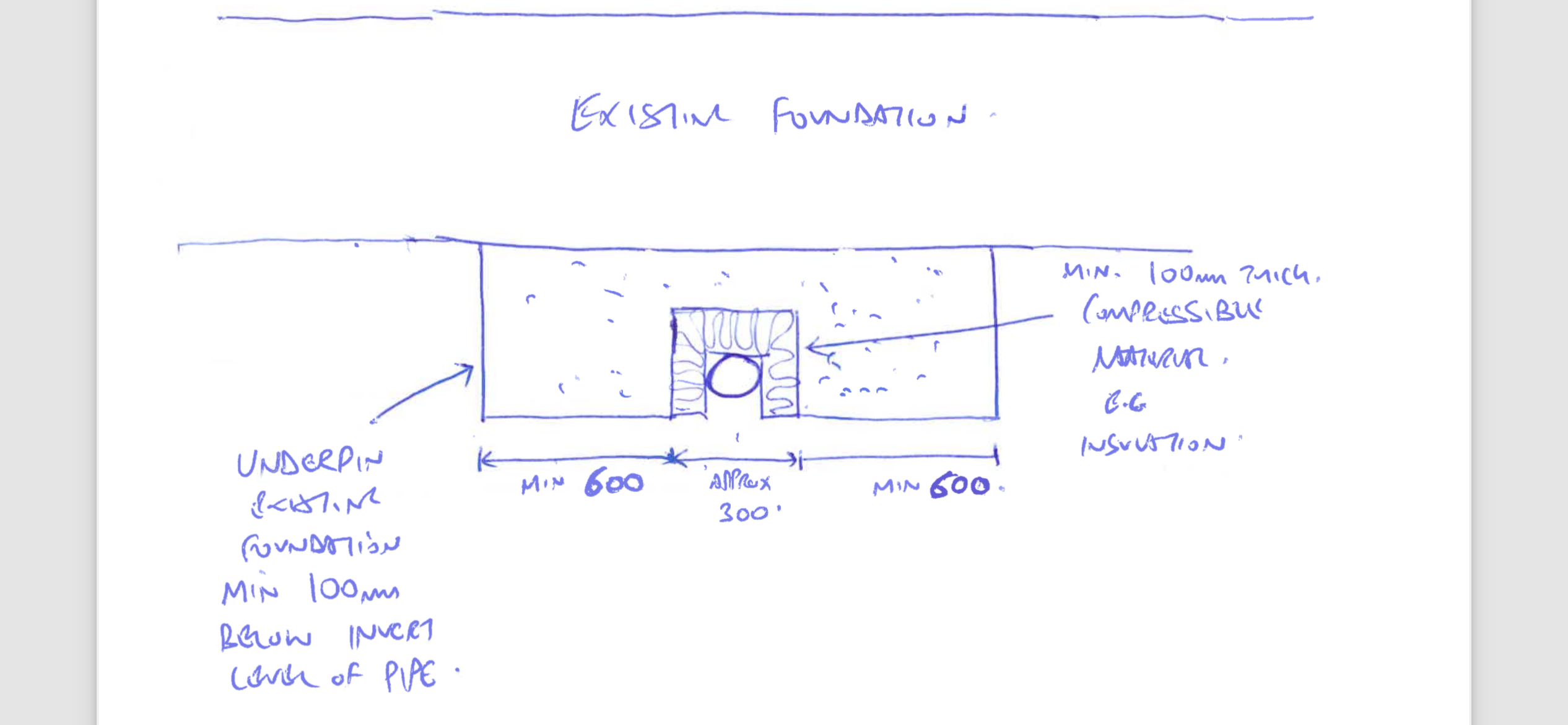
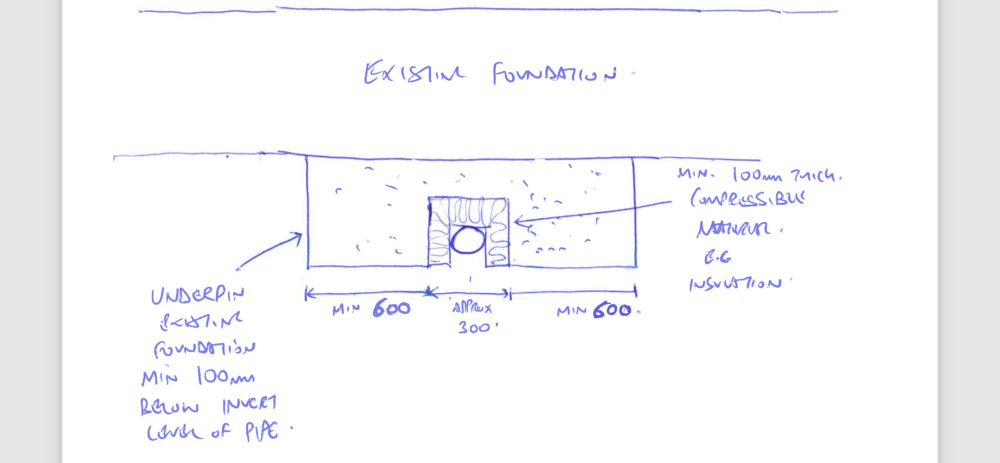
Hi, im considering running some drainage under the existing foundations. The SE has specified local underpinning if I wanted to do this. Will this cause complications later on for insurance, mortgage or selling? Will I have to say it’s been underpinned, even if it wasn’t due to subsidence? I’m worried that, through trying to do the right thing for my drainage situation, I’m about to make things worse for myself in the long run!
-
Ooh, maybe. How does the stack connect into it?
-
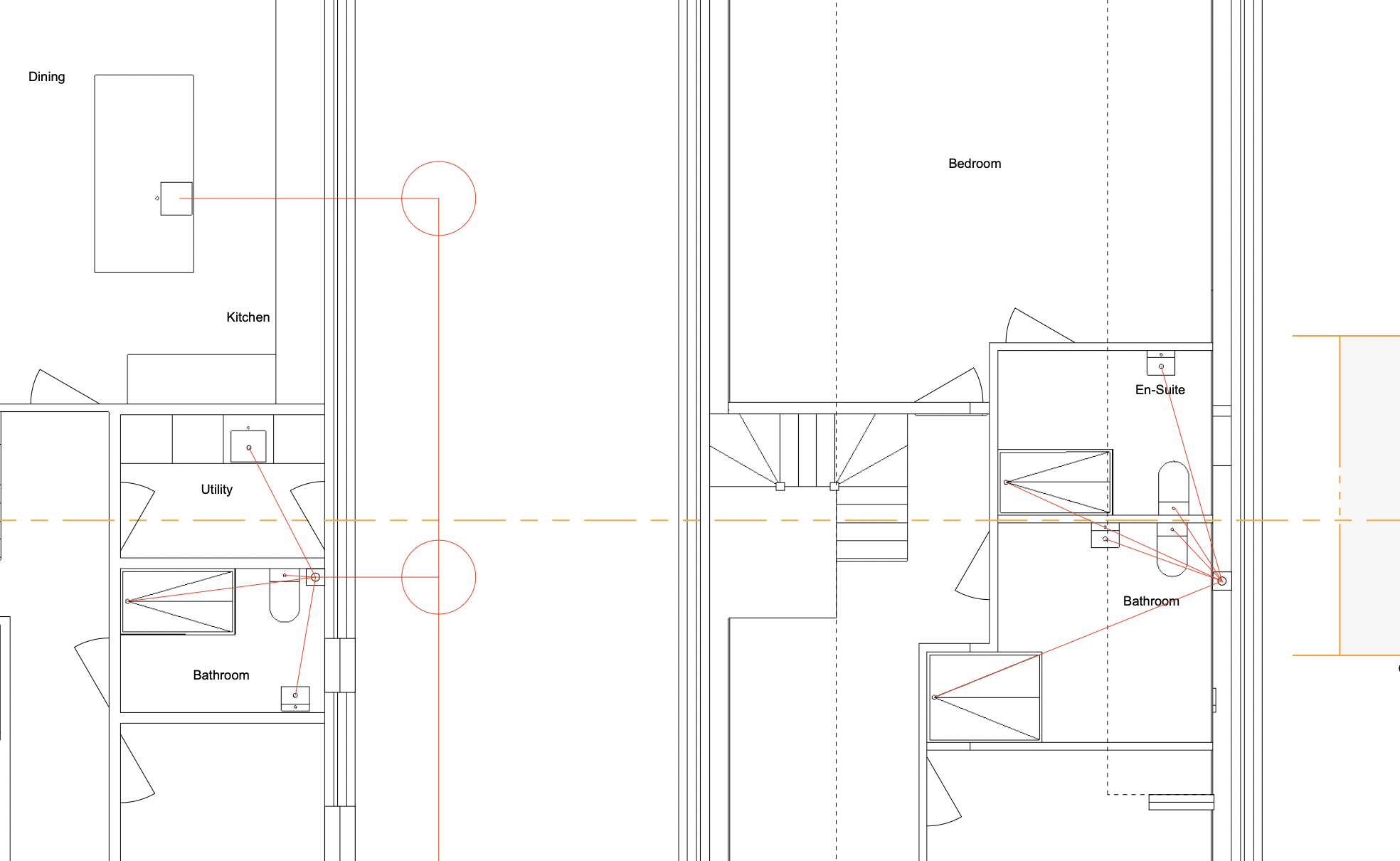
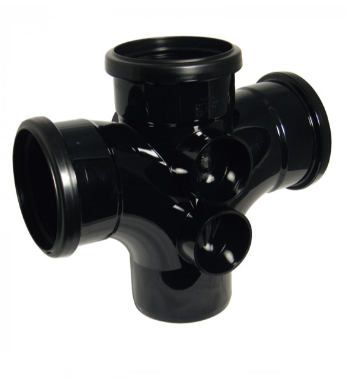
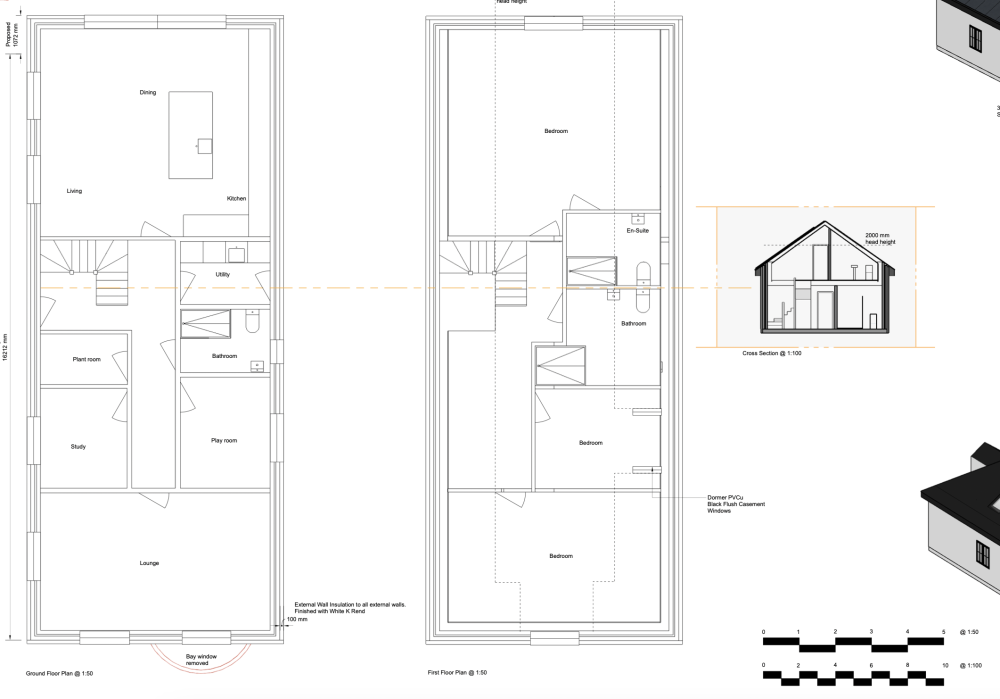
Hi, I'm after a below ground 110mm double branch fitting like this, but can't find any in terracotta? Why? I want to connect in a soil stack upwards, and then go left to a bathroom and right to a utility room, all in 110mm under slab. I could stack two single branches on top of each other, but this costs valuable depth to keep them both below slab and makes the falls im working with very hard/impossible. i could also use a single branch, then a 2 single branches off the horizontal branch, but i end up too far into the room at this point. It seems the only workable solution is a double branch, like below, or i split the runs and have to go under the foundations twice! https://www.floplast.co.uk/product/double-branch
-
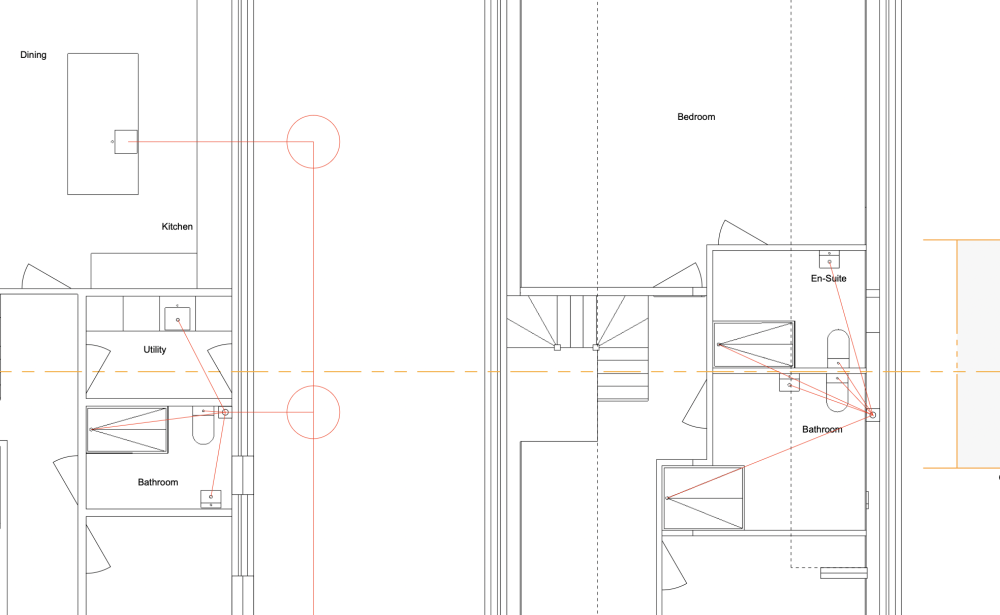
Could something like this work? Or is it too much for a single stack? Could i "daisy chain" some of them together to reduce number of connections into the stack?
-
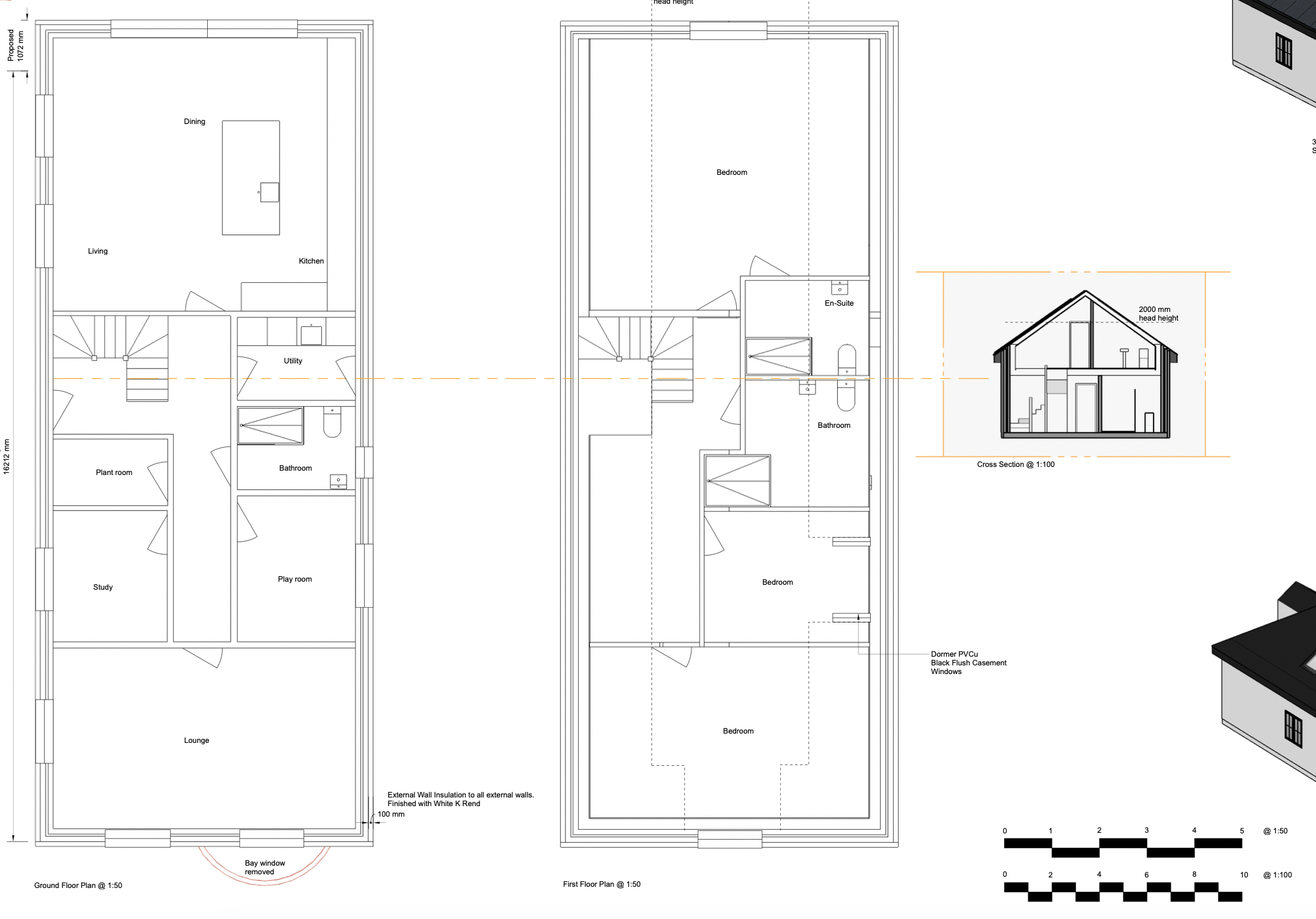
How would you plan the drainage for this project? I was going to run all of the ground floor drainage down into the oversite and then straight out, underground, into multiple inspection chambers. I've now realised, however, that any below ground drainage will need to be dug under the existing foundations, the foundations are 300mm to 550mm below dpc. I'm now considering reducing the number of underground penetrations, and connecting more bits up inside. The kitchen sink is straight out already (to the right), as this is a new extension and was all planned for. But the utility, both bathrooms and ensuite i'm scratching my head with. What would you do?
-
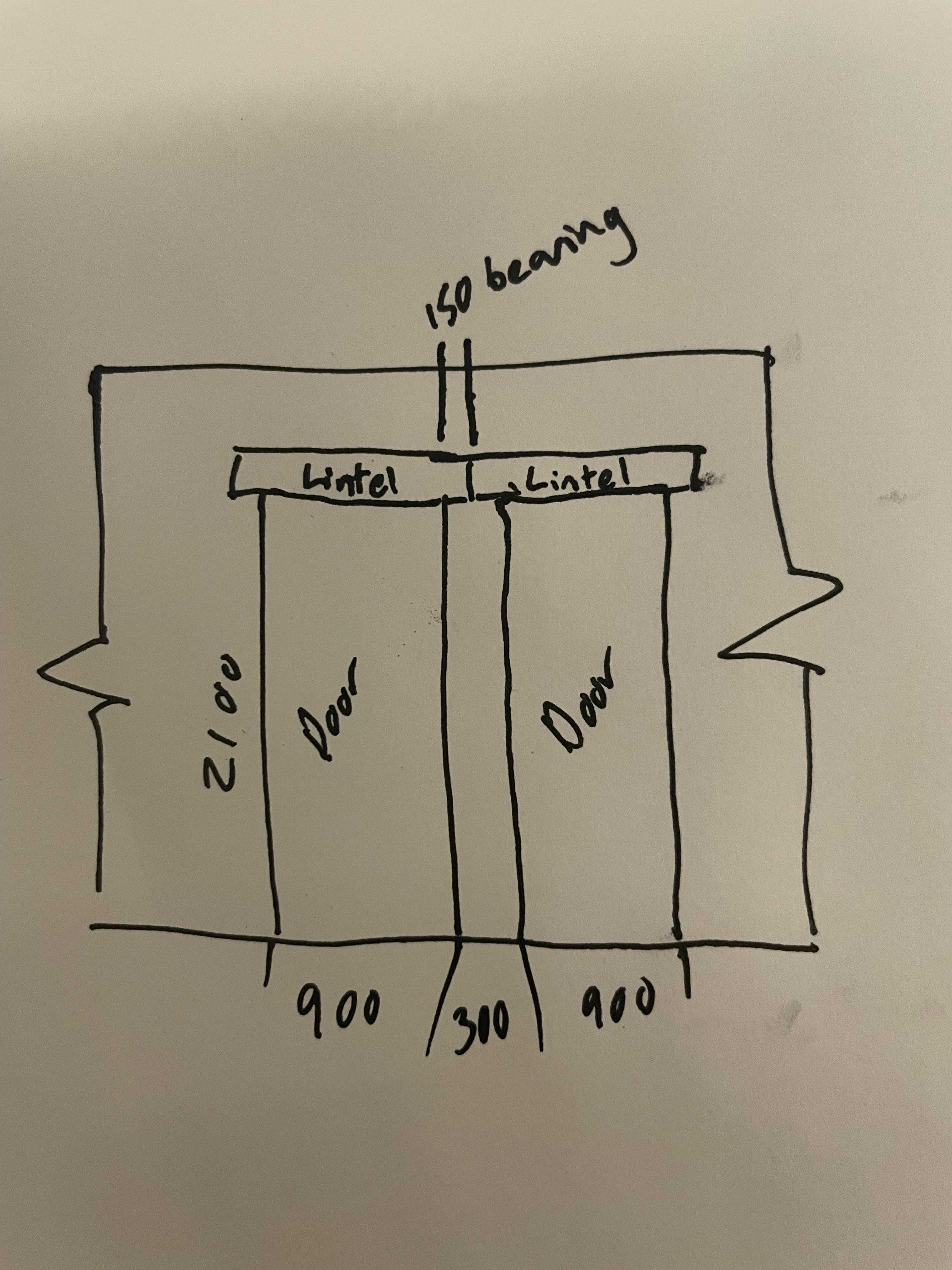
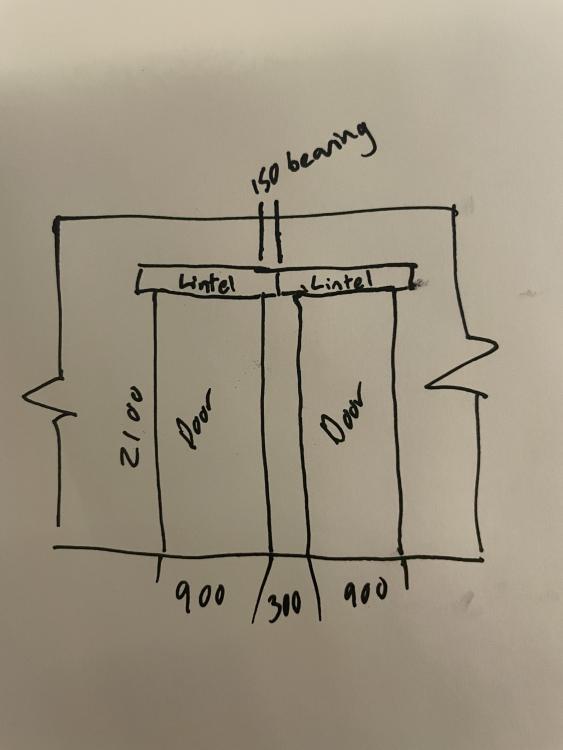
Thanks @ETC! Love being able to point to regs! So for my situation when the floor joist spans that sit on the wall are less than 4.5m. The gap between openings need to be the equal or greater than 1/6th of the combined opening widths. (920 + 920) / 6 = 307mm
-
stud wall is going straight down the middle! 68mm architrave set back 3mm from the liner. The liner (with packers) is approx 40mm in from the rough opening. That means the architrave extends past the opening 31mm. With the proposed 300mm gap between openings, and a 130mm finished stud wall central, leaves 69mm either side to the architrave. I think that sounds okay, although @Conorsuggested min 100mm between architrave and wall. That’d require a min 362mm between the two rough openings, that sounds like it’d be okay. I want the doors in the corners of the room to maximum space in the room. At 362mm apart, the door would be hinged about 171mm in from the stud wall. I think that sounds good and what I’ll probably go with! Thanks
-
Reviving a 7 year old thread! Having internal door openings formed tomorrow, what size would you go for? I like the idea of 2100 high, but door liners for the larger 826x2040 doors look very limited! 838 x 1981 doors look far more common and liners readily available. Opening size for 838 looks to be about 910 x 2050
-
Yes, that makes a good deal of sense. Stiffens it all up I guess so I don’t need to worry about the middle pier too much?
-
Planning on having two internal doors quite close to each other. These doors openings need to be formed in the block work going up tomorrow. Is 300mm of block sufficient inbetween two door rough door openings? It’s a single skin internal block wall. There will be a stud wall inbetween the two doors. 300mm gives me 150mm bearing for each lintel.
-
I’ve just gone ahead with Build aviator as I’ve been getting most materials from Jewsons (parent of build aviator). £309+vat for renovation, extension and loft conversion, in all about 200m2. Told me 2 day turn around, will report back.
-
Extra storeys by permitted development?
LiamJones replied to Alan Ambrose's topic in Planning Permission
Yeah the date range ruled me out, had to go planning permission for going upwards on 1930s bungalow! Got permission anyway, albeit with some imposed ridge and eaves heights! -
So a 2 storey house can meet regs with ONLY interlinked alarms, no fire escape windows or protected escape routes?
-
Thanks @ETCthats how I interpreted the regs, but the (now deleted) thread from this morning was suggesting otherwise. I think maybe @joe90 commented?
-
I’m digging this back out. There was a thread on here earlier today about not needing fire escape windows in a bungalow loft conversion, providing all rooms had RF interlinked fire alarms. the thread has since been deleted and I’m curious about this option, the regs don’t (at least explicitly) document this as an option.