


SilverShadow
-
Posts
185 -
Joined
-
Last visited
Everything posted by SilverShadow
-
Great advice there, RB - many thanks 😁 Good point about the floor - i'd roughly guessed something like 25mm PIR and use Osb3 above it. Sounds like maybe adding another VCL layer between PIR and Osb would be your preferred method. Id thought about maybe 40mm battens, so i could sink the power outlets knockouts neatly into the plaster? I was confused (see other reply), about how these battens would be fixed above the PIR without piercing the VCL though....🤔 Another great point about the building regs, re keeping the log burner. I'll probably do away with it, if it requires building regs & stringent rules. Am i right in thinking i won't need building regs if i use a couple of wall mounted electric radiators? 🤷♂️ Thanks again Shadow
-
T Many thanks, Elite 😁 Probably a daft few questions incoming.... 🫣 Item 2 - would you dot n dab the PIR directly onto the painted breezeblocks? Item 2 - i could go all out and buy 100mm PIR, but hoping i could get away with 50mm or 75mm maybe and the heat not dissipate too quickly (seeing as budget is a big factor!) Item 3 - How would you fix the battens? I could use long screws for fixing the battens through the PIR into the wall, but seemed like making holes in the VCL could potentially cause vapour issues, so maybe adhesive grab is better Item 3 - presumably 25mm battens would be enough between the PIR and plasterboard? Saying that, I'd probably choose 40mm, so i could use 25mm socket knockout boxes with 15mm wood to fix the knockout boxes... 🤔 Most helpful buddy - definitely gives me a good insight into how to go about this Shadow
-
Apologies folks, if i'm causing more problems than ever, with these continual questions If it's easier: please feel free to point me to some diagrams/videos, that show how the PIR/battens/voids/vents/taping are all arranged and done for a similar sort of conversion (one without needing building regs, ideally) 👍
-
Thanks Elite - i wasn't sure at all about ventilation (where & what). Do you suggest having a void between the 2 layers of PIR, by way of using something like 70mm wood battens (to create a 20mm air gap between 50mm & 37.5mm boards)? I presume the 'reveals' are things like consumer unit and power sockets, etc? Apologies for the fundamental questions - this is probably quite obvious to the trained eye, but a big mystery to those without prior experience. All the videos on YouTube about conversion seem to conveniently skip this sort of consideration & many do it quite differently by the look of it. There doesn't seem to a generic agreed method/diagram for how to construct the layers 🙃
-
Hey Gus - tbh, it shouldn't need building regs (as it complies with rules exempting it). I'd not really considered it, as it felt like a lot of hassle for potentially little return. But i confess to being no expert, so don't really know how many hoops i'd need to go through and for what ££ benefit. I was aiming to use it primarily just as an office, rather than up the spec to something a person could sleep in (for example)
-
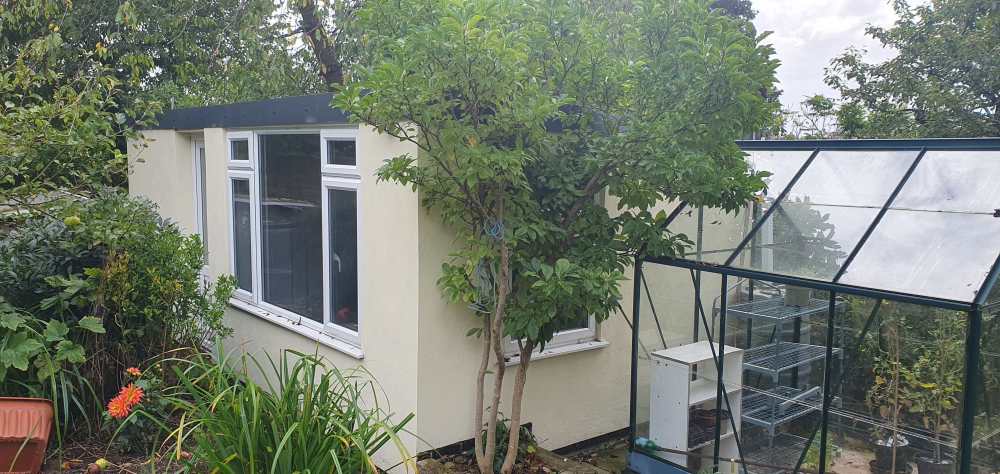
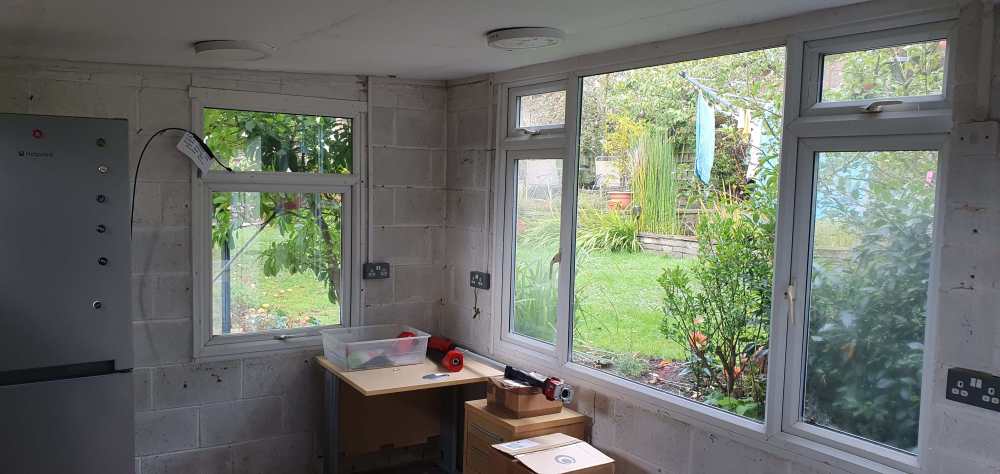
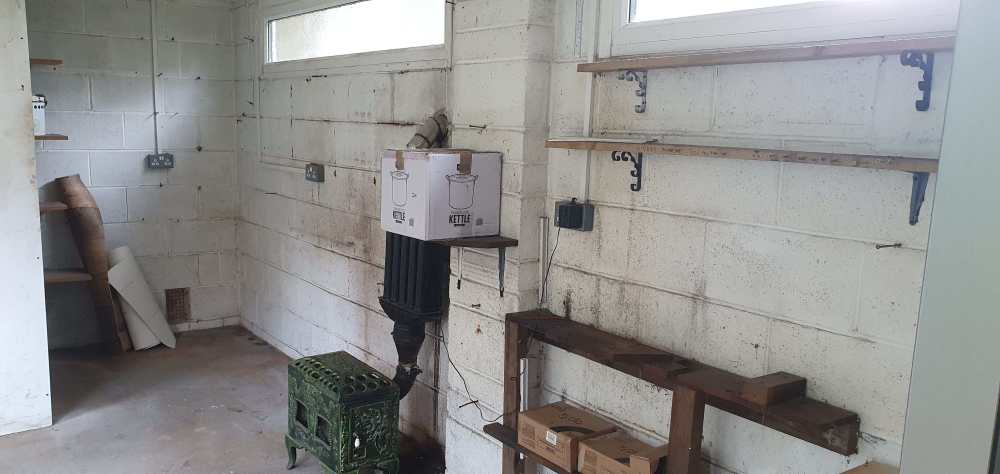
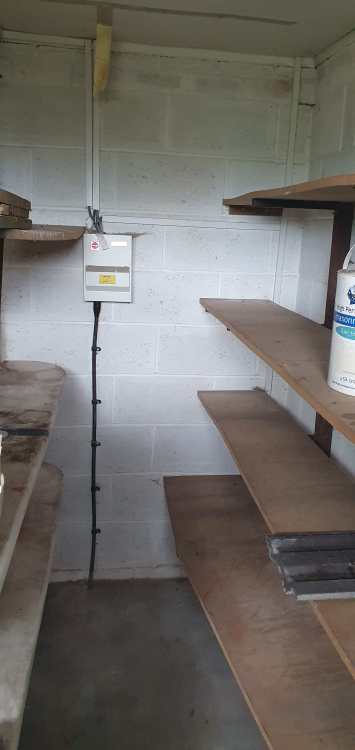
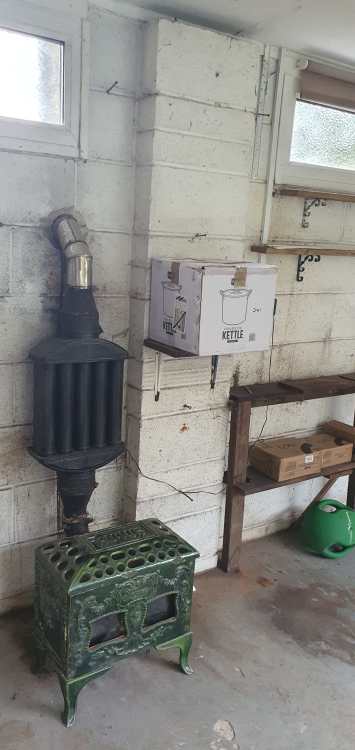
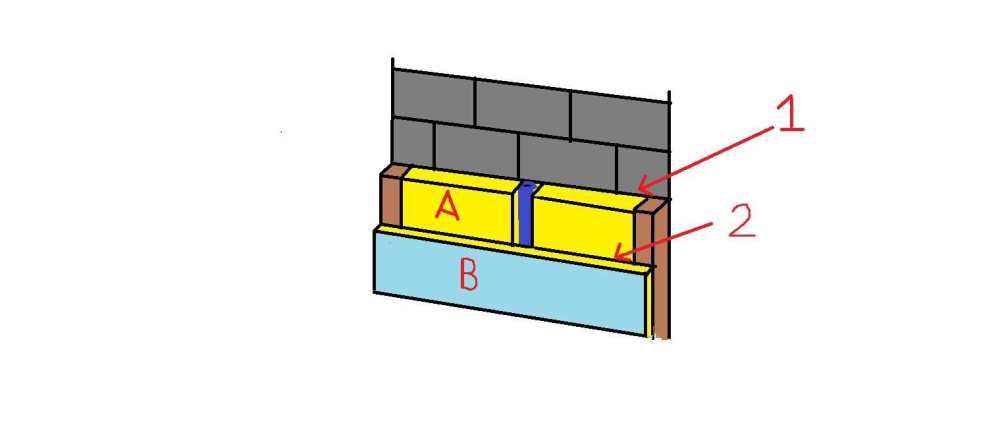
Hi there, I'm after more of your wonderful wisdom. Appreciate there's loads of similar threads floating around on, so apologies if this is stomping on well trodden paths... We'd like to convert our outbuilding at the bottom of the garden into an office, and wanted your sound advice on the type/approach of interior insulation, please. We've researched this a little so have a basic idea of what is required, but wanted to glean your knowledge if possible - the advice we're after is mostly for the walls, but any general advice is always more than welcome 😁 A little bit about the building:: 6m long x 3m wide x 2.5m high with metal sloping roof & solid concrete floor Appears to be single skin 100mm breeze-block with (i think) painted on the inside & with monocouche rendering on the outside. It has 3 upvc double glazed windows and upvc door Used to be a workshop (has plenty of power and it's own fuse box/consumer unit) From what i can see, the ceiling is already insulated (to an unknown depth), so our prime focus is walls & floor It has a wood burner with metal chimney leading to the outside A little about it's desired usage: Primarily an office - so used 8 hours or so during the day , throughout the year We'll add electric heating as required If at all possible we'd like to keep the log burner (if this isn't going to cause flammable issues with PIR/Insulation?) We'd like to be reasonably budget friendly, so get the most comfort/heat for whatever reasonable price we can afford Mock up of proposed wall insulation I've enclosed my initial plans for the wall insulation Vertical wooden battens 1.2m apart, using 50 x 50mm wood Item A- 50mm thick PIR boards (foil backed), sized 2.4m x 1.2m, arranged vertically Item B - 37.5mm thick PIR boards (25mm + 12.5mm plaster finish), sized 2.4m x 1.2m, arranged horizontally No air gaps between wall/item A or item A/item B Blue item - electrical tube trunking for sockets, cut between 50mm PIR boards cut through 37.5mm, where sockets will be As yet - unsure whether to install a damp proof membrane (if required with foil backed PIR?), and if so whether to insert for at 1 (between wall and 50mm PIR) or 2 (between 50mm & 37.5mm PIR) on the diagram? No idea what to do with the log burner (if it can stay without an undue fire risk, which i strongly doubt) This is something i'd really love to get to grips with in the new year, but realise it needs some strong advice to get off on the right footing Many thanks as always for your time Shadow
-
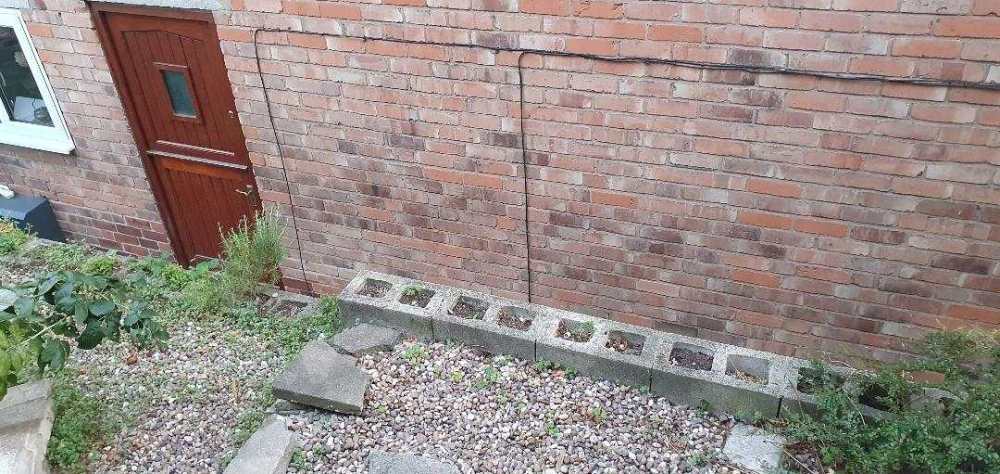
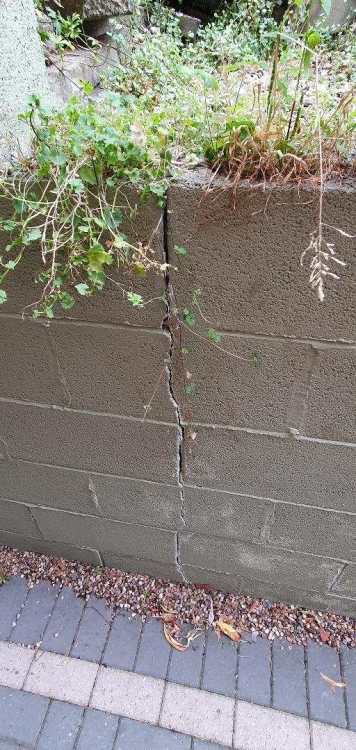
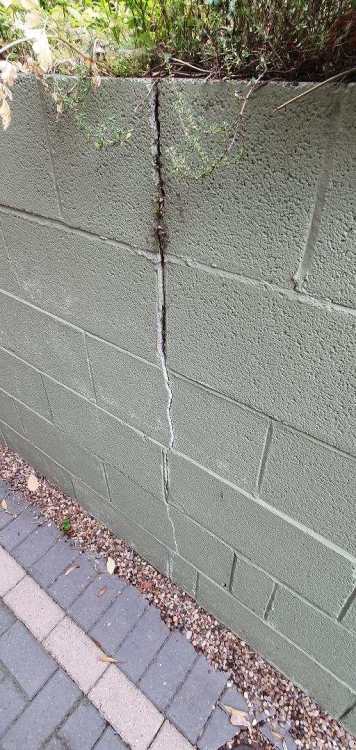
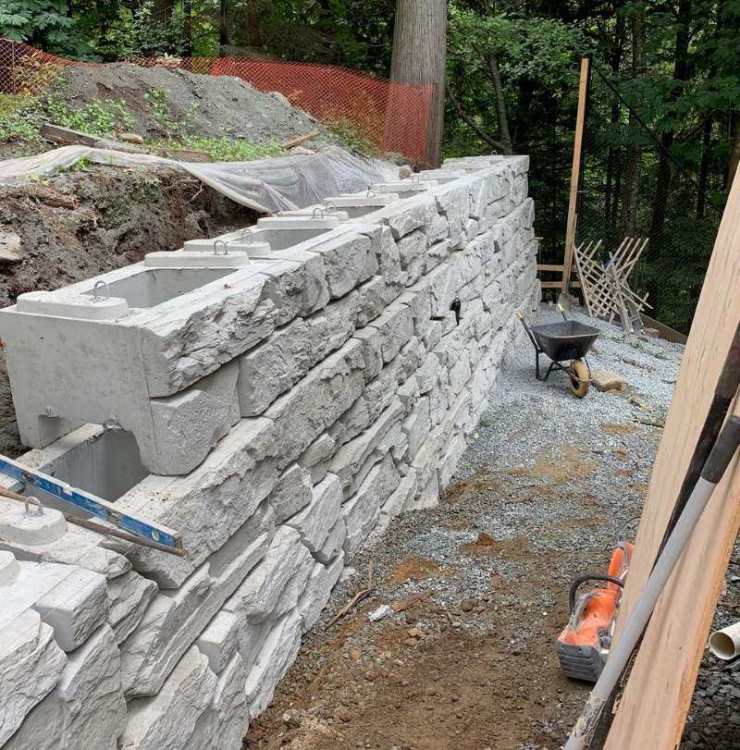
Hey all, I'm back once again, for more of your amazing advice please folks 😁 We purchased a property back in July 2024 and have since noted the adjacent retaining wall (to property below us) has a few large worrying cracks in it (see pics). The neighbours have said these have been there for decades, but seen some movement in the past few years. The wall is approx 8 meters long, 4-5ft high & made from concrete hollow blocks. Apparently our previous owner built it decades ago & reinforced it with posts/piles to make it sturdier. I've include pics of the cracks and view from our land above it (pics 1-3) As this feels slightly more specialised, we'd be grateful for any nuggets of help you guys can give... 1 - From recollection, i don't think this was picked up on our Lvl 3 survey. I'm not sure if this is a concern per se (something omitted by mistake), as the wall is not easily viewable 'down to the property side', but wasn't obstructed from view 2 - Our title deeds/plan don't show a 'T' for this boundary. However, i've read that it's generally assumed owners on the higher land side (and it's also right side boundary from street view) shoulder the responsibility for this. So probably not reasonable for us to ask neighbours to share repair costs for 3 - I'd imagine we'd get a structural engineer in 1st. But would anyone have a clue to whether repair or completely replace, yard stick costs m2 (prices vary wildly online - from £150-£300+ per m2, depending on material), suggestions for type of wall to consider? (interlocking blocks seem like a good option - as per pic 4) 4 - What would be a reasonable length of guarantee for this type of work (guess it depends on material used)? 5 - has anyone had similar experiences of this sort of scenario? Any hints/gotchya's to consider during this project Apologies for the verbose thread, but a lot to get through..... Many thanks as always for your time Mark
-
Hey again, Thought i'd pop by again to this great forum for more great advice 😁 I wondered if anyone would mind sharing their thoughts around home security, please. We're looking for a system that can cover the house & garage, along with a freestanding brick workshop at the bottom of the garden (some 10m away from the house). There are some great articles on the web reviewing devices, but you can't beat 1st hand experience from folks with this sort of setup at home. Our initial thoughts around requirements are: DIY self-installation preferred Battery powered (no need to connect to mains) Smart controlled via App (either bespoke or a free 3rd party app) Flexibility to plug in various add-ons (multiple sensors, doorbell, etc) Able to cover the house, garage & outbuilding (so either great wifi/ethernet connectivity, or able to connect separate control panels to 1 system in the app) Pet friendly (dog) No monthly subscription fees (or optional at least) / value for money Doesn't keep going off from 'false alarms' all the time We're total novices to this aspect, so apologies for the daft questions. Please feel free to share experiences of your own systems, if this helps determine what is/isn't suitable Many thanks for your time as always Shadow
-
Restore brickwork in 'hole' in wall
SilverShadow replied to SilverShadow's topic in Bricklaying, Blockwork & Mortar
Thanks guys - you're quite right: it's at the back of the house. The bit above the hole is a concrete beam, and above that is a raised pathway. I will take a look to see what's behind the loose bricks, but if nothing then just brick it back up Thanks for your input -
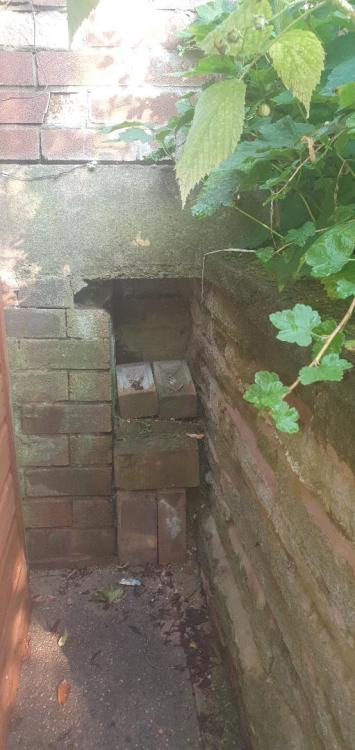
Hello again, all you helpful folks out there 😁 Another question for you guys, if you wouldn't mind sparing 5 mins of your brilliance please.... As mentioned on another thread, we've recently bought a new house, and currently finding all the 'hidden joys' you typically do when starting to live there. In our back yard i recently came across this 'hole' in our wall, and wondered what the best way was for me to repair it. The concrete above is a thick beam, supporting a pathway above, so it makes sense to make this as structurally sound as possible. It's seems sturdy enough right now, but these things only become more precarious over time... What would be your guys thoughts for plugging this hole? My thought was just with good old bricks & mortar - starting at the bottom upwards. Then really pack in the cement for the last 2 levels and wedge the bricks into that, so it dries compact & able to support the load Many thanks for your help - very much appreciated 👍 Shadow
-
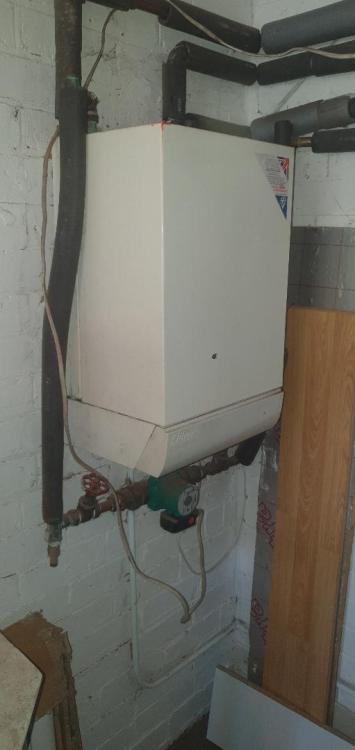
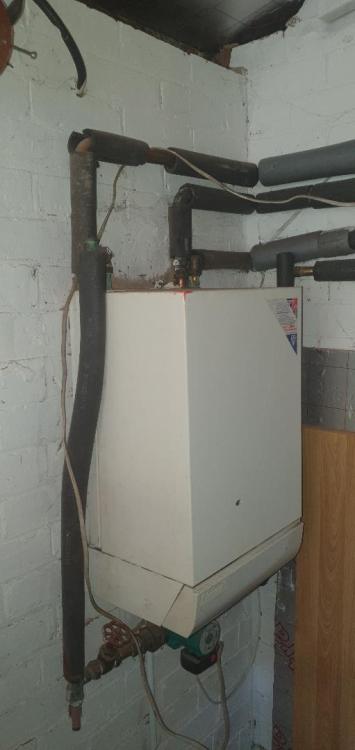
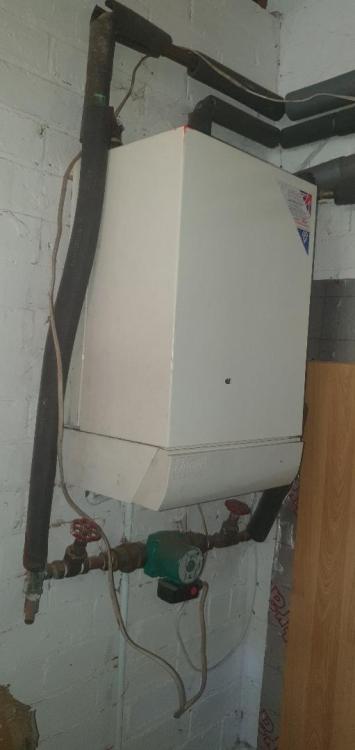
Hey all, Another day, another question - hopefully a nice easy one to ease into the weekend..... 😁 We've just recently moved into a new home, and noticed the central heating comes on whenever we want to heat the water via a gas boiler. Reading up on this it's pretty standard for gravity fed heating systems to do this. I've also read that installing a pump to the system will allow independent control of hot water & CH - very handy thing to have in this weather! 🥵 Looking at the boiler below, i'm pretty sure it's gravity fed (4 pipes in/out are a giveaway apparently?). However, am i right in thinking this system already has a pump attached to allow independent control? If so then perhaps it's the control panel that needs updating (a very old Horstmann Centaur44 🕸️), as this seems to only allow us to set hot water & CH combined My questions for you great guys are: 1 - can you tell from the pics if this seems to be gravity fed? 2 - if so, isn't that the required pump shown below to allow independent control? 3 - would getting a new control panel & pump (if not working) perhaps be the easiest way to achieve independent control? We will in time replace the antiquated system, once funds are a little more flowing and other jobs taken care of. Right now it's a shoestring budget approach to improving how it currently works. We will ofc get a qualified plumber out to look, but thought it good to be armed with some knowledge up front so we don't appear to be the duffers we really are! 😅 Many thanks for your time & help with this Shadow
-
Cleaning out hot and cold water tanks
SilverShadow replied to SilverShadow's topic in Boilers & Hot Water Tanks
Many thanks Marvin - seems fairly straightforward. I think we can definitely give this a try! 👍 -
Hey again - another day, another question for you gurus please 😁 We're moving into our new home next week, and one of the 1st tings we want to do is sort out the hot & cold water tanks in the loft. The surveyor noted the lids were missing from them and recommended a full cleaning of them. This is something i think he estimated £300 for doing 🫣 While we're happy to pay for a professional to do this, money is always tight when moving in. So i was wondering if this was something you think could be easily done by us? It seems fairly straightforward (drain tank, scrub clean, remove sediment, refill with chlorine dilute and leave for an hour, before draining once again and refill for use) Is this as simple as i'm thinking, or should we really leave this to the pros (plumber, for example)? Many thanks for your time & consideration Shadow
-
No building regs for existing porch for house purchase
SilverShadow replied to SilverShadow's topic in Building Regulations
Thanks guys - we may go for an indemnity to be on the safe side Yeah, the original front doorway (now a upvc door) is still intact, so definitely not deemed a hallway extension The vendor worked in the building trade, so I assumed he'd have got it done to a decent spec. 10 years standing & looks rock solid, so I don't think any worries there. Eventually (in the distant future) we may build above it to extend upstairs and make a bigger bedroom, so chances are we'd knock down & restart from scratch with PP/regs anyways Thanks as always for your sound advice Shadow -
Hi there, I guess this one question probably pre-dates the oldest rocks on earth 😜 So apologies for asking again.... The house we're looking to purchase has a single story front porch extension, built in Sept 2014. We've obtained the docs for PP, but since discovered they never submitted for building regs approval. A little about the porch: Approx 5-6m2 floor area single story, sloping tile roof (definitely under 3m high) Brick built (double skin brick from what i can tell), with upvc windows and door Has electrics within the porch (light, not sure if anything else) The web seems slightly conflicting about allowed size (think it means PP, not build regs), so we're a little cautious about the implications of this without build regs approval. I think we can just get an indemnity to cover this, as far as i know? It does also bring up questions: Is there a time limit with which the council could insist on it's removal? Seems odd the council allowed PP, but never insisted on building regs? Presumably an indemnity would protect anyone doing repairs in future? Afaik, indemnity can transfer from owner to owner? If we ever modified the porch, then i guess this would also run the same risk/need building regs approval up front? Apologies for the basic Q's, but these are just dropping out the noggin as i type.... Many thanks for your time & help 😁 Mark
-
Excellent work as always, guys - many thanks 😁 Closer the time I'll probably pop back for advice on converting it. There seems to be several different ways ways folks do PIR insulation (batons, dot n dab, moisture proofing, etc), so be glad to get plenty of advice before I start 👍 Thanks again Shadow
-
Addition to the above: Afaik, no PP or building regs apply here (looking at govt website). But I just wanted your thoughts/opinions, or advice on how I can check this with the necessary governing bodies
-
Hey again - hopefully just a basic quick question, for all you guys in the know 😁 The house we're hoping to buy has a detached outbuilding at the bottom of the garden, measuring 6 x 3m, with 2.5 sloping metal roof. It's >1m from property boundaries & generally non combustible (singke skin breezeblock walls, concrete floor, metal roof, upvc door & windows). It's a workshop, with electrical power & own consumer board, plus small log burner/ metal chimney I was looking to convert into an office (non sleeping accom) myself, by just adding PIR boards and adjusting electrical sockets over this. Would this incur building regs, and if so is there a portal / consultation service I can use for clarification & sign off?
-
brilliant stuff - very grateful for all the advice 😁 Certainly won't be rushing into doing much - we'll be skint for a while after buying the property! 😂 However, this sort of advice is still amazing to have. Even at this early stage, so we can appreciate what factors might affects us if we go ahead later down the line Many thanks
-
Ps, does the adjoining brick garage count in house footprint calcs?
-
Got it! Thanks buddy 😁 So allowable extension = (land plot size - house footprint) / 2 Presumably that's single story, & anything exceeding it or double story would go thru PP
-
Building a floor above a porchway
SilverShadow replied to SilverShadow's topic in House Extensions & Conservatories
Very true I'm a complete novice, so asking basic generalistic questions, as thoughts occur. Thought 1: ask the pro's on here 😁 Altho we could build a bigger extension in theory, the house has a really bad layout. We'd only need a small extension above the porch to make 3rd bed much better I thought it'd be easier & cheaper to build above the porch. But I hadn't reckoned on the foundations not being up to it, nor the extra rigmarole of extra planning headaches of altering the front elevation 🙃 Gives me plenty to consider, whatever we do, or don't -
Many thanks for that. Wow, this is a whole new area to understand! From what I can tell: detached outhouse + porch extension is circa 50% of the house floor plan (curtilage). There is an adjoining 7m× 3m garage to the house, built at the same time. From what I gather garages do not class as part of the floorplan curtilage allowance, so we couldn't assume another 10.5m2 from that I guess future extensions would still be possible, but would need full PP. Not unless we reduced the size of the outhouse, or demolished completely Sounds like our conveyancer will know the score
-
Sorry guys, thought of 1 last thing to ask, please..... On the property (towards the back of the rear garden), there is a standalone breezeblock workshop, about 10 meters from the house (afaik, it passes all building regs as regards size/height/proximity to boundary, but that is a separate matter). About 6m long x 3m wide x 2m high If we decide to build an extension at the side or rear of the property, then does this outhouse floorspace limit the size of floorspace we can extend without planning permission? I seem to recall something about permitted floor area, and wasn't sure if this outhouse counted towards this in any way..... Many thanks again for all your sound advice Mark


