zoothorn
-
Posts
4774 -
Joined
-
Last visited
-
Days Won
3
Everything posted by zoothorn
-
Yes understand its sort of an obvious answer.. just the most recent pine door I did (extention lower room workshop) with a sadolin quality coloured one.. every brush stroke visible/ patch city. Yup clear is the way to avoid this I guess. thanks zH
-
Just done the job- wool/ spirit then blast it with sander. Nice & quick too. What would be suggestion now? just a basic something on top maybe: its only an average pine door/ not really a looker.. I don't intend to go the 5x layer osmo route treatment!
-
This is where I fall short you see. My dad, struggled to change a bulb. Mum better, she could wire a plug if pushed to. I was a poor occasional diy'er only, up until 3 yrs ago when I had to get somone in to fix a bit of door frame to a wall ( bc those frame screws bewildered me!!) he looked at me like an idiot. Which prompted me to find build hub. Quite proud of how far Ive come tbh!
-
Hi Onoff.. forget to reply/ yes a freestanding double prayer seat.. searching around for one. Might make one if i cant find ideal one. Will note your vent holes, hadnt thought of this. Good to hear your opinion on the job.. I couldnt guage if a shoddy job, or a good one tbh! I think Ill just leave frame as is, stick there as it were, as its taken such an effort. I need shot of the job asap!
-
Hi Joe- I have a makita sander, I was just wondering before I make a ton of dust going this route, if it was best to remove the dark wear patches (over usual contact area LHS it seems) with the same white spirit & wire wool idea as I did the frame 1st? Or you say no forget the w.wool/spirits.. & just attack it all with sander? thanks zH
-
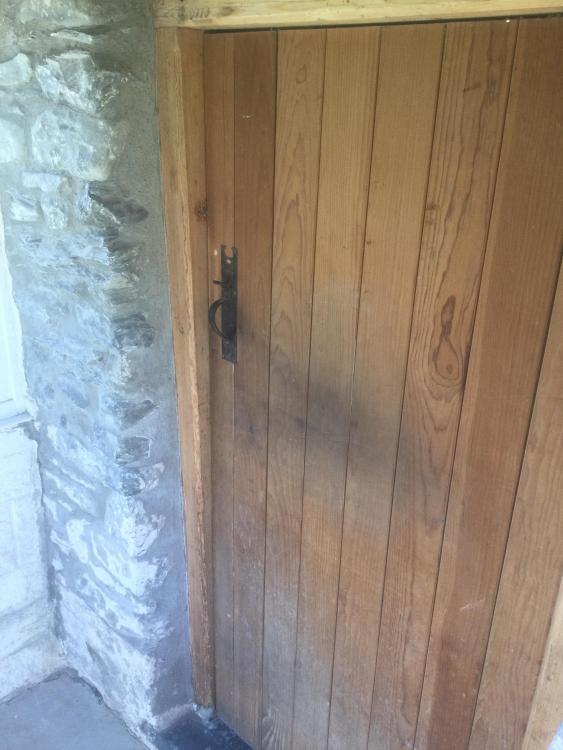
Could someone help on this: the door itself (pic on pg 6) needs restoring, alot of wear marks to face. Its 1980's 25mm t&g, very hard pine. Is it the same idea IE white spirit & wire wool.. or sand the sod? or maybe wool & spirit, then sand? Oddly very little www info or YT clips. thanks zoot
-
Actually I have 1" x 1/2" oak trim on the inside back edge of the frame.. packing frame depth out or something, & seems like the nails are fine/ no staining & I bet not stainless as rusty heads. Anyway its this very oak trim, spot-on guage, that I want to source. Would anyone recognise this as a standard build merchant trim stuff? or would you surmise it was obtained from a specialist place. Ever heard of it on a day to day basis? thanks zoot
-
Well that's an idea Id not thought of.. isn't it normal though for front door latch/ knob to be LHS as you look at it? Actually fixing the hinges over on this squiffy side, might be a bloomin 'mare. I had thought of swizzling the door upside down, refitting the latch other side.. but then it wont hit the hinges Im just thinking. Joe do you know if oak plan-ons are a common thing to find in places-?
-
No Im not in need for this type! The draughty whatnots are a bit difficult to see in that pic, but definitely an idea, I can consider once Ive fitted the plant-ons maybe/ later detail. But as to the huge door offset onto the old frame one side- what would you do? just follow the door with the plant-on? I guess I have no choice really: or try trim it down to a point maybe- it'll stick out a bit twds base of frame if I dont. Huge niff of meths in porch.. bloomin hope this will f-off. thanks zoot
-
Next is to fit lino I have ready. Its a bit of an uneven concrete floor twds edges, but a prayer double seat will be here over it.. the rest is passably flat. Any tips welcome. thanks zh
-
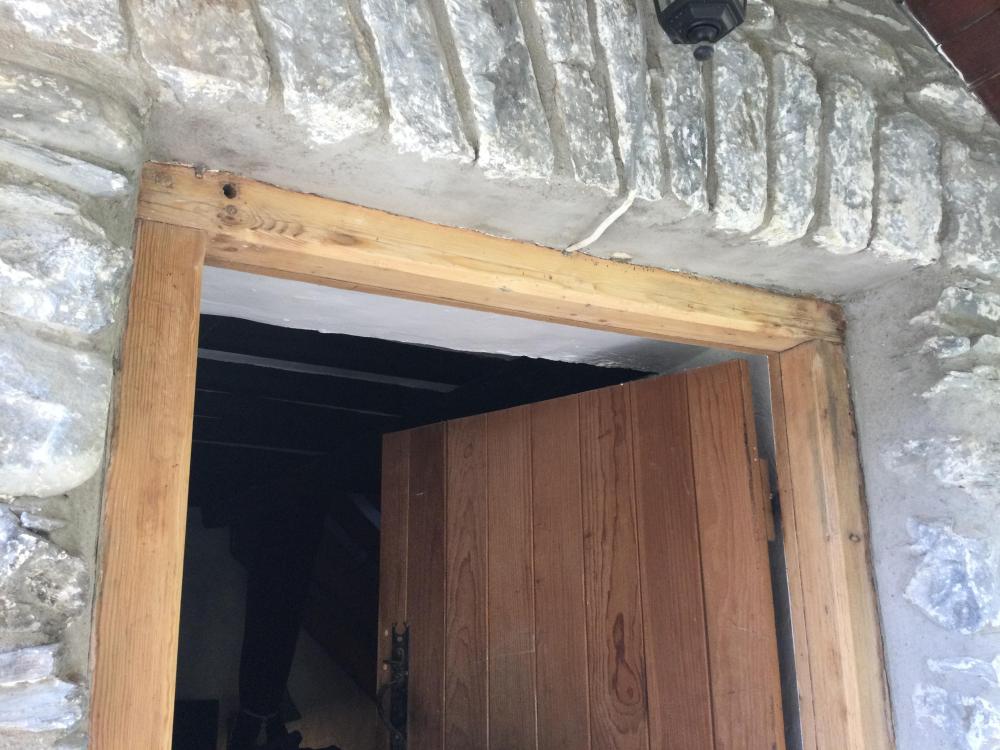
I do have a whopping great door offset for my plant- on to follow. Both door is warped, & frame base is kicked in a bit too exacerbating the offset. Hmm..
-
Hadnt heard of this before. But if I'm not intending to fill (which I guess the idea being, is to paint over the filler). Its clear which is good. Another good suggestion Onoff as per usual- appreciated. Either way. would you leave frame natural? even with the darkish stains top rhs (unable to remove).. or paint over? it is a bit of a dog's dinner.
-
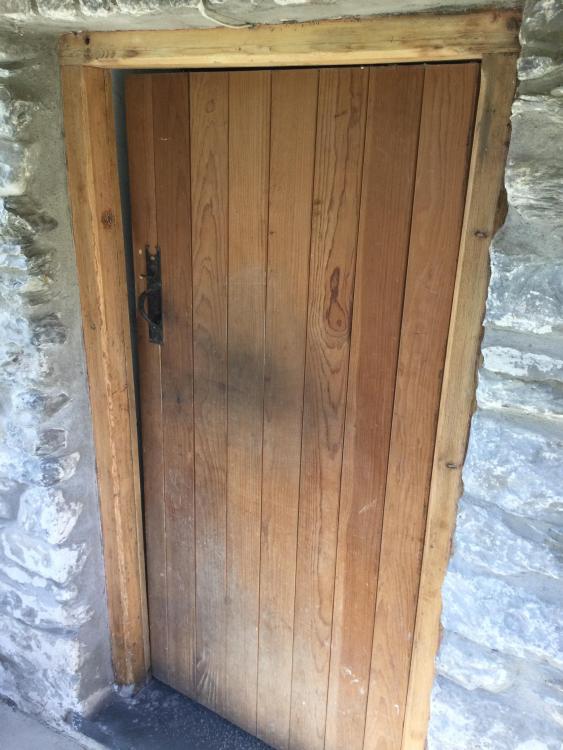
I think Ive done as much as I can, & although flaws galore/ a hole top left, its rotted rhs edge 1 cm all the way down, plus rot at both bottoms of legs.. its just about passable. Well it'll have to be " very characterful".. ie a bit crappy. Shame to add new pse plant-ons on.. but any alternative I wonder? Meths was best. So now its all smooth & as clean as i can get it.. just leave as it is? Or is it worth 1 osmo oil coat? Or furniture polish? Only got enough for 1 osmo coat. thanks zooter.
-
I recall Im sure we had one in family growing up.. real vintage character. Pitch pine- funny how its 1st time Ive heard of it (Chester Drawers.. a great comedy name too- cant recall where I heard it. fast show?). @Onoff I think the resin thing is ok, sunny porch/ front so might have dried. I do need to replace the plant-ons tho.. the usual pse pine will stick out & lower the standard I'm sure tho. Do you get hardwood maybe oak ones I wonder ?
-
Well that again fits the bill.. esp being 1830. Tight grains too. I'd pretty much dismissed it as 'boring pine' until markc mentioned 'pitch pine'. I had it in mind to paint over again as I thought well if its just pine/ cannot be much of a looker. So I'll try harder now to get it natural, & hopefully, with a ton more elbow grease.. get it just about presentable 'natural'.
-
Ok thanks markc got both so will find out. Pitch pine.. interesting, a new pine variety I'd not known of. It seems to fit the bill indeed googling it, seems almost hardwood strong/ I thought it was oak at 1st. shame it isn't. This old frame stands on 2 squares of slate 2" high.. never seen that before, I guess to keep the frame legs off any damp. Didn't work as the inch above has still mostly rotted mind you.
-
Ah I get it. It must be heavy enough not to get blasted away & wind taking away then. Just finished the scraping.. most exhausting/ my hands are knackered. Im sure many layers of lead paint, but I hope just kept within the scrapings.. rather than any dust which thankfully didnt happen. No hot air gun- Im too much the pauper for such contraptions. What Im left with now is a just-ok state frame, very hard pine I think & with some character, but filmy white painty residue etc clinging on for dear life. Is white spirit & wire wool the best idea to finish do you know?
-
@Onoff I bet that's a satisfying job, if you leave the mess to the household. I could do with a sandblast on my doorframe.. the 5 layers of paint going back to 60's are even worse to get off than the calcified stone lime.. jeesusH what an exhausting job this porch has been. Even strong paint remover, twice done aint shifting it. Underneath is the original frame in reasonable condition I hope to resucitate to natural. 1cm of rot to RHS edge though, closest to my new mortar, & 2" of rot at each base (so I dont exactly know how its standing?!) above the hearth old slate step.
-
Hi dangti6.. these sand blast/ soda blast devices.. so you're left with a huge ammount of dusty residue & sand/ or very fine sand flying everywhere? Ive had my share of dust for this job you see.
-
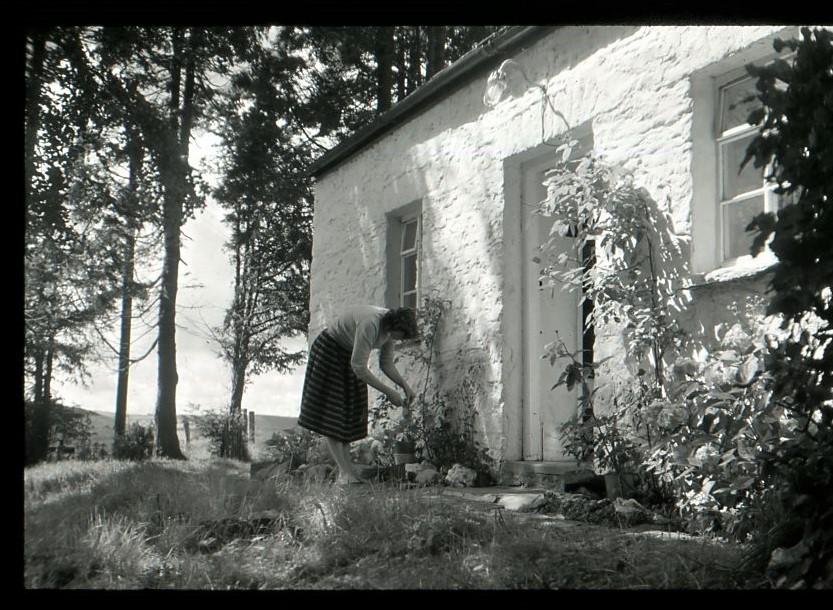
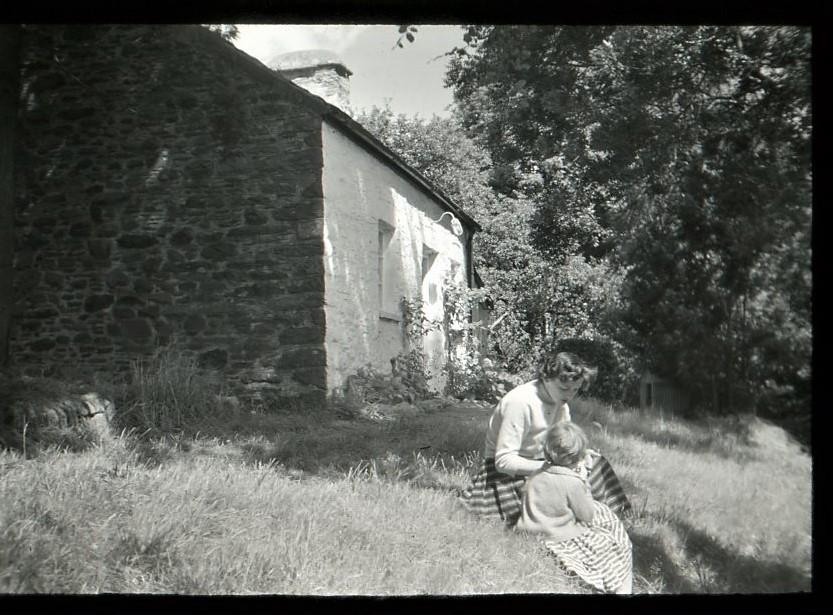
This is 1960's.. I have a feeling the limewash white, was just painted over year after year forming this calcified layer. But I'm only guessing. Anyway I really don't see it feasable to remove for a natural grey stone look now, it's a bit beyond my capabilities. You can see the thankfully decent (I hope) stonework on the side, which for some reason has no whitewash on as this faces west (my extention on here) & gets hammered by the weather coming up the valley.
-
True true. i have some lovely 60's photos of the cottage showing the stonework @ the extention-end wall, before concrete rendered over (+ placcy fired-on paint). Good stonework with much more even stone faces than the porch wall for some reason, which after all is old front wall (before porch added) with its much craggier stone used: I'm not sure why this craggy stone used if the front of house is the 'main looker' & extension end the 'side'. 1830 building regs I guess. I might dig them out & put up.. sweet diddy cottage it was. zoot.
-
Thanks joe- I think I've made it as presentable as I possibly could, with it being far from the ideal nice flat stone face wall/ very very craggy etc. With this latest mammoth effort to rid this calcified stuff, & stuck, Im 50/50 between continuing.. & fk it whitewash it. It'd sure look more uniform if white, but a nice natural 'different wee room' as it were if I could continue (damn good size 2 x 1.5m & high ceiling). The outside of porch is white, so general white outside of cottage wouldn't be starkly interrupted if natural grey stone inside. I'll wait for a few more suggestions maybe. No rush if I got a month for mortar to cure. Thanks- zoot.
-
No way salts. Its layers of (often very old-smelling) calcified lime coating, with plastic paint over the top just as an hors d'ouevre. Its the same substance as stalagmites in worst places, pretty much rock itself.. hence I came to the conclusion the word 'calcified' must be what it is today. I worry that acid might ruin the stone faces tho. The friction of the 50mm wire bit, on my 480w now-fkd-drill, caused burn marks to the stone.. that's how hard I was going at it for 15mins, just to get 5cm sq free of this stuff. I'll look into acid though. I'll have to have a word with my diving-helmet sandblast friend in next valley see.. but maybe it was hired.
-
No I mean a leccy 480w drill that can't reverse. No chance with a drill driver. Whole thing smoke pouring-out bushes fkd ruined. This approach will not work. Thankfully only £2 fot the brush.. but a useful drill that was. My fault. Its turned into job from hell. dust mainly.. but this wretched white ruining the stone, & how to get it off compounds it. A month on it now (I bet an afternoon for you guys).
-
Good link that- appreciated. I think the word in question then.. is calcification: both regarding what lime mortar does, and, what I think I've had to battle with the whole afternoon: bought a 50mm wire whatnot. Burnt out a drill, only got 2sq ft done, & the remainder is not even shifting with a 480w drill with this thing on at max torque. Totally exhausting with very little to show for it. So I'm stuck. The white god knows what (definitely old.. maybe 1830) is not welded on, its worse.. it's calcified-on the stone face I think. It is nigh on -impossible- to fully remove. An utter b'stard job. Hmm..