
zoothorn
-
Posts
4747 -
Joined
-
Last visited
-
Days Won
3
Everything posted by zoothorn
-
I wonder if there's a small mega stiff brush attatchment for a drill driver- anyone know? A wire brush, as hard as I could, was only shifting some.. the rest it couldn't have affect on. thats how welded on it is.
-
Hi Onoff. The slate is very prone to chipping, I think soft might be the word.. so I'd be very wary about attacking with said tool. But I do like the nympho idea. Friend next valley has a sandblast rig I believe.. wouldn't it unnavoidably fire out all my mortar work tho same time?
-
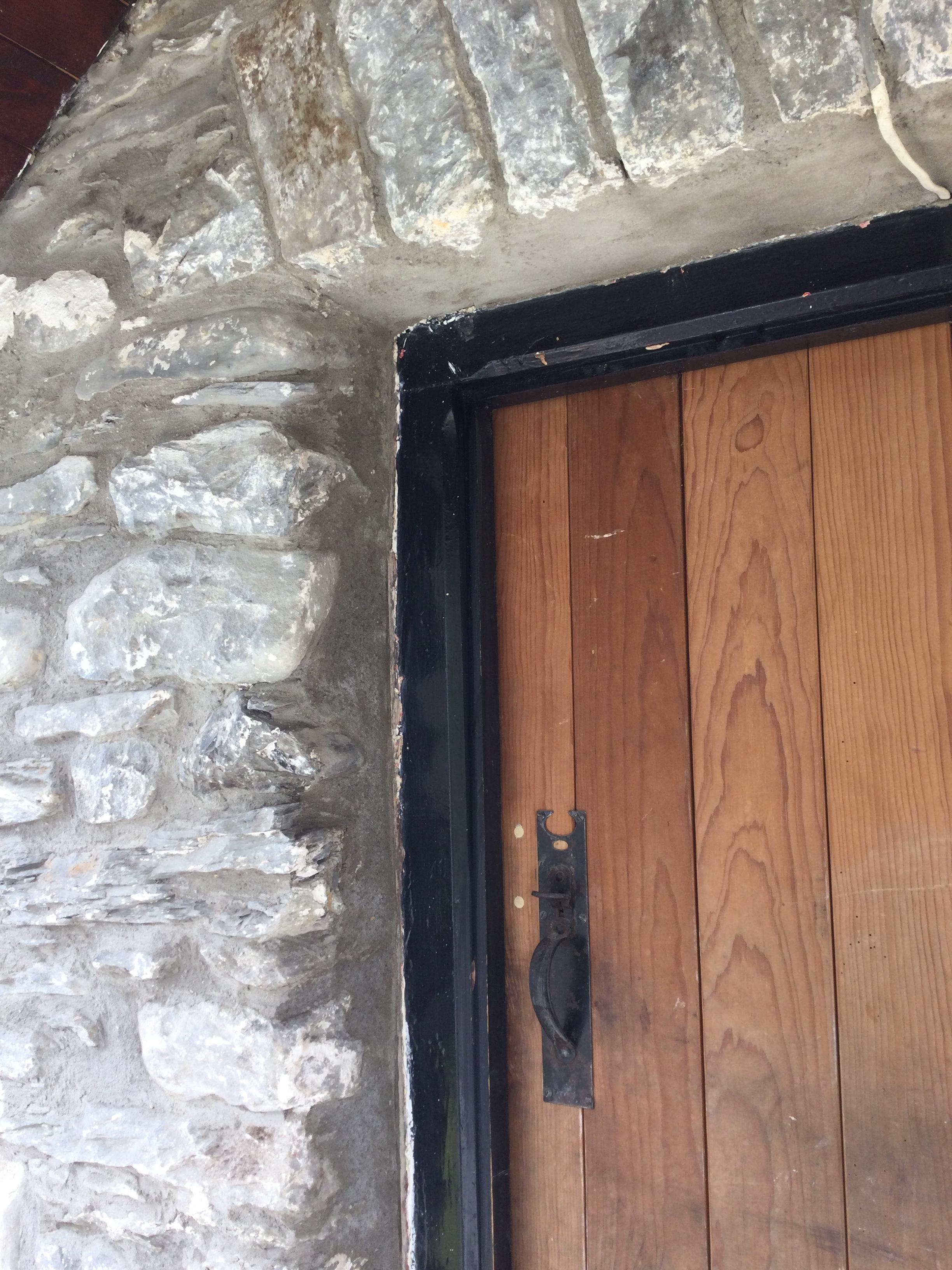
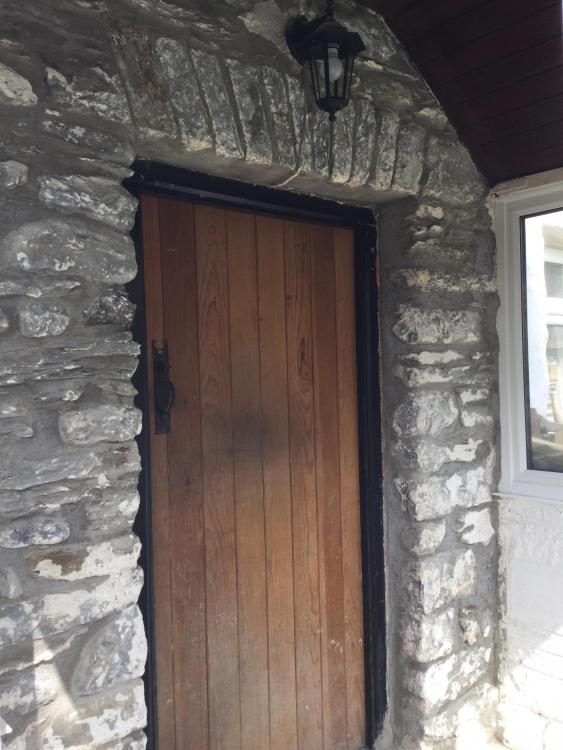
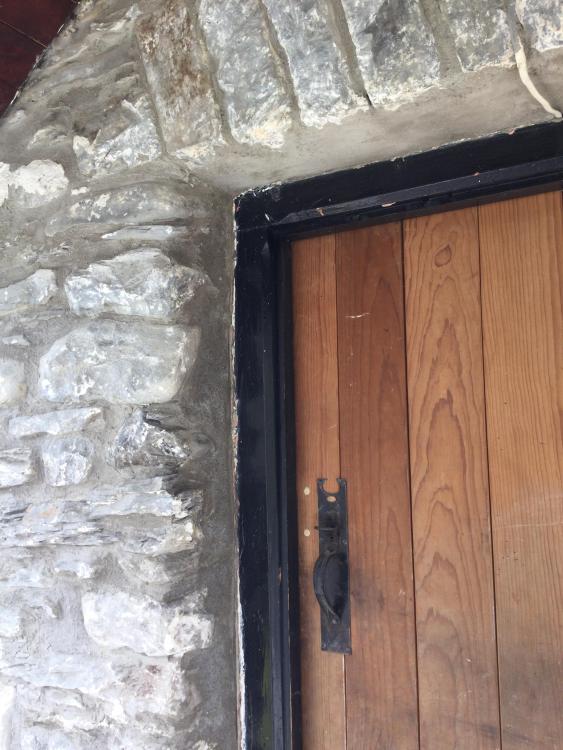
Job done. I had to wing the reveals, sort of done a render.. with mortar. Whether wrong i dont know, but it'll have to do. I couldn't understand how lime could provide 'cementing' aspects (i think cement is a verb) so how correct for me, for this job which involved alot of shoring up (stone at the reveal areas) as much as pointing, I couldn't really understand. So if its wrong I dont know, but its definitely better than it was & looks are ok. Getting the white off the stone tho, for a ' natural' look.. is a no go. Its 20 mins each stone all effort fkn exhausting & will still not fully remove. So i have no option but paint over. So may as well have been mortar not lime then i think (plus, mortar surely is far stronger). Thank god done! Thanks for help chaps. Zh
-
Ok joe thanks I get that idea. I think I'll just do water as jfb also suggests not pva. Really the last thing then is the reveals. Ive shored these 3 inside areas with mortar ok, but sides of stone here are so inny-outy I still think I need something added on to even-out the 3 surfaces, in a nice contoured way. And I can only think render, because it's a relatively thin layer needed onto the stone (& mortar isn't I don't think is ever applied in such a 'coat'.. is it?). Am I on the right track here.. or not at all? If so then I think I need a mix of 6:1:1 with one of lime. Which maybe I can scrounge a big 2 handfuls of from a build site I was thinking.
-
Gobbo - Wikipedia https://en.wikipedia.org › wiki › Gobbo Gobbo is an Italian surname meaning "hunchback". ..
-
When you say damp, do you mean (I assume not me spitting all over my porch until I feint) apply a fairly sloppy 2nd coat, fairly soon after my pva solution 5;1 I think..? sorry I only have pva. Its going to be a so-so job at best this, Ive made schoolboy errors every step. Im rather embarrassed tbh!
-
Gobbo. Do you mean spit on it, like those frightful cave people did on their hands? I think I might run out asap & dry up like a prune markc. Im gonna google gobbo. Ist time Ive ever said that.
-
hi Joe. Key! that rings a bell/ the word I was after. Ok doing the screwdriver idea just seems to chip the surface crust off tho. But I can wire brush a "keyed" rougher finish (tho I'm into hellish dust city again) if that fits the bill? And I dont have sbr.. so might pva be an ok 2nd best? I mean it might stick ok without, ppresumably the wetter the mix the better the adhesion/ so I'll make it a little sloppy to help if correct (as Peter hinted is better than dry presumably adhesion was the reason).. but making a mix then finnding it all falling off, will ruin a heck of alot of effort/ a mix wasted. Sorry so many Q's.. bc I'm new to mortar, & turns out it's bodged up very easily if a trainee std like me. thx zH
-
Could someone just help me out on the prep of a 1st coat of mortar, for best adhesion of a 2nd coat ontop? the 1st coat is fully dried unfortunately (the surface mostly smoothed out, to get it stuffed into the voids.. I forgot to rough it before it cured). Assuming this 2nd coat > onto 1st coat isn't often done, a weak pva solution painted on to help? thanks Zoot
-
Aha right. So Ive missed the boat again (15 hrs since) to do the brush off thing. Fk a duck. dust city for me again then. Live & learn. Right but the best surface prep of the 1st coat, for the 2nd coat? I assume it has to be proper dried beforehand? it seems to get always-dusty once dried/ permanently so you see, hence I need all the help so 2nd doesn't just fall off onto my loafers joe. I was wondering if weak pva solution was the ticket.
-
@joe90 Joe I wonder if you could help. I'm still up a gumtree on this job taken me weeks now & I'm only half way through, understanding some, but not all the basics still. I recall 33 yrs ago (i am capable.. just) as a labourer repointing a big old barn wall, cotswolds. Maybe it was lime mortar. Now afair, we repointed one day.. then came back perhaps the next day (?) & stiff-brushed off to a nice textured finish to the mortar. Now here, as Im doing this job in 2 steps (as I have very deep bits to fill) I need to apply a 2nd coat of 4:1 to my 1st. And try & recreate this nice 'textured' finish once Ive done my 2nd layer. So I need to do 2 things: "prep" my 1st coat surface so the 2nd coat best bonds to it (most is dried, some 15 hrs 'new').. & lastly to do the texture brush finish job preferably without copious dust involved. I have had some success, with the shallower pointing areas I needed only 1 pass on, but it had dried fully: I gently went at it swirly motion with a wire brush... trying to recreate my textured idea from yonks ago.. & it worked out well. But... dust galore. Terrible job my eyes full of mortar dust. Bad newbie mistake re. dust, but thankfully looks good. thanks zH
-
Hi there jfb. Great now I understand, Ive not been on board with the make up of this stuff. Right so as I can gather adding lime to cement/ sand, in a significant ammount, forms 'render'. But just a little ammount, is used as a plasticiser, forming 'mortar'. Is that right? Ive still got the question of how lime + sand alone can act as a mortar (or act as a bonding material between stone maybe is a better way to ask) without there being any cement in. Is the word cement a generic term perhaps.. & lime is a cement? surely not or there'd be too much confusion. thanks zH
-
Hi Jfb.. good advice, I was thinking of this myself. I'm recalling back 33 years to when I laboured/ we did a repoint job for some of this. so the weed hasnt destroyed all of my memory then.. which is nice.
-
Ok good thanks. Last thing is how deep is it best to go with the mix, before considering a 2nd layer? or can I just stuff my voids in one go, just making sure it doesn't sag out/ i think this is the reason for doing 2 passes-?
-
Can someone explain how sand + lime hardens then if it has no cement in with it.. if I've I got it correct that lime mortar has no cement at all-? or am I barking up another wrong tree I wonder. Is the lime put in a render mix, just added as a plasticiser.. not for adding any 'breathability' aspect then-?
-
I was wondering if I'd put in too much water tbh. I mixed, added water/ good consistancy/ add a squirt of fairy liquid (yes I know).. & consistancy then went 'wetter' somehow. 25minutes more adding more sand, more cement, mixing until exhausted.. but not getting less 'wet'. So I had to go for it. A beginners mix. Now I realise I have frostproofer I could've used as a plasticiser, dimwit. Right so for 4 flat shovels of sand, 1 cement, how much frostproofer? eggcupful? teecupful? thanks- zoot
-
Hi Peter. Ok as simple as that? so it's ok to apply an orange-size plug of mortar also as a sort of 'render' here too? (IE it will not be fine pointing-like lines, but fist sized wads smoothed out). ok if so, once Ive got my confidence with a mortar mix I can crack on then. Yes I do see rubble & lots of fine infill falling out, a pain as it'll prevent mortar adhesion I guess. And if I vacuuum It'll never end. Hmm. I have an even naiiver Q re. my 4:1 mix if you can help. Ok my 25kg sand bags were outdoor stored & fairly moisture heavy. If I'm hand mixing on a board it takes ages: but will the cement/ sand shovel mixing be at risk of 'going off' alot more, because of mixing the dry cement into wettish sand plus the 10mins time I'm hand mixing it prior to adding water? I don't seem to have made a very strong 4:1 mix afaict, it breaks off easily & seems 'sandy' you see. I'm not sure if it wasn't 'off' to start off with. thanks zH
-
Can someone advise. I have edges of stone wall forming the reveal of a doorway with old frame. I've removed some sort of thick concrete render around which was hollow. I think it was so thick here to maybe shore up the stone sides, due to there being big gaps around to frame. So essentially I need to replace it. I think. I'm concerned about structure currently. As far as I can tell the attention needed here, is different to the adjacent wall faces where I'm pointing in small volumes. I can't see cramming in 2 trowels of lime mortar is right.. surely I need a stronger material. Foam was suggested to fill small voids, but now Ive removed all of this bad diy job layer I've created bigger voids exposing the inside of the wall, which seem precarious & urgent. I've used concrete before, but liquid setting in a sided enclosure as normal etc. So forgive my naiivity.. but I cannot see how concrete can be used if it'll just fall out (so I cannot think how what I'm removing if it is some kind of fine concrete as it looks, was ever put in). Can anyone advise? thanks zoothorn.
-
Tony, I used the www for videos/ info. And if I go try it & things seem totally out of kilter, then I still do not understand some basics. I cannot go back & ask the www why or ask videos. So I ask on here. It is pretty much why the site exists. (you could just reply to every question asked on BH "you have the internet.. go figure it out" but you wouldn't). I understand the inherrant difference between lime mortar & mortar, it's been simple to understand from pg1 being mentioned it's breathability. But I was here asking what the difference was between mortar with lime in, & lime mortar is (which HAS to be mortar with lime in.. surely.. so surely yiou could appreciate might be confusing to a newbie, no?). My builder was passing, I ask him quick what he'd do in my porch. He looks at it. I say you chaps suggest "lime mortar". I expect him to concur of course he does, but also says "but heck I might just go mortar 4:1". So with due respect to the advice on here which I understand being the optimal choice, as he is a builder right here whose proven to be very competant (if not in his comms to me during the extention build), his alternate option of 4:1 must have some validity. It might not be optimal. It might not be your preferred choice either. It's not that I'm ignoring advice either. But a choice I explained why I made: 1) I cannot get lime mortar without spending £150 putting my old failing car at risk driving 150m to get tubs of it. 2) I cannot make lime mortar (I think.. but I'm confused as to what exactly it is ^as above) 3) my builder says just mortar 4:1 "is ok" so then I simply have no choice but go 4:1 mortar (even if I'd prefer lime mortar, of course I would if it's breathable). But, why my 4:1 mix seems crumbly I was questioning. Difference between concrete & mortar I was asking too: I go on www of course.. it says ballast, more water in concrete. If see two SUCH completely different materials I'm confused. So I ask on here. The one thing I have fully understood from pg1 is lime mortar's breathable/ best for stone/ optimal. It doesn't mean that I can choose it if not it's not feasably available tho, & there is a 2nd choice which is suggested by a builder to me that is readily available so I can at least try/ crack on.
-
Aha- I was wondering why joe90 said lime addition acts the same as a plasticiser, which lead me to think that perhaps then, lime mortar & mortar with lime in are two entirely sepaerate things. Omg I'm so confused. Right.. so so on earth is the difference between lime mortar, & a mortar mix with lime in it then? crikey I've been brought crashing down to earth with my 1st attempt at a mortar mix. I'm a bit dispondent tbh. And very worried about the structure of my area around thye reveals which I cannot seem to get an action plan together to attack it. Ok I think I have a problem then if you say 4:1 is "unneccesarily strong". Because I find my mortar seems weak & crumbly, & nothing like the strength (or the texture/ constituency) of the old stuff I'm chipping away in fact (whatever it is/ I cannot ID it, cement, mortar, concrete, render- but all I know its very strong, like a fine concrete or something). I'm further confused by having made 1 successful concrete mix before (in a mixer), which the only basic difference to this mortar Ive concocted, was the addition of aggregate, & more water. As far as I can tell. But the results.. totally, totally different: one a sandy dark grey thick stuff > forming a weakish crumbly material, the other a light grey thin stuff > forming a rock solid material. How such different results from adding some hard core, IE gravelly stones & water?? I can only surmise the stones are added in concrete to add ballast/ volume.. not as some ultra atom bonding properties.. so I cannot think it through & glean any logic from it. SO confused.
-
Hi joe. no understood re. 2nd coat. What I'm now considering, now Ive established that I can make lime mortar (assuming it's maybe 4:1:1 ?).. is toying with the idea of starting the job again. I think maybe it wasn't suggested to buy 25 kg bags x4, is my concern over waste (plus maybe hand mixing.. which is damn hard work). Before I jump in & redo it all tho: I'm paintakingly trying to get the old wretched white fk knows what off which is welded onto to stone.. incredibly hard work, worst job yet, but over a week I can maybe continue & have the naked stone "presentable" without whitewashing it all.. if I can do a decent repoint job. It would make an interesting porch but a helluva job. But the benefits are significant, if it can 'breathe' (especially if there is a bit of damp at base in one corner) as far as I can gather. So, if I continue as is with my 4:1 mortar & my naked stone.. it will look presentable. Now the stone has the white fk knows what removed.. can it breathe enough now? if so, could I do away with the idea of redoing the whole mortaring Ive done?
-
Actually i know someone who could use the remainder, & i think i might need 2 kg. Thanks tho. But do I even need it for this porch job- I still dont know. I suppose it makes no sense to point my 2nd layer with lime in the mix, if the prior layer is 4:1 sand/ cement. The only thing therefore it could be used for, is to make render. But i dont know if my thinking of rendering the reveals.. has any merit. You see the stone sides (showing at the reveals) are far more uneven than their faces ( showing on the porch walls) which themselves are very uneven. So the reveals are seriously, seriously inny outy uneven. Now, whoever did the job before me Im chipping off all hollow etc, seems to have seen this inny outy stone side reveals.. & evened them up with some form of mortar/ concrete/ rendery/ god knows what material. Therefore, its my thinking that i should replace it. But i dont know if this is correct thinking. And I dont know what to replace it with.
-
Hi Peter. I know but 90% wasted assuming it wont keep. Im not up to speed with cement & lime having never used them before. I just need 1kg, i think, if my plan is the right to 'render' the reveals at all.
-
Hi- if anyone could help. I'm about to do my 2nd layer of mortar between the stone. Once this is done, I still have the reveals to do: but I don't think mortar is correct for here, I think a render is (tho I might be wrong- I'm just making a guess I must admit). Can I make render with the two materials I have (sand, cement), plus buying say a small ammount of 'hydrated lime'.. to make render of 6:1:1 ? Am I on the right track with this idea? I don't think, so far as I can establish, that using my mortar mix as a render for the reveals is correct. Thanks- zoot
-
No good point. Doing every job the 1st time (mixing mortar- my 1st effort) innevitably means stress.. I convince myself it's all wrong & you lot are laughing at me. its a confidence thing. There's character.. & a crap diy job though joe: I chipped off one crap '80's diy job, to only then replace it with another wasn't on the job sheet! I'm worrying close to this outcome as it is- so I need to up my game & tart up the remainder of the job best I can. The reveals where I chipped off a 1" thick cementy-covering "render" needs consideration: I wonder whether I need a new "render" layer to replace it, after doing the 4:1 point job. I back filled the large voids around frame ok (builder told me just use mortar/ ok) so I sort of have a base layer to create new reveal bits. Ok one thing that did occur, is why I didn't buy hydrated lime (looked on ebay today, 1kg £10) & put into my 4:1 mix, to make "lime mortar" more affordably than the suggested 3x £30 tubs.. but anyway a bit late now. Or maybe I'm not understanding what constitutes "lime mortar" (or the difference between this, & render, which has lime in 6:1:1 ?). I'm so new to all this you see: I try googling prior to asking on here but it's still not clear to me even still. Thanks zoot Another