Garald
-
Posts
1113 -
Joined
-
Last visited
Everything posted by Garald
-
Keeping tabs on a Mitsubishi Ecodan heat pump
Garald replied to Garald's topic in Air Source Heat Pumps (ASHP)
Right, and I am not finding the model PUD-SHWM120VAA. Is it like a cat, which goes by three different names? -
Keeping tabs on a Mitsubishi Ecodan heat pump
Garald replied to Garald's topic in Air Source Heat Pumps (ASHP)
It's an Ecodan Split Zubadan Silence 12kW (1PH R32; not sure what "1PH" means). It advertises: - a COP of 4.85 at 35C operating temperature (whereas the leftmost bit of the top line in the above graph is at 4.4). - a SCOP (a weighted seasonal average, but what are the weights?) of 4.61 at 35C and 3.51 at 55C. Where did you get those beautiful graphs - and what temperature does each line correspond to? -
Keeping tabs on a Mitsubishi Ecodan heat pump
Garald replied to Garald's topic in Air Source Heat Pumps (ASHP)
As in: I've seen some people here somehow hook up a heat pump to a computer and get extremely detailed information. How does one do that? I see that (if I buy a WiFi device from Mitsubishi) I could download an application called MELCloud. However, it's unclear from the description that it gives this sort of detailed information. Folks here seem to have access to graphs showing precisely what a heat pump is doing at a given moment. -
As many of you know too well, I had a Mitsubishi Ecodan heat pump installed as part of a broader renovation. While it has adaptive heating, I've just set its operating system at 45 C (which is the temperature I did the calculations for). There was a bit of a cold wave at the beginning of January (I'm in the Paris area - maybe you felt it too), so the heat pump has been hard at work. Here's the data I just read off the heat pump: energy consumed energy produced December 583 kWh 2122 kWh January 883 kWh 2698 kWh In other words, the average COP for December and January was 3.64 and 3.06, respectively. Needless to say, this is somewhat disappointing; the statistics are what I would expect for a working temperature of 55 C, not 45 C. How do I keep closer tabs on how much energy the heat pump is using every day?
-
I already put seal round the edges! Even in the door hinge!
-
I am thinking putting this sort of thing on a metal door for insulation; https://www.corkstore24.co.uk/shop/29-coarse-grained-self-adhesive-cork-wall-tiles/254-coarse-grained-self-adhesive-cork-sheet-20x640x950mm/ Good idea? Bad idea? Good idea but bad product (e.g., because I should really be using some specific kind of glue)? (Also, why could the ratings on that website get worse and worse as one chooses greater and greater thicknesses?)
-
Glad to hear I am normal (assuming great aunts are normal by definition). But what *is* a silver popper kit?
-
Would it make sense to put in a sheet of Climasheet Apex 133 (https://orri.fr/climashield-apex-133.html - provides about R=0.5 per sheet) on either side of the space blanket? Or is it better to leave one of the two sides free? (Which one?)
-
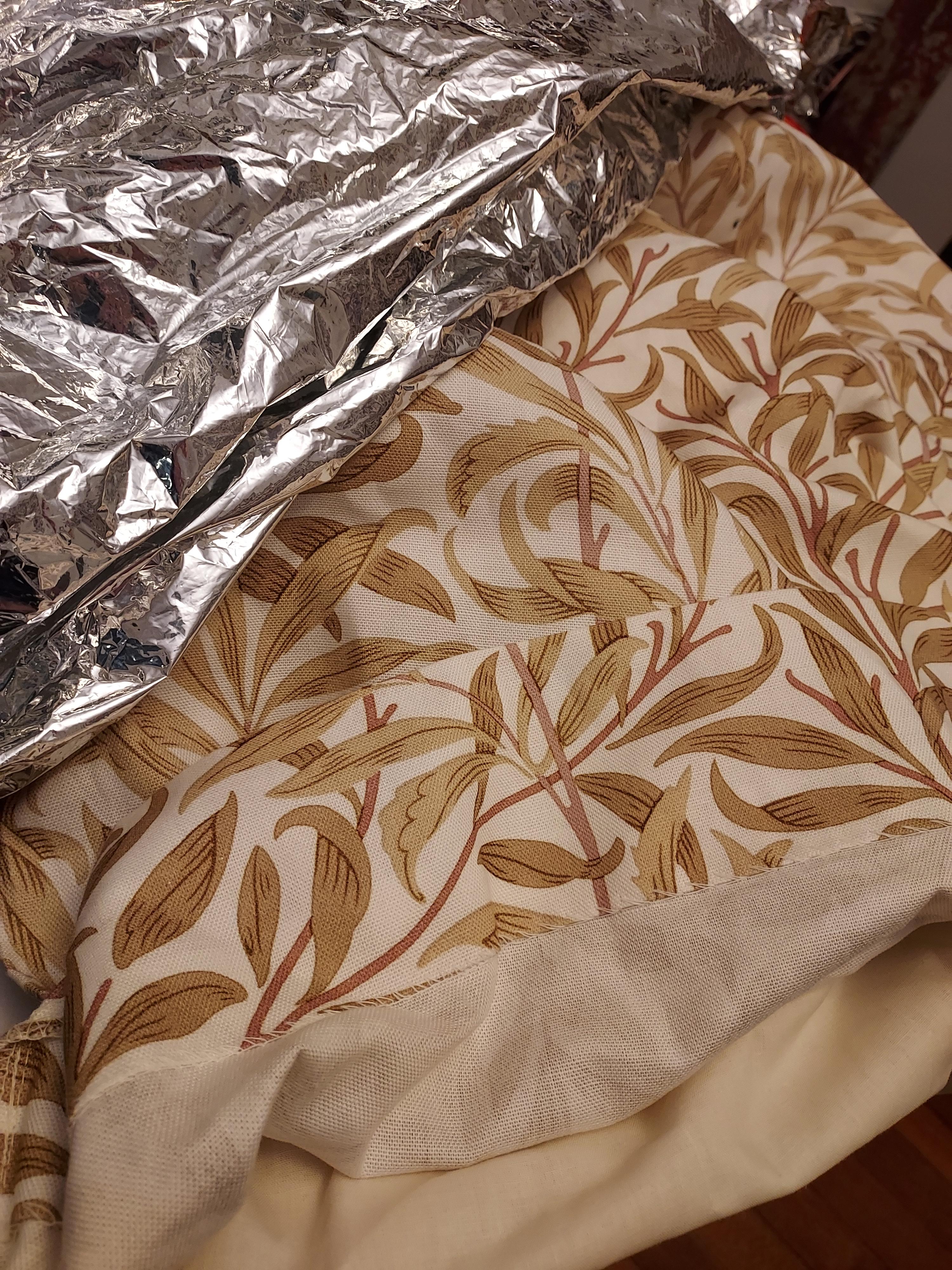
Ok, I just fixed a space blanket to the inside with tape. It's fine, except it crinkles! Will test with a thermal camera on a cold day. Not sure what else I could do easily -maybe put in a thick layer of polar tissue, also with tape, so that I can remove it when the curtain needs to be washed?
-
This could be a DIY project - I could use these: https://www.amazon.fr/Dilatation-Résiliente-Modélisme-Miniature-900x10x10/dp/B08425B4H3/ref=sr_1_5?__mk_fr_FR=ÅMÅŽÕÑ&crid=387JS1PUSJHFX&keywords=bande+en+liège&qid=1706648260&s=hi&sprefix=bande+en+liège%2Cdiy%2C86&sr=1-5 Cork is not as good as insulator as polyurethane (it's on the same league as rock wool) but it's harmless to leave exposed or to work with (are both the case for polyurethane?). What kind of glue should I use to stick cork permanently to a wooden beam or a plaster wall?
-
It could be that the insulation inside the walls is essentially perfect, and the reason why the short walls are cold, especially towards the top, is a different one. Remember how there was an airtightness defect hidden by those beams on top of the short walls (well, on one side) and that it had to be sealed with polyurethane mousse? That was enough to make things airtight (I hope) but it may still be a defect in the insulation, as in it was not a lot of polyurethane - just enough to seal. Perhaps a case can be made for 2cm of polyurethane (or cork; not sure how safe it would be to have a bunch of polyurethane just sitting exposed like that).
-
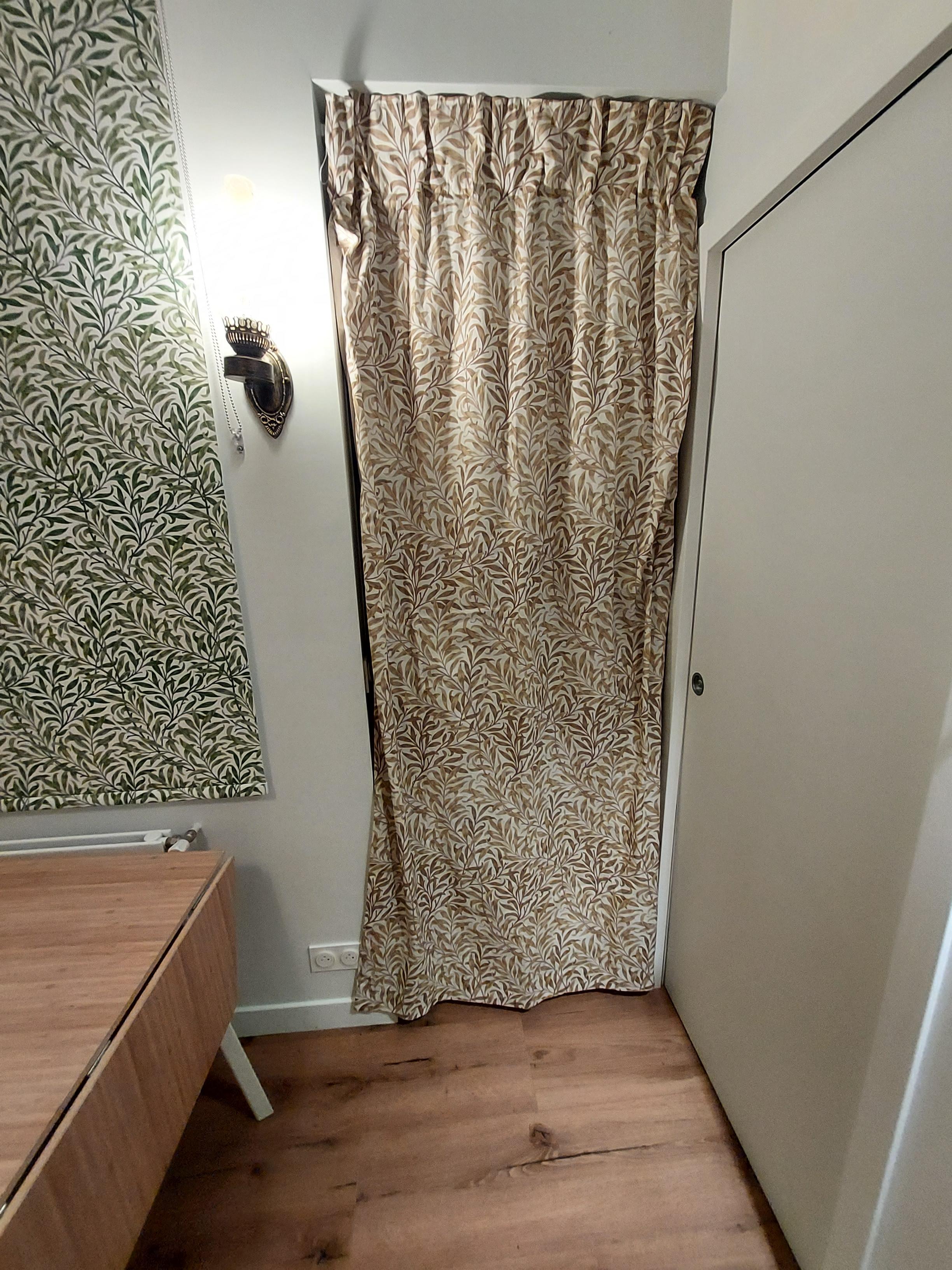
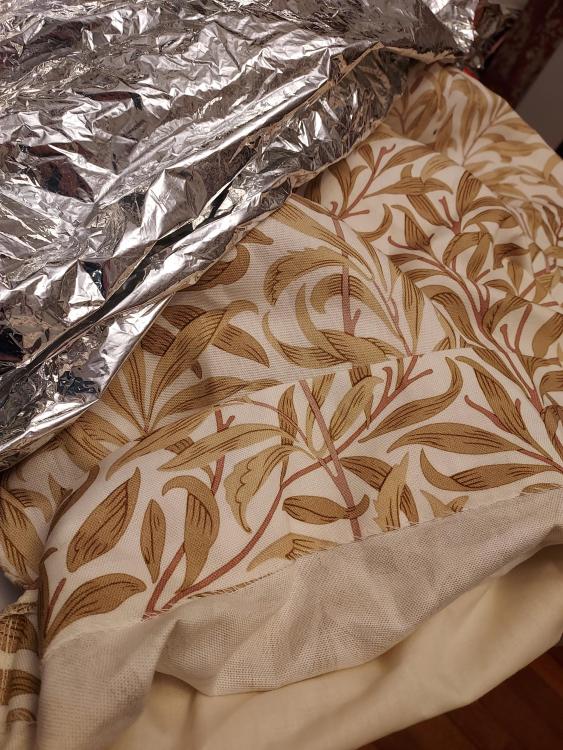
I just went to a local retoucheur (stitcher), but he refused to sew a space blanket inside a lined curtain (see photo). First, his machine would tear the blanket; second, it was not a simple task, and he had tons of simple tasks to do for pay; third, he was not familiar with these strange English curtains; fourth, it wouldn't work anyhow, and the only thing that could work was a very thin cloth that he showed me. I suppose he is right about 1-3 and wrong about 4. Surely the only thin thing that can work is reflective insulation? At any rate, I suppose this means I'm stuck buying the grossly overpriced reflective curtain linings from Moondream (https://www.laredoute.fr/ppdp/prod-505228231.aspx?dim1=1003&dim2=1000&cod=PSN00080388FR&gad_source=1&kard=1&kClkId=240130201329484220&kVsId=240130201329482561&gclid=Cj0KCQiA2eKtBhDcARIsAEGTG42H_FFLhfDM4p1v9PmdBcPAKmlvIJ_Y05phTGyhbY8RVSmq7W7NVMcaAjvjEALw_wcB) - they come with a velcro attachment on top - and cutting them to size myself.
-
Has anyone used tile.expert website to order tiles?
Garald replied to leemkule's topic in Wall Tiles & Tiling
I ordered Spanish tiles from Tile.Expert last year (Equipe and Mainzu). Everything was fine. -
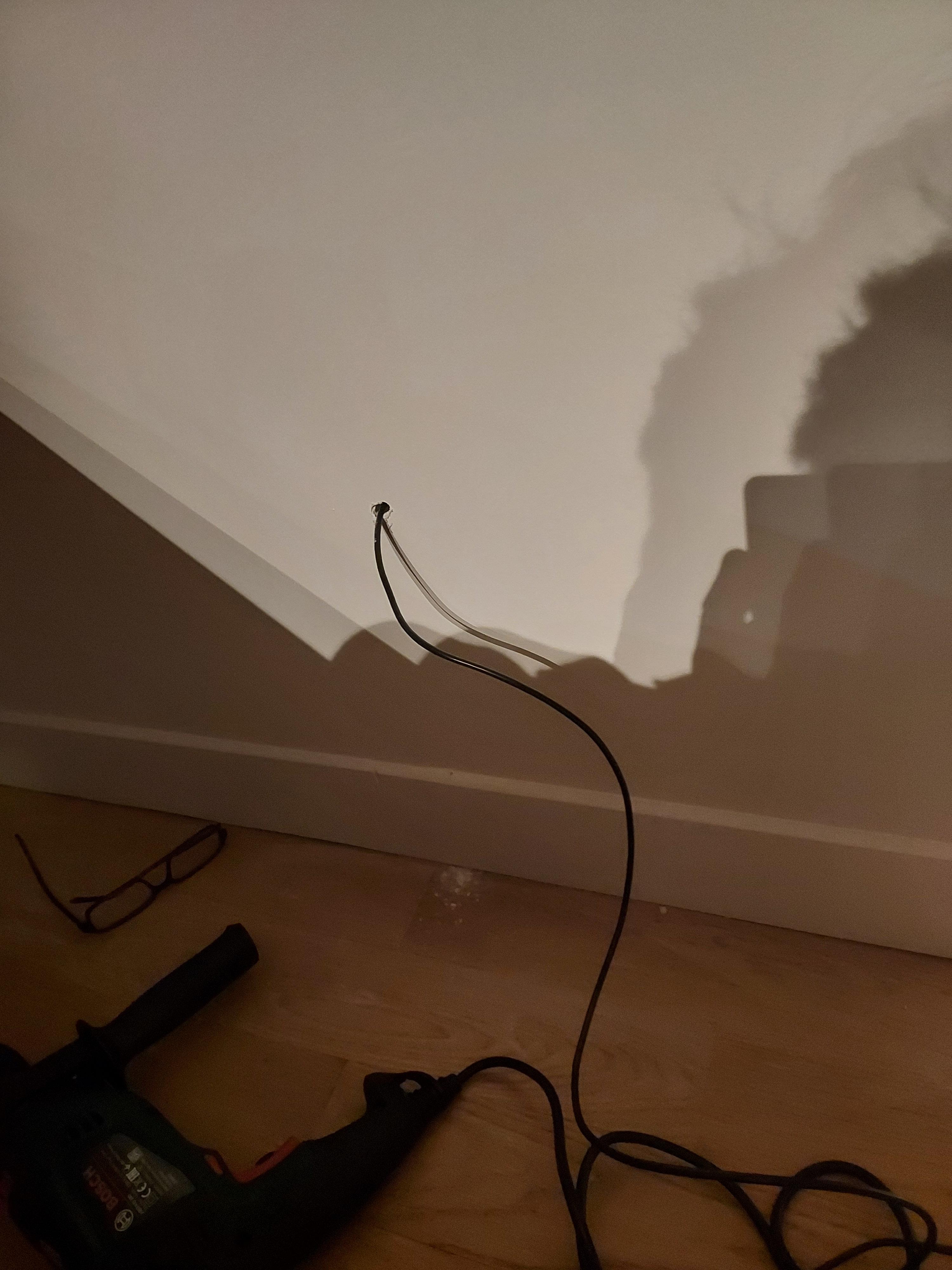
Is this enough detail? Should I close the hole? I imagine poking around isn't causing lasting damage, in that insulation will just settle into the narrow tunnel I've effectively created by poking around with a borescope.
-
Oh, I didn't mean as in which-way-is-up ( though the tip is helpful - thanks) but as on how-to-bend the-borescope-so-that-it-goes-upwards-in-the-wall. What is the solution?
-
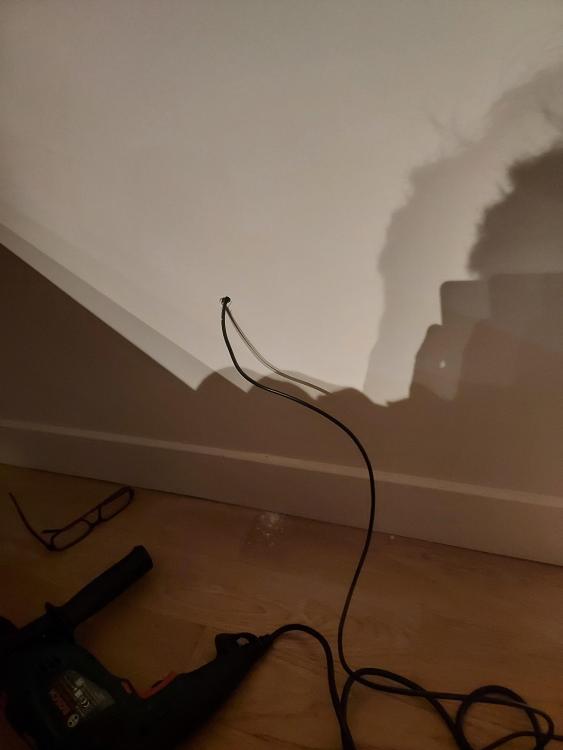
I guess they all look fine? (Or is the insulation not quite thick enough?) I'm having some trouble orienting the borescope to the zone of greatest suspicion (upwards) but I'm doing my best. I'm reluctant to make a second hole.



-
Fun and joy with a thermal camera, part I: Attic
Garald replied to Garald's topic in Heat Insulation
Wait, beginner's question: once I bore a small hole (can't find a 10mm holesaw - I guess I'll just take my 8mm masonry drill bit and move it around a bit) and take pictures with the boroscope, how do I seal the hole well? Cellulose may be mostly harmless, but one shouldn't be exposed to fibrous materials, however "natural" (and of coure it's treated with fire-retardant chemicals). -
Right. It should go much more smoothly in the future. Well, both realizations (staggering + modular design) should be credited to the German company that sold me the boards and the screws. They basically told me as such, left it up to me to provide them with a design with measurements (I just sketched one by hand - now I now some OpenSCAD, though I don't yet know how to make the measurements show) and sent me the boards after, well, many more weeks than I expected. I could stagger the verticals in the second design, but that would mean missing out on the possibility of installing a cremaillère en bois, no? Though let me see - perhaps something is possible.
-
Thinking aloud: supplementing inside insulation by outside insulation?
Garald replied to Garald's topic in Building Materials
Also, isn't much foam insulation non-breathable? As I said, this is a masonry wall. From what I read, there is also wood fibre (though that can be expensive). Is that a possibility? What are the downsides? -
Thinking aloud: supplementing inside insulation by outside insulation?
Garald replied to Garald's topic in Building Materials
Fireproof - so neither PUR not PIR, but rather what? -
Broke two 3mm drill bits putting it together. While I am at it - here are two OpenSCAD sketches of possibilities for the street-side bookshelves in the non-technical part of my library. We'll see what the carpenter thinks. Or perhaps open-topped bookcases are better? I'm having trouble finding examples of those I like.
-
I've already bored many of you with my story, but, quick recap: on the south side, I have a thick layer of BioFib Trio as insulation, but, on the north side, I have a much thinner layer (5cm I think) plus reflective insulation (which comes with its own insulating backing, obvs). So far, everything seems good, but plenty of people here have doubts that reflective insulation works as well as advertised. A thermal camera shows nothing terrible (just that the frames are very visible under the thermal camera on some spots of the north side). Still, I wonder whether I am as well insulated as planned. I obviously don't want to scrap everything that has been done without good reason. But what if, at some point in the next few years, I have the budget to do further major renovations? Would it make sense to add insulation on the outside of the north wall? Which kind? Obviously it would need to be a kind of insulation that "breathes", to prevent condensation. (The wall itself is masonry, hence porous.)
-
Right, that's what I've heard. But then I'm sure some bugs like cotton, linen and hemp - wonder what is added to BioFib Trio to prevent that.
-
Wonder why you specified *sheep's* wool. Never heard of llama wool being used for insulation. (Now that's an interesting idea in certain circumstances, but I'd imagine the problems would be much the same, no?)
-
Or something sharing most of the properties of rockwool. I've used BioFib Trio (cotton+linen+hemp) and it seems to be doing its job. It has similar heat conductivity and sound absorption properties to rockwool. Of course for sound insulation you also need mass (more than either rockwool or BioFib trio provide).