Garald
-
Posts
1113 -
Joined
-
Last visited
Everything posted by Garald
-
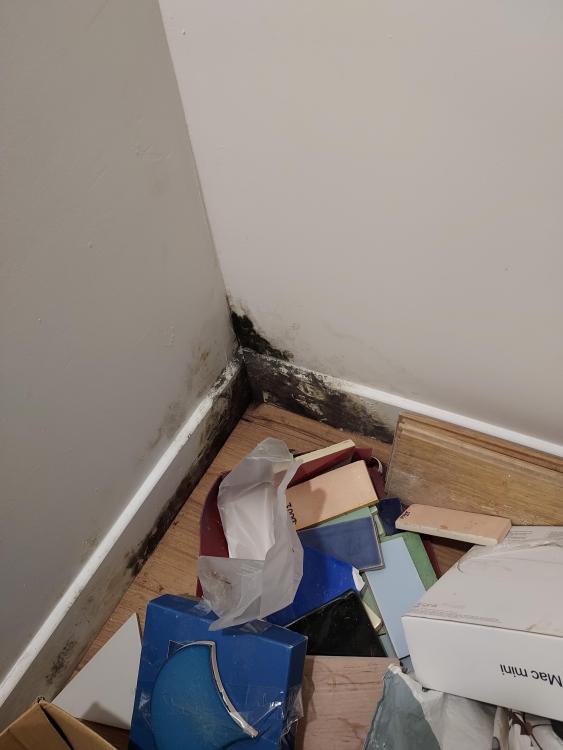
Think so. I'll contact the contractor - this is a recent renovation - there should be some kind of warranty. Is there any chance it's just the closet's moisture, as opposed to a problem behind the wall?
-
I honestly don't know. I do think that the refrigeration pipes for the heat pump have to be somewhere not far from there. Is it mold, or what exactly? A hygrometer I placed in that closet about 90 minutes ago now gives a humidity reading of 82%.
-
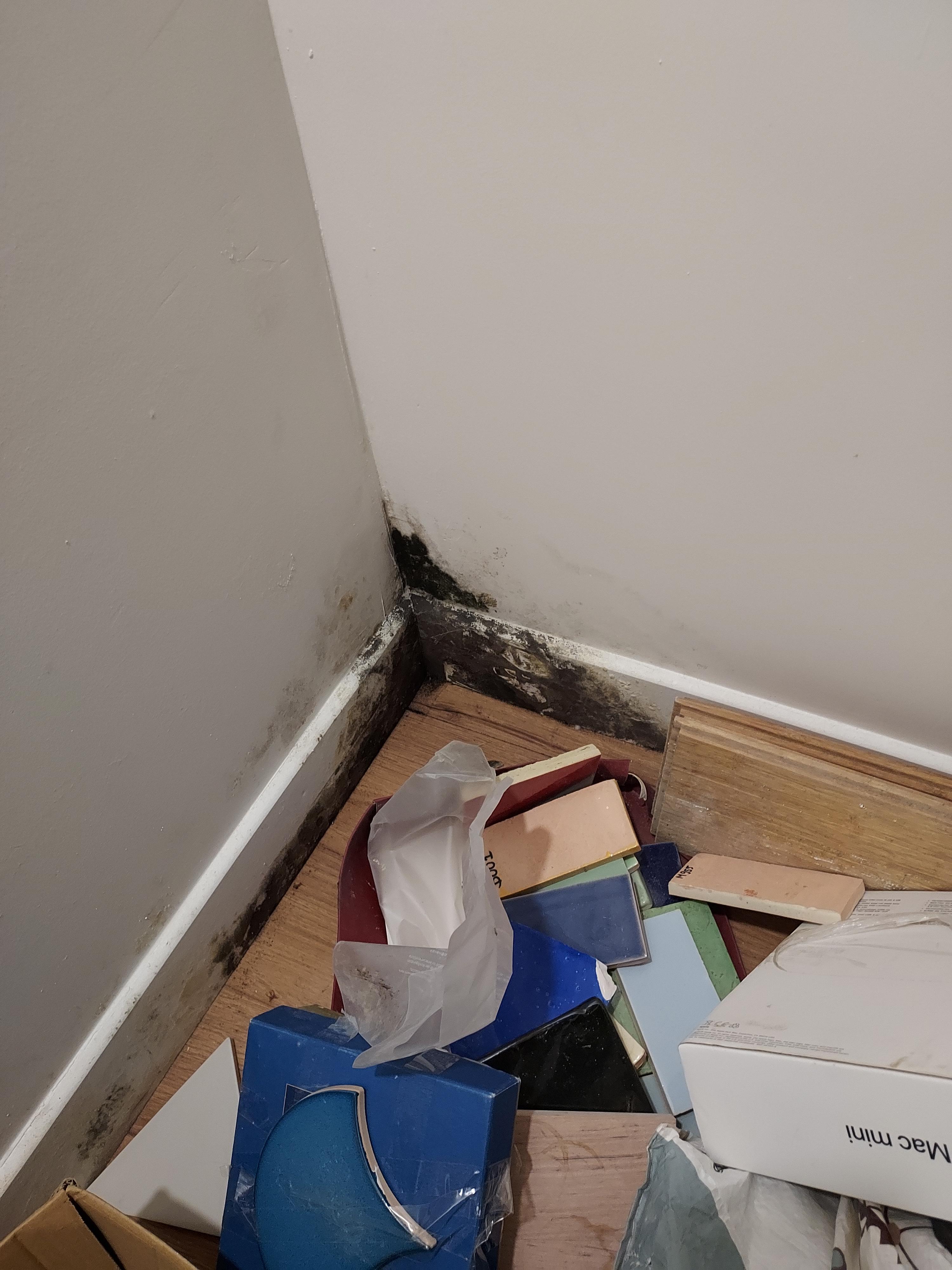
I realized some time ago that the closet unser the stairs smelled a bit funny; I had the bottom of the door sanded a bit to improve ventilation. I just opened the door, noticed the smell had remained, and, putting a couple of things aside, saw this: What kind of damage is this? How to fix it or have it fixed? What should I do to prevent it in the future?
-
Ah, that's very nice! Thank you!
-
90 minutes later: "Good" window: 39.5 C, 57% "Bad" window: 43.3 C, 42% Temperature indoors: 23 C Temperature outdoors: 19 C
-
Huh. Left hygrometers/thermometers inside each inter-window space, and the results are not at all what I expected! "Good" window (no condensation): 29.2 C, 74% humidity "Bad" window (condensation) 34.8 C, 52% Temperature indoors: 22.5C Temperature outdoors: 18C Small basil plant in the "bad" window, a pelargonium and a sad geranium in the "good" window.
-
Right - I suspect that the single pane seal is *not* airtight in the "good" window and that it *is* airtight in the "bad" window, and that it is (deliberately) non-airtight in the inner, double-pane frame - thus humidity is trapped inside the single pane of the bad window. Does that make sense? Or is this much too naïve? I do have a couple of hygrometers/thermometers - let me put them in the two cavities overnight and report back.
-
The single glazed outer layer is heavy security glass, with a decent R. Notice the complete lack of condensation in one of the windows. Notice also that it's not cold in Paris in this time of the year! So clearly there must be another explanation.
-
Yes. >Maybe just trapped humity when it was installed? No; we opened the windows wide when the parquet specialist came to do a sanding, the condensation naturally disappeared (it was noticeable - the parquet guy was also concerned), we closed the windows back last Friday or so, and it's already the way you see. >Suggest putting some silica gel sachets between the two units - assuming you can get to the space between them. Sure, I'll do that - but that's putting a Band-Aid on a wound. I'd like to get to the reason of the problem. (Besides, I'd have to change the silica sachets constantly.)
-
As you know, I have two identical double windows now. (Double glazing on the inside, 18cm space (which I have lined with 2cm cork on all sides, for sound absorption), thick single glazing on the outside.) One has condensation on the outer pane, the other one not. This is obviously a problem I need to solve. What could be the reason? I imagine that the two windows must not be really identical. I can think of two possibilities: (a) in the "bad" window, there is a ventilation exit (from the space between the windows to the outside world) that is blocked or never existed in the first place, or (b) in the "good" window, there is a ventilation exit from the room to the space between the windows that is blocked. Any other possibilities? (For what it is worth, I have PIV - positive-input ventilation: that is, air is drawn in by a fan, and expelled by ventilation exits that are discretely tucked into window frames and the like.. Or so the builder tells me - I can never find them. Not sure the folks who installed the outer windows really understood this (though I've been asking them, to no avail). I do not know whether this is the issue or a red herring.)
-
But this is not what the diagram you post yourself shows! If it were just what you say, the exhaust temperature would be a little higher than 12.5C, and th supply temperature a little lower than 12.5C. That's not at all what the diagram depicts.
-
Just asked an applied friend, and he has a conjecture. Is this it? https://www.heatpipe.com/engineering-manual/heat-pipe-principle-and-applications/?fbclid=IwZXh0bgNhZW0CMTAAAR3xQrm_78fPi0UOOwRZvEYPSuy8r1Atsg9g5ALqL1trhn65aqvViZ6tgQk_aem_ASjRtEBhO0MTBUHkK_BqoJqJDEcObo2s0pIrxF4ZWED0yDAxIgtn3VCF2OWCIEW27dVGLj4-U9egT6L7gMAfaLax
-
But seriously - yes, the first and second laws are respected, but I'm still mystified by the mechanism. Presumably it is not some sort Rube-Goldbergesque contraption where a steam engine powers a heat pump.
-
This is a bit confused :).
-
(I mean "work in the physical sense".)
-
Sure, in the physical sense - I believe it. But surely something non-trivial is going on if the air going out is at 4 C and the air going in is at 20 C, say. If any fool (read: me) builds a heat exchanger, the air going out and the air going in will be at about the same temperature.
-
Impressive. And this is done without putting in work? Then, right, the supply temp can't possibly be as high as the extract temp - but 2 deg is very little to lose. What is the mechanism, roughly?
-
Wait - surely temperature is average kinetic energy? And the density of hot air is if anything a bit lower than that of cold air? More to the point, I'm surprised (in a good sense) by this: How can you extract air at 4.6 while heating air to 18.9 without putting energy into the heat transfer? Either the heat exchanger needs power for that, or it is actually using the energy from the initial heat transfer from hot inside air (A) to cold outside air (B) to then keep transferring heat from A to B even once B is warmer than A. Is this the case? Sounds sweet (and then feeding exhaust air to a heat pump would be gilding the lily, though I suppose one can sometimes arrange matters so that the exhaust just happens to be close to the heat-pump's input).
-
This is a bit I don't understand. Say it's 0 C outside and 20 C inside. The air being output is at 20C, the air coming in is at 0 C. Since the volumes of air going in and going out are the same, we see that, after going through the heat exchanger, the air coming in is at most 10 C (of course it will be a bit less, unless the heat exchanger is magically perfect) and the air going out is at 10 C at the very least. So why wouldn't be talking about an uplift in temperature of at least 10 degrees?
-
My place is 120m^2 loi Carrez (i.e. space you can stand on and that is not stair space; has high ceilings except in the attic) plus of course there are the sides of the attic, the stairs, the entryway, etc. So your experience is very much relevant. Do you think the system eventually paid for itself? SteamyTea: by 5 Delta T, you mean the difference in temperature between the exhaust air and outside temperature? Saveasteading: well, the difference in COP at higher and lower temperatures means a heat pump is a plausible tool for exploiting exhaust heat (even after heat exchange). Shouldn't be hard to figure out the maximum theoretical efficiency.
-
If I understand correctly, a heat exchanger in MVHR simply uses the fact that heat naturally flows from a hotter to a colder body; in winter, even after heat exchange, the air exhausted is warmer than the outside air (in fact, it will be warmer than the air that flows into the house after going through the heat exchanger). Why not use that air being exhausted as part of the input to a heat-pump? If it is the house's main heat pump, I suppose the best one can do is have the exhaust be close to the heat-pump's input, and then much of it will be lost. But what if one uses a separate heat-pump for hot water, as in a so-called thermodynamic water heater? (Also, why not have ducting so that the said water heater exhausts its output outside during the winter, and has both its input and its output ducted indoors during the summer?) I imagine this is either (a) a naïve proposal that has a fatal flaw, (b) something that is sound in principle but too expensive to implement in practice for some reason I don't know, (c) something that is actually in the market (or set up by enterprising installers) and I just haven't heard about it.
-
Have allergies - my tolerance to rugs is limited.
-
I don't have an existing system yet! I take FIT is about selling energy back to the state at regulated prices? Yes - this is all in France - the price offered is not terrible and not great (about half of peak prices for consumption). Here's the quote I'll probably accept (with one controller for every two panels). I should make my decision today or tomorrow (or else I won't take advantage of a discount). The main alternative is IKEA - they are about to call me, but I take it would be at least 2000eur more. devis_DEV-28851_28851.pdf
-
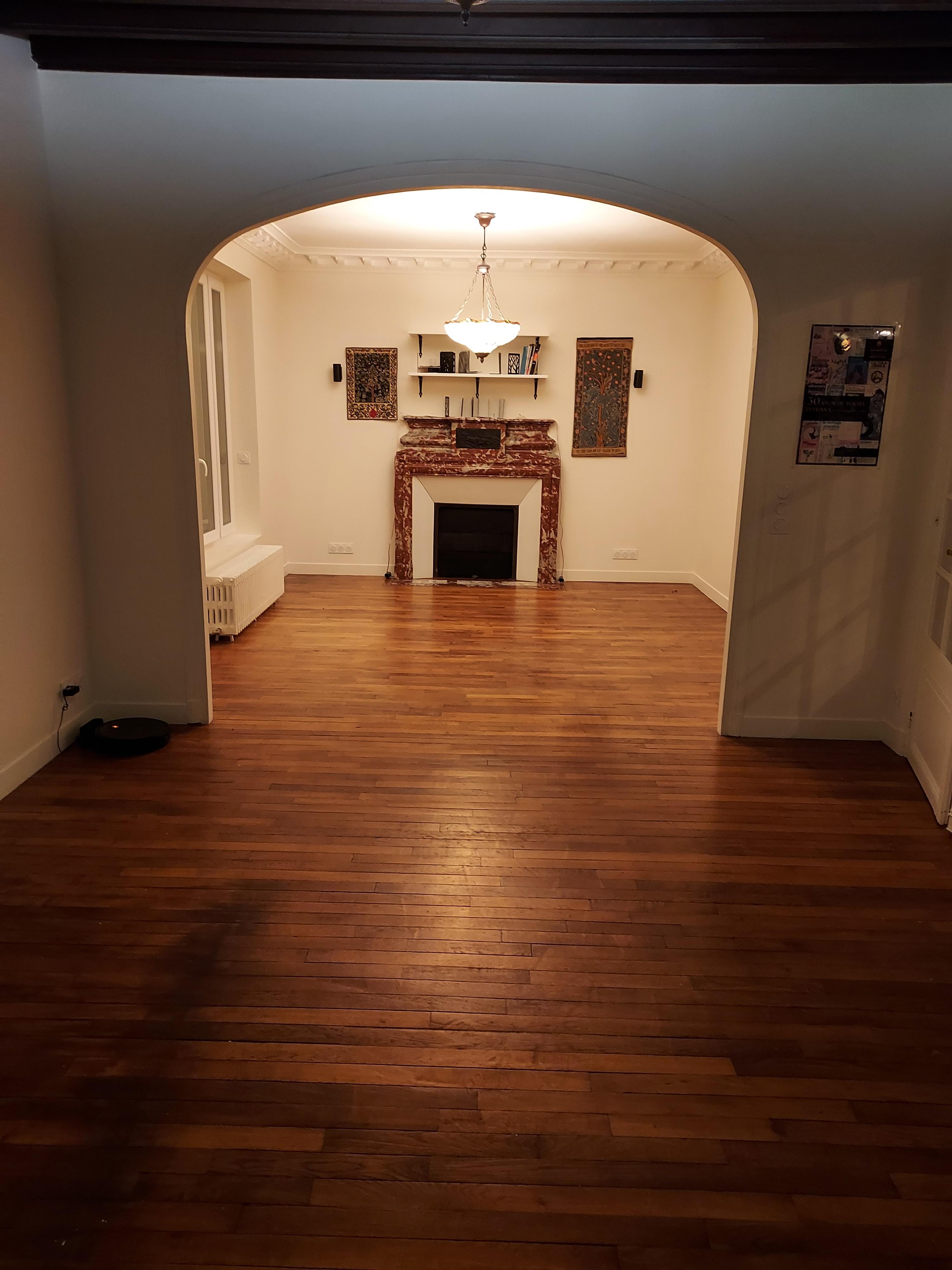
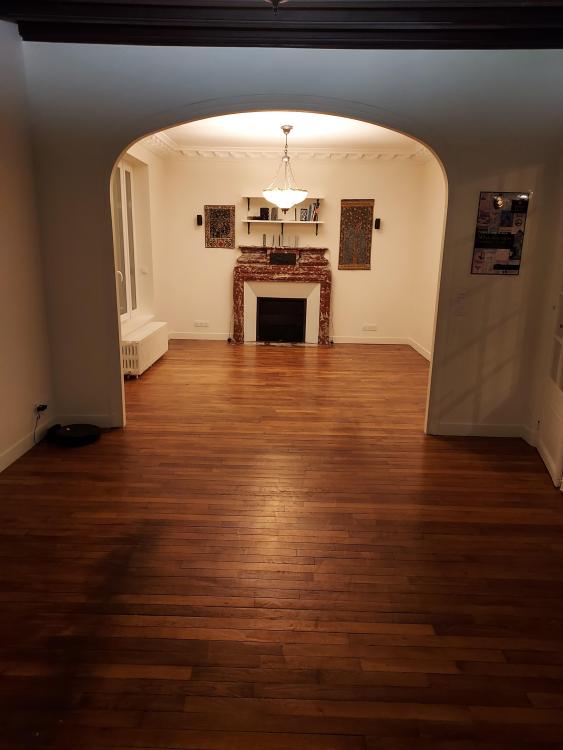
Previous condition, for comparison:
-
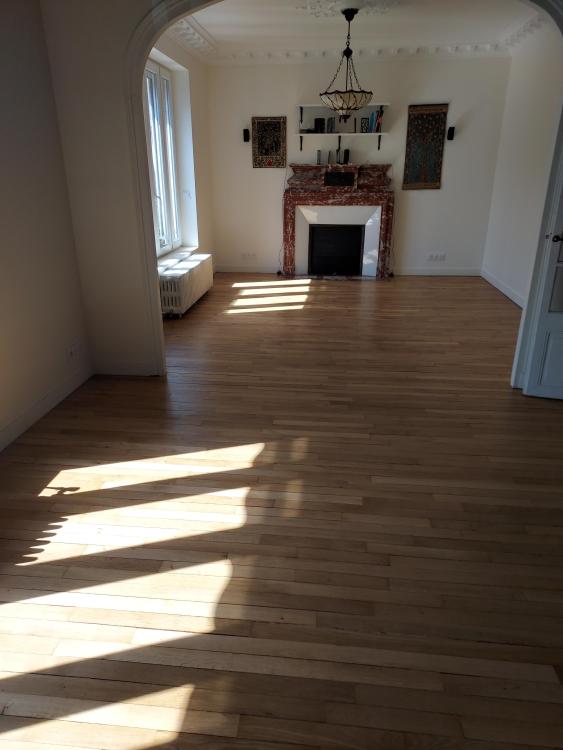
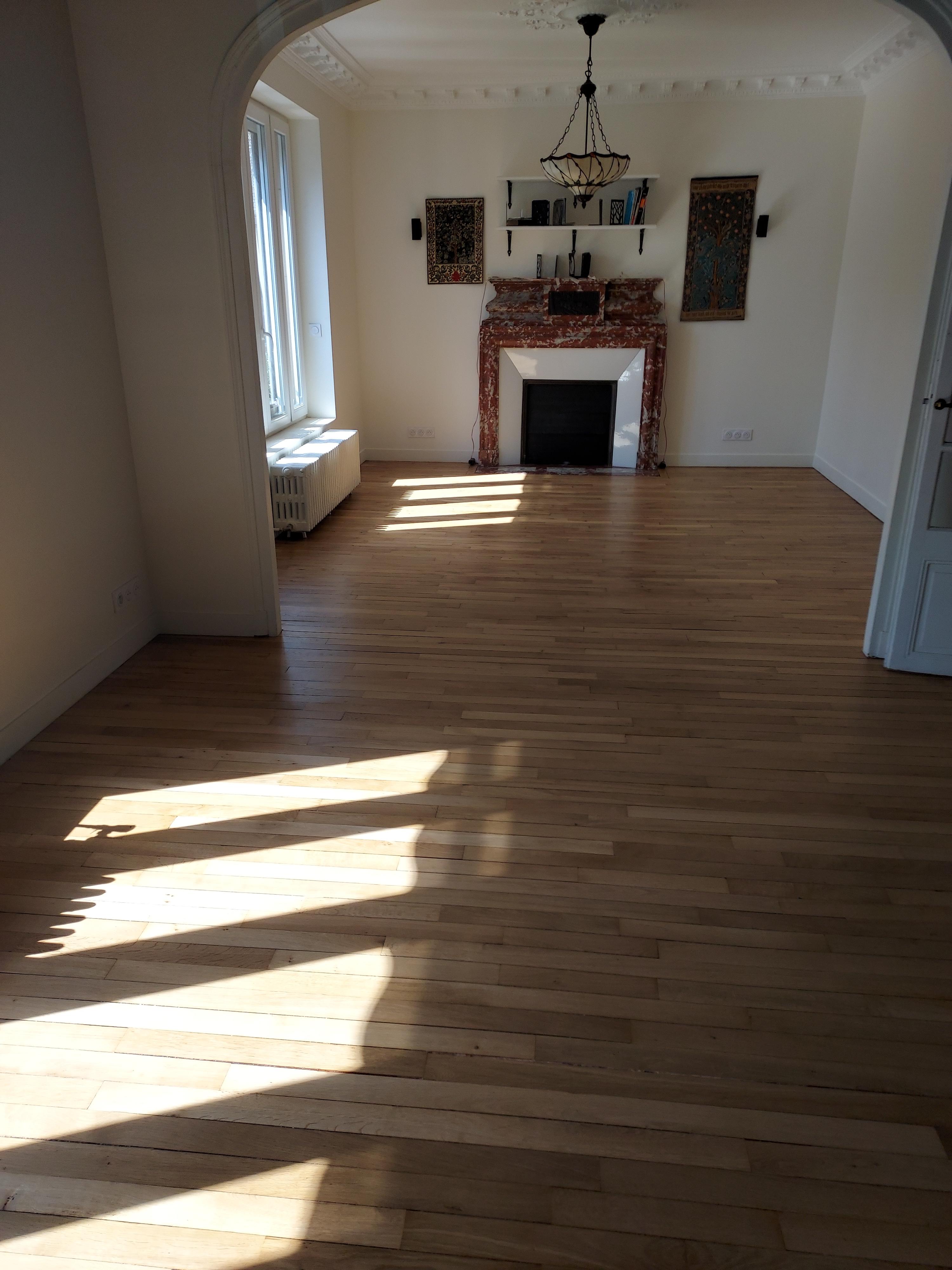
Newly sanded floors, with acrylic "varnish" that just dried. I'm glad the water damage and what I assume was the mostly invisible filth of 90 years of pet dynasties came out, but I don't know how I feel about the new, much lighter coloring. I know or think I know that elegant variation is all the range, but perhaps this is a little too much variation. Perhaps it would be best to make everything a bit more uniform by darkening it a notch? Or will time take care of that?